


















How to Grind Silicon Carbide (SiC): A Practical Guide to Diamond Wheel Selection, Process Optimization & Troubleshooting

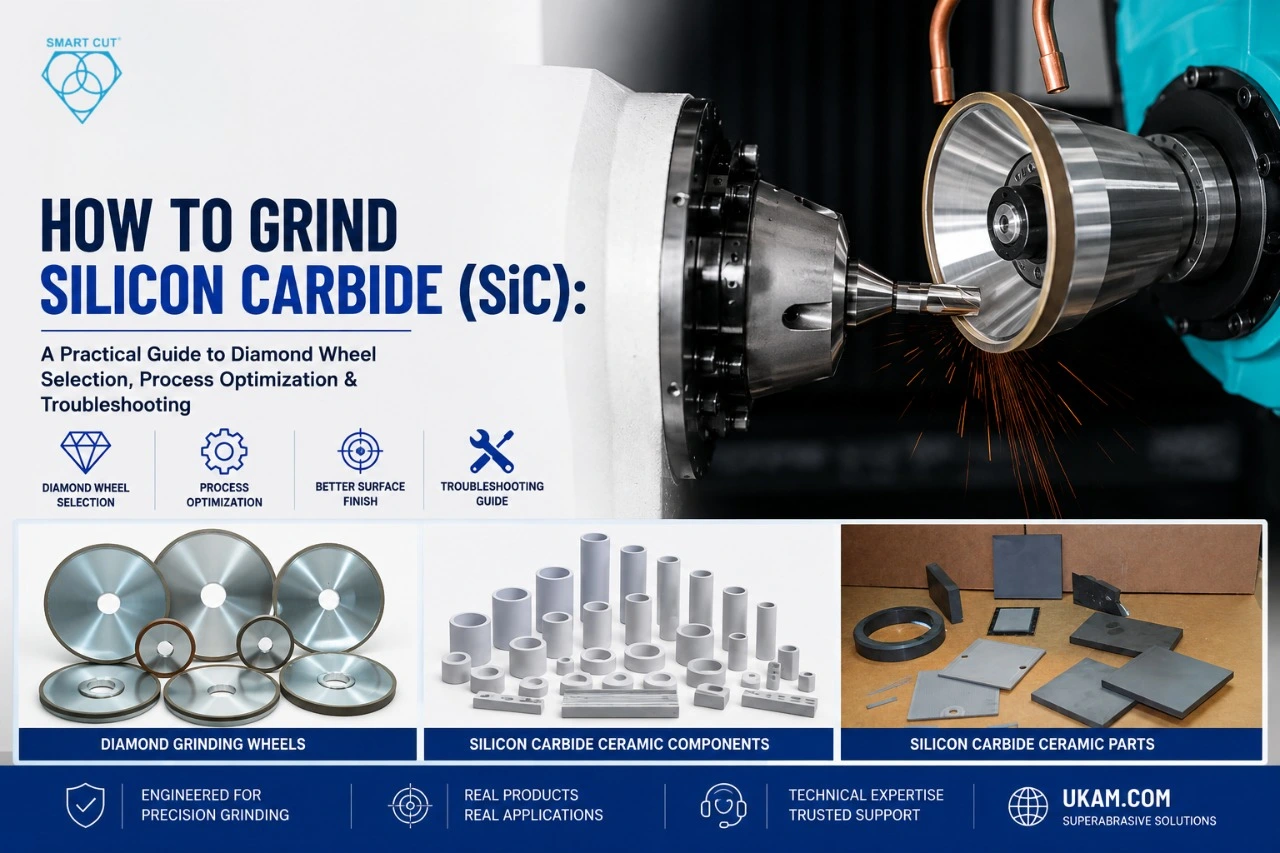
Table of Contents
Toggle
American Based Manufacturer

Established in 1990


Custom manufacturing


Silicon carbide (SiC) is one of the most challenging engineering materials to machine, yet it has become indispensable across industries that demand exceptional performance and reliability. Its combination of extreme hardness, excellent wear resistance, high thermal conductivity, and outstanding chemical stability makes it the preferred material for applications ranging from semiconductor wafers and power electronics (see our Semiconductor Industry solutions) to mechanical seals, aerospace components, precision optics, and advanced industrial ceramics, including our dedicated work in the Advanced Ceramics industry.
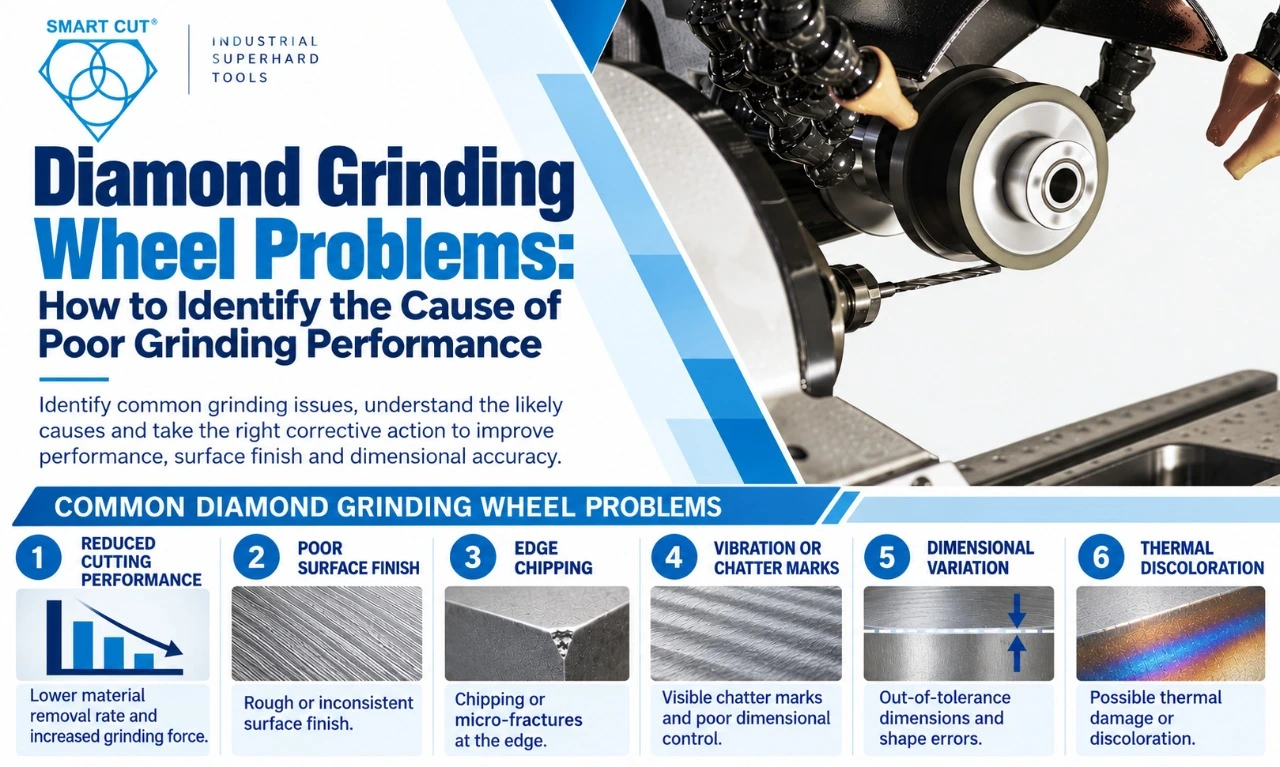
As the adoption of silicon carbide continues to grow, manufacturers face increasing pressure to produce components with tighter tolerances, finer surface finishes, and higher production efficiency. However, machining SiC is fundamentally different from machining metals. As a hard, brittle ceramic, silicon carbide does not deform under cutting forces—it fractures. Without proper control of the grinding process, manufacturers can encounter problems such as rapid diamond wheel wear, edge chipping, subsurface damage, poor surface finish, dimensional variation, and excessive production costs.
Achieving consistent results requires more than simply selecting a diamond grinding wheel. Successful silicon carbide grinding depends on matching the wheel specification to the application and optimizing key process variables, including wheel speed, feed rate, depth of cut, coolant delivery, machine rigidity, and dressing practices.
UKAM Engineering Insight — There is no “one-size-fits-all” grinding solution for silicon carbide. The optimum wheel specification and grinding parameters depend on the SiC grade, component geometry, tolerance requirements, machine capabilities, production volume, and desired surface finish.
This guide provides a practical engineering approach to grinding silicon carbide. For more in-depth technical resources, visit our full Knowledge Center. Whether you are developing a new process or improving an existing one, this guide will help you achieve more consistent results, longer wheel life, better surface integrity, and greater manufacturing efficiency.
Understanding Silicon Carbide (SiC): Material Properties That Influence Grinding Performance
Selecting the right diamond grinding wheel begins with understanding the material being machined. Silicon carbide is not a conventional engineering material—it is an advanced ceramic with unique mechanical and thermal properties that directly influence grinding behavior. Characteristics such as extreme hardness, brittle fracture, and excellent wear resistance determine how the material responds to cutting forces, heat, and abrasive action.
Understanding these properties helps manufacturers select the appropriate grinding wheel, establish stable machining parameters, and reduce problems such as excessive wheel wear, edge chipping, poor surface finish, and subsurface damage.
What Is Silicon Carbide?
Silicon carbide (SiC) is a synthetic ceramic composed of silicon and carbon atoms arranged in a highly stable crystalline structure. It is one of the hardest commercially available engineering materials, second only to diamond and cubic boron nitride (CBN). Its unique combination of hardness, thermal conductivity, corrosion resistance, and high-temperature stability makes it suitable for demanding applications where conventional materials fail.
Today, silicon carbide is widely used in:
- Semiconductor wafers and power electronics
- Mechanical seals and pump components
- Bearings and wear-resistant parts
- Aerospace and defense systems
- Optical mirrors and precision optics
- Ceramic substrates and electronic components
- Heat exchangers and furnace equipment
- Armor systems and ballistic protection
- Medical and laboratory equipment
For a deeper look at wafer-level material behavior, see Silicon Wafer Material Preparation: Mechanical Stages That Determine Semiconductor Yield, and for the full production sequence, see Semiconductor Wafer Manufacturing Process: Cutting, Grinding, Dicing & Polishing Tools Explained.
Common Silicon Carbide Grades
|
SiC Grade |
Typical Characteristics |
Common Applications |
|---|---|---|
|
Pressureless Sintered (SSiC) |
Extremely hard, dense, excellent wear resistance |
Mechanical seals, bearings, precision components |
|
Reaction Bonded (RBSiC) |
Contains residual silicon, improved machinability |
Wear parts, kiln furniture, armor systems |
|
Recrystallized (RSiC) |
Excellent thermal shock resistance |
Furnace fixtures, high-temperature applications |
|
Single Crystal SiC |
Ultra-high purity and dimensional stability |
Semiconductor wafers, power electronics, RF devices |
UKAM Engineering Insight — Never assume all silicon carbide materials grind the same way. Identifying the material grade and its performance requirements before selecting a grinding wheel helps improve wheel life, reduce scrap, and achieve more consistent results.
Material Properties That Affect Grinding
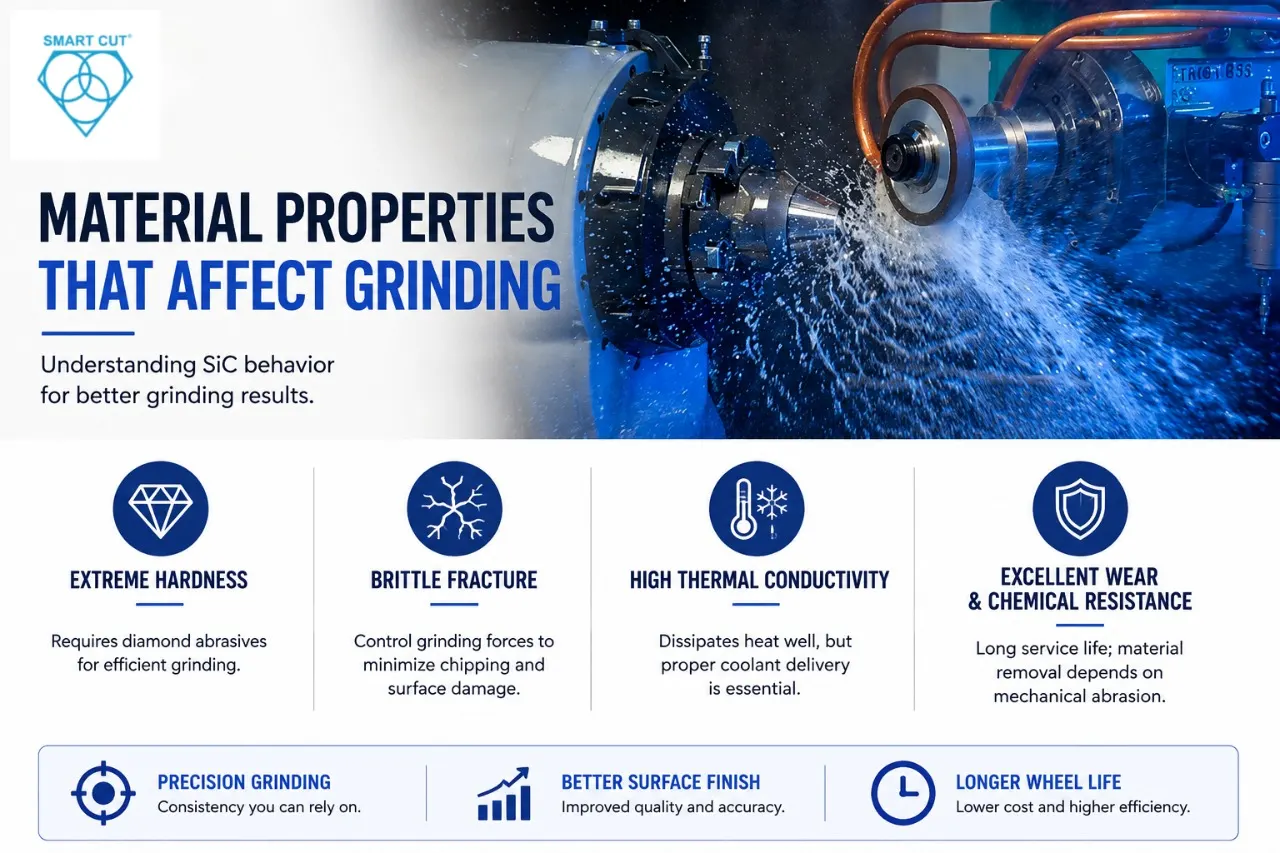
- Extreme Hardness: Increases resistance to material removal and requires diamond abrasives for efficient grinding.
- Brittle Fracture: Makes the material susceptible to edge chipping, surface cracking, and subsurface damage if grinding forces are not properly controlled. Related reading: How Material Fracture Toughness Influences Diamond & CBN Blade Selection.
- High Thermal Conductivity: Helps dissipate heat more effectively than many ceramics, but excessive grinding temperatures can still occur with incorrect wheel selection or poor coolant delivery.
- Excellent Wear and Chemical Resistance: Provides long service life but makes material removal dependent almost entirely on mechanical abrasion.
abrasion rather than chemical interaction.
These characteristics explain why silicon carbide requires carefully matched grinding wheels and well-controlled machining conditions to achieve high-quality results.
Why Material Properties Matter
The success of any silicon carbide grinding operation depends on matching the grinding process to the material being machined. Understanding how different SiC grades respond to grinding allows manufacturers to select appropriate wheel specifications, optimize machining parameters, and minimize defects before production begins.
The following section examines the engineering challenges that make silicon carbide one of the most difficult materials to grind and explains how these properties influence grinding performance in real manufacturing environments.
Why Silicon Carbide Is Difficult to Grind
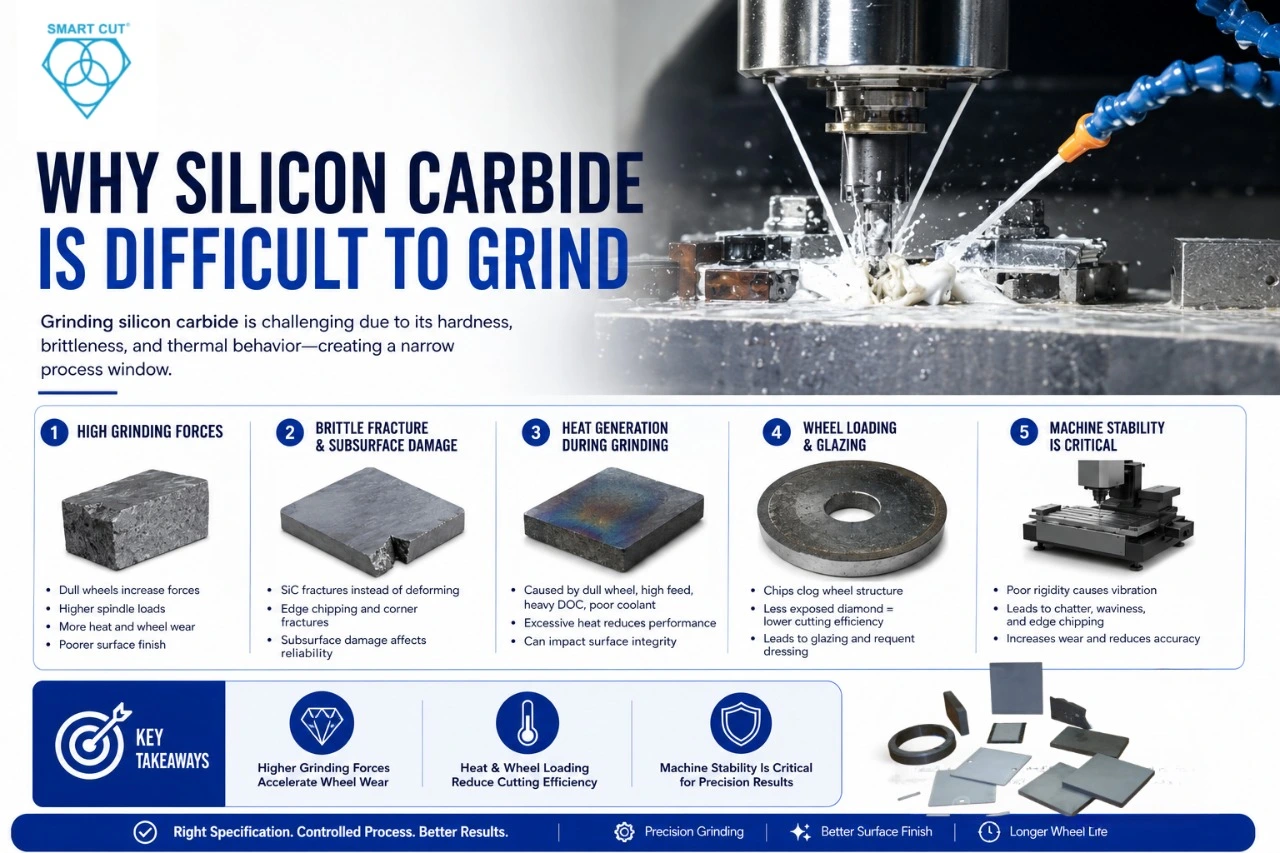
Grinding silicon carbide is challenging not because of a single material property, but because several characteristics work together to create a narrow process window. Its extreme hardness increases grinding forces, while its brittle nature makes it susceptible to cracking and edge damage. Even small changes in wheel condition, machine stability, or grinding parameters can affect part quality and wheel performance.
For manufacturers producing high-value components, understanding these challenges is essential for achieving consistent results, maximizing wheel life, and minimizing manufacturing costs.
High Grinding Forces
Silicon carbide’s exceptional hardness makes it highly resistant to abrasion. As a result, grinding requires diamond abrasives capable of maintaining sharp cutting edges under demanding conditions.
As the grinding wheel begins to dull, cutting efficiency decreases and grinding forces increase. This often leads to:
- Faster wheel wear
- Higher spindle loads
- Increased heat generation
- Reduced material removal rates
- Poorer surface finish
Maintaining a sharp wheel is essential for keeping grinding forces low and ensuring stable production.
UKAM Engineering Insight — Productive grinding is achieved through efficient cutting—not by increasing grinding pressure. A properly specified, sharp diamond wheel removes material more efficiently while generating less heat.
Brittle Fracture and Subsurface Damage
Unlike ductile metals, silicon carbide does not deform under grinding forces. Instead, excessive mechanical stress is relieved through crack formation.
Visible defects may include:
- Edge chipping
- Corner fractures
- Surface cracks
More critical, however, is subsurface damage—microscopic cracks beneath the finished surface that may not be detected during routine inspection. These hidden defects can reduce component strength and shorten service life, particularly in semiconductor, optical, aerospace, and precision ceramic applications.
For many manufacturers, minimizing subsurface damage is just as important as achieving the required dimensional tolerance or surface finish.
—see our full technical breakdown in How to Reduce Subsurface Damage During Precision Wafer Sectioning.
Heat Generation During Grinding
Although silicon carbide has relatively high thermal conductivity, excessive heat can still develop during grinding when process conditions are not properly controlled.
Common causes include:
- A dull or loaded grinding wheel
- Excessive feed rates
- Heavy depths of cut
- Poor coolant delivery
- Incorrect wheel specification
Excessive grinding temperatures can accelerate wheel wear, reduce surface quality, and increase the likelihood of thermal damage. Controlling heat generation through proper wheel selection and optimized grinding parameters is more effective than relying solely on coolant.— see How Coolant Flow Affects Diamond Blade Life, Cut Quality & Process Stability During Precision Cutting.
Wheel Loading
During grinding, chips and debris can accumulate within the wheel structure, reducing the exposure of fresh diamond particles. This condition, known as wheel loading, decreases cutting efficiency and increases friction.
Typical signs of wheel loading include:
- Higher grinding temperatures
- Increased spindle power
- Poor surface finish
- Lower material removal rates
- More frequent dressing requirements
Selecting an appropriate bond system and following regular dressing practices help maintain an open, free-cutting wheel.
Learn more in Why Diamond Tools Load During Grinding and How to Prevent It and our related deep-dive, Diamond Grinding Wheel Loading and Glazing: Complete Technical Guide for Engineers. A closely related failure mode, wheel glazing, is covered in Why Diamond Grinding Wheels Glaze and How to Restore Cutting Performance.
Machine Stability Is Critical
Grinding performance depends not only on the grinding wheel but also on the stability of the machine tool.
Poor machine rigidity, spindle runout, wheel imbalance, or inadequate workholding can lead to:
- Chatter marks
- Surface waviness
- Dimensional inaccuracies
- Increased edge chipping
- Premature wheel wear
A rigid machine setup with secure fixturing and accurate spindle alignment is essential for achieving repeatable, high-quality grinding results.
Common Mistake: Many manufacturers replace the grinding wheel when problems arise, even though the root cause may be machine vibration, poor coolant delivery, or unstable fixturing. Evaluating the entire grinding system before changing wheel specifications often leads to faster and more effective solutions. See Common Grinding Mistakes That Reduce Diamond Tool Performance for a full breakdown of these root causes.
Every Grinding Variable Is Connected
Silicon carbide grinding is a balanced process where changes to one parameter influence several others.
For example:
- Increasing feed rate raises grinding forces and heat generation.
- Using a finer grit improves surface finish but lowers material removal rates.
- Higher wheel speeds may improve cutting efficiency but require more effective coolant delivery.
- Extending dressing intervals can reduce short-term downtime but may increase grinding pressure as the wheel becomes dull.
Successful process optimization requires balancing these variables according to the application’s quality, productivity, and cost objectives. — for example, cutting force behavior is explored further in Understanding Cutting Force Distribution During Metallographic Sectioning Using Diamond & CBN Wafering Blades and Cut-Off Wheels.
Key Takeaways
- Silicon carbide's hardness increases grinding forces and accelerates wheel wear.
- Brittle fracture behavior makes edge chipping and subsurface damage major concerns.
- Excessive heat reduces wheel performance and can affect surface integrity.
- Wheel loading decreases cutting efficiency and increases dressing frequency.
- Machine rigidity and workholding play a critical role in grinding quality.
Choosing the Right Diamond Grinding Wheel for Silicon Carbide
Selecting the appropriate diamond grinding wheel is one of the most important factors in achieving consistent grinding performance. The correct wheel not only improves material removal rates but also helps minimize edge chipping, reduce subsurface damage, extend wheel life, and lower the overall cost per finished component.
There is no universal wheel specification for every silicon carbide application. The ideal wheel depends on factors such as the SiC grade, component geometry, surface finish requirements, dimensional tolerances, machine capabilities, and production volume. Matching the wheel to the application is essential for maximizing both productivity and quality. For a full walkthrough of the selection process, see How to Select a Diamond / CBN Grinding Wheel.
UKAM Engineering Insight — The best grinding wheel is not necessarily the one that removes material the fastest—it is the one that delivers the lowest cost per finished part while consistently meeting quality requirements.
Why Diamond Is the Preferred Abrasive
Silicon carbide is too hard for conventional abrasives such as aluminum oxide to grind efficiently in precision applications. Diamond abrasives maintain sharp cutting edges longer, reducing grinding forces and improving process stability.
Compared to conventional abrasives, diamond wheels offer:
- Higher material removal rates
- Longer wheel life
- Lower grinding forces
- Better dimensional accuracy
- Improved surface finish
- Reduced heat generation
These advantages make diamond the preferred abrasive for grinding advanced ceramics and high-performance silicon carbide component. Our SMART CUT® Technology is engineered specifically to maintain sharp cutting edges longer, reducing grinding forces and improving process stability.
Selecting the Right Bond Type
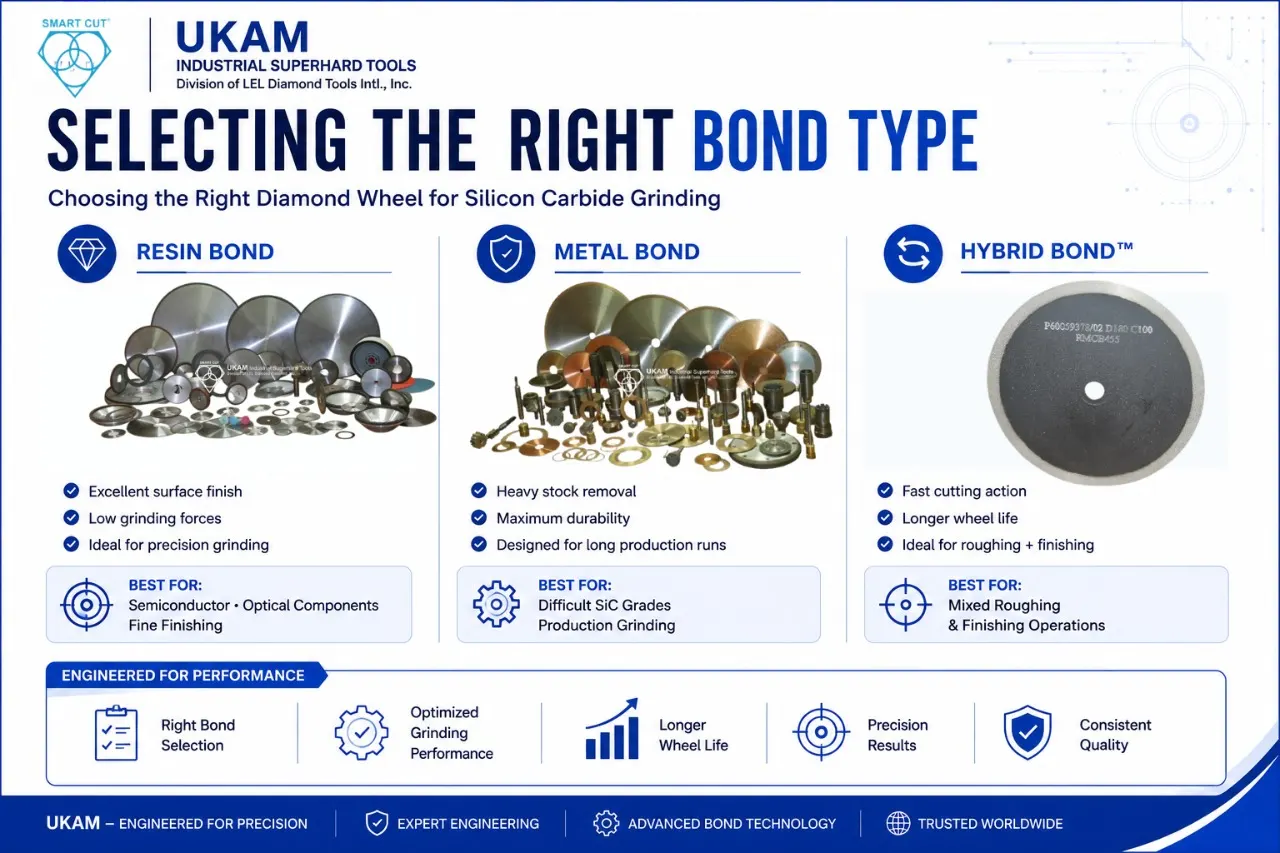
The bond system determines how diamond particles are held within the wheel and directly affects cutting action, wheel wear, dressing requirements, and surface quality. For the complete engineering comparison, see How to Select the Correct Diamond Bond Type for Precision Grinding Applications and Resin Bond vs. Metal Bond Diamond Wheels: Engineering Comparison for Precision Grinding Applications.
Resin bond wheels are commonly used for applications requiring excellent surface finish and low grinding forces.
Best suited for:
- Precision grinding
- Semiconductor wafers
- Optical components
- Fine finishing
- Tight tolerances
Advantages
- Excellent surface finish
- Lower grinding temperatures
- Reduced edge chipping
- Smooth cutting action
Considerations
- Faster wheel wear
- More frequent dressing in high-production environments
Resin Bond
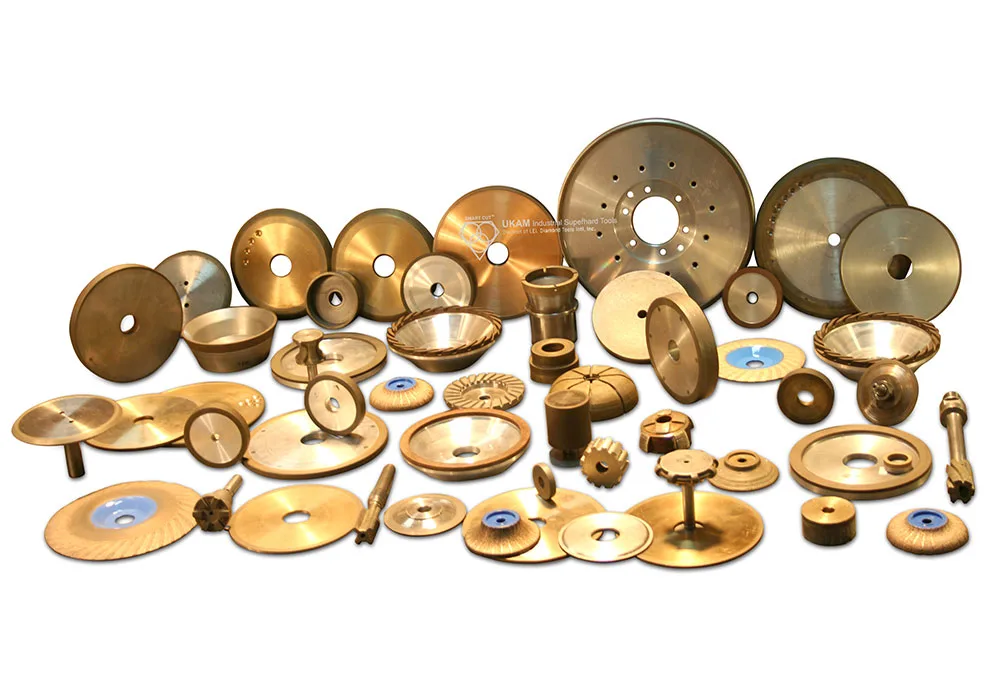
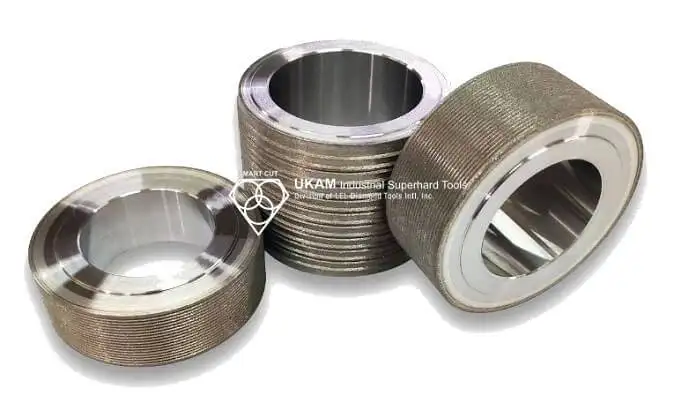
Our Resin Bond wheels are commonly used for applications requiring excellent surface finish and low grinding forces — ideal for precision grinding, semiconductor wafers, optical components, and fine finishing.
Metal Bond
Metal bond wheels are designed for maximum durability and long production runs.
Best suited for:
- Heavy stock removal
- High-volume manufacturing
- Difficult silicon carbide grades
- Profile grinding
Advantages
- Long wheel life
- Excellent profile retention
- High dimensional stability
- Reduced wheel consumption
Considerations
- Higher grinding forces
- May require more aggressive dressing
- Surface finish may require secondary finishing
Hybrid Bond
Hybrid bond wheels combine the cutting performance of resin bonds with the durability of metal bonds.
Best suited for:
- Mixed roughing and finishing operations
- Precision production
- Applications requiring both productivity and quality
Advantages
- Balanced wheel life
- Good surface finish
- Reduced dressing frequency
- Improved process stability
For heavy-duty, high-temperature dressing applications such as PDC cutter grinding, our Vitrified Bond wheels are also available — see the application case study in Vitrified Bond Diamond Grinding Wheels for PDC Cutter Grinding.
Choosing the Correct Diamond Grit Size
Diamond grit size directly affects stock removal rate, surface finish, grinding forces, and wheel life. For a full technical explanation, see How Diamond Mesh Size Affects Grinding Performance and Surface Finish.
|
Grit Size |
Primary Objective |
Typical Application |
|---|---|---|
|
Coarse |
Maximum stock removal |
Rough grinding |
|
Medium |
Balance productivity and finish |
General-purpose grinding |
|
Fine |
Better surface finish |
Precision finishing |
|
Ultra-Fine |
Highest surface integrity |
Semiconductor and optical components |
As a general rule:
- Coarser grits remove material faster but leave a rougher surface.
- Finer grits produce better surface finishes but reduce material removal rates.
The objective is to select the coarsest grit that still meets the required surface finish and tolerance.
Diamond Concentration
Diamond concentration refers to the amount of diamond abrasive contained within the grinding wheel. For a full breakdown, see Understanding Diamond Crystal Concentration: Balancing Cutting Speed, Tool Life & Cost.
Higher concentrations generally provide:
- Longer wheel life
- Better profile retention
- Improved dimensional stability
Lower concentrations generally provide:
- More aggressive cutting
- Lower grinding forces
- Improved chip clearance
The optimal concentration depends on the grinding operation, machine power, component geometry, and production requirements rather than a single “best” value.
Wheel Structure
Wheel structure influences coolant penetration, chip evacuation, and heat generation during grinding.
An optimized wheel structure helps:
- Reduce wheel loading
- Improve coolant access
- Lower grinding temperatures
- Maintain cutting efficiency
- Extend wheel life
For high-production applications, selecting a wheel structure that promotes effective chip clearance is critical for maintaining consistent grinding performance.
For applications requiring exceptional flatness, see How to Achieve Better Flatness with Diamond Lapping Discs: Material Selection, Grit Size & Process Optimization.
Match the Wheel to the Grinding Operation
Different stages of grinding require different wheel characteristics.
|
Grinding Stage |
Primary Objective |
Recommended Wheel Characteristics |
|---|---|---|
|
Rough Grinding |
Maximum stock removal |
Coarse grit, durable bond, high productivity |
|
Semi-Finishing |
Improve geometry |
Medium grit with balanced cutting action |
|
Precision Finishing |
Final dimensions and surface finish |
Fine grit, low grinding forces |
|
Profile Grinding |
Maintain wheel shape |
High profile retention and dimensional stability |
|
Wafer Grinding |
Minimize subsurface damage |
Fine abrasive with excellent surface integrity |
For edge-precision applications, electroplated wheels can also be considered — see Electroplated Diamond Edge Grinding Wheels: Improving Edge Quality, Reducing Subsurface Damage, and Increasing Manufacturing Yield, built on our Electroplating (Nickel Bond) technology.
Application Example
Consider two manufacturers grinding silicon carbide.
A manufacturer producing industrial wear components may prioritize wheel life and high material removal rates to maximize production efficiency.
In contrast, a manufacturer producing semiconductor wafers is more likely to prioritize minimal subsurface damage, exceptional surface finish, and dimensional accuracy—even if it means slower material removal.
Although both applications involve silicon carbide, each requires a different grinding wheel specification because the manufacturing objectives are fundamentally different. — see the real-world results in Semiconductor Wafer Grinding: Reduction in Edge Chipping Using Resin Bond Diamond Wheels.
Common Mistake —Selecting a grinding wheel based solely on purchase price often increases overall manufacturing costs. A properly engineered wheel specification can reduce cycle time, dressing frequency, scrap, and downtime, resulting in a significantly lower cost per finished component.
Key Takeaways
- Select the grinding wheel based on the application—not just the material.
- Diamond abrasives provide the best combination of cutting efficiency, wheel life, and dimensional accuracy for silicon carbide.
- Bond type influences wheel wear, cutting action, dressing frequency, and surface finish.
- Grit size should balance stock removal with the required surface quality.
- Diamond concentration and wheel structure affect wheel life, coolant flow, and grinding efficiency.
- Different grinding operations require different wheel specifications for optimum performance.
- Evaluate the total cost per finished part, including productivity, wheel life, dressing intervals, and scrap—not simply the purchase price of the wheel.
Optimizing the Grinding Process: Maximizing Productivity, Wheel Life & Surface Quality
Selecting the right diamond grinding wheel is only the first step toward achieving consistent results. Grinding performance ultimately depends on how well the process is optimized. Properly balancing grinding parameters helps improve productivity, extend wheel life, maintain dimensional accuracy, and minimize defects such as edge chipping, poor surface finish, and subsurface damage.
Rather than maximizing a single parameter, successful manufacturers focus on developing a stable and repeatable process that consistently produces high-quality parts.
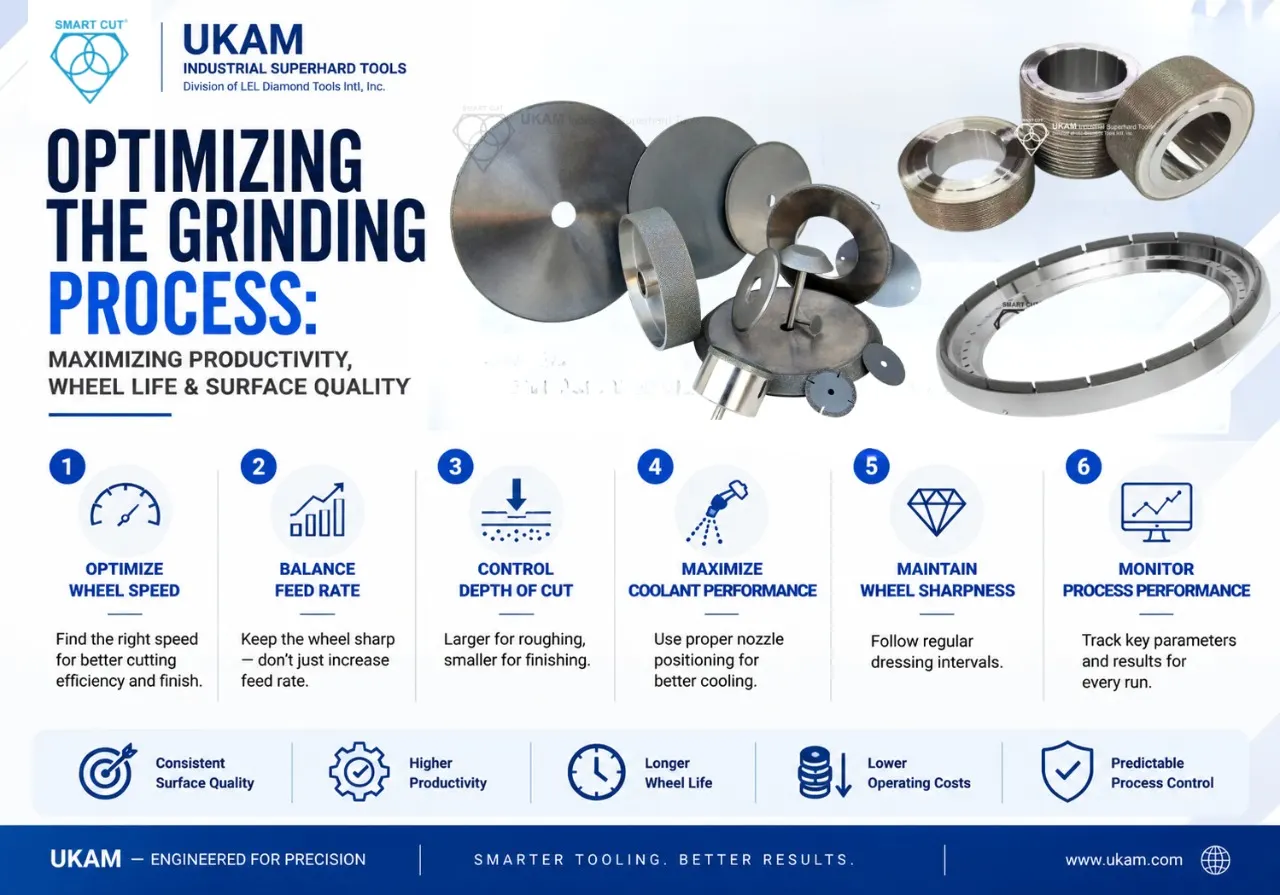
UKAM Engineering Insight — The most efficient grinding process is one that consistently delivers the required quality with predictable wheel life and cycle times. Stable production almost always results in a lower cost per finished part than aggressive machining conditions.
Optimize Wheel Speed
Wheel speed has a direct influence on cutting efficiency, grinding forces, and surface finish.
When properly optimized, wheel speed can:
- Improve cutting action
- Reduce grinding forces
- Produce smoother surface finishes
- Improve dimensional consistency
Operating above or below the recommended speed range can reduce grinding efficiency and accelerate wheel wear. Always begin with the wheel manufacturer’s recommended operating range and fine-tune the process based on production results.
Our Diamond & CBN Wheels with SMART CUT® Technology: Improving Grinding Performance, Reducing Manufacturing Costs, and Achieving Consistent Results covers how to fine-tune this together with other process variables.
Balance Feed Rate
Feed rate directly affects productivity and grinding forces.
Excessive feed rates may result in:
- Higher grinding pressure
- Edge chipping
- Increased wheel wear
- Poor surface finish
- Greater risk of subsurface damage
Feed rates that are too low, however, unnecessarily increase cycle time. The objective is to find the highest stable feed rate that maintains the required quality.
Common Mistake — Increasing feed rate to improve productivity often creates more problems if the grinding wheel has become dull or loaded. Restoring wheel sharpness is usually more effective than increasing grinding pressure.
Control Depth of Cut
Depth of cut significantly influences heat generation, wheel wear, and dimensional accuracy.
As a general guideline:
- Larger depths of cut are better suited for rough grinding and stock removal.
- Smaller depths of cut provide better dimensional control and improved surface finish during finishing operations.
Many manufacturers achieve better results by gradually reducing the depth of cut as the component approaches its final dimensions.
Maximize Coolant Performance
Effective coolant delivery is essential for maintaining grinding efficiency and protecting both the grinding wheel and the workpiece.
Proper coolant application helps:
- Reduce grinding temperatures
- Flush grinding debris from the wheel
Coolant should be directed precisely into the grinding zone. Proper nozzle positioning is often more important than simply increasing coolant flow.
Maintain Wheel Sharpness
Grinding performance gradually declines as diamond particles wear.
A dull wheel typically causes:
- Higher spindle loads
- Increased friction
- Poor surface finish
- Reduced material removal rates
- Greater edge chipping
Establishing regular dressing or conditioning intervals helps maintain consistent cutting performance throughout production.
. Our Diamond Dressers and Diamond Rotary Dressers are engineered for this purpose. For extending life further, see 5 Tips That Make Your Electroplated Diamond Grinding Wheels Last Longer — And Save You Money.
Monitor Process Performance
Successful manufacturers continuously monitor the grinding process rather than waiting for quality problems to develop.
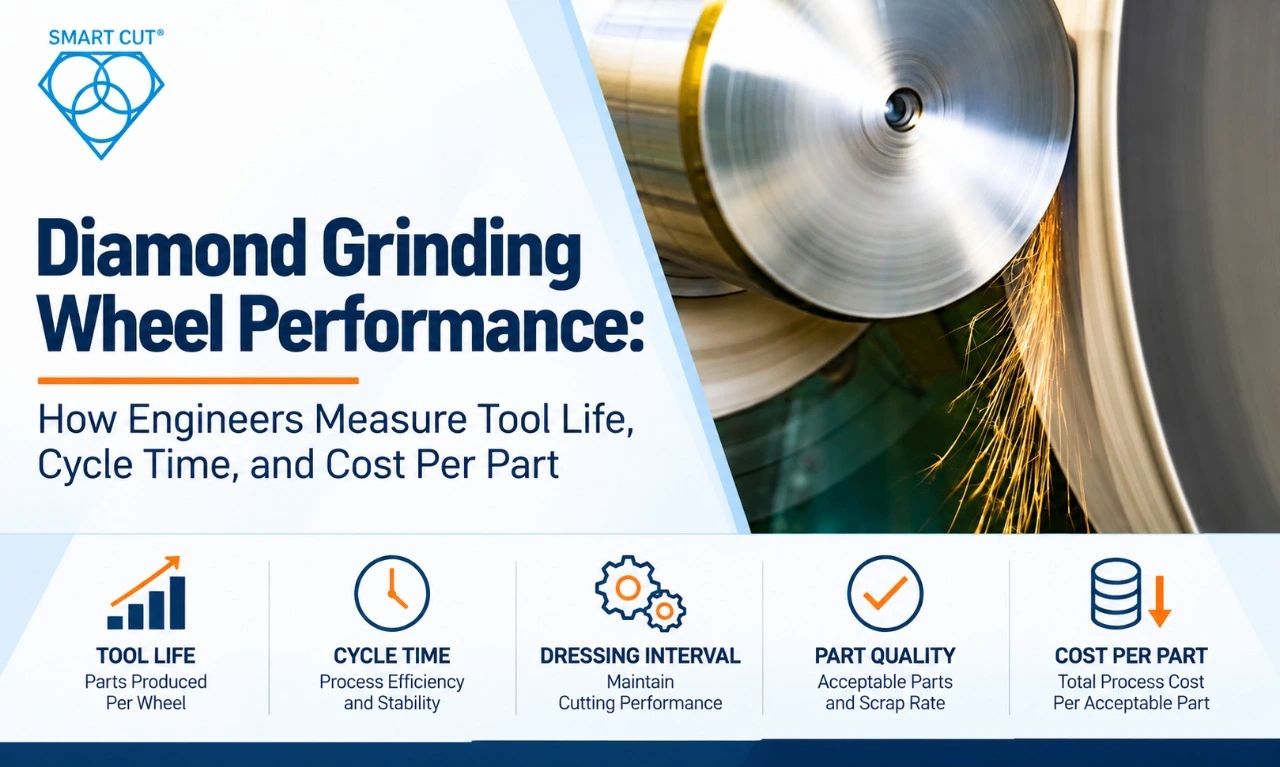
Key performance indicators include:
- Wheel wear
- Surface finish consistency
- Grinding forces
- Material removal rate
- Power consumption
- Dimensional accuracy
- Dressing frequency
Tracking these variables helps identify process changes before they affect production quality.
UKAM Engineering Recommendation —Record wheel specifications, grinding parameters, wheel life, dressing intervals, and inspection results for each production run. This information provides a valuable reference for future process optimization and simplifies troubleshooting when conditions change.
Use a Multi-Stage Grinding Strategy
Attempting to achieve maximum stock removal and final surface finish in a single operation rarely produces the best results.
Dividing the process into separate grinding stages improves both productivity and quality.
|
Grinding Stage |
Primary Objective |
Process Focus |
|---|---|---|
|
Rough Grinding |
Remove material efficiently |
High stock removal with controlled heat |
|
Semi-Finishing |
Improve geometry |
Stable cutting and reduced grinding forces |
|
Precision Finishing |
Achieve final dimensions dimensions |
Superior surface finish and dimensional accuracy |
Engineering Process Checklist
- The grinding wheel matches the silicon carbide grade and application.
- Wheel speed, feed rate, and depth of cut are properly balanced.
- Coolant is reaching the grinding zone effectively.
- Machine and workholding are rigid and stable.
- Dressing intervals have been established.
- Wheel condition is monitored throughout production.
- Surface finish and dimensional tolerances are inspected regularly.
Key Takeaways
- Process optimization is just as important as wheel selection.
- Balance wheel speed, feed rate, and depth of cut to achieve stable grinding conditions.
- Effective coolant delivery improves wheel life and surface quality.
- Maintain wheel sharpness through planned dressing and conditioning.
- Monitor process data to identify performance trends before they affect production.
- A multi-stage grinding strategy typically delivers better productivity, improved surface integrity, and lower manufacturing costs than attempting to complete the process in a single operation.
Application-Specific Grinding Recommendations for Silicon Carbide Components
Although all silicon carbide materials share similar characteristics, their grinding requirements vary significantly depending on the application. Factors such as component geometry, dimensional tolerances, surface finish requirements, and production volume often have a greater influence on the grinding strategy than the material itself.
Instead of using the same wheel specification and process for every job, manufacturers should tailor the grinding process to the performance requirements of the finished component.
UKAM Engineering Insight
The optimal grinding solution is determined by the application’s functional requirements—not simply the silicon carbide grade. Defining the primary manufacturing objective before selecting a grinding wheel leads to better productivity, improved quality, and lower manufacturing costs.
Recommended Grinding Priorities by Application
|
Application |
Primary Objective |
Recommended Grinding Focus |
|---|---|---|
|
Semiconductor Wafers |
Minimize subsurface damage and maintain wafer flatness |
Fine-grit diamond wheels, low grinding forces, excellent coolant delivery |
|
Mechanical Seals |
Achieve flat sealing surfaces and tight tolerances |
Stable grinding conditions, fine surface finish |
|
Bearings & Wear Components |
Maximize productivity while maintaining quality |
Durable wheel specifications, efficient stock removal |
|
Optical Components |
Produce exceptional surface finish with minimal defects |
Fine abrasives, low grinding pressure |
|
Aerospace & Defense |
Ensure reliability and dimensional accuracy |
Stable process control, repeatable production |
|
Medical & Laboratory |
Achieve precision and repeatability |
Tight process control, superior surface finish |
Matching the Process to the Application
Different industries prioritize different performance characteristics.
For example:
- Semiconductor manufacturers focus on minimizing subsurface damage and maintaining wafer flatness before polishing.
- Mechanical seal manufacturers prioritize flatness and sealing surface quality to ensure leak-free operation.
- Industrial manufacturers often emphasize productivity, wheel life, and lower cost per part.
- Optical component manufacturers require extremely fine surface finishes and minimal edge damage.
- Aerospace and medical applications demand consistent dimensional accuracy and reliable, repeatable manufacturing processes.
Because these objectives differ, the grinding wheel specification and process parameters should be selected based on the application’s functional requirements rather than applying the same approach to every silicon carbide component.
Hardened-material applications requiring CBN wheels can also reference CBN Grinding Wheel Suppliers in the USA — How to Choose the Right One for Your Application. If your operation also processes tungsten carbide alongside SiC, see How to Select the Best Diamond Grinding Wheel for Tungsten Carbide.
UKAM Engineering Recommendation — Before selecting a grinding wheel, identify the application’s primary objective—whether it is faster stock removal, improved surface finish, tighter tolerances, longer wheel life, or lower cost per part. Aligning the grinding process with these priorities leads to more efficient and consistent production.
Key Takeaways
- Different silicon carbide applications require different grinding strategies.
- Production objectives should guide wheel selection and process optimization.
- Semiconductor and optical applications prioritize surface integrity and minimal subsurface damage.
- Mechanical seals require excellent flatness and dimensional accuracy.
- Industrial wear components focus on productivity, wheel life, and manufacturing efficiency.
- Aerospace and medical applications demand high precision, repeatability, and consistent quality.
Matching the grinding process to the application’s functional requirements delivers better long-term performance than using a single grinding approach for every component.
Troubleshooting Common Silicon Carbide Grinding Problems
Even with the correct diamond grinding wheel and well-established machining parameters, grinding issues can still develop during production. Changes in wheel condition, machine stability, coolant delivery, or operating parameters can gradually reduce process performance and affect part quality.
The most effective troubleshooting approach is to identify the root cause rather than treating the symptoms. A structured evaluation helps reduce downtime, minimize scrap, and restore consistent grinding performance more quickly.
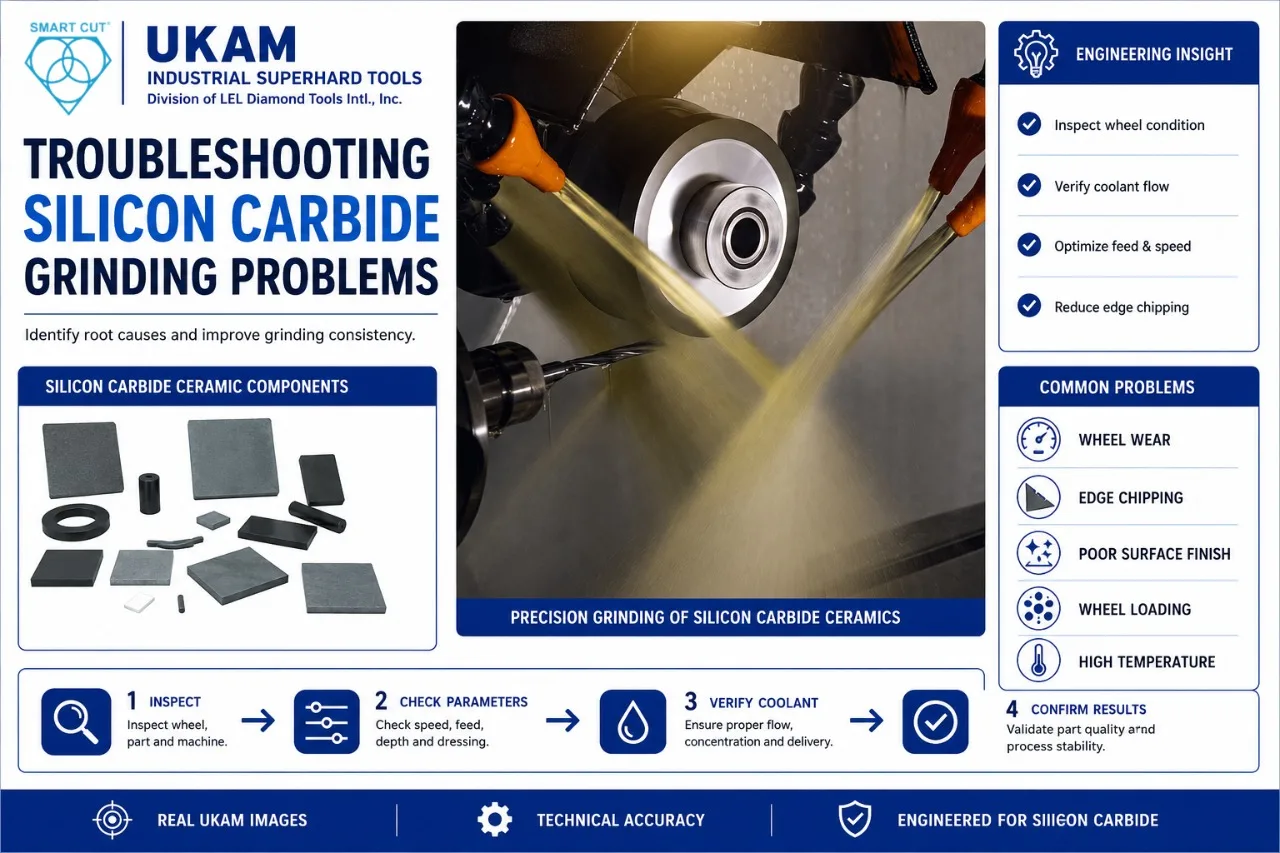
UKAM Engineering Insight — Most grinding problems are caused by a combination of factors—not a single issue. Evaluating the grinding wheel, machine, coolant system, and operating parameters together typically leads to faster, more reliable solutions.
Common Grinding Problems and Corrective Actions
|
Problem |
Possible Causes |
Recommended Solutions |
|---|---|---|
|
Excessive Wheel Wear |
Incorrect bond selection, aggressive parameters, inadequate coolant |
Verify wheel specification, reduce grinding forces, improve coolant delivery |
|
Edge Chipping |
Excessive feed rate, deep cuts, dull wheel, machine vibration |
Reduce feed and depth of cut, restore wheel sharpness |
|
Poor Surface Finish |
Wheel loading, worn abrasives, vibration |
Dress the wheel, inspect machine stability |
|
Wheel Loading |
Inadequate coolant, incorrect bond, insufficient chip clearance |
Improve coolant application, review wheel structure |
|
High Grinding Temperature |
Dull wheel, excessive pressure, poor coolant delivery |
Restore sharpness, improve coolant access |
|
Dimensional Inaccuracy |
Machine instability, wheel wear, fixture movement |
Inspect machine alignment, monitor wheel wear |
If standard wheel specifications aren’t resolving persistent issues, our Custom Diamond & CBN Tools program can engineer a solution around your exact process.
A Systematic Troubleshooting Process
When grinding performance changes, evaluate one variable at a time rather than making multiple adjustments simultaneously.
Step 1 – Inspect the Grinding Wheel
Check for:
- Excessive wheel wear
- Wheel loading
- Profile loss
- Glazing or damage
- Dressing condition
Many grinding issues originate from a wheel that is no longer cutting efficiently.
Step 2 – Evaluate the Machine
Inspect the grinding system for:
- Spindle runout
- Machine vibration
- Wheel balance
- Fixture rigidity
- Workholding stability
Mechanical instability often produces symptoms that resemble wheel-related problems.
Step 3 – Review Process Parameters
Confirm that the established grinding conditions have not changed.
Verify:
- Wheel speed
- Feed rate
- Depth of cut
- Spark-out time
- Cycle consistency
Even small parameter changes can significantly affect grinding performance when machining brittle ceramics.
Step 4 – Check Coolant Delivery
Ensure coolant is reaching the grinding interface effectively.
Inspect:
- Nozzle position
- Flow rate
- Pressure
- Filtration
- Coolant condition
Poor coolant application frequently results in wheel loading, excessive heat generation, and shorter wheel life.
Step 5 – Inspect the Finished Components
Evaluate finished parts for:
- Edge chipping
- Surface finish consistency
- Dimensional accuracy
- Surface cracks
- Repeatability between parts
Regular inspection helps detect process drift before it leads to significant quality or production issues.
UKAM Engineering Recommendation
Maintain a standardized grinding log for every production job. Recording wheel specifications, grinding parameters, dressing intervals, wheel life, coolant settings, and inspection results provides valuable data for troubleshooting, process optimization, and future production planning.
Key Takeaways
- Troubleshoot grinding problems systematically by evaluating one variable at a time.
- Most production issues are caused by a combination of wheel condition, machine performance, coolant delivery, and grinding parameters.
- Regular wheel inspection and planned dressing help maintain cutting efficiency.
- Stable machines, secure workholding, and proper coolant delivery are essential for consistent results.
- Recording production data helps identify long-term trends and reduces future troubleshooting time.
Engineering Best Practices for Grinding Silicon Carbide
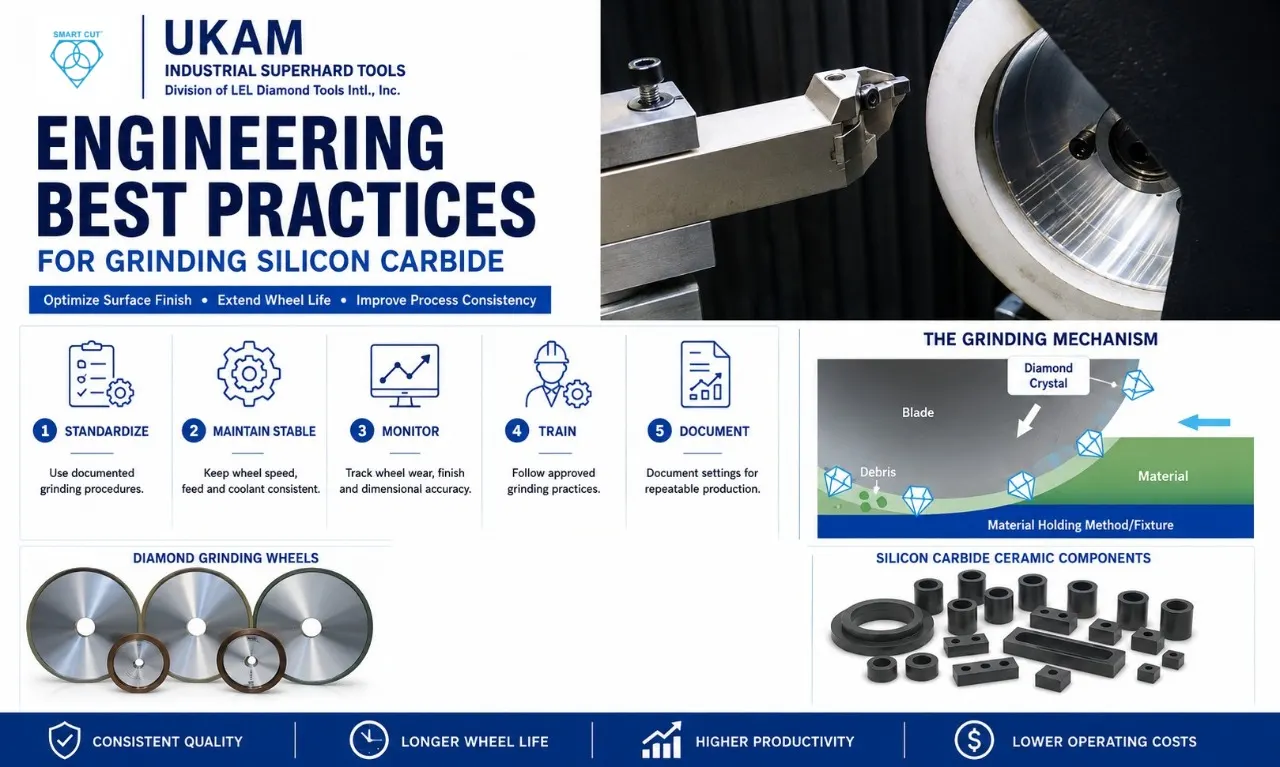
Consistent results in silicon carbide grinding are achieved through disciplined process control rather than trial and error. Manufacturers that produce high-quality components with long wheel life and predictable cycle times typically follow standardized procedures, monitor process performance, and continuously refine their grinding operations using production data.
UKAM Engineering Insight — The most successful grinding operations focus on consistency, not constant adjustment. A stable, well-documented process produces better long-term results than frequent changes to wheel specifications or machining parameters.
Best Practices for Reliable Grinding Performance
Follow these proven practices to improve process stability and manufacturing efficiency:
- Standardize grinding procedures for wheel selection, machine setup, coolant application, dressing intervals, and inspection.
- Maintain stable operating parameters rather than making frequent adjustments during production.
- Monitor key process indicators, including wheel wear, surface finish, grinding forces, cycle time, and dimensional accuracy.
- Train machine operators to recognize signs of wheel loading, excessive wear, vibration, and declining performance.
- Document production data such as wheel specifications, process parameters, wheel life, dressing frequency, and inspection results to support future process optimization
Continuous Improvement Through Process Data
Recording and analyzing production data helps manufacturers identify trends, improve repeatability, and reduce trial-and-error process development.
Useful information to track includes:
- Silicon carbide grade
- Grinding wheel specification
- Machine parameters
- Wheel life
- Dressing intervals
- Surface finish results
- Production yield
- Scrap rate
Over time, this information becomes a valuable engineering resource for selecting wheel specifications, reducing setup time, and improving manufacturing consistency.
UKAM Engineering Recommendation
Develop a standardized process database for each silicon carbide application. Capturing production data allows engineers to optimize future jobs more quickly, improve repeatability, and reduce overall manufacturing costs.
Key Takeaways
- Standardize grinding procedures to ensure consistent production.
- Maintain stable operating conditions rather than constantly adjusting parameters.
- Monitor wheel condition and part quality throughout production.
- Train operators to recognize process changes before quality issues occur.
- Use production data to continuously improve wheel selection, process stability, and manufacturing efficiency.
Frequently Asked Questions
No. Diamond grinding wheels are the preferred choice because they provide higher cutting efficiency, longer wheel life, and better surface quality when machining silicon carbide.
It depends on the application. Resin bonds are preferred for precision finishing, metal bonds for heavy stock removal, while hybrid bonds offer a balance of productivity and quality.
Edge chipping is commonly caused by excessive feed rates, heavy depths of cut, a dull grinding wheel, machine vibration, or unstable grinding conditions.
Rapid wheel wear is usually the result of an incorrect wheel specification, aggressive grinding parameters, inadequate coolant delivery, or improper dressing practices.
Improve surface finish by selecting the appropriate grit size, maintaining a sharp grinding wheel, optimizing grinding parameters, and ensuring effective coolant delivery.
Wheel loading occurs when grinding debris accumulates within the wheel structure, reducing cutting efficiency and degrading surface quality. Regular dressing and proper coolant application help prevent loading.
Dress the wheel whenever cutting performance begins to decline or surface finish deteriorates.
Use fine-grit diamond wheels, lighter grinding forces, controlled depths of cut, effective coolant delivery, and stable machining conditions.
Provide the silicon carbide grade, component dimensions, grinding operation, required tolerances, surface finish specifications, machine type, production volume, and any current grinding challenges.
Reduce costs by selecting the correct grinding wheel, optimizing machining parameters, maintaining wheel sharpness, minimizing scrap, and monitoring process performance.
Conclusion
Grinding silicon carbide is a complex process that requires more than selecting a high-quality diamond grinding wheel. Achieving consistent results depends on matching the wheel specification to the material and application while optimizing key process variables such as wheel speed, feed rate, depth of cut, coolant delivery, and dressing practices.
By understanding how silicon carbide behaves during grinding and adopting a systematic approach to wheel selection and process optimization, manufacturers can reduce wheel wear, minimize edge chipping and subsurface damage, improve surface finish, extend wheel life, and lower the overall cost per finished component.
Whether you are grinding semiconductor wafers, mechanical seals, bearings, optical components, aerospace parts, or other advanced ceramic materials, the most effective grinding solution is one that is engineered around your specific application, quality requirements, and production goals.
Need Help Selecting the Right Diamond Grinding Wheel?
With over 36+ years of experience, UKAM Industrial Superhard Tools helps manufacturers optimize grinding processes for silicon carbide and other advanced ceramic materials.
Our application engineers can recommend the most suitable diamond grinding wheel based on your:
- Silicon carbide grade
- Component dimensions and geometry
- Grinding operation
- Surface finish requirements
- Dimensional tolerances
- Machine type
- Production volume
- Current grinding challenges
Whether you’re developing a new grinding process or improving an existing one, our team can help you identify a solution that increases productivity, improves part quality, extends wheel life, and reduces manufacturing costs.
Trusted by Tens of Thousands of Manufacturers, Laboratories,
Research Institutions Worldwide Since 1990
American Based Manufacturer
Established in 1990
Custom manufacturing
RELATED ARTICLES