



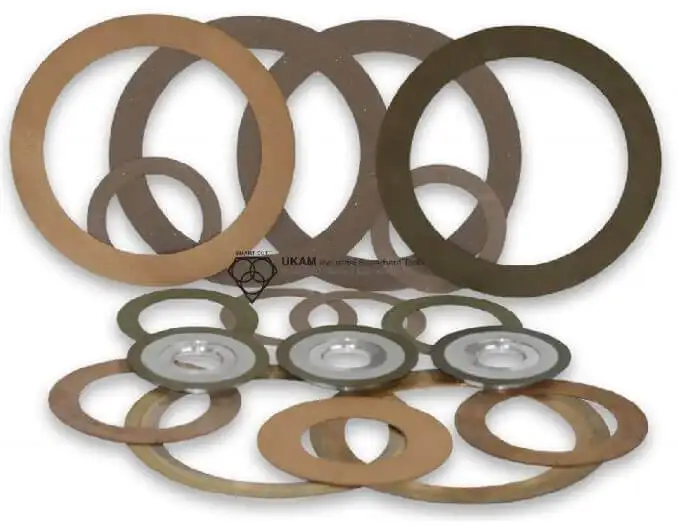

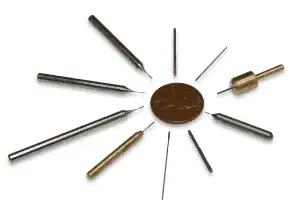
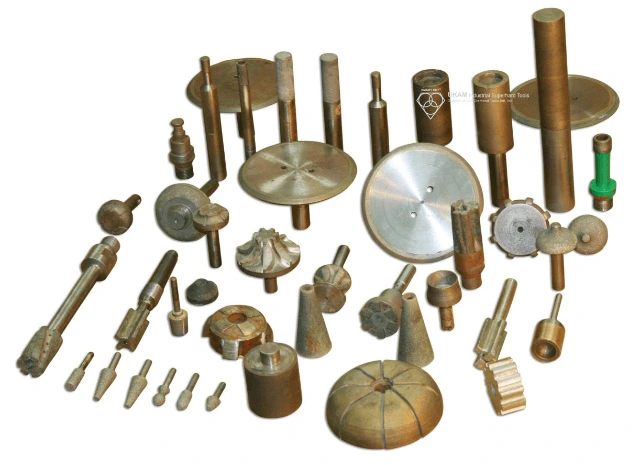
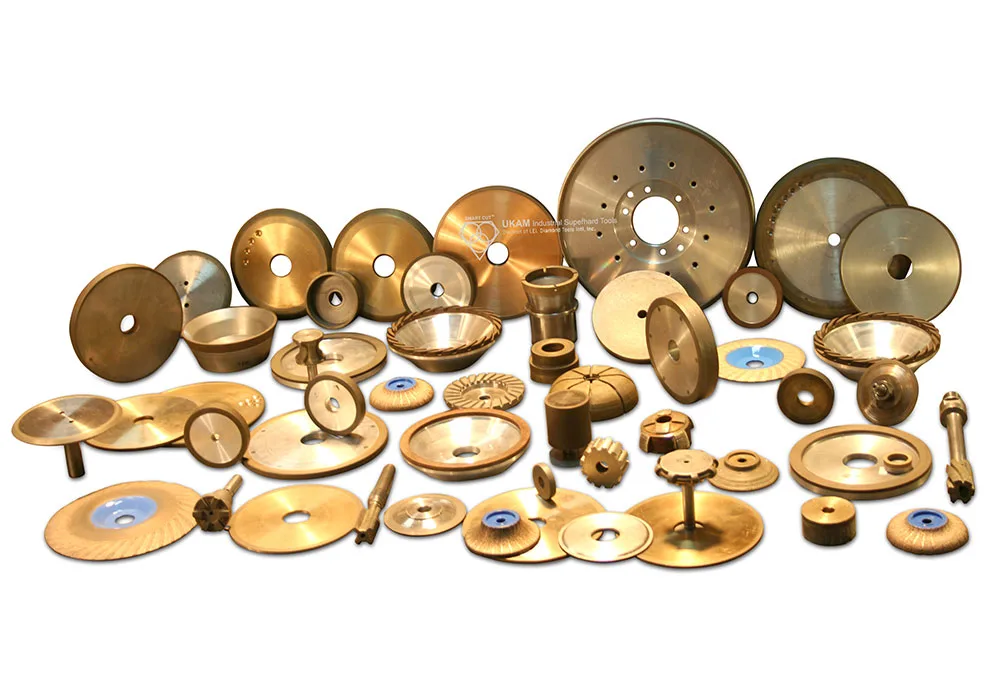
















Why Diamond Blade Specifications Should Be Customized Instead of Standardized
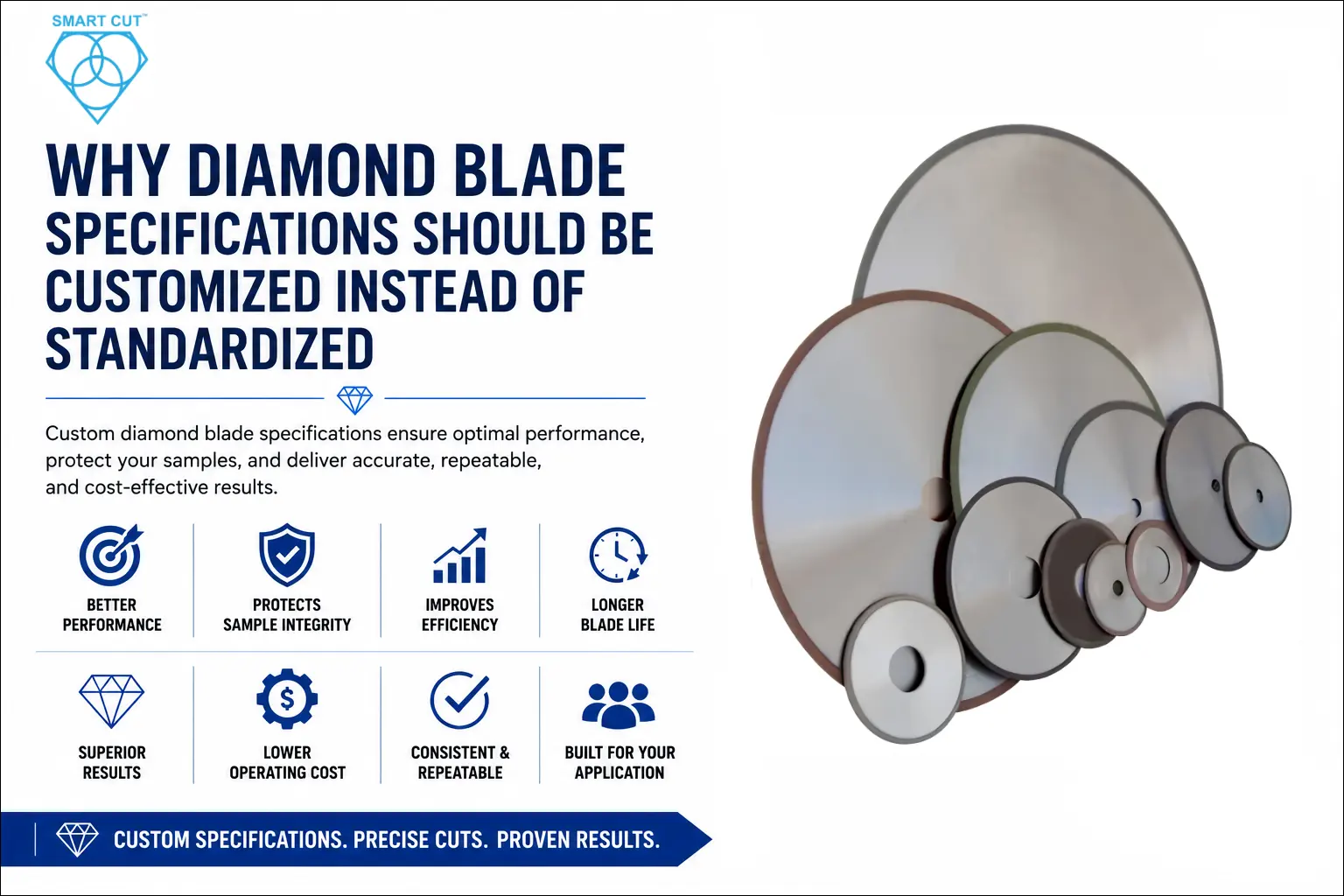
Table of Contents
ToggleSelecting a diamond blade is often viewed as a straightforward purchasing decision. Many buyers compare blade diameter, arbor size, grit designation, or price before assuming that any blade meeting those basic specifications will perform similarly.
In precision cutting applications, this assumption is rarely correct.
Unlike conventional cutting tools, diamond blade specifications directly influence cutting forces, heat generation, material removal, blade life, sample integrity, surface finish, dimensional accuracy, and overall process efficiency. Even when two blades appear identical, differences in bond formulation, diamond concentration, abrasive size, kerf width, core design, and manufacturing tolerances can produce dramatically different results.
This becomes particularly important when working with:
- Semiconductor wafers
- Technical ceramics
- Glass
- Sapphire
- Tungsten carbide
- Silicon carbide
- Composite materials
- Aerospace alloys
- Metallographic specimens
- Advanced engineering materials
These materials possess significantly different mechanical properties, fracture behavior, abrasiveness, and thermal characteristics. A blade optimized for one application may perform poorly or even damage the workpiece, when used on another.
For this reason, experienced applications engineers rarely recommend a “universal” blade.
Instead, they select or design blades that match the material, machine, production objectives, and required surface quality.
Proper diamond blade selection improves:
- Cutting efficiency
- Sample preservation
- Edge quality
- Surface integrity
- Blade life
- Material yield
- Process repeatability
- Overall operating cost
Understanding why custom diamond blades frequently outperform standardized solutions helps manufacturers, laboratories, and research facilities achieve more consistent and reliable cutting performance.
Trusted by Tens of Thousands of Manufacturers, Laboratories Research Institutions Worldwide Since 1990

American Based Manufacturer

Established in 1990


Custom manufacturing


Why Standard Diamond Blades Are Not Always the Best Choice
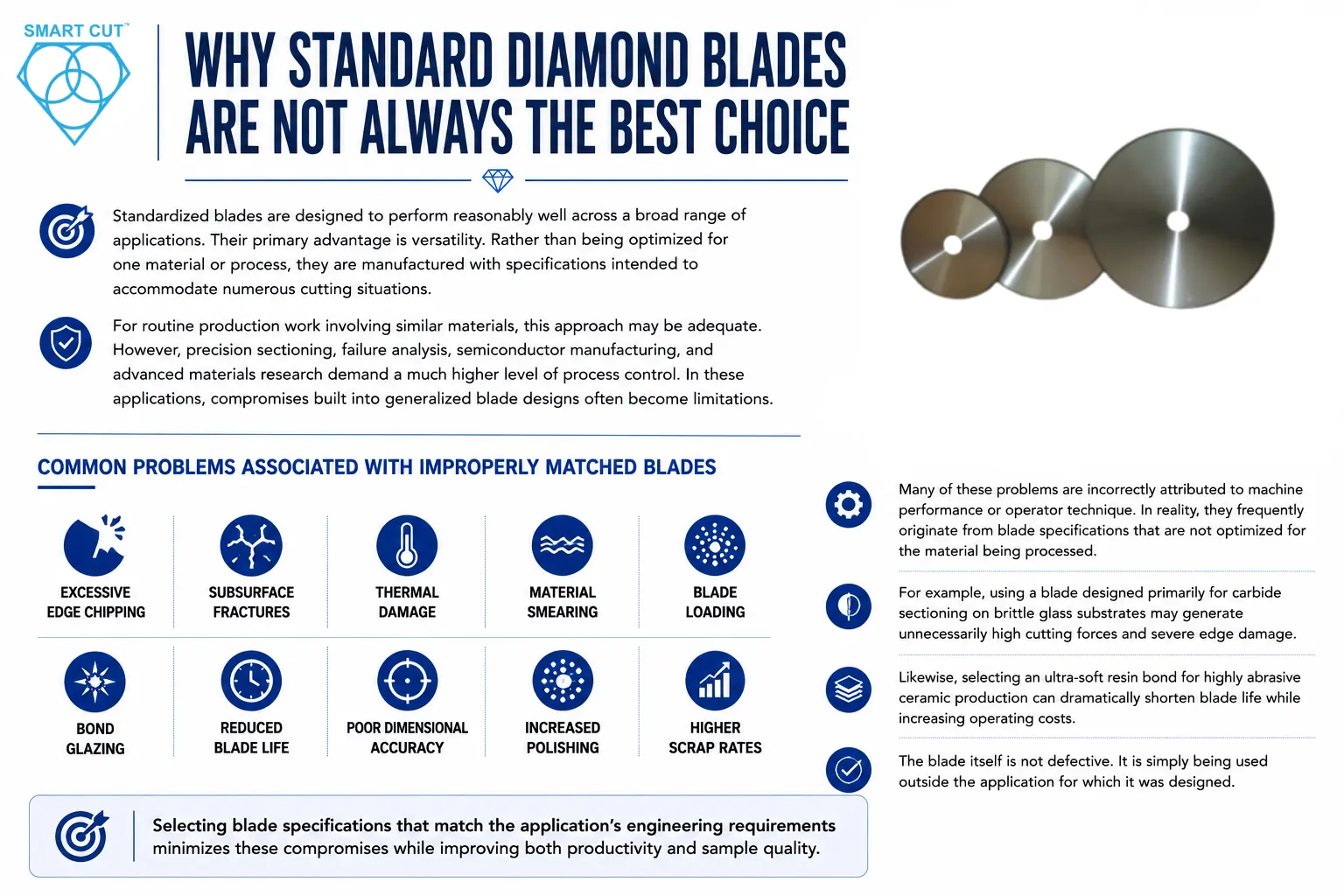
Standardized blades are designed to perform reasonably well across a broad range of applications.
Their primary advantage is versatility.
Rather than being optimized for one material or process, they are manufactured with specifications intended to accommodate numerous cutting situations.
For routine production work involving similar materials, this approach may be adequate.
However, precision sectioning, failure analysis, semiconductor manufacturing, and advanced materials research demand a much higher level of process control.
In these applications, compromises built into generalized blade designs often become limitations.
Common problems associated with improperly matched blades include:
- Excessive edge chipping
- Subsurface fractures
- Thermal damage
- Material smearing
- Blade loading
- Bond glazing
- Reduced blade life
- Poor dimensional accuracy
- Increased polishing requirements
- Higher scrap rates
Many of these problems are incorrectly attributed to machine performance or operator technique.
In reality, they frequently originate from blade specifications that are not optimized for the material being processed.
For example, using a blade designed primarily for carbide sectioning on brittle glass substrates may generate unnecessarily high cutting forces and severe edge damage.
Likewise, selecting an ultra-soft resin bond for highly abrasive ceramic production can dramatically shorten blade life while increasing operating costs.
The blade itself is not defective.
It is simply being used outside the application for which it was designed.
Selecting blade specifications that match the application’s engineering requirements minimizes these compromises while improving both productivity and sample quality.
One Blade Cannot Optimize Every Cutting Variable
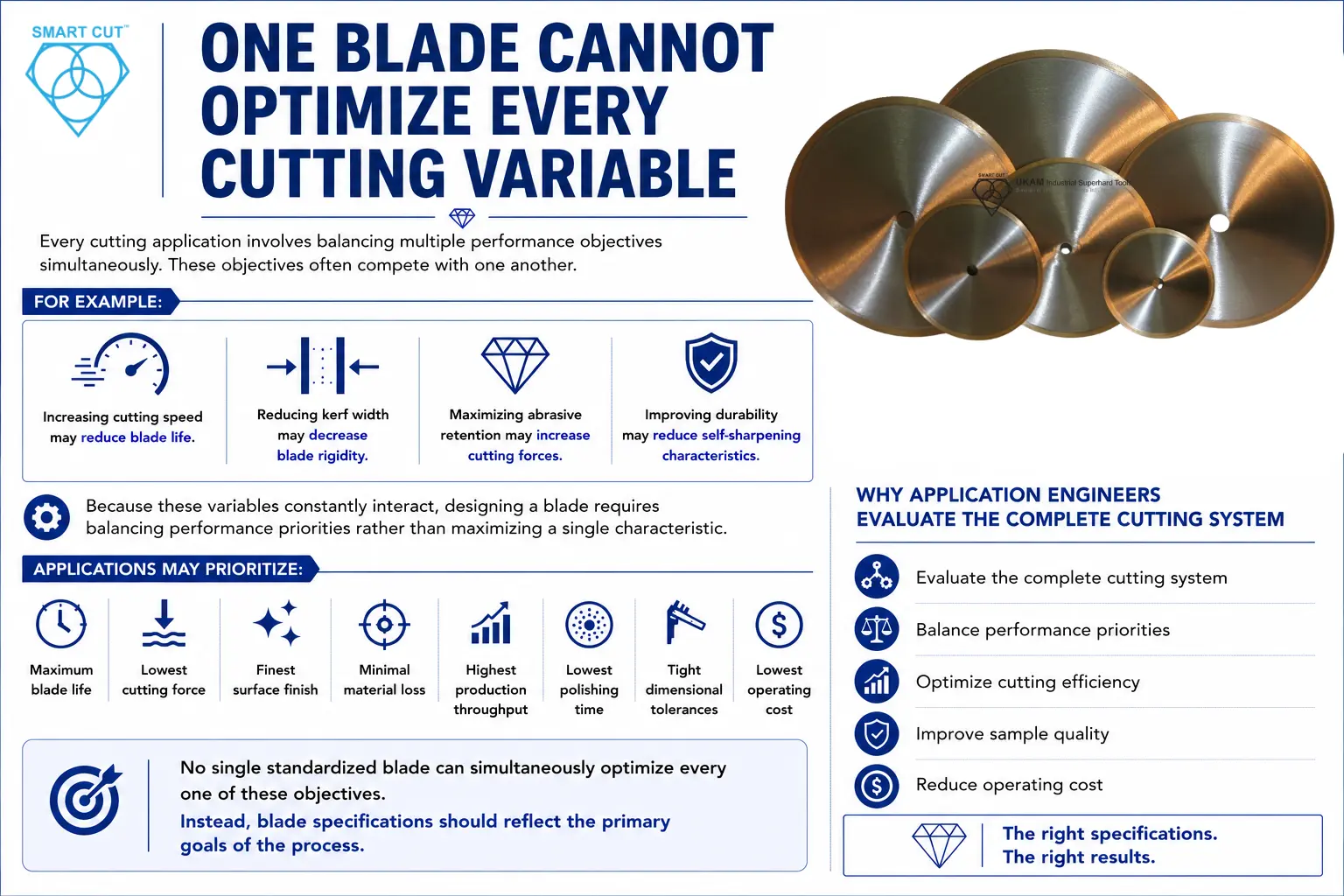
Every cutting application involves balancing multiple performance objectives simultaneously.
These objectives often compete with one another.
For example:
Increasing cutting speed may reduce blade life.
Reducing kerf width may decrease blade rigidity.
Maximizing abrasive retention may increase cutting forces.
Improving durability may reduce self-sharpening characteristics.
Because these variables constantly interact, designing a blade requires balancing performance priorities rather than maximizing a single characteristic.
Applications may prioritize:
- Maximum blade life
- Lowest cutting force
- Finest surface finish
- Minimal material loss
- Highest production throughput
- Lowest polishing time
- Tight dimensional tolerances
- Lowest operating cost
No single standardized blade can simultaneously optimize every one of these objectives.
Instead, blade specifications should reflect the primary goals of the process.
This is one of the reasons why applications engineers evaluate the complete cutting system rather than recommending blades based solely on material type.
Material Variables That Influence Blade Design
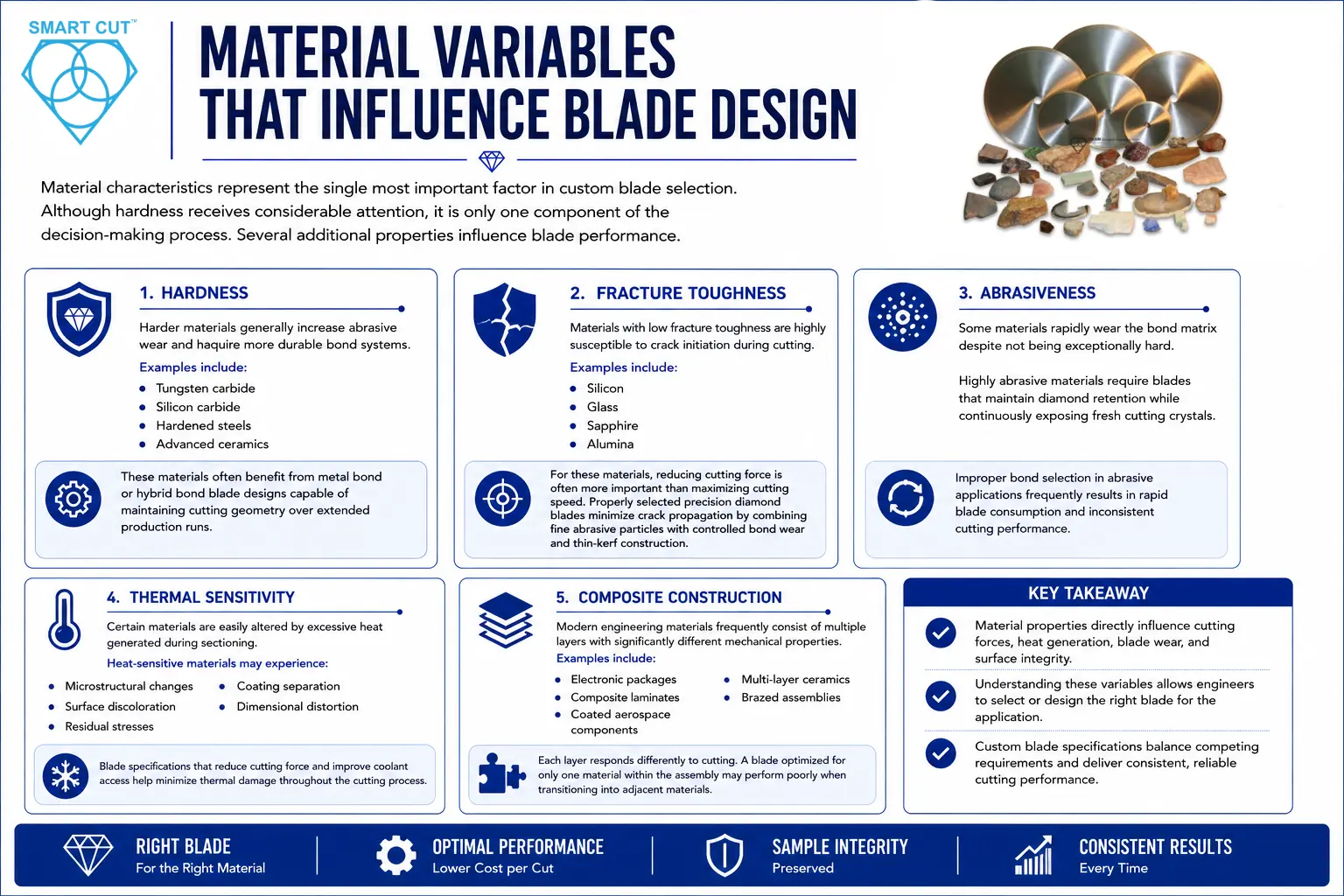
Material characteristics represent the single most important factor in custom blade selection.
Although hardness receives considerable attention, it is only one component of the decision-making process.
Several additional properties influence blade performance.
Hardness
Harder materials generally increase abrasive wear and require more durable bond systems.
Examples include:
- Tungsten carbide
- Silicon carbide
- Hardened steels
- Advanced ceramics
These materials often benefit from metal bond or hybrid bond blade designs capable of maintaining cutting geometry over extended production runs.
Fracture Toughness
Materials with low fracture toughness are highly susceptible to crack initiation during cutting.
Examples include:
- Silicon
- Glass
- Sapphire
- Alumina
For these materials, reducing cutting force is often more important than maximizing cutting speed.
Properly selected precision diamond blades minimize crack propagation by combining fine abrasive particles with controlled bond wear and thin-kerf construction.
Abrasiveness
Some materials rapidly wear the bond matrix despite not being exceptionally hard.
Highly abrasive materials require blades that maintain diamond retention while continuously exposing fresh cutting crystals.
Improper bond selection in abrasive applications frequently results in rapid blade consumption and inconsistent cutting performance.
Thermal Sensitivity
Certain materials are easily altered by excessive heat generated during sectioning.
Heat-sensitive materials may experience:
- Microstructural changes
- Surface discoloration
- Residual stresses
- Coating separation
- Dimensional distortion
Blade specifications that reduce cutting force and improve coolant access help minimize thermal damage throughout the cutting process.
Composite Construction
Modern engineering materials frequently consist of multiple layers with significantly different mechanical properties.
Examples include:
- Electronic packages
- Composite laminates
- Coated aerospace components
- Multi-layer ceramics
- Brazed assemblies
Each layer responds differently to cutting.
A blade optimized for only one material within the assembly may perform poorly when transitioning into adjacent materials.
Custom blade specifications allow engineers to balance these competing requirements while maintaining consistent cutting performance across the complete component.
Process Variables That Affect Performance
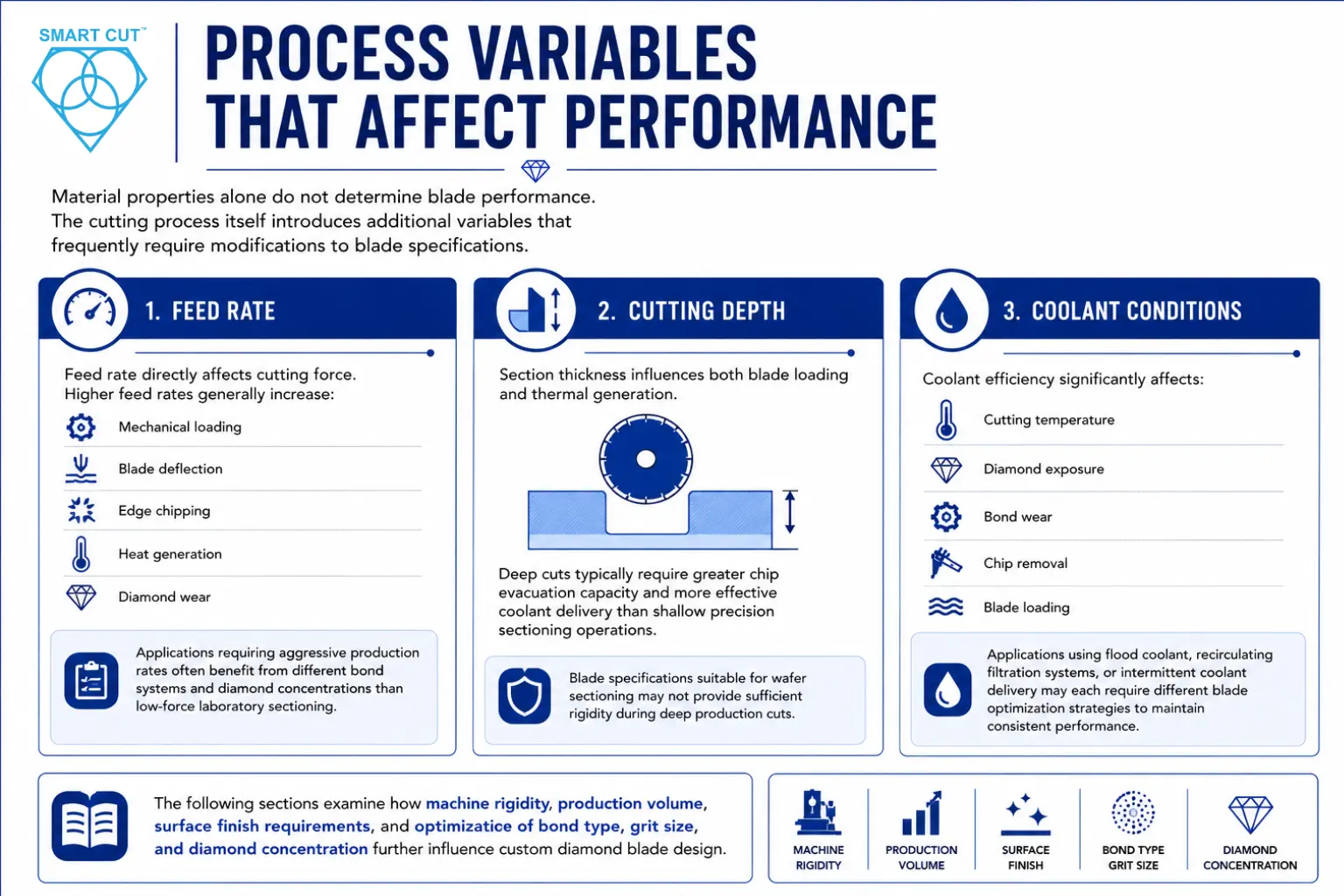
Material properties alone do not determine blade performance.
The cutting process itself introduces additional variables that frequently require modifications to blade specifications.
Feed Rate
Feed rate directly affects cutting force.
Higher feed rates generally increase:
- Mechanical loading
- Blade deflection
- Edge chipping
- Heat generation
- Diamond wear
Applications requiring aggressive production rates often benefit from different bond systems and diamond concentrations than low-force laboratory sectioning.
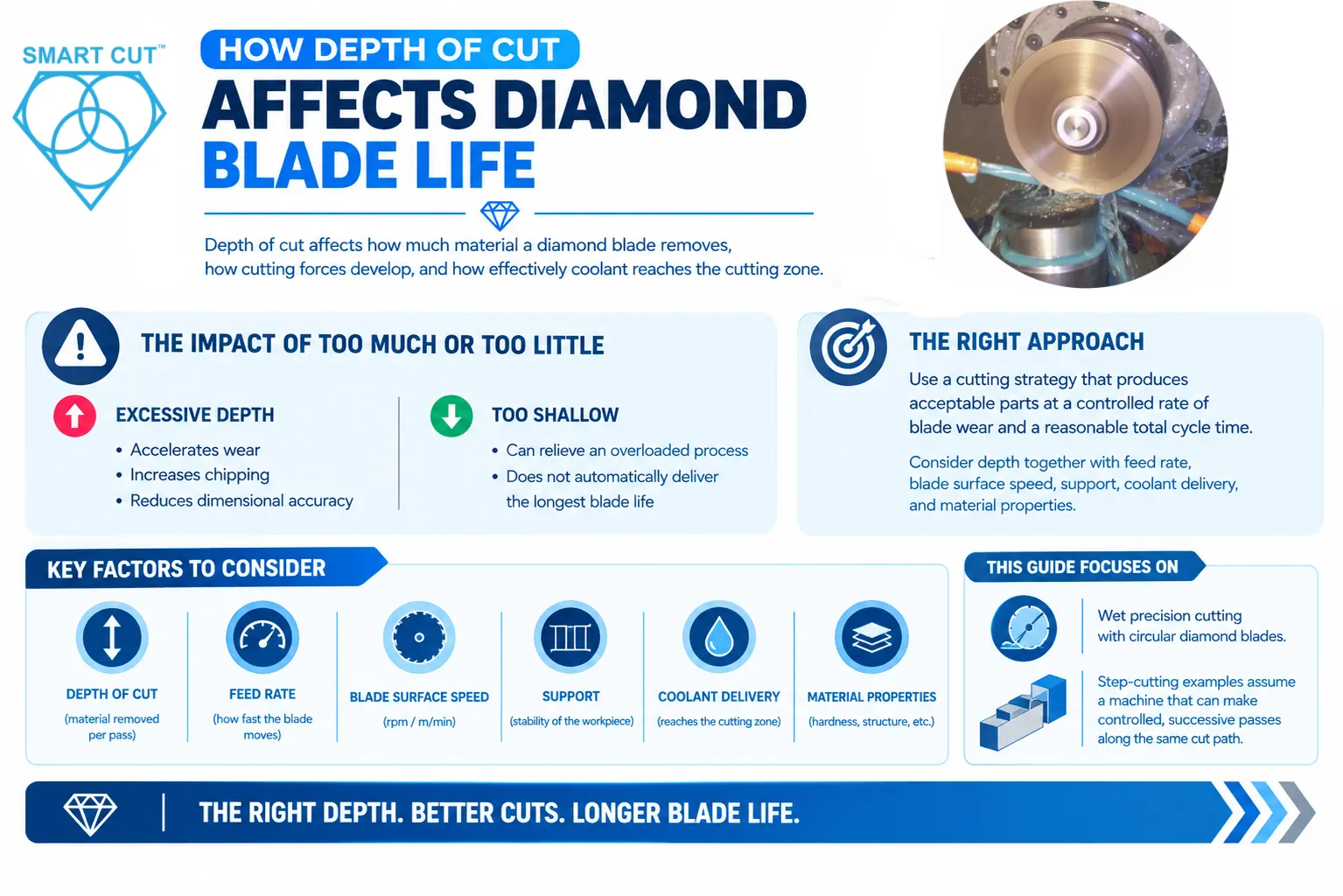
Cutting Depth
Section thickness influences both blade loading and thermal generation.
Deep cuts typically require greater chip evacuation capacity and more effective coolant delivery than shallow precision sectioning operations.
Blade specifications suitable for wafer sectioning may not provide sufficient rigidity during deep production cuts.
Coolant Conditions
Coolant efficiency significantly affects:
- Cutting temperature
- Diamond exposure
- Bond wear
- Chip removal
- Blade loading
Applications using flood coolant, recirculating filtration systems, or intermittent coolant delivery may each require different blade optimization strategies to maintain consistent performance.
The following sections examine how machine rigidity, production volume, surface finish requirements, and optimization of bond type, grit size, and diamond concentration further influence custom diamond blade design.
Machine & Equipment Considerations
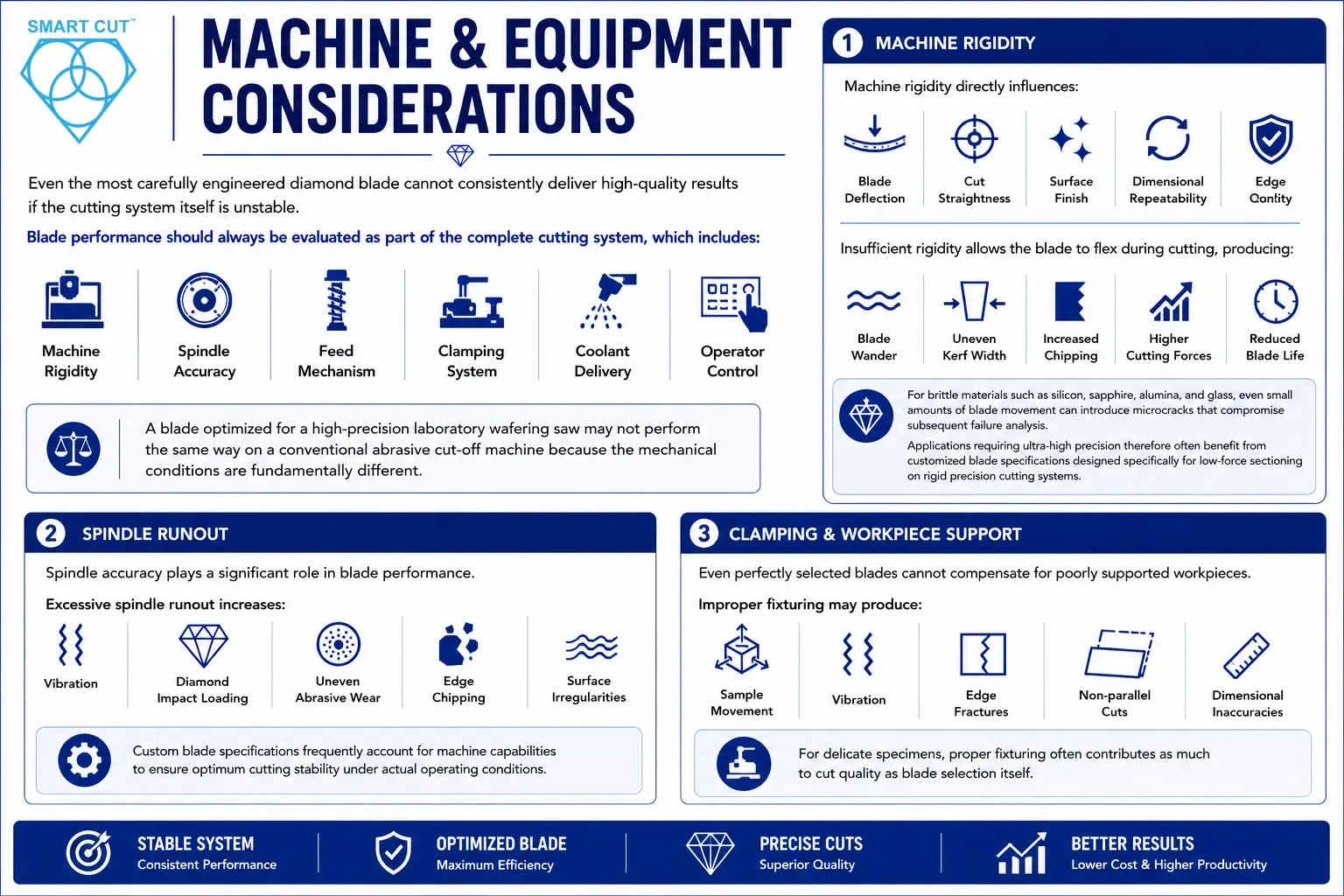
Even the most carefully engineered diamond blade cannot consistently deliver high-quality results if the cutting system itself is unstable.
Blade performance should always be evaluated as part of the complete cutting system, which includes:
- Machine rigidity
- Spindle accuracy
- Feed mechanism
- Clamping system
- Coolant delivery
- Operator control
A blade optimized for a high-precision laboratory wafering saw may not perform the same way on a conventional abrasive cut-off machine because the mechanical conditions are fundamentally different.
Machine Rigidity
Machine rigidity directly influences:
- Blade deflection
- Cut straightness
- Surface finish
- Dimensional repeatability
- Edge quality
Insufficient rigidity allows the blade to flex during cutting, producing:
- Blade wander
- Uneven kerf width
- Increased chipping
- Higher cutting forces
- Reduced blade life
For brittle materials such as silicon, sapphire, alumina, and glass, even small amounts of blade movement can introduce microcracks that compromise subsequent failure analysis.
Applications requiring ultra-high precision therefore often benefit from customized blade specifications designed specifically for low-force sectioning on rigid precision cutting systems.
Spindle Runout
Spindle accuracy plays a significant role in blade performance.
Excessive spindle runout increases:
- Vibration
- Diamond impact loading
- Uneven abrasive wear
- Edge chipping
- Surface irregularities
Custom blade specifications frequently account for machine capabilities to ensure optimum cutting stability under actual operating conditions.
Clamping & Workpiece Support
Even perfectly selected blades cannot compensate for poorly supported workpieces.
Improper fixturing may produce:
- Sample movement
- Vibration
- Edge fractures
- Non-parallel cuts
- Dimensional inaccuracies
For delicate specimens, proper fixturing often contributes as much to cut quality as blade selection itself.
Production Volume & Throughput Requirements
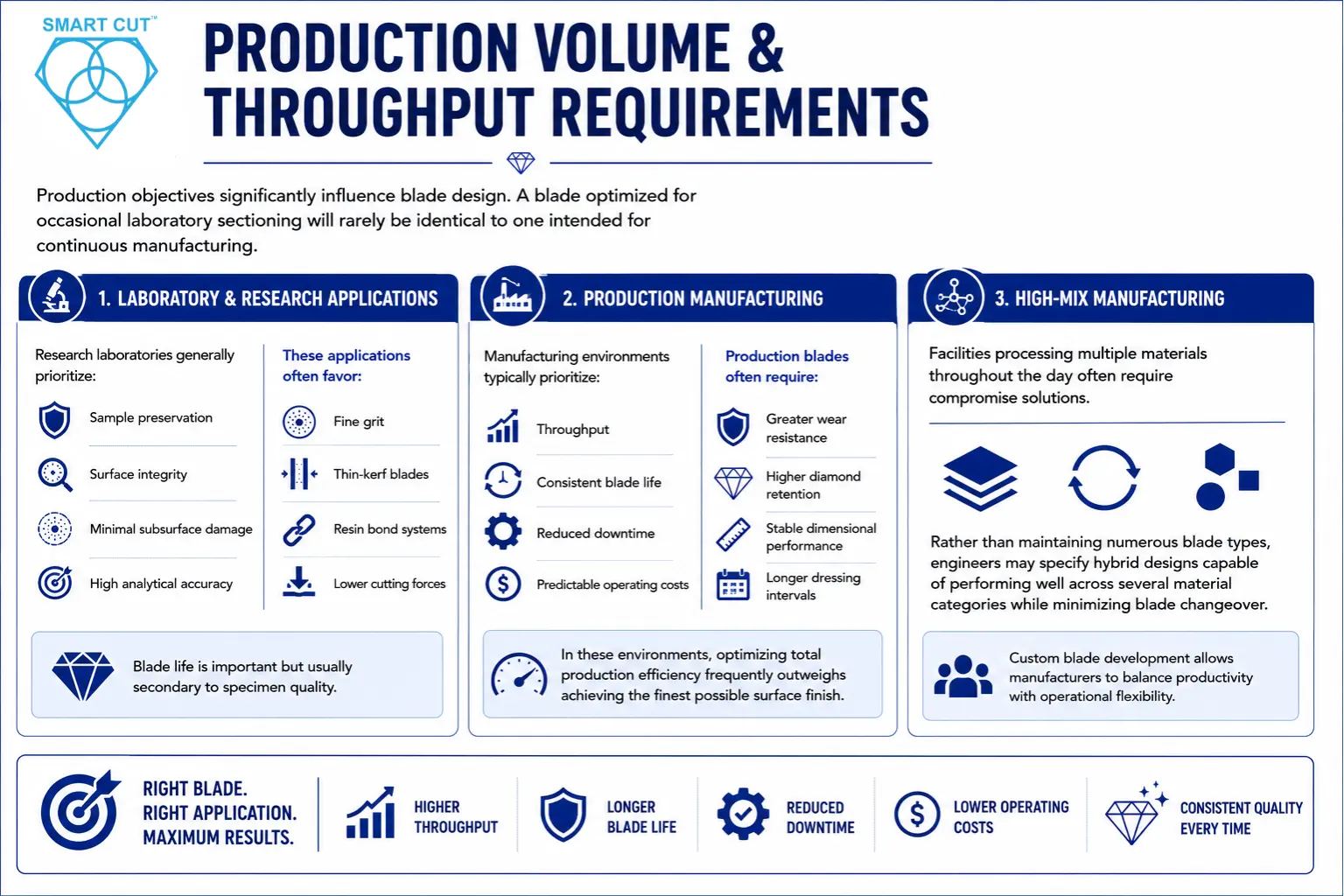
Production objectives significantly influence blade design.
A blade optimized for occasional laboratory sectioning will rarely be identical to one intended for continuous manufacturing.
Laboratory & Research Applications
Research laboratories generally prioritize:
- Sample preservation
- Surface integrity
- Minimal subsurface damage
- High analytical accuracy
These applications often favor:
- Fine grit
- Thin-kerf blades
- Resin bond systems
- Lower cutting forces
Blade life is important but usually secondary to specimen quality.
Production Manufacturing
Manufacturing environments typically prioritize:
- Throughput
- Consistent blade life
- Reduced downtime
- Predictable operating costs
Production blades often require:
- Greater wear resistance
- Higher diamond retention
- Stable dimensional performance
- Longer dressing intervals
In these environments, optimizing total production efficiency frequently outweighs achieving the finest possible surface finish.
High-Mix Manufacturing
Facilities processing multiple materials throughout the day often require compromise solutions.
Rather than maintaining numerous blade types, engineers may specify hybrid designs capable of performing well across several material categories while minimizing blade changeover.
Custom blade development allows manufacturers to balance productivity with operational flexibility.
Surface Finish & Tolerance Requirements
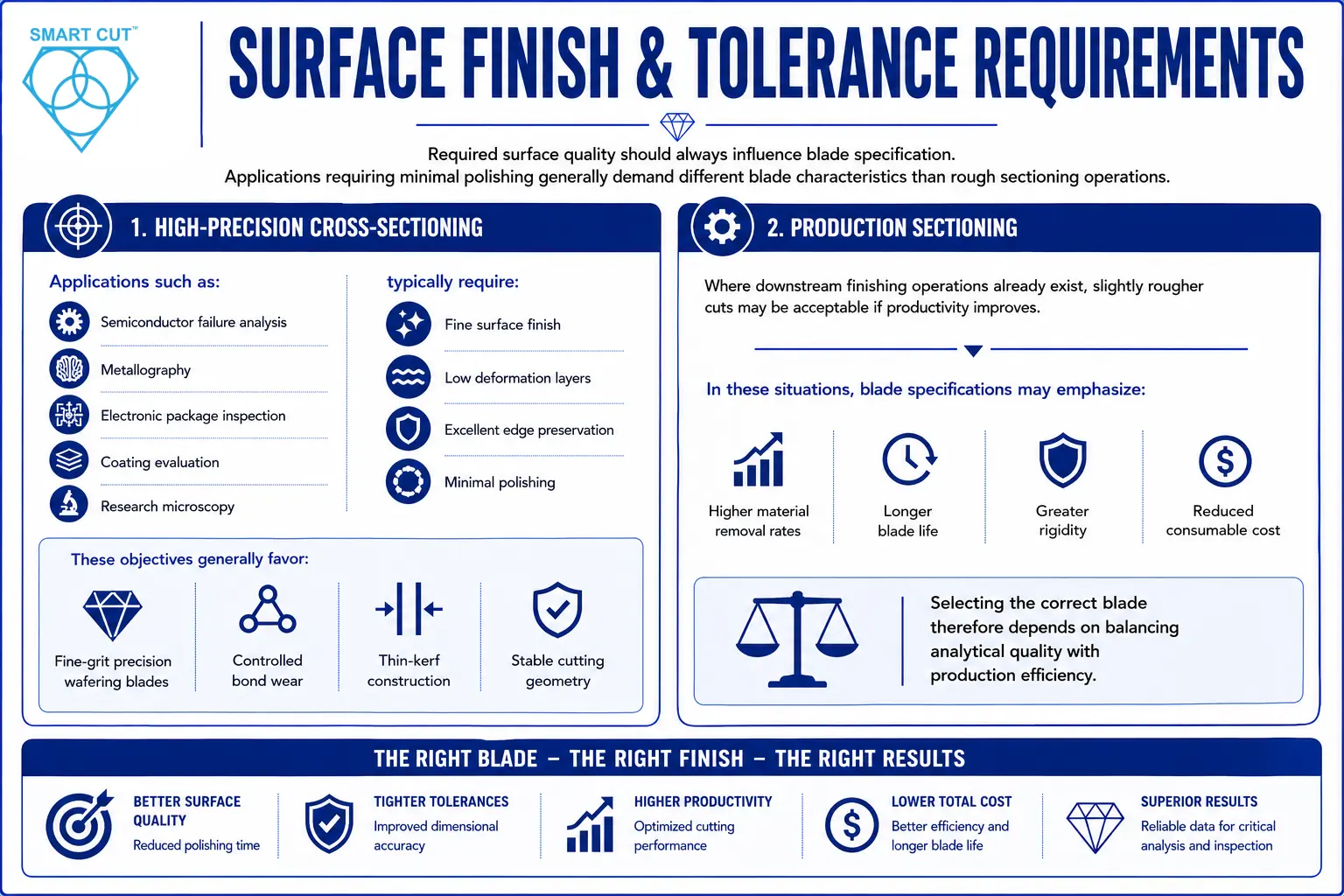
Required surface quality should always influence blade specification.
Applications requiring minimal polishing generally demand different blade characteristics than rough sectioning operations.
High-Precision Cross-Sectioning
Applications such as:
- Semiconductor failure analysis
- Metallography
- Electronic package inspection
- Coating evaluation
- Research microscopy
typically require:
- Fine surface finish
- Low deformation layers
- Excellent edge preservation
- Minimal polishing
These objectives generally favor:
- Fine-grit precision wafering blades
- Controlled bond wear
- Thin-kerf construction
- Stable cutting geometry
Production Sectioning
Where downstream finishing operations already exist, slightly rougher cuts may be acceptable if productivity improves.
In these situations, blade specifications may emphasize:
- Higher material removal rates
- Longer blade life
- Greater rigidity
- Reduced consumable cost
Selecting the correct blade therefore depends on balancing analytical quality with production efficiency.
Blade Bond, Grit & Diamond Concentration Optimization
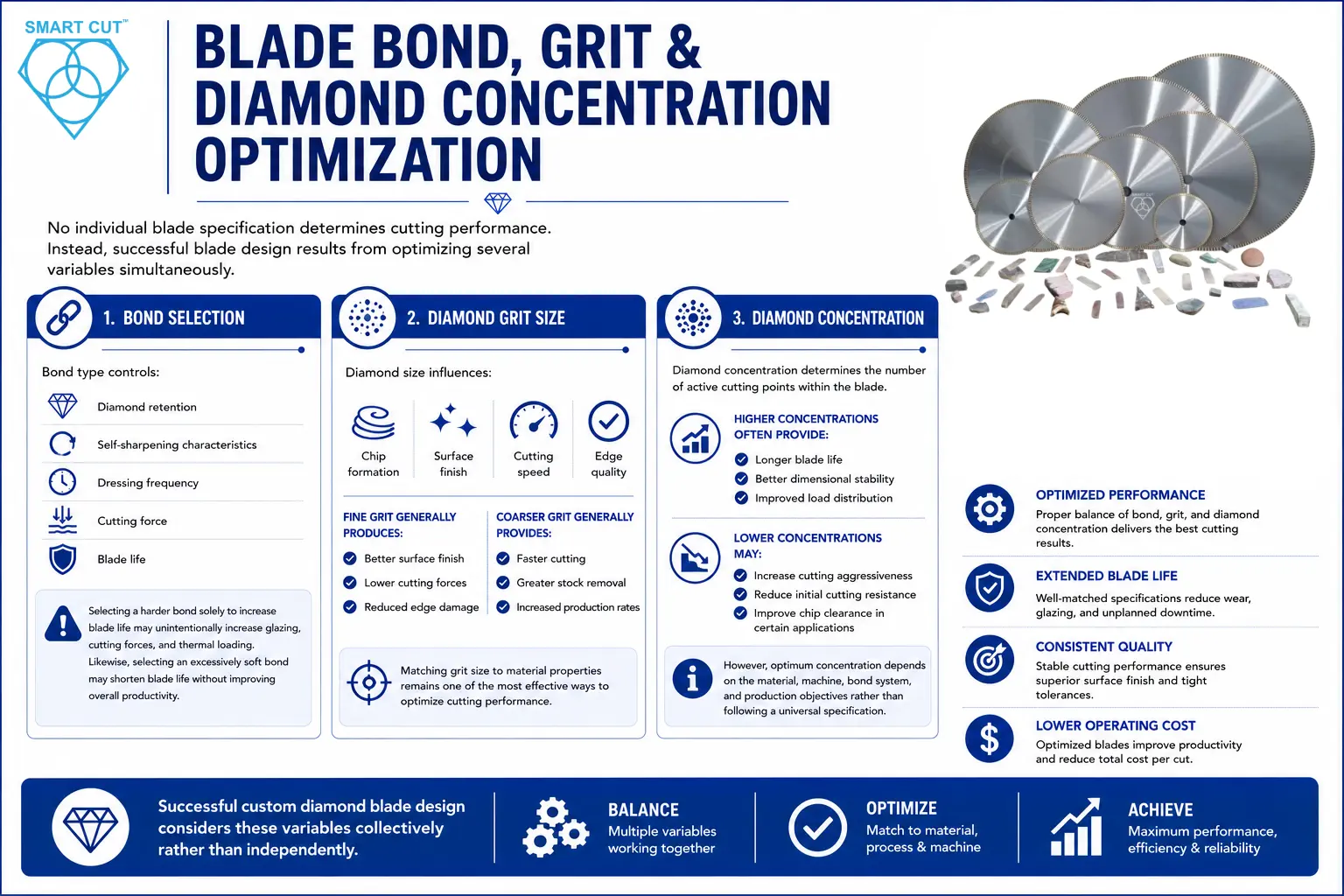
No individual blade specification determines cutting performance.
Instead, successful blade design results from optimizing several variables simultaneously.
Bond Selection
Bond type controls:
- Diamond retention
- Self-sharpening characteristics
- Dressing frequency
- Cutting force
- Blade life
Selecting a harder bond solely to increase blade life may unintentionally increase glazing, cutting forces, and thermal loading.
Likewise, selecting an excessively soft bond may shorten blade life without improving overall productivity.
Diamond Grit Size
Diamond size influences:
- Chip formation
- Surface finish
- Cutting speed
- Edge quality
Fine grit generally produces:
- Better surface finish
- Lower cutting forces
- Reduced edge damage
Coarser grit generally provides:
- Faster cutting
- Greater stock removal
- Increased production rates
Matching grit size to material properties remains one of the most effective ways to optimize cutting performance.
Diamond Concentration
Diamond concentration determines the number of active cutting points within the blade.
Higher concentrations often provide:
- Longer blade life
- Better dimensional stability
- Improved load distribution
Lower concentrations may:
- Increase cutting aggressiveness
- Reduce initial cutting resistance
- Improve chip clearance in certain applications
However, optimum concentration depends on the material, machine, bond system, and production objectives rather than following a universal specification.
Successful custom diamond blade design considers these variables collectively rather than independently.
Why Custom Blade Design Improves Overall Process Performance
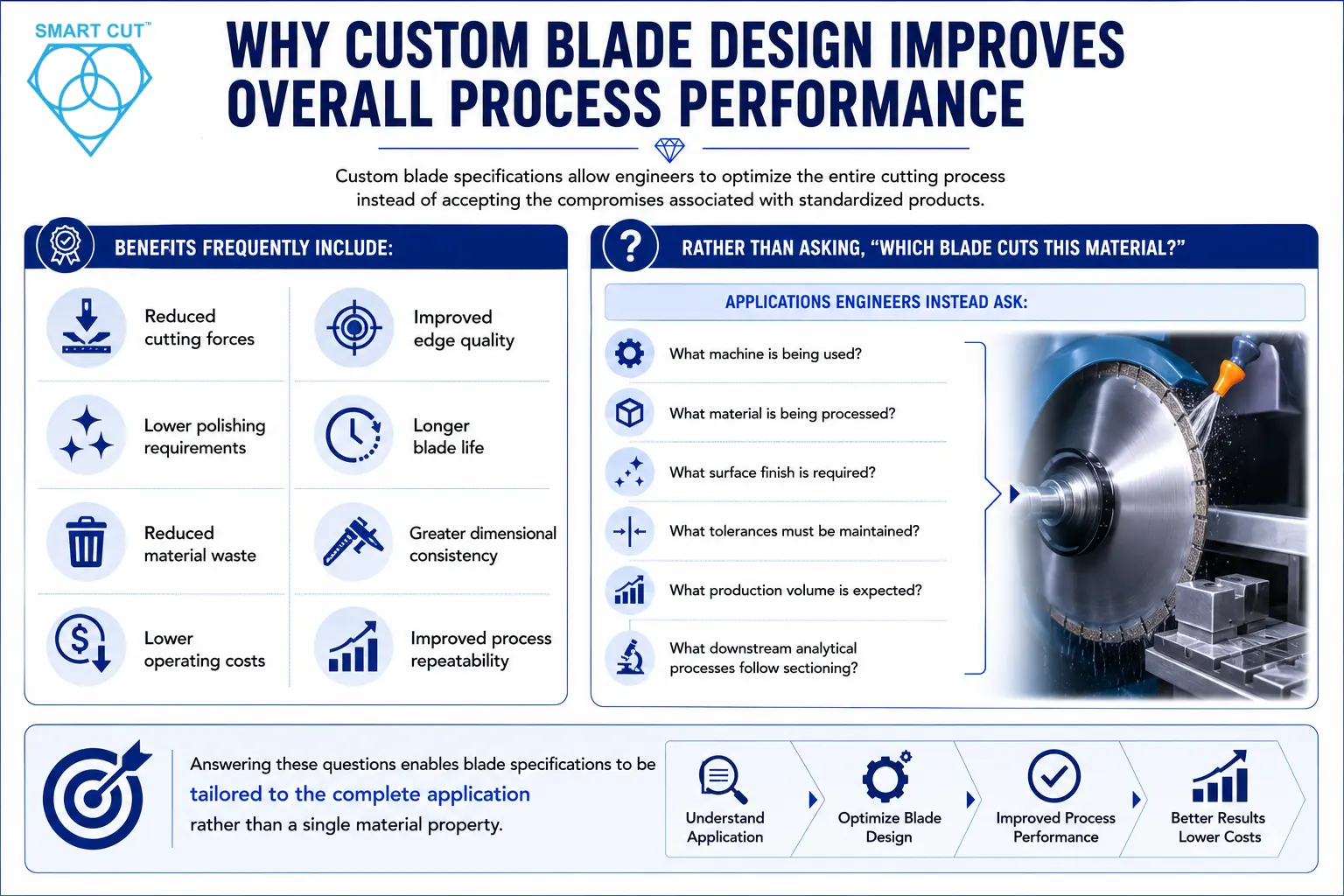
Custom blade specifications allow engineers to optimize the entire cutting process instead of accepting the compromises associated with standardized products.
Benefits frequently include:
- Reduced cutting forces
- Improved edge quality
- Lower polishing requirements
- Longer blade life
- Reduced material waste
- Greater dimensional consistency
- Lower operating costs
- Improved process repeatability
Rather than asking, “Which blade cuts this material?”
Applications engineers instead ask:
- What machine is being used?
- What material is being processed?
- What surface finish is required?
- What tolerances must be maintained?
- What production volume is expected?
- What downstream analytical processes follow sectioning?
Answering these questions enables blade specifications to be tailored to the complete application rather than a single material property.
Custom Blade Design Process at UKAM
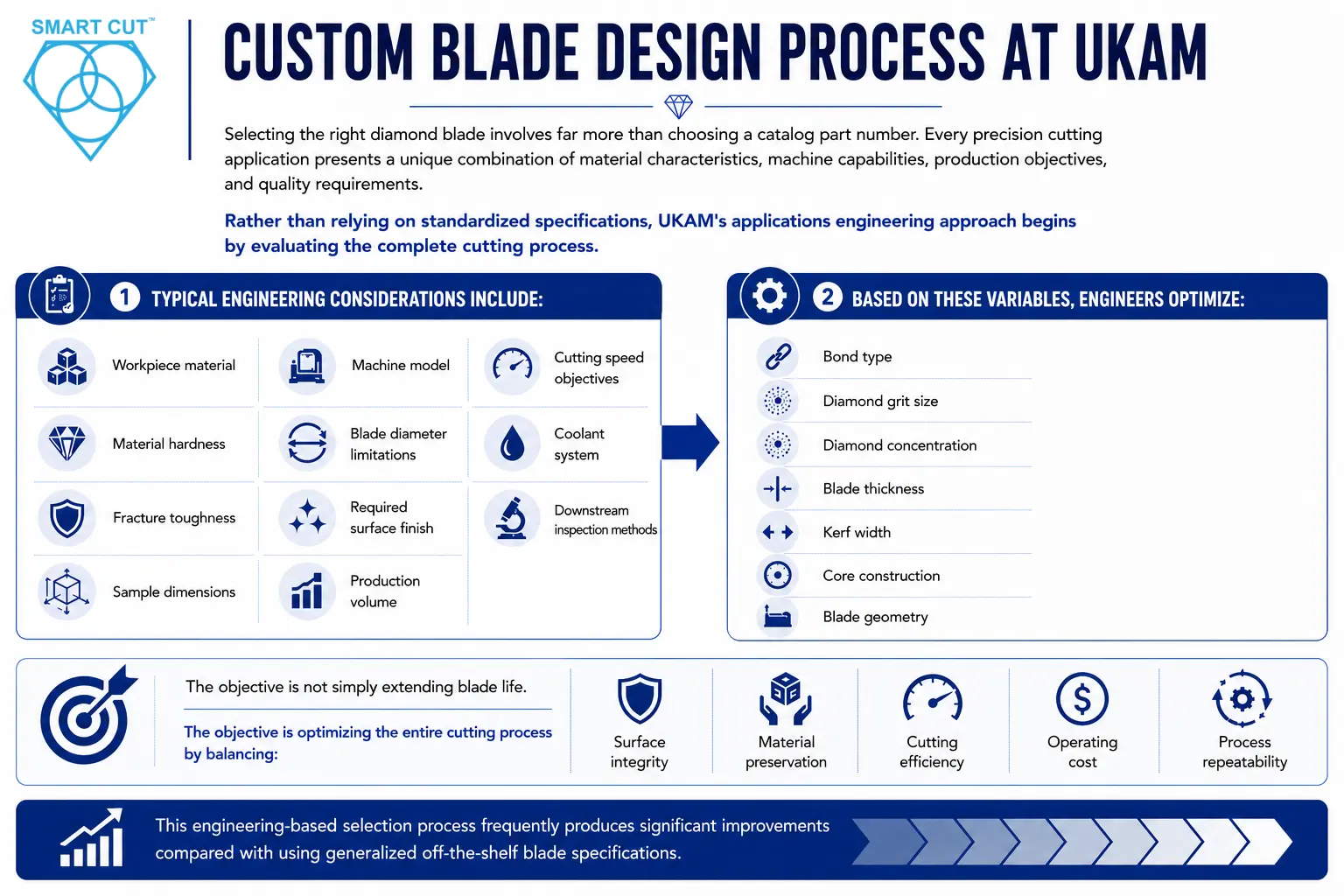
Selecting the right diamond blade involves far more than choosing a catalog part number. Every precision cutting application presents a unique combination of material characteristics, machine capabilities, production objectives, and quality requirements.
Rather than relying on standardized specifications, UKAM’s applications engineering approach begins by evaluating the complete cutting process.
Typical engineering considerations include:
- Workpiece material
- Material hardness
- Fracture toughness
- Sample dimensions
- Machine model
- Blade diameter limitations
- Required surface finish
- Production volume
- Cutting speed objectives
- Coolant system
- Downstream inspection methods
Based on these variables, engineers optimize:
- Bond type
- Diamond grit size
- Diamond concentration
- Blade thickness
- Kerf width
- Core construction
- Blade geometry
The objective is not simply extending blade life.
The objective is optimizing the entire cutting process by balancing:
- Surface integrity
- Material preservation
- Cutting efficiency
- Operating cost
- Process repeatability
This engineering-based selection process frequently produces significant improvements compared with using generalized off-the-shelf blade specifications.
Engineering Examples
Example 1. Semiconductor Cross-Sectioning
A laboratory performing failure analysis on silicon devices required:
- Minimal edge chipping
- Low subsurface damage
- Reduced polishing time
Instead of selecting a general-purpose diamond blade, engineers specified:
- Resin bond
- Fine diamond grit
- Thin-kerf blade
- Low cutting force configuration
The result was improved edge preservation while reducing specimen preparation time.
Example 2. Tungsten Carbide Production
A manufacturer processing cemented carbide inserts experienced rapid blade wear using a standard resin bond blade.
Application analysis determined that the material’s abrasiveness required:
- Metal bond construction
- Higher diamond retention
- Modified concentration
- Improved coolant delivery
The customized blade significantly improved process stability and extended blade life.
Example 3. Multi-Layer Electronic Packages
An electronics manufacturer needed to section packages containing:
- Copper
- Epoxy
- Silicon
- Ceramic
Each material responded differently during cutting.
Rather than optimizing for only one layer, a hybrid blade specification balanced cutting forces across the complete assembly, improving section quality while minimizing delamination and edge damage.
These examples demonstrate why blade selection should always consider the complete application rather than individual material properties alone.
When Standard Diamond Blades Are Appropriate
Although custom blade specifications provide significant advantages for demanding applications, standardized blades remain suitable in many situations.
Standard blades often perform well when:
- Materials are consistent
- Production requirements are moderate
- Surface finish requirements are less demanding
- Tight dimensional tolerances are unnecessary
- Sample preservation is not critical
Examples include:
- General maintenance cutting
- Routine production operations
- Educational laboratories
- Occasional sectioning tasks
For highly specialized applications involving expensive materials, advanced ceramics, semiconductor devices, aerospace components, or critical failure investigations, customized blade specifications generally provide greater long-term value through improved cutting performance and reduced process variability.
The key is matching the blade to the application rather than assuming one specification is appropriate for every material.
Frequently Asked Questions
Standard blades are designed to accommodate a broad range of materials and operating conditions. Precision applications often require blade specifications optimized for specific materials, machines, and quality requirements.
Custom blade specifications are particularly beneficial when:
- Cutting expensive materials
- Performing failure analysis
- Working with brittle materials
- Requiring exceptional surface quality
- Experiencing excessive blade wear
- Encountering persistent edge chipping or cracking
The most significant variables include:
- Material properties
- Bond type
- Diamond grit size
- Diamond concentration
- Blade thickness
- Feed rate
- Spindle speed
- Coolant delivery
- Machine rigidity
Successful blade selection requires evaluating these variables together rather than individually.
Not necessarily.
The goal is not purchasing the most expensive blade but selecting one that improves overall process efficiency by reducing:
- Scrap
- Downtime
- Polishing time
- Consumable usage
- Sample preparation variability
In many precision applications, these savings significantly outweigh the initial blade cost.
While some general-purpose blades can process multiple materials, optimum performance typically requires blade specifications matched to the individual application.
Using a single blade across very different materials often results in compromised cutting quality and reduced blade life.
Engineering recommendations generally consider:
- Material characteristics
- Machine configuration
- Production objectives
- Surface finish requirements
- Dimensional tolerances
- Sample size
- Coolant availability
- Required productivity
Evaluating the complete process allows blade specifications to be optimized for both performance and operating cost.
Conclusion
Selecting a diamond blade should never be reduced to matching diameter, arbor size, or grit designation alone.
Every precision cutting application involves a unique combination of material properties, machine conditions, production requirements, and quality expectations.
Attempting to satisfy every application with a standardized blade inevitably requires performance compromises.
By customizing blade specifications, including bond type, diamond grit, concentration, kerf width, and blade geometry, engineers can significantly improve:
- Surface finish
- Sample integrity
- Blade life
- Material yield
- Cutting efficiency
- Process repeatability
- Overall operating cost
Whether performing semiconductor failure analysis, metallographic sectioning, ceramic processing, or precision manufacturing, selecting a blade specifically engineered for the application frequently delivers better long-term performance than relying on generalized specifications.
If you’re unsure which precision diamond blade is best suited for your material or cutting process, UKAM’s Applications Engineering Team can recommend a blade specification tailored to your equipment, production goals, and performance requirements.
Trusted by Tens of Thousands of Manufacturers, Laboratories,
Research Institutions Worldwide Since 1990
American Based Manufacturer
Established in 1990
Custom manufacturing
RELATED ARTICLES

Brian is an experienced professional in the field of precision cutting tools, with over 27 years of experience in technical support. Over the years, he has helped engineers, manufacturers, researchers, and contractors find the right solutions for working with advanced and hard-to-cut materials. He’s passionate about bridging technical knowledge with real-world applications to improve efficiency and accuracy.
As an author, Brian Farberov writes extensively on diamond tool design, application engineering, return on investment strategies, and process optimization, combining technical depth with a strong understanding of customer needs and market dynamics.