





















Understanding Cutting Force Distribution During Metallographic Sectioning Using Diamond & CBN Wafering Blades and Cut-Off Wheels
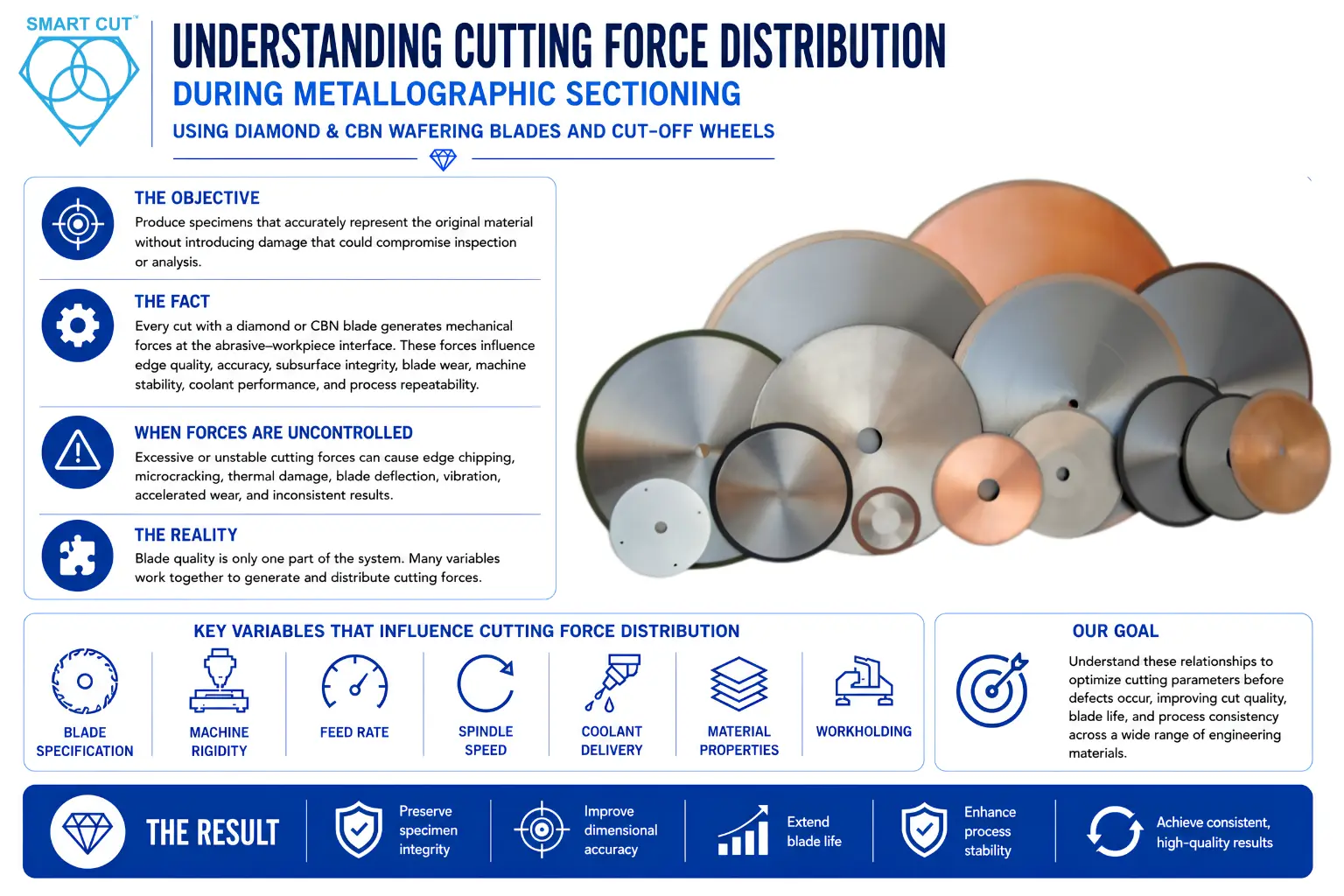
Table of Contents
TogglePrecision sectioning is far more than simply separating material into smaller pieces. In metallography, semiconductor manufacturing, failure analysis, materials research, and quality control laboratories, the objective is to produce a specimen that accurately represents the original material without introducing damage that could compromise subsequent inspection or analysis.
Every cut performed using a diamond or CBN blade generates mechanical forces at the interface between the abrasive particles and the workpiece. These cutting forces directly influence edge quality, dimensional accuracy, subsurface integrity, blade wear, machine stability, coolant performance, and overall process repeatability.
When properly controlled, cutting forces enable efficient material removal while preserving specimen integrity. When they become excessive or unstable, they may produce a wide range of problems, including edge chipping, microcracking, thermal damage, blade deflection, vibration, accelerated blade wear, and inconsistent cutting results.
For many engineers and laboratory personnel, these issues are often attributed to blade quality alone. In reality, blade performance represents only one component of a much larger mechanical system. Machine rigidity, spindle accuracy, blade specification, feed rate, rotational speed, coolant delivery, material properties, and workholding all influence how cutting forces are generated and distributed throughout the cutting process.
Understanding these relationships allows engineers to optimize cutting parameters before defects occur rather than attempting to correct them after valuable specimens have already been damaged.
This guide explains how cutting forces develop during precision metallographic sectioning, how those forces affect both the workpiece and the cutting blade, and how optimizing process variables can significantly improve cut quality, blade life, and process consistency across a wide range of engineering materials.
Trusted by Tens of Thousands of Manufacturers, Laboratories Research Institutions Worldwide Since 1990

American Based Manufacturer

Established in 1990


Custom manufacturing


Why Cutting Forces Matter During Metallographic Sectioning
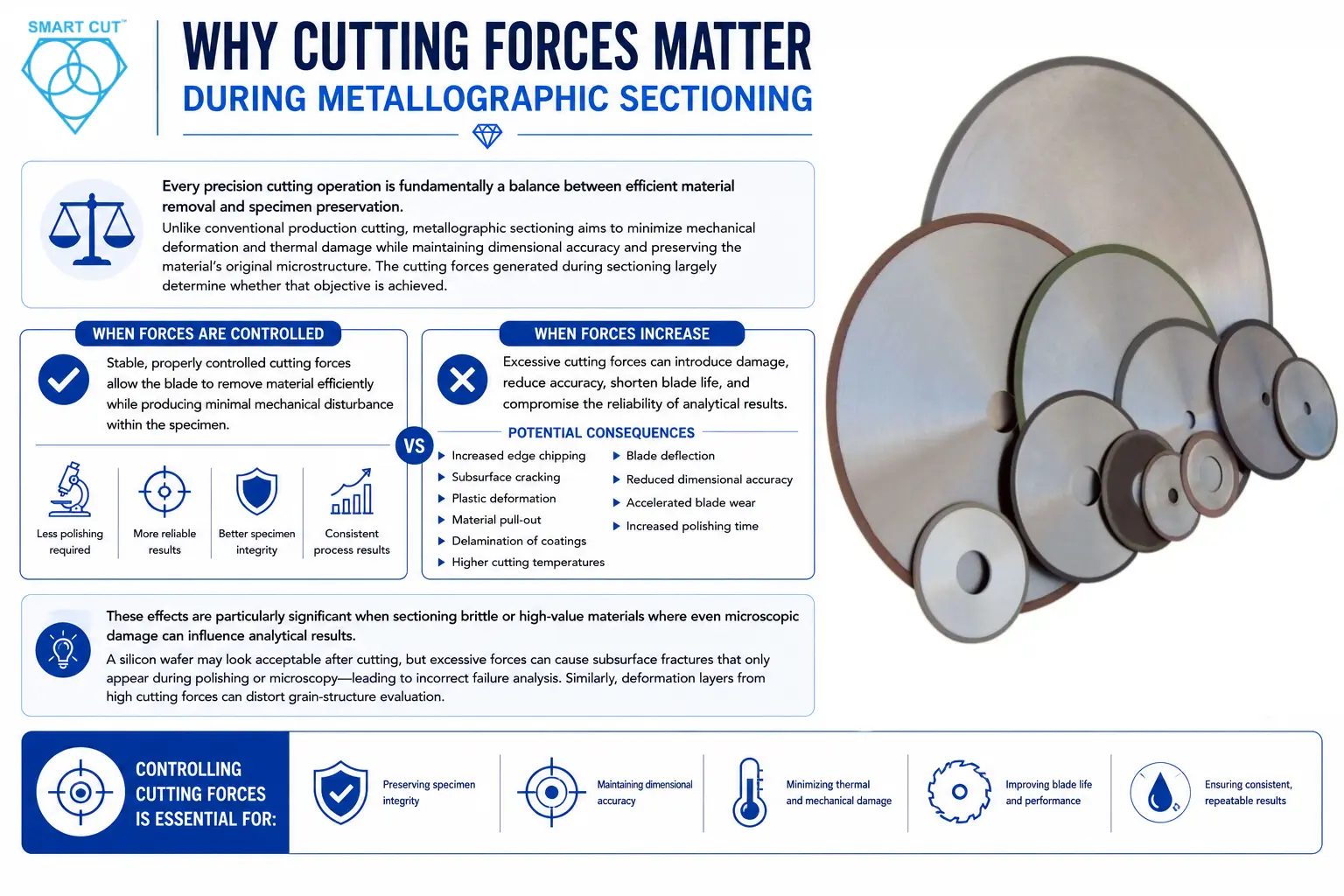
Every precision cutting operation is fundamentally a balance between efficient material removal and specimen preservation.
Unlike conventional production cutting, metallographic sectioning aims to minimize mechanical deformation and thermal damage while maintaining dimensional accuracy and preserving the material’s original microstructure.
The cutting forces generated during sectioning largely determine whether that objective is achieved.
When cutting forces remain stable and properly controlled, the blade removes material efficiently while producing minimal mechanical disturbance within the specimen. The resulting sample typically requires less polishing and provides more reliable results during microscopic examination, failure analysis, hardness testing, and other downstream inspection methods.
As cutting forces increase beyond acceptable levels, the consequences become progressively more severe.
Higher cutting forces may contribute to:
- Increased edge chipping
- Subsurface cracking
- Plastic deformation
- Material pull-out
- Delamination of coatings
- Higher cutting temperatures
- Blade deflection
- Reduced dimensional accuracy
- Accelerated blade wear
- Increased polishing time
These effects are particularly significant when sectioning brittle or high-value materials where even microscopic damage can influence analytical results.
For example, a silicon wafer prepared for failure analysis may appear visually acceptable immediately after cutting. However, excessive cutting forces can introduce subsurface fractures that become visible only during polishing or electron microscopy, potentially leading to inaccurate conclusions regarding the original failure mechanism.
Similarly, metallographic specimens intended for grain-structure evaluation may exhibit deformation layers formed during sectioning rather than reflecting the material’s true microstructure.
Controlling cutting forces is therefore not simply a matter of improving blade life or increasing productivity.
It is essential for preserving specimen integrity throughout the entire material preparation process.
Understanding Normal, Tangential, and Axial Cutting Forces
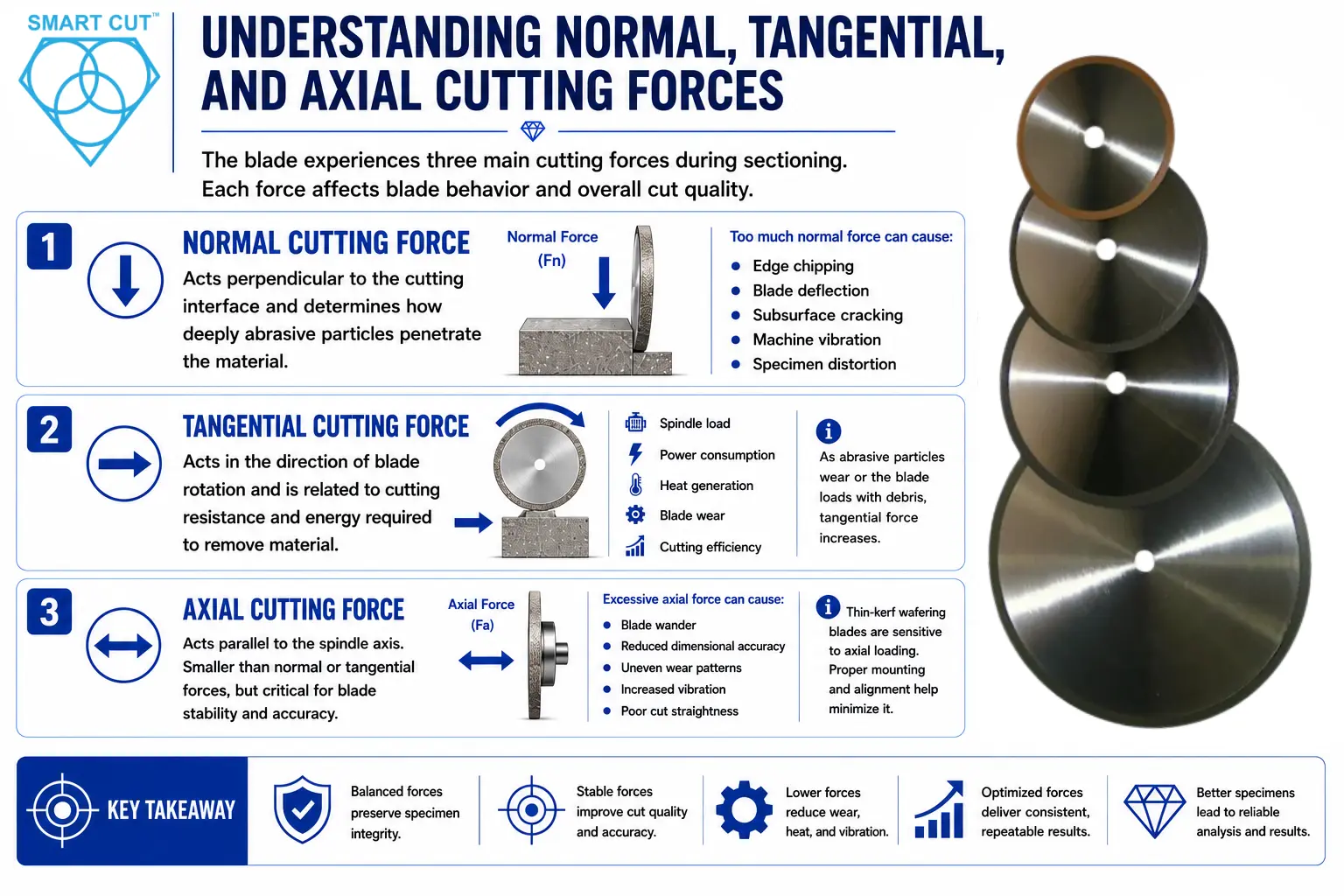
Although cutting appears to be a single continuous operation, the blade experiences several different mechanical forces simultaneously while interacting with the workpiece.
Each force influences blade behavior differently and contributes to overall cutting performance.
Understanding these force components helps explain why seemingly minor changes in process parameters may produce significant differences in cut quality.
Normal Cutting Force
Normal force acts perpendicular to the cutting interface.
It represents the pressure required to maintain contact between the blade and the workpiece and largely determines how deeply individual diamond or CBN particles penetrate the material surface.
As normal force increases, abrasive particles remove more material during each interaction.
However, excessive normal force may also increase:
- Edge chipping
- Blade deflection
- Subsurface cracking
- Machine vibration
- Specimen distortion
Maintaining an appropriate normal force is particularly important when sectioning brittle ceramics, glass, sapphire, silicon, and advanced composites, where excessive penetration can initiate uncontrolled fracture.
Tangential Cutting Force
Tangential force acts in the direction of blade rotation and represents the force required to shear, fracture, or abrade the material during cutting.
This force is directly related to cutting resistance and therefore influences:
- Spindle load
- Power consumption
- Heat generation
- Blade wear
- Cutting efficiency
As abrasive particles become worn or the blade begins to load with debris, tangential force typically increases because more energy is required to remove the same volume of material.
Monitoring changes in tangential cutting force often provides an early indication that blade dressing, parameter adjustment, or blade replacement may soon become necessary.
Axial Cutting Force
Axial force acts parallel to the spindle axis.
Although typically smaller than the normal or tangential components, axial force plays an important role in maintaining blade stability.
Excessive axial force may contribute to:
- Blade wander
- Reduced dimensional accuracy
- Uneven wear patterns
- Increased vibration
- Poor cut straightness
Thin-kerf wafering blades are particularly sensitive to axial loading because even small lateral forces may influence cutting accuracy.
Proper blade mounting, spindle alignment, and rigid workholding all help minimize unwanted axial loading.
How Cutting Forces Develop During Diamond & CBN Cutting
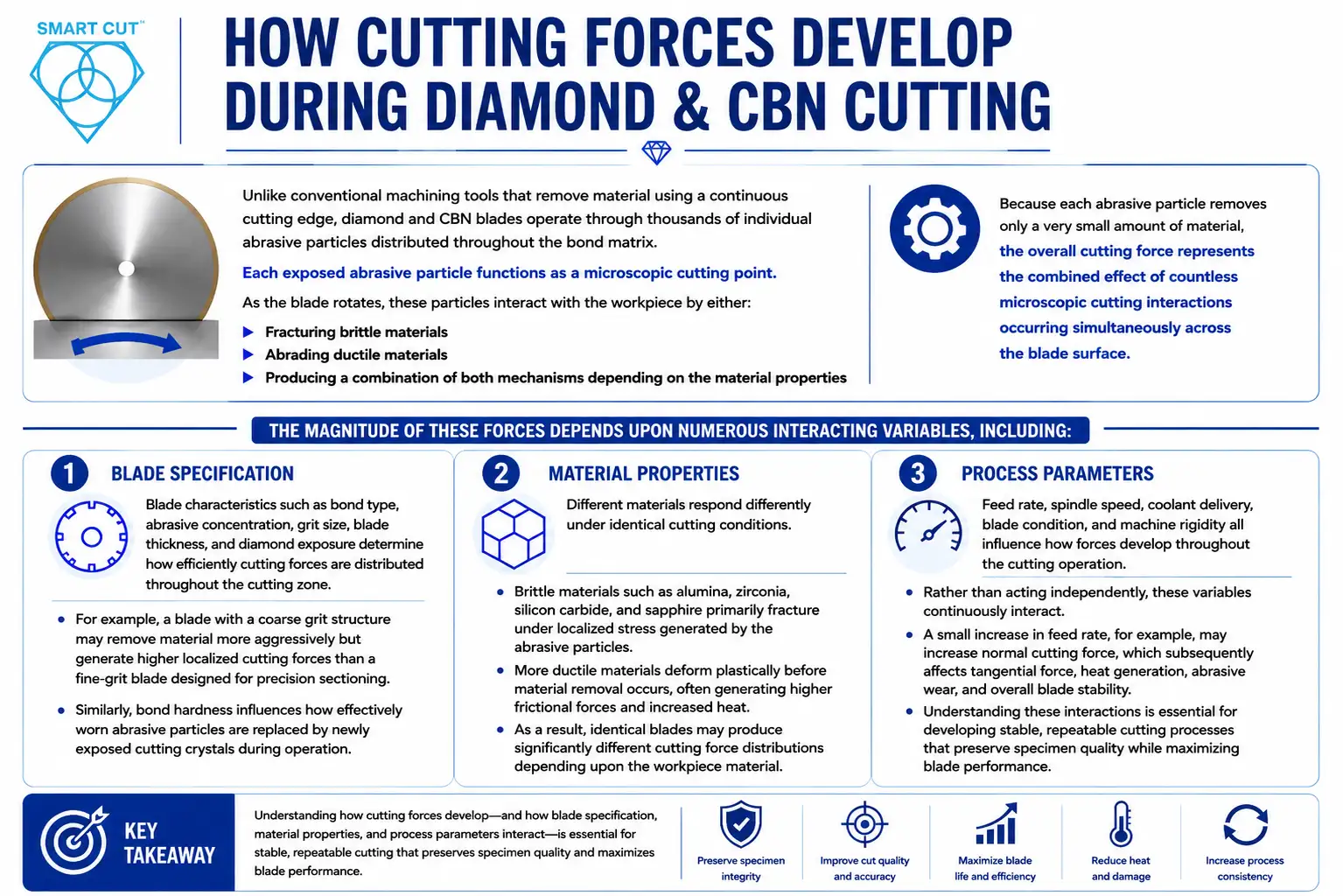
Unlike conventional machining tools that remove material using a continuous cutting edge, diamond and CBN blades operate through thousands of individual abrasive particles distributed throughout the bond matrix.
Each exposed abrasive particle functions as a microscopic cutting point.
As the blade rotates, these particles interact with the workpiece by either:
- Fracturing brittle materials
- Abrading ductile materials
- Producing a combination of both mechanisms depending on the material properties
Because each abrasive particle removes only a very small amount of material, the overall cutting force represents the combined effect of countless microscopic cutting interactions occurring simultaneously across the blade surface.
The magnitude of these forces depends upon numerous interacting variables, including:
Blade Specification
Blade characteristics such as bond type, abrasive concentration, grit size, blade thickness, and diamond exposure determine how efficiently cutting forces are distributed throughout the cutting zone.
For example, a blade with a coarse grit structure may remove material more aggressively but generate higher localized cutting forces than a fine-grit blade designed for precision sectioning.
Similarly, bond hardness influences how effectively worn abrasive particles are replaced by newly exposed cutting crystals during operation.
Material Properties
Different materials respond differently under identical cutting conditions.
Brittle materials such as alumina, zirconia, silicon carbide, and sapphire primarily fracture under localized stress generated by the abrasive particles.
More ductile materials deform plastically before material removal occurs, often generating higher frictional forces and increased heat.
As a result, identical blades may produce significantly different cutting force distributions depending upon the workpiece material.
Process Parameters
Feed rate, spindle speed, coolant delivery, blade condition, and machine rigidity all influence how forces develop throughout the cutting operation.
Rather than acting independently, these variables continuously interact.
A small increase in feed rate, for example, may increase normal cutting force, which subsequently affects tangential force, heat generation, abrasive wear, and overall blade stability.
Understanding these interactions is essential for developing stable, repeatable cutting processes that preserve specimen quality while maximizing blade performance.
Force Distribution and Edge Chipping
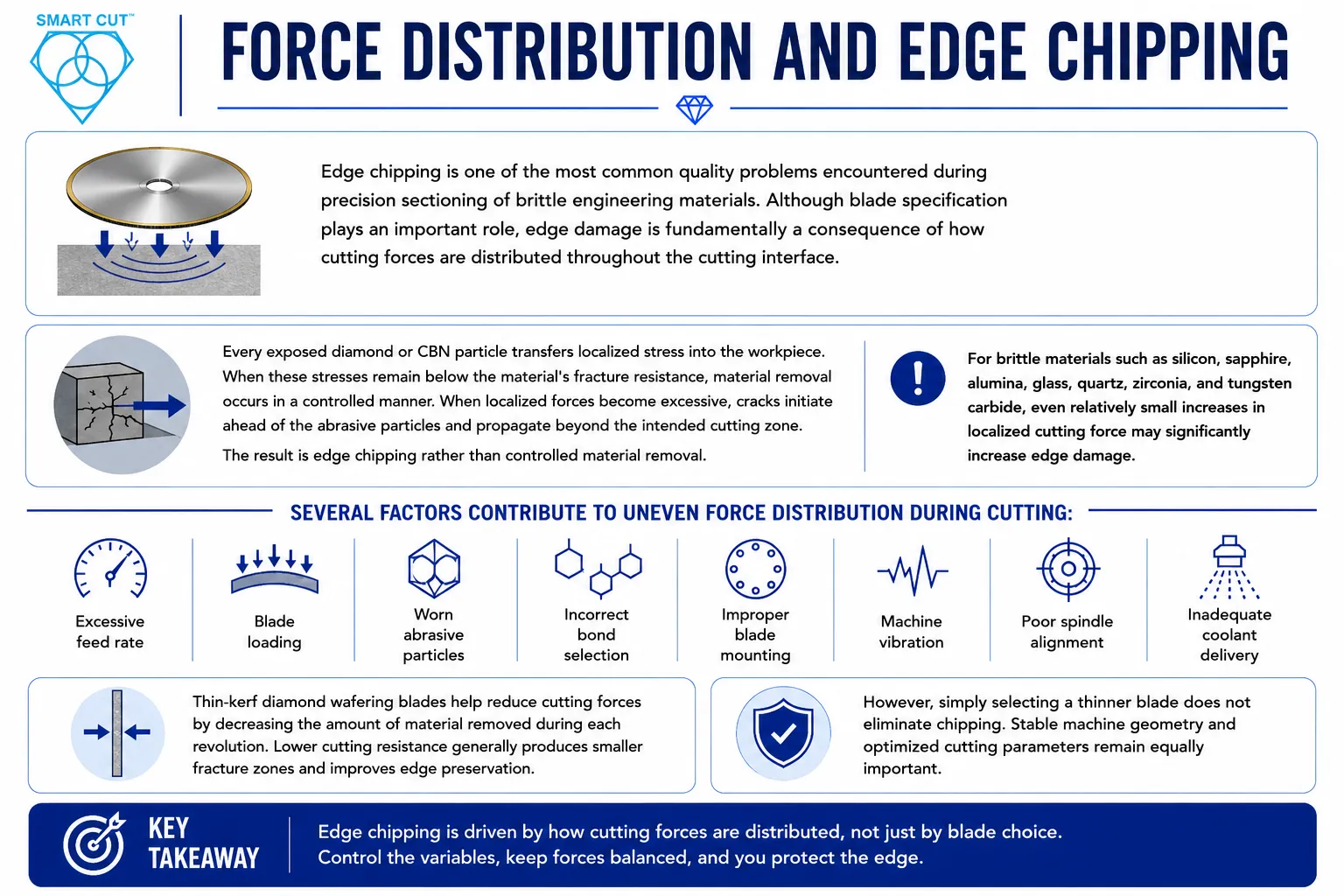
Edge chipping is one of the most common quality problems encountered during precision sectioning of brittle engineering materials. Although blade specification plays an important role, edge damage is fundamentally a consequence of how cutting forces are distributed throughout the cutting interface.
Every exposed diamond or CBN particle transfers localized stress into the workpiece. When these stresses remain below the material’s fracture resistance, material removal occurs in a controlled manner. When localized forces become excessive, cracks initiate ahead of the abrasive particles and propagate beyond the intended cutting zone.
The result is edge chipping rather than controlled material removal.
For brittle materials such as silicon, sapphire, alumina, glass, quartz, zirconia, and tungsten carbide, even relatively small increases in localized cutting force may significantly increase edge damage.
Several factors contribute to uneven force distribution during cutting:
- Excessive feed rate
- Blade loading
- Worn abrasive particles
- Incorrect bond selection
- Improper blade mounting
- Machine vibration
- Poor spindle alignment
- Inadequate coolant delivery
Thin-kerf diamond wafering blades help reduce cutting forces by decreasing the amount of material removed during each revolution. Lower cutting resistance generally produces smaller fracture zones and improves edge preservation.
However, simply selecting a thinner blade does not eliminate chipping. Stable machine geometry and optimized cutting parameters remain equally important.
Force Distribution and Subsurface Damage
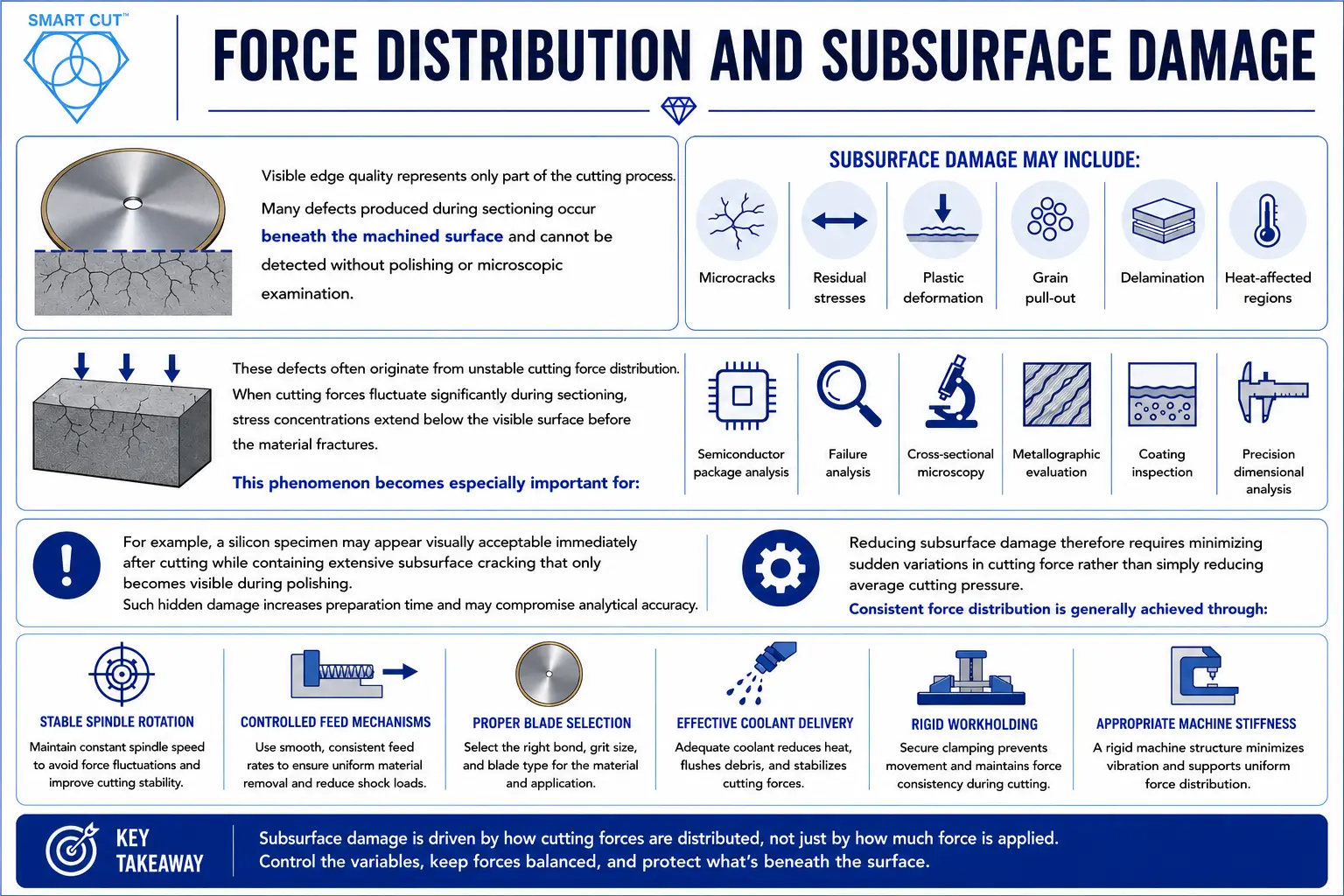
Visible edge quality represents only part of the cutting process.
Many defects produced during sectioning occur beneath the machined surface and cannot be detected without polishing or microscopic examination.
Subsurface damage may include:
- Microcracks
- Residual stresses
- Plastic deformation
- Grain pull-out
- Delamination
- Heat-affected regions
These defects often originate from unstable cutting force distribution.
When cutting forces fluctuate significantly during sectioning, stress concentrations extend below the visible surface before the material fractures.
This phenomenon becomes especially important for:
- Semiconductor package analysis
- Failure analysis
- Cross-sectional microscopy
- Metallographic evaluation
- Coating inspection
- Precision dimensional analysis
For example, a silicon specimen may appear visually acceptable immediately after cutting while containing extensive subsurface cracking that only becomes visible during polishing.
Such hidden damage increases preparation time and may compromise analytical accuracy.
Reducing subsurface damage therefore requires minimizing sudden variations in cutting force rather than simply reducing average cutting pressure.
Consistent force distribution is generally achieved through:
- Stable spindle rotation
- Controlled feed mechanisms
- Proper blade selection
- Effective coolant delivery
- Rigid workholding
- Appropriate machine stiffness
Cutting Forces vs. Blade Wear and Tool Life
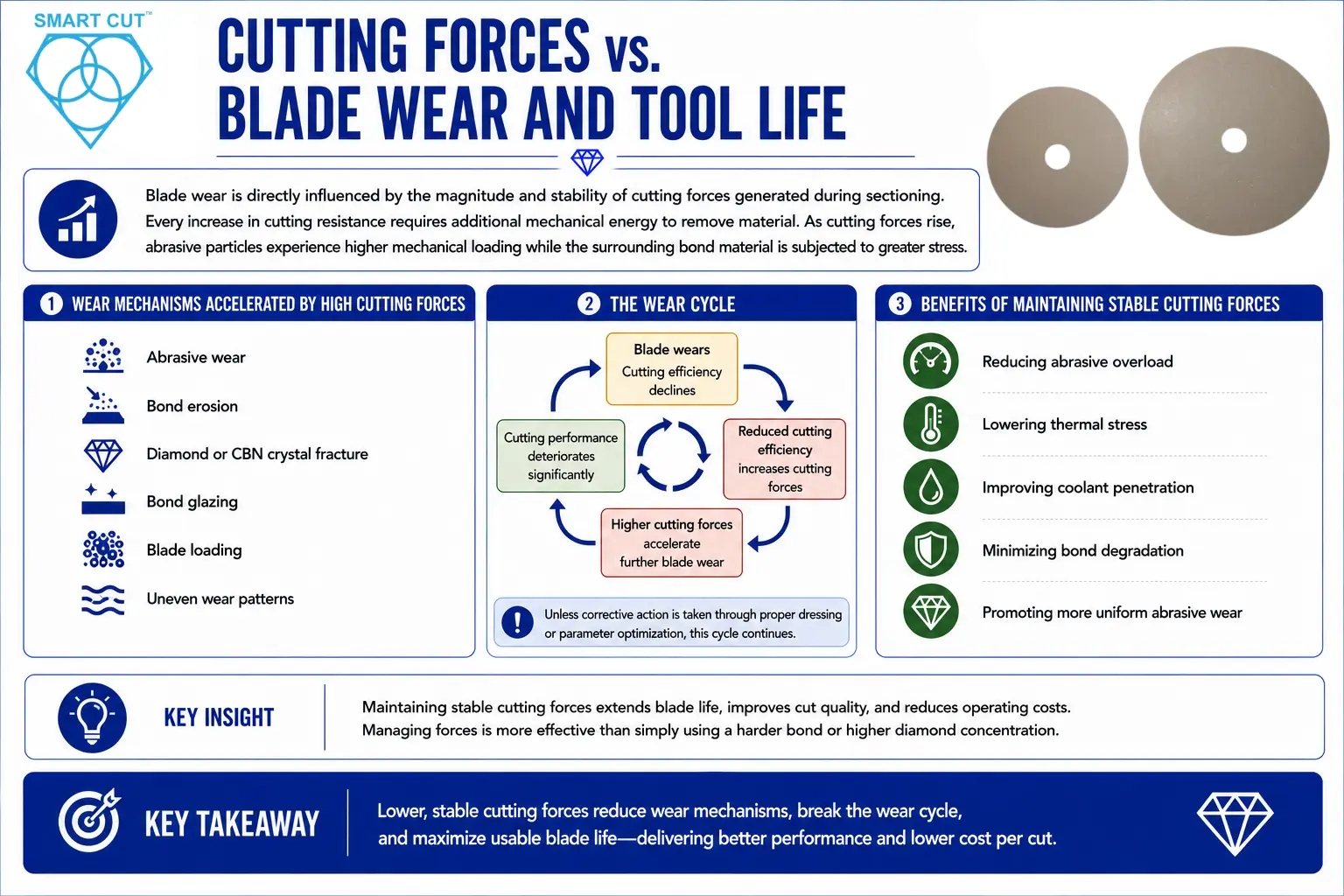
Blade wear is directly influenced by the magnitude and stability of cutting forces generated during sectioning.
Every increase in cutting resistance requires additional mechanical energy to remove material.
As cutting forces rise, abrasive particles experience higher mechanical loading while the surrounding bond material is subjected to greater stress.
This accelerates several wear mechanisms, including:
- Abrasive wear
- Bond erosion
- Diamond or CBN crystal fracture
- Bond glazing
- Blade loading
- Uneven wear patterns
The relationship becomes cyclical.
As the blade wears, cutting efficiency gradually declines.
Reduced cutting efficiency increases cutting forces.
Higher cutting forces accelerate further blade wear.
Unless corrective action is taken through proper dressing or parameter optimization, this cycle continues until cutting performance deteriorates significantly.
Maintaining stable cutting forces helps maximize usable blade life by:
- Reducing abrasive overload
- Lowering thermal stress
- Improving coolant penetration
- Minimizing bond degradation
- Promoting more uniform abrasive wear
For this reason, process optimization often produces greater improvements in blade life than simply selecting a harder bond or higher diamond concentration.
Machine Rigidity and Cutting Stability
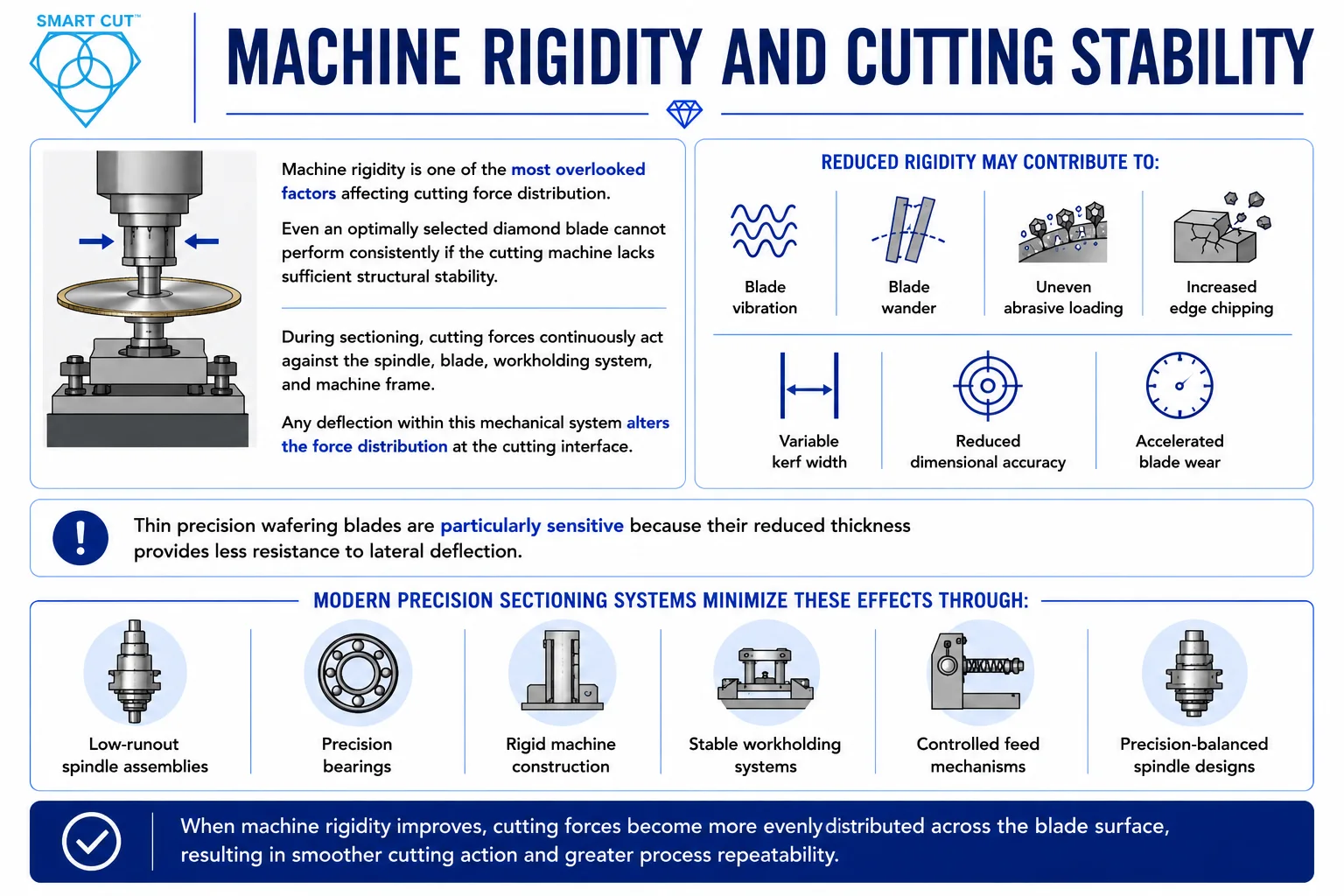
Machine rigidity is one of the most overlooked factors affecting cutting force distribution.
Even an optimally selected diamond blade cannot perform consistently if the cutting machine lacks sufficient structural stability.
During sectioning, cutting forces continuously act against the spindle, blade, workholding system, and machine frame.
Any deflection within this mechanical system alters the force distribution at the cutting interface.
Reduced rigidity may contribute to:
- Blade vibration
- Blade wander
- Uneven abrasive loading
- Increased edge chipping
- Variable kerf width
- Reduced dimensional accuracy
- Accelerated blade wear
Thin precision wafering blades are particularly sensitive because their reduced thickness provides less resistance to lateral deflection.
Modern precision sectioning systems minimize these effects through:
- Low-runout spindle assemblies
- Precision bearings
- Rigid machine construction
- Stable workholding systems
- Controlled feed mechanisms
- Precision-balanced spindle designs
When machine rigidity improves, cutting forces become more evenly distributed across the blade surface, resulting in smoother cutting action and greater process repeatability.
Effects of Feed Rate, RPM, Blade Thickness, and Bond Type
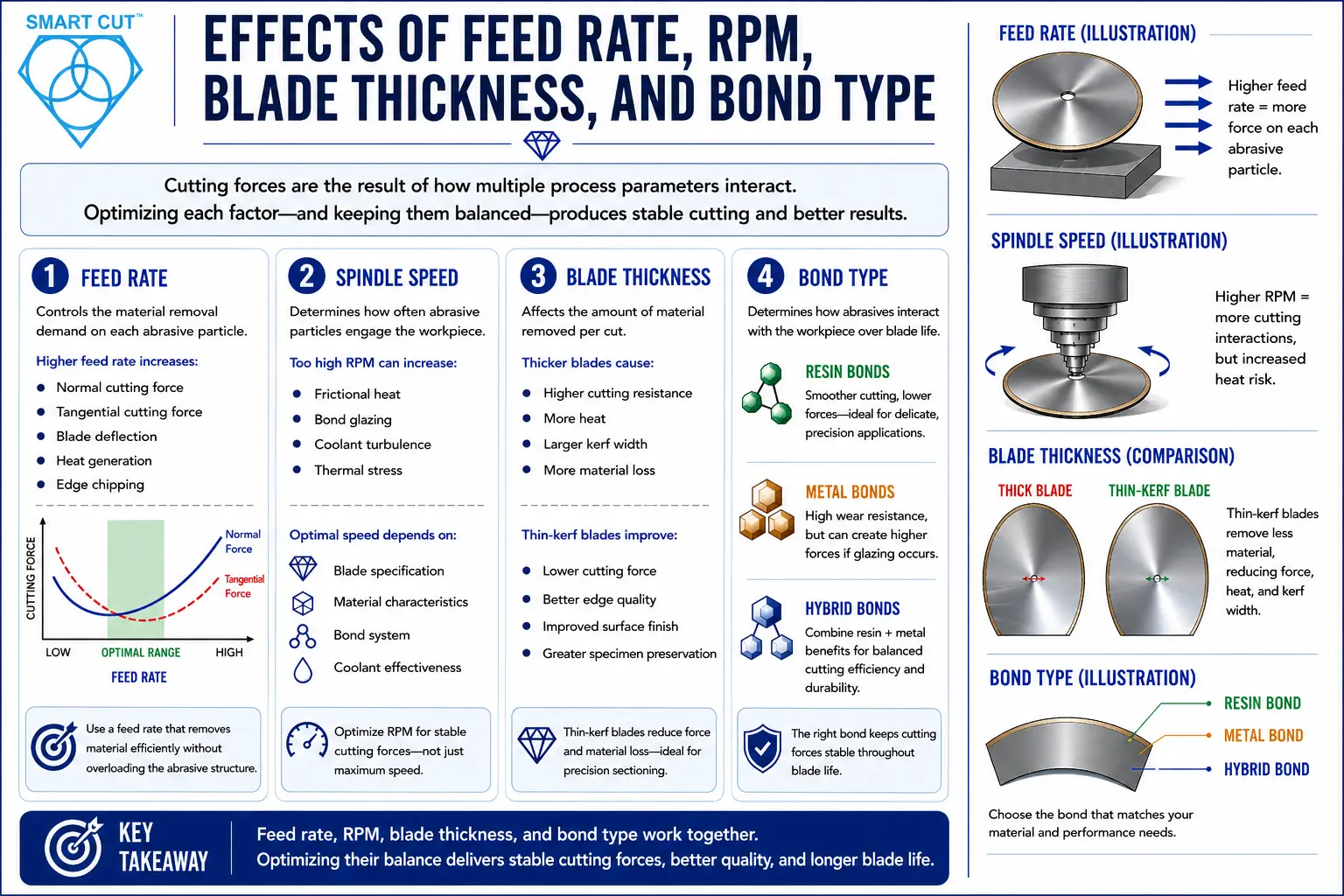
Cutting forces are never determined by a single process variable.
Instead, they result from the interaction of several operating parameters that must remain properly balanced throughout the cutting cycle.
Feed Rate
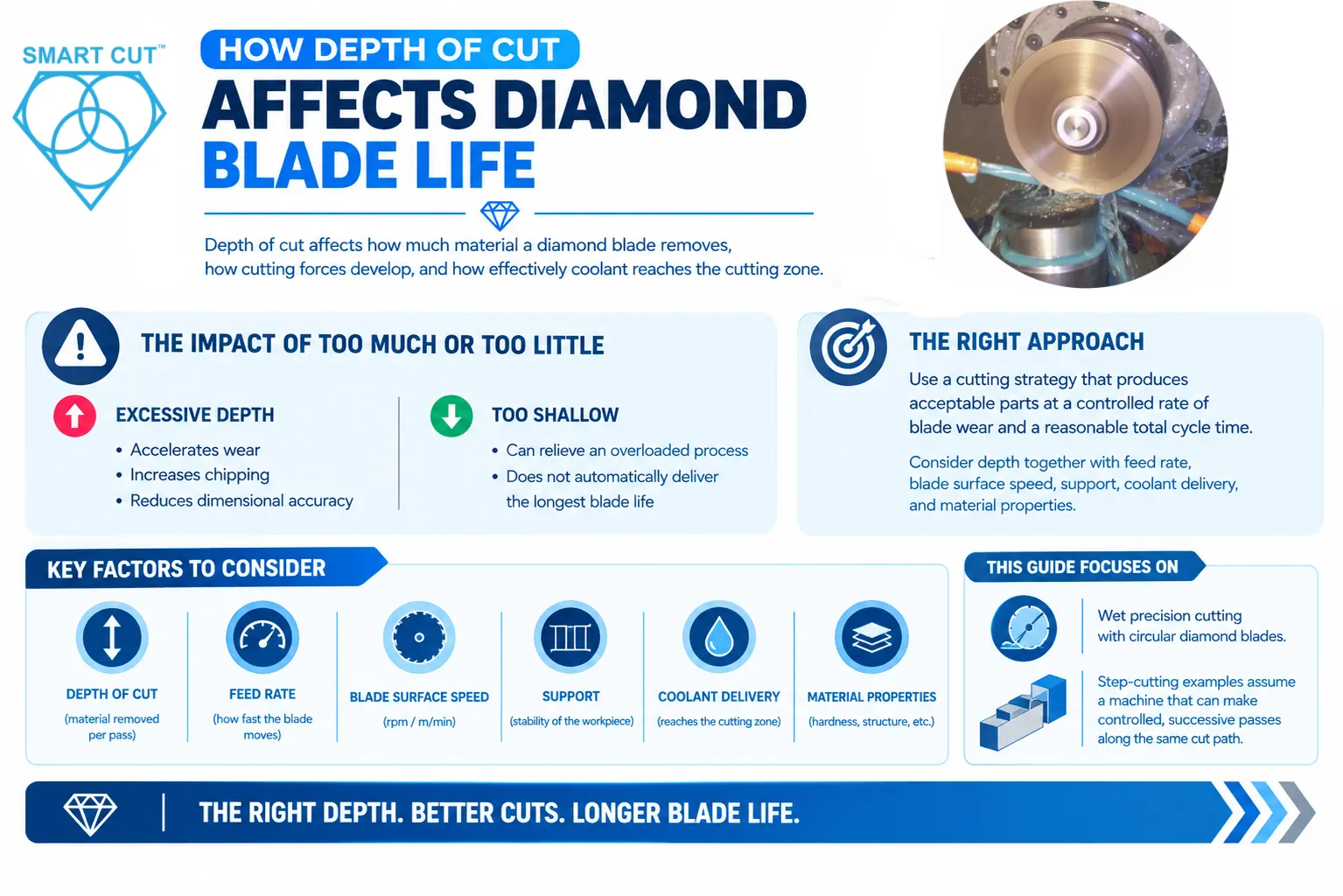
Feed rate largely determines the material removal demand placed upon each abrasive particle.
Higher feed rates generally increase:
- Normal cutting force
- Tangential cutting force
- Blade deflection
- Heat generation
- Edge chipping
Extremely low feed rates, however, may encourage rubbing instead of efficient cutting, increasing friction while reducing productivity.
The objective is to identify a feed rate that maintains efficient material removal without overloading the abrasive structure.
Spindle Speed
Spindle speed influences the frequency at which abrasive particles engage the workpiece.
Increasing RPM may reduce the material removed by each abrasive particle while increasing the total number of cutting interactions.
However, excessively high spindle speeds may also increase:
- Frictional heating
- Bond polishing
- Coolant turbulence
- Thermal stress
Optimal spindle speed depends upon:
- Blade specification
- Material characteristics
- Bond system
- Coolant effectiveness
Rather than maximizing RPM, engineers should optimize spindle speed to achieve stable cutting forces throughout the sectioning process.
Blade Thickness
Blade thickness directly affects the amount of material removed during cutting.
Thicker blades typically generate:
- Higher cutting resistance
- Greater heat generation
- Larger kerf widths
- Increased material loss
Thin-kerf wafering blades reduce cutting force by minimizing the cross-sectional area of material removed.
Lower cutting resistance generally improves:
- Edge quality
- Surface finish
- Specimen preservation
- Blade efficiency
This is particularly valuable when cutting expensive semiconductor materials or precision laboratory specimens.
Bond Type
Bond selection determines how abrasive particles interact with the workpiece throughout blade life.
Resin bonds generally provide smoother cutting action with lower cutting forces and are commonly selected for delicate precision applications.
Metal bonds offer greater wear resistance but may generate higher cutting forces if glazing develops before fresh abrasive particles become exposed.
Hybrid bond systems combine characteristics of both resin and metal bonds to balance cutting efficiency and blade durability.
Selecting the proper bond system ensures that cutting forces remain stable throughout the blade’s service life.
Coolant Influence on Cutting Forces
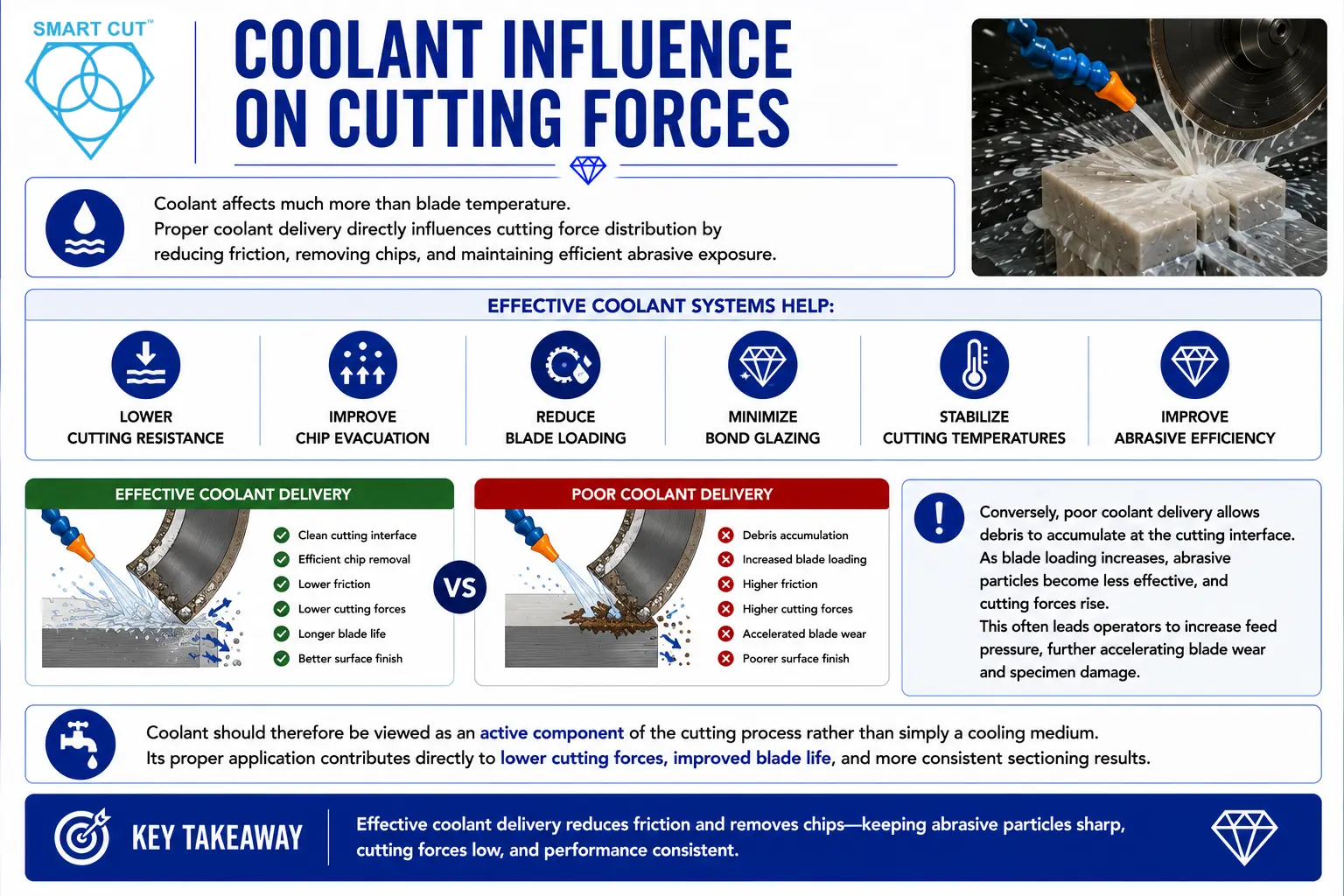
Coolant affects much more than blade temperature.
Proper coolant delivery directly influences cutting force distribution by reducing friction, removing chips, and maintaining efficient abrasive exposure.
Effective coolant systems help:
- Lower cutting resistance
- Improve chip evacuation
- Reduce blade loading
- Minimize bond glazing
- Stabilize cutting temperatures
- Improve abrasive efficiency
Conversely, poor coolant delivery allows debris to accumulate at the cutting interface.
As blade loading increases, abrasive particles become less effective, and cutting forces rise.
This often leads operators to increase feed pressure, further accelerating blade wear and specimen damage.
Coolant should therefore be viewed as an active component of the cutting process rather than simply a cooling medium.
Its proper application contributes directly to lower cutting forces, improved blade life, and more consistent sectioning results.
Process Optimization for Different Materials
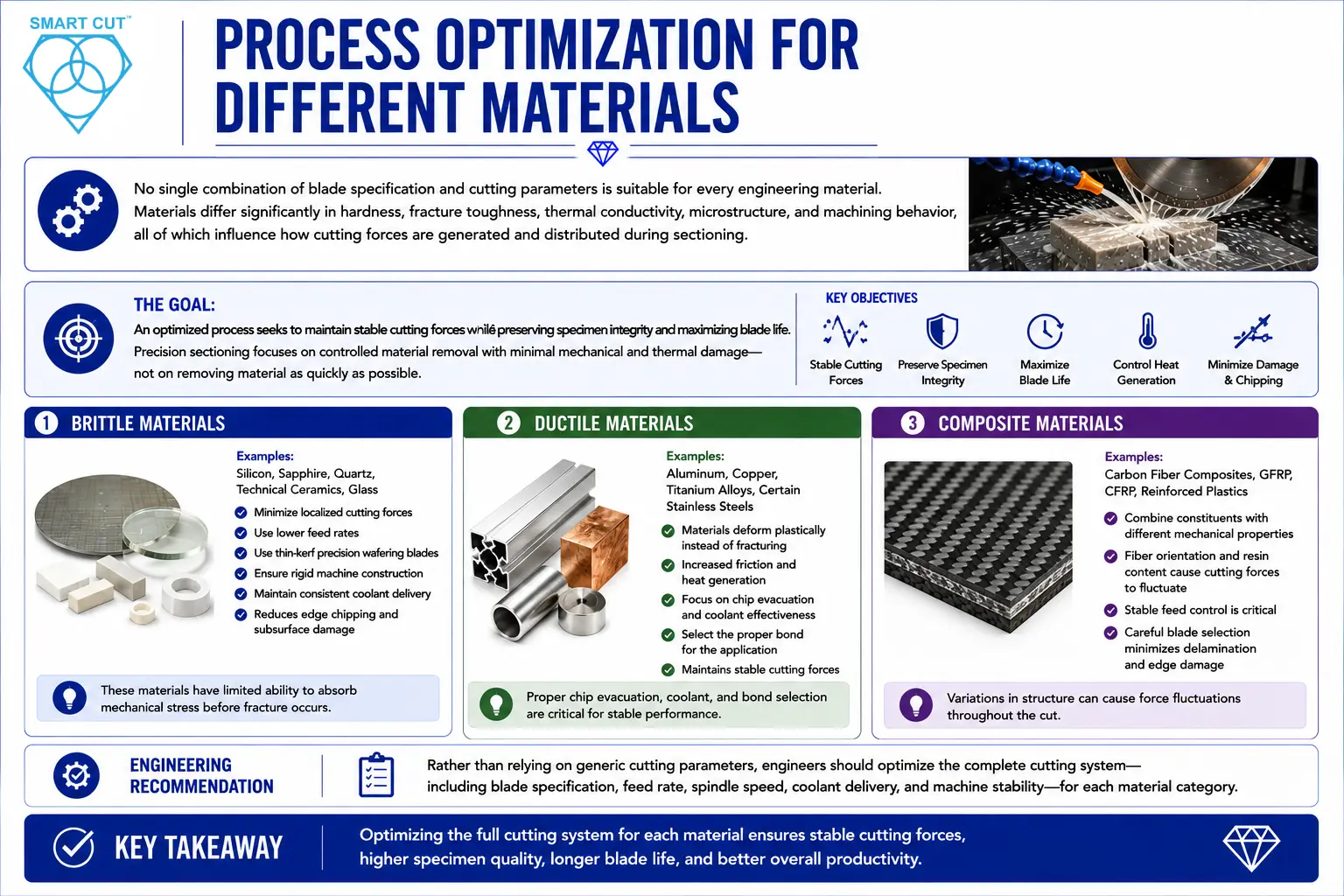
No single combination of blade specification and cutting parameters is suitable for every engineering material. Materials differ significantly in hardness, fracture toughness, thermal conductivity, microstructure, and machining behavior, all of which influence how cutting forces are generated and distributed during sectioning.
An optimized process seeks to maintain stable cutting forces while preserving specimen integrity and maximizing blade life. Rather than attempting to remove material as quickly as possible, precision sectioning focuses on controlled material removal with minimal mechanical and thermal damage.
For brittle materials such as silicon, sapphire, quartz, technical ceramics, and glass, minimizing localized cutting forces is essential. These materials have a limited ability to absorb mechanical stress before fracture occurs. Lower feed rates, thin-kerf precision wafering blades, rigid machine construction, and consistent coolant delivery help maintain controlled fracture while reducing edge chipping and subsurface damage.
More ductile materials – including aluminum, copper, titanium alloys, and certain stainless steels, respond differently. Instead of brittle fracture, these materials tend to deform plastically, increasing friction and heat generation. In these applications, chip evacuation, coolant effectiveness, and proper bond selection become increasingly important for maintaining stable cutting forces.
Composite materials often present an additional challenge because they combine constituents with significantly different mechanical properties. Variations in fiber orientation, resin content, or reinforcement hardness may cause cutting forces to fluctuate continuously throughout the cut. Stable feed control and careful blade selection are therefore critical for minimizing delamination and edge damage.
Rather than relying on generic cutting parameters, engineers should optimize the complete cutting system—including blade specification, feed rate, spindle speed, coolant delivery, and machine stability—for each material category.
Common Engineering Mistakes That Increase Cutting Forces
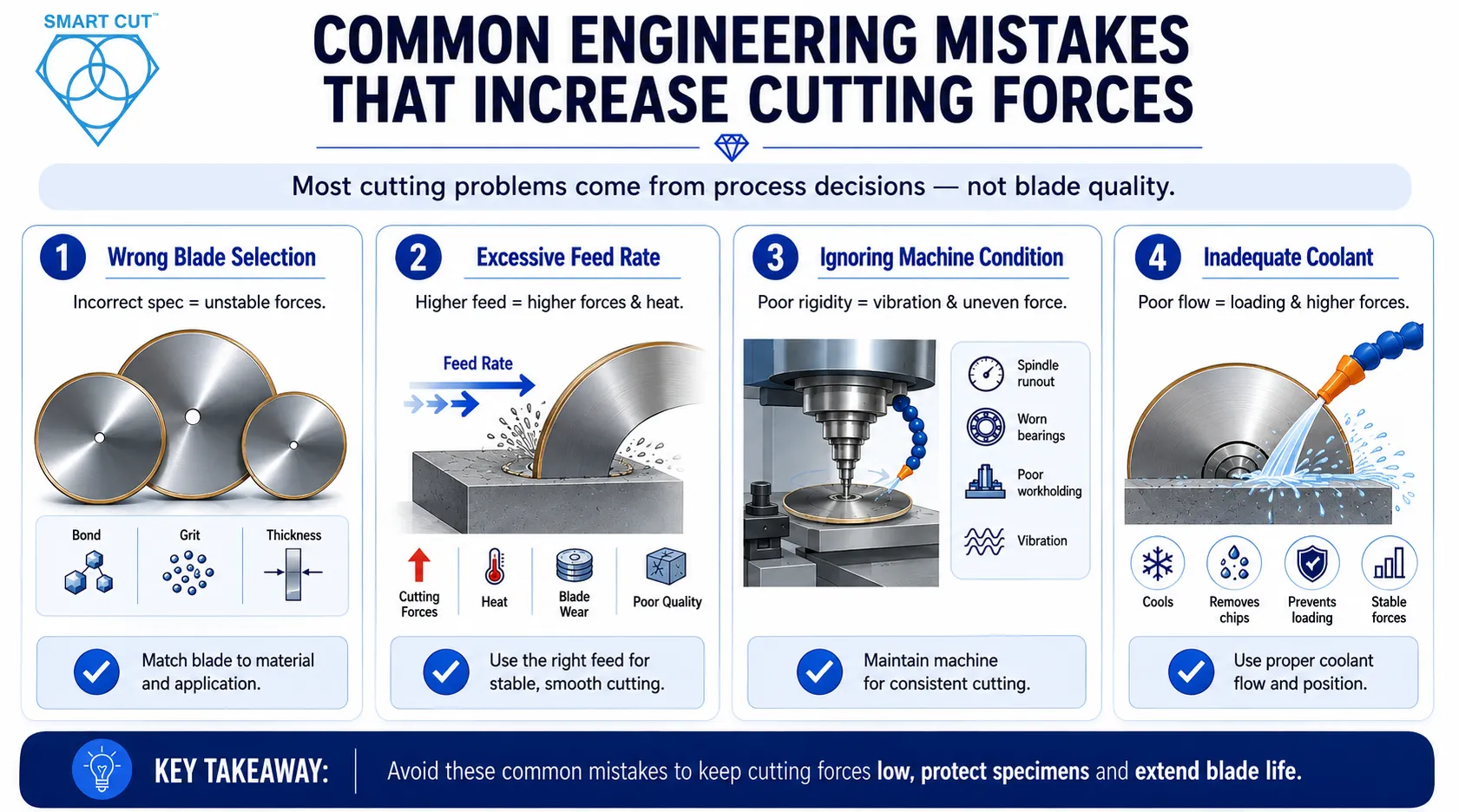
Many cutting problems originate from process decisions rather than blade quality. Understanding these common mistakes helps engineers prevent unnecessary specimen damage while improving blade utilization.
Selecting the Wrong Blade Specification
Choosing an inappropriate bond type, grit size, concentration, or blade thickness often results in unstable cutting forces regardless of machine settings.
A blade designed for aggressive material removal may generate unnecessarily high cutting forces when used for precision wafering, while an ultra-fine precision blade may wear rapidly if used in heavy-duty sectioning applications.
Proper blade selection should always consider:
- Material properties
- Required surface finish
- Sample dimensions
- Cutting machine capability
- Desired production rate
Increasing Feed Rate to Compensate for Reduced Blade Performance
As blades become loaded or worn, operators sometimes increase feed pressure in an attempt to maintain productivity.
Although this may temporarily increase cutting speed, it usually produces higher cutting forces, accelerated blade wear, increased heat generation, and poorer specimen quality.
The correct solution is to determine why cutting efficiency has declined rather than simply increasing mechanical loading.
Ignoring Machine Condition
Blade performance depends heavily on machine condition.
Even a premium diamond wafering blade cannot compensate for:
- Excessive spindle runout
- Loose spindle bearings
- Improper blade mounting
- Poor workholding
- Structural vibration
Routine inspection of the machine should therefore be considered part of process optimization.
Inadequate Coolant Management
Coolant is often viewed primarily as a method of controlling temperature.
In reality, coolant also reduces friction, removes chips, prevents blade loading, and helps maintain consistent cutting forces.
Poor coolant positioning or insufficient flow frequently contributes to unstable cutting conditions long before overheating becomes visible.
Material-Specific Recommendations
Although every application should be optimized individually, certain general principles can help establish stable cutting conditions for common engineering materials.
| Material | Primary Cutting Consideration | Recommended Process Focus |
|---|---|---|
| Silicon | Minimize edge chipping | Thin-kerf blade, low feed, stable spindle |
| Sapphire | Reduce subsurface cracking | Fine grit, controlled feed, efficient coolant |
| Glass | Prevent crack propagation | Low cutting force, rigid workholding |
| Alumina | Control brittle fracture | Precision feed control, stable machine geometry |
| Zirconia | Reduce edge damage | Fine-grit blade, optimized RPM |
| Silicon Carbide | Minimize abrasive wear | Appropriate bond selection, effective coolant |
| Tungsten Carbide | Maintain blade stability | Rigid machine, optimized feed rate |
| Aluminum | Reduce blade loading | Proper coolant, chip evacuation, and frequent dressing |
| Titanium Alloys | Control heat generation | Stable feed, efficient coolant delivery |
| Fiber-Reinforced Composites | Prevent delamination | Precision blade selection, controlled cutting forces |
These recommendations provide a starting point for process optimization. Final operating parameters should always be validated through application-specific testing.
Engineering Case Study
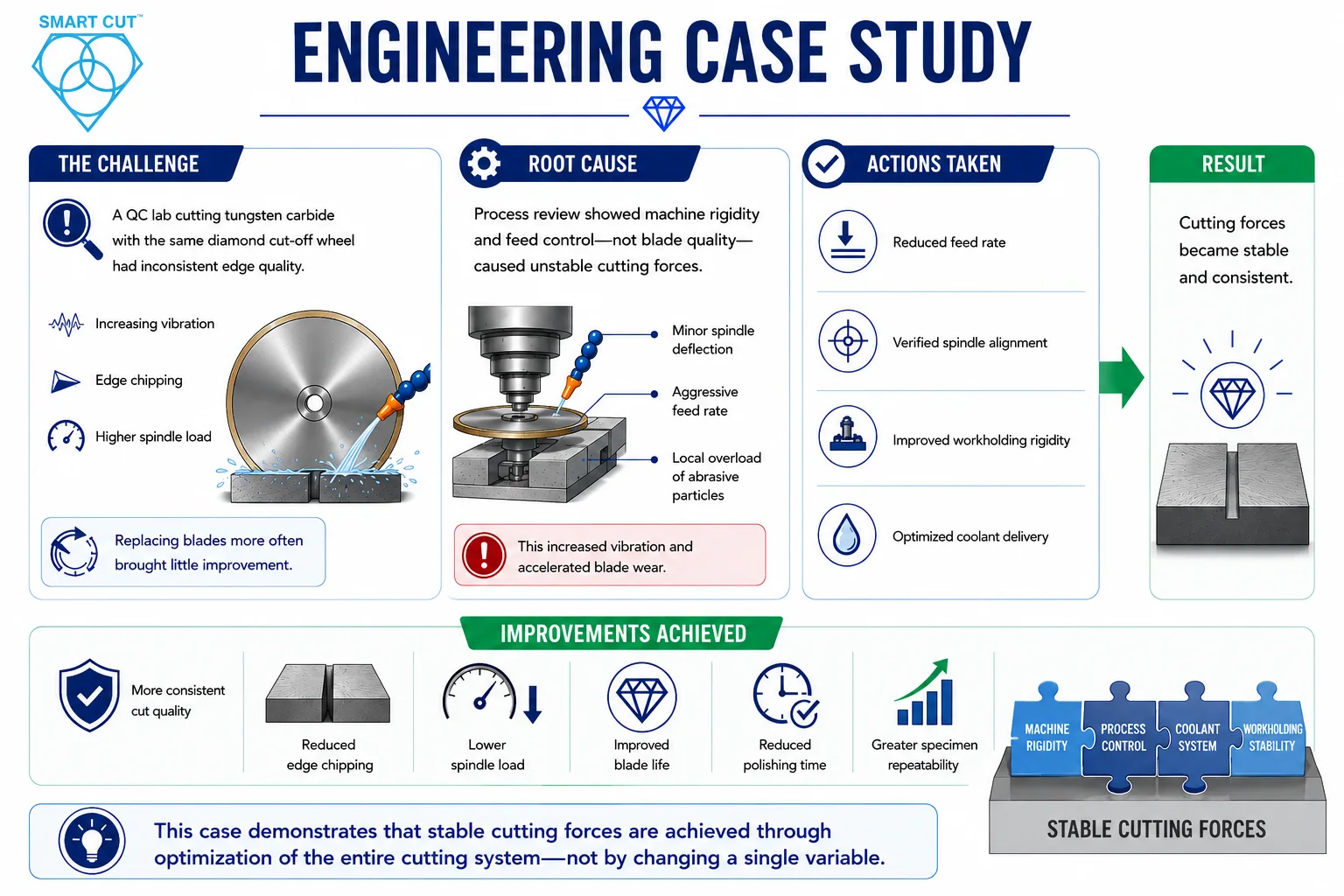
A quality-control laboratory responsible for preparing cross-sectional specimens of tungsten carbide experienced inconsistent edge quality despite using the same diamond cut-off wheel for every production batch.
Operators reported increasing vibration, occasional edge chipping, and higher spindle load during sectioning. Initial troubleshooting focused on replacing blades more frequently, but improvements were minimal.
A detailed process review revealed that machine rigidity and feed control—not blade quality – were the primary causes of unstable cutting forces. Minor spindle deflection combined with aggressive feed settings caused localized overload of the abrasive particles, increasing vibration and accelerating blade wear.
After reducing the feed rate, verifying spindle alignment, improving workholding rigidity, and optimizing coolant delivery, cutting forces became significantly more stable.
The improvements included:
- More consistent cut quality
- Reduced edge chipping
- Lower spindle load
- Improved blade life
- Reduced polishing time
- Greater specimen repeatability
The case demonstrates that stable cutting forces are achieved through optimization of the entire cutting system rather than by changing a single process variable.
Frequently Asked Questions
Cutting forces are generated as individual diamond or CBN abrasive particles interact with the workpiece during material removal.
They directly influence edge quality, subsurface damage, blade wear, dimensional accuracy, and overall cutting efficiency.
No. Excessive cutting forces often produce greater specimen damage while accelerating blade wear and reducing process stability.
Thin-kerf blades generally reduce cutting resistance because less material is removed during sectioning.
Yes. Loaded blades remove material less efficiently, increasing friction and mechanical resistance.
Yes. Proper coolant delivery reduces friction, improves chip evacuation, and helps maintain stable cutting conditions.
Rigid machines distribute cutting forces more evenly, reducing vibration, blade wander, and dimensional variation.
Absolutely. Bond type, grit size, blade thickness, and abrasive concentration all influence cutting force distribution.
Through proper blade selection, optimized feed rate and RPM, effective coolant delivery, rigid workholding, and routine blade maintenance.
Yes. Stable cutting forces generally produce more uniform abrasive wear and extend usable blade life.
Conclusion
Understanding cutting force distribution is fundamental to achieving consistent, low-damage metallographic sectioning. Every precision cutting operation involves a complex interaction between the blade, machine, workpiece, coolant, and process parameters, all of which influence how mechanical forces develop throughout the cut.
Rather than viewing cutting force as an isolated variable, engineers should consider it a direct indicator of overall process health. Stable force distribution contributes to improved specimen integrity, reduced subsurface damage, longer blade life, lower polishing requirements, and greater process repeatability.
Achieving these results requires more than selecting a high-quality diamond or CBN blade. Proper machine rigidity, accurate blade mounting, optimized feed rate and spindle speed, effective coolant delivery, and application-specific blade selection all work together to control cutting forces and improve cutting performance.
If you are experiencing excessive blade wear, inconsistent cut quality, edge chipping, or unstable sectioning performance, UKAM’s applications engineering team can help evaluate your process and recommend the optimal blade specification, machine configuration, and cutting parameters for your specific material and application.
Trusted by Tens of Thousands of Manufacturers, Laboratories,
Research Institutions Worldwide Since 1990
American Based Manufacturer
Established in 1990
Custom manufacturing
RELATED ARTICLES




Brian is an experienced professional in the field of precision cutting tools, with over 27 years of experience in technical support. Over the years, he has helped engineers, manufacturers, researchers, and contractors find the right solutions for working with advanced and hard-to-cut materials. He’s passionate about bridging technical knowledge with real-world applications to improve efficiency and accuracy.
As an author, Brian Farberov writes extensively on diamond tool design, application engineering, return on investment strategies, and process optimization, combining technical depth with a strong understanding of customer needs and market dynamics.