









How to Achieve Better Flatness with Diamond Lapping Discs: Material Selection, Grit Size & Process Optimization
Table of Contents
ToggleWhy Flatness Matters More Than Most Manufacturers Realize
Flatness is one of the most critical requirements in precision manufacturing. Whether producing optical components, semiconductor substrates, metallographic specimens, ceramic parts, or carbide tooling, poor flatness can affect assembly accuracy, surface quality, dimensional tolerances, and overall product performance.
Many manufacturers focus on achieving a specific surface finish while overlooking flatness requirements. A part may appear smooth but still fail inspection because it does not meet flatness specifications. In many cases, the root cause can be traced back to the lapping process.
Diamond lapping discs are widely used because they provide a controlled method of material removal while maintaining dimensional accuracy and producing superior surface finishes on hard and brittle materials. However, selecting the wrong disc specification, grit size, or operating parameters can result in inconsistent results, excessive polishing time, and increased production costs.
Understanding how diamond lapping discs work and how to select the proper specification can significantly improve flatness, surface quality, and process efficiency.
Trusted by Tens of Thousands of Manufacturers, Laboratories Research Institutions Worldwide Since 1990
Established in 1990
Why Flatness Matters in Precision Manufacturing
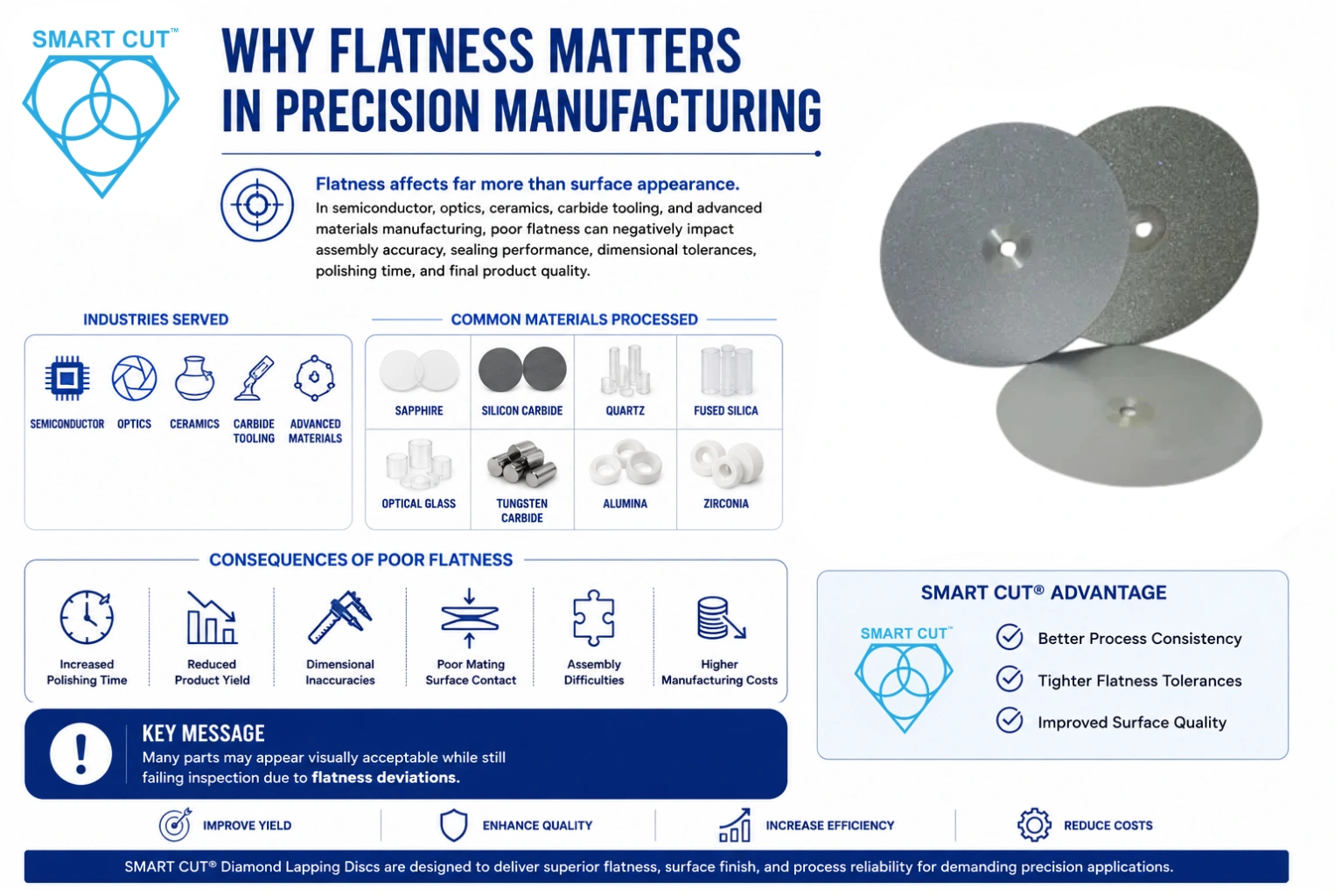
Flatness affects far more than surface appearance. In semiconductor, optics, ceramics, carbide tooling, and advanced materials manufacturing, poor flatness can negatively impact assembly accuracy, sealing performance, dimensional tolerances, polishing time, and final product quality.
Manufacturers processing sapphire, silicon carbide, quartz, fused silica, optical glass, tungsten carbide, alumina, and zirconia often discover that achieving the desired surface finish alone does not guarantee part acceptance. Components may appear visually acceptable while still failing inspection due to flatness deviations.
Typical consequences of poor flatness include:
- Increased polishing time
- Reduced product yield
- Dimensional inaccuracies
- Poor mating surface contact
- Assembly difficulties
- Increased manufacturing costs
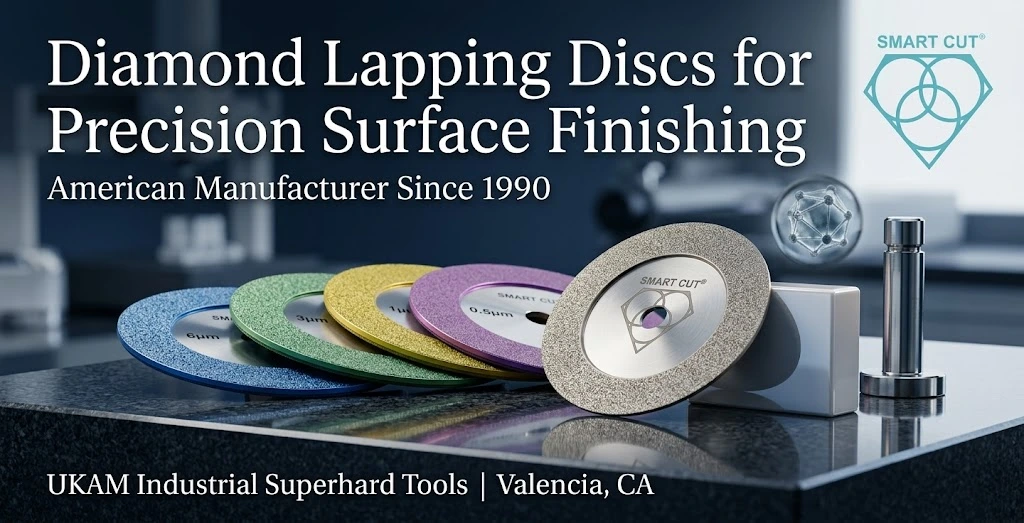
For this reason, many manufacturers rely on SMART CUT® Diamond Lapping Discs to improve process consistency while achieving tighter flatness tolerances and better surface quality.
The Problem: Why Flatness Issues Occur During Lapping
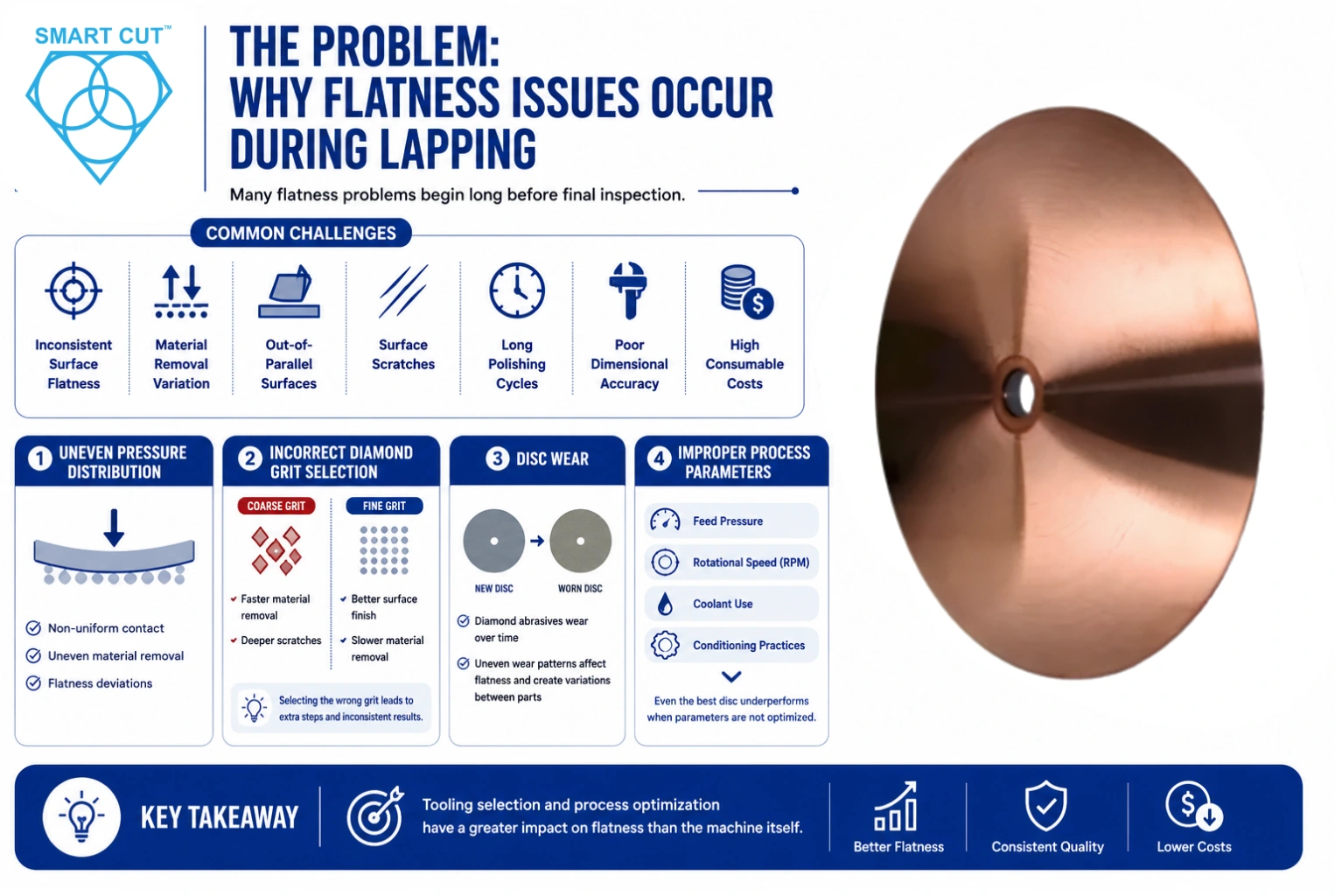
Many flatness problems originate long before final inspection.
Manufacturers frequently encounter:
Inconsistent surface flatness
Excessive material removal variation
Out-of-parallel surfaces
Surface scratches
Long polishing cycles
Poor dimensional accuracy
High consumable costs
These problems are often blamed on the machine or operator. In reality, tooling selection and process parameters are frequently the primary causes.
Uneven Pressure Distribution
Lapping relies on uniform contact between the workpiece and abrasive surface.
When pressure distribution becomes uneven, material removal rates vary across the part. This can result in non-uniform surfaces and flatness deviations.
Incorrect Diamond Grit Selection
Grit size directly affects both material removal rate and surface finish.
Coarse grits remove material quickly but may leave deeper scratches. Fine grits produce smoother finishes but remove material more slowly.
Selecting the wrong grit often leads to unnecessary processing steps and inconsistent results.
Disc Wear
As diamond abrasives wear, cutting efficiency changes.
Uneven wear patterns can affect flatness and create variations between parts.
Improper Process Parameters
Feed pressure, rotational speed, coolant use, and conditioning practices all influence final results.
Even a high-quality diamond lapping disc may underperform when process parameters are not optimized.
Engineering Logic: How Diamond Lapping Discs Improve Flatness
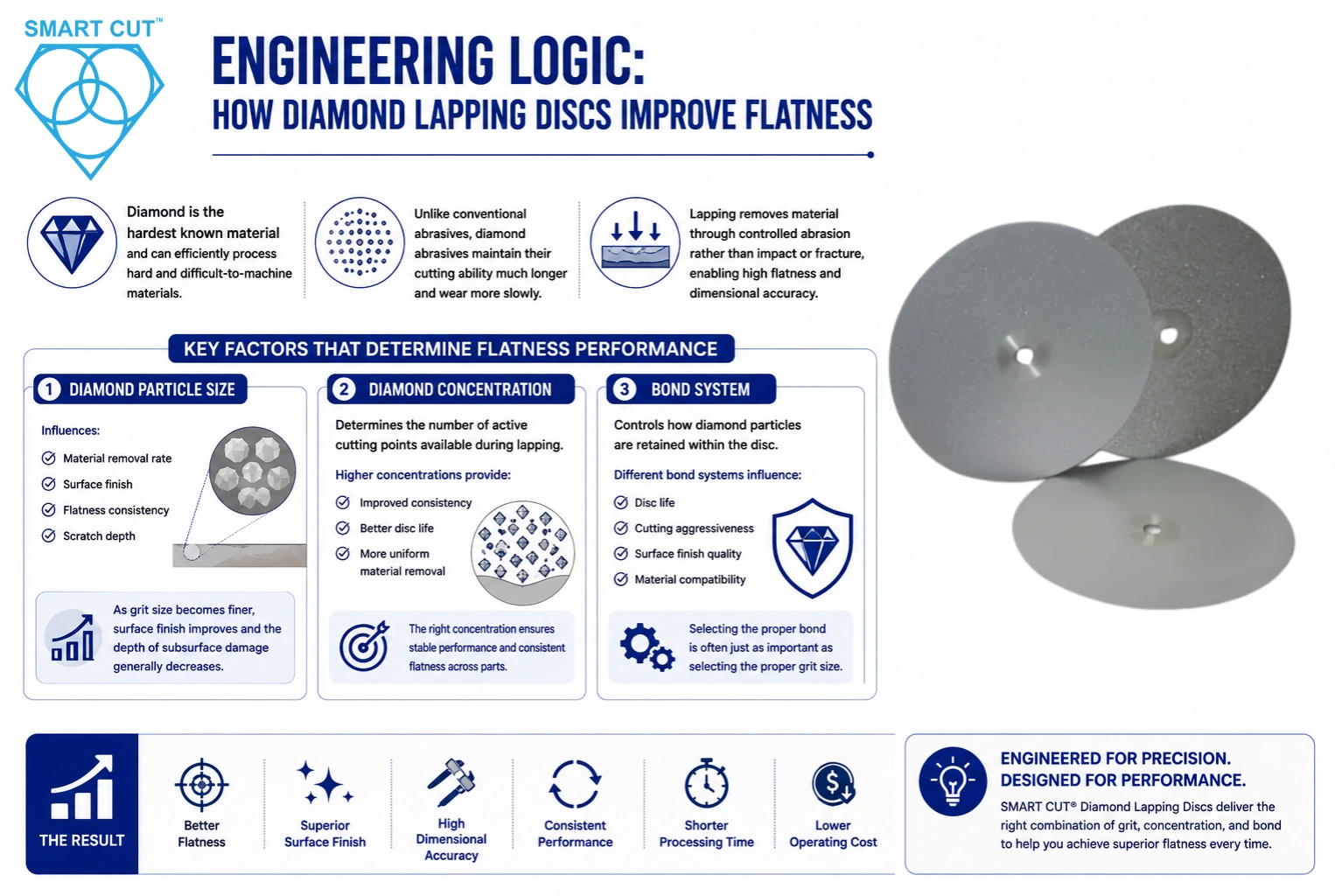
Unlike conventional abrasives that fracture and wear rapidly, diamond abrasives maintain their cutting ability much longer.
Diamond is the hardest known material and can efficiently process materials that are difficult to machine using conventional abrasives.
The lapping process removes material through controlled abrasion rather than impact or fracture. This controlled material removal enables manufacturers to achieve high levels of flatness and dimensional accuracy.
Several factors determine overall performance.
Diamond Particle Size
Diamond particle size influences:
- Material removal rate
- Surface finish
- Flatness consistency
- Scratch depth
As grit size becomes finer, surface finish improves, and the depth of subsurface damage generally decreases.
Diamond Concentration
Diamond concentration affects the number of active cutting points available during the lapping process.
Higher concentrations can provide:
- Improved consistency
- Better disc life
- More uniform material removal
Bond System
The bond system controls how diamond particles are retained within the disc.
Different bond systems influence:
Disc life
Cutting aggressiveness
Surface finish quality
Material compatibility
Selecting the proper bond is often just as important as selecting the proper grit size.
Material-Specific Recommendations
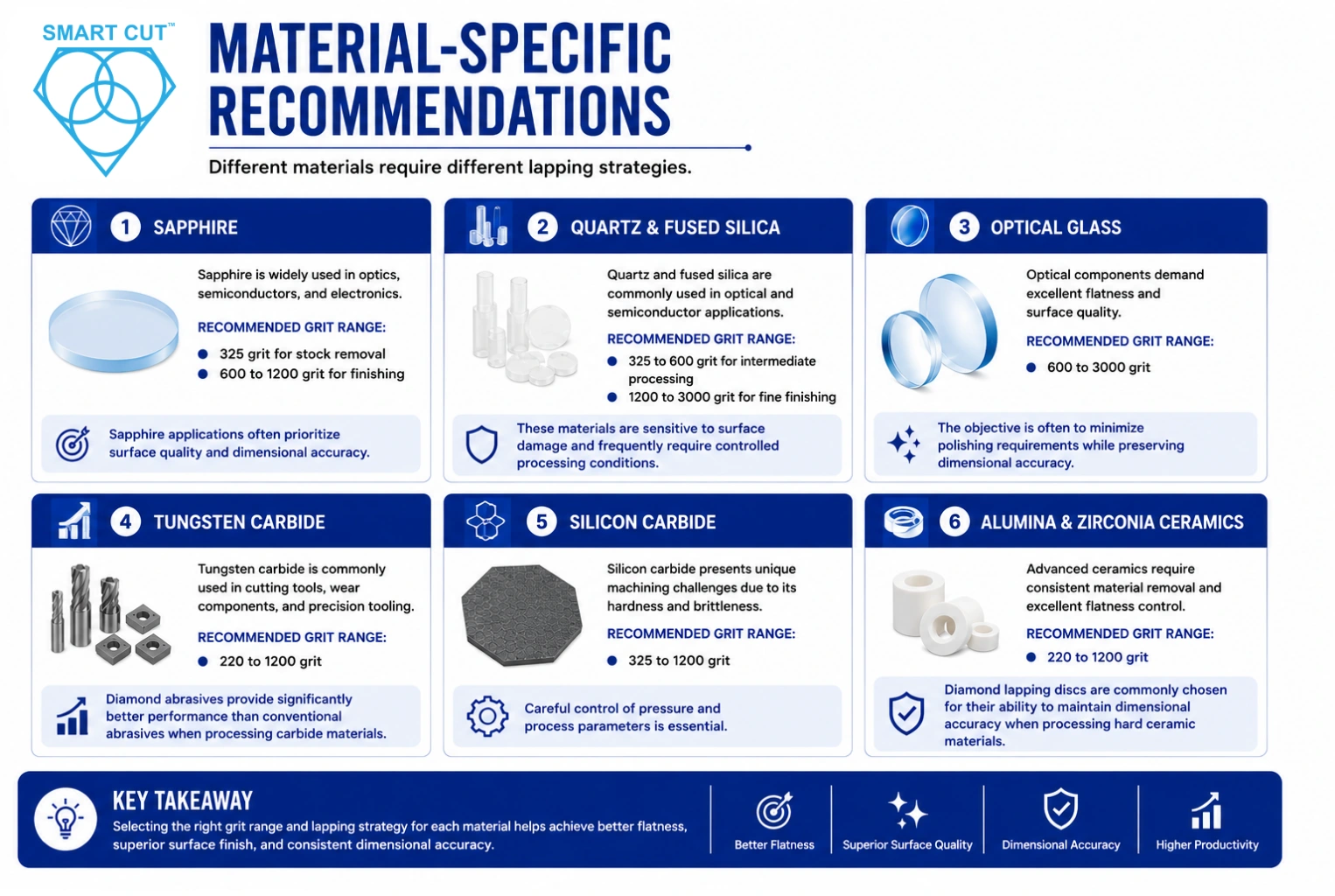
Different materials require different lapping strategies.
Sapphire
Sapphire is widely used in optics, semiconductors, and electronics.
Recommended grit range:
- 325 grit for stock removal
- 600 to 1200 grit for finishing
Sapphire applications often prioritize surface quality and dimensional accuracy.
Quartz & Fused Silica
Quartz and fused silica are commonly used in optical and semiconductor applications.
Recommended grit range:
- 325 to 600 grit for intermediate processing
- 1200 to 3000 grit for fine finishing
These materials are sensitive to surface damage and frequently require controlled processing conditions.
Optical Glass
Optical components demand excellent flatness and surface quality.
Recommended grit range:
- 600 to 3000 grit
The objective is often to minimize polishing requirements while preserving dimensional accuracy.
Tungsten Carbide
Tungsten carbide is commonly used in cutting tools, wear components, and precision tooling.
Recommended grit range:
- 220 to 1200 grit
Diamond abrasives provide significantly better performance than conventional abrasives when processing carbide materials.
Silicon Carbide
Silicon carbide presents unique machining challenges due to its hardness and brittleness.
Recommended grit range:
- 325 to 1200 grit
Careful control of pressure and process parameters is essential.
Alumina & Zirconia Ceramics
Advanced ceramics require consistent material removal and excellent flatness control.
Recommended grit range:
- 220 to 1200 grit
Diamond lapping discs are commonly chosen for their ability to maintain dimensional accuracy when processing hard ceramic materials.
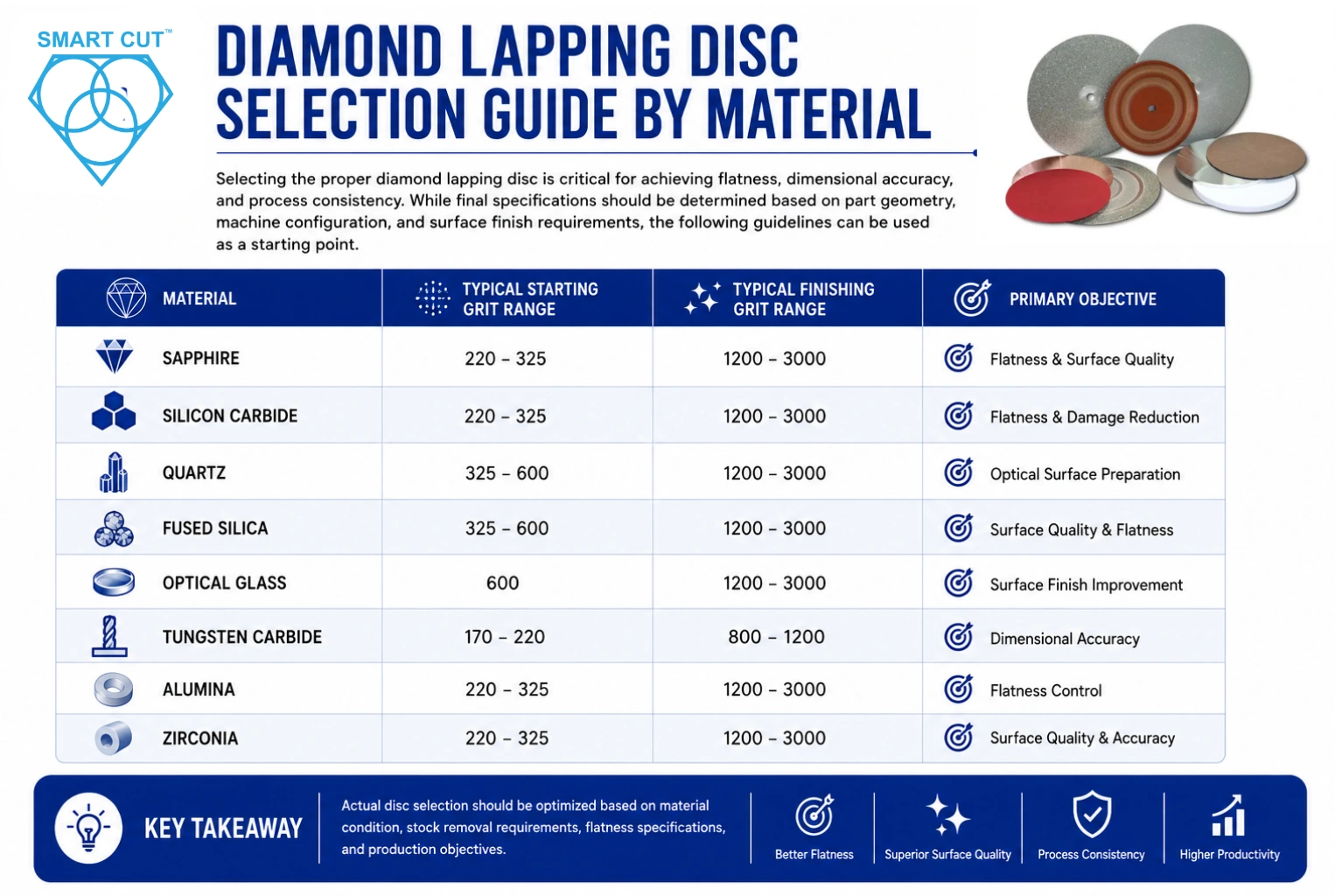
Diamond Lapping Disc Selection Guide by Material
Selecting the proper diamond lapping disc is critical for achieving flatness, dimensional accuracy, and process consistency. While final specifications should be determined based on part geometry, machine configuration, and surface finish requirements, the following guidelines can be used as a starting point.
| Material | Typical Starting Grit Range | Typical Finishing Grit Range | Primary Objective |
|---|---|---|---|
| Sapphire | 220–325 | 1200–3000 | Flatness & Surface Quality |
| Silicon Carbide | 220–325 | 1200–3000 | Flatness & Damage Reduction |
| Quartz | 325–600 | 1200–3000 | Optical Surface Preparation |
| Fused Silica | 325–600 | 1200–3000 | Surface Quality & Flatness |
| Optical Glass | 600 | 1200–3000 | Surface Finish Improvement |
| Tungsten Carbide | 170–220 | 800–1200 | Dimensional Accuracy |
| Alumina | 220–325 | 1200–3000 | Flatness Control |
| Zirconia | 220–325 | 1200–3000 | Surface Quality & Accuracy |
Actual disc selection should be optimized based on material condition, stock removal requirements, flatness specifications, and production objectives.
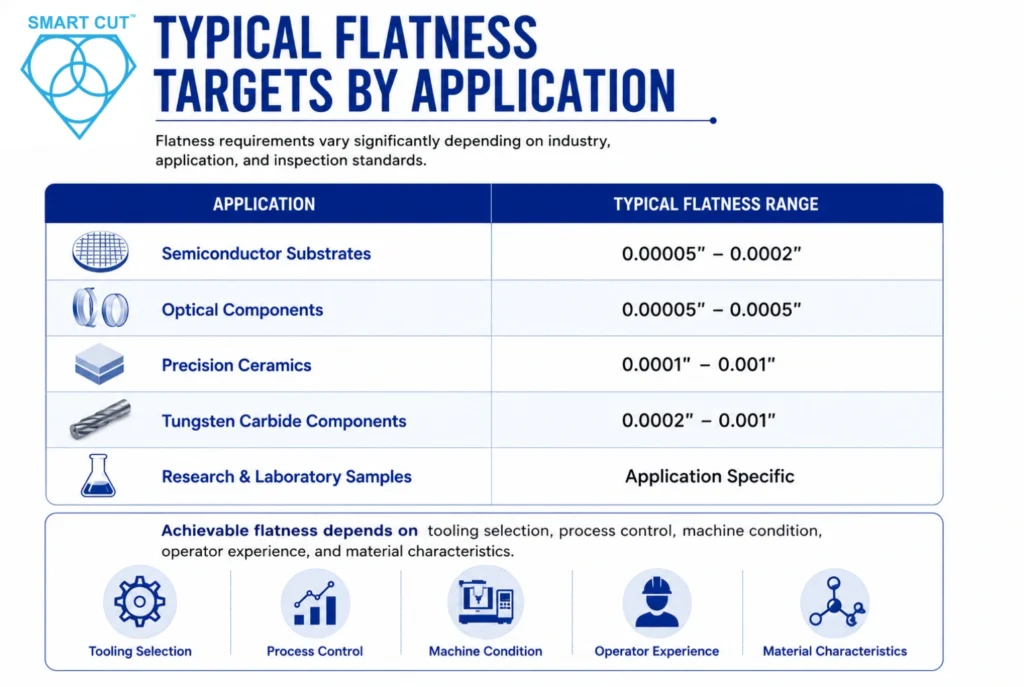
Typical Flatness Targets by Application
Flatness requirements vary significantly depending on industry, application, and inspection standards.
| Application | Typical Flatness Range |
|---|---|
| Semiconductor Substrates | 0.00005"–0.0002" |
| Optical Components | 0.00005"–0.0005" |
| Precision Ceramics | 0.0001"–0.001" |
| Tungsten Carbide Components | 0.0002"–0.001" |
| Research & Laboratory Samples | Application Specific |
Achievable flatness depends on tooling selection, process control, machine condition, operator experience, and material characteristics.
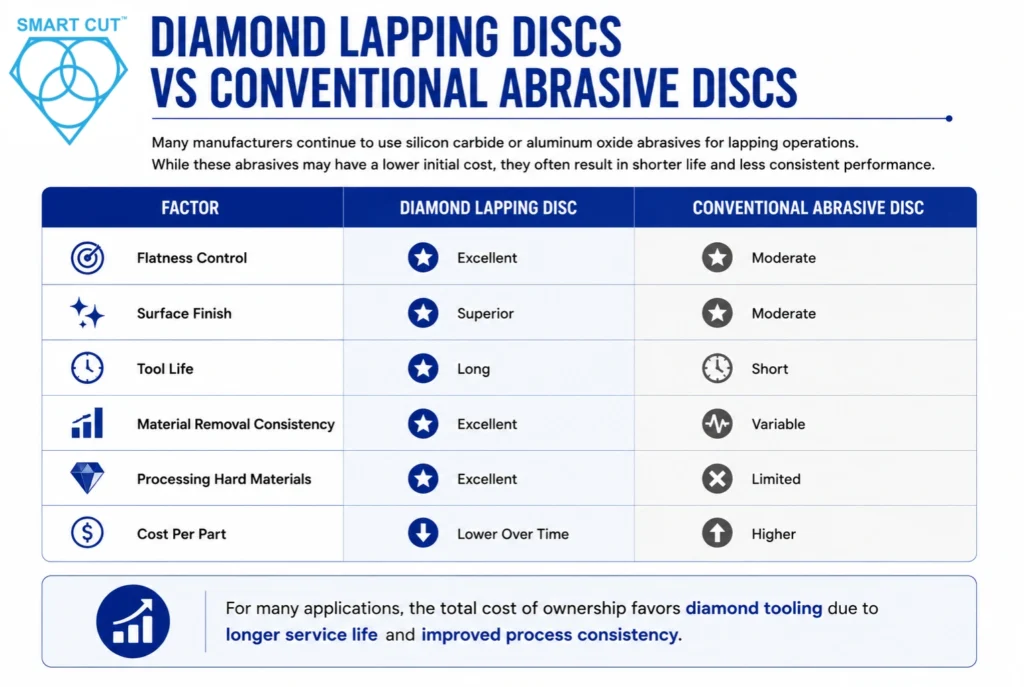
Diamond Lapping Discs vs Conventional Abrasive Discs
Many manufacturers continue to use silicon carbide or aluminum oxide abrasives for lapping operations.
While these abrasives may have a lower initial cost, they often result in shorter life and less consistent performance.
| Factor | Diamond Lapping Disc | Conventional Abrasive Disc |
|---|---|---|
| Flatness Control | Excellent | Moderate |
| Surface Finish | Superior | Moderate |
| Tool Life | Long | Short |
| Material Removal Consistency | Excellent | Variable |
| Processing Hard Materials | Excellent | Limited |
| Cost Per Part | Lower Over Time | Higher |
For many applications, the total cost of ownership favors diamond tooling due to longer service life and improved process consistency.
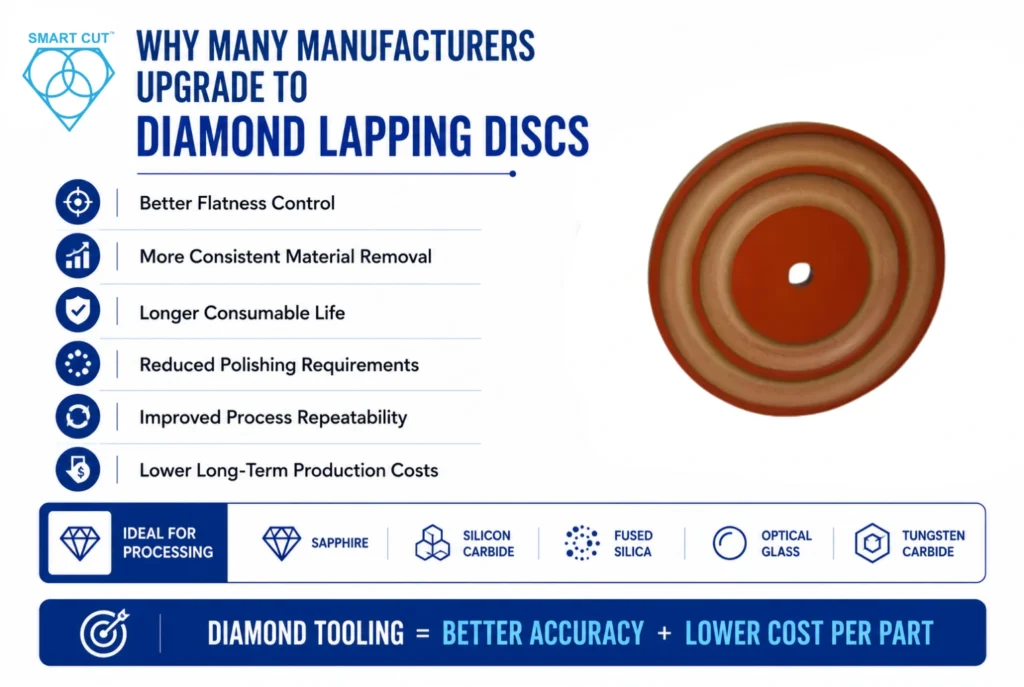
Why Many Manufacturers Upgrade to Diamond Lapping Discs
Although conventional abrasives may have a lower initial purchase price, many manufacturers find that diamond tooling delivers a lower total cost per part.
Advantages commonly include:
- Better flatness control
- More consistent material removal
- Longer consumable life
- Reduced polishing requirements
- Improved process repeatability
- Lower long-term production costs
These benefits become increasingly important when processing high-value materials such as sapphire, silicon carbide, fused silica, optical glass, and tungsten carbide.
Common Causes of Poor Surface Finish
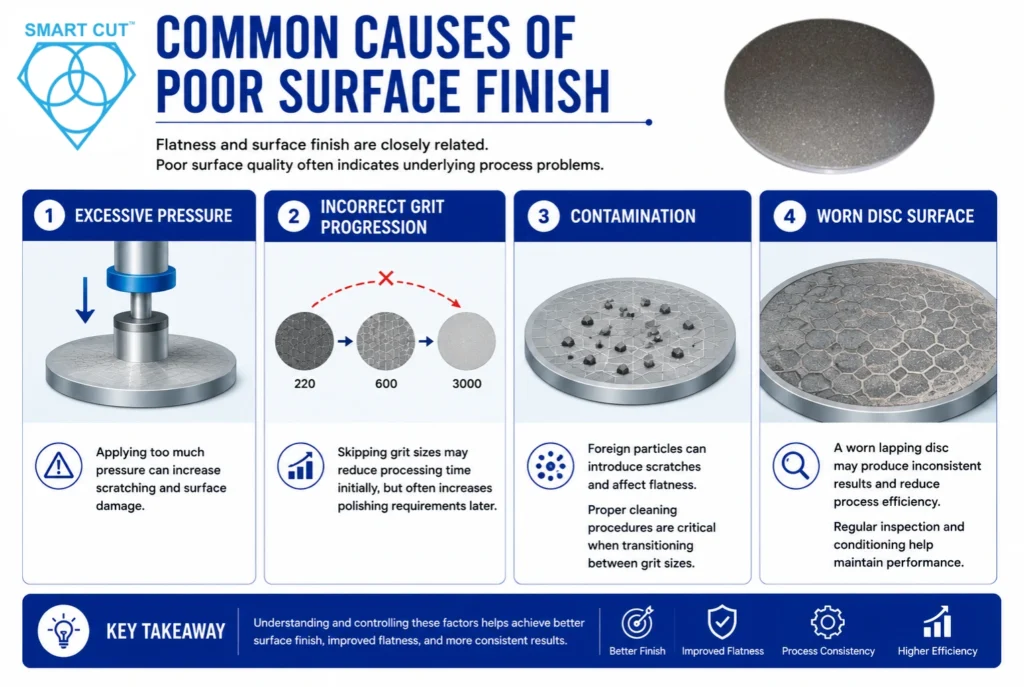
Flatness and surface finish are closely related.
Poor surface quality often indicates underlying process problems.
Excessive Pressure
Applying too much pressure can increase scratching and surface damage.
Incorrect Grit Progression
Skipping grit sizes may reduce processing time initially, but often increases polishing requirements later.
Contamination
Foreign particles can introduce scratches and affect flatness.
Proper cleaning procedures are critical when transitioning between grit sizes.
Worn Disc Surface
A worn lapping disc may produce inconsistent results and reduce process efficiency.
Regular inspection and conditioning help maintain performance.
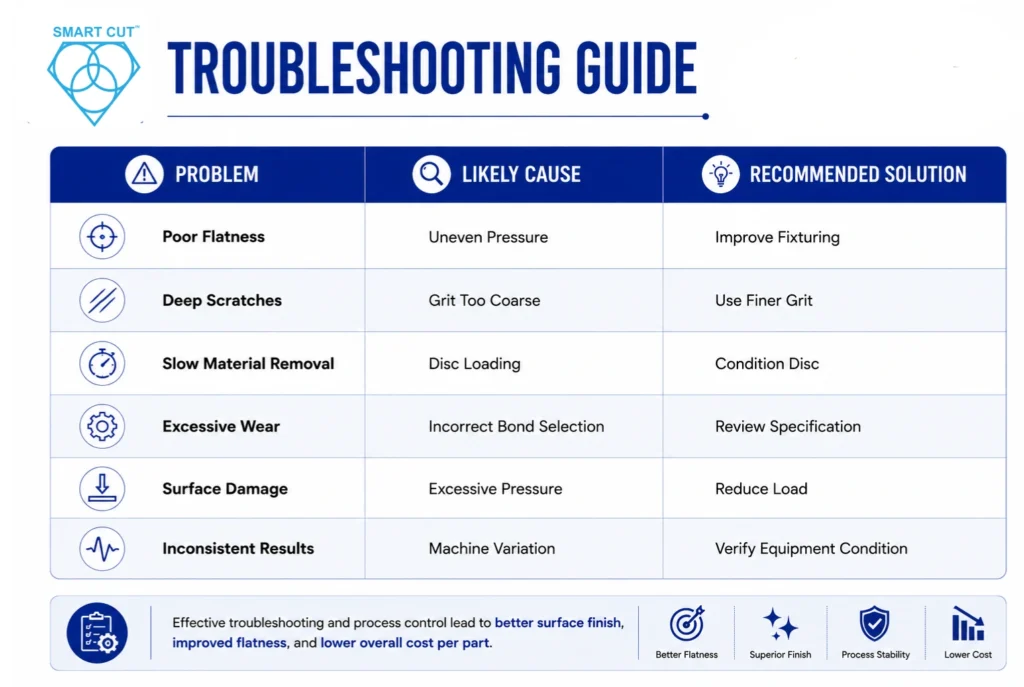
Troubleshooting Guide
| Problem | Likely Cause | Recommended Solution |
|---|---|---|
| Poor Flatness | Uneven Pressure | Improve Fixturing |
| Deep Scratches | Grit Too Coarse | Use Finer Grit |
| Slow Material Removal | Disc Loading | Condition Disc |
| Excessive Wear | Incorrect Bond Selection | Review Specification |
| Surface Damage | Excessive Pressure | Reduce Load |
| Inconsistent Results | Machine Variation | Verify Equipment Condition |
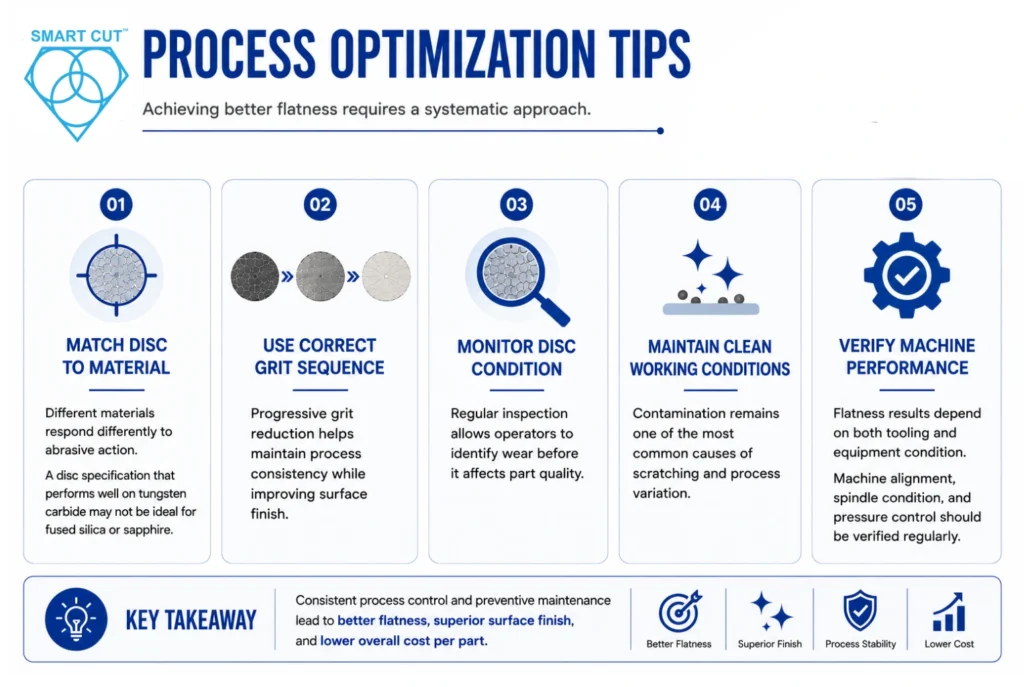
Process Optimization Tips
Achieving better flatness requires a systematic approach.
Match the Disc to the Material
Different materials respond differently to abrasive action.
A disc specification that performs well on tungsten carbide may not be ideal for fused silica or sapphire.
Use the Correct Grit Sequence
Progressive grit reduction helps maintain process consistency while improving surface finish.
Monitor Disc Condition
Regular inspection allows operators to identify wear before it affects part quality.
Maintain Clean Working Conditions
Contamination remains one of the most common causes of scratching and process variation.
Verify Machine Performance
Flatness results depend on both tooling and equipment condition.
Machine alignment, spindle condition, and pressure control should be verified regularly.
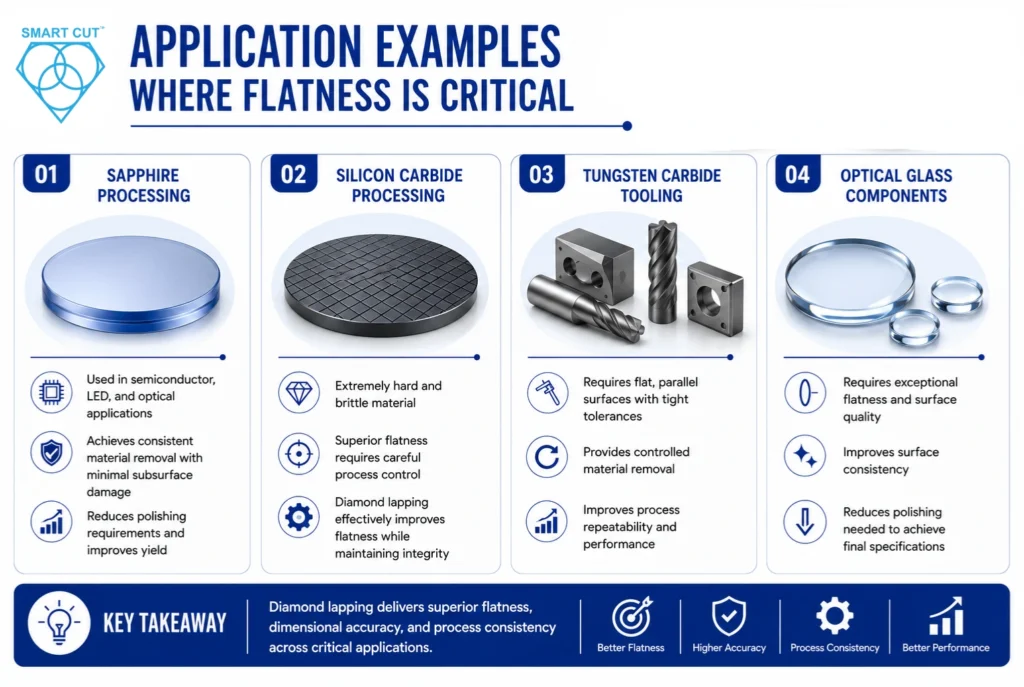
Application Examples Where Flatness Is Critical
Sapphire Processing
Sapphire substrates are commonly used in semiconductor, LED, and optical applications where flatness and dimensional accuracy directly affect downstream polishing and inspection results.
Diamond lapping helps manufacturers achieve consistent material removal while minimizing subsurface damage and reducing polishing requirements.
Silicon Carbide Processing
Silicon carbide is one of the most difficult materials to process due to its combination of hardness and brittleness.
Achieving superior flatness typically requires careful control of grit size, pressure, disc condition, and process parameters. Diamond lapping remains one of the most effective methods for improving flatness while maintaining dimensional integrity.
Tungsten Carbide Tooling
Manufacturers of carbide cutting tools and wear components often require flat, parallel surfaces with tight dimensional tolerances.
Diamond lapping discs provide controlled material removal and improved process repeatability compared to conventional abrasives.
Optical Glass Components
Optical components frequently require exceptional flatness and surface quality before final polishing.
Diamond lapping helps improve surface consistency while reducing the amount of polishing required to achieve final specifications.
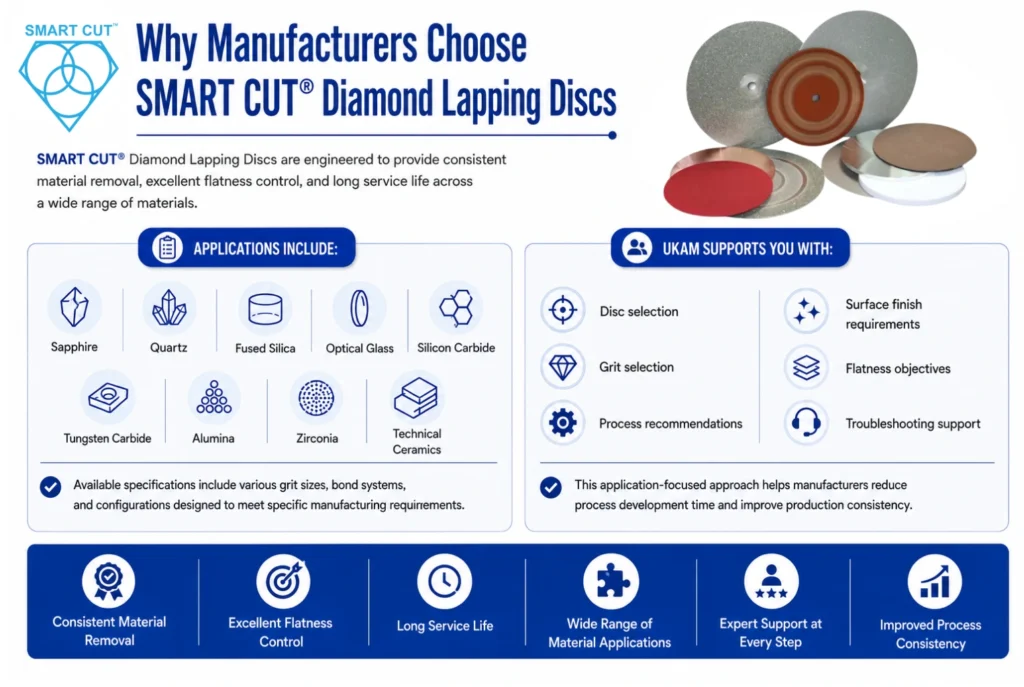
Why Manufacturers Choose SMART CUT® Diamond Lapping Discs
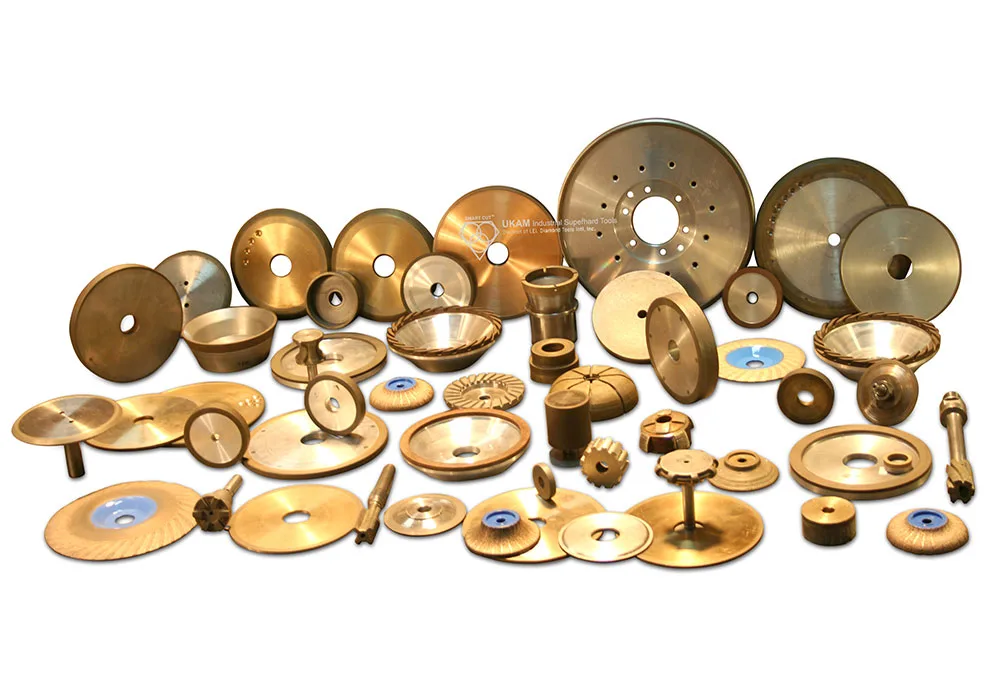
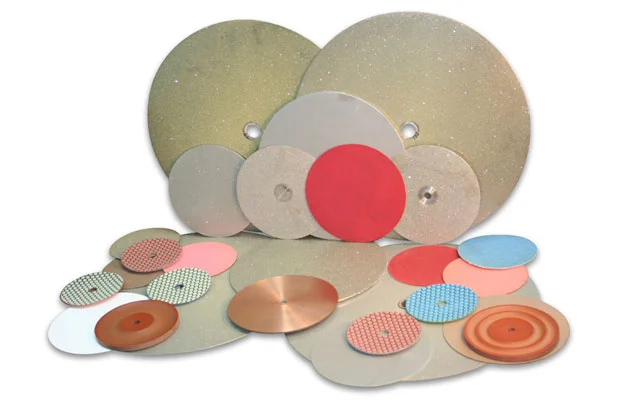
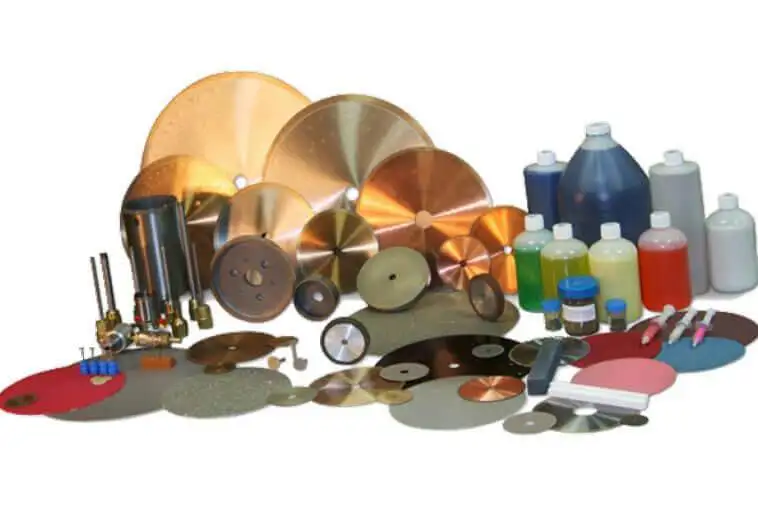
SMART CUT® Diamond Lapping Discs are engineered to provide consistent material removal, excellent flatness control, and long service life across a wide range of materials.
Applications include:
- Sapphire
- Quartz
- Fused Silica
- Optical Glass
- Silicon Carbide
- Tungsten Carbide
- Alumina
- Zirconia
- Technical Ceramics
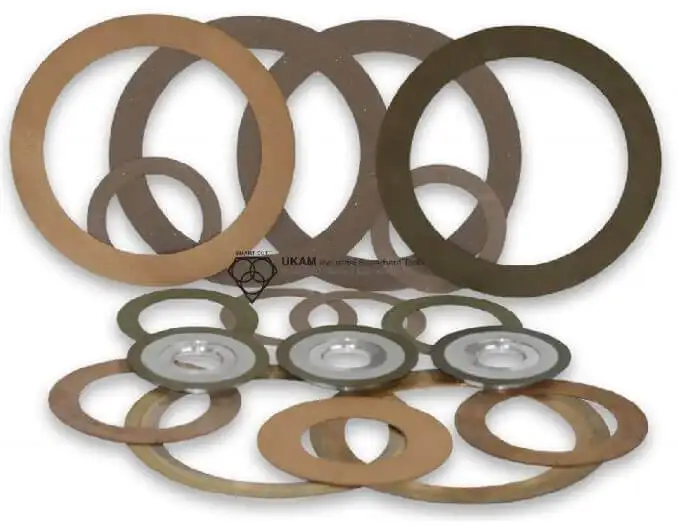
Available specifications include various grit sizes, bond systems, and configurations designed to meet specific manufacturing requirements.
In addition to supplying tooling, UKAM works with customers to assist with:
- Disc selection
- Grit selection
- Process recommendations
- Surface finish requirements
- Flatness objectives
- Troubleshooting support
This application-focused approach helps manufacturers reduce process development time and improve production consistency.
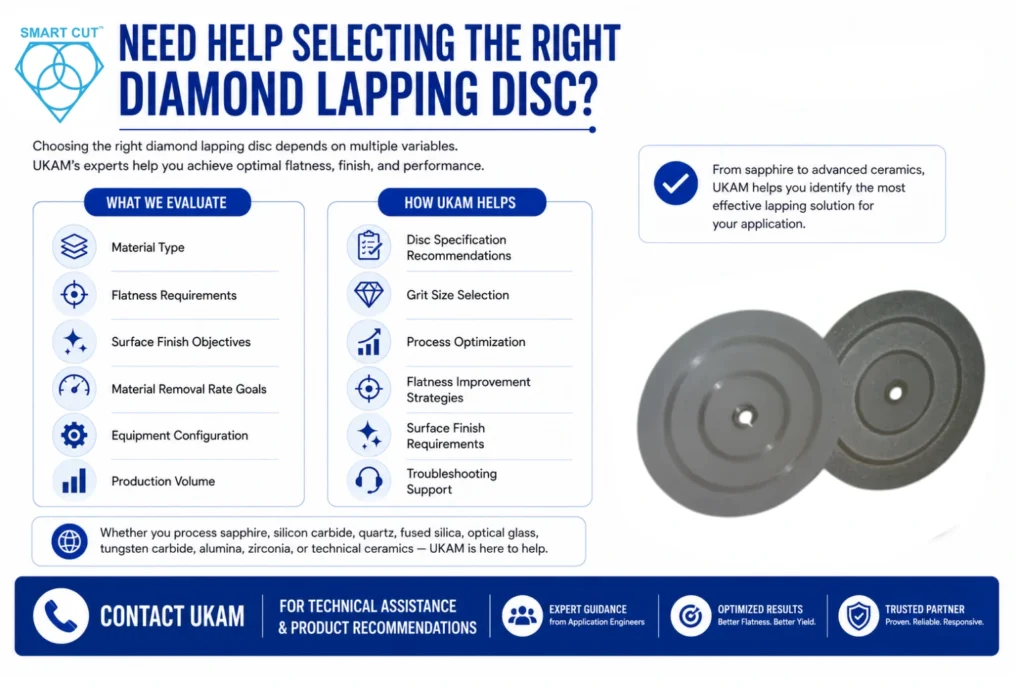
Need Help Selecting the Right Diamond Lapping Disc?
Selecting the proper diamond lapping disc depends on multiple variables, including:
- Material type
- Flatness requirements
- Surface finish objectives
- Material removal rate goals
- Equipment configuration
- Production volume
UKAM’s application engineers assist customers with:
- Disc specification recommendations
- Grit size selection
- Process optimization
- Flatness improvement strategies
- Surface finish requirements
- Troubleshooting support
Whether processing sapphire, silicon carbide, quartz, fused silica, optical glass, tungsten carbide, alumina, zirconia, or advanced ceramics, UKAM can help identify the most effective lapping solution for your application.
Contact UKAM for technical assistance and product recommendations.
Frequently Asked Questions
The answer depends on the material, removal requirements, and desired surface finish. Coarser grits provide faster stock removal, while finer grits improve surface quality.
Diamond lapping discs remove material through controlled abrasion, allowing manufacturers to achieve consistent flatness and dimensional accuracy.
Common materials include sapphire, quartz, fused silica, optical glass, silicon carbide, tungsten carbide, alumina, zirconia, and advanced ceramics.
Conclusion
Achieving superior flatness requires more than simply selecting a diamond lapping disc. Material properties, grit size, bond selection, process parameters, machine condition, and operating practices all influence final results.
Manufacturers processing sapphire, optical glass, quartz, fused silica, tungsten carbide, silicon carbide, and advanced ceramics often rely on diamond lapping discs because they provide consistent material removal, improved flatness control, and superior surface finish compared to conventional abrasives.
By selecting the proper disc specification and optimizing the lapping process, manufacturers can reduce polishing time, improve dimensional accuracy, increase productivity, and lower overall production costs.
Trusted by Tens of Thousands of Manufacturers, Laboratories,
Research Institutions Worldwide Since 1990
Established in 1990
RELATED ARTICLES

Brian is an experienced professional in the field of precision cutting tools, with over 27 years of experience in technical support. Over the years, he has helped engineers, manufacturers, researchers, and contractors find the right solutions for working with advanced and hard-to-cut materials. He’s passionate about bridging technical knowledge with real-world applications to improve efficiency and accuracy.
As an author, Brian Farberov writes extensively on diamond tool design, application engineering, return on investment strategies, and process optimization, combining technical depth with a strong understanding of customer needs and market dynamics.
About Brian Farberov
Brian is an experienced professional in the field of precision cutting tools, with over 27 years of experience in technical support. Over the years, he has helped engineers, manufacturers, researchers, and contractors find the right solutions for working with advanced and hard-to-cut materials. He’s passionate about bridging technical knowledge with real-world applications to improve efficiency and accuracy. As an author, Brian Farberov writes extensively on diamond tool design, application engineering, return on investment strategies, and process optimization, combining technical depth with a strong understanding of customer needs and market dynamics.
View all posts by Brian Farberov