blog, Grinding

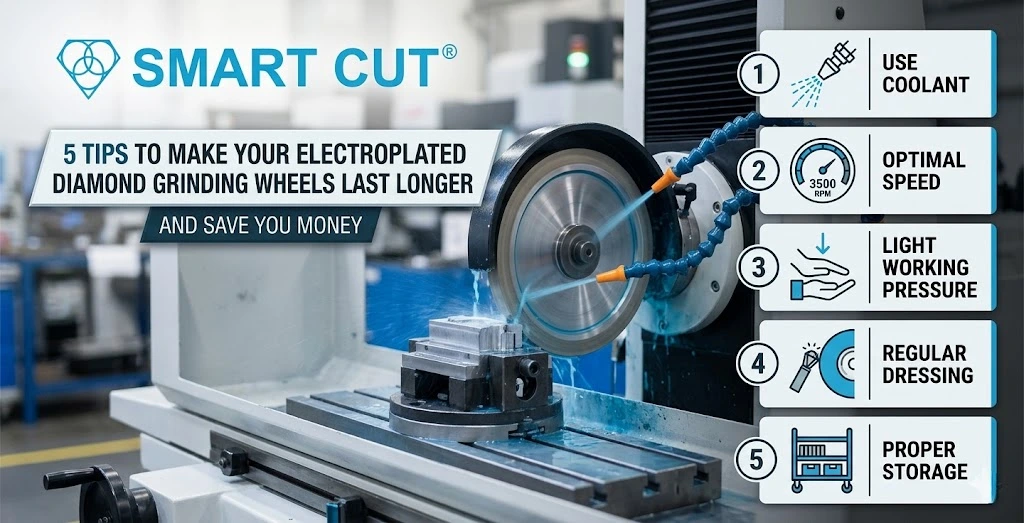
5 Tips That Make Your Electroplated Diamond Grinding Wheels Last Longer — And Save You Money

Table of Contents

When you invest in precision electroplated diamond wheels, you are investing in one of the most aggressive, high-performance abrasive technologies available in industrial manufacturing.  Unlike multi-layer bonded systems, electroplated tools expose a single layer of diamond or CBNcrystals locked into a nickel matrix — maximizing protrusion height, cutting speed, and profile fidelity. That precision comes at a cost. Once that single layer is gone, the wheel is done.

For engineers and production teams running tight tolerances on advanced ceramics, composites, carbide, quartz, glass, or semiconductor materials, wheel life is not just a maintenance topic — it’s a cost-of-production variable that directly affects throughput, surface quality, and your bottom line.

At UKAM Industrial Superhard Tools, we have manufactured precision diamond & CBN electroplated wheels for laboratories, production floors, and R&D environments since 1990. The guidance below is drawn from that experience — not generic machining theory.

Trusted by Tens of Thousands of Manufacturers, Laboratories Research Institutions Worldwide Since 1990

American Based Manufacturer

Established in 1990

Custom manufacturing

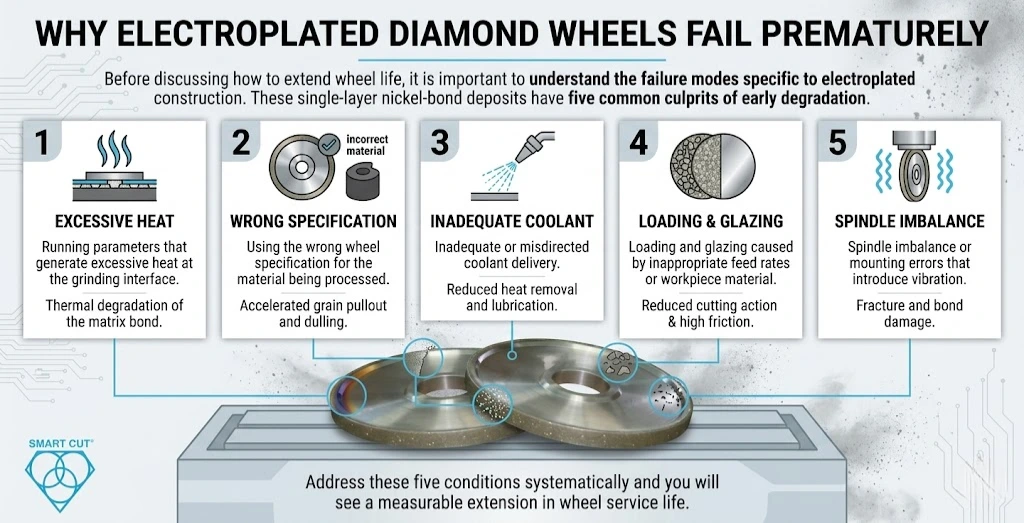
Why Electroplated Diamond Wheels Fail Prematurely

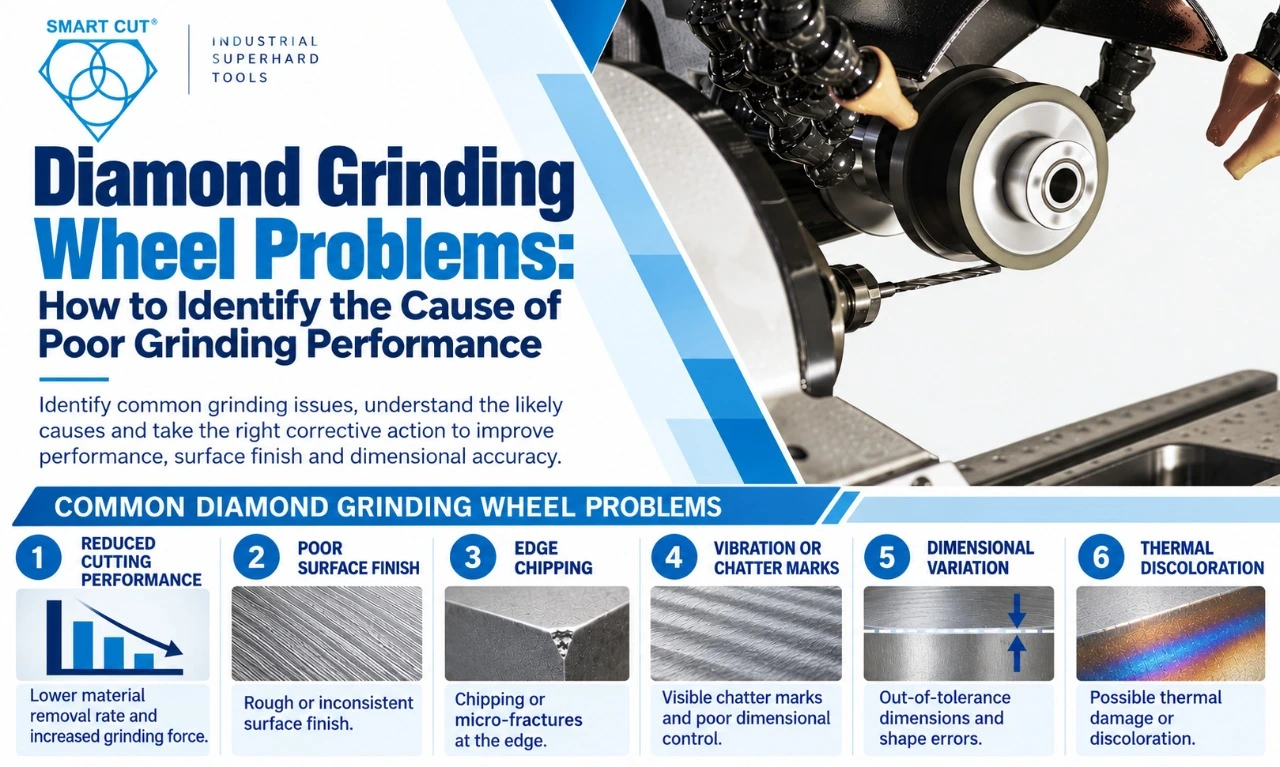
Before discussing how to extend wheel life, it is important to understand the failure modes specific to electroplated construction. Because the abrasive layer is a single-layer nickel-bond deposit, any condition that accelerates grain pullout, dulls cutting edges, or thermally degrades the matrix directly shortens usable life. The most common culprits are:

Address these five conditions systematically and you will see a measurable extension in wheel service life.

Tip 1: Match Your Wheel Specification Precisely to the Application

The single most impactful decision you make for wheel longevity happens before the wheel ever touches the spindle — selecting the right specification for your material and process.

For electroplated diamond grinding wheels, this means carefully evaluating diamond grit size, concentration, and substrate geometry against the hardness, fracture toughness, and desired surface finish of the workpiece. Coarser grit removes material faster but leaves rougher surfaces and generates more heat per unit contact. Finer grit improves surface finish but is more susceptible to loading when cutting soft, gummy, or thermally sensitive materials.

CBN is the correct abrasive choice for hardened steels and ferrous alloys, while diamond is appropriate for non-ferrous and non-metallic materials including ceramics, composites, glass, quartz, and carbide. Running diamond on ferrous materials accelerates wear due to carbon diffusion at elevated temperatures — a mismatch that destroys a wheel in a fraction of its expected service life.

UKAM’s diamond & CBN electroplated wheels are available in fully custom specifications. If your current wheel is wearing faster than expected, the first diagnostic question is whether the specification is correctly matched to the process — not whether you are running it harder. Our application engineers can assist with this evaluation.

For a deeper understanding of how grit size affects tool performance, refer to our Knowledge Center article on selecting the right diamond mesh size for your application.

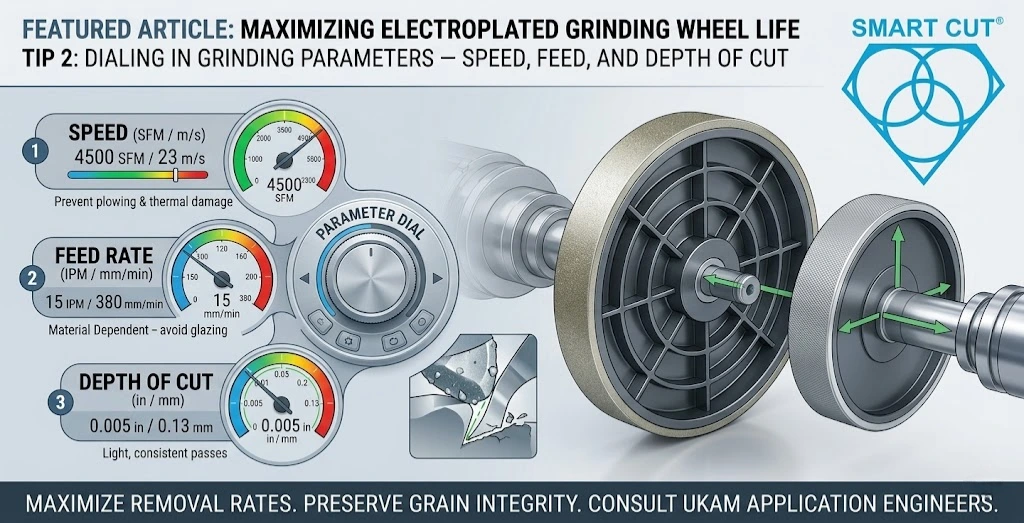
Tip 2: Dial In Grinding Parameters — Speed, Feed, and Depth of Cut

Electroplated wheels are aggressive by design. The high protrusion of abrasive grains means they can operate at higher material removal rates than bonded wheels — but that same characteristic makes them sensitive to parameter errors that generate excessive grinding forces.

Wheel Surface Speed (SFM/m/s): Operating within the recommended surface speed range keeps the cutting action efficient. Too slow and the wheel plows rather than cuts, generating heat and applying excessive radial force on individual grains. Too fast without adequate coolant creates thermal concentration that can soften the nickel bond and cause premature grain pullout.

Feed Rate: Aggressive infeed on hard materials like carbide or advanced ceramics overloads individual diamond crystals, causing micro-fracture or extraction at the bond interface. On softer or more ductile materials, too slow a feed rate causes glazing and loading. The goal is a feed rate that allows each grain to take a chip, not rub.

Depth of Cut: For precision applications — particularly when using an electroplated diamond cut off wheel for slicing or sectioning — shallow, consistent passes preserve grain integrity and produce repeatable surface finishes.

Document your baseline parameters for each material-wheel combination. Deviations from those baselines are often the earliest indicator of a wheel that is beginning to dull or load.

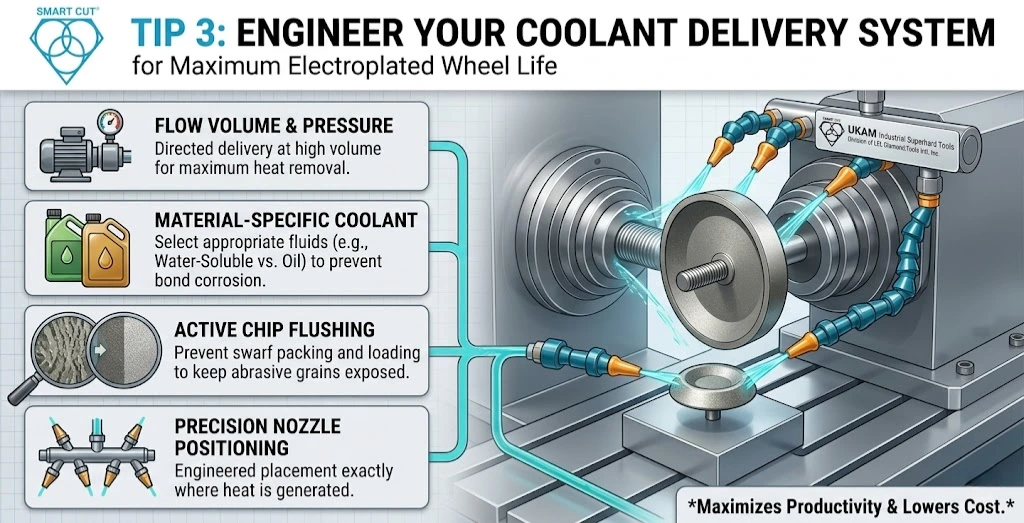
Tip 3: Engineer Your Coolant Delivery System, Not Just the Coolant

Cooling in precision grinding is engineering — not afterthought. For electroplated diamond grinding wheels, inadequate cooling is the leading cause of premature failure in production environments. The single abrasive layer has no thermal buffer; heat generated at the cutting zone goes directly into the wheel substrate and workpiece.

Flow Volume and Pressure: High-flow, low-pressure coolant floods the grinding zone and carries away chips and heat. Insufficient flow allows thermal build-up even when coolant is technically present. For high-removal-rate operations, directed nozzle placement is critical — coolant that arrives at the wrong angle or position does little to protect the wheel-workpiece interface.

Coolant Type: Water-soluble coolants are appropriate for most diamond grinding applications on ceramics, composites, and glass. For carbide grinding, sulphurized oils or specialized synthetic coolants offer better lubrication at the interface. Using the wrong coolant for the material can cause corrosion of the nickel bond over time, accelerating grain loss.

Chip Flushing: Loaded wheels — where swarf packs between abrasive grains — are a significant cause of degraded performance and accelerated wear. High-velocity coolant delivery that actively flushes the wheel face prevents this condition. Periodic inspection of the wheel face under magnification can identify early loading before it becomes performance-limiting.

Our diamond tool accessories include coolant system components designed to work alongside UKAM electroplated tools in precision grinding setups.

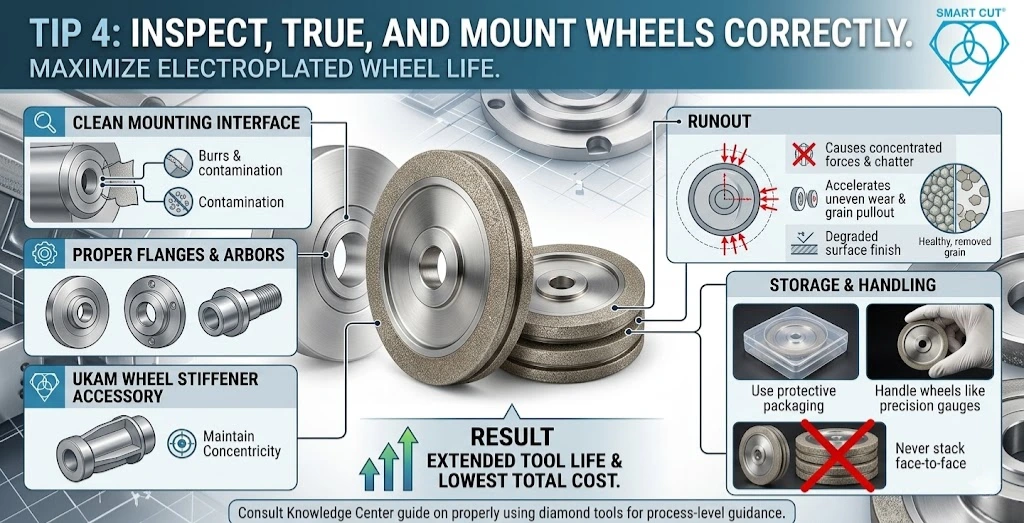
Tip 4: Inspect, True, and Mount Wheels Correctly

An electroplated wheel running out of true is not just a geometry problem — it is a wheel life problem. Runout concentrates grinding forces on a repeating section of the wheel circumference, causing uneven grain wear, chatter, and degraded surface finish. Over time, the high-load zones experience grain pullout at a rate that far exceeds the rest of the wheel.

Mounting Precision: Always use clean, properly dimensioned flanges and arbors. Any contamination or burr on the mounting interface introduces runout. UKAM’s diamond tool accessories include wheel stiffeners and adapters engineered to maintain concentricity in precision setups.

Spindle Condition: Before attributing premature wheel wear to the tool itself, verify spindle bearing condition and dynamic balance. A spindle with measurable runout will consume abrasive tools faster regardless of specification quality.

Storage and Handling: Electroplated wheels are single-layer tools. Any impact on the wheel face can dislodge or damage grains. Store wheels in protective packaging, never stacked face-to-face, and handle them with the same care given to precision gauges.

For a full overview of best practices when working with diamond tools in production environments, our Knowledge Center guide on how to properly use diamond tools provides comprehensive process-level guidance.

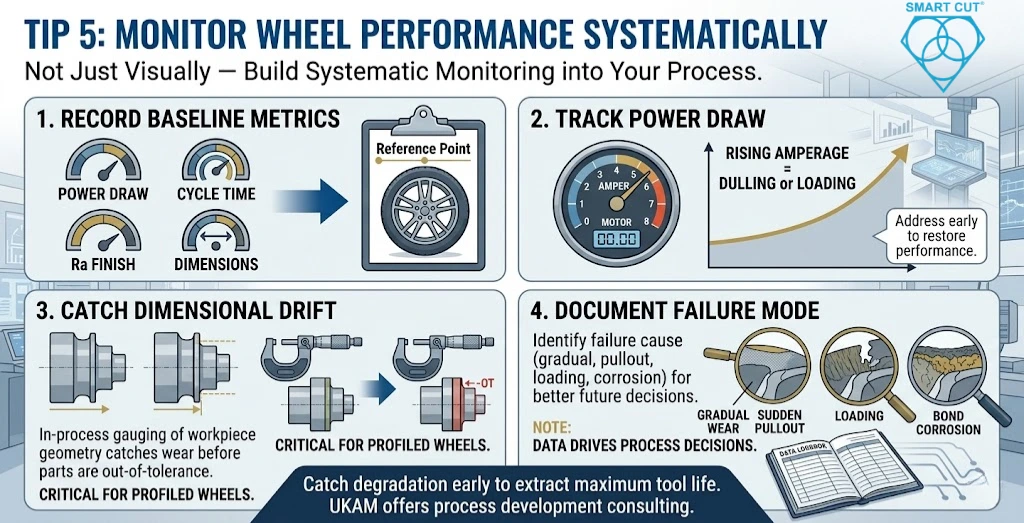
Tip 5: Monitor Wheel Performance Systematically — Not Just Visually

In precision manufacturing and laboratory environments, wheel condition monitoring should be built into the process, not left to operator judgment at the point of failure. Electroplated diamond wheels do not dress; when the single layer is exhausted, the wheel must be replaced. Catching performance degradation early allows you to extract maximum life from the tool while still maintaining part quality.

Establish Baseline Metrics: Record spindle power draw, cycle time, surface finish measurements, and dimensional outcomes when a fresh wheel is put into service. These baseline values give you a reference point against which gradual performance changes become measurable.

Track Power Draw: Rising spindle motor amperage at constant parameters is an indicator of increasing grinding resistance — often a sign that the wheel is beginning to dull or load. Addressing loading early (by adjusting feed or coolant) can restore performance without replacing the wheel.

Dimensional Drift: For applications where profile fidelity is critical, periodic in-process gauging of workpiece geometry catches wheel wear before it produces out-of-tolerance parts. This is especially important when using profiled diamond & CBN electroplated wheels where form accuracy is as important as surface finish.

Failure Mode Documentation: When a wheel does reach end-of-life, document whether failure was gradual performance degradation, sudden grain pullout, loading, or bond corrosion. This data drives better specification and process decisions on the next wheel purchase.

UKAM offers process development consulting for customers who want to build structured monitoring protocols into their grinding operations.

Bonus: Consider Multi-Layer Electroplated Construction for High-Demand Applications

Standard electroplated tools deposit a single abrasive layer onto the substrate. UKAM manufactures multi-layer electroplated diamond and CBN tools that deposit three successive layers of diamond rather than one. This construction significantly increases usable wheel life in high-material-removal applications while preserving the high grain protrusion and aggressive cutting action that makes electroplated technology valuable.

For production environments where wheel change frequency is a bottleneck, UKAM’s multi-layer electroplated tools represent a meaningful upgrade over conventional single-layer designs.

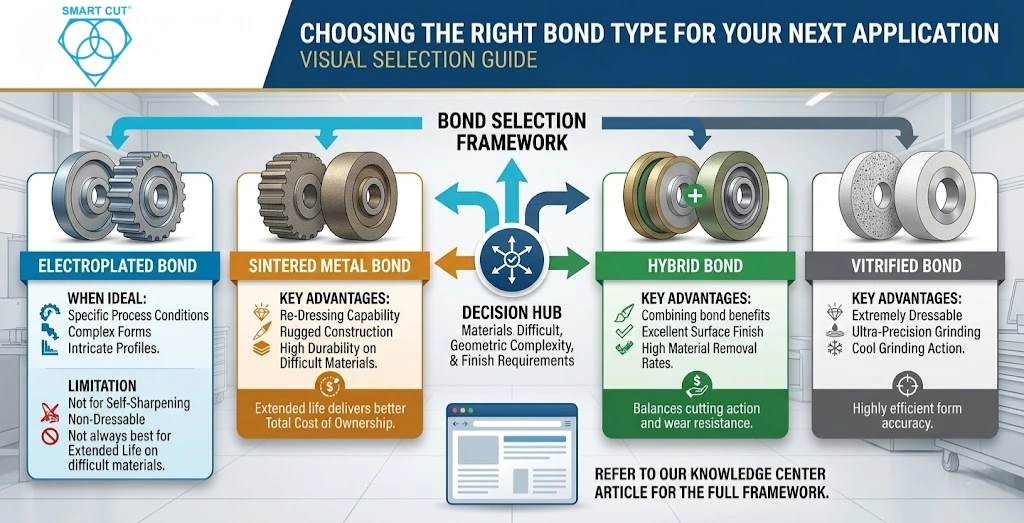
Choosing the Right Bond Type for Your Next Application

Electroplated technology is ideal for specific process conditions, but it is not always the best choice for every application. If your application involves re-dressing capability, self-sharpening behavior, or extended wheel life on difficult materials, sintered metal bond, hybrid bond, or vitrified bond diamond tools may deliver better total cost of ownership.

Our Knowledge Center article on choosing the correct diamond bond type walks through the decision framework in detail, including when electroplated is the right choice and when a different bond system will outperform it.

Summary

Extending the life of your electroplated diamond grinding wheels is not about grinding cautiously

— it is about grinding correctly. The five disciplines that govern wheel life are specification selection, parameter optimization, engineered coolant delivery, precision mounting and handling, and systematic performance monitoring. Each one compounds the others. A correctly specified wheel running wrong parameters will still fail early. A correctly parameterized process with poor coolant delivery will still overheat and lose grains.

UKAM Industrial Superhard Tools has supported precision manufacturers, government laboratories, and research institutions across these disciplines since 1990. If your current electroplated wheel specification is not delivering the life or performance your process requires, we encourage you to request a consultation with our engineering team.

Frequently Asked Questions

  • No — single-layer electroplated wheels cannot be re-dressed once the abrasive layer is worn.
  • When the diamond layer is exhausted, the wheel must be replaced.
  • UKAM’s multi-layer electroplated tools provide extended life as a design alternative.
  • Insufficient coolant flow or poor chip evacuation is the most common cause.
  • Feed rate may be too low, causing rubbing rather than cutting.
  • Grit size may be too fine for the material being processed.
  • Diamond is for non-ferrous and non-metallic materials: ceramics, carbide, glass, composites, quartz.
  • CBN is for ferrous materials: hardened steel, tool steel, superalloys.
  • Using diamond on ferrous materials causes rapid wear due to carbon diffusion.

Read UKAM’s detailed guide: Diamond vs CBN Tools.

  • Store in original packaging or a protected container — never stacked face-to-face.
  • Keep in a dry, temperature-stable environment to prevent nickel bond corrosion.
  • Handle as precision instruments, not commodity abrasives.
  • Excessive grinding pressure or depth of cut overloads individual grains.
  • Thermal shock from inadequate cooling degrades the nickel bond interface.
  • Spindle runout or imbalance concentrates forces on repeating sections of the wheel face.
  • Electroplated cut off wheels are ideal when fast cutting speed, sharp edge definition, and open, aggressive action are priorities.
  • Sintered (metal bond) blades are better for extended life applications where self-sharpening is required.
  • Yes — UKAM manufactures fully custom diamond & CBN electroplated wheels with no minimum quantity requirements.
  • Custom options include grit size, concentration, substrate geometry, and multi-layer construction.
  • Request a consultation to discuss your application.

UKAM Industrial Superhard Tools is an American manufacturer of high precision diamond and CBN tools, established in 1990. We serve manufacturers, research laboratories, and production environments across aerospace, semiconductor, advanced ceramics, composites, photonics, metallography, and related industries.

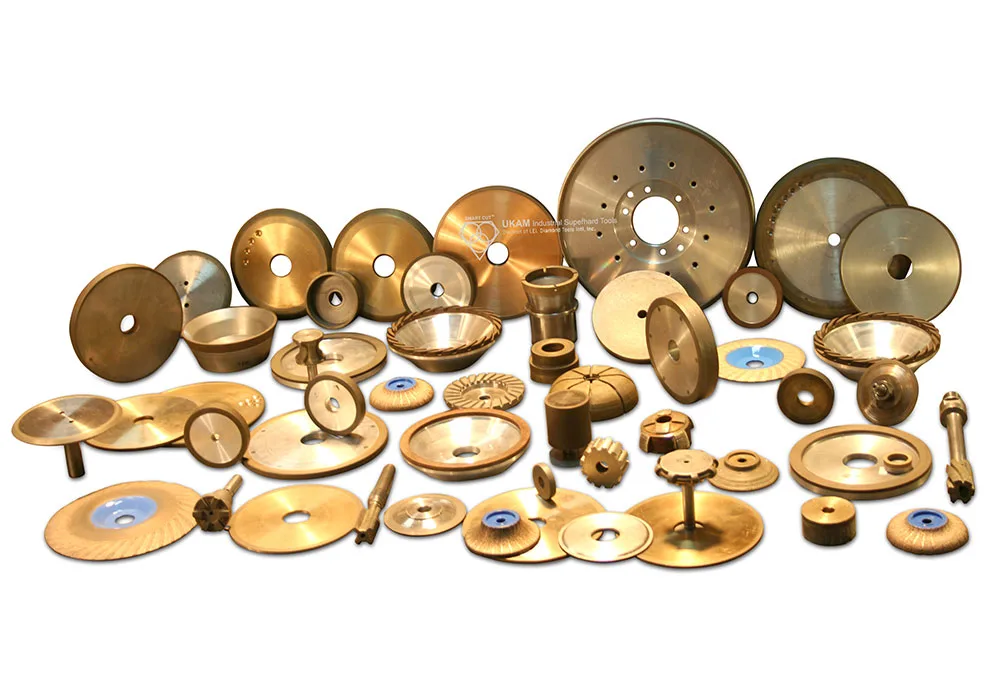
Explore our full range of Diamond & CBN Wheels or contact our application engineers to discuss your precision grinding requirements.

Trusted by Tens of Thousands of Manufacturers, Laboratories,
Research Institutions Worldwide Since 1990

American Based Manufacturer

Established in 1990

Custom manufacturing

RELATED ARTICLES