






Electroplated Diamond Edge Grinding Wheels: Improving Edge Quality, Reducing Subsurface Damage, and Increasing Manufacturing Yield
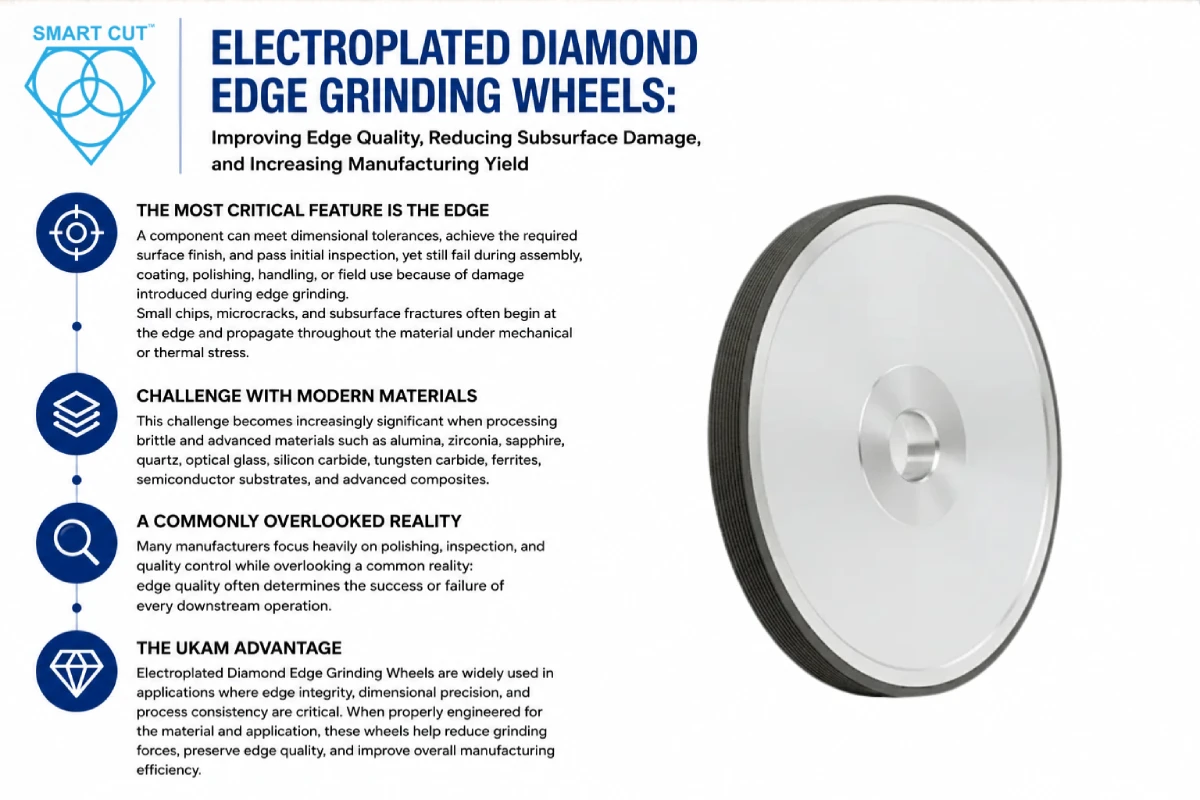

Table of Contents
ToggleIn many manufacturing operations, the most critical feature of a component is not the surface. It is the edge.
A component can meet dimensional tolerances, achieve the required surface finish, and pass initial inspection, yet still fail during assembly, coating, polishing, handling, or field use because of damage introduced during edge grinding. Small chips, microcracks, and subsurface fractures often begin at the edge and propagate throughout the material under mechanical or thermal stress.
This challenge becomes increasingly significant when processing brittle and advanced materials such as alumina, zirconia, sapphire, quartz, optical glass, silicon carbide, tungsten carbide, ferrites, semiconductor substrates, and advanced composites
Many manufacturers focus heavily on polishing, inspection, and quality control while overlooking a common reality: edge quality often determines the success or failure of every downstream operation.
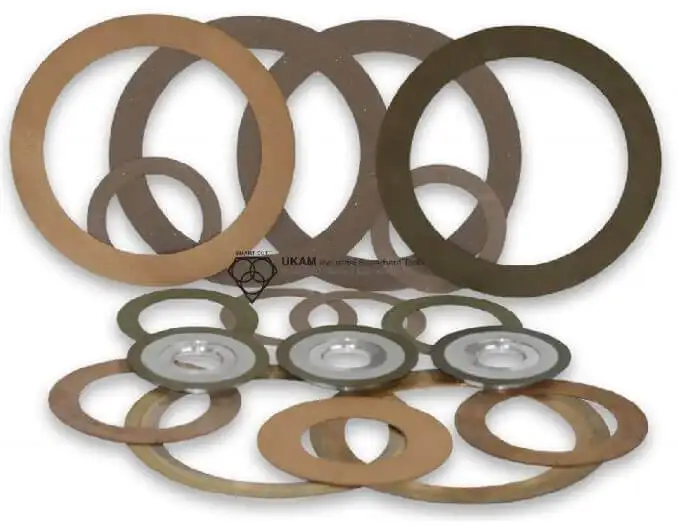
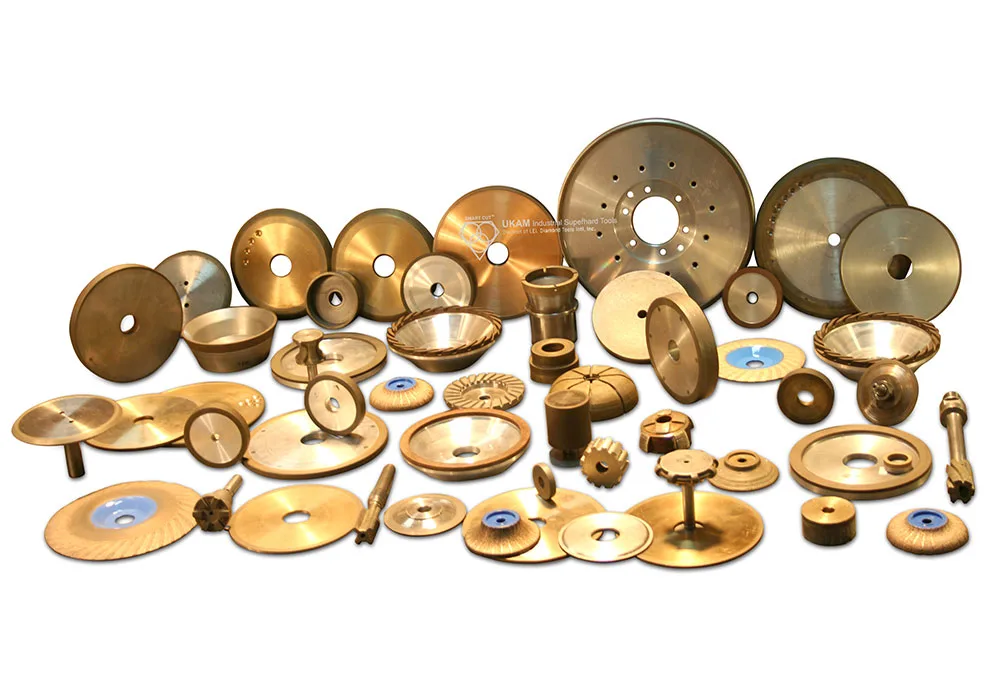
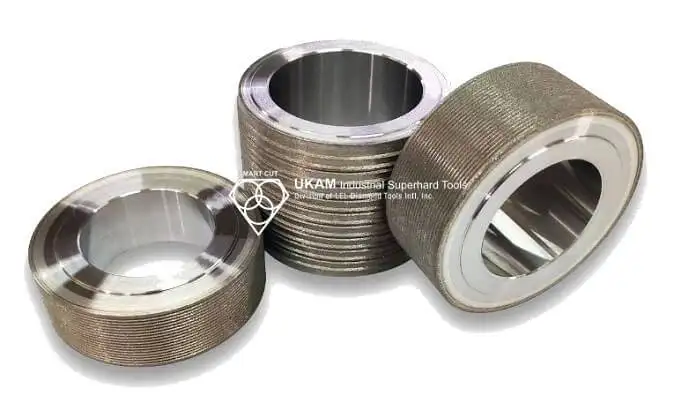
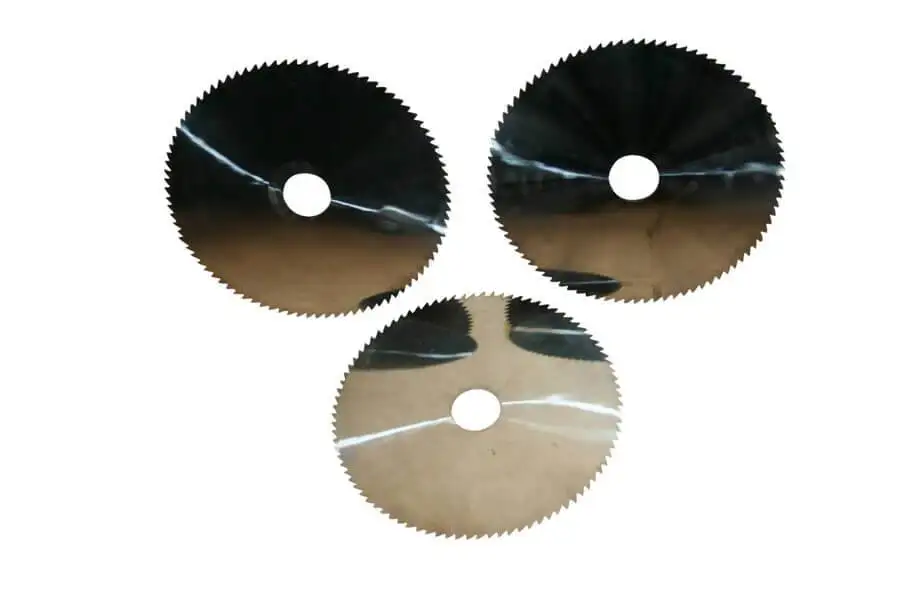
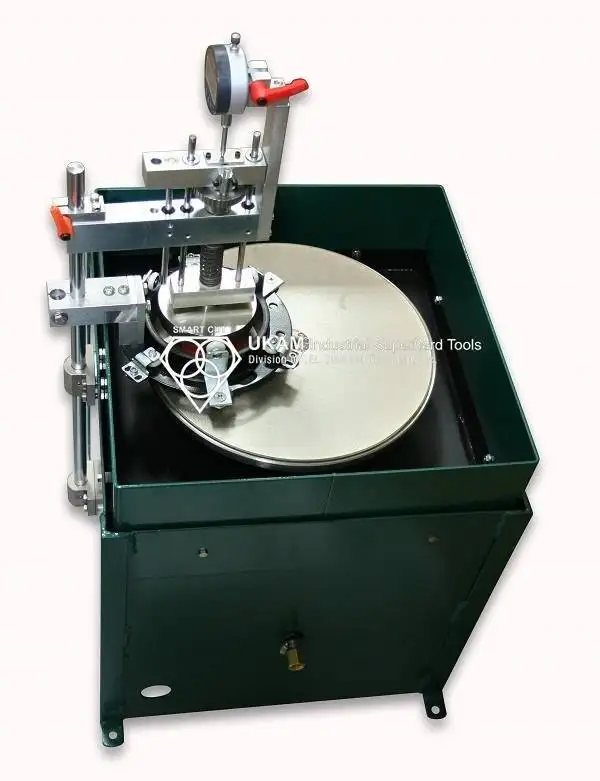
Electroplated Diamond Edge Grinding Wheels are widely used in applications where edge integrity, dimensional precision, and process consistency are critical. When properly engineered for the material and application, these wheels help reduce grinding forces, preserve edge quality, and improve overall manufacturing efficiency.
Trusted by Tens of Thousands of Manufacturers, Laboratories Research Institutions Worldwide Since 1990

Established in 1990
Why Edge Quality Directly Affects Manufacturing Yield
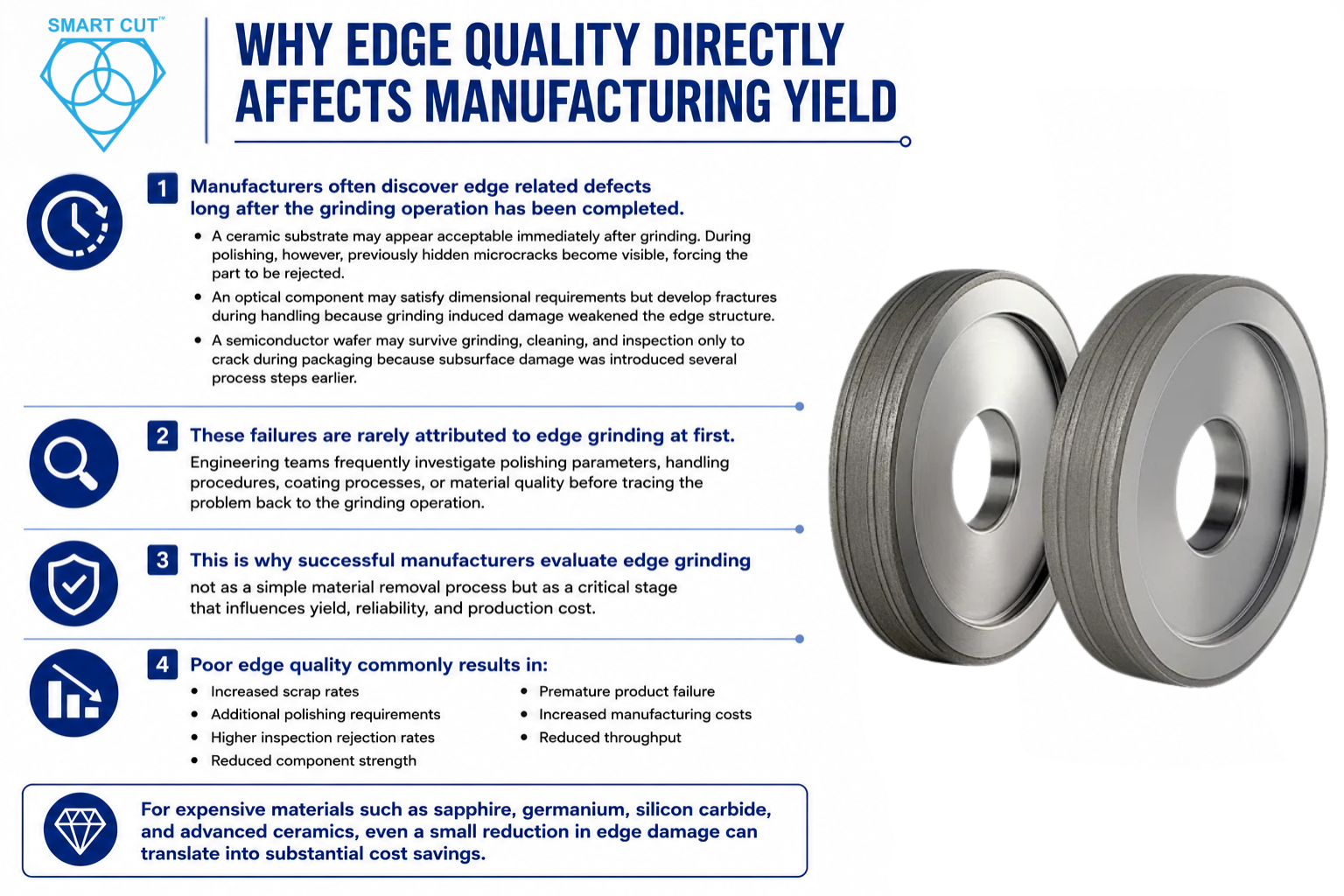
Manufacturers often discover edge related defects long after the grinding operation has been completed.
A ceramic substrate may appear acceptable immediately after grinding. During polishing, however, previously hidden microcracks become visible, forcing the part to be rejected.
An optical component may satisfy dimensional requirements but develop fractures during handling because grinding induced damage weakened the edge structure.
A semiconductor wafer may survive grinding, cleaning, and inspection only to crack during packaging because subsurface damage was introduced several process steps earlier.
These failures are rarely attributed to edge grinding at first. Engineering teams frequently investigate polishing parameters, handling procedures, coating processes, or material quality before tracing the problem back to the grinding operation.
This is why successful manufacturers evaluate edge grinding not as a simple material removal process but as a critical stage that influences yield, reliability, and production cost.
Poor edge quality commonly results in:
● Increased scrap rates
● Additional polishing requirements
● Higher inspection rejection rates
● Reduced component strength
● Premature product failure
● Increased manufacturing costs
● Reduced throughput
For expensive materials such as sapphire, germanium, silicon carbide, and advanced ceramics, even a small reduction in edge damage can translate into substantial cost savings.
Why Edge Grinding Problems Occur

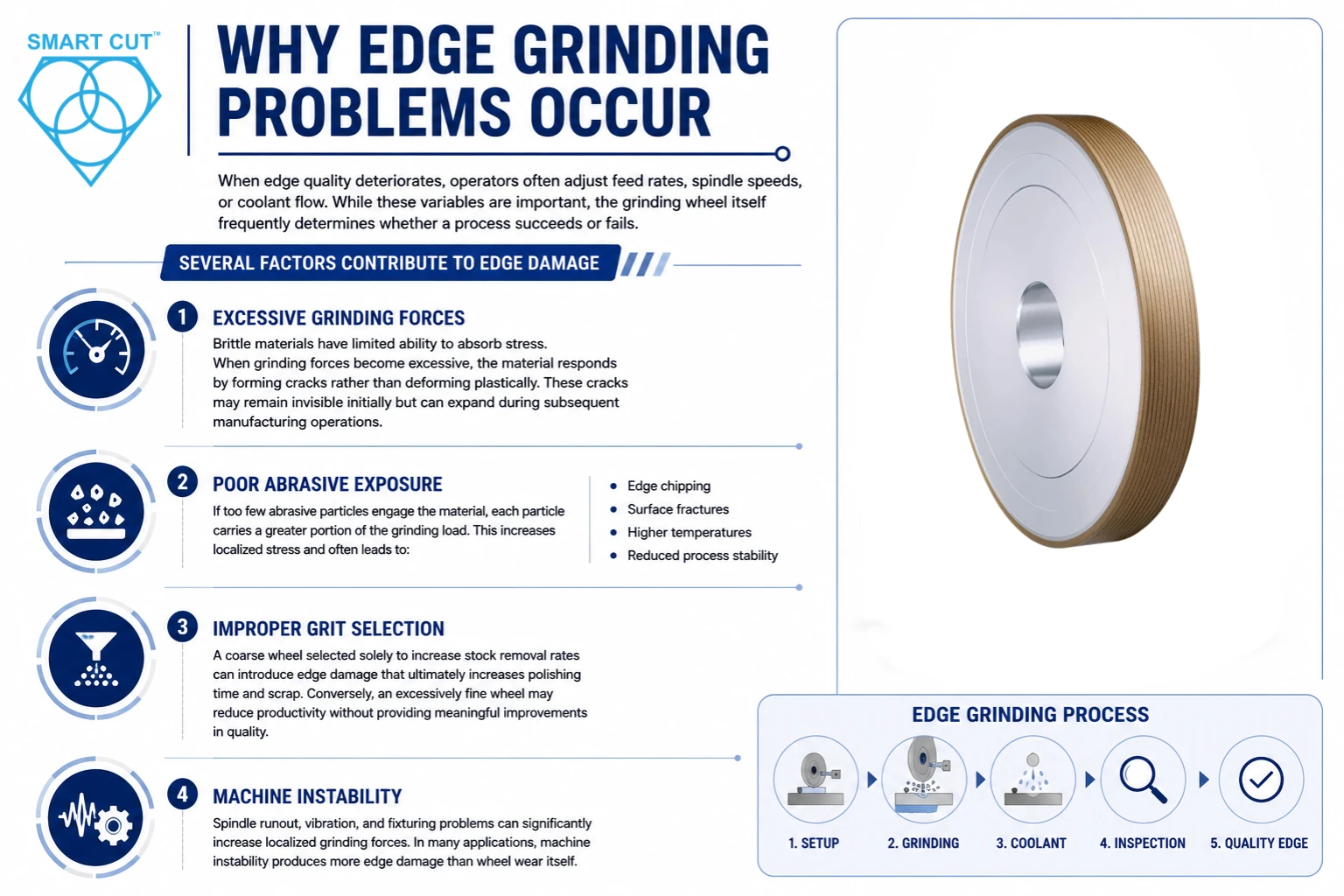
When edge quality deteriorates, operators often adjust feed rates, spindle speeds, or coolant flow. While these variables are important, the grinding wheel itself frequently determines whether a process succeeds or fails.
Several factors contribute to edge damage.
Excessive Grinding Forces
Brittle materials have limited ability to absorb stress.
When grinding forces become excessive, the material responds by forming cracks rather than deforming plastically. These cracks may remain invisible initially but can expand during subsequent manufacturing operations.
Poor Abrasive Exposure
If too few abrasive particles engage the material, each particle carries a greater portion of the grinding load.
This increases localized stress and often leads to:
● Edge chipping
● Surface fractures
● Higher temperatures
● Reduced process stability
Improper Grit Selection
A coarse wheel selected solely to increase stock removal rates can introduce edge damage that ultimately increases polishing time and scrap.
Conversely, an excessively fine wheel may reduce productivity without providing meaningful improvements in quality.
Machine Instability
Spindle runout, vibration, and fixturing problems can significantly increase localized grinding forces.
In many applications, machine instability produces more edge damage than wheel wear itself.
Why Damage Is Often Discovered Too Late

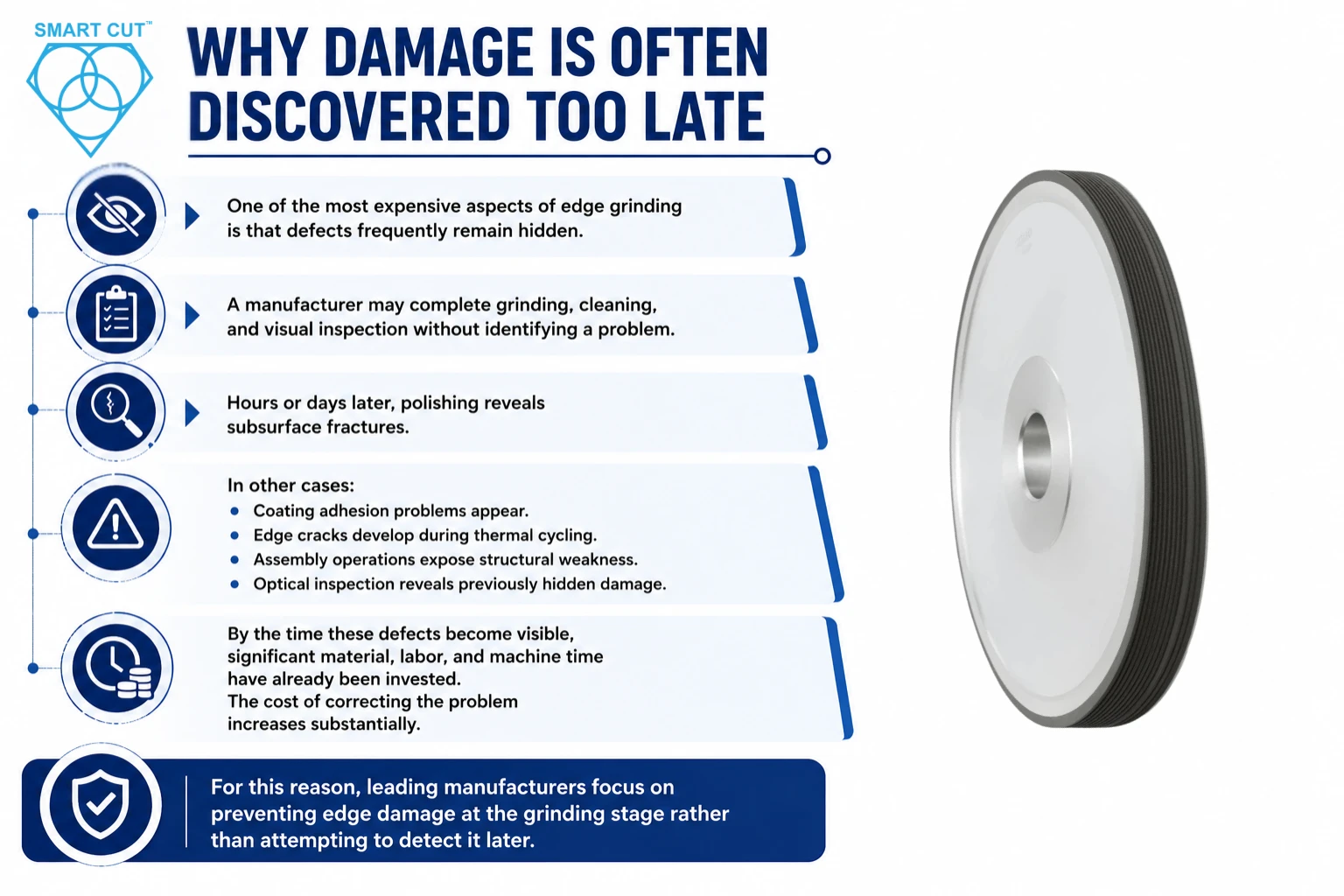
One of the most expensive aspects of edge grinding is that defects frequently remain hidden.
A manufacturer may complete grinding, cleaning, and visual inspection without identifying a problem.
Hours or days later, polishing reveals subsurface fractures.
In other cases:
- Coating adhesion problems appear.
- Edge cracks develop during thermal cycling.
- Assembly operations expose structural weakness.
- Optical inspection reveals previously hidden damage.
By the time these defects become visible, significant material, labor, and machine time have already been invested.
The cost of correcting the problem increases substantially.
For this reason, leading manufacturers focus on preventing edge damage at the grinding stage rather than attempting to detect it later.
How Electroplated Diamond Edge Grinding Wheels Address These Challenges

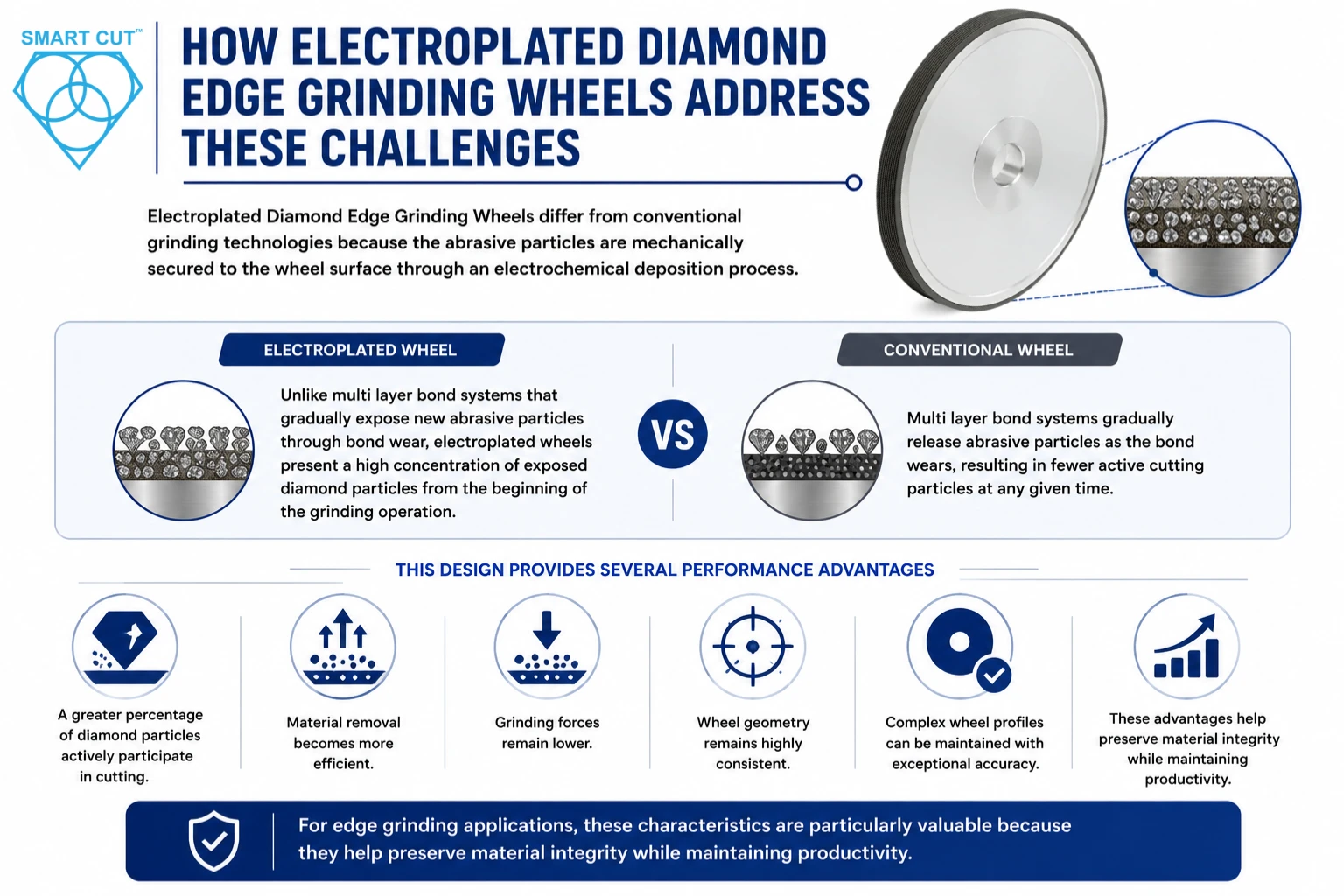
Electroplated Diamond Edge Grinding Wheels differ from conventional grinding technologies because the abrasive particles are mechanically secured to the wheel surface through an electrochemical deposition process.
Unlike multi layer bond systems that gradually expose new abrasive particles through bond wear, electroplated wheels present a high concentration of exposed diamond particles from the beginning of the grinding operation.
This design provides several performance advantages.
A greater percentage of diamond particles actively participate in cutting.
Material removal becomes more efficient.
Grinding forces remain lower.
Wheel geometry remains highly consistent.
Complex wheel profiles can be maintained with exceptional accuracy.
For edge grinding applications, these characteristics are particularly valuable because they help preserve material integrity while maintaining productivity.
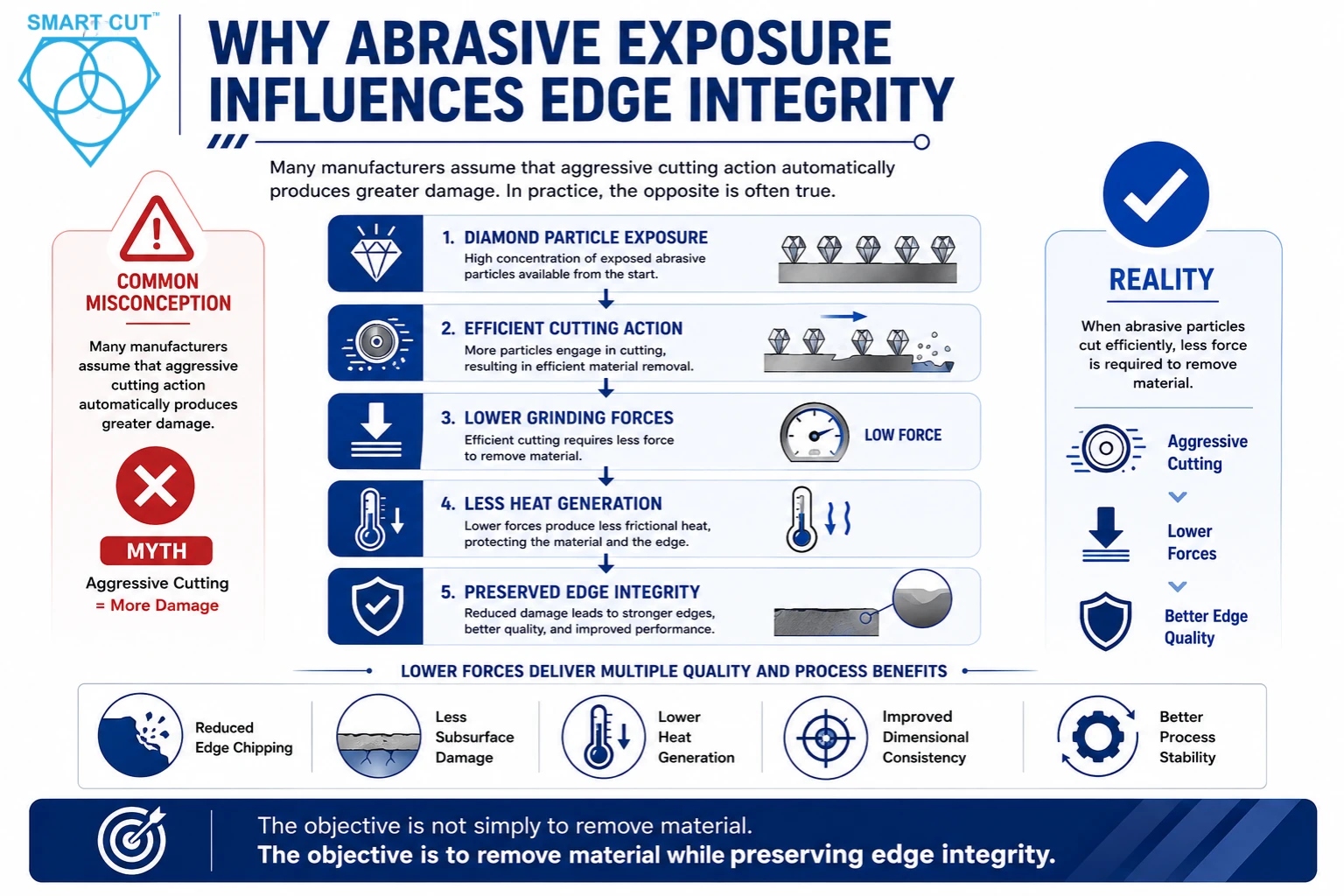
Why Abrasive Exposure Influences Edge Integrity

Many manufacturers assume that aggressive cutting action automatically produces greater damage.
In practice, the opposite is often true.
When abrasive particles cut efficiently, less force is required to remove material.
Lower grinding forces generally result in:
- Reduced edge chipping
- Less subsurface damage
- Lower heat generation
- Improved dimensional consistency
- Better process stability
This relationship explains why properly engineered electroplated wheels frequently outperform less aggressive alternatives when processing brittle materials.
The objective is not simply to remove material. The objective is to remove material while preserving edge integrity.
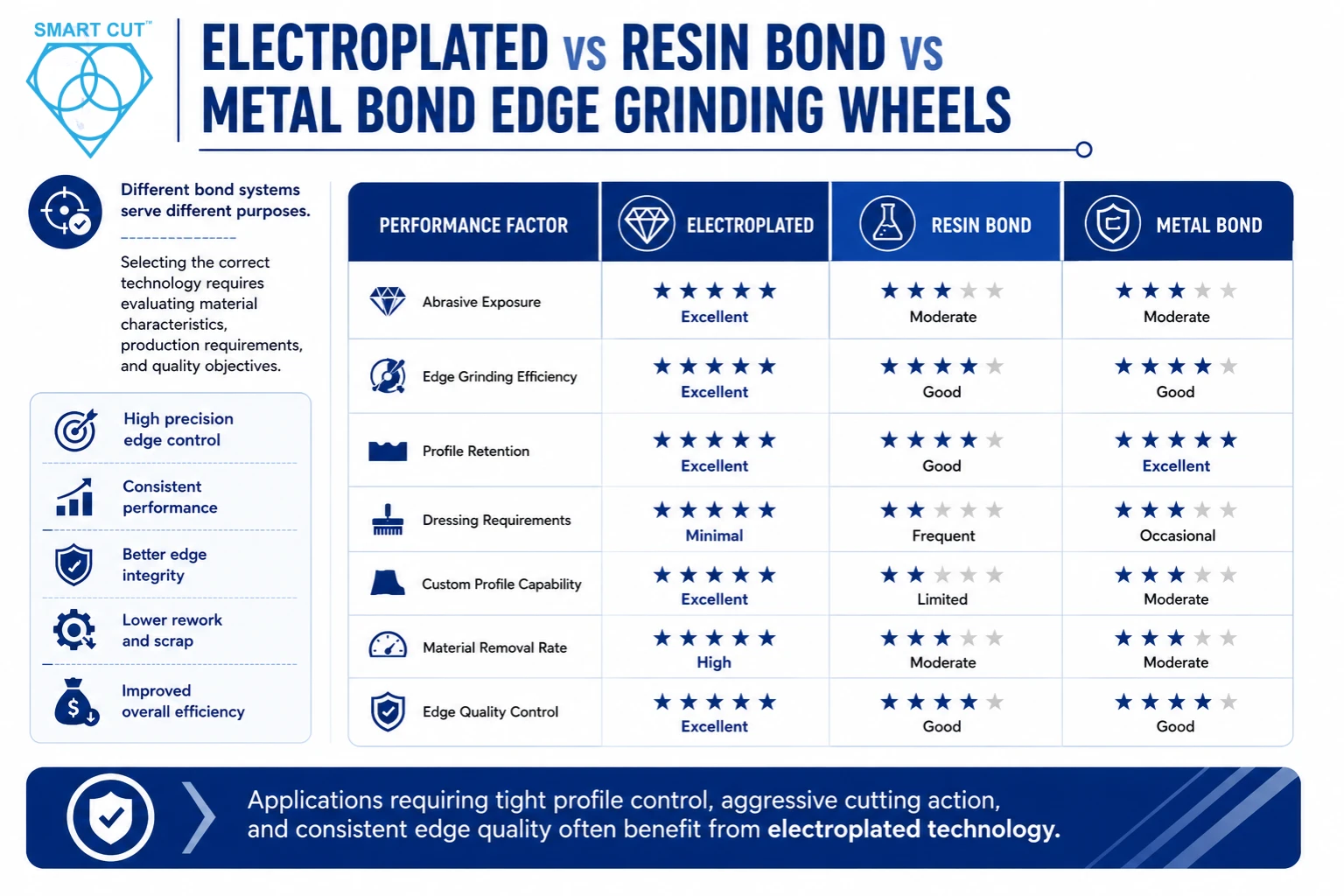
Electroplated vs Resin Bond vs Metal Bond Edge Grinding Wheels
Different bond systems serve different purposes.
Selecting the correct technology requires evaluating material characteristics, production requirements, and quality objectives.

| Performance Factor | Electroplated | Resin Bond | Metal Bond |
|---|---|---|---|
| Abrasive Exposure | Excellent | Moderate | Moderate |
| Edge Grinding Efficiency | Excellent | Good | Good |
| Profile Retention | Excellent | Good | Excellent |
| Dressing Requirements | Minimal | Frequent | Occasional |
| Custom Profile Capability | Excellent | Limited | Moderate |
| Material Removal Rate | High | Moderate | Moderate |
| Edge Quality Control | Excellent | Good | Good |
Applications requiring tight profile control, aggressive cutting action, and consistent edge quality often benefit from electroplated technology.
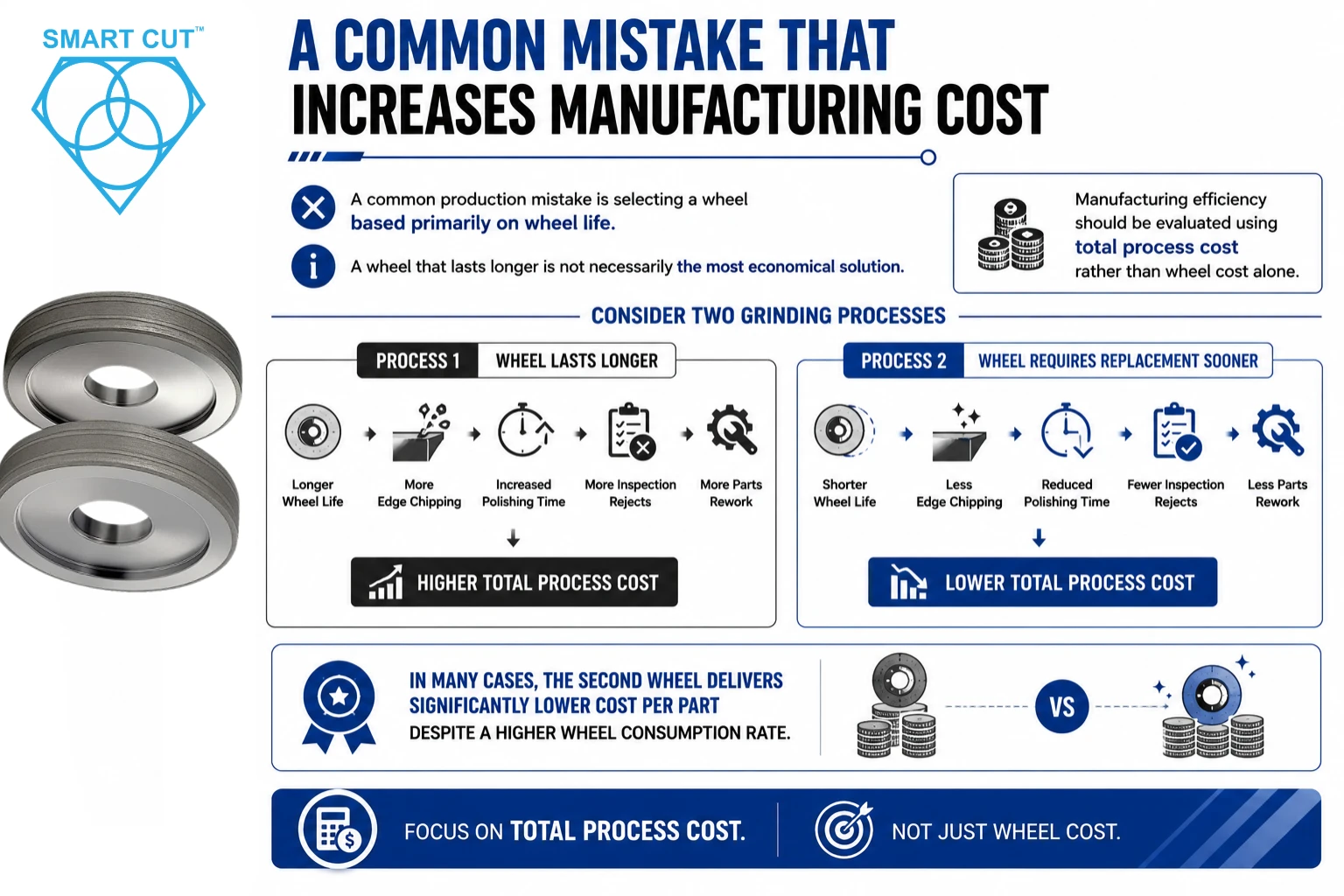
A Common Mistake That Increases Manufacturing Cost

A common production mistake is selecting a wheel based primarily on wheel life.
A wheel that lasts longer is not necessarily the most economical solution.
Consider two grinding processes.
The first wheel lasts longer but creates additional edge chipping. Polishing time increases, inspection rejects increase, and more parts require rework.
The second wheel may require replacement sooner, but it reduces polishing requirements and improves yield.
In many cases, the second wheel delivers significantly lower cost per part despite a higher wheel consumption rate.
Manufacturing efficiency should be evaluated using total process cost rather than wheel cost alone.
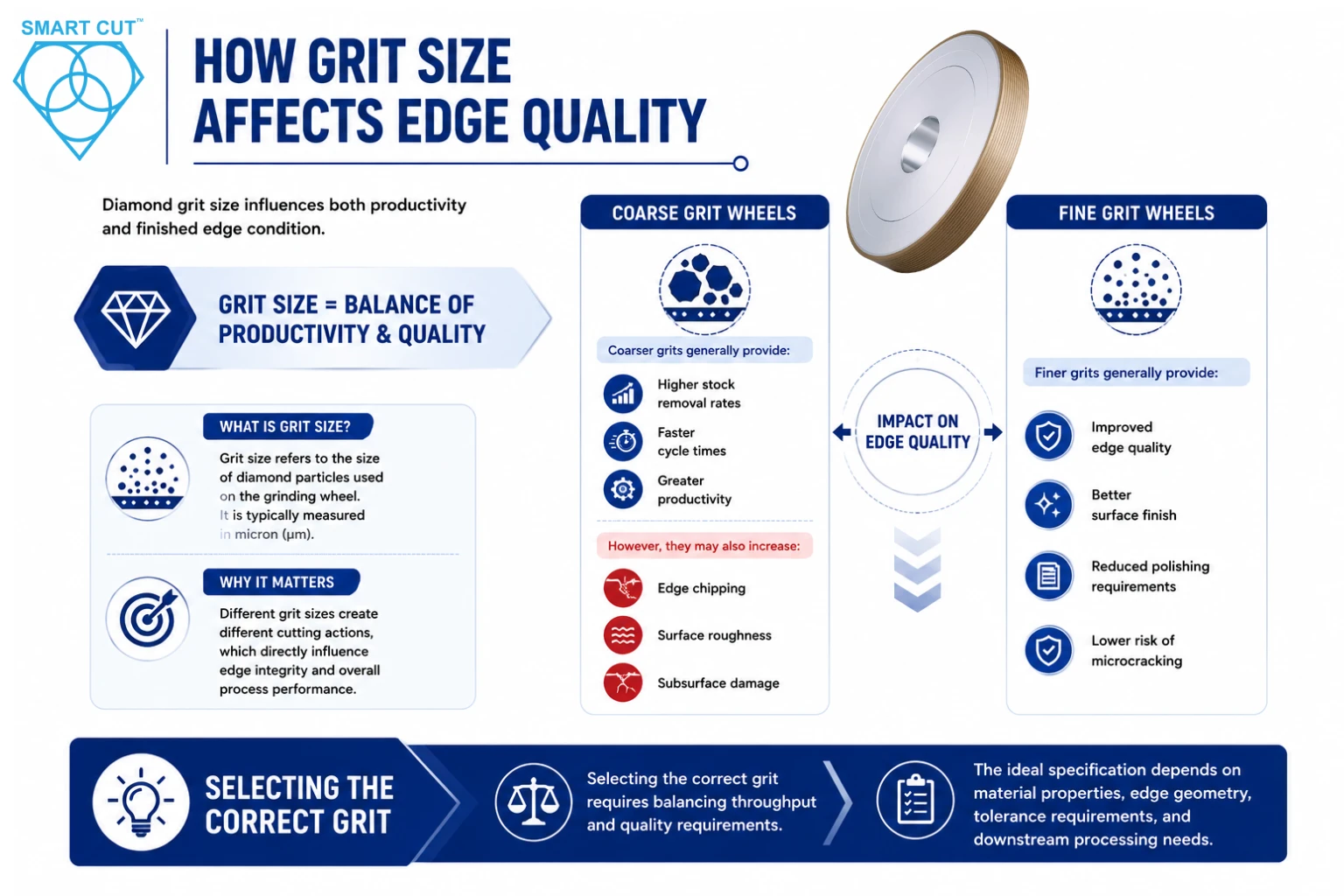
How Grit Size Affects Edge Quality

Diamond grit size influences both productivity and finished edge condition.
Coarse Grit Wheels
Coarser grits generally provide:
- Higher stock removal rates
- Faster cycle times
- Greater productivity
However, they may also increase:
- Edge chipping
- Surface roughness
- Subsurface damage
Fine Grit Wheels
Finer grits generally provide:
- Improved edge quality
- Better surface finish
- Reduced polishing requirements
- Lower risk of microcracking
Selecting the correct grit requires balancing throughput and quality requirements.
The ideal specification depends on material properties, edge geometry, tolerance requirements, and downstream processing needs.
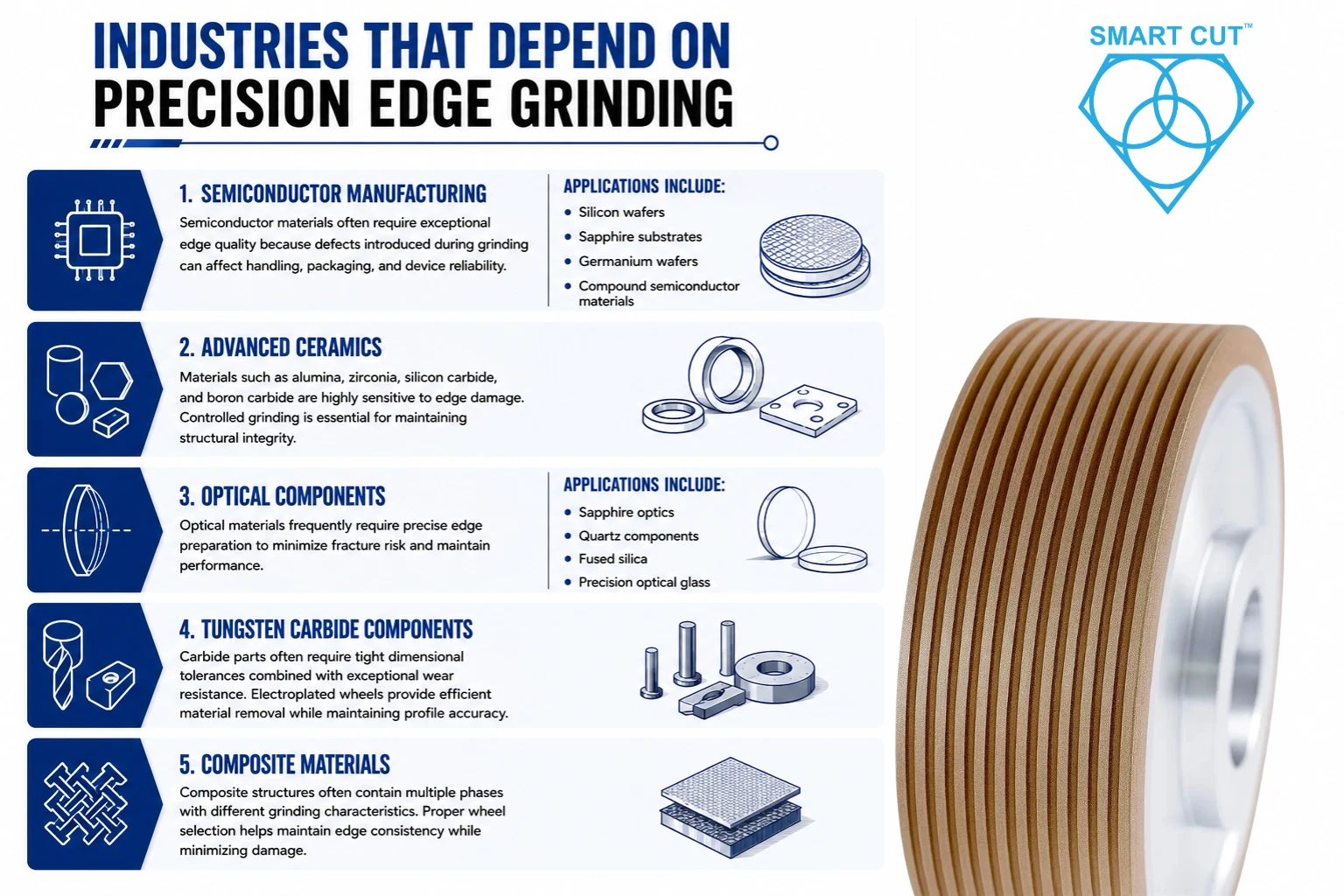
Industries That Depend on Precision Edge Grinding

Semiconductor Manufacturing
Semiconductor materials often require exceptional edge quality because defects introduced during grinding can affect handling, packaging, and device reliability.
Applications include:
- Silicon wafers
- Sapphire substrates
- Germanium wafers
- Compound semiconductor materials
Advanced Ceramics
Materials such as alumina, zirconia, silicon carbide, and boron carbide are highly sensitive to edge damage.
Controlled grinding is essential for maintaining structural integrity.
Optical Components
Optical materials frequently require precise edge preparation to minimize fracture risk and maintain performance.
Applications include:
- Sapphire optics
- Quartz components
- Fused silica
- Precision optical glass
Tungsten Carbide Components
Carbide parts often require tight dimensional tolerances combined with exceptional wear resistance.
Electroplated wheels provide efficient material removal while maintaining profile accuracy.
Composite Materials
Composite structures often contain multiple phases with different grinding characteristics.
Proper wheel selection helps maintain edge consistency while minimizing damage.
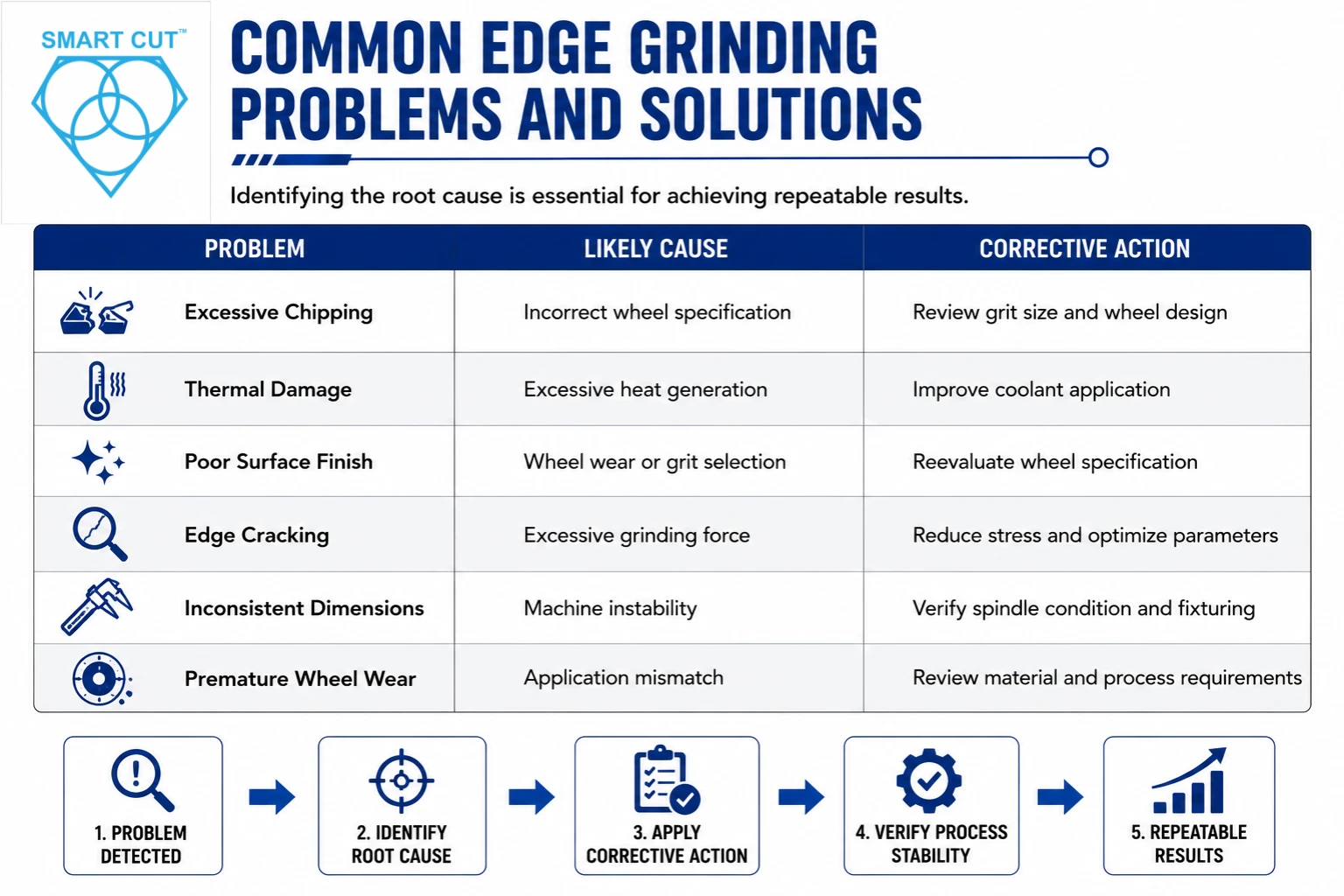
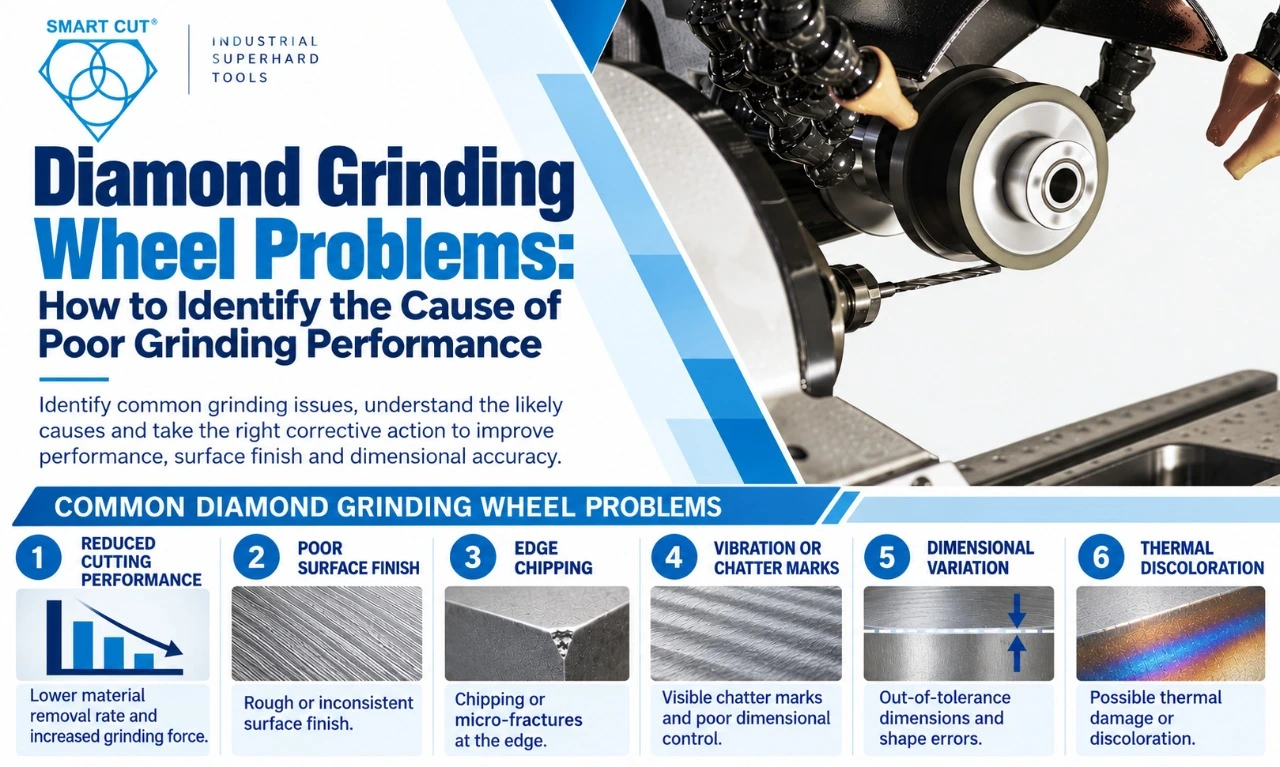
Common Edge Grinding Problems and Solutions

| Problem | Likely Cause | Corrective Action |
|---|---|---|
| Excessive Chipping | Incorrect wheel specification | Review grit size and wheel design |
| Thermal Damage | Excessive heat generation | Improve coolant application |
| Poor Surface Finish | Wheel wear or grit selection | Reevaluate wheel specification |
| Edge Cracking | Excessive grinding force | Reduce stress and optimize parameters |
| Inconsistent Dimensions | Machine instability | Verify spindle condition and fixturing |
| Premature Wheel Wear | Application mismatch | Review material and process requirements |
Identifying the root cause is essential for achieving repeatable results.
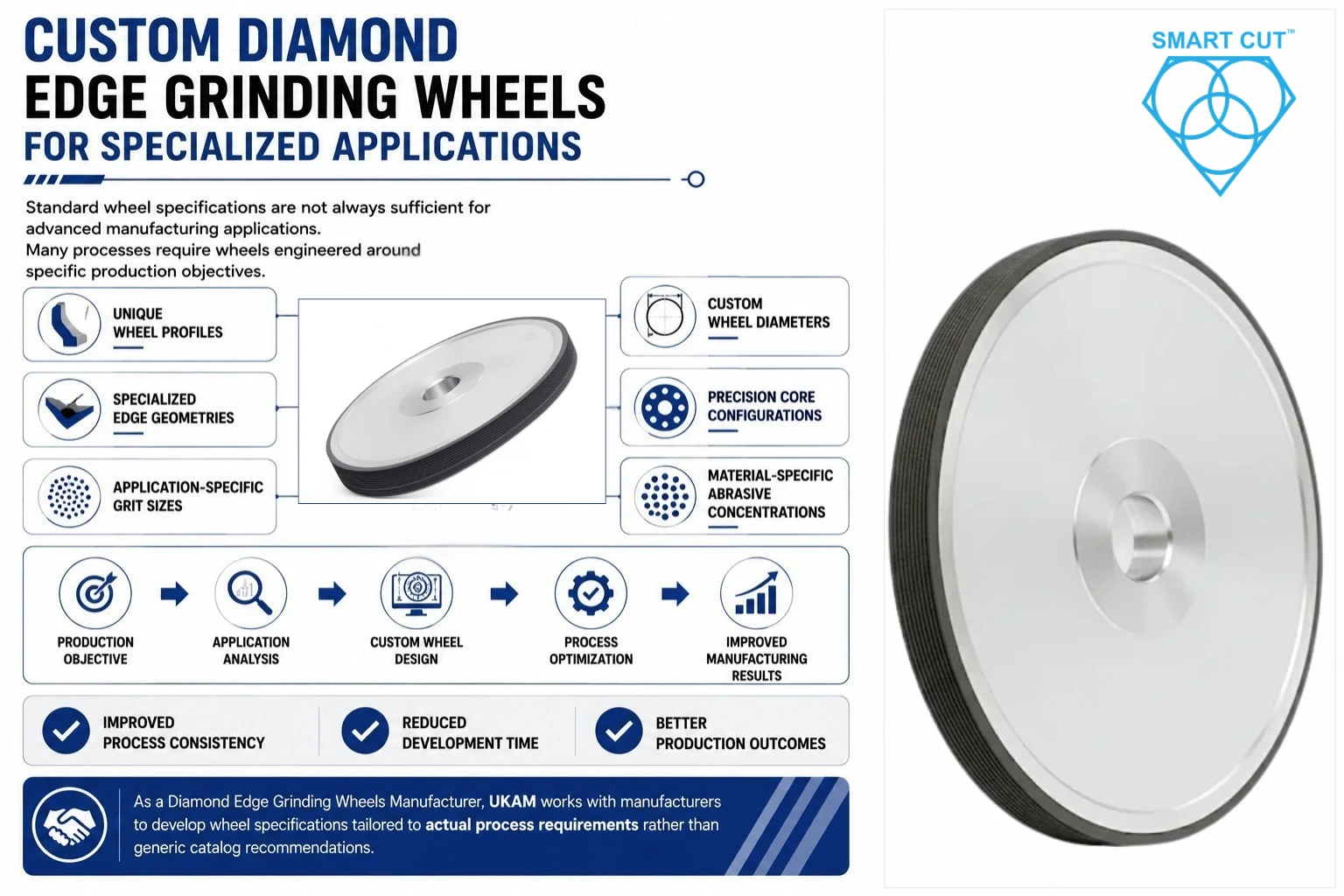
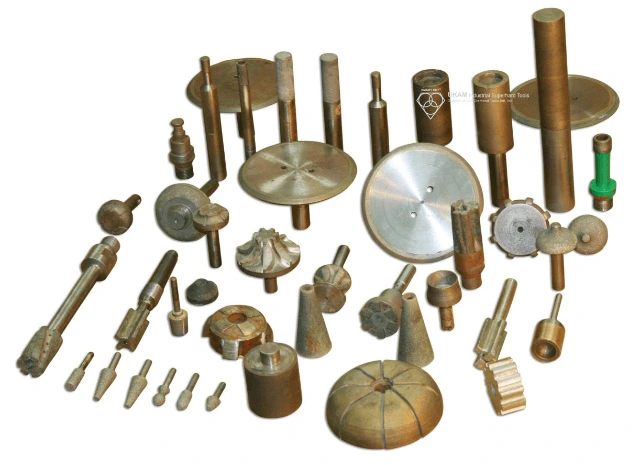
Custom Diamond Edge Grinding Wheels for Specialized Applications

Standard wheel specifications are not always sufficient for advanced manufacturing applications.
Many processes require wheels engineered around specific production objectives.
Customization may include:
- Unique wheel profiles
- Specialized edge geometries
- Application-specific grit sizes
- Custom wheel diameters
- Precision core configurations
- Material specific abrasive concentrations
As a Diamond Edge Grinding Wheels Manufacturer, UKAM works with manufacturers to develop wheel specifications tailored to actual process requirements rather than generic catalog recommendations.
This approach helps improve process consistency, reduce development time, and achieve better production outcomes.
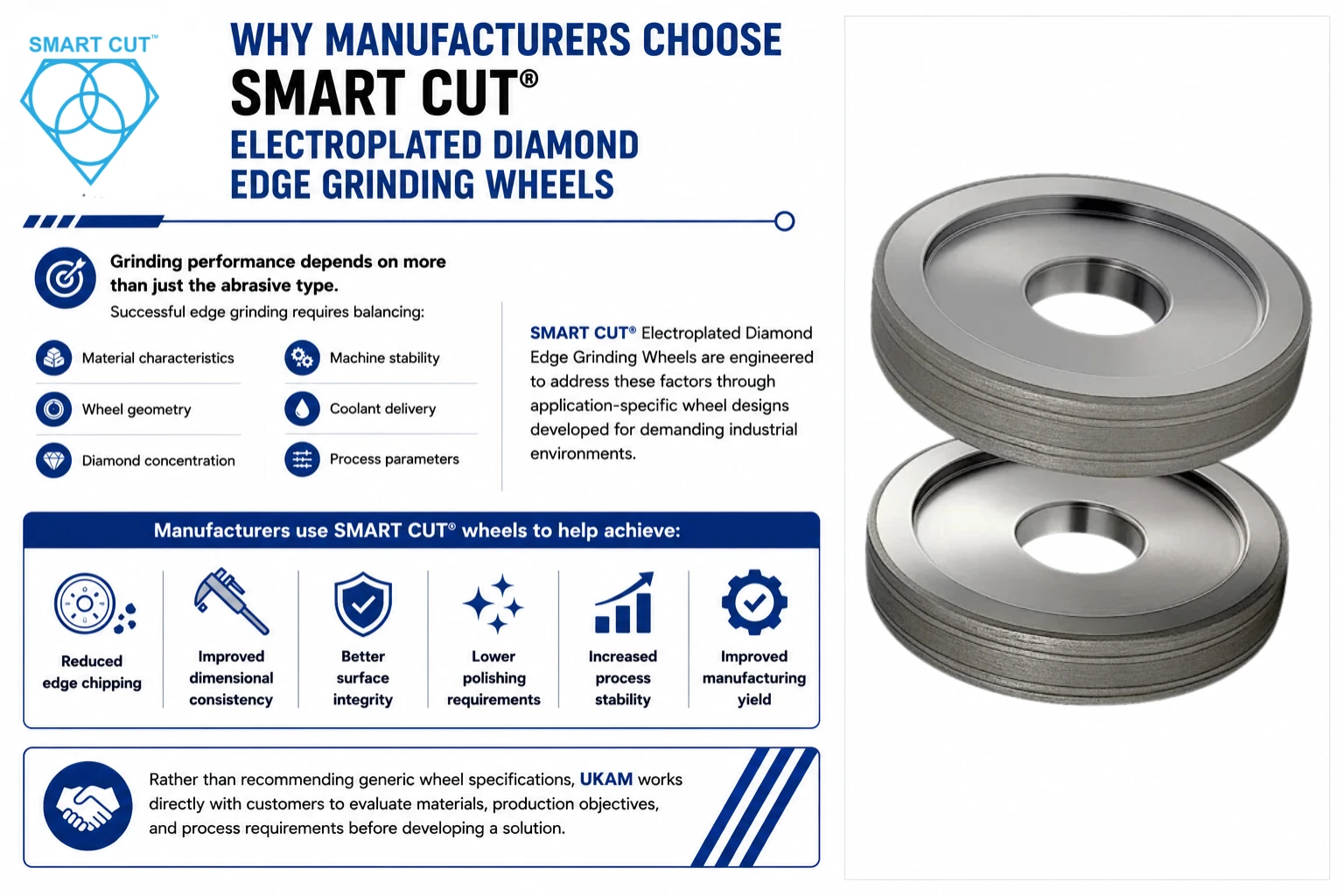
Why Manufacturers Choose SMART CUT® Electroplated Diamond Edge Grinding Wheels

Grinding performance depends on more than just the abrasive type.
Successful edge grinding requires balancing:
- Material characteristics
- Wheel geometry
- Diamond concentration
- Machine stability
- Coolant delivery
- Process parameters
SMART CUT® Electroplated Diamond Edge Grinding Wheels are engineered to address these factors through application-specific wheel designs developed for demanding industrial environments.
Manufacturers use SMART CUT® wheels to help achieve:
- Reduced edge chipping
- Improved dimensional consistency
- Better surface integrity
- Lower polishing requirements
- Increased process stability
- Improved manufacturing yield
Rather than recommending generic wheel specifications, UKAM works directly with customers to evaluate materials, production objectives, and process requirements before developing a solution.
Frequently Asked Questions
Finer grits reduce chip size but may also increase wheel loading if process parameters are not adjusted accordingly. Wheel specification, coolant delivery, and grinding conditions should be evaluated together.
Conclusion
Edge grinding influences far more than the appearance of a component.
The quality of the edge affects yield, polishing requirements, dimensional stability, inspection results, product reliability, and manufacturing cost.
Many edge-related failures originate during grinding but are not discovered until much later in the production cycle. By that point, significant resources have already been invested in the part.
Electroplated Diamond Edge Grinding Wheels provide manufacturers with an effective solution for controlling edge quality while maintaining productivity. Their high abrasive exposure, excellent profile retention, and efficient cutting action help reduce grinding forces and preserve material integrity across a wide range of hard and brittle materials.
For manufacturers processing ceramics, optical materials, semiconductor substrates, composites, and carbide components, selecting the correct wheel specification can significantly improve process consistency, reduce scrap, and increase overall manufacturing efficiency.
UKAM’s applications engineering team works closely with customers to develop edge grinding solutions tailored to specific materials, tolerances, and production objectives, helping manufacturers achieve higher yields and more reliable results.
Trusted by Tens of Thousands of Manufacturers, Laboratories,
Research Institutions Worldwide Since 1990

Established in 1990
RELATED ARTICLES

Brian is an experienced professional in the field of precision cutting tools, with over 27 years of experience in technical support. Over the years, he has helped engineers, manufacturers, researchers, and contractors find the right solutions for working with advanced and hard-to-cut materials. He’s passionate about bridging technical knowledge with real-world applications to improve efficiency and accuracy.
As an author, Brian Farberov writes extensively on diamond tool design, application engineering, return on investment strategies, and process optimization, combining technical depth with a strong understanding of customer needs and market dynamics.
About Brian Farberov
Brian is an experienced professional in the field of precision cutting tools, with over 27 years of experience in technical support. Over the years, he has helped engineers, manufacturers, researchers, and contractors find the right solutions for working with advanced and hard-to-cut materials. He’s passionate about bridging technical knowledge with real-world applications to improve efficiency and accuracy. As an author, Brian Farberov writes extensively on diamond tool design, application engineering, return on investment strategies, and process optimization, combining technical depth with a strong understanding of customer needs and market dynamics.
View all posts by Brian Farberov