

















Diamond Grinding Wheel Problems: How to Identify the Cause of Poor Grinding Performance

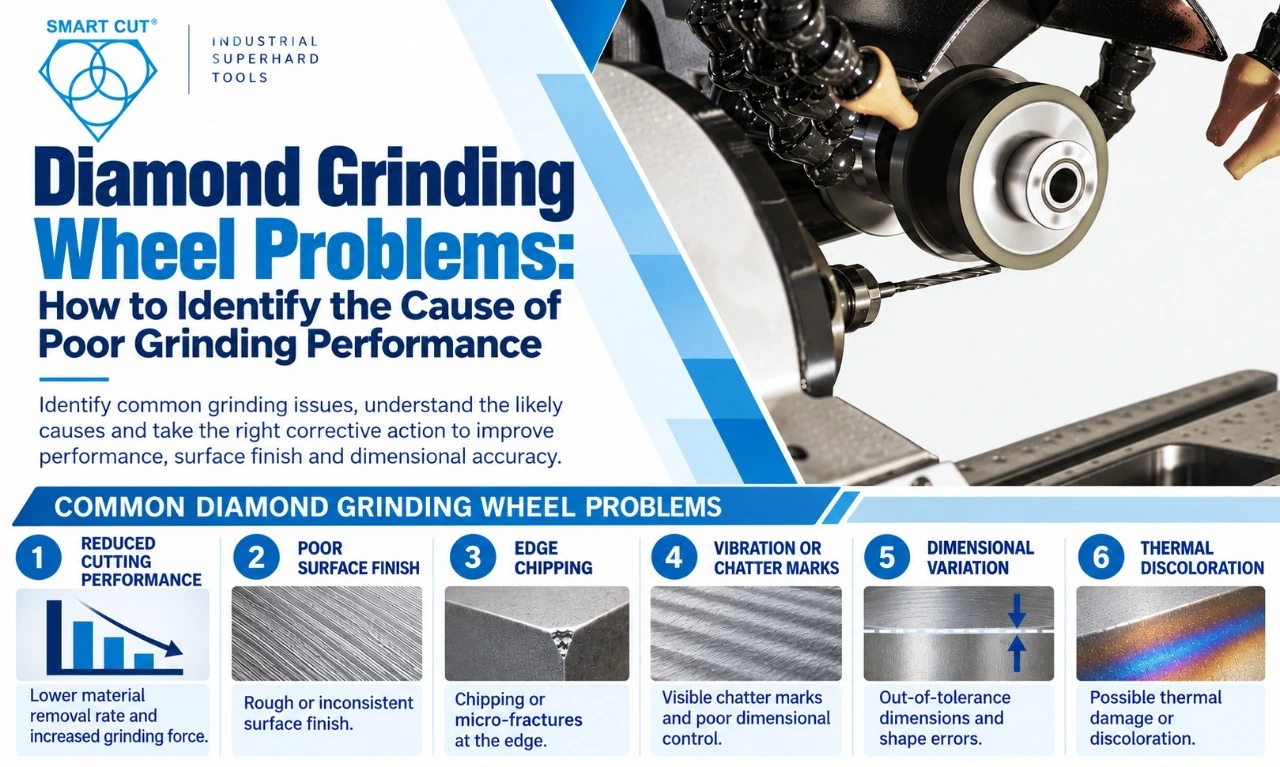
Table of Contents
Toggle
American Based Manufacturer

Established in 1990


Custom manufacturing


When diamond grinding performance deteriorates, replacing the wheel is not always the correct first step. Reduced material removal, poor surface finish, edge chipping, vibration and dimensional variation can result from the interaction of wheel specification, machine condition, coolant delivery, workholding and workpiece material.
For manufacturing engineers, the objective is to identify the cause before changing the process. A wheel may be incorrectly specified, but the same symptoms can occur when coolant fails to reach the grinding zone, the spindle has excessive runout, the workpiece is inadequately supported or the process has drifted from its established operating conditions.
This guide explains how to recognize common diamond grinding wheel problems, what to inspect first and how to validate corrective actions without introducing unnecessary process changes.
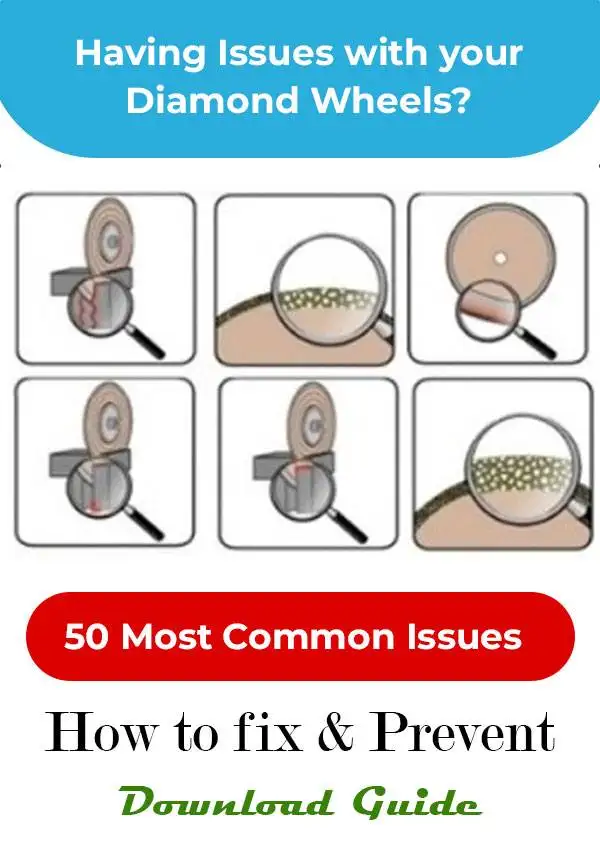
Common Diamond Grinding Wheel Problems
Begin by identifying the actual production symptom. Use measurements and workpiece inspection to support the diagnosis rather than relying on wheel appearance alone.
|
Observed problem |
Possible causes to investigate |
First diagnostic check |
|---|---|---|
|
Reduced cutting performance |
Wheel loading, glazing, unsuitable wheel specification or ineffective conditioning |
Compare cutting performance and wheel condition with the established baseline |
|
Increasing spindle load or grinding force |
Accumulated debris, reduced cutting effectiveness, excessive engagement or changes in workpiece condition |
Review machine-load trends and confirm that operating conditions remain comparable (see grinding force vs. wheel condition) |
|
Poor surface finish or unexpected scratches |
Abrasive debris, contamination, wheel damage, vibration or unsuitable grit selection |
Inspect the ground surface and check wheel condition and coolant cleanliness |
|
Edge chipping or localized fracture |
Brittle material behaviour, inadequate support, runout or unsuitable grinding conditions |
Examine defect location and review workpiece support and engagement conditions |
|
Dimensional variation or profile loss |
Wheel wear, profile degradation, runout, thermal effects or unstable workholding |
Measure the wheel profile and inspect workpiece dimensions |
|
Discoloration or suspected thermal damage |
Inadequate coolant delivery, excessive heat generation or unsuitable process conditions |
Check coolant delivery at the contact zone and inspect the workpiece for damage |
|
Vibration or chatter marks |
Wheel imbalance, mounting problems, spindle condition, poor workholding or process instability |
Inspect the mounting arrangement and investigate the machine and fixture (see grinding wheel and machine troubleshooting) |
|
Visible wheel damage |
Mechanical damage, mounting issues, excessive loading or operation outside permitted limits |
Stop the process and follow the applicable wheel and machine safety instructions |
These symptoms are starting points for investigation, not definitive diagnoses. Several causes may coexist, so confirm the likely mechanism before changing the wheel or process.
Check the Machine, Workholding and Coolant First
Before selecting a different wheel, verify that the existing grinding system is operating as intended. This prevents a machine or process problem from being incorrectly attributed to the abrasive tool.
Machine and mounting
Check the wheel mounting arrangement, runout, balance where applicable, spindle condition and fixture stability. Confirm that the installed wheel matches the machine requirements and that its operating speed does not exceed its rated limit.
If vibration or dimensional variation began after a wheel change, inspect the installation and mounting arrangement before assuming the wheel specification is unsuitable.
Coolant delivery and debris removal
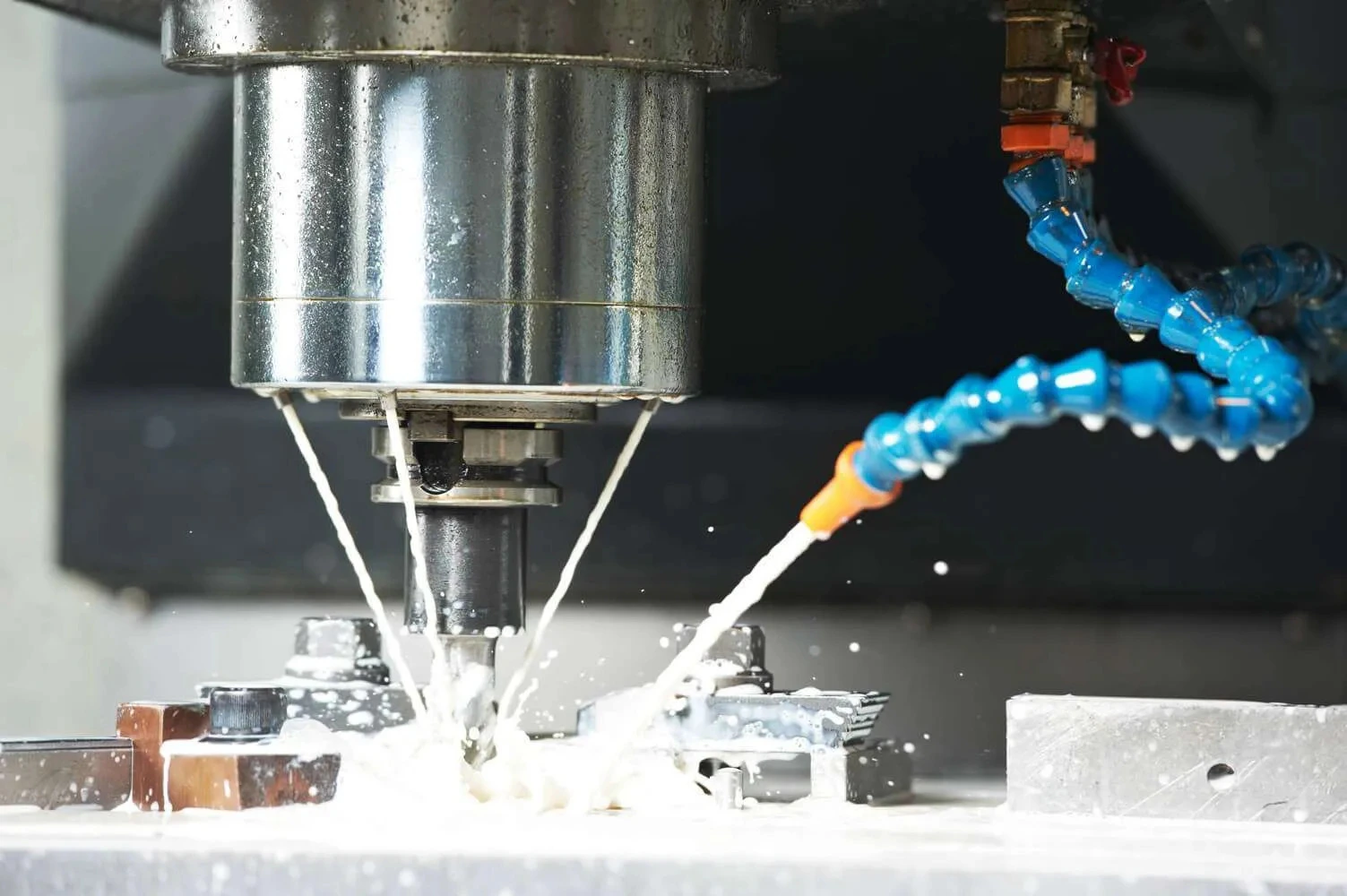
Confirm that coolant reaches the grinding contact zone in the intended quantity and direction. Also review filtration, contamination and the removal of grinding debris.
Coolant delivery should be assessed at the actual grinding interface, not simply by confirming that the pump is running. The required delivery arrangement depends on the wheel, machine and application. For background on how coolant flow affects tool life and process stability, see UKAM’s technical guide.
Workpiece support and process consistency
Check that the workpiece is securely supported and that its material, geometry and condition are comparable with previously accepted production.
Changes in engagement, feed, traverse, workpiece condition or fixture alignment can affect cutting behaviour and surface quality. Record the relevant conditions before making adjustments.
For a broader reference covering common wheel faults and their corrective actions, consult UKAM’s Diamond & CBN Wheel Troubleshooting Guide.
Distinguish Wheel Loading from Glazing
Loading and glazing can both reduce grinding performance, but they describe different conditions.
|
Condition |
Description |
What to investigate |
|---|---|---|
|
Wheel loading |
Workpiece material or grinding debris accumulates on the active wheel surface or within its accessible spaces |
Material compatibility, debris removal, coolant condition, wheel structure and approved cleaning or conditioning methods |
|
Wheel glazing |
The active abrasive surface becomes less effective at cutting because effective cutting edges are no longer being presented adequately |
Abrasive and bond selection, conditioning method, wheel specification and process settings |
Do not assume that every smooth-looking wheel is glazed or that every loss of cutting performance is caused by loading. Surface appearance alone may not establish the failure mechanism.
The appropriate corrective action depends on the wheel construction. Before cleaning, dressing or conditioning a wheel, confirm the procedure permitted by its manufacturer.
For an in-depth explanation of the causes and diagnosis of these two conditions, read UKAM’s Diamond Grinding Wheel Loading vs. Glazing Guide.
Establish a Baseline Before Changing the Process
A reliable baseline makes it possible to distinguish a genuine improvement from normal production variation.
Record the following information before a troubleshooting trial.
|
Baseline parameter |
Information to document |
|---|---|
|
Workpiece |
Material grade, condition, geometry and batch |
|
Wheel |
Manufacturer, part number, abrasive, grit, bond, concentration, dimensions and profile |
|
Machine |
Machine identification, spindle condition, mounting arrangement and relevant runout measurements |
|
Grinding conditions |
Wheel speed, feed, engagement, traverse and other application-specific settings |
|
Coolant |
Type, concentration where applicable, delivery position, filtration and contamination |
|
Conditioning |
Method, frequency, settings and wheel condition (see diamond dressers) |
|
Quality |
Surface finish, dimensional results, edge integrity and applicable acceptance criteria |
|
Production |
Cycle time, accepted parts, scrap, rework and relevant wheel-wear measurements (see wheel performance and cost per part) |
Use the same measurement methods and acceptance criteria throughout the investigation. Otherwise, apparent differences between trials may reflect inconsistent measurement rather than a real process improvement.
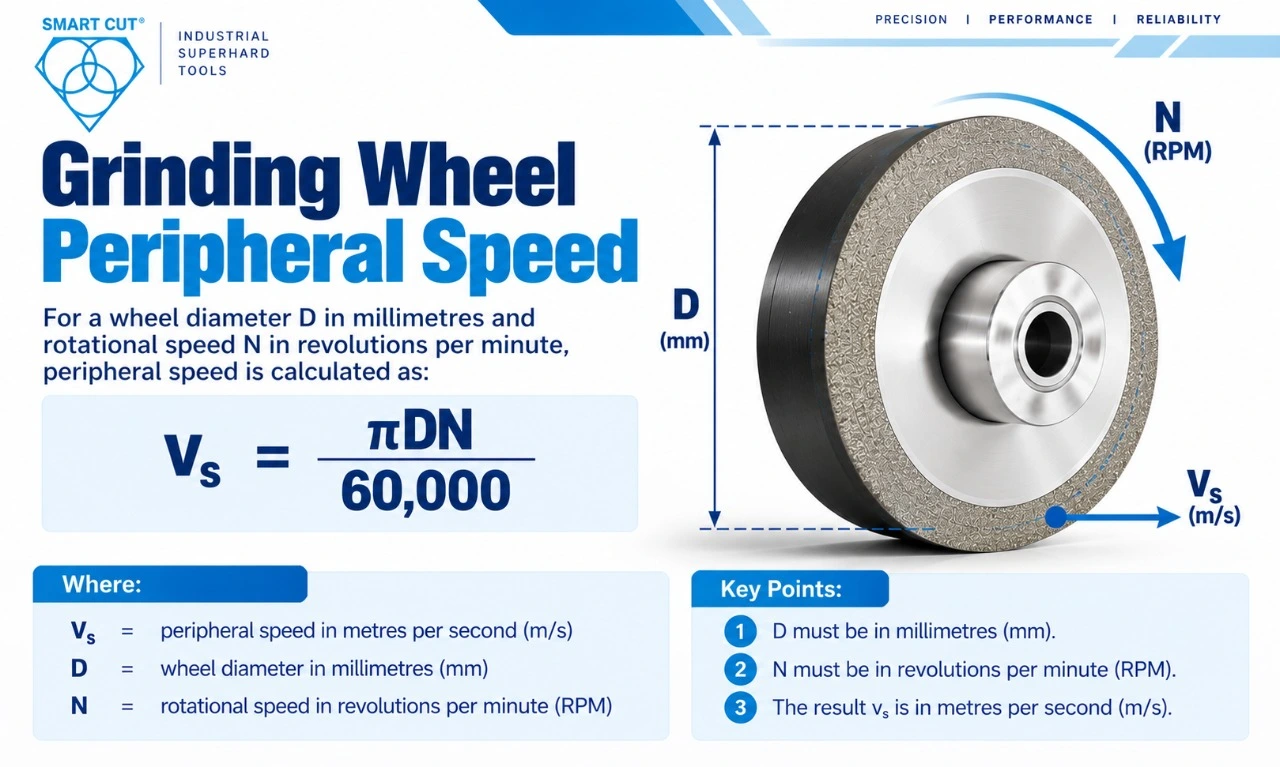
For a wheel diameter D in millimetres and rotational speed N in revolutions per minute, peripheral speed is calculated as:
vs = πDN60,000
Where:
vs = peripheral speed in metres per second
D = wheel diameter in millimetres
N = rotational speed in RPM
For example, a 150 mm wheel rotating at 3,000 RPM has a calculated peripheral speed of approximately 23.6 m/s.
This is a mathematical example, not a recommended operating condition. Always verify the specific wheel’s rated speed, mounting requirements, condition and machine limitations before operation. UKAM’s guide on how to properly use diamond tools covers performance, safety and tool life in more detail.
Follow a Controlled Troubleshooting Process
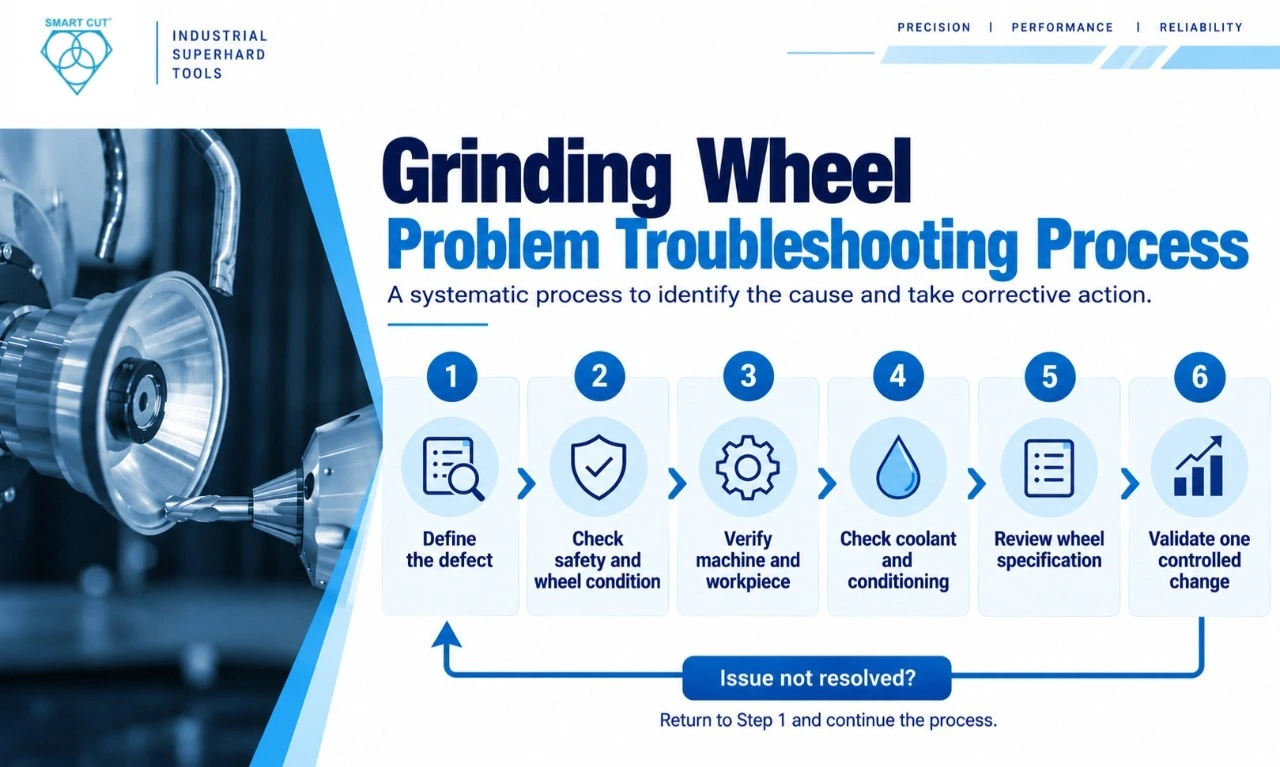
Once the symptom and baseline are documented, investigate the problem systematically.
Step 1: Define the defect
Identify whether the primary issue is reduced cutting performance, surface damage, edge chipping, vibration, dimensional variation or another measurable change.
Step 2: Check safety and wheel condition
Stop the process if there is visible damage or another unsafe condition. Do not operate a wheel outside its permitted use.
Step 3: Verify the machine and workpiece
Inspect mounting, runout, workholding, alignment and other relevant machine conditions.
Step 4: Check coolant and conditioning
Confirm effective coolant delivery, debris removal and compliance with the wheel manufacturer’s conditioning instructions.
Step 5: Review wheel specification
If the preceding checks do not explain the problem, evaluate whether the abrasive, bond, grit, concentration, profile or dimensions are appropriate for the application.
Step 6: Validate one controlled change
Change one relevant variable at a time where practical. Compare the result against the original baseline and the same workpiece acceptance criteria.
|
Trial record |
Required information |
|---|---|
|
Problem |
Specific defect or performance loss |
|
Baseline |
Original wheel, machine and process conditions |
|
Change |
The single adjustment or corrective action being evaluated |
|
Quality result |
Finish, dimensions, edge integrity and other acceptance checks |
|
Production result |
Cycle time, accepted parts and relevant wheel-wear data |
|
Decision |
Accept the change, reject it or continue investigating |
A corrective action should only be approved when the results demonstrate that it resolves the identified problem without introducing unacceptable quality or production issues.
Consider Material-Specific Failure Mechanisms
Different materials respond differently to grinding. The following table identifies potential mechanisms to investigate; the actual cause must be confirmed through material-specific inspection and process evidence.
|
Workpiece material |
Potential issues to investigate |
|---|---|
|
Edge chipping, brittle fracture and subsurface damage |
|
|
Edge breakout, localized fracture and surface damage |
|
|
Silicon nitride |
Edge fracture and subsurface cracking |
|
Edge chipping, dimensional variation and possible grinding-related cracking |
|
|
Edge chipping, crystal-related fracture behaviour and subsurface damage |
|
|
Fused silica |
Edge chipping, localized surface damage and subsurface fracture |
|
Gallium arsenide (GaAs) |
Wafer-edge chipping and localized cracking (see semiconductor industry solutions) |
|
Localized chipping, uneven wear and potential damage near material interfaces (see PDC cutter grinding) |
For brittle materials, investigate workpiece support, wheel runout, engagement conditions, coolant delivery and defect location. For composite or multi-phase materials, assess whether different constituents respond differently under the same grinding conditions.
Do not assume that a single wheel change will resolve every material defect. The appropriate corrective action depends on the failure mechanism, material requirements and inspection results.
When Should You Review the Wheel Specification?
If machine condition, coolant delivery, workholding and operating conditions have been checked, review whether the wheel is appropriate for the application.
The most relevant specification variables are:
|
Specification variable |
Engineering consideration |
|---|---|
|
Wheel shape and profile |
Must match the required contact geometry, groove, contour or surface |
|
Must be suitable for the workpiece material and intended grinding operation |
|
|
Influences the balance between finish, cutting behaviour and material removal |
|
|
Affect abrasive retention, wear behaviour and the wheel's response under application conditions |
|
|
Diamond concentration |
Influences abrasive content and wheel behaviour; suitability depends on the wheel design and application |
|
Core and mounting |
Must meet machine, mounting, dimensional stability and interface requirements (see diamond tool accessories) |
|
Dimensions and tolerances |
Must match the machine, clearance, required geometry and workpiece specification |
|
Conditioning requirements |
Must be compatible with the wheel construction and approved process |
Bond selection should not be based on one symptom alone. A change in bond may be worth evaluating when evidence points to a wheel-specification issue, but the proposed configuration must be matched to the material, operation, machine and required finish. For a side-by-side view, see resin bond vs. metal bond diamond wheels and choosing the correct diamond bond type.
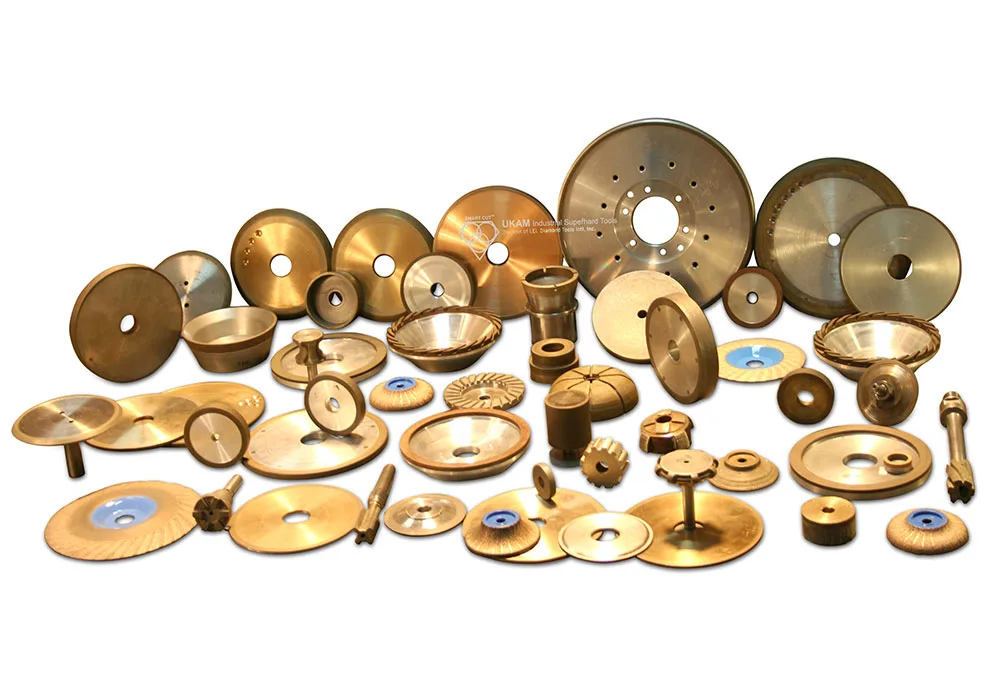
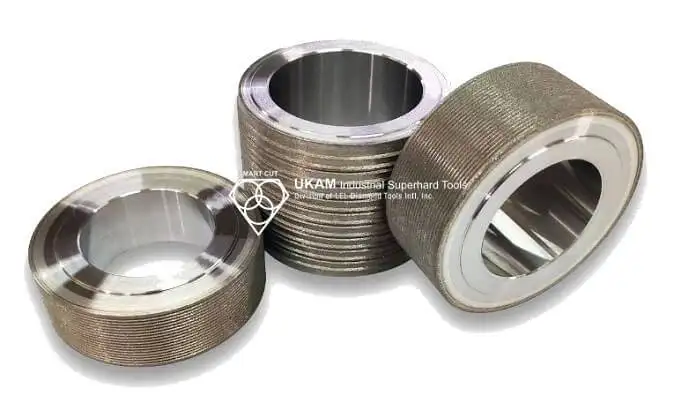
For available wheel configurations and manufacturing capabilities, see UKAM Diamond and CBN Wheels with SMART CUT Technology.
For a more comprehensive selection process, refer to the UKAM Diamond and CBN Wheel Selection Guide. To define every parameter before ordering, review diamond grinding wheel specification.
Which UKAM Wheel Options Should You Evaluate?
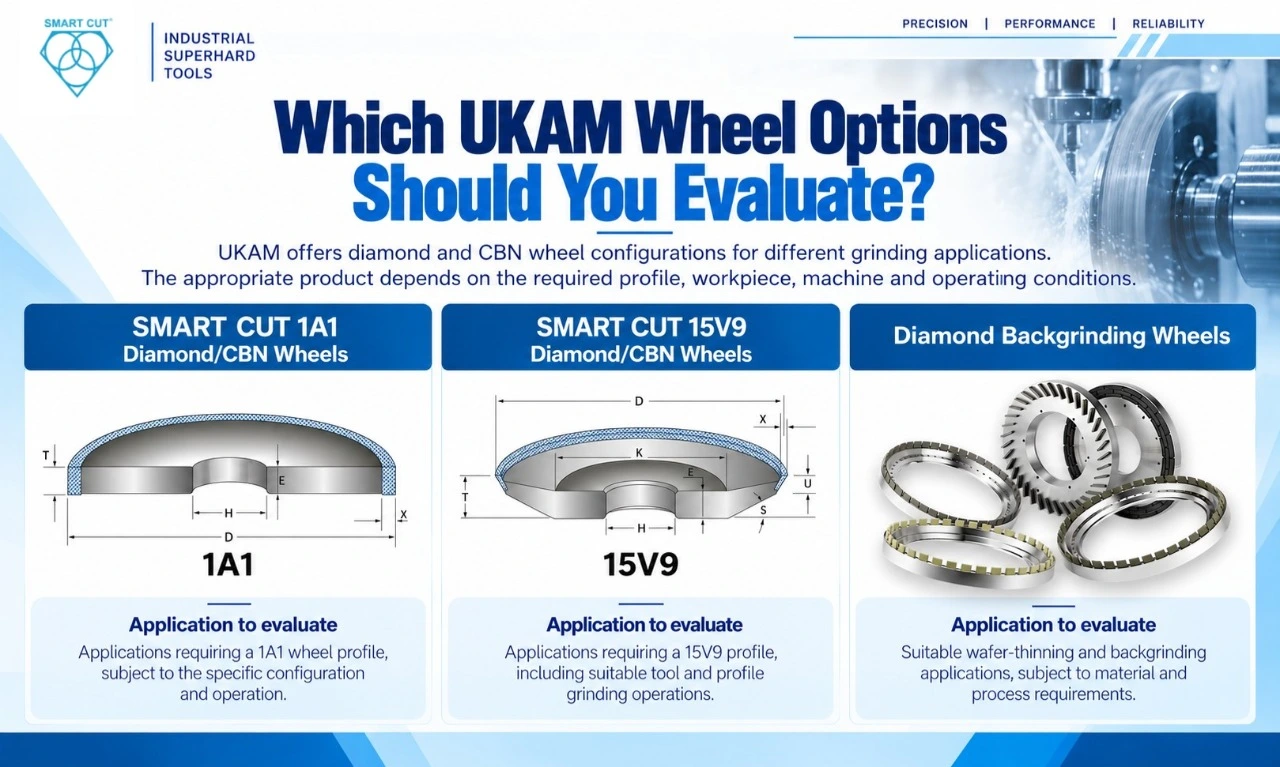
UKAM offers diamond and CBN wheel configurations for different grinding applications. The appropriate product depends on the required profile, workpiece, machine and operating conditions.Record the following information where applicable:
|
Wheel family |
Application to evaluate |
|---|---|
|
Applications requiring a 1A1 wheel profile, subject to the specific configuration and operation |
|
|
Applications requiring a 15V9 profile, including suitable tool and profile grinding operations |
|
|
Suitable wafer-thinning and backgrinding applications, subject to material and process requirements |
These options are not interchangeable solutions. Confirm the exact dimensions, profile, abrasive, bond, mounting, speed rating and intended application with UKAM before selecting a replacement or custom wheel. Learn more about the underlying SMART CUT® technology.
Final Troubleshooting Checklist
Before approving a corrective action, confirm that the following checks have been completed.
- Wheel identity, dimensions and profile have been verified.
- Wheel condition, mounting and runout have been checked.
- Machine condition and workholding have been reviewed.
- Rated wheel speed and applicable machine limits have been confirmed.
- Operating conditions have been compared with a documented baseline.
- Coolant delivery and debris removal have been checked.
- Conditioning follows the manufacturer's instructions.
- Surface finish, dimensions and edge integrity meet acceptance criteria.
- The corrective action has been validated under controlled conditions.
- The original problem and baseline have been recorded.
- The trial change and results have been documented.
- The decision to accept or reject the change is supported by evidence.
- The approved wheel specification and process instructions have been updated where necessary.
Frequently Asked Questions
Possible causes include loading, glazing, unsuitable wheel specification, ineffective conditioning, inadequate coolant delivery or changes in machine and workpiece conditions. Verify the process baseline and investigate these factors before replacing the wheel. You can also extend the life and performance of your diamond grinding wheels with good process discipline.
Loading involves material or debris accumulating on the wheel’s active surface. Glazing describes a loss of effective cutting action associated with the condition of the active abrasive surface. The causes and appropriate corrective actions may differ.
Potential causes include contamination, abrasive debris, wheel damage, vibration, unsuitable grit selection, unstable workholding or changes in grinding conditions. Inspect the surface and wheel, then verify machine and process conditions before changing the specification.
Yes. Bond construction and hardness influence abrasive retention and wheel behaviour. However, machine condition, coolant delivery, conditioning and operating settings should also be checked before concluding that the bond is responsible. Compare resin bond, sintered (metal bond) and HYBRID Bond™ options.
Inspect the wheel and mounting arrangement, verify machine condition, check workholding and coolant delivery, review conditioning history, and compare the process against an established baseline. If these checks do not explain the problem, evaluate the wheel specification.
Use comparable workpiece material, geometry, machine conditions and acceptance criteria. Evaluate cutting performance, surface quality, dimensional results, accepted parts and relevant wheel-wear measurements. A wheel is not a successful replacement if it increases output but fails quality requirements.
Provide the workpiece material and geometry, machine and mounting details, current wheel specification, operating conditions, coolant arrangement, quality requirements and the specific problem being investigated. This information helps the supplier evaluate the application more effectively. UKAM can manufacture custom diamond and CBN tools to your specification, and its process development team can support application trials.
Conclusion: Diagnose Before Replacing the Wheel
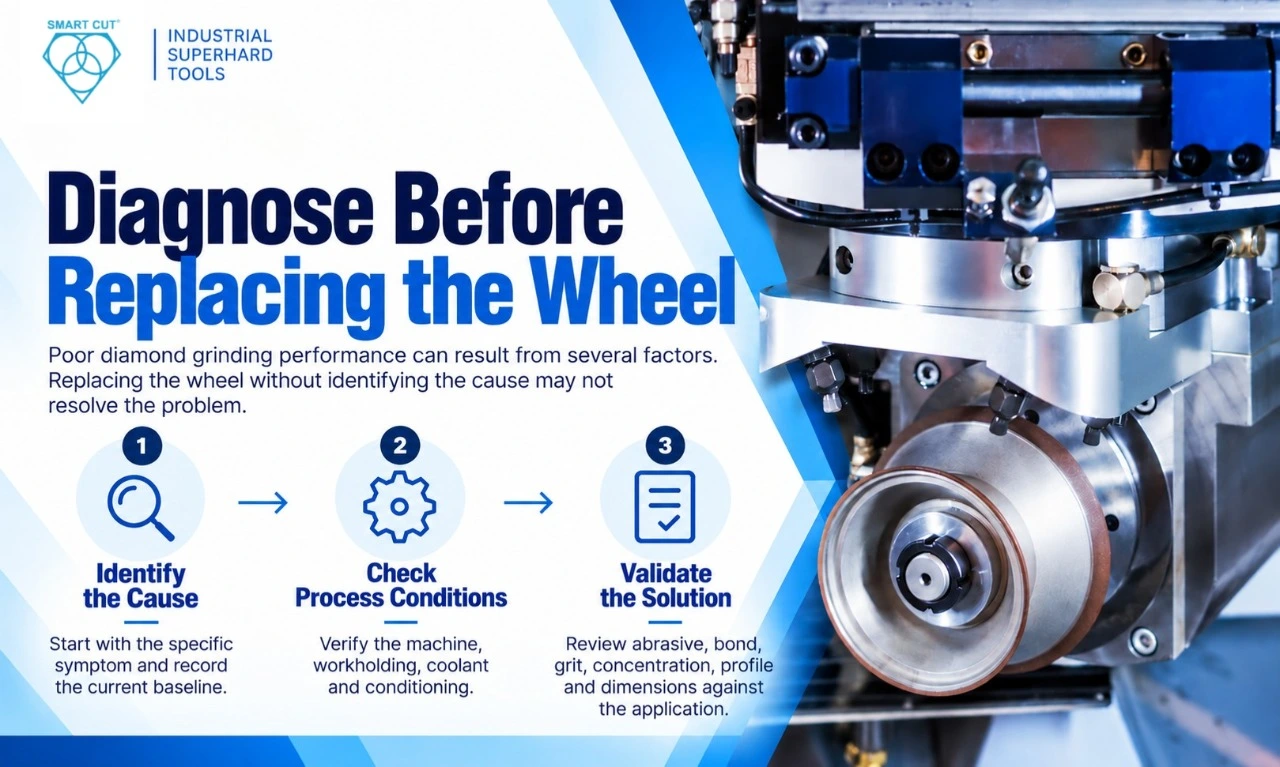
Poor diamond grinding performance can result from wheel specification, abrasive condition, machine accuracy, coolant delivery, workholding or workpiece material. Replacing the wheel without identifying the cause may leave the underlying problem unchanged.
Start with a defined symptom and a documented baseline. Check the machine, workholding, coolant and conditioning before evaluating a change in wheel specification. Then validate the corrective action against the same quality and production requirements.
When the evidence indicates that the wheel may be contributing to the problem, review its abrasive, bond, grit, concentration, profile and dimensions against the actual application.
Need help evaluating a diamond or CBN grinding wheel application? Contact UKAM Industrial Superhard Tools with your workpiece material, existing wheel specification, machine conditions and performance requirements to discuss a suitable configuration.
Important: Wheel suitability, available configurations and operating limits must be confirmed for the specific application. Always follow the wheel manufacturer’s instructions and the machine’s applicable safety requirements.
American Based Manufacturer
Established in 1990
