-
0 items in quote
No products in the Quote Basket.
Knowledge Center
UKAM Industrial Superhard Tools is committed to helping you improve and optimize your slicing, dicing, and drilling operation to the outmost level of efficiency.
On our web site you will find the Most Comprehensive Source of Information on Everything you wanted to know about diamond tools, diamond drilling, cutting, grinding, & polishing. We believe that the best client is a well-informed client. The more you understand about what we can do for you, the better our partnership will be Superior Performance requires not only high quality diamond tools, but Proper Understanding & Experience on how to properly use them.
Trusted by Tens of Thousands of Manufacturers, Laboratories,
Research Institutions Worldwide
Since 1990

Established in 1990
LET US HELP YOU
We Are A Partner In Your Success
We highly suggest exploring our Knowledge Center, which contains valuable information, where you will find answers to most of your questions. This valuable resource is offered to you FREE of charge, which is a rare benefit as many companies charge for similar information. We urge you to take advantage of this resource.

- Silicon Manufacturing
- Metallography / Sample Preparation
- Diamond Blade Articles
- Diamond Lapidary Blade Articles
- Diamond Drill Articles
- Dicing Blade Articles
- Diamond Wire
- Diamond Band Saw Blades Articles
- Diamond Articles
- CBN Articles
- Coolants Articles
- Diamond Bonds Articles
- Technologies Articles
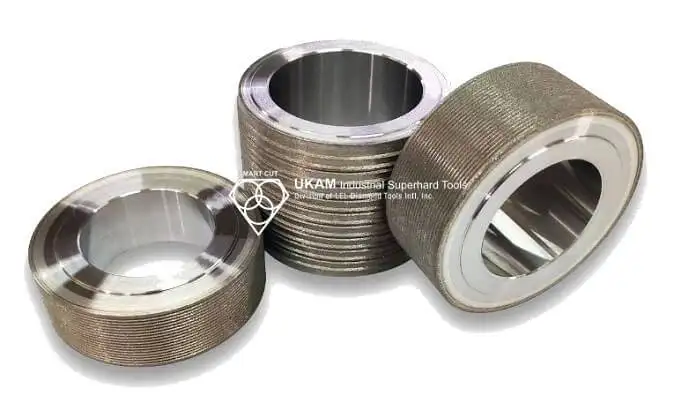
- Diamond Wheels Articles
- Metallography Articles
- Diamond Core Bits Articles
- Diamond Hole Saws Articles
- Composites Articles
- Lapidary Articles
- Semiconductor Articles
- Sample Preparation Articles
- Concrete Articles
- Construction Articles
- Wafering Blade
Selecting Right Diamond & CBN Tools for your Application
08
May
Key Variables in Diamond & CBN Tool Performance that affect your ROI
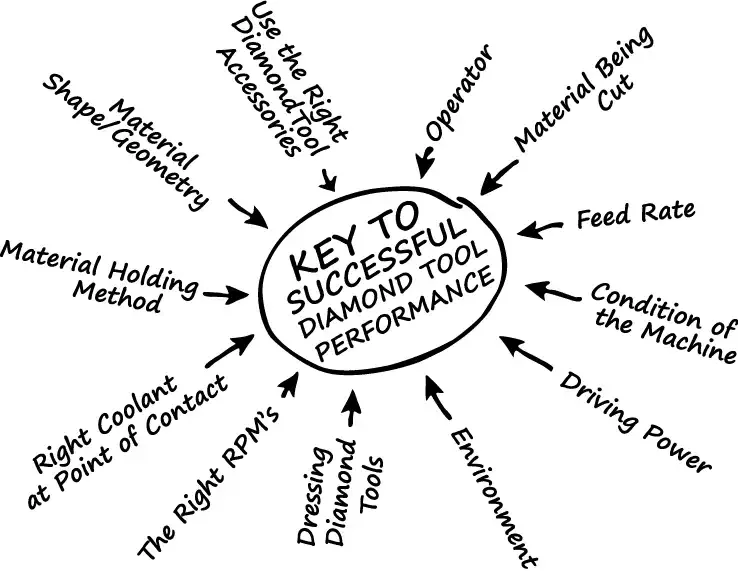
Understanding the variables that play an important role diamond tool performance is important for achieving optimal results & improving your return on investment (ROI). This article dives into essential factors such as selecting the appropriate...
17
May
Choosing The Correct Diamond Bond Type
Selecting the appropriate diamond bond type for specific applications is crucial for several reasons. Diamond bond type directly affects the tool's performance, efficiency, and longevity. Different bond types determine how well a tool can withstand...
How Diamond & CBN Tools Work
02
Jun
How to properly use Diamond Tools
UKAM Industrial Superhard Tools manufactures precision diamond tools for a large variety of applications, materials, and industries.
Trusted by Tens of Thousands of Manufacturers, Laboratories,
Research Institutions Worldwide
Since 1990
American Based Manufacturer
Established in 1990
Expert technical support
Custom manufacturing
Thousands...
02
Jun
How Diamond Tools Work
Diamond & CBN Tools represent the highest engineering of cutting and grinding technology. These tools use their unparalleled hardness and durability of diamonds to perform tasks beyond the capabilities of conventional tools.
Trusted by Tens of...
02
Jun
What is SMART CUT Technology
The sharpest and finest quality diamonds or CBN crystals that go into a SMART CUT Diamond Bond, immediately penetrate into the material, grinding and polishing as they cut.
Trusted by Tens of Thousands of Manufacturers, Laboratories,
Research...
02
Jun
Diamond Tool Bond Hardness & wear resistance
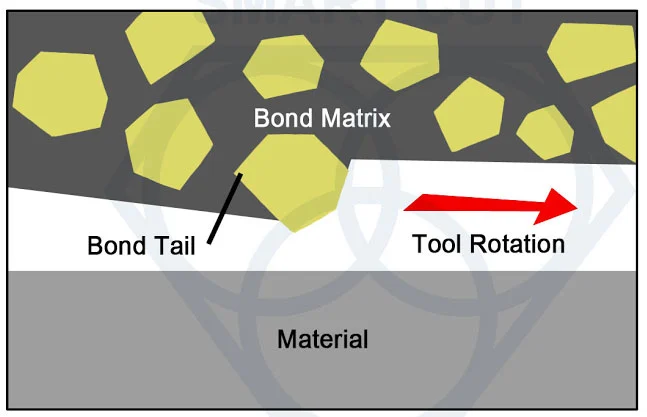
Performance of Diamond or CBN Tools is not solely dependent on the diamond grit itself but also on the bond matrix that holds the diamonds in place. The bond matrix serves a dual function: retaining...
04
Aug
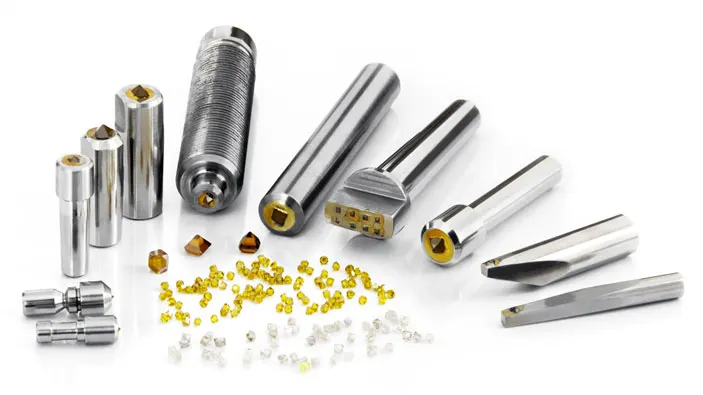
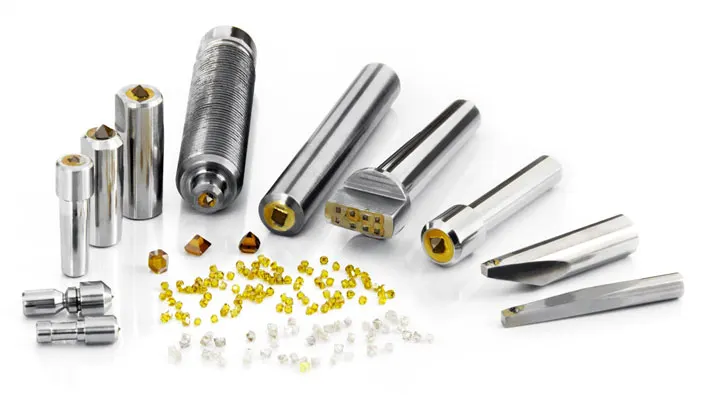
What are diamond dressers and their application
In the world of manufacturing, precision and efficiency are paramount. Among the various processes that contribute to achieving these objectives in abrasive grinding operations, truing and dressing stand out as critical steps. These...
04
Aug
How Diamond Tools are Manufactured: Step-by-Step Process Guide
Manufacturing diamond tools involves a series of technological processes to impregnated manmade or natural diamond into various diamond tools. Find info on how these types of tools are made.
Trusted by Tens...
03
Jan
How to Properly Use Diamond Tools: A Complete Guide to Performance, Safety, and Tool Life
The use of diamond tools in the manufacturing and precision machining industries, as well as in construction, research, etc., is essential. They are used for a wide range of materials, including sharpening, cutting, grinding, and polishing...
Diamond & CBN Specifications
02
Jun
Why use diamond
Diamond is the hardest material known to man kind. When used on diamond/tools, diamond grinds away material on micro (nano) level. Due to its hardness Diamond will work all types of materials from hardness of 40 on Rockwell scale and up. Diamond will machine hardest material, including those materials that other conventional types of abrasives, carbide and high speed steel will not.
02
Jun
Diamond vs CBN (cubic boron nitride) Tools
Cubic Boron Nitride (CBN) is a synthetic material that is renowned for its exceptional hardness and high thermal stability. It is composed of boron and nitrogen atoms arranged in a crystal lattice structure, similar to...
02
Jun
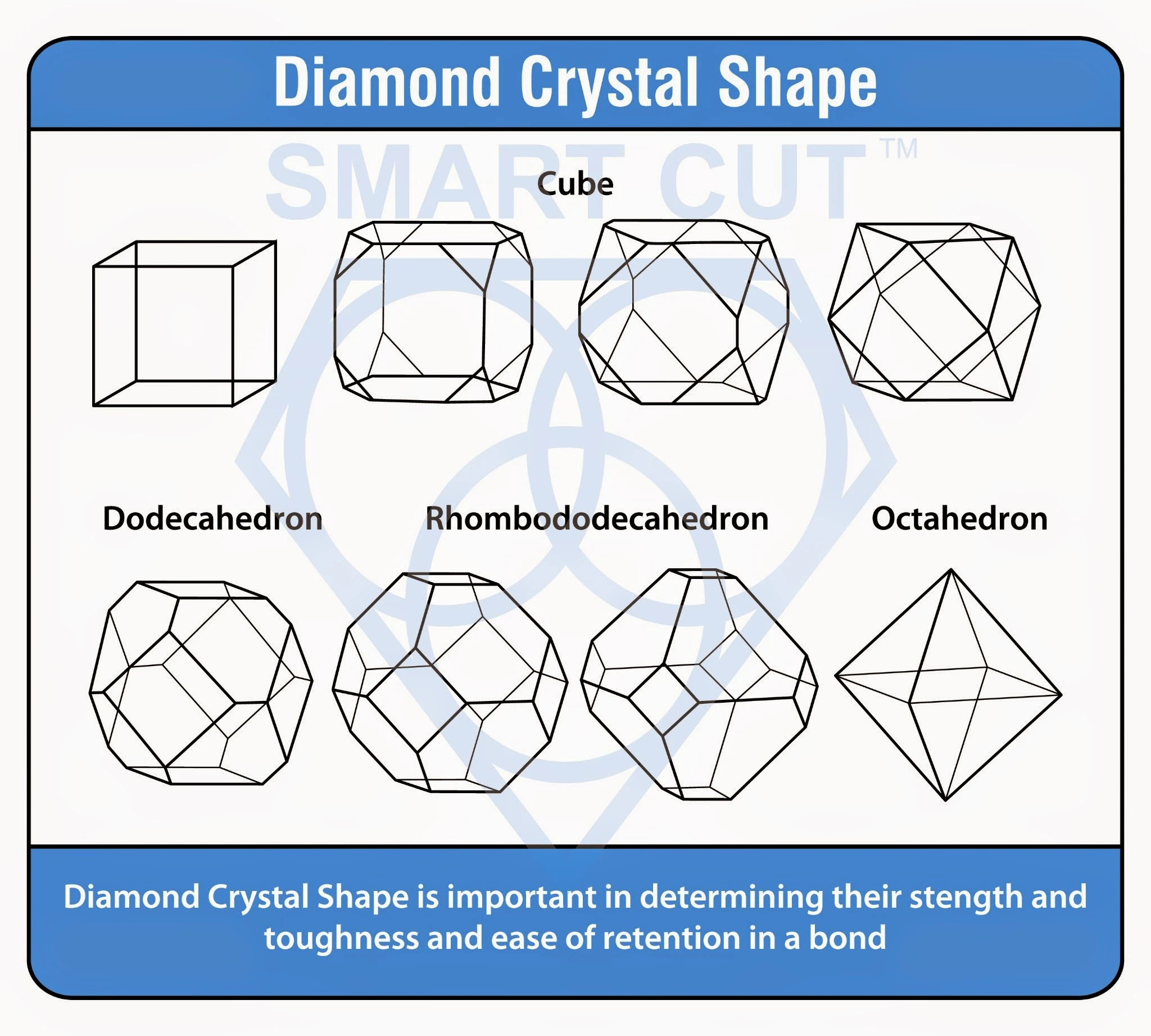
Discover the Right Diamond Powder for Your Application: Choosing Between Monocrystalline and Polycrystalline Diamonds
Diamond shape plays a significant role in the effectiveness of polishing solutions, affecting both the polishing rate and the quality of the final finish. Understanding the differences between monocrystalline and polycrystalline diamond shapes can help you choose the best solution for your specific application.
02
Jun
Diamond crystal quality – you get way you pay for
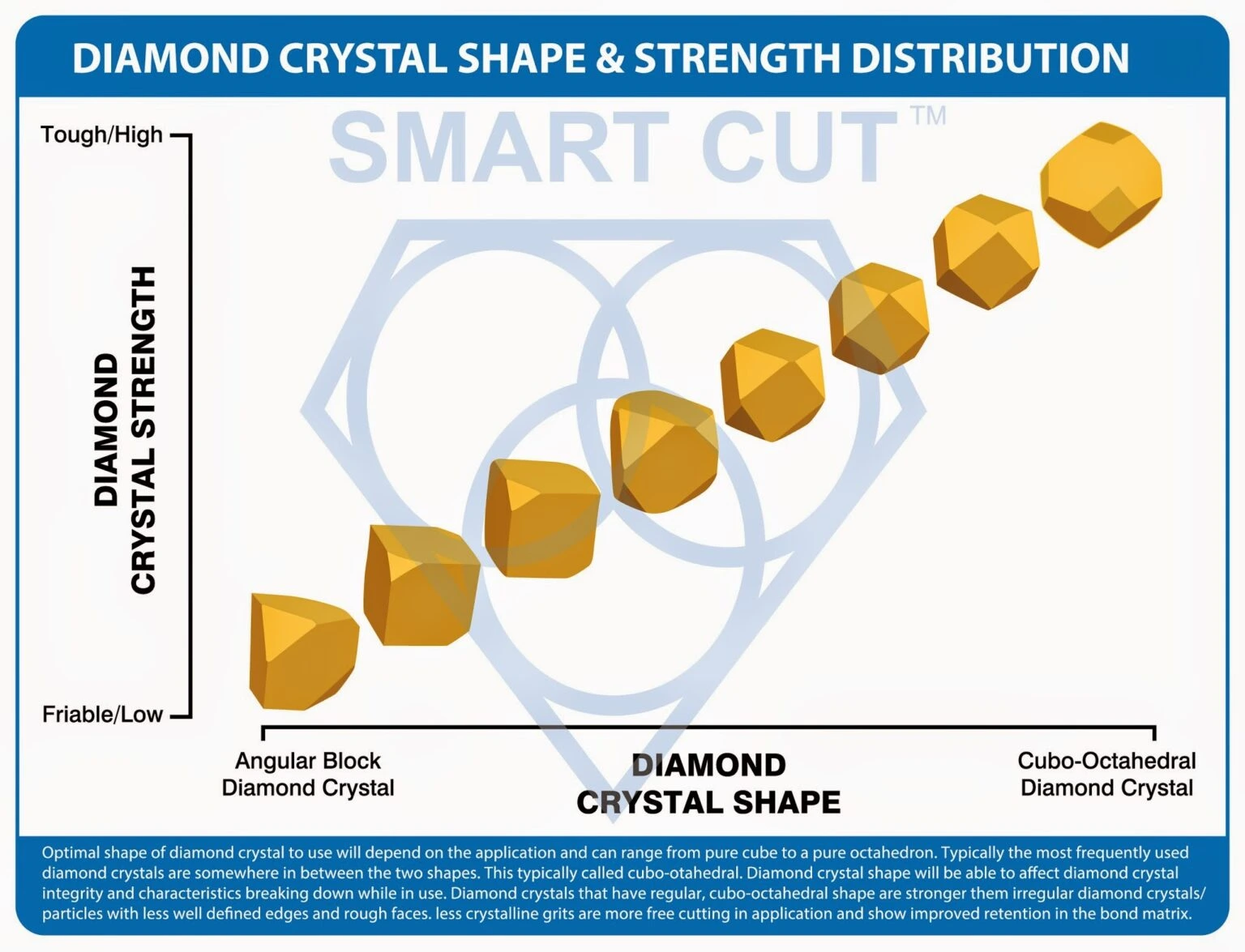
The diamonds impregnated inside the bond matrix of the diamond & tool, are what actually participate in cutting action. No matter what equipment and process you are using. You will not be able to obtain the material surface finish, and precision tolerances you need, if the diamond & cbn crystals you are using is not right for your application.
02
Jun
Diamond impact strength
Understanding the wear mechanisms of diamond crystals is essential for optimizing cutting performance in terms of both cutting ratio and speed. Diamond crystal loss, which primarily occurs through micro chipping rather than fracturing or pullout,...
02
Jun
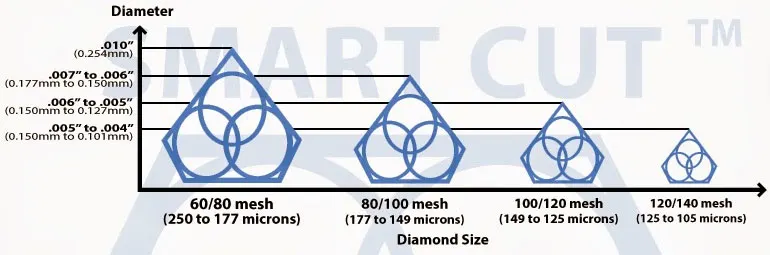
What is Diamond Mesh Size and how to select best one for your application
Diamond grit size can be defined as the size of the diamond particles used in the bond matrix. The larger the diamond particles (grit size) the faster the tool will cut.
Trusted by Tens of Thousands of...
02
Jun
What is Diamond Concentration and which to use for your application
Diamond concentration is measured based on the volume of diamond within a section of the tool. It is typically defined as Concentration 100, which equates to 4.4 carats per cubic centimeter of the diamond layer...
Diamond & CBN Bond Types
04
Aug
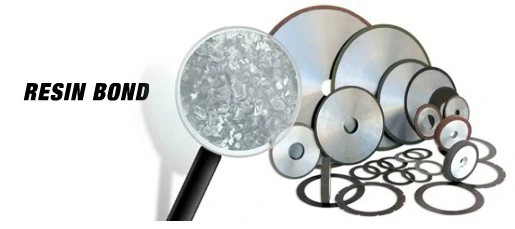
Resin Bond Tools
Learn everything you wanted to know about resin bond diamond tools. How they are made, what types are available and their applicationTrusted by Tens of Thousands of Manufacturers, Laboratories,Research Institutions Worldwide...
04
Aug
SINTERED (METAL BOND) DIAMOND TOOLS
Sintered (Metal bonded) diamond tools have multiple layers of diamonds impregnated inside the metal matrix. Diamonds are furnaces sintered in a matrix made of iron, cobalt, nickel, bronze, copper, tungsten, alloys of these powders or other metals in various combinations. Metal Bonded Diamond Tools are “impregnated” with diamonds. This means that selected diamonds are mixed and sintered with specific metal alloys to achieve the best cutting performance possible on any materials such as sapphire, advanced ceramics, optics, glass, granite, tile and etc.
04
Aug
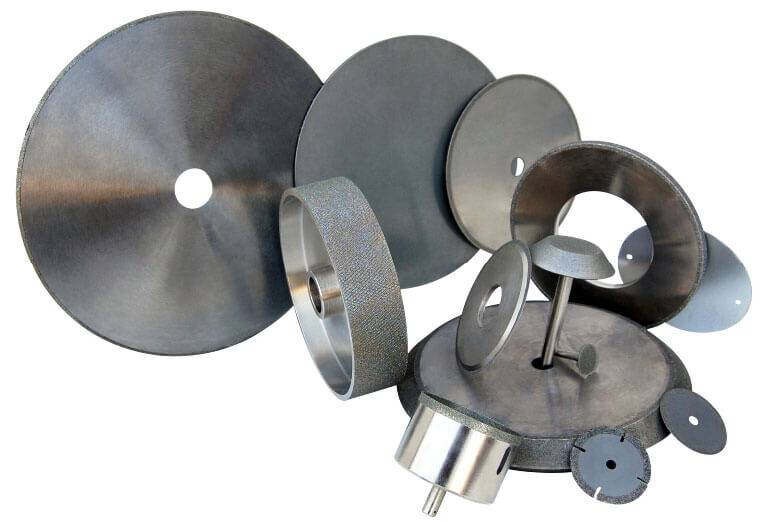
Electroplated Diamond Tools
Need Help Selecting the Right Diamond or CBN Tool for Your Application?
Our applications engineers will review your material, machine, and cutting parameters and recommend the optimalDiamond or CBN Tool specification/solution for your application
Request Applications Engineering...
04
Aug
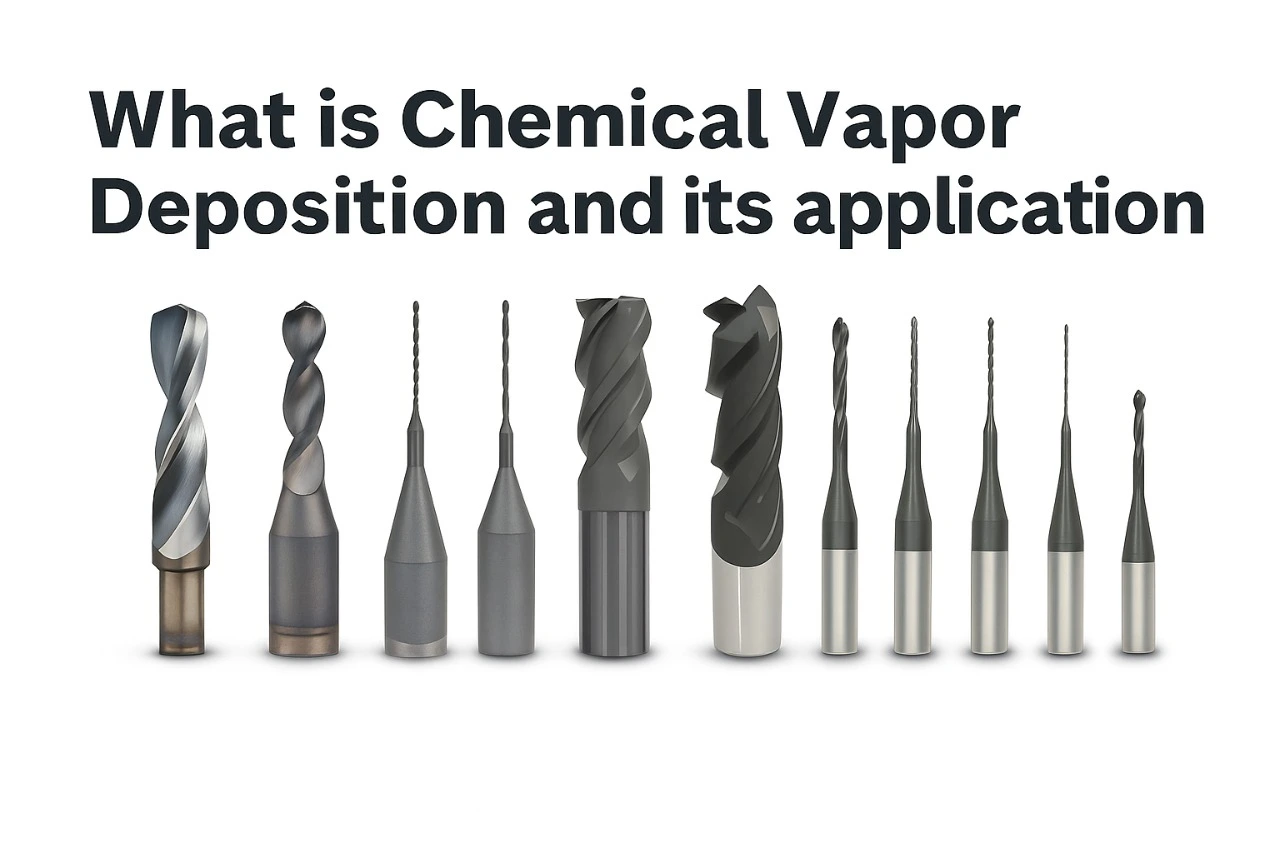
What is Chemical Vapor Deposition and its application
CVD (Chemical Vapor Deposition) diamond coating is an advanced technique used to significantly enhance the performance of cutting tools. This process is conducted in a vacuum chamber, where tools, typically made from carbide,...
04
Aug
What is Polycrystalline Diamond and its application
Polycrystalline Diamond (PCD), stand out for their utility in industrial applications. PCD is crafted through a meticulous process that combines small diamond particles using extreme heat and pressure, resulting in a material that...
Diamond & CBN Usage Principals
29
Aug
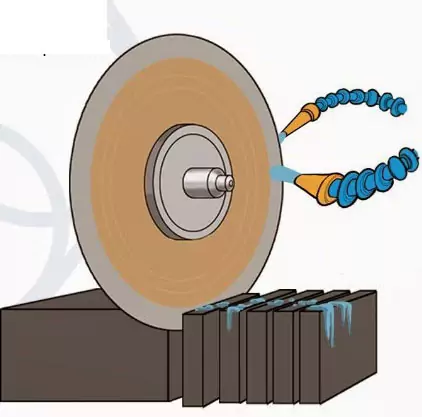
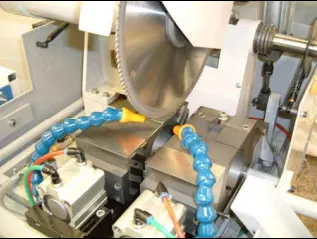
Selecting the Right Coolant Method for your Diamond & CBN Tools
Coolant is one of the most important factors in CNC machining when using diamond and CBN tools. These tools are made to cut and grind very hard materials, which naturally produces high amounts of friction...
02
Jun
Dressing Diamond Tools Why, How, When & Where
Dressing is the process of sharpening and exposing diamond particles within the bond matrix, allowing them to penetrate materials more effectively, minimize operational loads, and ensure high-quality cuts. Despite its critical role in tool performance,...
02
Jun
Material Holding Methods
Selecting the appropriate material mounting or fixturing method is essential for achieving precision, consistency, and efficiency in your cutting or machining operations. The choice depends on several factors, including material dimensions, desired cut depth, material properties, and specific application requirements.
02
Jun
RPMs & Feed Rates Guide | UKAM
Selecting the right RPM (revolutions per minute) when using industrial diamond tools is a critical factor in achieving optimal results for a variety of applications. Whether you're slicing, dicing, drilling, grinding, or polishing, the RPM...
02
Jun
Material Guide
Learn everything you wanted to know about different materials and methods of working with them
Trusted by Tens of Thousands of Manufacturers, Laboratories,
Research Institutions Worldwide
Since 1990
American Based Manufacturer
Established in 1990
Expert technical...
02
Jun
What is Surface Finish
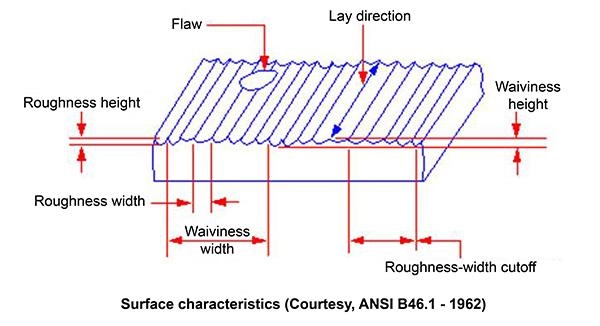
Surface finish is typically measured in terms of roughness or smoothness. It influences the appearance, functionality, and performance of a product. A well-controlled surface finish can enhance the product's aesthetics, reduce friction, improve...
02
Jun
What are Tolerances, Accuracy, and repeatability
Tolerances, accuracy, and repeatability are essential concepts in the fields of engineering, manufacturing, and measurement. They all relate to the precision and consistency of a process, system, or measurement
Trusted by Tens...
02
Jun
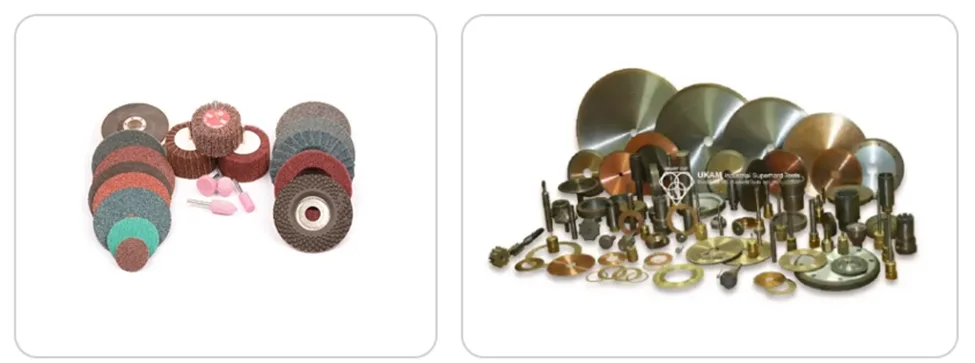
Diamond Tools compared with Abrasive Tools
Abrasive tools and diamond tools are two of the most widely used solutions for cutting, grinding, drilling, and polishing in manufacturing, research, and materials processing. While both serve the same purpose of removing material and...
04
Aug
Diamond vs. Laser and Water Jet
Machining with diamond tools and using diamond, laser, and water jet as cutting methods are all different processes with distinct advantages and applicationsIn selecting the most effective machining method...
12
Jan
Diamond Dressers: A Complete Guide to Types, Applications, and Best Practices in Grinding
Grinding is an important finishing and material-removal stage on components in manufacturing processes, which are secondary to precision, surface finish, and form errors of the workpieces. But wheels tend to lose their effectiveness through natural wear, loading,...
Coolant Articles
02
Nov
Diamond Tool Coolants Why, How, When & Where to Use
Coolant is one of the most overlooked variables in the overall diamond or cbn tool machining process. Effective and proper use of coolant and recalculating coolant system will pay off in terms of improved surface...
29
Aug
Selecting the Right Coolant Method for your Diamond & CBN Tools
Coolant is one of the most important factors in CNC machining when using diamond and CBN tools. These tools are made to cut and grind very hard materials, which naturally produces high amounts of friction...
02
Jun
SMART CUT® Water Soluble Coolant Usage Recommendations
This usage guide will cover most aspects of coolant use, including mixing ratios, the mixing process, best practices, and optimization strategies. We will start by discussing the proper mixing ratios that balance lubrication and cooling efficiency, tailored to different materials and cutting conditions. Then, we will cover into the mixing process, focusing on how to achieve a consistent mixture, and the importance of water quality and temperature.
08
Dec
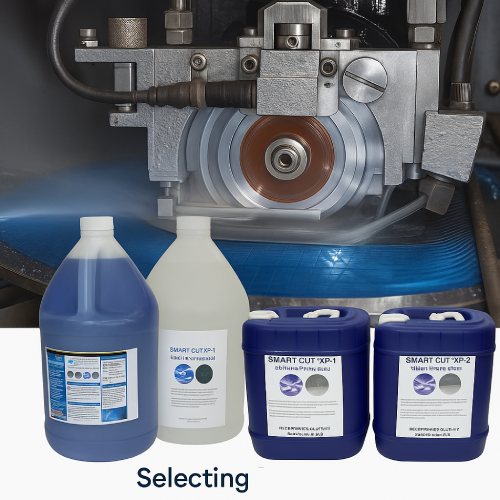
Selecting the Right Dicing Surfactant / Fluid for Your Application
Selecting the correct dicing surfactant / fluid is essential for stable cutting, consistent kerf quality, and long blade life. Each operation places specific demands on lubrication, cooling, foaming control, and electrostatic behavior. You must choose...
09
Dec
How to Use SMART CUT XP Dicing Surfactants
SMART CUT® XP dicing surfactants should be introduced into the saw water supply in a controlled and consistent manner to ensure proper dilution, stable chemical performance, and uniform delivery to the cutting zone. Correct dosing equipment and proper setup help achieve full...
09
Dec
Dicing Surfactants Guide
Dicing surfactants support stable and consistent wafer dicing. You use them as part of a complete dicing fluid designed to cool the blade, flush debris, and protect exposed device surfaces. Modern semiconductor wafers contain smaller...
Diamond Wire & Band Saw Blades
02
Nov
Guide to Diamond Wire Sawing: Technologies, Wire Types, and Machine Designs
Diamond wire saws provide one of the most precise and reliable methods for sectioning both hard and fragile materials. The principle behind the process is simple yet highly effective. A thin wire embedded with fine...
02
Jun
Comparing Two Different Cutting Methods (Low Speed Saw vs. Wire Saw)
For metallography, sample preparation, materials research and working with large variety of materials, selecting the optimal cutting technology is crucial for achieving high-quality results across various materials and applications. This article delves into a comparative...
07
Oct
Selecting the Right Diamond Band Saw blade for your Application
Selecting the right diamond band saw blade is important for getting the best results in your cutting process. The right blade can help you achieve clean cuts, reduce material waste, and make your blades last...
17
Sep
Diamond Band Saw Blades Usage Recommendations & Best Practices
Diamond band saw blades are used for cutting large variety of materials from ultra hard ceramics to glass and composite materials. This article covers all critical usage recommendations and best practices for diamond band saw...
04
Aug
Diamond Wire vs band saw blades and circular blades
Diamond wire, band saw blades, and circular blades are all cutting tools used in various industries for different purposes. Each tool has its advantages and applications.For cutting ultra hard and brittle...
Before purchasing, avoid these common errors:
Silicon Manufacturing
02
Jun
Silicon Fabrication Guide
Cutting silicon wafers is a critical process in the manufacturing of semiconductor devices, where precision and control are paramount to the success of the final products. Silicon, a semi-metallic or metalloid, is the base material...
08
Jul
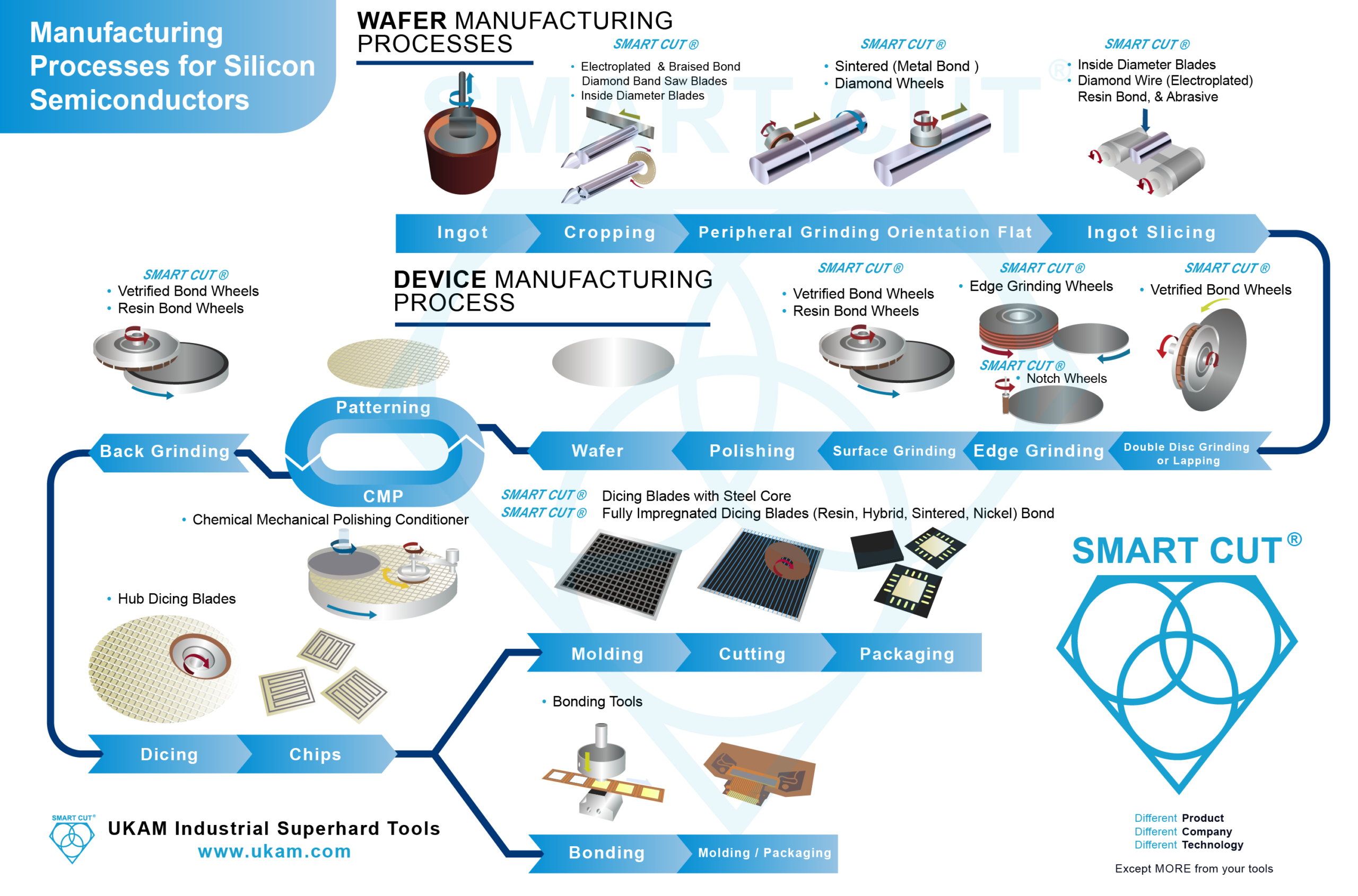
Manufacturing Processes for Silicon Semiconductors From Ingot to Integrated Circuit
1. Ingot Production The journey begins with the creation of silicon ingots, which are pure silicon cylinders produced through methods like the Czochralski process. Once formed, these ingots undergo a cropping procedure to remove any excess and to prepare them for slicing. This step ensures that only the highest quality silicon is used, which is crucial for the performance of the final semiconductor devices.
08
Jul
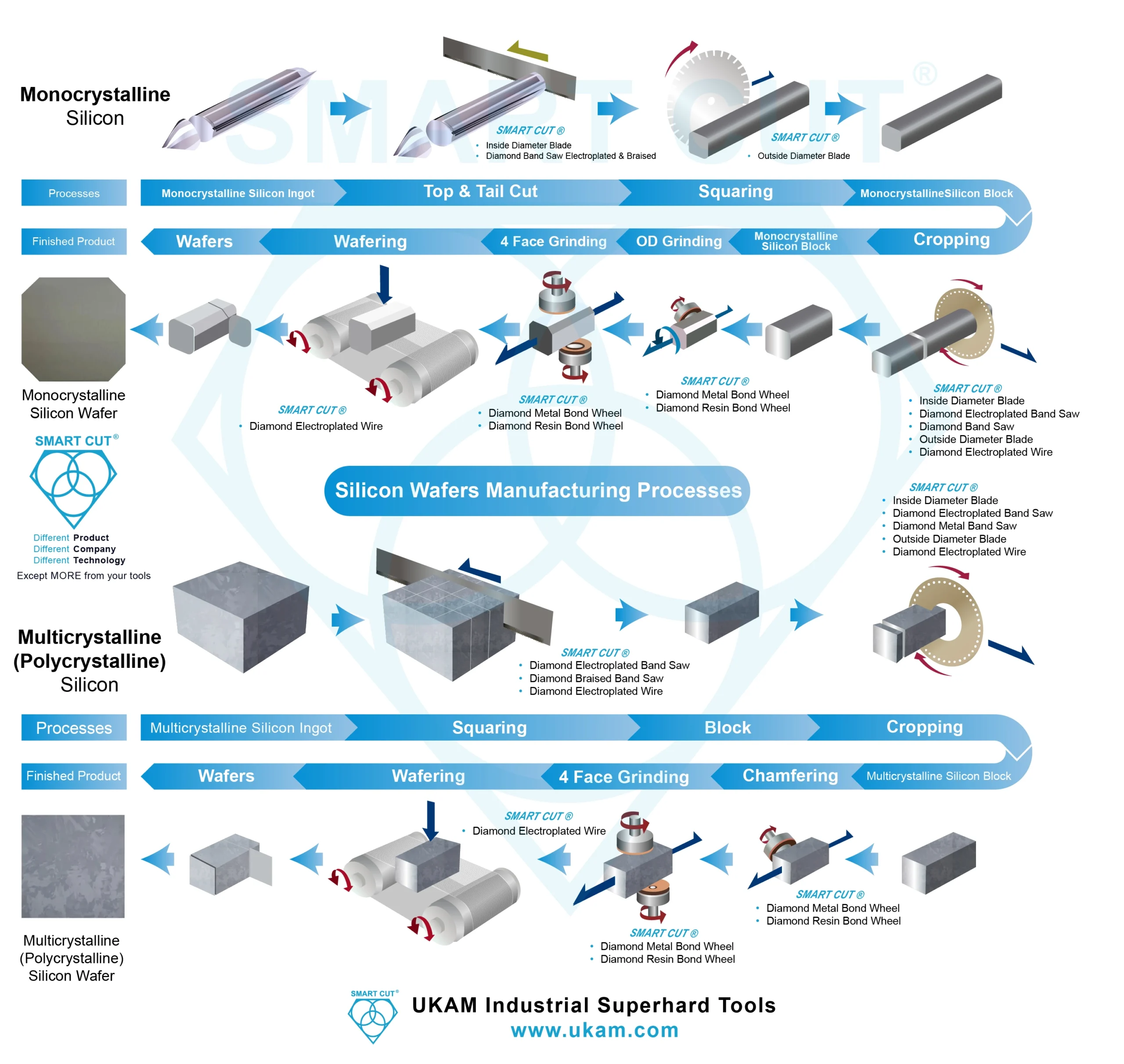
The Comprehensive Guide to the Processes of Silicon Wafers Production
The production of silicon wafers, an essential component in semiconductor manufacturing, involves several intricate steps to ensure precision and quality. This article explores the detailed processes depicted in the provided illustration, covering both monocrystalline and...
Diamond & CBN Wheels
02
Jun
CBN (Cubic Boron Nitride) Grinding Wheels – Everything you wanted to know
Why Use Cubic Boron Nitride (CBN) Wheels? Cubic boron nitride (CBN) grinding wheels are gaining recognition as superior tools for machining difficult metals. Initially used in toolrooms and cutter-grinding applications, CBN wheels are now making a significant impact in production grinding operations, where conventional abrasives would wear out much faster. CBN wheels are versatile, ranging from regrinding high-speed cutting tools to high-speed grinding of hardened steel components in the automotive industry.
02
Jun
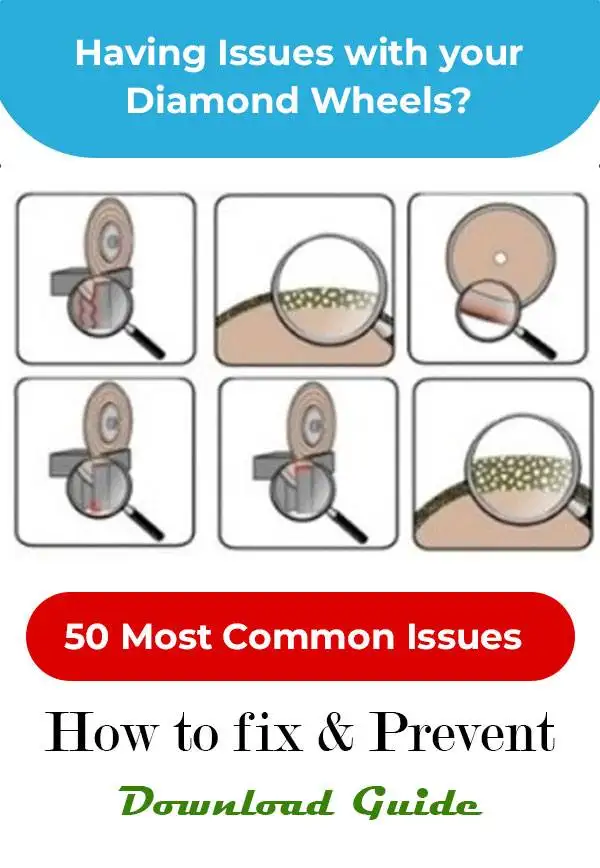
Diamond & CBN Wheel Troubleshooting Guide
Our illustrated troubleshooting guide was designed to help you optimize your grinding operations. It assists in diagnosing most possible issues that may arise when using diamond & CBN WHEELS. This guide highlights the signs to watch out for, their...
Diamond Core Bit Articles
02
Jun
Diamond Core Bit Ultimate Guide
Diamond Core Bits for Concrete & Construction are available in countless of specifications. Diamond core bits, known for their unmatched durability and cutting ability, are a necessity for professionals needing to drill through reinforced concrete,...
02
Jun
Concrete Drilling Metrics – Optimizing your Diamond Core Bit
Recommendations on speeds, feed rates and equipment to use to obtain best return on investment for using diamond core bits for drilling concrete and related materials
Trusted by Tens of Thousands of...
02
Jun
Optimal Drilling Performance – How to Properly Use Diamond Core Bits
To achieve the best drilling results, it's important to know the right techniques and tips for using diamond core bits. Whether you're experienced or new to construction and drilling, using these bits properly can make...
Metallography / Sample Preparation
11
Jun
Selecting the Right Diamond Suspension for your Application – Monocrystalline or Polycrystalline?
Selecting the correct diamond suspension, whether monocrystalline or polycrystalline, has a significant impact on the quality and efficiency of the polishing and material removal processes. Understanding the properties and applications of both types of suspensions can...
17
Jun
Improve Sample Quality & Optimize your Polishing Operating for Metallography & Sample Preparation
Polishing is important step in metallography & sample preparation for revealing the true microstructure of materials, including grain boundaries, phases, and inclusions, which provide insights into material properties and history. This guide is designed to...
26
Jun
Optimize your Grinding Operation for Metallography & Sample Preparation
Grinding is a fundamental mechanical process in metallography that involves removing material from a specimen using hard, abrasive particles. This process is essential for preparing specimens for microscopic examination as it establishes a smooth and...
08
Jul
Low Speed Saw Case Studies
Introduction In the realm of precision cutting, the SMART CUT® 6005 Low Speed Diamond Saw stands out for its capability to handle a variety of materials with high accuracy. To better understand its performance and optimize its usage, a detailed study was conducted using sapphire material. This study aims to provide valuable insights into the operational parameters of the saw, such as wheel diameter, load, wheel speed, and arm position, and their effects on cutting time. The findings will be incorporated into user manuals to enhance consumer knowledge and usage efficiency.
11
Sep
What is the difference between Lapping, Grinding, & Polishing
Some of the major differences include the type and diamond mesh size of diamond discs used, type and size of abrasives used and their holding method. Other factors include RPM’s (speed) used and pressure applied...
29
Jan
Guide to Selecting the Right SMART CUT® Metallographic / Metallurgical Polishing Cloth & Pads for Your Application
Proper selection of SMART CUT® Metallographic / Metallurgical Polishing Cloths and Pads is important to achieving best results in metallography and sample preparation. These products are specially designed for precision, durability, and compatibility with various...
30
Jan
Select the Right Silicon Carbide Paper Discs for Metallography Sample Preparation
Selecting the right silicon carbide paper for metallographic sample preparation is important for achieving accurate and reliable results in material analysis. The grinding and polishing process plays a fundamental role in preparing specimens for microscopic...
30
Jan
Upgrading Metallography Grinding with Silicon Carbide Paper
This guide covers the best practices for using silicon carbide paper in metallography. It includes tips on proper grit progression, optimizing pressure and speed settings, preventing common issues, and extending the life of the abrasive....
19
Feb
Sample Preparation Consumables for Metallography: Selection, Function, and Best Practices
Careful sample preparation is the key to good metallographic analysis. Although equipment features and process conditions are significant factors, the impact of sample preparation consumables is equally crucial for surface quality, reproducibility, and trustworthiness in microstructural assessment. Consumables...
Diamond Blade Articles
02
Jun
How to Properly Use Precision Diamond & CBN Blades
The diamond & cbn blade itself is just one element in the complex process of successful cutting. Precision diamond sawing combines both art and science, requiring a thorough understanding of the right RPMs,...
02
Jun
Precision & Ultra Thin Diamond Blade Guide
Diamond and CBN blades are available in an extensive array of varieties, each differing in bond types, manufacturing methods, and design specifics. Ultra Thin & High Precision Diamond Blades are particularly versatile, applicable...
02
Jun
Troubleshooting Diamond Sawing Problems
Having issues with your diamond cutting operation? This Illustrated Guide can help. Learn the most common problems most people have in using diamond cutting blades. How to resolve them and avoid them in...
02
Jun
How to Improve & Optimize Your Diamond Sawing Operation
There are numerous variables that affect the performance of diamond and CBN cutting blades. Understanding these variables will help end users select the right diamond blade specifications for their applications and optimize their cutting operations to achieve the...
02
Jun
Evaluating & Comparing Diamond Blades
Proper testing procedures and methodologies must be set up and used to obtain accurate as well as repeatable testing results. This article will discuss several simple procedures which have been used under actual field conditions, verifying their feasibility for testing diamond cut off wheels.
31
Jul
Top 5 Diamond & CBN Cutting Blade Performance Metrics
When evaluating diamond and cubic boron nitride (CBN) cutting blades, it’s crucial to consider key performance metrics and criteria. Different applications have varying goals, making it important to understand these factors to determine a blade’s effectiveness and impact on result quality. There are many metrics that are important in optimizing your cutting operation to ultimate level of efficiency.
01
Aug
Diamond & CBN Cutting Blade Performance Metrics that you Should Know
When evaluating diamond and cubic boron nitride (CBN) cutting blades, it’s crucial to consider key performance metrics and criteria. Different applications have varying goals, making it important to understand these factors to determine a blade’s effectiveness and impact on result quality. There are many metrics that are important in optimizing your cutting operation to ultimate level of efficiency. In a previous article we discussed the main top 5 Key metrics include surface finish, blade life, cost, and consistency.
02
Aug
Total Cost of Ownership & Why its Important
Diamond and CBN cutting blades are available in a myriad of specifications, with virtually limitless options. The industry is saturated with numerous manufacturers, each professing to offer the optimal solution. However, in reality, only a select few possess the requisite expertise and experience necessary to fabricate blades that not only ensure optimal performance for each client but also deliver the most advantageous return on investment and the lowest total cost of ownership.
05
Aug
Understanding Tradeoffs- Searching for Perfect Diamond & CBN Blade
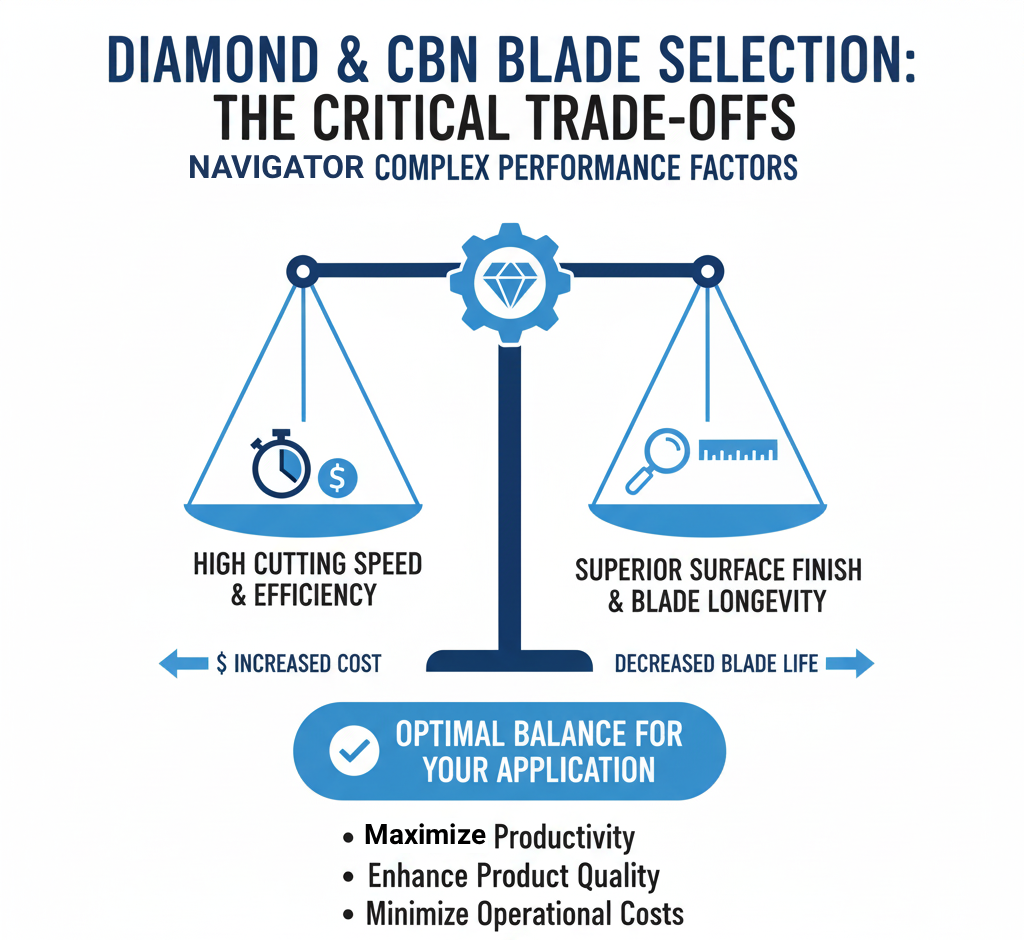
Choosing the right blade diamond or cbn blade can significantly impact efficiency, cost, and quality. However, this is not simple and clear cut process. Selecting the optimal blade involves navigating a complex landscape of trade-offs, where factors such as cutting speed, surface finish, blade longevity, and cost must be carefully balanced. This article explores the critical performance trade-offs associated with diamond and CBN blades, providing insights to help you make informed decisions that align with your specific cutting requirements and operational goals. Understanding these trade-offs is essential for optimizing your processes, enhancing productivity, and achieving superior results in your cutting applications.
19
Aug
Understanding & Calculating Return on Investment for Diamond & CBN Blades
The term "ROI" (Return On Investment) is frequently mentioned across various industries, often with different interpretations depending on the context. However, few take the time to thoroughly understand what ROI truly represents and its specific...
10
Oct
Everything You Wanted to Know About Cutting Glass with Diamond Blades
Cutting glass is a delicate process that requires the right set up, technique and process to avoid cracks, chips, or fractures. The inherent brittleness and hardness of glass make it challenging to work with, requiring...
26
Dec
Select right Diamond Blade for your application
Selecting the right parameters for your Precision & Ultra Thin Diamond Blade can be a very time consuming, trial & error frustrating process. The guide below has been designed to help you better understand the most...
Diamond Lapidary Blade Articles
08
Apr
Mastering the Art of Lapidary cutting
Mastering the Art of Lapidary, Gemstone, Cabochon, & Slab Cutting: A Comprehensive Guide to Slab and Trim Sawing Techniques The process of transforming rough lapidary rocks & gemstones into beautiful, polished pieces is both an art and a science, requiring precision, patience, and the right tools. Diamond lapidary blades are essential for cutting and shaping lapidary materials, gemstones, and this guide is designed to provide detailed instructions on their proper use, catering to enthusiasts of all skill levels. From slab sawing to creating a preform, and from saw maintenance to helpful hints for handling small rough material, every step is crucial in the lapidary process.
10
Apr
What Makes a Great Diamond Lapidary Blade
Cutting is a foundational step in the lapidary process, and the choice of diamond Lapidary blade significantly influences subsequent stages. While the market offers a plethora of blades for lapidary work, their performance and quality...
10
Apr
Signs of a High Quality Diamond Lapidary Blade
Getting the best results when using lapidary blades is not only skill but also about using the right blade for the application. When we talk about a good blade for lapidary application, we are really...
12
Apr
How to Properly Use Diamond Lapidary Blades
(Guide on getting the most from your blade) Welcome to the User Guide on How to Properly Use Diamond Lapidary Blades. This guide is designed to provide detailed insights and essential practices for operating diamond lapidary blades efficiently and safely. Whether you are a professional lapidary or beginning rockhound involved cutting hard lapidary materials, understanding how to correctly handle and maintain your diamond lapidary blades is important.
Diamond Hole Saws / Composites Articles
12
Sep
Drilling Composite Materials Using Diamond Drills & Hole Saws
Drilling composite materials presents a unique set of challenges due to their heterogeneous nature, which combines different materials with varying properties. To achieve precision and maintain the integrity of both the tool and the workpiece,...
12
Sep
Selecting Right Diamond Drills & Tools for Drilling Composites
Drilling composite materials, such as Carbon Fiber Reinforced Polymer (CFRP), Glass Fiber Reinforced Polymer (GFRP), Kevlar, and hybrid laminates, presents unique challenges due to their abrasive nature, heterogeneous structure, and susceptibility to issues like delamination, fiber breakout, and material fraying. These advanced materials are increasingly used in industries such as aerospace, automotive, and construction because of their exceptional strength-to-weight ratio, durability, and performance under demanding conditions. However, their distinct properties make them significantly more difficult to machine than traditional materials like metals or plastics.
Dicing Blade Articles
01
Jun
Optimizing QFN Package Dicing Process Using SMART CUT® Dicing Blades
Dicing QFN packages presents several challenges due to the composition of materials and the precision required for clean, defect-free cuts. These challenges arise from the multi-layered structure of QFN packages, which often include tin (Sn) coatings, nickel/palladium (Ni/Pd) plating, and composite substrate materials. Each of these layers introduces specific difficulties that must be managed to ensure high-yield, high-quality production.
01
Jun
Select right Diamond Dicing Blade for your application
Selecting the right dicing blade for your application requires careful consideration of several key variables that influence both performance and cost. The type of material being cut, the depth of the required cuts, the level...
02
Jun
Dicing Blade Operations Recommendations
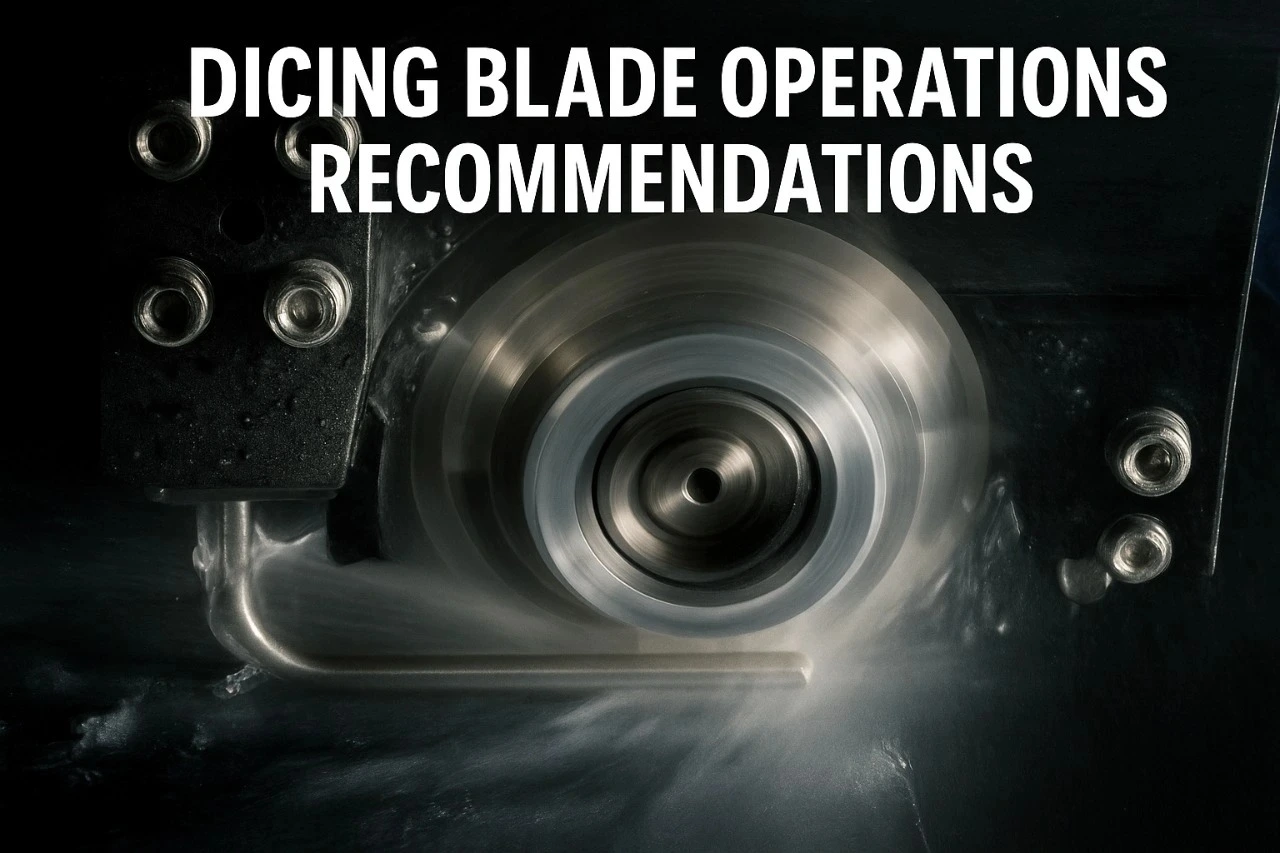
Selecting the right dicing blade parameters often involves a trial and error process, many aspects of which can be mitigated through experience and a deep understanding of how to optimize these parameters for specific applications. What works for one application may not work for another. While there is no true substitute for experience, even new dicing saw operators can quickly become proficient by learning and applying some basic principles of dicing. Much of the content in this guide has been published in industry magazines or presented at conventions.
02
Jun
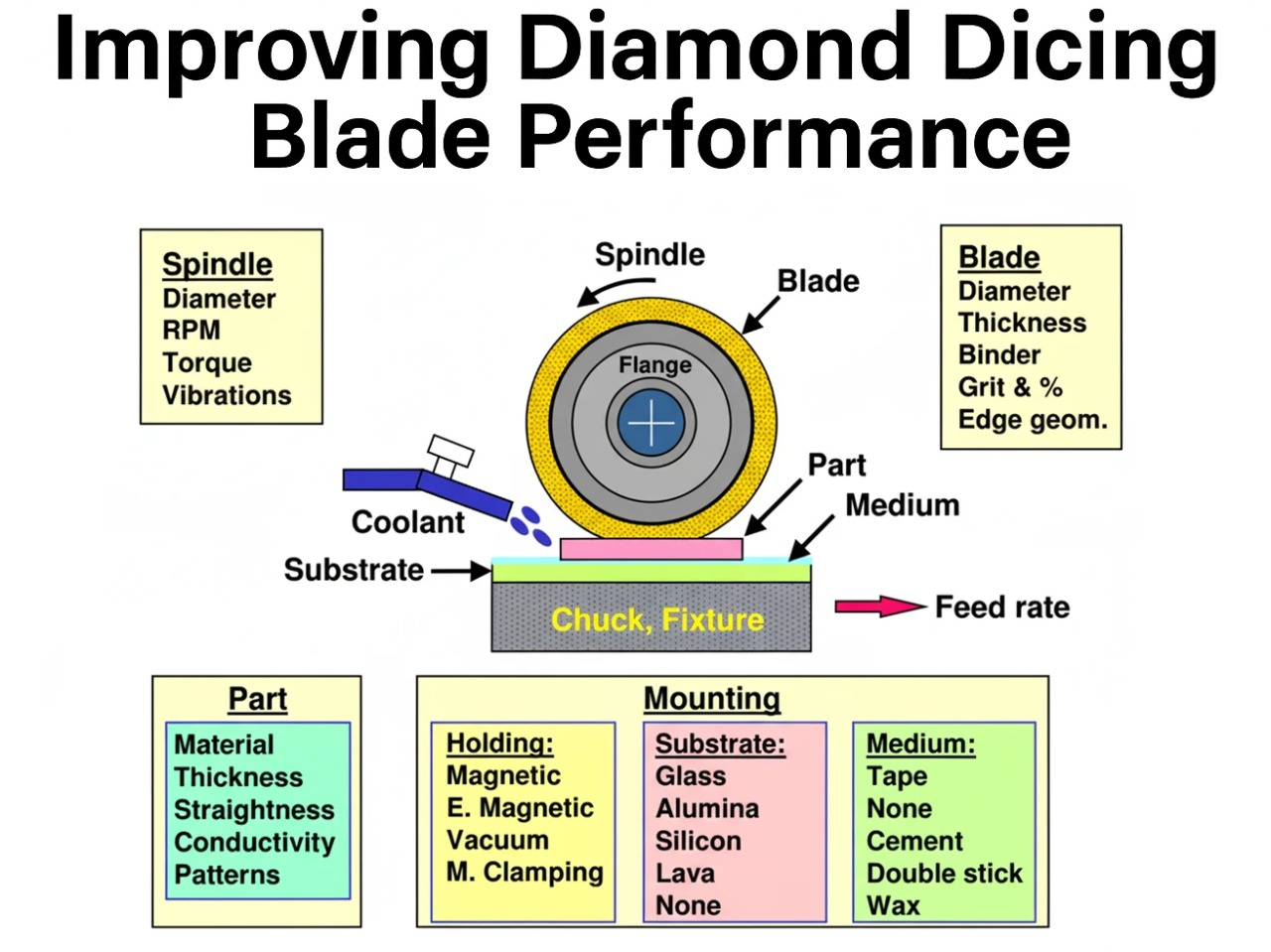
Optimizing your Diamond Dicing Performance
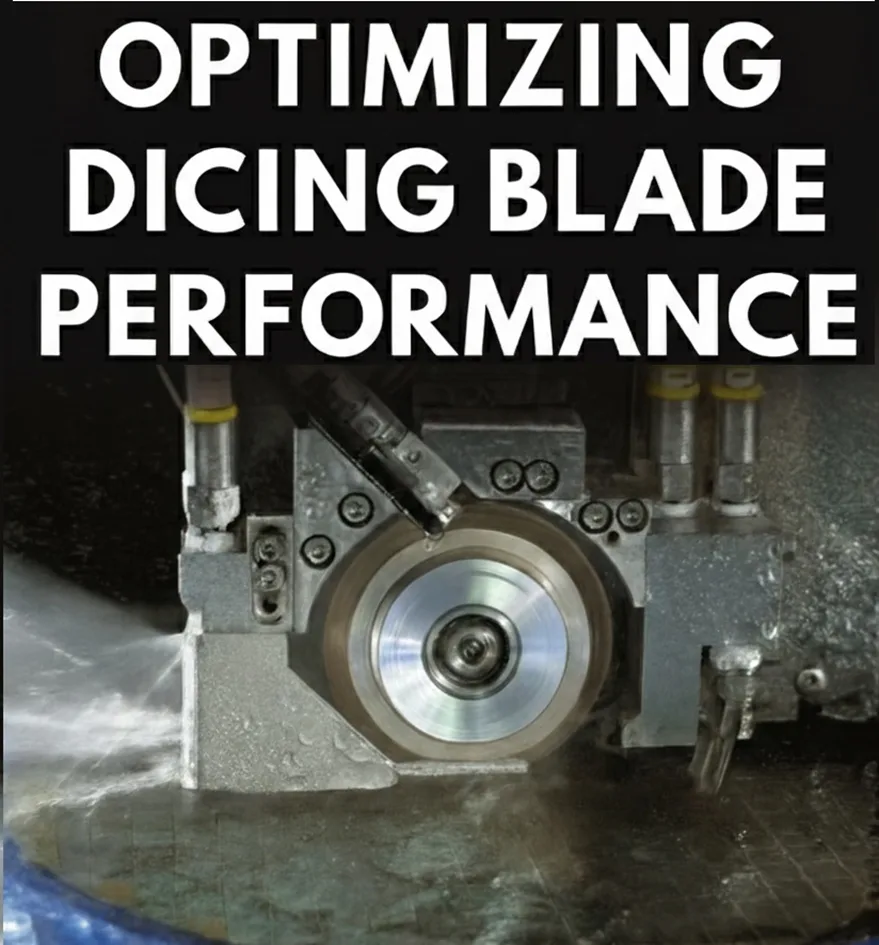
The performance of diamond dicing blades is influenced by a wide range of interdependent variables, and understanding these factors is essential for selecting the correct blade specifications and optimizing the dicing process. Each parameter, whether related to the blade itself, the material being cut, or the operating conditions, is only one part of a larger system. Adjusting a single factor in isolation rarely produces efficiency. True optimization comes only when all parameters are properly balanced and work together as a system.
02
Jun
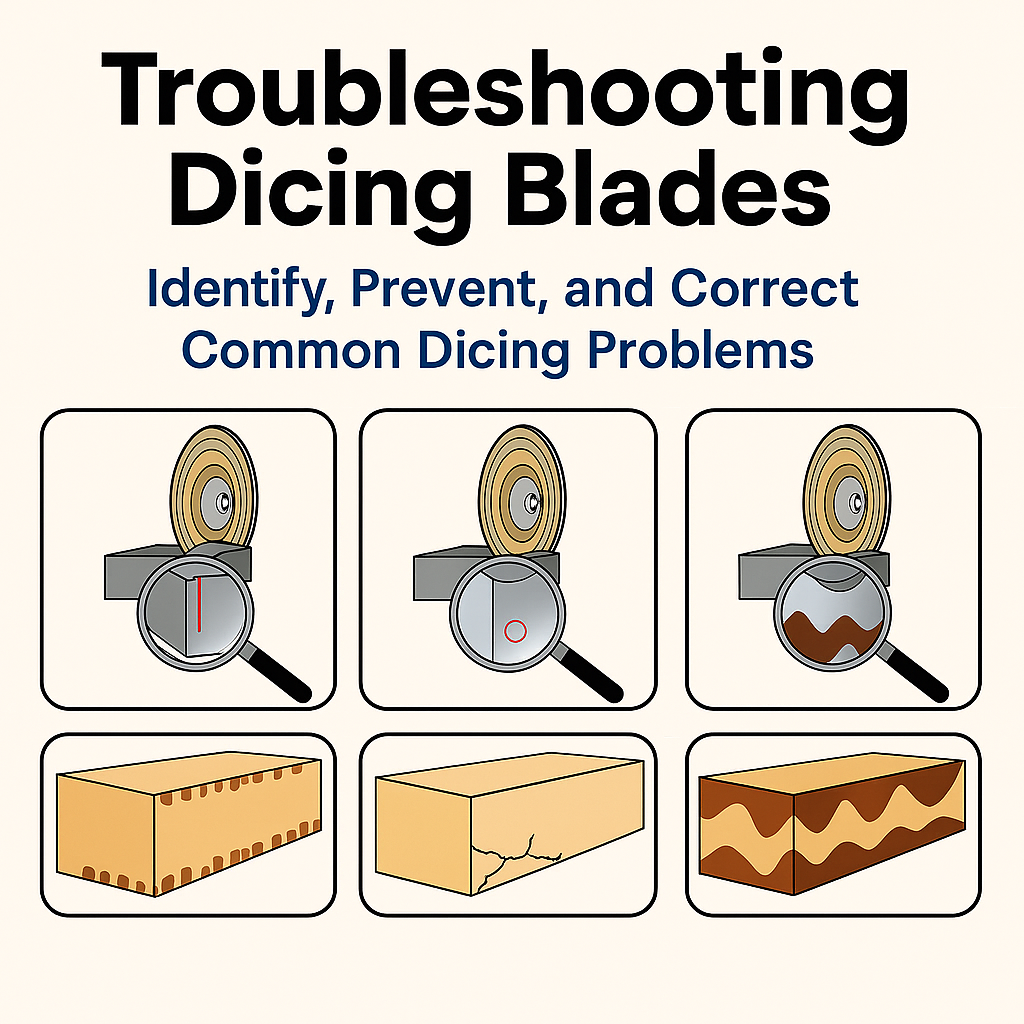
Trouble Shooting Dicing Problems
Guide on most common dicing problems and how to resolve themShare this Article with Friend or Colleague
ARE YOU USING RIGHT TOOLS
FOR YOUR APPLICATION?
LET USHELP YOU
CONTACT US
HAVING ISSUES WITH
YOUR...
02
Jun
Application Recommendations
This article provides important guidelines for optimizing the dicing process in semiconductor packaging, focusing on package singulation for various technologies such as BGA, QFN, LED, CMOS, and wafer substrates. It covers key variables such as the recommended blade types, coolant options, RPMs, feed rates, and mounting methods to ensure high-quality results and efficient throughput. By exploring specific material requirements and common concerns, this guide offers valuable insights into selecting the ideal dicing parameters for each application.
02
Jun
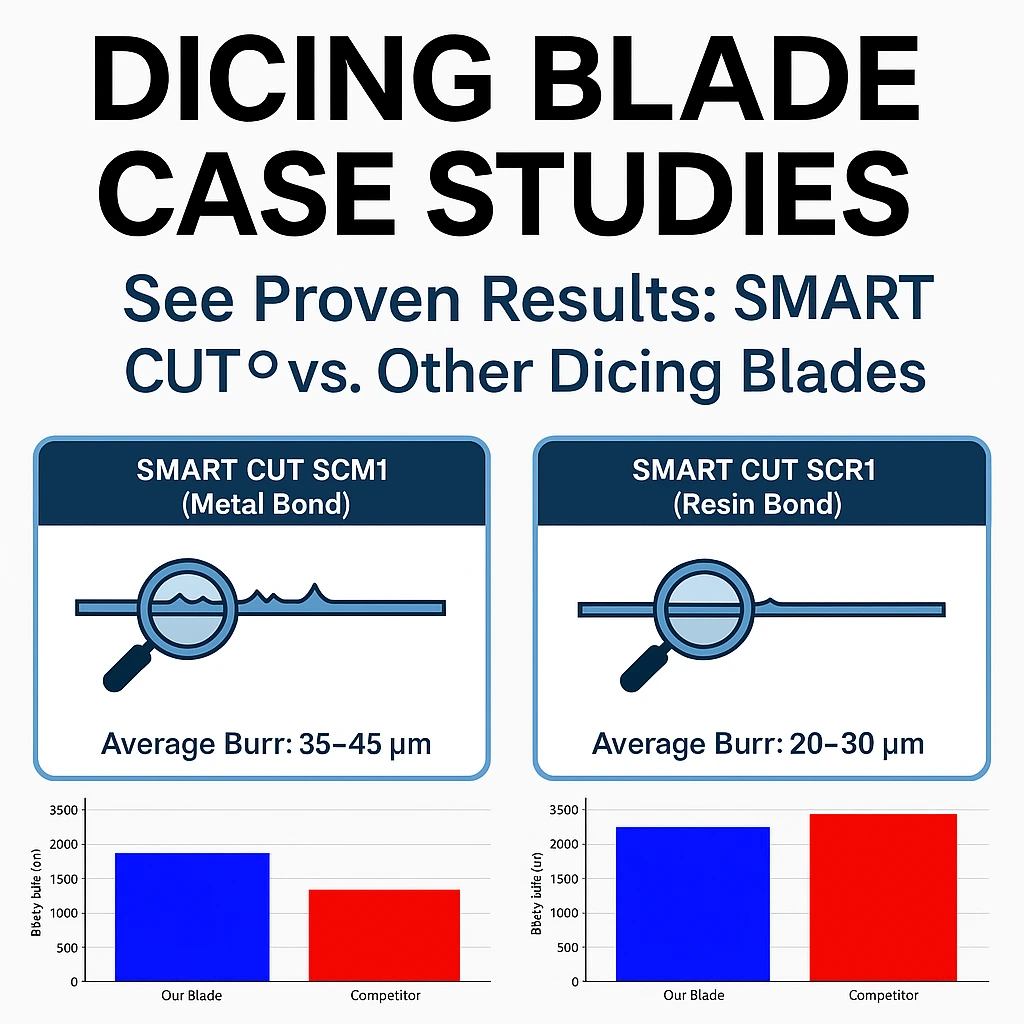
Dicing Blade Case Studies
Selecting the right dicing blade is important to achieving high yields, superior edge quality, and consistent reliability in microelectronics and optics manufacturing. Across industries such as semiconductors, electronics packaging, photonics, and precision optics, even small improvements in blade performance can significantly reduce costs and improve output. Manufacturers often struggle with challenges like excessive chipping, burr formation, wafer damage, tool wear, and unstable cutting at higher feed rates.
27
Aug
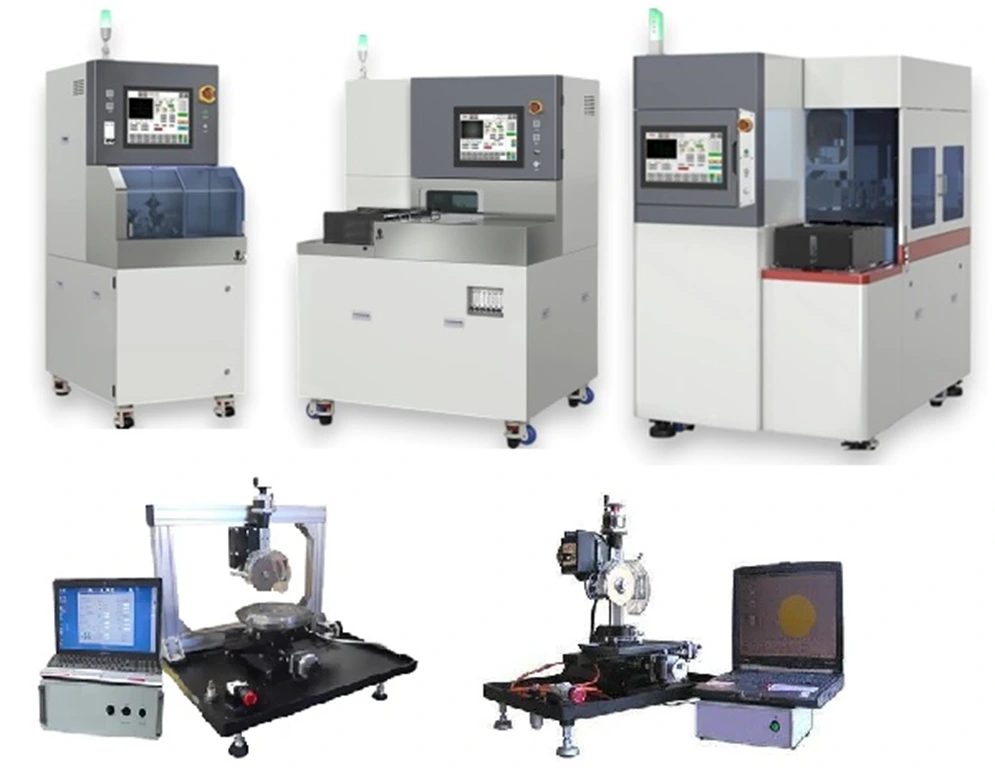
Selecting the Right Wafer Dicing Saw Practical Guide
Selecting the proper wafer dicing saw is a important decision for manufacturers, researchers, and engineers working with large variety of materials. Whether processing silicon wafers in microelectronics, ceramics in materials science, or glass substrates in...
17
Sep
Total Cost of Ownership – Measuring the Real Economics of Diamond Dicing
Many companies still judge diamond dicing blades by purchase price alone. At first, the cheapest blade may appear to be the best choice. However, price does not equal cost. The real economics of diamond dicing...
18
Sep
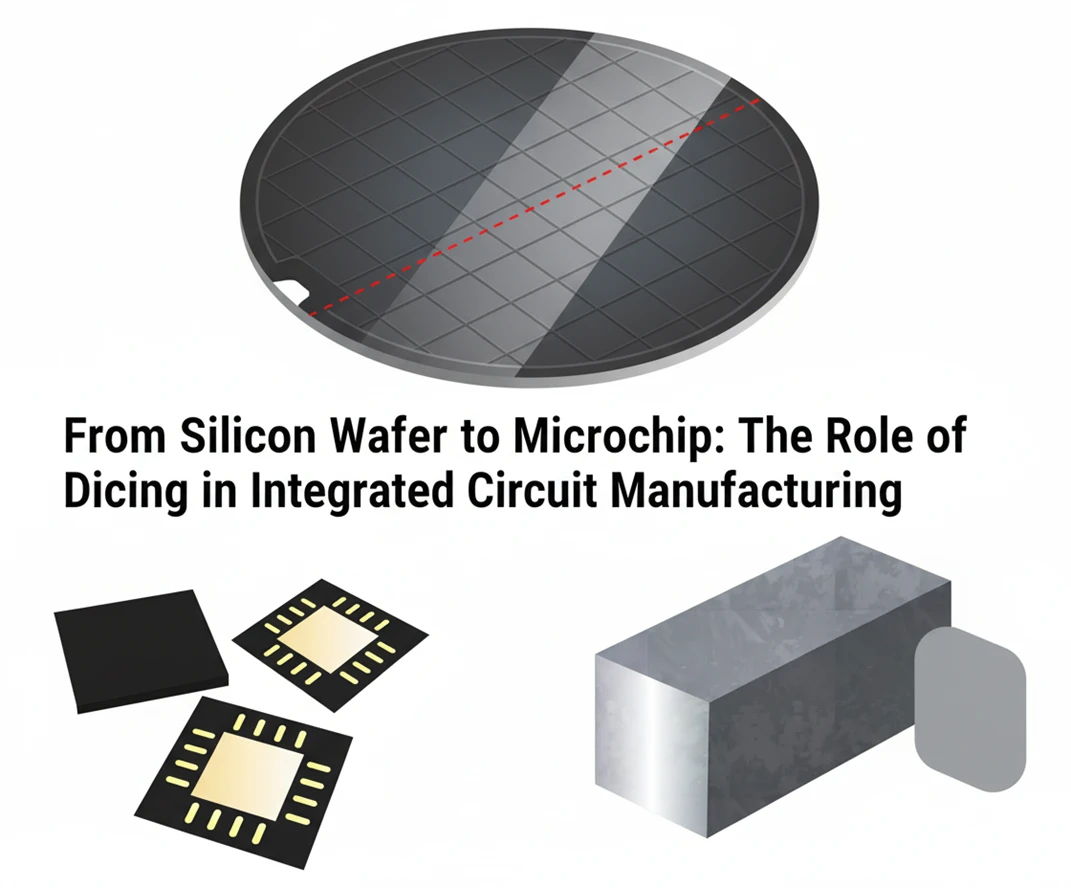
From Silicon Wafer to Microchip: The Role of Dicing in Integrated Circuit Manufacturing
The making of the integrated circuit is a long and complex process that involves many critical steps. In most cases, the wafer travels to multiple facilities before it is completed and turned into the final...
19
Sep
Improving Diamond Dicing Blade Performance: Key Factors and Strategies
Diamond dicing is one of the most important step in semiconductor & microelectronics manufacturing package. Although the process itself does not add direct value to the finished device, it has a decisive impact on yield,...
26
Nov
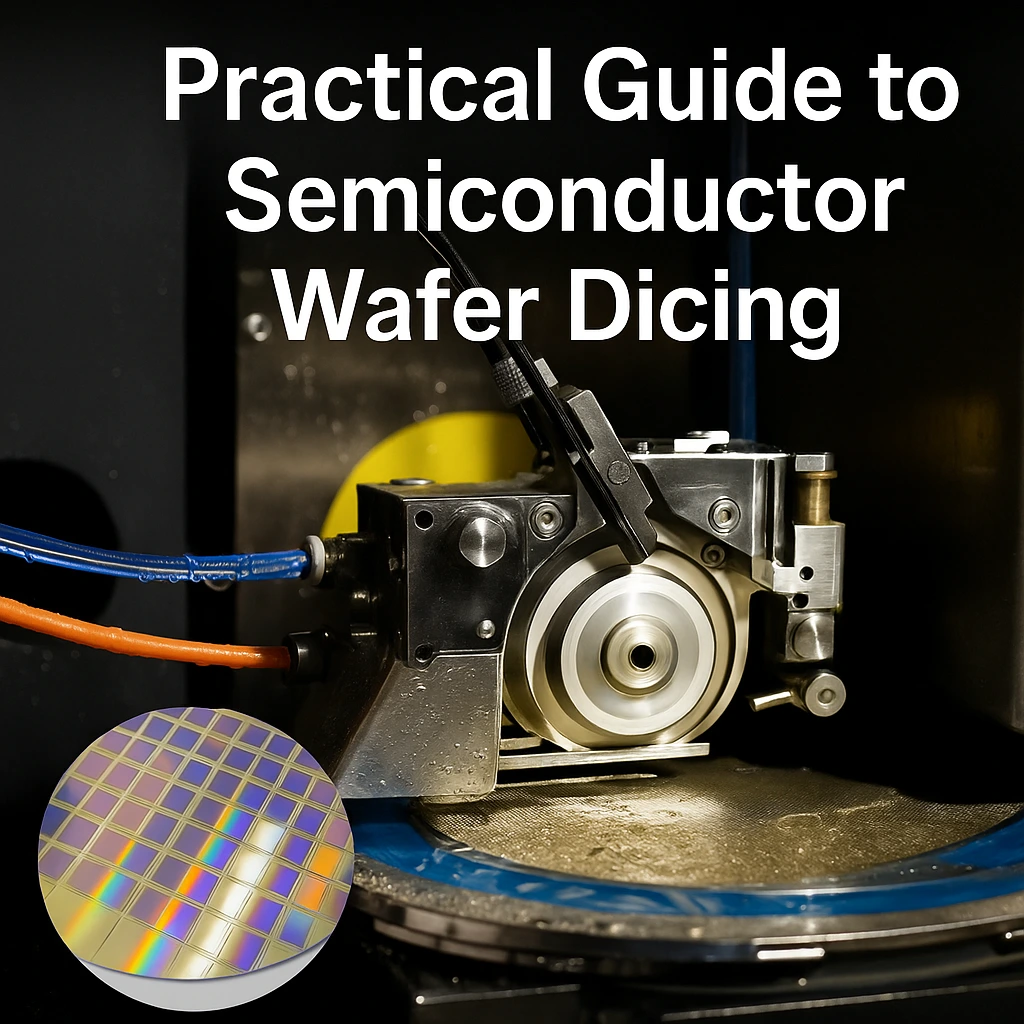
Practical Guide to Semiconductor Wafer Dicing: Materials, Blades, and Process Optimization
Semiconductor wafers are the foundation of nearly all modern electronics, from integrated circuits and photonic devices to advanced power components. As device geometries shrink and packaging density increases, the requirements placed on wafer dicing processes...
Diamond Drill Articles
02
Jun
Select Right Diamond Drill for your Application
Learn important diamond drill methodology. understand diamond drill specifications and their differences Selecting the right Diamond Drills/Bits for your application is key to obtaining desired diamond drilling results. Using the Right Diamond Drill will...
02
Jun
How to Properly Use Precision Diamond Drills
Step by step guide on how to properly use and care for your diamond drills. Selecting the right diamond drill/diamond drill bit parameters, often involves a trial and error process. Many which can be avoided...
02
Jun
Diamond Core Drills: Materials, Applications & Selection Guide
Diamond are used across large variety of industries and applications. This guide explores the wide range of diamond drill types, including hollow core drills designed for removing a cylindrical core, non-core formation drills that grind...
02
Jun
Diamond Tools Guide – Selecting Right Drills & Tools for your application
These tools are used for many different industries grinding and shaping material into different forms, expanding exiting inside diameters, grinding, finishing and polishing existing material. Grinding different angles and radius, creating cavities of various forms,...
02
Jun
Optimizing your Diamond Drilling Operation
There are numerous factors that influence the performance of diamond drills. Understanding these factors helps users select the appropriate diamond drill specifications for their specific applications, optimizing drilling operations to achieve maximum efficiency....
02
Jun
Micro Drilling Guide
In order for you to get the most out of your diamond micro drill or carbide / high speed steel micro drill, we strongly urge you to read and follow these instructions and suggestions. Doing so will help you save money and time. These suggestions and recommendations have come from years of experience in research, development and manufacturing of diamond micro drills. As well as years of personal experience, micro drilling service, process development and observations of diamond micro drills users like you. The diamond micro drills itself is only a small factor in your drilling operation. Successful diamond micro drilling is both an art & science. Requiring proper use and understanding of selecting the right diamond micro for your material / application.
02
Jun
Selecting Right Drilling Equipment for your Application. What you features & functionality you should look for?
There are hundreds or even thousands of different drilling equipment options. Selecting the right equipment for a specific application involves carefully considering several variables and attributes of the drilling equipment. Each attribute can significantly influence the effectiveness, efficiency, and outcome of the drilling process.
03
May
Diamond Core Drill & Drill Trouble Shooting Guide
Learn the most common problems most people have in using diamond drills. How to resolve them and avoid them in first place
Trusted by Tens of Thousands of Manufacturers, Laboratories,Research Institutions Worldwide Since 1990
American...
09
Sep
Understanding & Calculating Return on Investment for Diamond Core Drills & Other Tools
The term "ROI" (Return On Investment) is widely used across industries, often interpreted differently depending on the context. However, few truly understand what ROI represents and its specific implications, particularly in the context of diamond...
09
Sep
Understanding Tradeoffs – Searching for Perfect Diamond Drill & Tool
Choosing the right diamond drill or tool can significantly impact efficiency, cost, and quality. However, this is not a simple and clear-cut process. Selecting the optimal drill or tool involves navigating a complex landscape of...
19
Sep
Why Use Diamond Drills?
Diamond, known as the hardest material on Earth, enables diamond drills and tools to grind away material at a micro (nano) scale. This extreme hardness allows diamond tools to effectively work on materials with a...
20
Sep
Diamond Drill Terminology Guide – Key Terms Explained for Precision Drilling
How to fine tune each of these variables to improve and optimize your drilling operation in the success of your diamond drilling operation
Trusted by Tens of Thousands of Manufacturers, Laboratories,
Research Institutions...
09
Oct
How to Properly Use Diamond Carving Points
Diamond carving points are essential tools for anyone working with hard materials like glass, stone, and metals. These tools facilitate detailed tasks such as engraving and finishing, offering precise control and enabling you to work...
10
Mar
Selecting Right Diamond Drill for your Application
Selecting the right diamond drill or bit for your application is one of the most important steps in achieving successful drilling results. The correct choice not only improves accuracy and efficiency but also saves time, reduces costs, and minimizes trial and error. This guide has been created for all levels of users whether you are a beginner, a researcher, a contractor, or an experienced manufacturing engineer seeking process optimization.
Today’s industries face a rapidly expanding range of materials that are harder, more brittle, and more complex than ever before. Advanced ceramics, composites, semiconductors, optical materials, and exotic alloys are increasingly replacing traditional substrates, often rendering older drill designs and methods obsolete. These new materials require advanced diamond tools and updated techniques to achieve consistent, high-quality results.
Although the marketplace offers hundreds of diamond drills, bits, accessories, and machines, it often provides very little guidance on how to select the right tool. Many users end up experimenting for days or weeks, trying different drills, speeds, and setups. This trial-and-error approach wastes time, increases costs, and leads to unnecessary material loss.
By focusing on the key variables that affect drill performance, including material properties, drill geometry, equipment capability, and application requirements you can make informed decisions that align with your objectives. Proper planning, careful tool selection, and attention to detail in setup and technique will ultimately determine the success of your operation.
This article outlines the critical factors to consider when choosing a diamond drill, helping you avoid common mistakes and achieve reliable, repeatable results for your specific application.

20
Mar
Diamond Core Drills: Best Practices for Speed, Accuracy, and Tool Life
Diamond core drills are widely used in industries that require precise hole creation in extremely hard or brittle materials. From ceramics and glass to advanced composites and semiconductor substrates, these tools allow operators to produce accurate holes while minimizing material damage.
Diamond core drills are grinding, rather than cutting, like conventional twist drill bits. It uses a hollow drill body, where diamond particles embedded in the tool bond are used gradually to abrade the surface of the workpiece and remove material in a ring-shaped path.
As a different system for removing material, its setup and operating practices also need to be suitable to obtain consistent results.
This guide explains that drilling speed, procedures for truing and dressing diamond cores, chip control, and tool configuration have been identified as the most important factors affecting diamond core drilling performance.
Diamond & CBN Wafering Blade Articles
22
Apr
Diamond & CBN Wafering Blade Performance Metrics
When evaluating Diamond & CBN wafering blades, especially for metallography and sample preparation, it is critical to consider a set of key evaluation criteria and performance metrics. These factors help determine the effectiveness of a...
02
Jun
Wafering Blade Usage Recommendations
The wafering/sectioning blade itself is only a small factor in your sectioning operation. Successful wafering/sectioning operation is both an art & science. Requiring proper use and understanding of selecting the right diamond wafering/sectioning...
02
Jun
Wafering Blade Case Studies
Diamond & CBN Wafering Blade Case Studies This study evaluates the cutting performance of SMART CUT® Diamond & CBN Wafering Blades compared to Conventional Wafering Blades under identical test conditions. The objective was to measure differences in cutting speed, surface finish, dimensional accuracy, and blade durability when processing a range of materials commonly used in metallography, materials research, and precision sectioning.
25
Apr
Diamond & CBN Wafering Blade Guide
All you need to know about wafering blades (understanding variables & specifications) This guide is designed to help you navigate the various variables and possibilities associated with diamond wafering blades, crucial for precision sectioning and sample preparation. By gaining a deeper understanding of these variables and principles, you will be better equipped to identify which factors are most relevant to your specific metallography or sample preparation needs. This knowledge will enable you to make informed decisions about blade selection, ensuring optimal results and efficiency in your cutting operations.
24
Apr
Understanding & Comparing Diamond & CBN Wafering Blades
Diamond wafering blades are designed for sectioning a large variety of materials and sample types. In order to identify the best diamond wafering blade for your specific material/application, we have implemented a grading system that spans diamond mesh/particle sizes from 5 (the finest) to 30 (the coarsest). This scale helps users select the appropriate blade for their specific sectioning requirements. A blade designated as number 10, for instance, will feature larger diamond particles than one rated at No. 5; however, the increase in particle size is not directly proportional, meaning they are not simply twice as large. Furthermore, we have provided cross-references to Buehler, Struers, and Leco part numbers, allowing you to easily find the equivalent diamond or CBN wafering blade for your needs.
02
Jun
Selecting Right Wafering Blade for your application
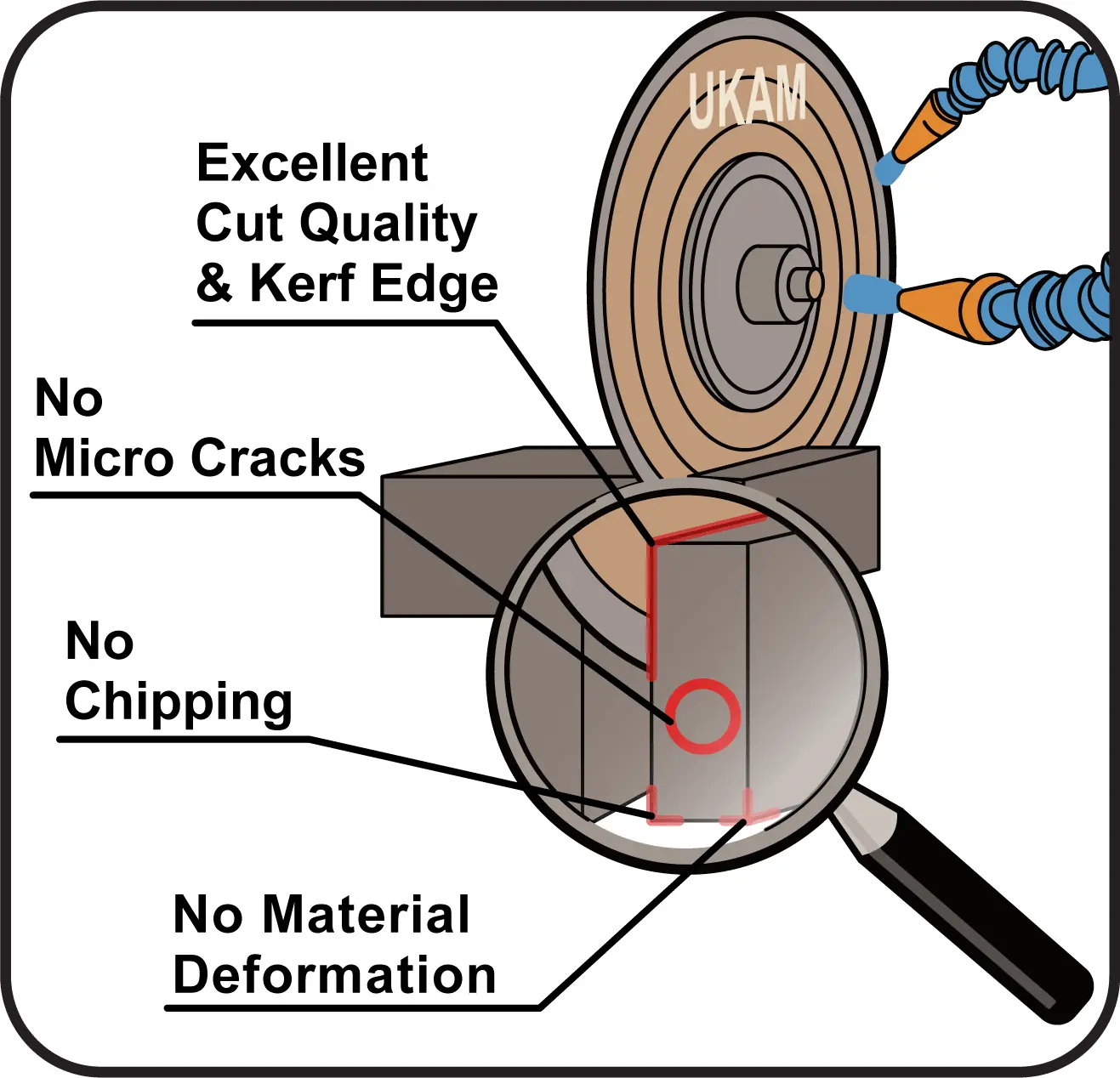
Cross Sectioning is the first and most important step in the sample preparation process. Getting the best results involves obtaining a smooth surface finish, minimum chipping, material deformation, without sacrificing cutting speed. Today, most laboratories, work with dozens...

ARE YOU USING RIGHT TOOLS
FOR YOUR APPLICATION?
LET US
HELP YOU
HAVING ISSUES WITH
YOUR CURRENT TOOLS?

Let us Help you Improve & Optimize your Diamond Machining Operation to Ultimate Level of Efficency
Developing close ties with our customers is the foundation of our business. At the core of our company is a team of world class engineers, knowledgeable customer service personnel here to serve you. Whether is designing or manufacturing a special solution. We will go out of our way to optimizing your slicing, dicing, and drilling operation to ultimate efficiency.

- Eliminate / Minimize Chipping
- Improve Surface Finish Quality
- Increase Tool Life
- Increase Process Consistency
- Preserve True Material Microstructure
- Reduce & Eliminate Material Deformation
- Improve Productivity Reduce Cost