









Cutting Glass with Diamond Saw Blades: How to Prevent Chipping, Cracking & Material Loss
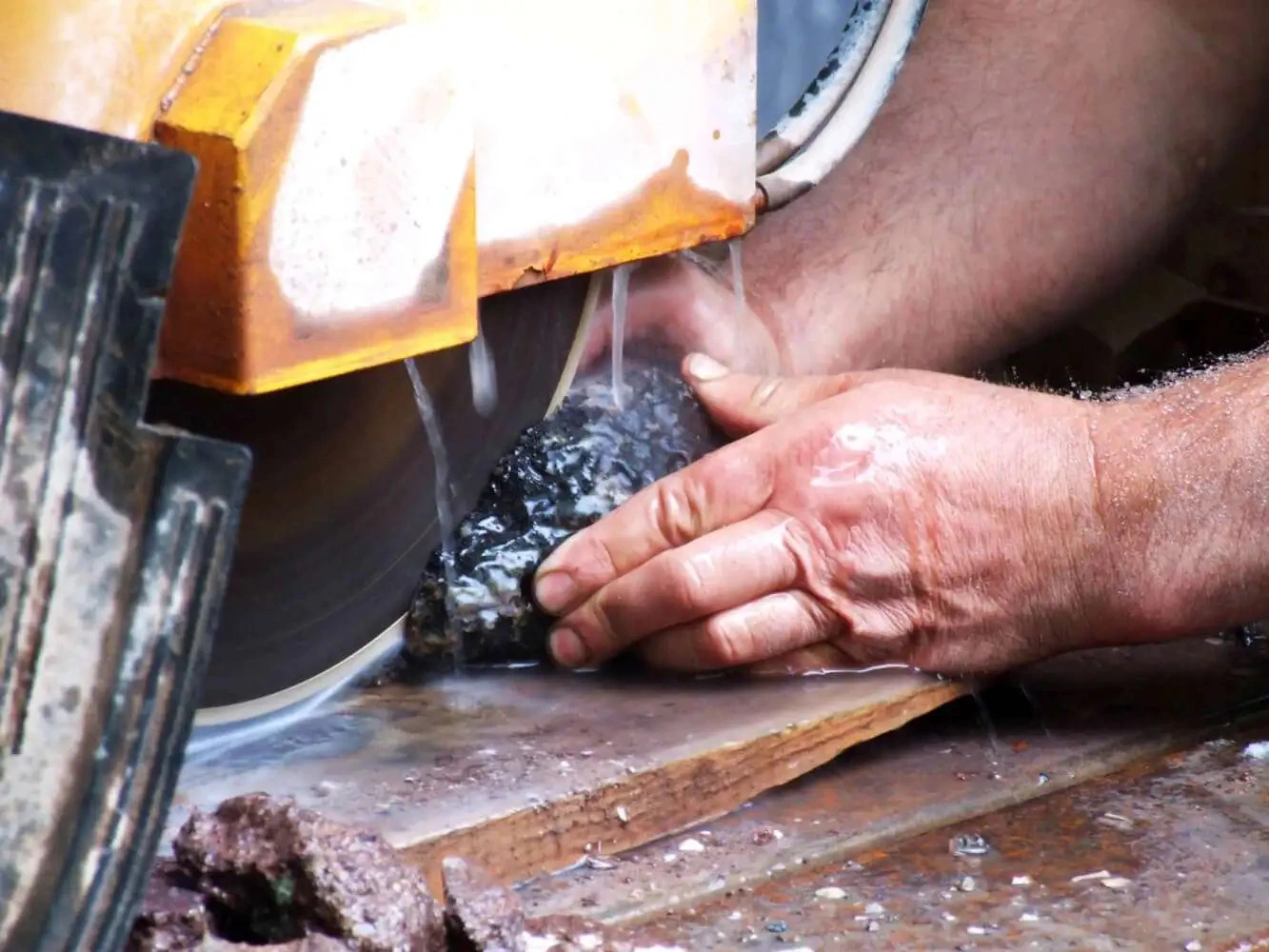
Edge chipping, corner breakout, microcracking, poor surface finish, and excessive material loss are among the most common challenges encountered when cutting glass. While separating the material may appear straightforward, producing clean, damage-free cuts consistently is often one of the most difficult steps in the manufacturing process.
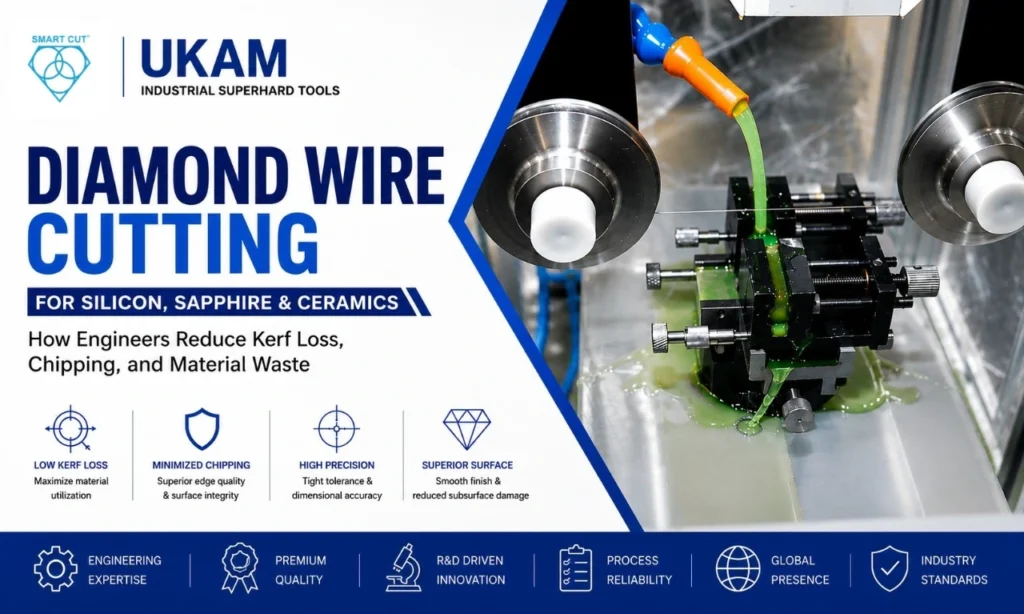
Diamond Wire Saw: Maximizing Material Yield and Precision Cutting of Advanced Materials
Manufacturers processing sapphire, germanium, silicon, quartz, technical ceramics, optical crystals, and advanced electronic materials face a common challenge: every cut removes material, introduces some degree of stress, and influences the quality of every downstream operation.
How Laboratory Cutting Machines Improve Precision Sectioning
In precision material preparation, the quality of the cut directly affects inspection accuracy, edge integrity, dimensional reliability, polishing time, and downstream analytical results. Standard abrasive cutting equipment often introduces excessive heat, vibration, edge chipping, microcracks, subsurface fractures, coating separation, or material deformation — particularly when sectioning brittle, ultra-hard, composite, or advanced engineering materials.
Critical Factors That Influence Diamond Dicing Blade Cutting Performance
Diamond dicing blades are essential tools for high-precision cutting in semiconductor manufacturing, electronics packaging, advanced ceramics, and optical materials. These blades enable manufacturers to separate delicate substrates with extremely tight tolerances while minimizing material damage.
How Diamond Grit Size Influences Cutting Speed, Surface Finish, and Tool Life
Diamond grit size is one of the most significant factors influencing the performance of diamond debt cutting, grinding, and polishing tools. While operators in many applications may focus on machine settings, feed rates, or coolant conditions, they often ignore the fact that, like any material, diamond abrasive particle size is a fundamental requirement that dictates tool/material interaction.
Silicon Wafer Material Preparation: Mechanical Stages That Determine Semiconductor Yield
Modern semiconductor devices are often discussed in terms of lithography nodes, transistor density, and advanced packaging. However, long before photolithography defines circuit geometry, the mechanical integrity of the silicon wafer has already determined whether high yield is even possible.
Engineered Diamond Pellet Systems for Controlled Surface Preparation
In metallography, advanced ceramics processing, semiconductor substrate preparation, and materials research, polishing is not a cosmetic operation – it is a controlled material removal step that directly influences surface integrity, dimensional accuracy, and downstream reliability.
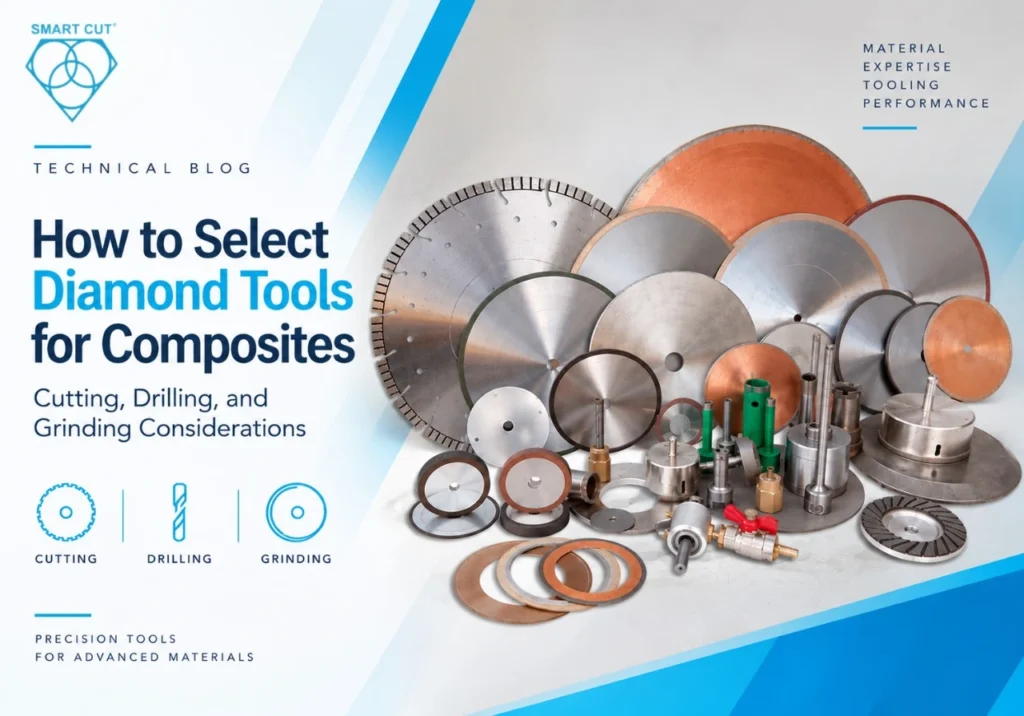
Cutting Carbon Fiber Tubes: Best Blades, Tool Life Comparison, and Cost-Per-Cut Analysis
Carbon fiber reinforced composites have become essential materials in industries such as aerospace, automotive, sporting goods, and advanced manufacturing. Carbon fiber tubes, in particular, are widely used because they offer an excellent combination of high strength, low weight, and dimensional stability.
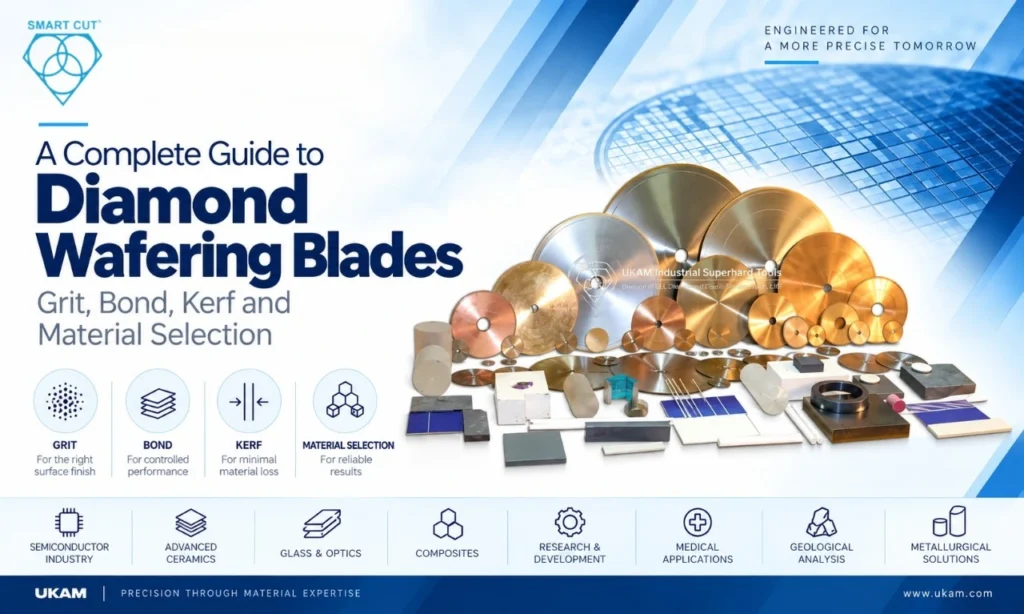
Diamond Dicing Blades for Semiconductor Industry: The Complete Buyer’s Guide
If you are sourcing diamond dicing blades for microelectronics and semiconductor industry, you already know that the wrong blade choice does not just cost you money — it costs you yield. Chipping, cracking, inconsistent kerf width, and premature blade wear are not just quality problems. They are production problems that shut down lines and delay shipments.