







author-avatar

About Brian Farberov

Brian is an experienced professional in the field of precision cutting tools, with over 27 years of experience in technical support. Over the years, he has helped engineers, manufacturers, researchers, and contractors find the right solutions for working with advanced and hard-to-cut materials. He’s passionate about bridging technical knowledge with real-world applications to improve efficiency and accuracy. As an author, Brian Farberov writes extensively on diamond tool design, application engineering, return on investment strategies, and process optimization, combining technical depth with a strong understanding of customer needs and market dynamics.

how to reduce subsurface damage during precision wafer sectioning
Diamond & Cbn Wafering Blade Articles, blog

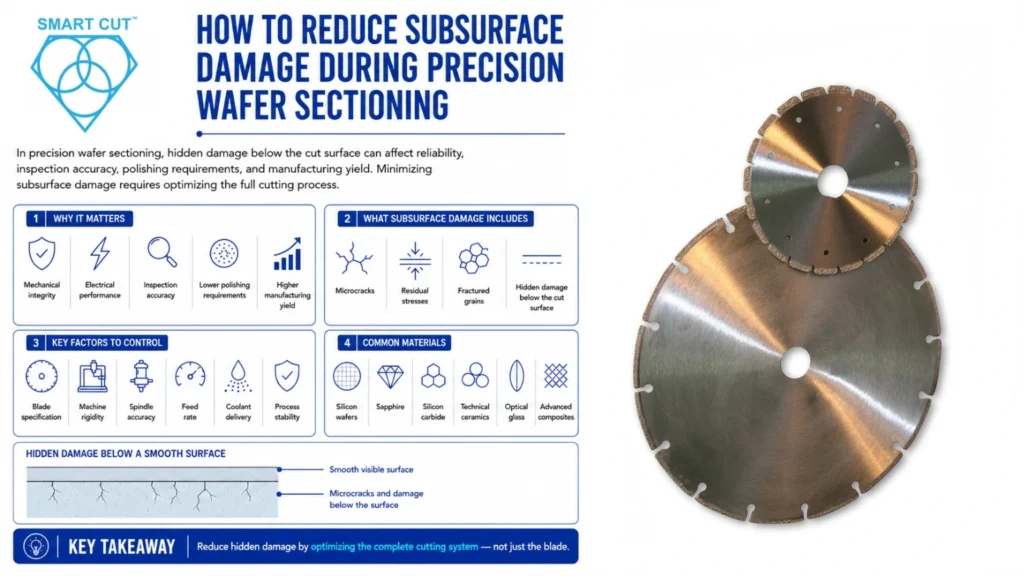
How to Reduce Subsurface Damage During Precision Wafer Sectioning

In precision wafer sectioning, what happens beneath the cut surface is often more important than what is visible to the naked eye. A component may appear to have a smooth edge and acceptable dimensional accuracy, yet contain microscopic cracks, residual stresses, or fractured grains extending below the machined surface. These hidden defects, collectively referred to as subsurface damage, can compromise the mechanical integrity, electrical performance, and long-term reliability of the finished component.
Continue reading
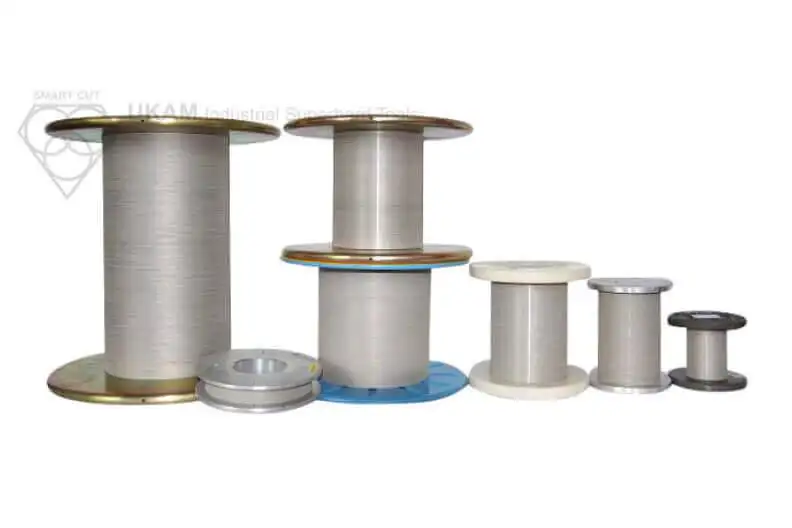
diamond blade vs diamond wire saw
Cutting, Diamond Blade Articles, blog

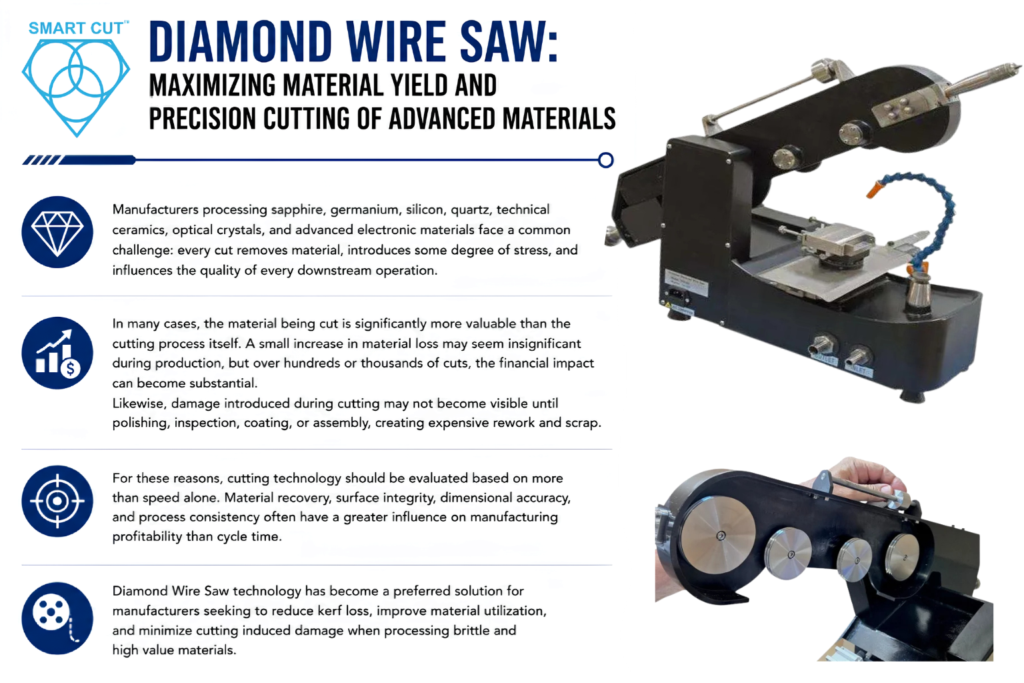
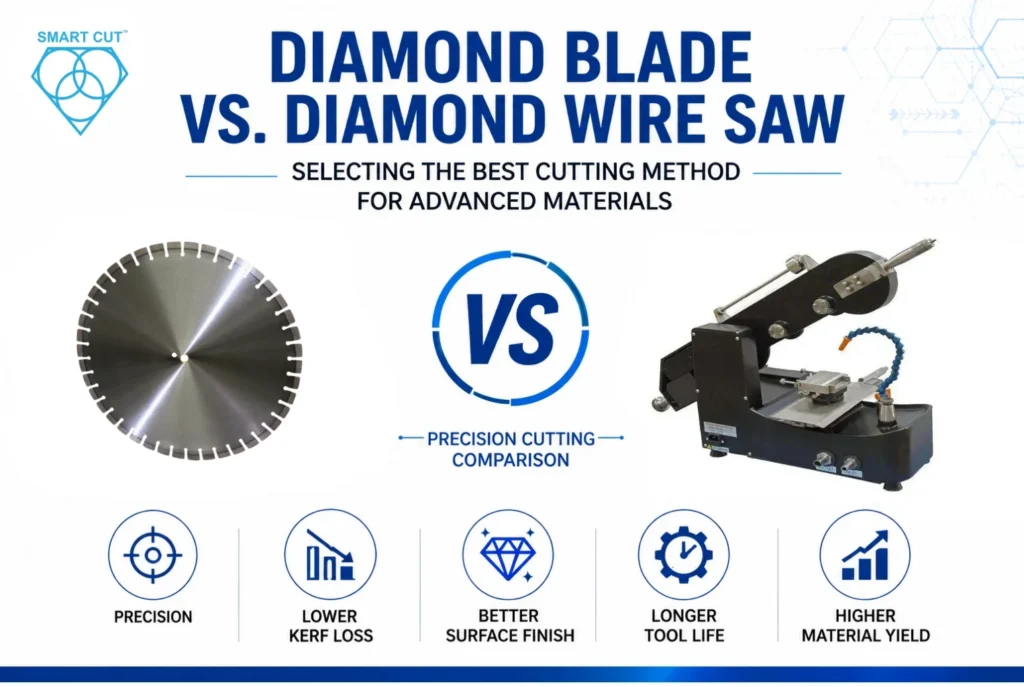
Diamond Blade vs. Diamond Wire Saw: Selecting the Best Cutting Method for Advanced Materials

Selecting the appropriate cutting technology is one of the most important decisions in precision material processing. While diamond blades and diamond wire saws both use industrial diamond abrasives to machine difficult materials, they are designed for fundamentally different applications and process requirements. Choosing the wrong cutting method can lead to excessive kerf loss, edge chipping, subsurface damage, poor surface finish, higher consumable costs, and unnecessary production delays. Conversely, selecting the right cutting technology can significantly improve material yield, extend tool life, reduce polishing requirements, and increase overall process stability.
Continue reading
how coolant flow affects diamond blade life
coolant, blog, Cutting

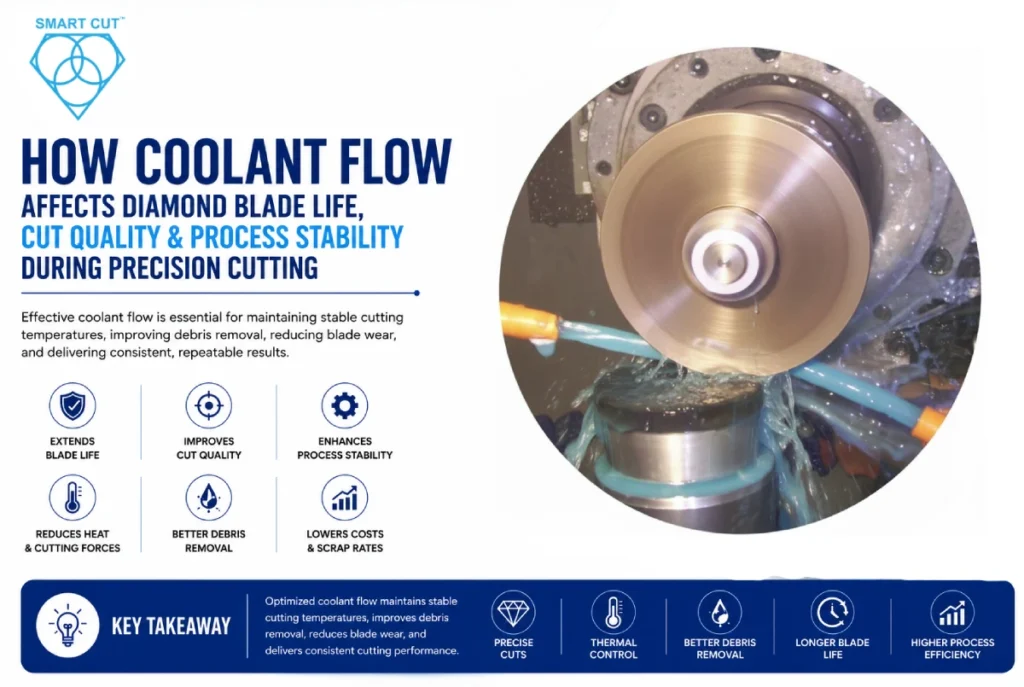
How Coolant Flow Affects Diamond Blade Life, Cut Quality & Process Stability During Precision Cutting

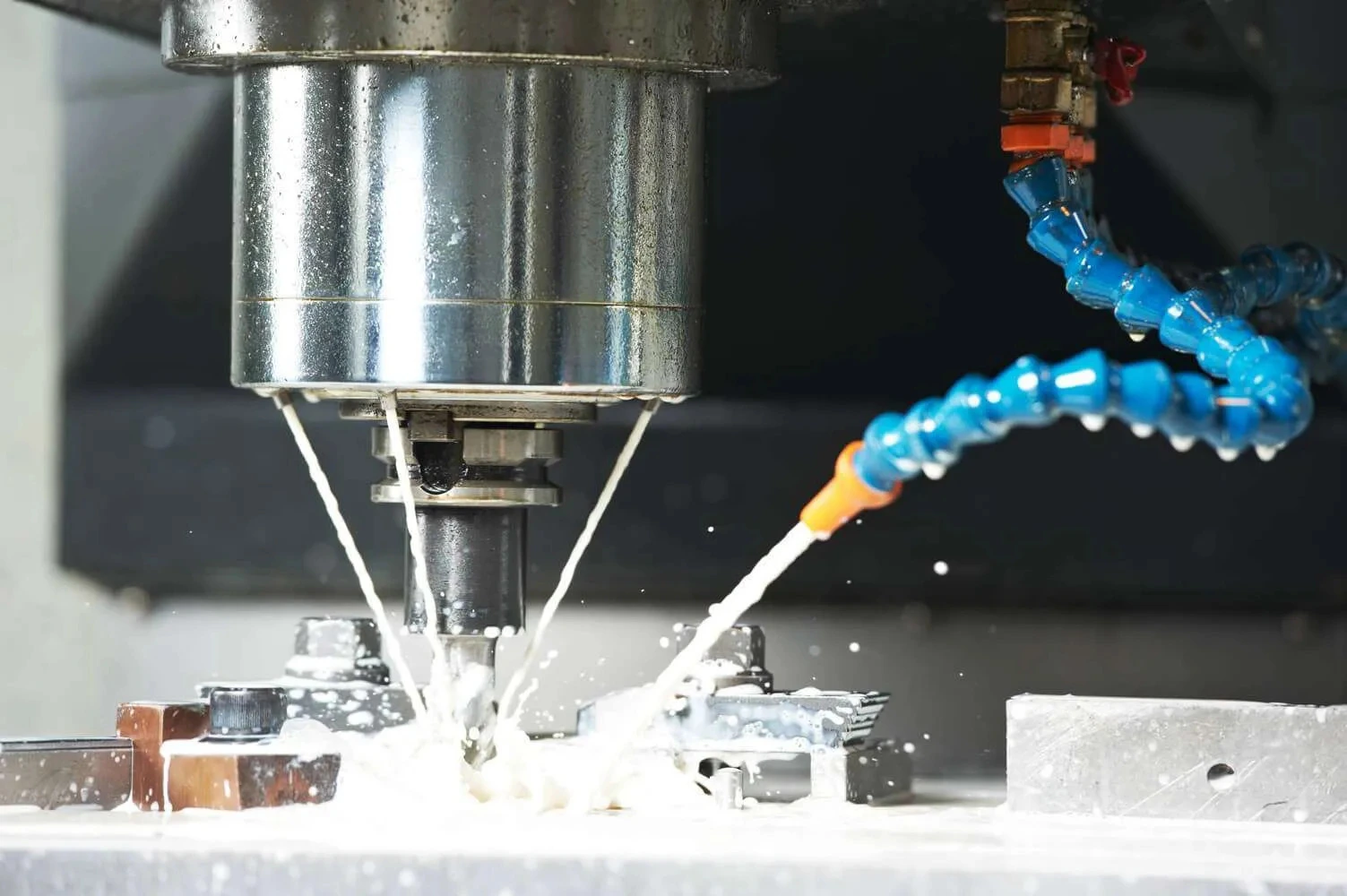
Coolant is one of the most important and often most overlooked variables in precision cutting operations. Many manufacturers focus heavily on blade selection, spindle speed, feed rate, and machine rigidity while assuming coolant simply serves as a cooling medium. In reality, coolant directly influences: Blade life Cut quality Surface finish Edge integrity Process repeatability Thermal stability Material removal efficiency Operating costs
Continue reading
why silicon wafers chip during cutting and how to reduce edge damage
blog, Cutting

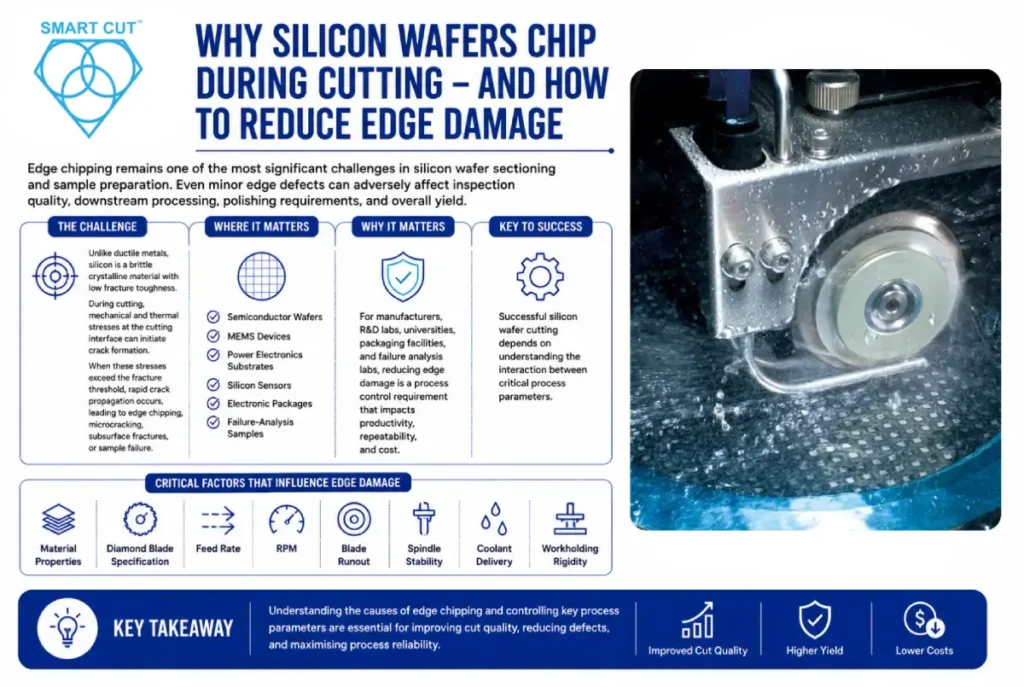
Why Silicon Wafers Chip During Cutting – And How to Reduce Edge Damage

Edge chipping remains one of the most significant challenges in silicon wafer sectioning and sample preparation. Whether cutting semiconductor wafers, MEMS devices, power electronics substrates, silicon sensors, electronic packages, or failure-analysis samples, even minor edge defects can adversely affect inspection quality, downstream processing, polishing requirements, and overall yield.
Continue reading
blog, Grinding

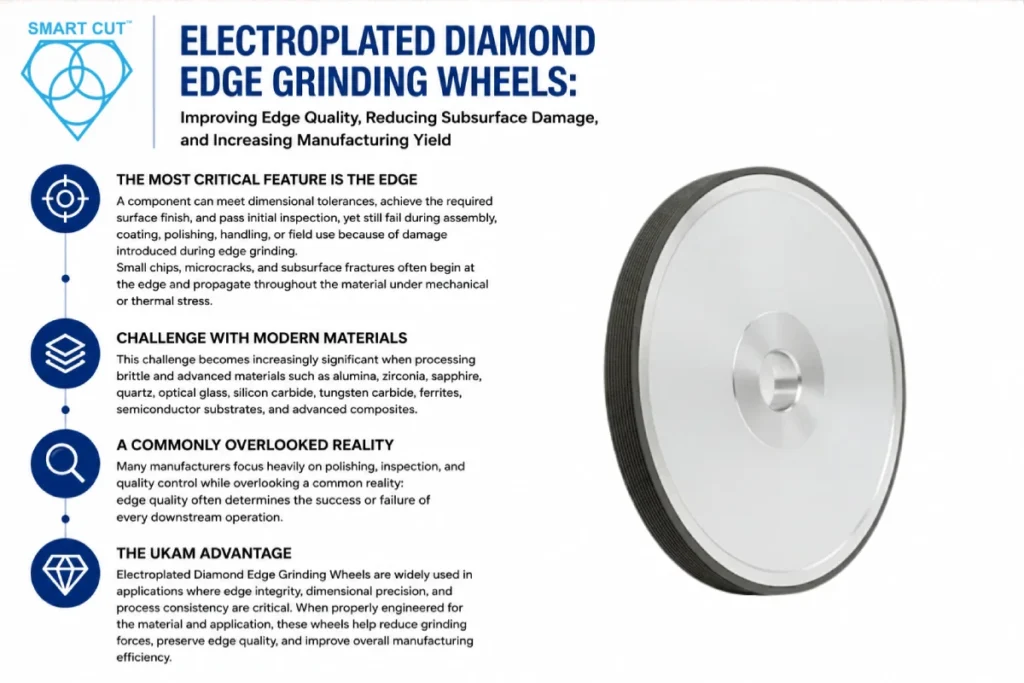
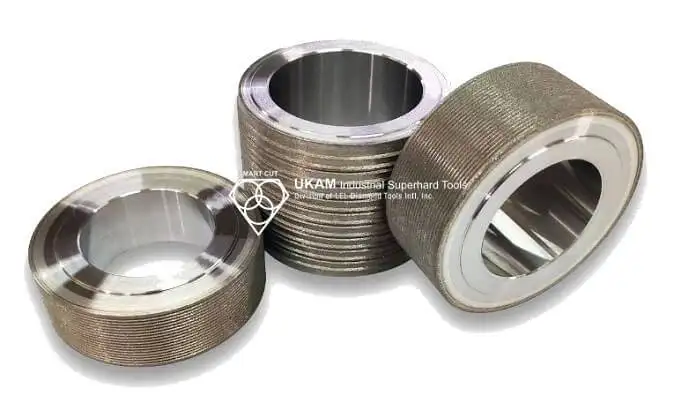
Electroplated Diamond Edge Grinding Wheels: Improving Edge Quality, Reducing Subsurface Damage, and Increasing Manufacturing Yield

In many manufacturing operations, the most critical feature of a component is not the surface. It is the edge. A component can meet dimensional tolerances, achieve the required surface finish, and pass initial inspection, yet still fail during assembly, coating, polishing, handling, or field use because of damage introduced during edge grinding. Small chips, microcracks, and subsurface fractures often begin at the edge and propagate throughout the material under mechanical or thermal stress.
Continue reading