









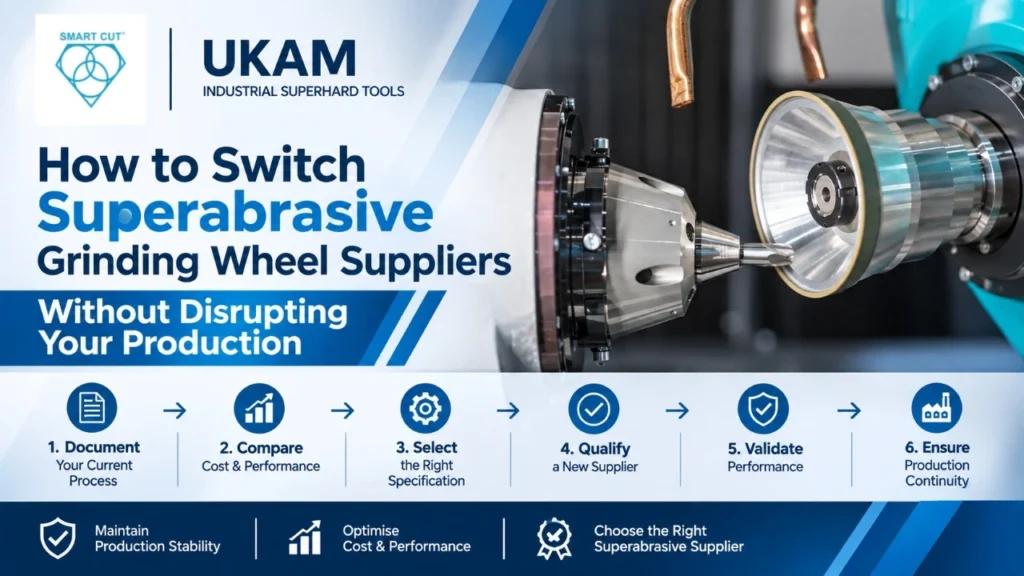
How to Switch Superabrasive Grinding Wheel Suppliers Without Disrupting Your Production
Premature diamond core drill failure increases tooling costs, interrupts production, and creates dimensional inconsistencies in precision drilled components. In applications involving alumina, silicon carbide, sapphire, quartz, glass, and other hard or brittle materials, incorrect drill specifications can produce rapid abrasive wear, excessive edge chipping, bore taper, and inconsistent hole dimensions.
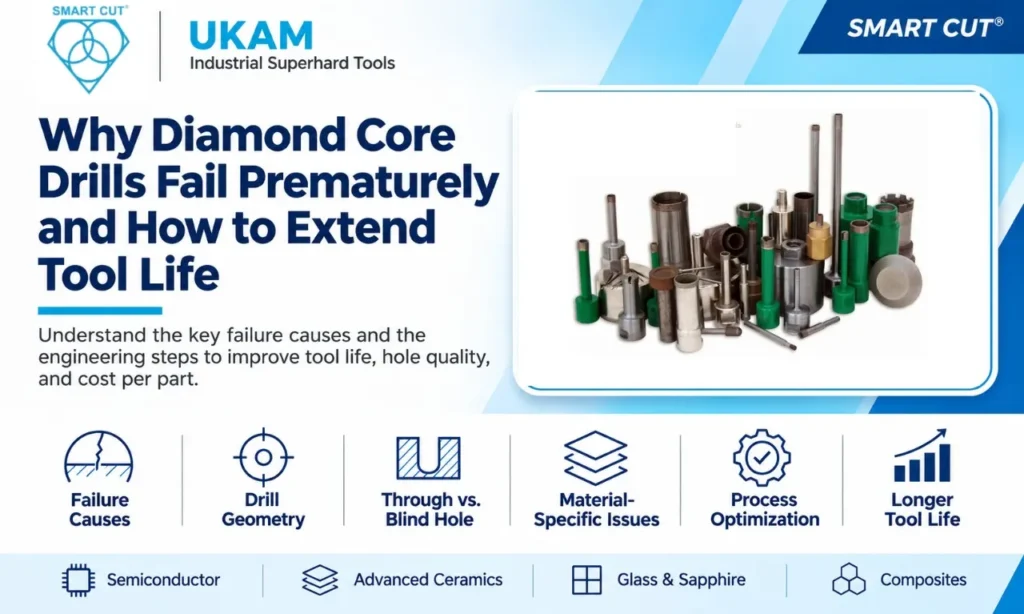
Why Diamond Core Drills Fail Prematurely and How to Extend Tool Life
Premature diamond core drill failure increases tooling costs, interrupts production, and creates dimensional inconsistencies in precision drilled components. In applications involving alumina, silicon carbide, sapphire, quartz, glass, and other hard or brittle materials, incorrect drill specifications can produce rapid abrasive wear, excessive edge chipping, bore taper, and inconsistent hole dimensions.
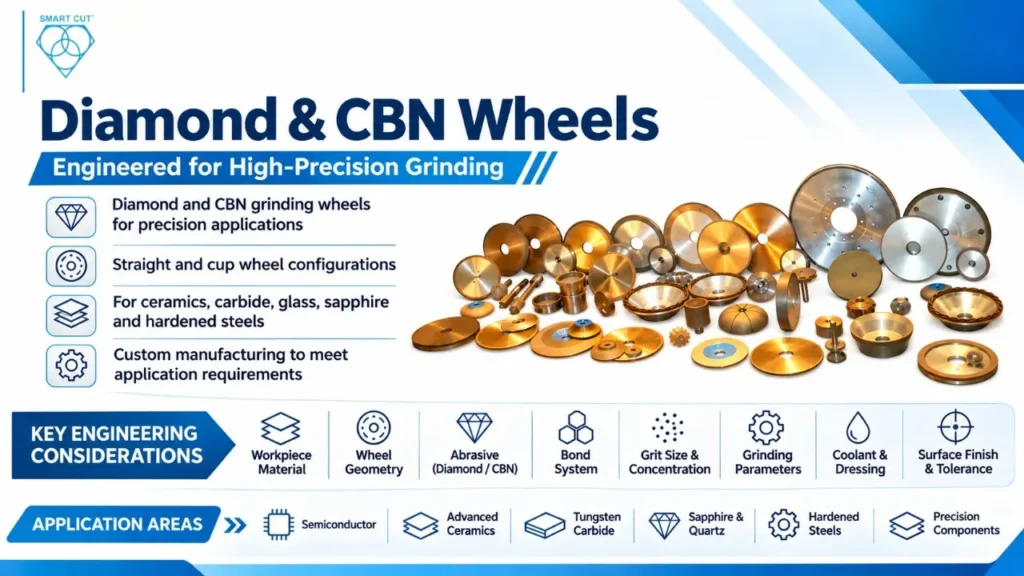
Diamond Wheels and Cup Wheels: How Engineers Select Diamond CBN Wheels for Precision Grinding
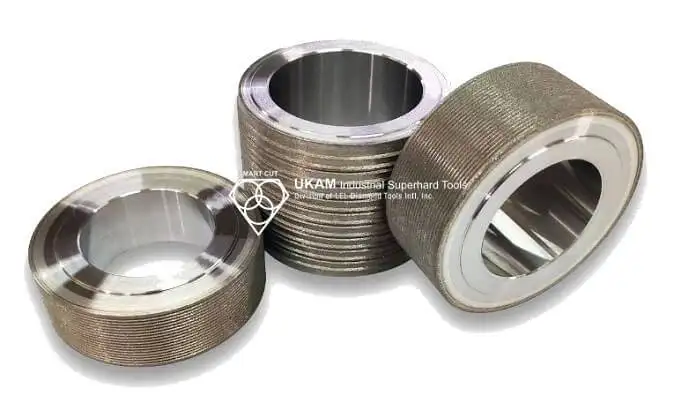
Selecting the correct diamond or CBN grinding wheel requires more than matching abrasive type to workpiece hardness. Wheel geometry, bond system, grit size, abrasive concentration, machine capability, coolant delivery, and required surface quality all influence grinding performance.
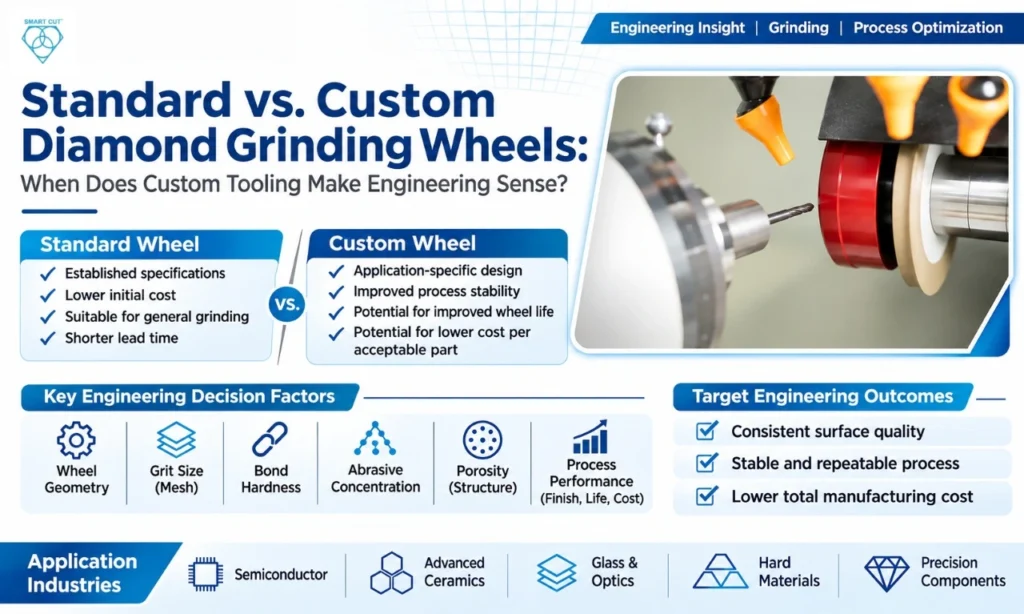
Standard vs. Custom Diamond Grinding Wheels: When Does Custom Tooling Make Engineering Sense?
Selecting a diamond grinding wheel is not simply a matter of matching abrasive grit to workpiece hardness. Wheel specification directly influences material removal rate, surface integrity, dimensional accuracy, dressing frequency, cycle time, tool consumption and the cost of producing an acceptable component.
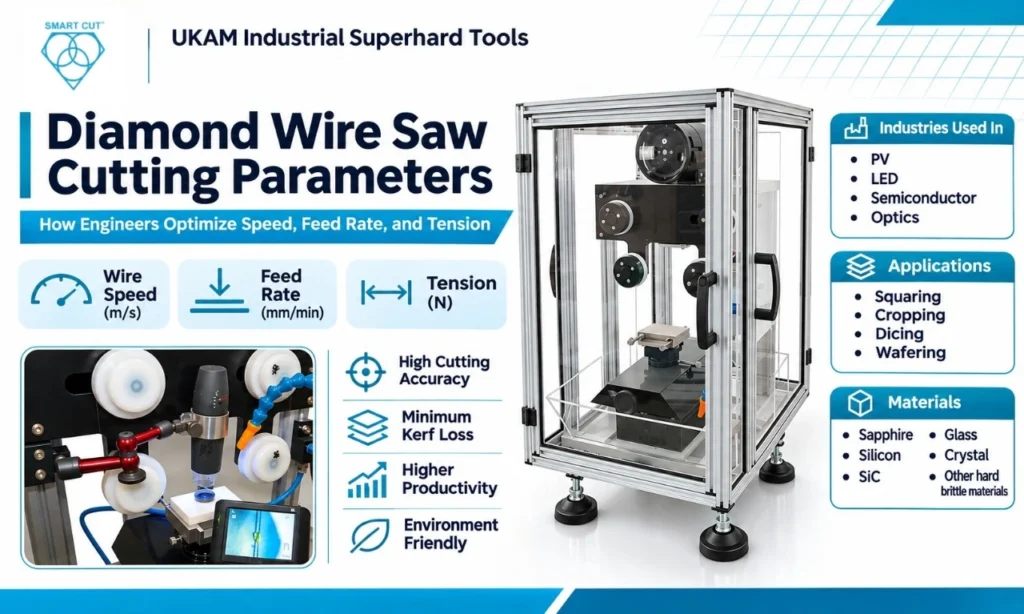
Diamond Wire Saw Cutting Parameters: How Engineers Optimize Speed, Feed Rate, and Tension
Selecting a diamond grinding wheel requires more than matching the abrasive to the workpiece material. Grit size, bond system, diamond concentration, wheel geometry, machine capability, and grinding conditions all influence material removal, surface finish, subsurface damage, wheel wear, and cost per acceptable part.
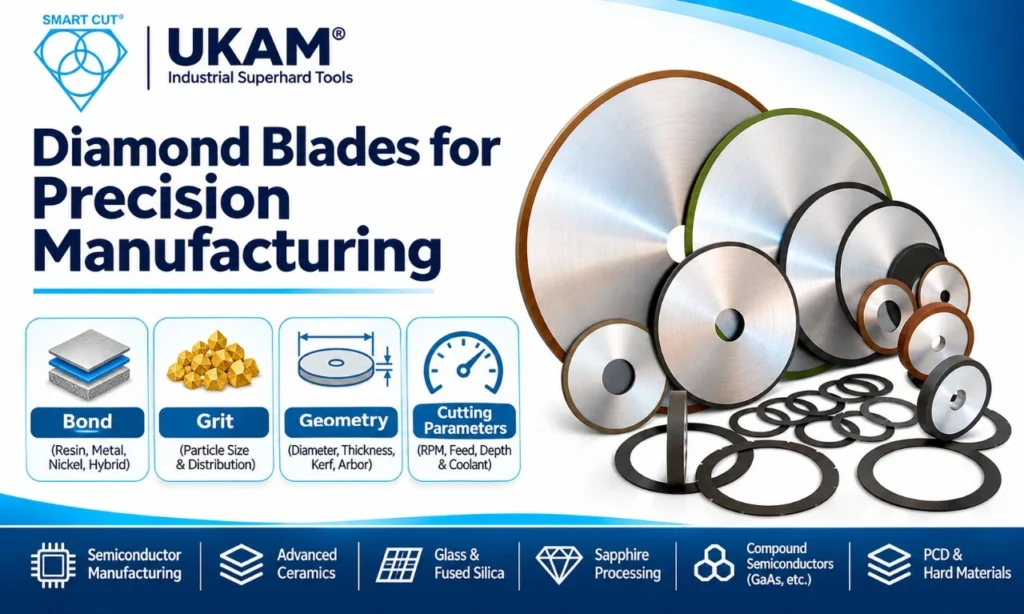
Diamond Blades for Precision Manufacturing: How to Select Bond, Grit, Geometry, and Cutting Parameters
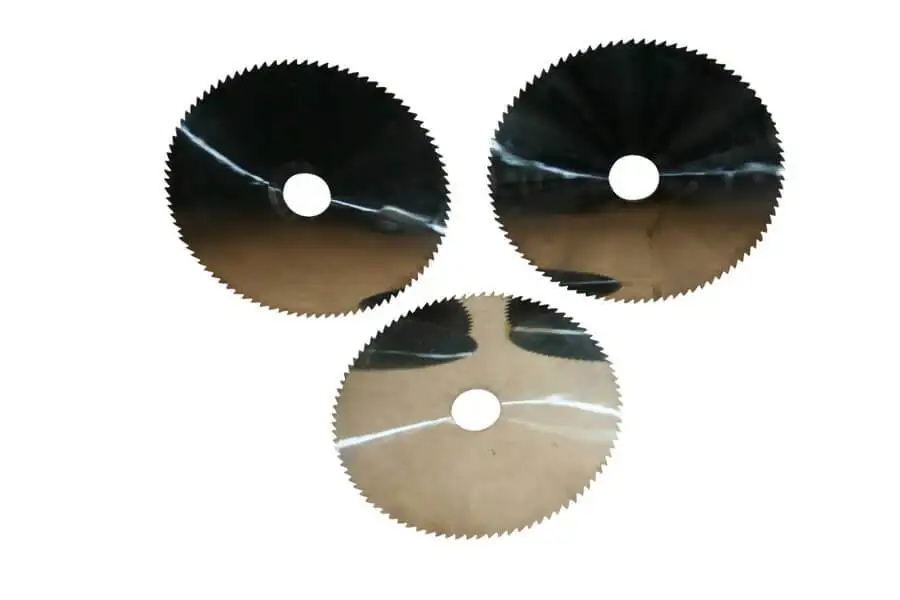
Selecting diamond blades for precision manufacturing is not simply a matter of choosing the hardest abrasive or the blade with the longest advertised service life. The blade must remove material at a controlled rate while maintaining dimensional accuracy, acceptable edge quality, manageable cutting forces and predictable wear.
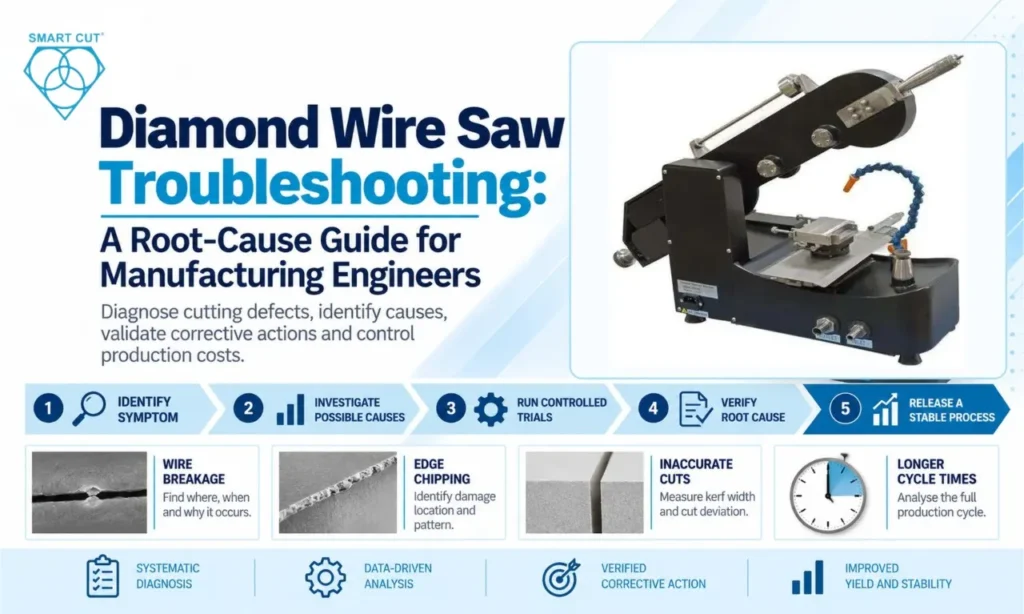
Diamond Wire Saw Troubleshooting: A Root-Cause Guide for Manufacturing Engineers
When a diamond wire sawing process begins producing chipped edges, inconsistent kerf, wire breakage, or longer cutting cycles, replacing the consumable may not resolve the underlying problem.
For manufacturing engineers, the first task is to determine what changed, where the failure occurs, and whether the evidence points to the wire, machine, workpiece, or operating conditions.
Diamond Wire Saw: Maximizing Material Yield and Precision Cutting of Advanced Materials
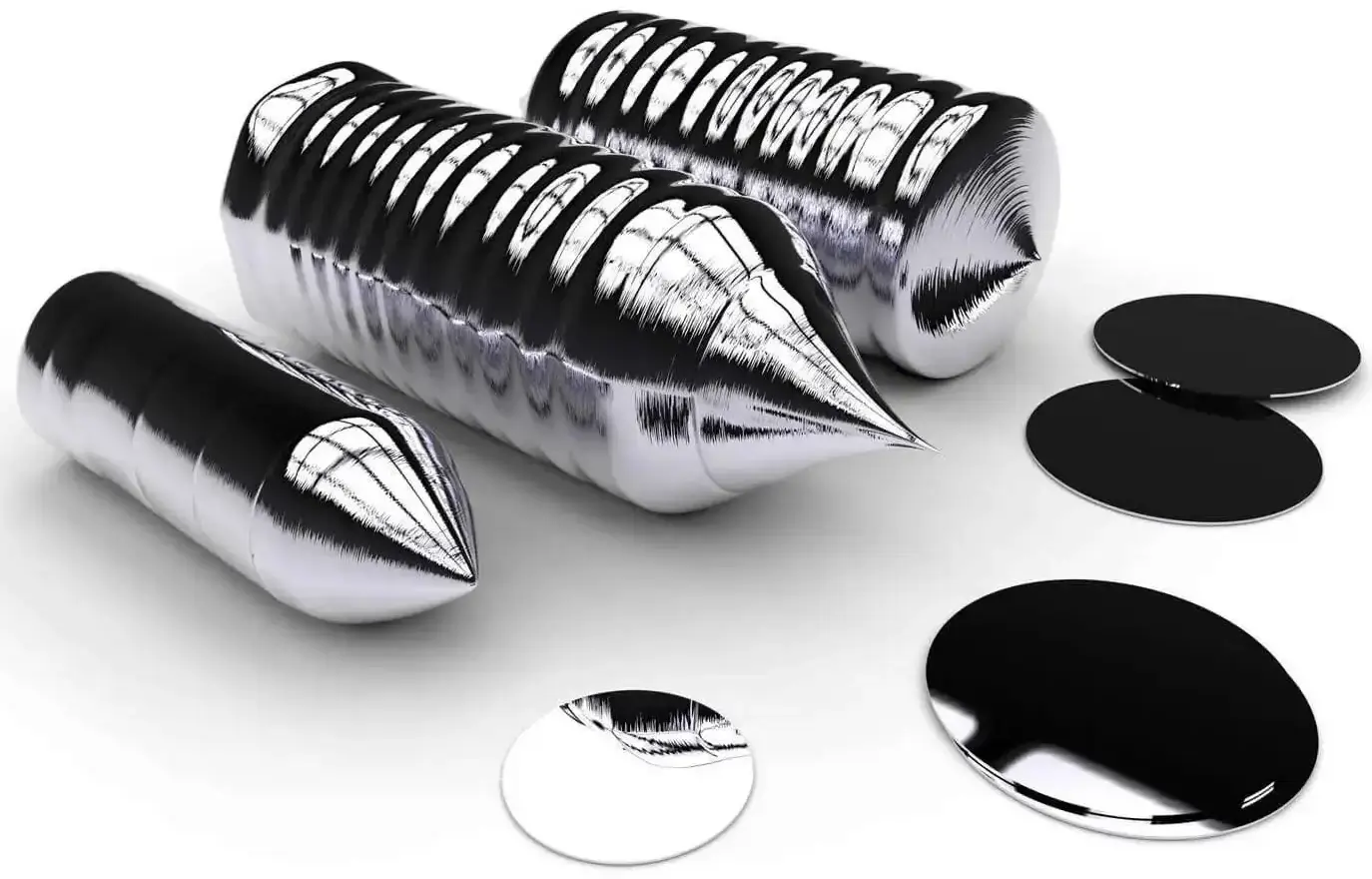
Manufacturers processing sapphire, germanium, silicon, quartz, technical ceramics, optical crystals, and advanced electronic materials face a common challenge: every cut removes material, introduces some degree of stress, and influences the quality of every downstream operation.
Guide to Diamond Wire Sawing: Technologies, Wire Types, and Machine Designs
Diamond wire saws provide one of the most precise and reliable methods for sectioning both hard and fragile materials. The principle behind the process is simple yet highly effective. A thin wire embedded with fine...