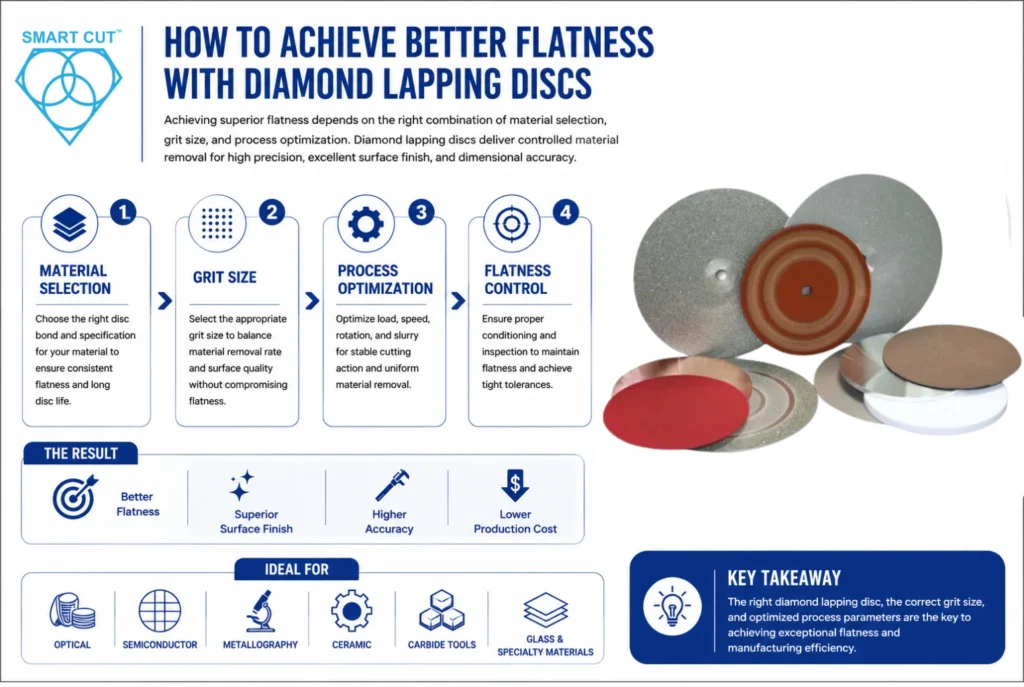

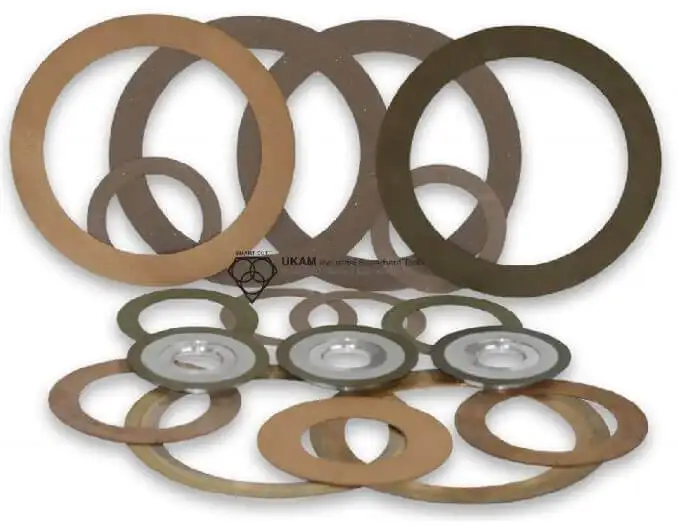
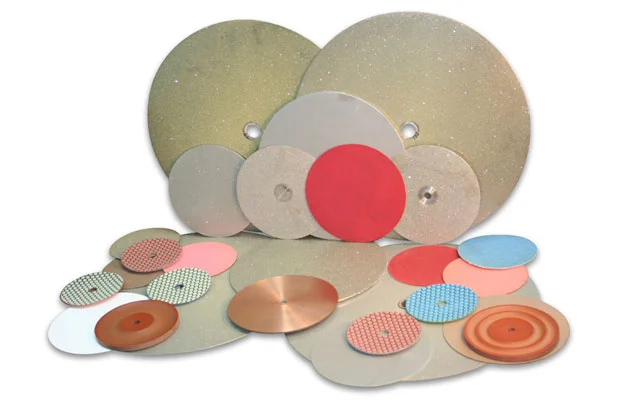

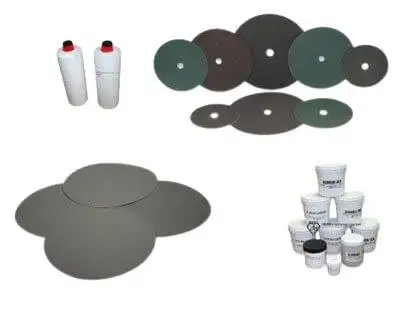


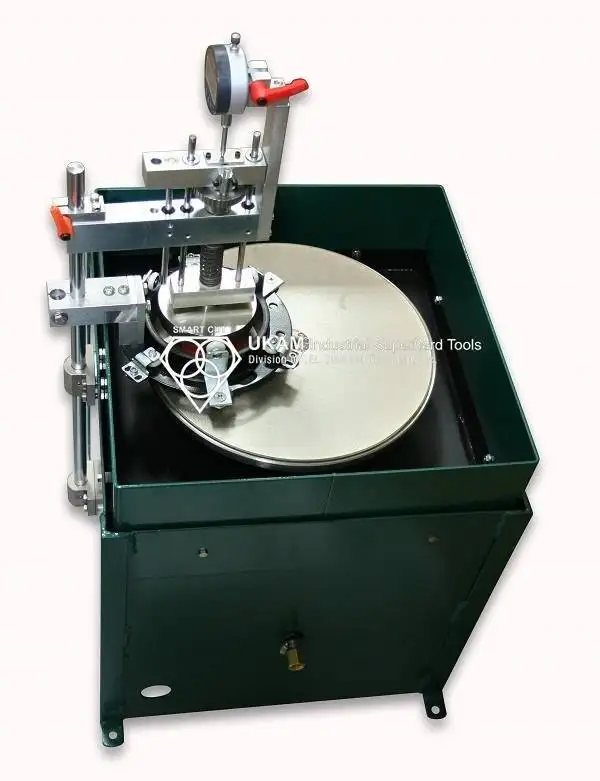






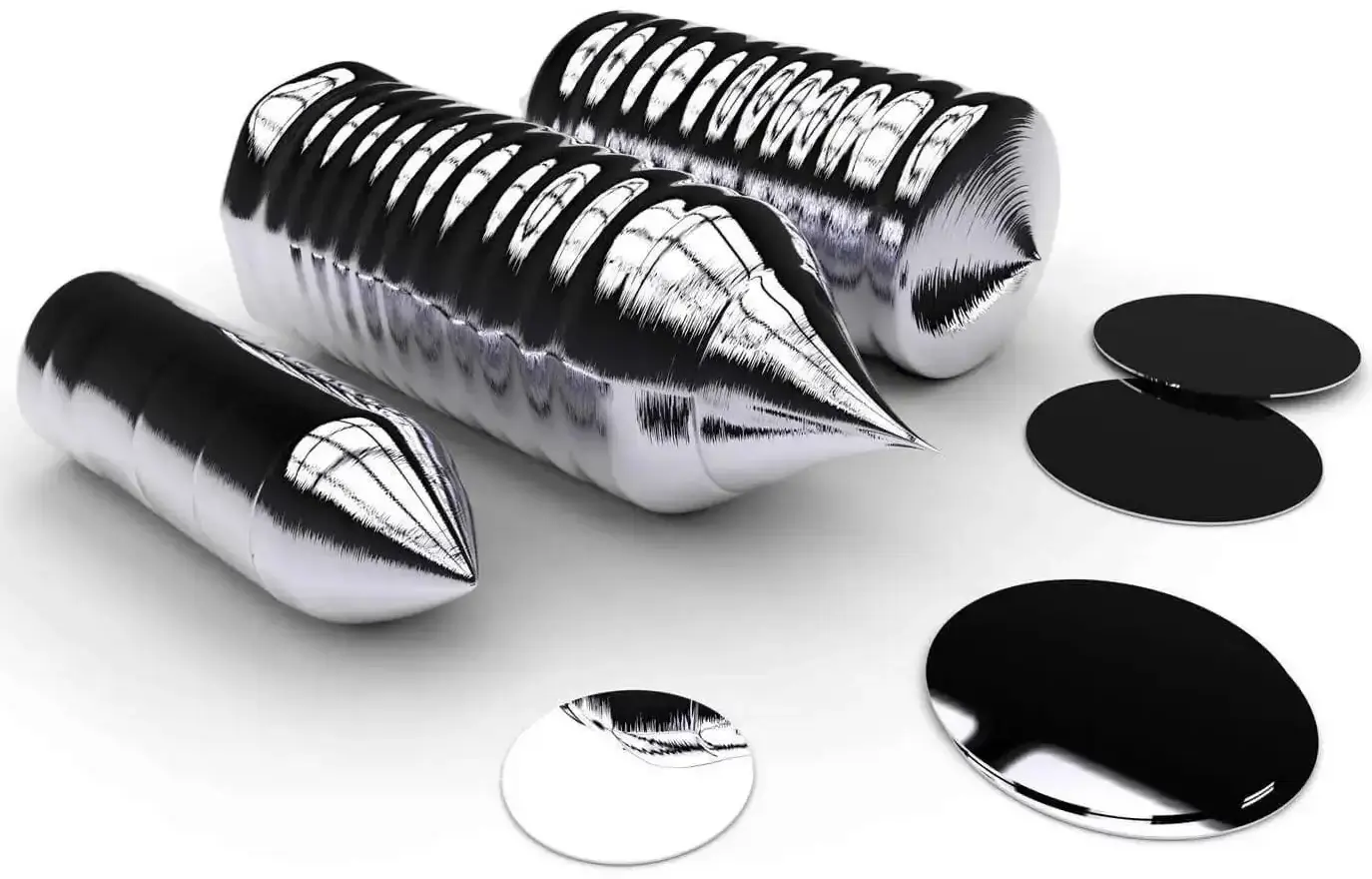
Diamond Lapping Discs for Precision Surface Finishing
Diamond grit size is one of the most significant factors influencing the performance of diamond debt cutting, grinding, and polishing tools. While operators in many applications may focus on machine settings, feed rates, or coolant conditions, they often ignore the fact that, like any material, diamond abrasive particle size is a fundamental requirement that dictates tool/material interaction.
Critical Factors That Influence Diamond Dicing Blade Cutting Performance
Diamond dicing blades are essential tools for high-precision cutting in semiconductor manufacturing, electronics packaging, advanced ceramics, and optical materials. These blades enable manufacturers to separate delicate substrates with extremely tight tolerances while minimizing material damage.
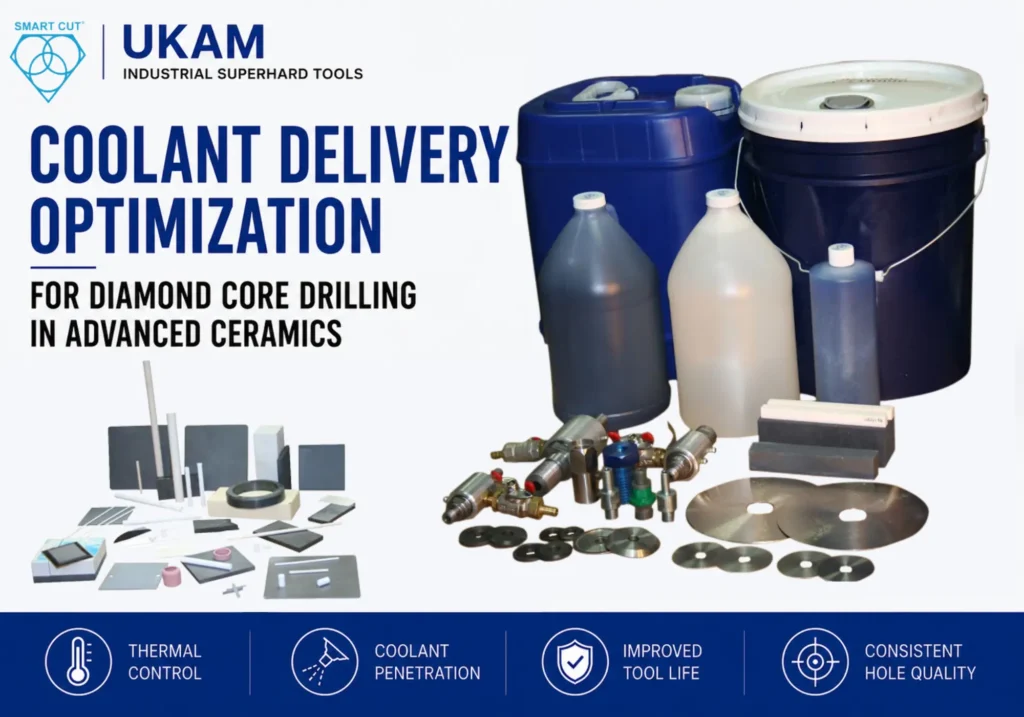
Diagnosing Surface Finish Failures Caused by Wrong Water Soluble Coolant
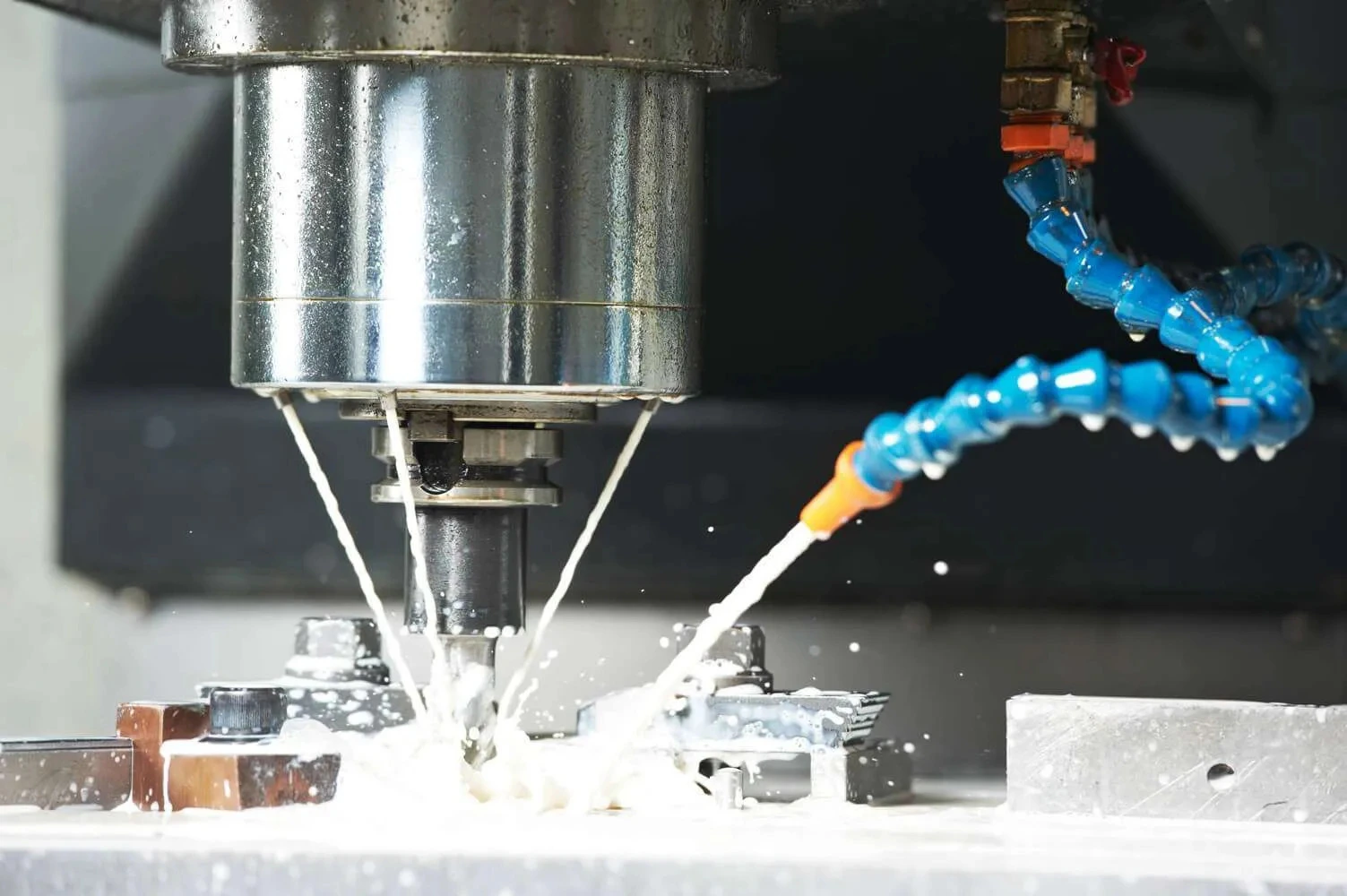
In precision manufacturing — semiconductor dicing, advanced ceramics, photonics, optical grinding — the fluid in your cutting zone is not a secondary concern. It directly determines tool life, yield, surface finish, and part integrity.
Water soluble coolant is one of the most mismanaged variables in precision operations. Wrong formulation, wrong concentration, or poor maintenance will cost you in scrap, tool wear, and rework. This guide covers what you need to know.
How Diamond Grit Size Influences Cutting Speed, Surface Finish, and Tool Life
Diamond grit size is one of the most significant factors influencing the performance of diamond debt cutting, grinding, and polishing tools. While operators in many applications may focus on machine settings, feed rates, or coolant conditions, they often ignore the fact that, like any material, diamond abrasive particle size is a fundamental requirement that dictates tool/material interaction.
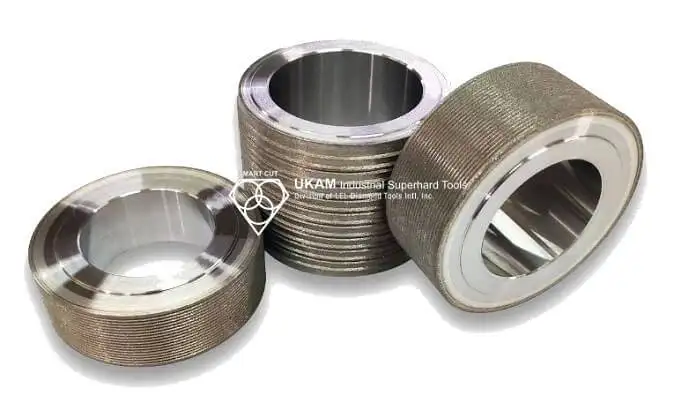
5 Tips That Make Your Electroplated Diamond Grinding Wheels Last Longer — And Save You Money
When you invest in precision electroplated diamond wheels, you are investing in one of the most aggressive, high-performance abrasive technologies available in industrial manufacturing. Unlike multi-layer bonded systems, electroplated tools expose a single layer of diamond or CBNcrystals locked into a nickel matrix — maximizing protrusion height, cutting speed, and profile fidelity. That precision comes at a cost. Once that single layer is gone, the wheel is done.
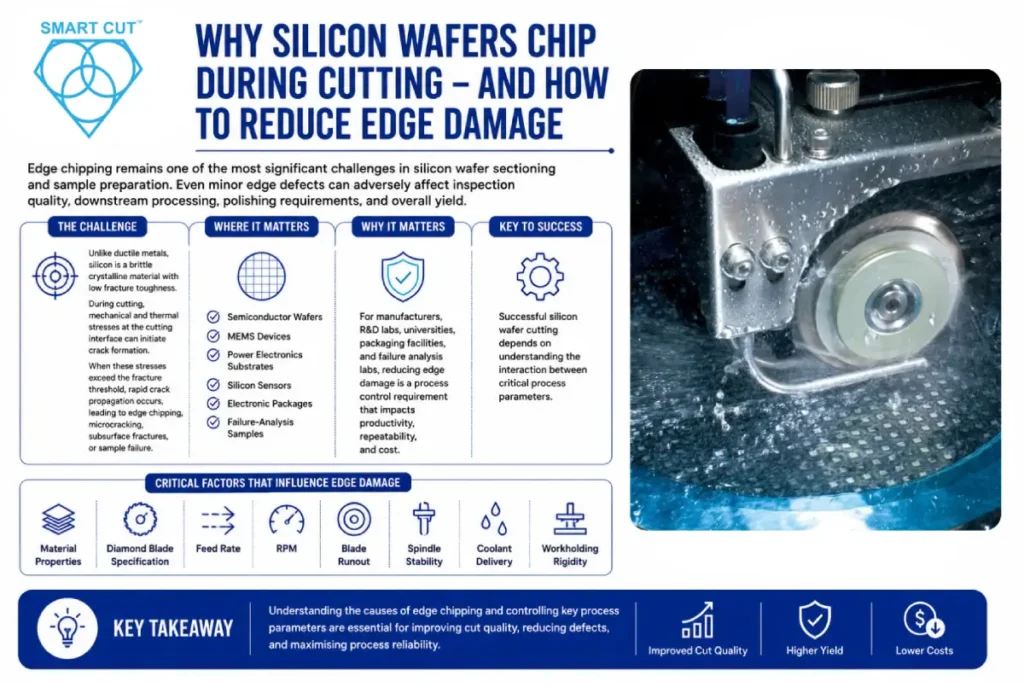
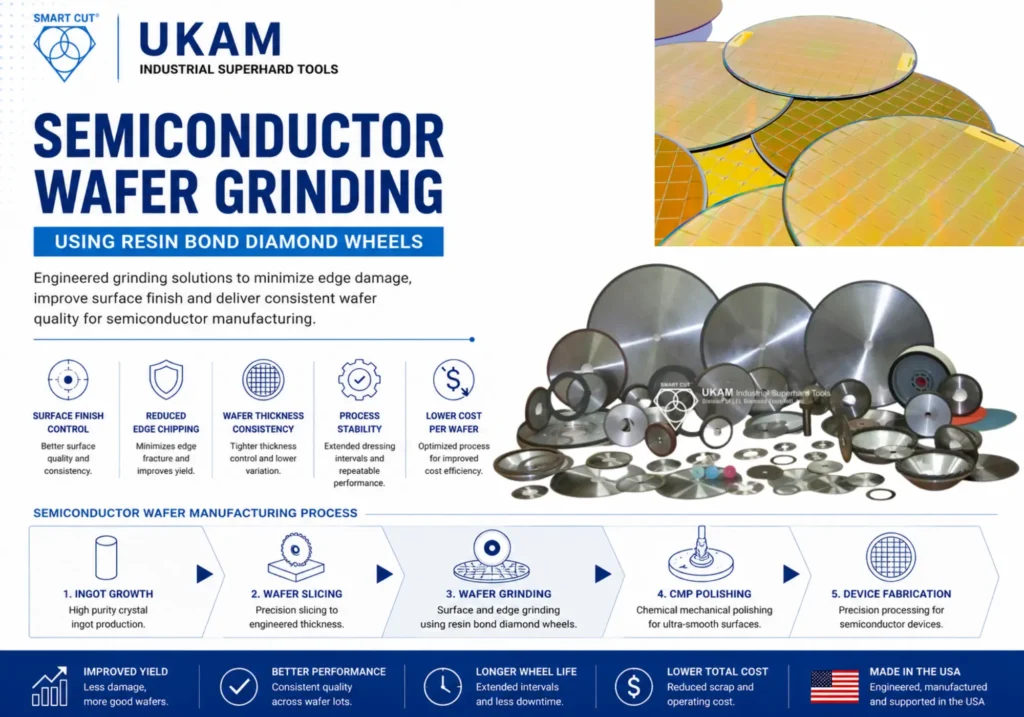
Silicon Wafer Material Preparation: Mechanical Stages That Determine Semiconductor Yield
Modern semiconductor devices are often discussed in terms of lithography nodes, transistor density, and advanced packaging. However, long before photolithography defines circuit geometry, the mechanical integrity of the silicon wafer has already determined whether high yield is even possible.
Engineered Diamond Pellet Systems for Controlled Surface Preparation
In metallography, advanced ceramics processing, semiconductor substrate preparation, and materials research, polishing is not a cosmetic operation – it is a controlled material removal step that directly influences surface integrity, dimensional accuracy, and downstream reliability.
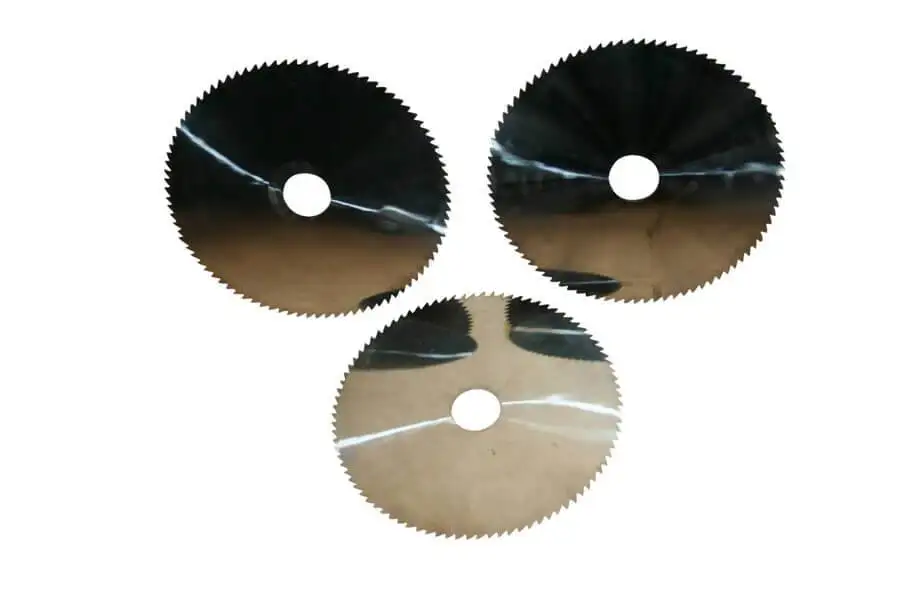
Cutting Carbon Fiber Tubes: Best Blades, Tool Life Comparison, and Cost-Per-Cut Analysis
Carbon fiber reinforced composites have become essential materials in industries such as aerospace, automotive, sporting goods, and advanced manufacturing. Carbon fiber tubes, in particular, are widely used because they offer an excellent combination of high strength, low weight, and dimensional stability.
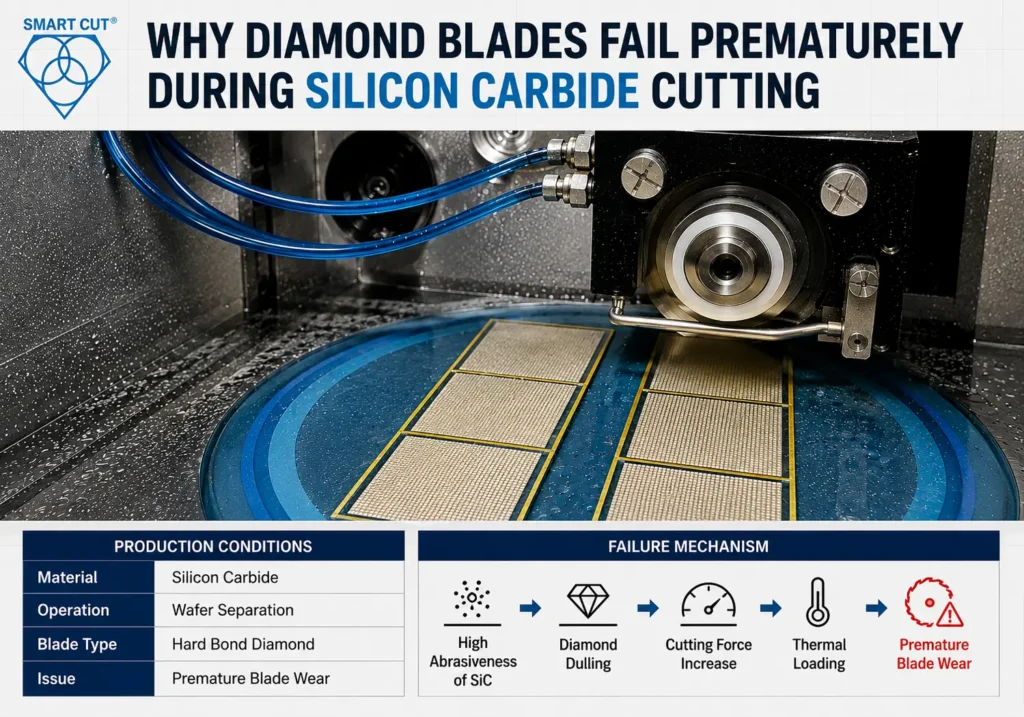
Diamond Dicing Blades for Semiconductor Industry: The Complete Buyer’s Guide
If you are sourcing diamond dicing blades for microelectronics and semiconductor industry, you already know that the wrong blade choice does not just cost you money — it costs you yield. Chipping, cracking, inconsistent kerf width, and premature blade wear are not just quality problems. They are production problems that shut down lines and delay shipments.