







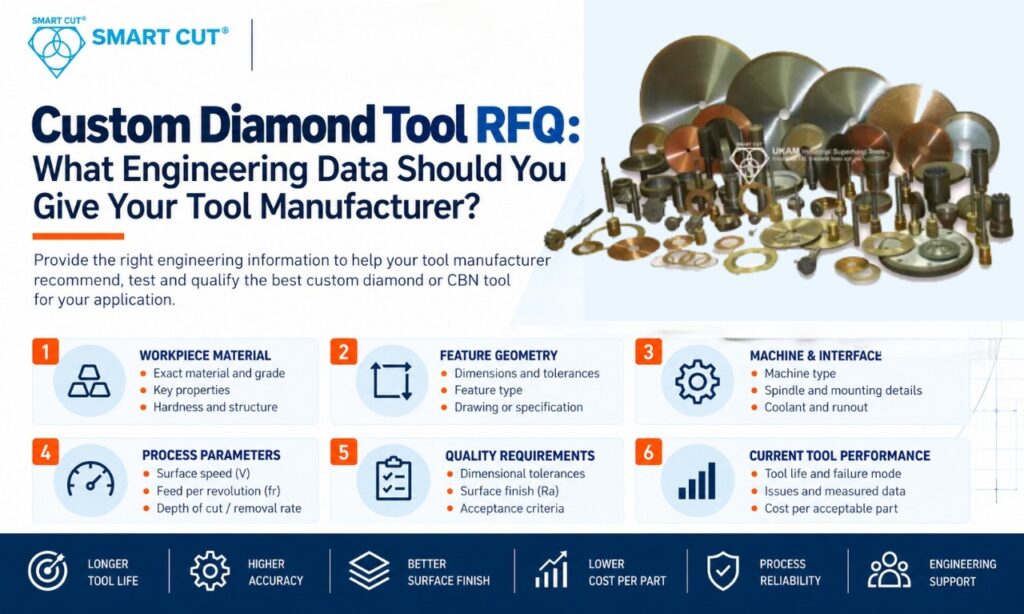
Custom Diamond Tool RFQ: What Engineering Data Should You Give Your Tool Manufacturer?
A custom diamond tool should not be specified from diameter, thickness, and grit size alone.
An incomplete specification can produce a tool that fits the machine correctly but fails to control edge damage, dimensional stability, surface finish, tool wear, cycle time, or cost per acceptable part.
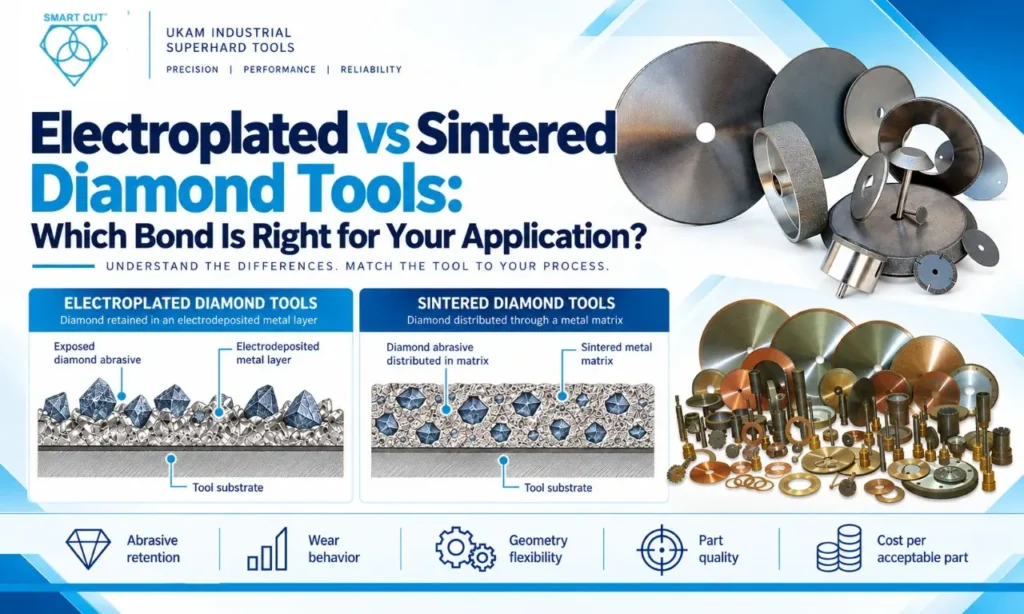
Electroplated vs Sintered Diamond Tools: Which Bond Is Right for Your Application?
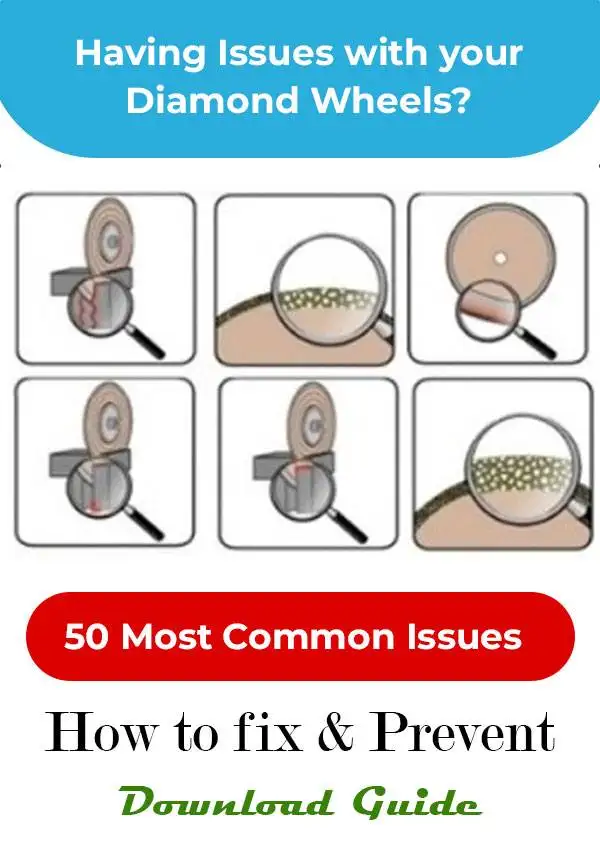
A diamond tool can lose cutting efficiency, damage a workpiece edge or drift outside dimensional tolerance even when its initial cutting performance appears satisfactory. In many production environments, the problem is not simply the diamond abrasive. It is the interaction between abrasive exposure, bond wear, workpiece properties, tool geometry and machine conditions.
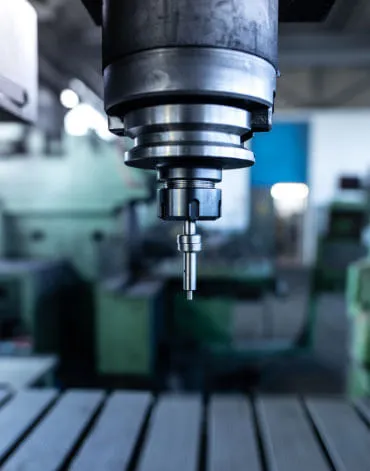
Diamond Milling Tools for Precision Machining of Advanced Materials
Conventional carbide end mills and abrasive tooling often struggle when machining advanced engineering materials such as alumina ceramics, sapphire, quartz, silicon carbide, ferrites, tungsten carbide, and carbon composites. In production environments, problems such as rapid edge wear, thermal cracking, glazing, dimensional instability, and excessive edge chipping become increasingly common as material hardness and brittleness increase.

