


















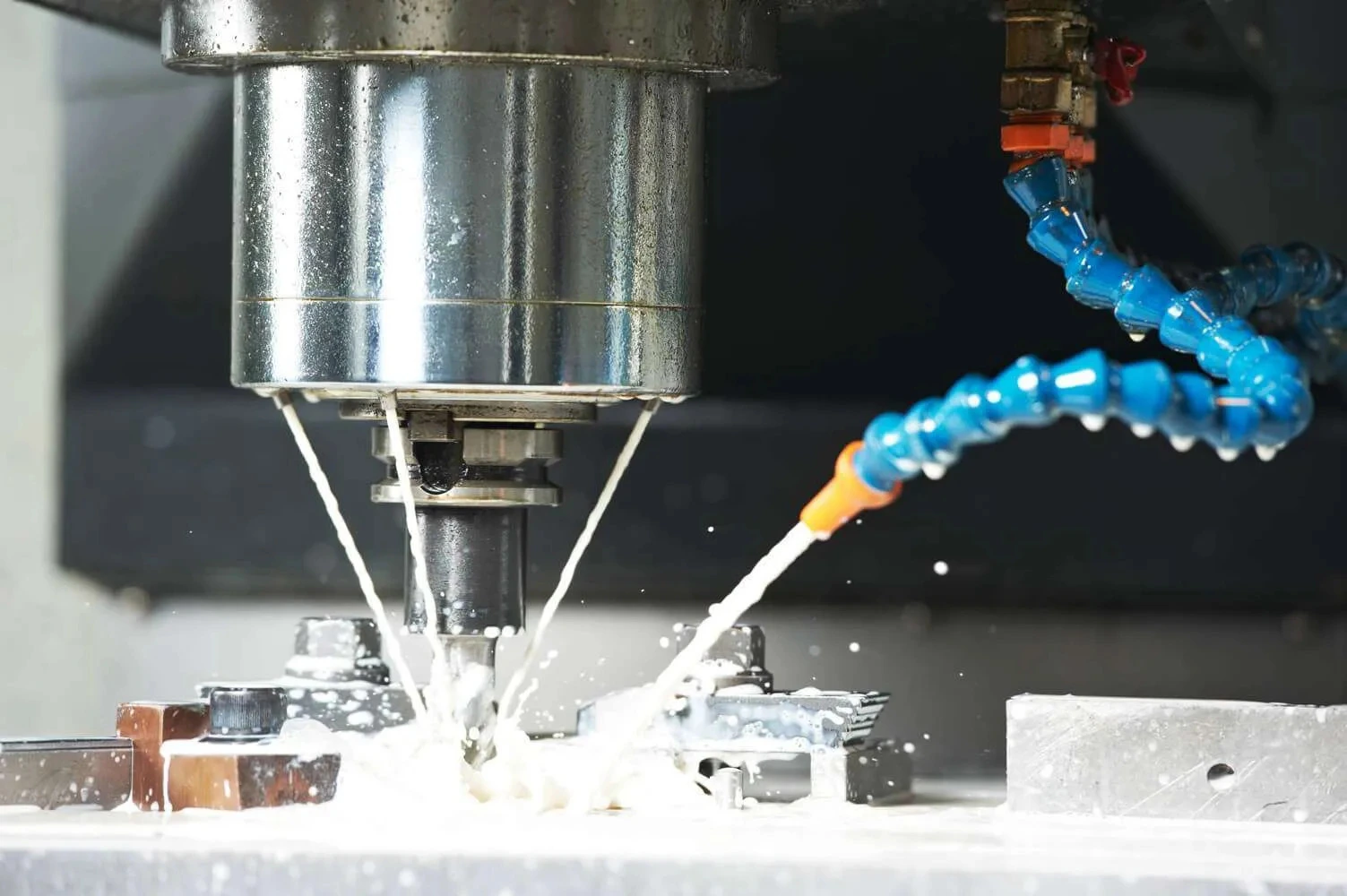

Bond Hardness in Diamond & CBN Blades: How It Affects Cutting Performance, Wear, Blade Life & Surface Quality
Table of Contents
ToggleIn precision cutting applications, engineers often focus on selecting the correct diamond grit size, blade thickness, spindle speed, or feed rate to achieve optimal cutting performance. While each of these variables plays an important role, the characteristics of the diamond bond system frequently have an even greater influence on cutting efficiency, blade wear, surface integrity, and overall process stability.
The bond is far more than the material that holds the diamond particles together. It controls how diamonds are supported during cutting, how worn abrasive particles are released, how efficiently fresh cutting edges are exposed, and how the blade responds to variations in material hardness, cutting forces, thermal loading, and coolant conditions.
Selecting an inappropriate bond hardness can result in rapid diamond pull-out, excessive glazing, increased cutting forces, poor surface finish, accelerated blade wear, or unnecessary material damage, even when all other process parameters have been correctly optimized.
This becomes increasingly important when cutting brittle, high-value, or difficult-to-machine materials such as:
- Silicon wafers
- Sapphire
- Technical ceramics
- Tungsten carbide
- Silicon carbide
- Quartz
- Glass
- Optical crystals
- Composite materials
- Metallographic specimens
- Advanced aerospace materials
Each material interacts differently with the bond during cutting. A bond designed for one application may perform poorly when used on another, despite using the same diamond grit size and blade geometry.
Understanding how bond hardness influences diamond exposure, wear mechanisms, heat generation, cutting forces, and material removal enables engineers to select tooling that delivers consistent cutting performance while maximizing blade life and preserving workpiece integrity.
This guide examines the engineering principles behind diamond bond hardness, explains how different bond systems behave under varying cutting conditions, and provides practical recommendations for selecting the most appropriate bond for specific materials and applications.
Trusted by Tens of Thousands of Manufacturers, Laboratories Research Institutions Worldwide Since 1990

American Based Manufacturer

Established in 1990


Custom manufacturing


Understanding Diamond Blade Bond Systems
Before evaluating bond hardness, it is important to understand the function of the bond itself.
Although diamond particles perform the actual cutting, they cannot function effectively without proper support from the surrounding bond material. The bond determines how the diamonds are retained, how cutting forces are transferred into the blade, and when worn abrasive particles are released to expose new cutting edges.
In simple terms, the bond acts as the structural framework of a diamond blade.
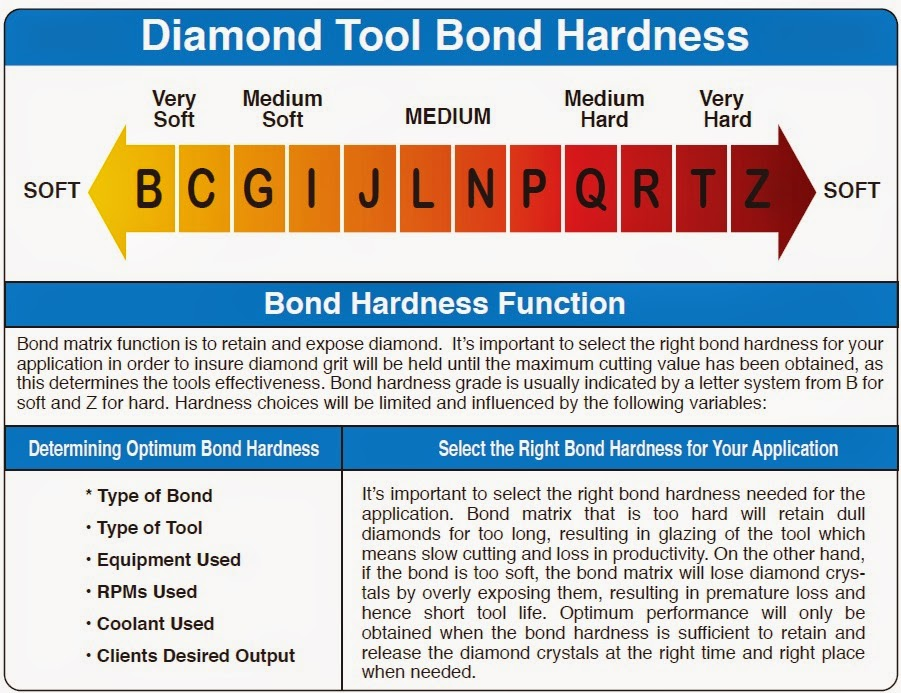
Its behavior influences virtually every aspect of cutting performance, including:
- Cutting efficiency
- Blade life
- Material removal rate
- Heat generation
- Surface finish
- Edge quality
- Process stability
- Consumable cost
Rather than serving as a passive holding material, the bond is an active engineering component that continuously interacts with the workpiece, coolant, machine dynamics, and abrasive particles throughout the cutting process.
Achieving optimum cutting performance therefore requires balancing two competing objectives:
- Retaining diamond particles long enough to maximize their useful cutting life.
- Releasing worn or fractured diamonds before they begin rubbing rather than cutting.
The rate at which this controlled wear occurs is determined primarily by bond hardness.
What Is a Diamond Bond?
A diamond bond is the engineered matrix that secures synthetic diamond abrasive particles within the cutting edge of a blade or wheel.
During cutting, every diamond crystal experiences extremely high localized mechanical loads. The bond distributes these loads across the cutting edge while maintaining sufficient support to prevent premature diamond loss.
At the same time, the bond must gradually wear under controlled conditions so that dull abrasive particles are replaced by new, sharp cutting crystals.
If the bond wears too quickly, useful diamonds are lost before they have completed their cutting life.
If the bond wears too slowly, worn diamonds remain trapped within the blade, causing increased friction, heat generation, glazing, and declining cutting efficiency.
Effective bond design, therefore, represents a controlled balance between diamond retention and diamond renewal.
Common Diamond Bond Systems
Different bond formulations are designed to suit different materials, cutting conditions, and production objectives.
Resin Bond
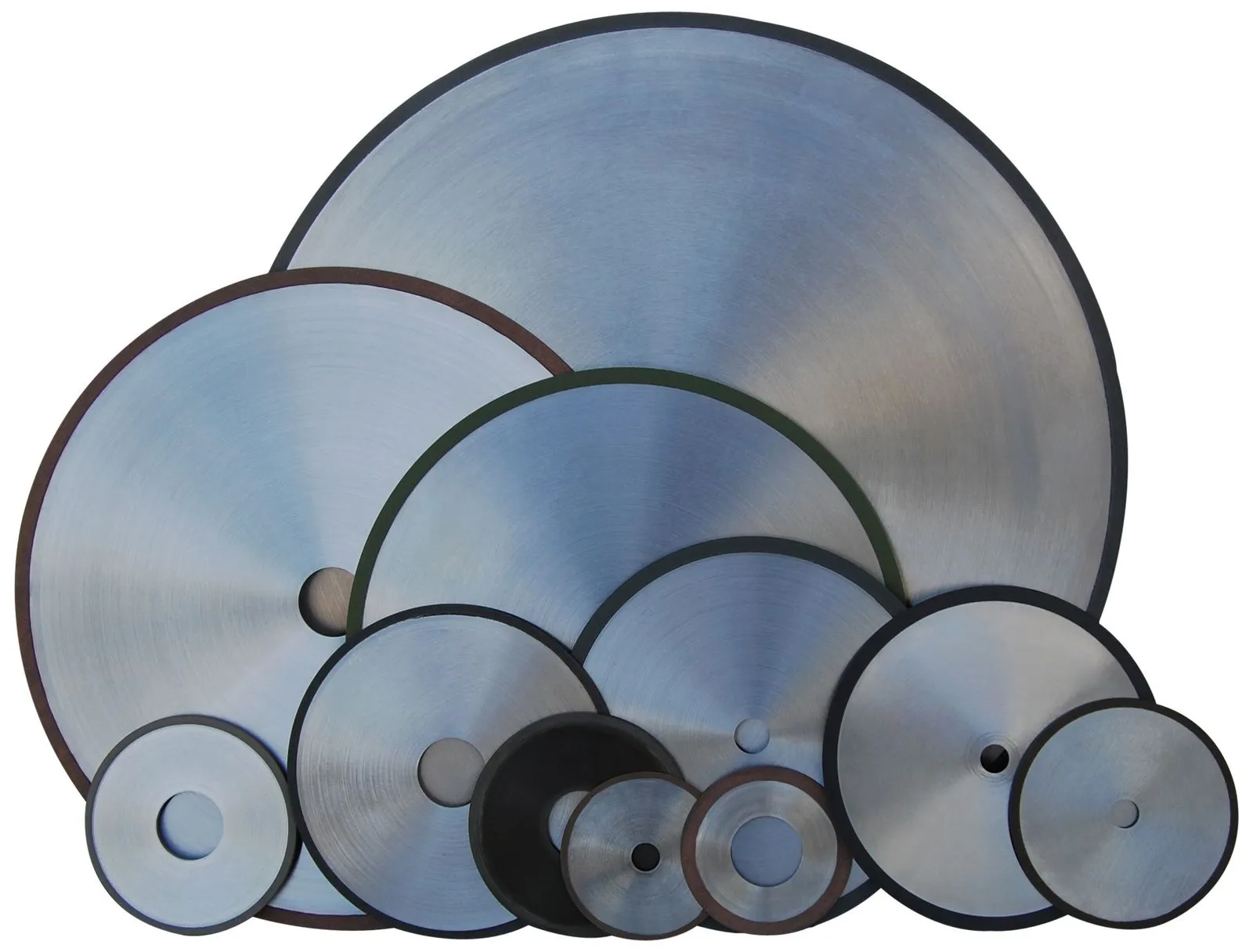
Resin bond systems use carefully engineered polymer-based matrices to hold diamond or CBN abrasive particles while allowing the bond to wear at a controlled rate during cutting. The bond is intentionally designed to release worn abrasive particles and continuously expose new, sharp cutting edges.
From a bond hardness standpoint, resin bonds are generally softer than metal bond systems. This controlled wear is what creates the blade’s self-sharpening behavior. As dull diamonds or CBN particles lose cutting ability, the surrounding resin gradually wears away, exposing fresh abrasive that restores cutting efficiency without frequent dressing.
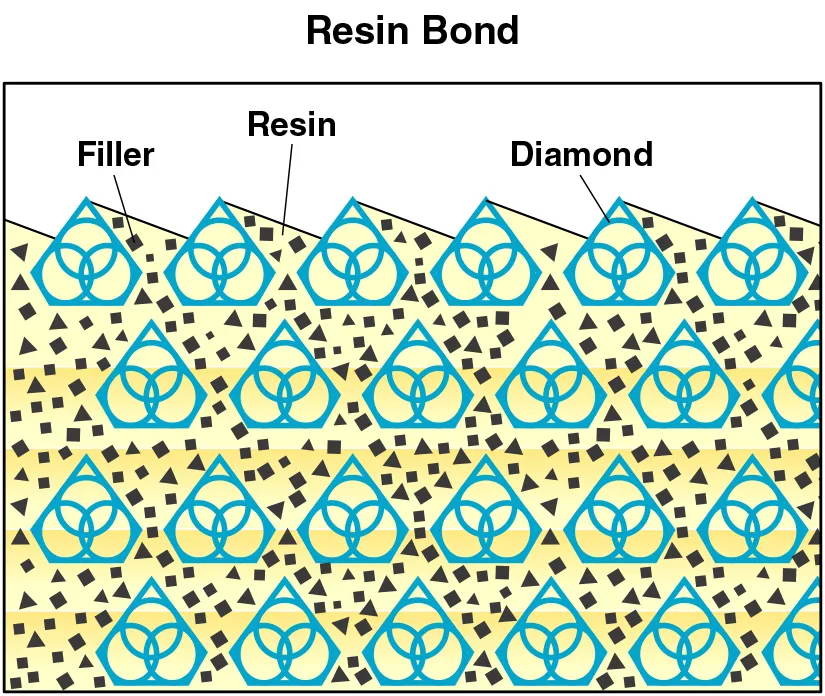
The hardness of the resin bond directly influences cutting performance:
- Softer resin bonds expose new abrasive more quickly, resulting in faster cutting rates, lower cutting forces, and cooler operation. They are often preferred when cutting hard, dense, or heat-sensitive materials that dull the abrasive rapidly.
- Harder resin bonds retain abrasive particles longer, increasing blade life when cutting less abrasive materials. However, if the bond is too hard for the application, dull abrasive particles remain trapped in the bond, causing increased cutting forces, higher temperatures, slower cutting, glazing, and reduced cutting efficiency.
Compared to harder bond systems, resin bond diamond and CBN blades typically provide:
- Lower cutting forces
- Lower spindle load and power consumption
- Reduced heat generation
- Faster cutting speeds
- Excellent self-sharpening characteristics
- Better surface finish and lower surface roughness
- Reduced subsurface damage
- Lower risk of edge chipping and microcracking in brittle materials
- Higher dimensional accuracy on precision cuts
These characteristics make resin bond blades an excellent choice when surface quality, cut accuracy, and minimizing thermal or mechanical damage are the primary objectives. Although resin bond blades generally wear faster than harder bond systems, they often produce superior cut quality and higher overall process efficiency in applications involving ceramics, glass, quartz, silicon, sapphire, advanced composites, and other precision engineering materials. The optimal resin bond hardness should always be matched to the workpiece material, abrasive type, machine rigidity, feed rate, coolant conditions, and production requirements to achieve the best balance between cutting speed, blade life, and surface finish.
- Silicon
- Sapphire
- Quartz
- Glass
- Optical crystals
- Advanced ceramics
- Cemented tungsten carbide
- Metallographic specimens
- Semiconductor wafering
- Hardened tool steels
- High-speed steels (HSS)
- Bearing steels
- Tool and die steels
- Ferrous alloys requiring precision grinding or cut-off
Because resin bonds wear more readily than metal bonds, they continuously expose new diamond or CBN particles before the abrasive becomes excessively dull. This minimizes rubbing, reduces heat generation, and helps maintain stable cutting and grinding forces throughout the operation.
The tradeoff is that resin bond blades generally have shorter service life than comparable metal bond systems when used in highly abrasive materials or continuous high-volume production. For applications where maximum tool life is the primary objective, a more wear-resistant bond system may be the preferred choice.
Sintered (Metal Bond)
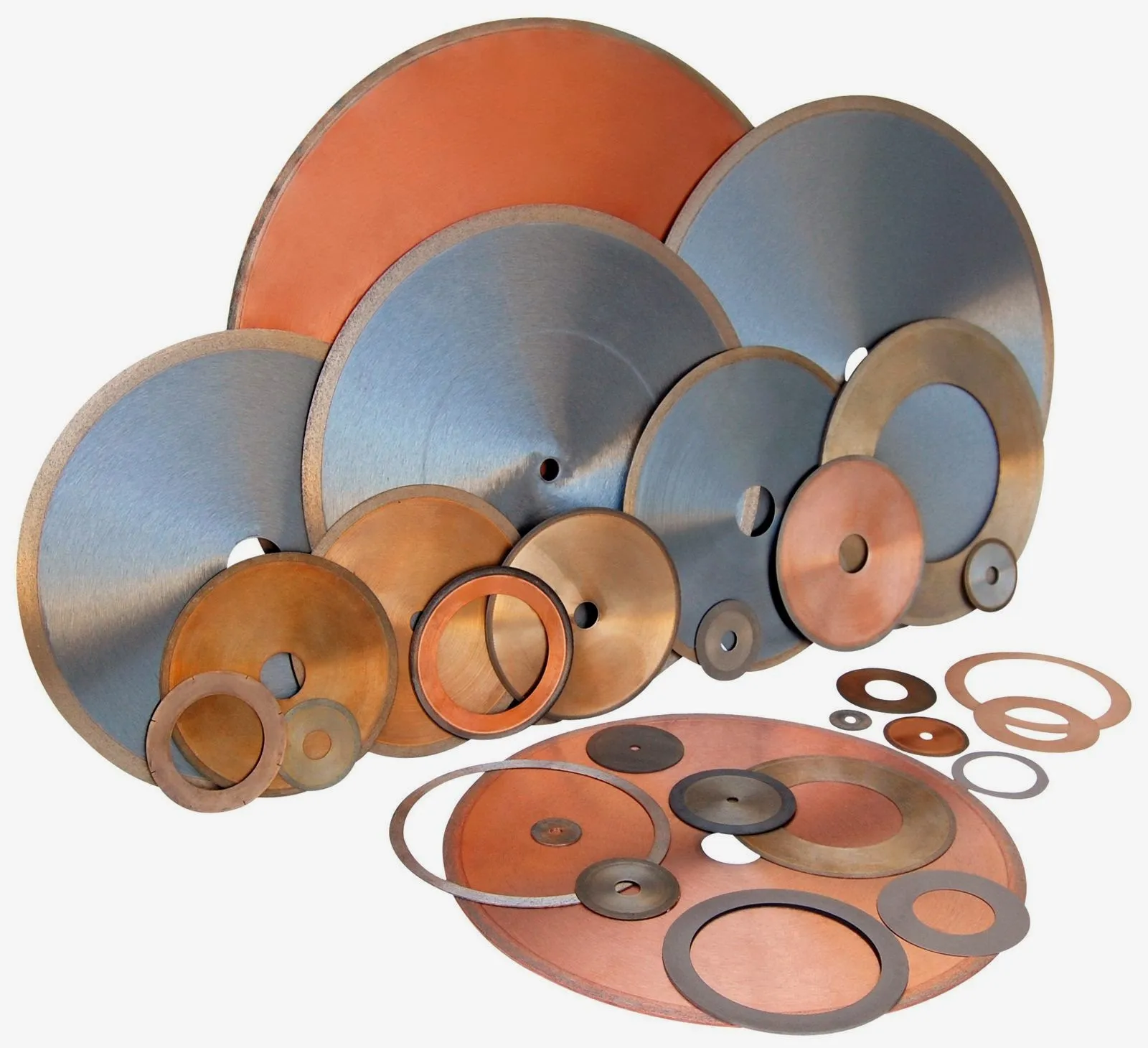
Sintered (metal bond) systems utilize carefully engineered metallic matrices consisting of bronze, cobalt, iron, tungsten, nickel, and other alloying elements to securely retain diamond or CBN abrasive particles throughout the cutting process. Compared with resin bond systems, sintered bonds provide greater resistance to bond wear, allowing abrasive particles to remain engaged longer before being released.
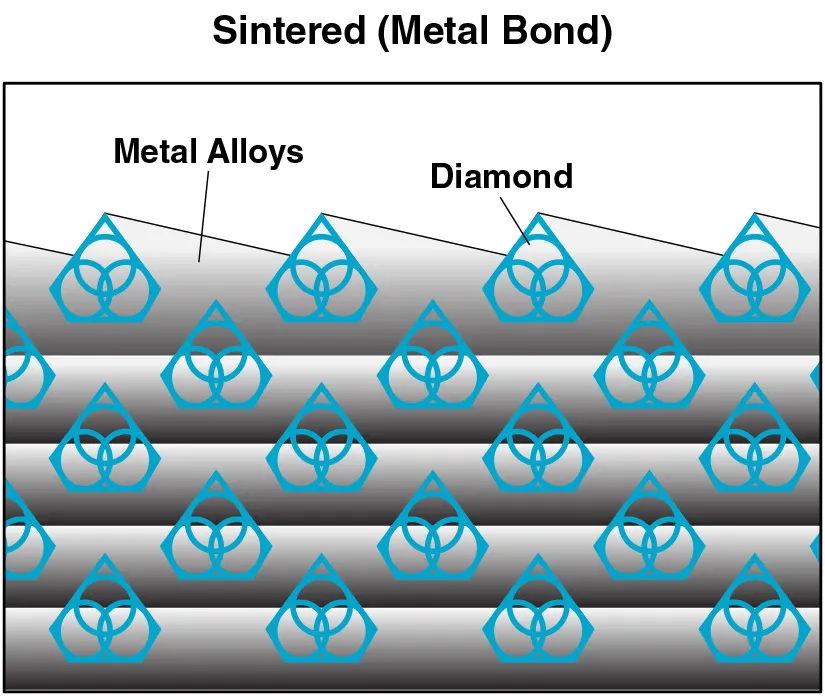
The primary objective of a sintered bond is to maximize abrasive utilization while maintaining sufficient self-sharpening to preserve efficient cutting performance.
Compared with resin bond systems, sintered (metal bond) diamond and CBN blades generally provide:
- Longer blade life
- Higher diamond or CBN retention
- Greater wear resistance
- Improved dimensional stability
- Better resistance to abrasive materials
- Excellent performance during continuous and high-volume production
These characteristics make sintered bond blades well suited for applications where blade life, dimensional accuracy, and consistent production performance are more important than achieving the lowest possible cutting forces.
Typical applications include:
Diamond Sintered (Metal Bond) Blades
- Tungsten carbide
- Silicon carbide
- Engineering ceramics
- Glass
- Quartz
- Stone
- Carbon fiber composites
- Ceramic matrix composites
- Other highly abrasive non-ferrous materials
CBN Sintered (Metal Bond) Blades
- Hardened tool steels
- High-speed steels (HSS)
- Bearing steels
- Tool and die steels
- Other hardened ferrous alloys
Because sintered bonds wear more slowly than resin bonds, they retain abrasive particles for a longer portion of their useful cutting life. However, if the bond is excessively wear resistant for a particular application, worn abrasive particles may remain exposed after they have lost their cutting efficiency. This can result in blade glazing, increased cutting forces, greater heat generation, and reduced cutting performance. Proper bond selection therefore requires balancing diamond or CBN retention with controlled self-sharpening to achieve optimum blade life, cutting efficiency, and surface quality.
Hybrid Bond
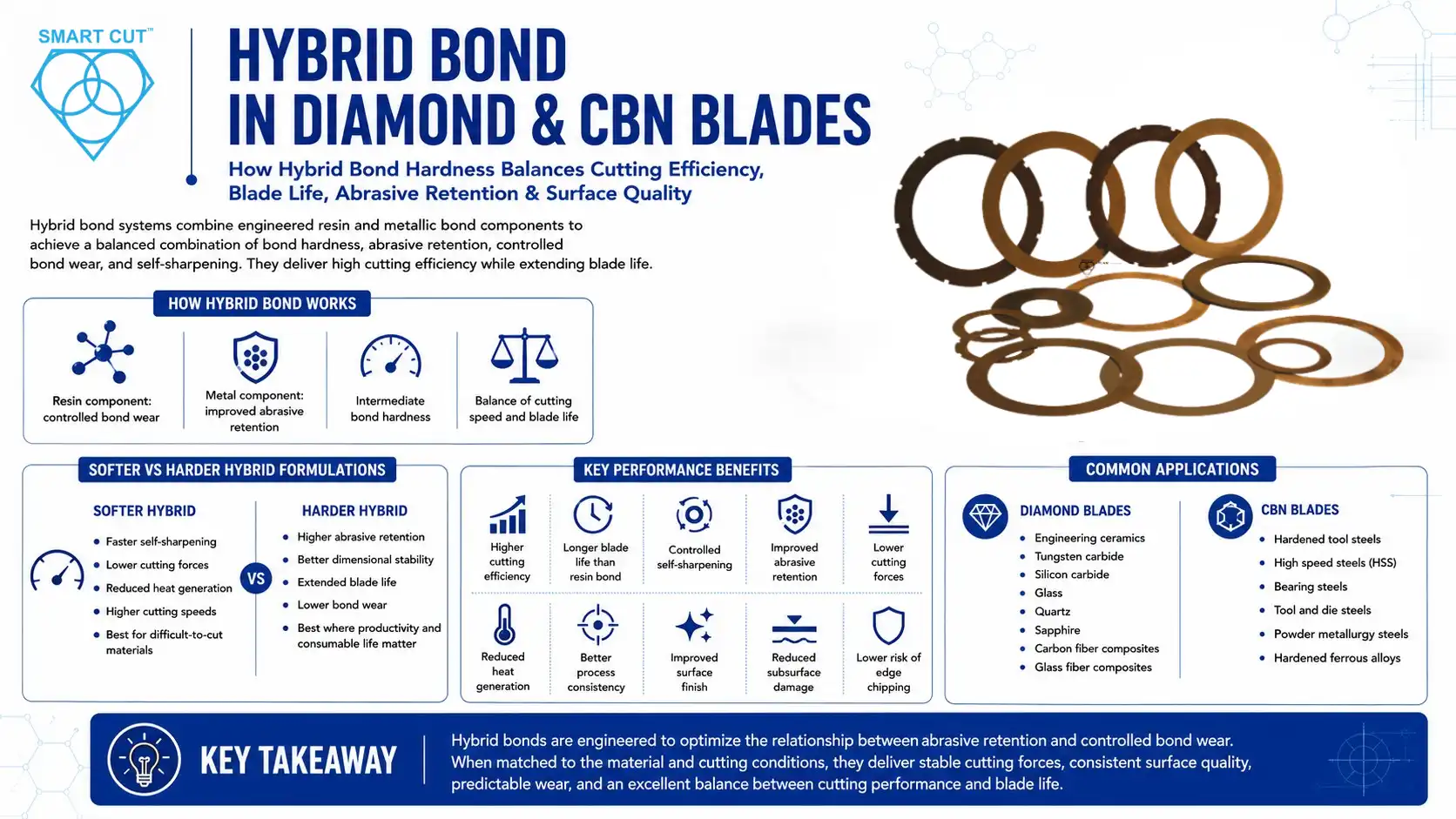
Hybrid bond systems combine carefully engineered resin and metallic bond components to achieve an optimal balance between bond hardness, abrasive retention, controlled bond wear, and self-sharpening. Rather than behaving as either a soft resin bond or a hard metal bond, hybrid bonds are formulated to provide intermediate bond hardness that delivers both high cutting efficiency and extended blade life.
From a bond hardness perspective, hybrid bonds bridge the gap between conventional resin and sintered (metal) bond systems. The resin component promotes controlled bond wear and continuous exposure of fresh diamond or CBN particles, while the metallic component improves abrasive retention, structural rigidity, and wear resistance. This combination allows the blade to maintain sharp cutting edges for longer periods without sacrificing cutting performance.
The hardness of a hybrid bond has a direct influence on blade performance:
- Softer hybrid formulations provide faster self-sharpening, lower cutting forces, reduced heat generation, and higher cutting speeds when machining difficult-to-cut materials that rapidly dull the abrasive.
- Harder hybrid formulations increase abrasive retention, improve dimensional stability, and extend blade life in applications where excessive bond wear would reduce productivity or increase consumable costs.
When properly matched to the workpiece material and cutting conditions, hybrid bond diamond and CBN blades typically provide:
- Higher cutting efficiency than comparable metal bond blades
- Longer blade life than comparable resin bond blades
- Controlled self-sharpening
- Improved abrasive retention
- Lower cutting forces
- Reduced heat generation
- Improved dimensional stability
- Better process consistency during long production runs
- Excellent balance between cutting speed and blade life
- Improved surface finish and reduced subsurface damage
- Lower risk of edge chipping in brittle materials
Because hybrid bonds maintain a more consistent cutting condition throughout the blade’s service life, they often produce more predictable cutting performance, reduced variation in cut quality, and greater process stability than bond systems optimized solely for maximum wear resistance or maximum cutting speed.
Hybrid bond diamond blades are commonly used for cutting:
- Engineering ceramics
- Tungsten carbide
- Silicon carbide
- Glass
- Quartz
- Sapphire
- Technical ceramics
- Carbon fiber composites
- Glass fiber composites
- Advanced composite materials
- Precision production components
Hybrid bond CBN blades are commonly used for cutting:
- Hardened tool steels
- High speed steels (HSS)
- Bearing steels
- Tool and die steels
- Powder metallurgy steels
- Other hardened ferrous alloys
Unlike the common misconception that hybrid bonds simply represent a compromise between resin and metal bond technologies, modern hybrid systems are engineered with specific bond hardness characteristics to optimize the relationship between abrasive retention and controlled bond wear. The result is a blade that maintains efficient cutting action, stable cutting forces, consistent surface quality, and predictable wear characteristics over extended production runs. Selecting the appropriate hybrid bond hardness for the material being cut, machine rigidity, cutting speed, feed rate, coolant conditions, and required surface finish is essential for achieving the optimum balance between cutting performance, blade life, dimensional accuracy, and overall manufacturing efficiency.
How Bond Systems Function During Cutting
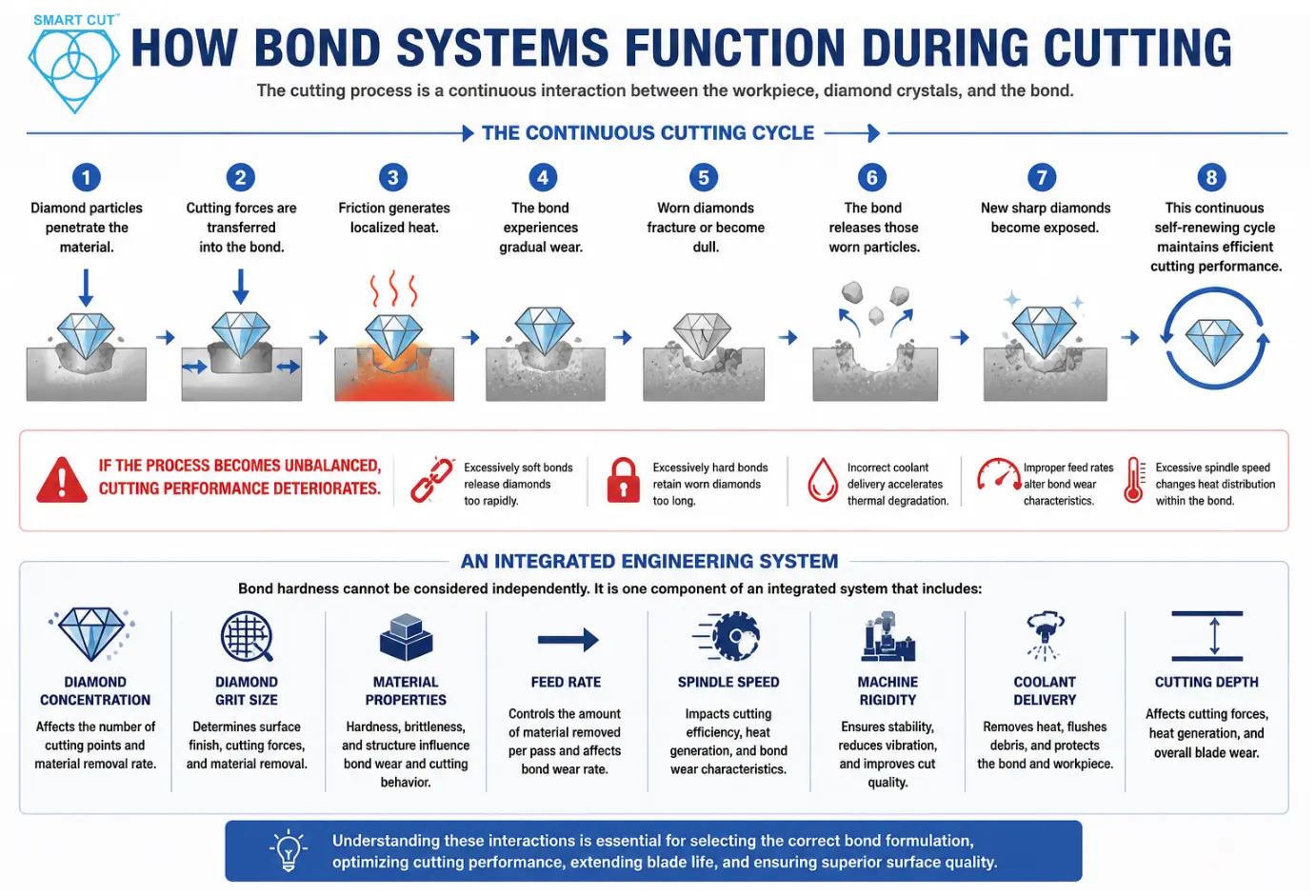
The cutting process can be visualized as a continuously evolving interaction between the workpiece, the diamond crystals, and the bond.
As the blade rotates:
- Diamond particles penetrate the material.
- Cutting forces are transferred into the bond.
- Friction generates localized heat.
- The bond experiences gradual wear.
- Worn diamonds fracture or become dull.
- The bond releases those worn particles.
- New sharp diamonds become exposed.
This continuous self-renewing cycle allows diamond blades to maintain efficient cutting performance over thousands of cutting cycles.
If any part of this process becomes unbalanced, cutting performance begins to deteriorate.
For example:
- Excessively soft bonds release diamonds too rapidly.
- Excessively hard bonds retain worn diamonds too long.
- Incorrect coolant delivery accelerates thermal degradation.
- Improper feed rates alter bond wear characteristics.
- Excessive spindle speed changes heat distribution within the bond.
Bond hardness, therefore, cannot be considered independently from the overall cutting process.
It is one component of an integrated engineering system that includes:
- Diamond concentration
- Diamond grit size
- Material properties
- Feed rate
- Spindle speed
- Machine rigidity
- Coolant delivery
- Cutting depth
Understanding these interactions is essential for selecting the correct bond formulation.
The Microscopic Science Behind Bond Wear
At the microscopic level, diamond cutting is a highly dynamic process involving millions of individual interactions between abrasive particles and the workpiece.
Each exposed diamond crystal acts as a miniature cutting tool.
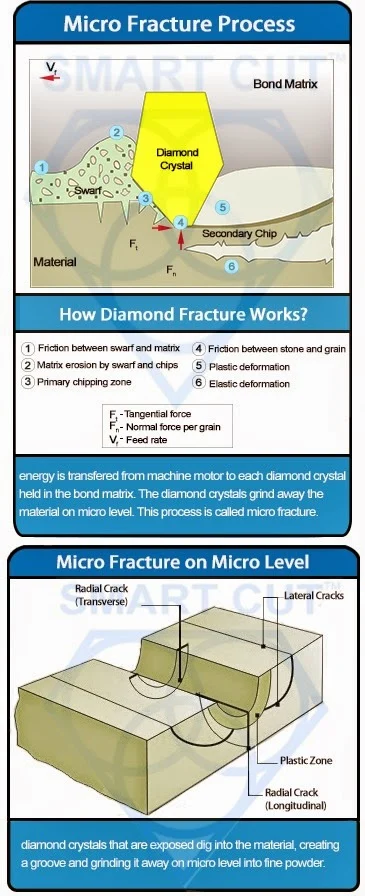
As cutting progresses, every crystal experiences:
- Compressive forces
- Shear forces
- Frictional loading
- Thermal cycling
- Impact stresses
Over time, these forces gradually wear the diamond particle.
Depending on the cutting conditions, several outcomes may occur:
- The diamond develops microscopic wear flats.
- Small fractures expose new sharp cutting edges.
- The crystal eventually becomes dull.
- The bond surrounding the crystal wears away, allowing the worn particle to detach.
Ideally, this sequence occurs in a controlled manner.
A properly engineered bond releases each diamond only after it has contributed its maximum useful cutting life, while simultaneously exposing fresh abrasive particles to maintain efficient cutting action.
This controlled self-sharpening mechanism is one of the defining characteristics of high-performance diamond tooling.
If the bond releases diamonds prematurely, abrasive utilization decreases and blade life is shortened.
Conversely, if the bond retains dull diamonds for too long, the blade begins rubbing instead of cutting, increasing cutting forces, heat generation, glazing, and the risk of workpiece damage.
For this reason, bond hardness is best understood not simply as a measure of strength, but as a carefully engineered mechanism that governs the renewal cycle of the cutting edge.
Bond Hardness vs. Material Hardness
One of the most common misconceptions in precision cutting is that harder materials always require harder diamond bonds. In reality, the relationship between bond hardness and workpiece hardness is far more complex.
The objective of a diamond bond is not simply to resist wear. Instead, it must wear at a controlled rate that continuously exposes fresh diamond particles while providing sufficient support to prevent premature abrasive loss.
Material hardness is only one variable influencing this balance. Other properties—including fracture toughness, abrasiveness, thermal conductivity, microstructure, and cutting forces—often have an equal or greater impact on bond selection.
For example, two materials with similar hardness values may require entirely different bond systems because they wear the blade differently.
Silicon carbide and tungsten carbide are both extremely hard materials, yet their interaction with a diamond blade differs significantly due to differences in fracture behavior and abrasiveness.
Likewise, a relatively softer material containing highly abrasive fillers may require a different bond formulation than a harder but less abrasive engineering ceramic.
Engineers therefore evaluate bond hardness in combination with the material’s complete cutting characteristics rather than hardness alone.
Engineering Factors That Influence Bond Hardness Selection
| Engineering Factor | Typical Bond Trend | Primary Objective |
| Material abrasiveness | Harder bond | Reduce bond wear and increase blade life |
| Material brittleness | Softer bond | Reduce cutting forces and edge chipping |
| Material toughness | Harder bond | Improve diamond support |
| Thermal sensitivity | Softer to medium bond | Minimize heat generation |
| Surface finish requirement | Softer to medium bond | Maintain continuous sharp diamond exposure |
| Dimensional accuracy | Stable, application-specific bond | Maintain consistent cutting forces |
| Production volume | Harder bond for long production runs | Increase tool life while maintaining process stability |
Proper bond selection should always consider the entire cutting system rather than relying on a single material property.
Bond Hardness vs. Diamond Concentration
Bond hardness and diamond concentration work together to determine how cutting forces are distributed across the blade.
Diamond concentration refers to the amount of diamond abrasive contained within a given volume of bond material.
Although these two parameters are often discussed independently, they function as a single engineering system.
Higher diamond concentrations generally distribute cutting loads across a greater number of abrasive particles. This can reduce the mechanical load experienced by each individual crystal while improving dimensional stability during long cutting cycles.
Lower concentrations increase the load carried by each exposed diamond particle, often resulting in more aggressive cutting but potentially accelerating abrasive wear.
The bond must be engineered to complement the selected concentration.
For example:
- A very hard bond combined with extremely high diamond concentration may retain worn abrasive particles too long, increasing rubbing, glazing, and heat generation.
- Conversely, a soft bond paired with low diamond concentration may release useful diamonds prematurely, shortening blade life.
Successful blade design balances these variables so that diamond exposure remains stable throughout the cutting cycle.
Bond Hardness vs. Diamond Grit Size
Diamond grit size influences how individual abrasive particles engage the material, while bond hardness determines how effectively those particles are supported during cutting.
Large diamond particles penetrate deeper into the workpiece and generally remove material more aggressively.
However, they also experience greater mechanical loading and therefore require sufficient bond support to prevent premature pull-out.
Fine diamond particles produce smaller cutting depths and distribute cutting forces across more abrasive contacts.
Because of this, fine-grit blades typically rely on controlled bond wear to continuously expose fresh cutting edges while maintaining excellent surface quality.
The interaction between grit size and bond hardness directly affects:
- Material removal rate
- Surface finish
- Edge chipping
- Cutting forces
- Blade wear characteristics
Neither parameter should be selected independently.
The optimum combination depends on the workpiece material, required surface finish, dimensional tolerances, and production objectives.
Bond Hardness vs. Feed Rate
Feed rate determines how rapidly the blade enters the material and directly influences the forces acting on both the diamonds and the bond.
Increasing the feed rate increases:
- Mechanical loading
- Contact pressure
- Friction
- Heat generation
- Bond stress
If feed rates exceed the capability of the selected bond, several problems may occur:
- Premature bond wear
- Diamond pull-out
- Increased edge chipping
- Blade deflection
- Reduced dimensional accuracy
Conversely, excessively slow feed rates may cause the blade to rub rather than cut efficiently.
This often increases:
- Heat generation
- Bond glazing
- Reduced cutting efficiency
- Surface damage
For this reason, feed rate optimization should always be considered alongside bond selection.
A properly selected bond maintains stable diamond exposure across the intended feed-rate range while minimizing unnecessary wear.
Bond Hardness vs. Spindle Speed
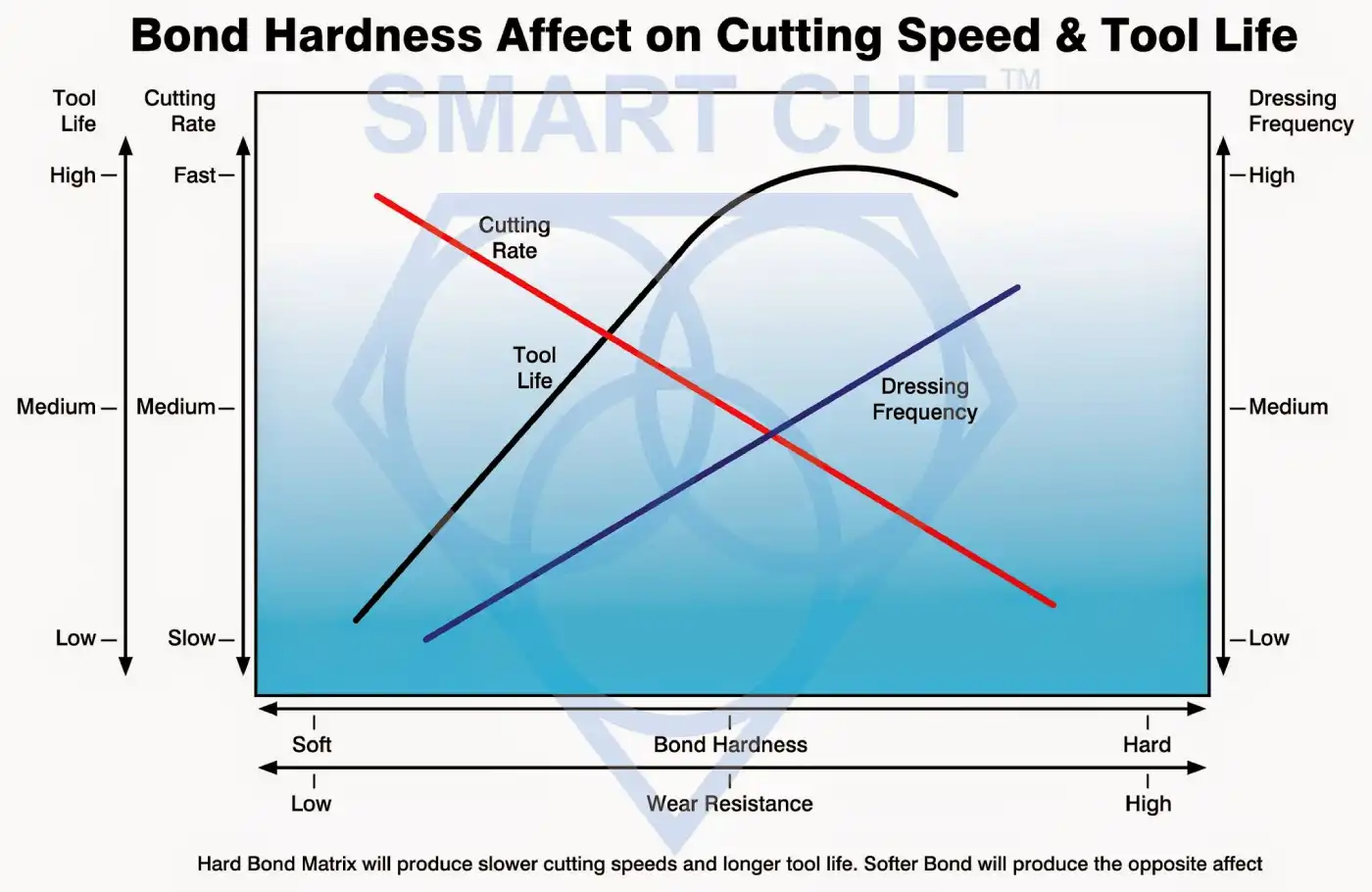
Spindle speed influences the frequency at which diamond particles engage the material and therefore affects both bond wear and heat generation.
Higher spindle speeds generally increase the number of abrasive contacts occurring each second.
Depending on the application, this may:
- Improve surface finish
- Reduce chip thickness
- Increase frictional heating
- Accelerate bond wear
- Increase coolant demand
Lower spindle speeds reduce cutting frequency but may increase mechanical loading per abrasive particle.
Neither extremely high nor extremely low spindle speeds guarantee improved performance.
Instead, spindle speed should complement the bond formulation, diamond grit size, coolant system, and workpiece material.
Selecting the correct combination helps maintain stable cutting conditions while preserving blade life.
Bond Hardness vs. Coolant Performance
Although bond hardness primarily governs diamond retention, coolant performance strongly influences how the bond behaves during cutting.
Effective coolant systems perform several critical functions:
- Remove heat from the cutting interface
- Reduce friction
- Flush abrasive debris
- Prevent bond loading
- Stabilize cutting temperatures
Insufficient cooling increases thermal loading within the bond.
As temperatures rise, some bond systems may experience:
- Accelerated wear
- Reduced diamond retention
- Thermal softening
- Increased glazing
- Lower cutting efficiency
Conversely, properly delivered coolant helps maintain predictable bond wear while preserving consistent cutting performance.
Bond selection and coolant design should therefore be treated as complementary engineering variables rather than independent process settings.
Bond Hardness vs. Material Removal Rate
Material removal rate is frequently used as a measure of production efficiency.
However, increasing the removal rate without considering bond characteristics often leads to reduced blade life and poorer cut quality.
Aggressive cutting conditions increase:
- Mechanical stresses
- Friction
- Thermal loading
- Diamond wear
- Bond erosion
The bond must therefore be capable of supporting higher cutting forces while still maintaining controlled abrasive renewal.
Applications emphasizing productivity may benefit from different bond formulations than applications prioritizing:
- Surface integrity
- Edge quality
- Minimal subsurface damage
- Precision dimensional control
Finding the correct balance between productivity and blade longevity is one of the primary objectives of bond engineering.
Bond Hardness vs. Blade Life
Blade life is influenced by much more than diamond quality.
The rate at which the bond wears determines how efficiently diamond particles are utilized before replacement.
A bond that wears too quickly may expose fresh diamonds continuously but sacrifice useful abrasive particles before their cutting potential has been fully utilized.
This typically results in:
- Higher consumable costs
- Reduced blade life
- Increased tool changes
Conversely, a bond that wears too slowly may hold worn diamonds beyond their effective cutting life.
Common symptoms include:
- Blade glazing
- Increased cutting forces
- Excessive heat generation
- Reduced cutting speed
- Poor surface finish
Maximum blade life is achieved when bond wear closely matches diamond wear, allowing each abrasive particle to remain productive until it reaches the end of its useful life before being replaced by a new cutting edge.
This principle, known as controlled self-sharpening, is one of the most important objectives in diamond blade design.
Surface Finish, Edge Quality & Subsurface Damage
Bond hardness plays a direct role in determining the condition of the surface (surface finish) after cutting.
Stable diamond exposure promotes uniform cutting action and minimizes force fluctuations throughout the cut.
When bond wear becomes unstable, cutting conditions may change rapidly, leading to:
- Edge chipping
- Surface tearing
- Blade vibration
- Dimensional variation
- Increased polishing requirements
For brittle materials such as silicon, sapphire, quartz, and advanced ceramics, maintaining stable bond behavior is particularly important because even small fluctuations in cutting forces can initiate microcracks beneath the finished surface.
Reducing subsurface damage often depends as much on selecting the correct bond formulation as it does on optimizing feed rate, spindle speed, coolant delivery, and machine rigidity.
Properly engineered bond systems help maintain predictable cutting forces, preserve surface integrity, and improve the consistency required for precision inspection, failure analysis, and advanced material preparation.
Material Selection Guide: Recommended Bond Hardness by Material Type
Selecting the proper bond hardness begins with understanding how different materials interact with the diamond abrasive during cutting. Material hardness alone should never determine bond selection. Engineers should also consider abrasiveness, fracture toughness, thermal conductivity, cutting depth, and required surface finish.
The following table provides general engineering recommendations. Final bond selection should always be optimized according to the specific application, machine configuration, blade geometry, and production requirements. Material-Based Starting Points for Diamond Bond Selection
| Material or Material Group | Typical Bond Selection Trend | Engineering Considerations |
| Silicon | More readily self-sharpening resin or hybrid bond for low-damage sectioning | Helps maintain low cutting forces and reduce edge chipping and subsurface damage. Deeper cuts and production applications may require a more wear-resistant formulation. |
| Silicon Carbide | Wear-resistant metal or hybrid bond with sufficient self-sharpening capability | SiC is extremely abrasive and can cause rapid bond wear. Excessively hard bonds may glaze if the cutting load is too low. |
| Sapphire | Self-sharpening resin, hybrid, or application-specific metal bond | Bond selection must balance edge quality, cutting force, blade life, and the risk of crack propagation. |
| Quartz and Fused Silica | Resin, hybrid, or controlled-wear metal bond | Selection depends on thickness, cut depth, thermal sensitivity, edge-quality requirements, and production volume. |
| Soda-Lime and Borosilicate Glass | Controlled-wear metal, resin, hybrid, or electroplated system depending on blade construction | Glass type, thickness, cut radius, feed rate, coolant delivery, and required edge quality are more important than hardness alone. |
| Alumina Ceramic | Balanced medium-wear resin, hybrid, or metal bond | Higher-purity and denser alumina can increase blade wear and cutting forces. The bond must balance dimensional stability with self-sharpening. |
| Zirconia Ceramic | Self-sharpening to moderately wear-resistant bond | Zirconia’s toughness can increase cutting forces. An excessively hard bond may glaze or increase edge damage. |
| Silicon Nitride | Balanced hybrid or metal bond | High fracture toughness and hardness require strong diamond support without sacrificing cutting sharpness. |
| Tungsten Carbide | Wear-resistant resin, hybrid, metal, or vitrified diamond bond | Carbide grade, cobalt content, stock-removal rate, surface-finish requirements, and cooling conditions determine the bond system. |
| Boron Carbide | Highly wear-resistant bond with controlled diamond exposure | Extreme abrasiveness can cause rapid bond erosion. Process qualification is essential to avoid glazing. |
| PCD Cutting-Tool Material | Application-specific resin, vitrified, hybrid, or metal-bond diamond wheel | Roughing and finishing often require different bond, grit, concentration, and structure combinations. |
| PCBN Cutting-Tool Material | Specialized diamond grinding system | PCBN grinding requires application-specific wheel design. It should not be grouped simply as “CBN.” |
| Carbon-Fiber Composites | Controlled-wear metal, resin, hybrid, or electroplated diamond system | Fiber orientation, resin system, laminate thickness, delamination limits, and edge-fraying requirements affect the specification. |
| G10 and FR4 Laminates | Wear-resistant diamond bond | Glass reinforcement is highly abrasive. Bond selection must balance blade life, heat generation, fiber breakout, and resin loading. |
| Ceramic Matrix Composites | Application-specific wear-resistant hybrid or metal bond | Performance depends on the ceramic matrix, reinforcement type, porosity, and machining direction. |
| Mixed Electronic Packages | Application-specific resin or hybrid bond after material review | Packages may contain silicon, ceramics, copper, solder, molding compounds, and lead frames. No single bond recommendation applies to all packages. |
| Optical Crystals | Material-specific resin, hybrid, or controlled-wear metal bond | Crystal composition, cleavage behavior, thermal sensitivity, orientation, and allowable subsurface damage must be evaluated individually. |
Engineering Note: These recommendations are intended as starting points. Final optimization should be validated through application-specific testing.
Engineering Decision Tree for Bond Selection
The following decision process can help narrow bond selection before optimizing grit size and cutting parameters.
Step 1 – Identify the Material
- Brittle material → Proceed to Step 2
- Ductile material → Proceed to Step 3
Step 2 – Brittle Materials
If preserving edge quality is the highest priority:
→ Select a bond that promotes continuous self-sharpening while minimizing cutting forces.
Examples:
- Silicon
- Sapphire
- Glass
- Optical crystals
- Technical ceramics
Step 3 – Abrasive Materials
If the material causes rapid bond wear:
Select a more wear-resistant bond capable of maintaining dimensional stability.
Examples:
- Silicon carbide
- Tungsten carbide
- Boron carbide
- Ceramic composites
Step 4 – High Production Applications
If blade life is more important than maximum cutting speed:
Increase bond durability while optimizing feed rate and coolant delivery.
Step 5 – Precision Laboratory Applications
If sample integrity is critical:
Prioritize lower cutting forces over maximum material removal rate.
Common Engineering Mistakes When Selecting Bond Hardness
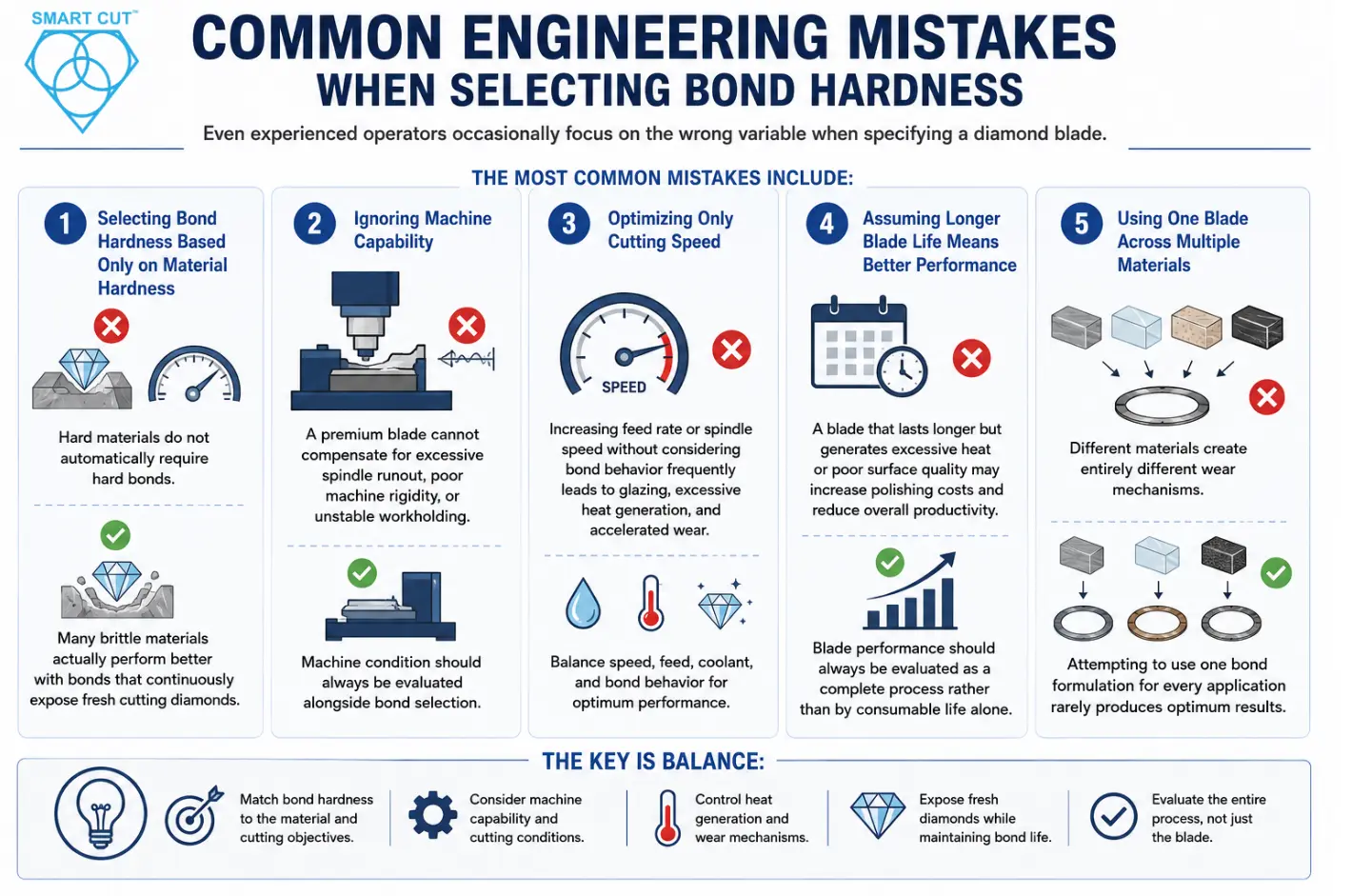
Even experienced operators occasionally focus on the wrong variable when specifying a diamond blade.
The most common mistakes include:
Selecting Bond Hardness Based Only on Material Hardness
Hard materials do not automatically require hard bonds.
Many brittle materials actually perform better with bonds that continuously expose fresh cutting diamonds.
Ignoring Machine Capability
A premium blade cannot compensate for excessive spindle runout, poor machine rigidity, or unstable workholding.
Machine condition should always be evaluated alongside bond selection.
Optimizing Only Cutting Speed
Increasing feed rate or spindle speed without considering bond behavior frequently leads to glazing, excessive heat generation, and accelerated wear.
Assuming Longer Blade Life Means Better Performance
A blade that lasts longer but generates excessive heat or poor surface quality may increase polishing costs and reduce overall productivity.
Blade performance should always be evaluated as a complete process rather than by consumable life alone.
Using One Blade Across Multiple Materials
Different materials create entirely different wear mechanisms.
Attempting to use one bond formulation for every application rarely produces optimum results.
Failure Analysis: Diagnosing Bond-Related Problems
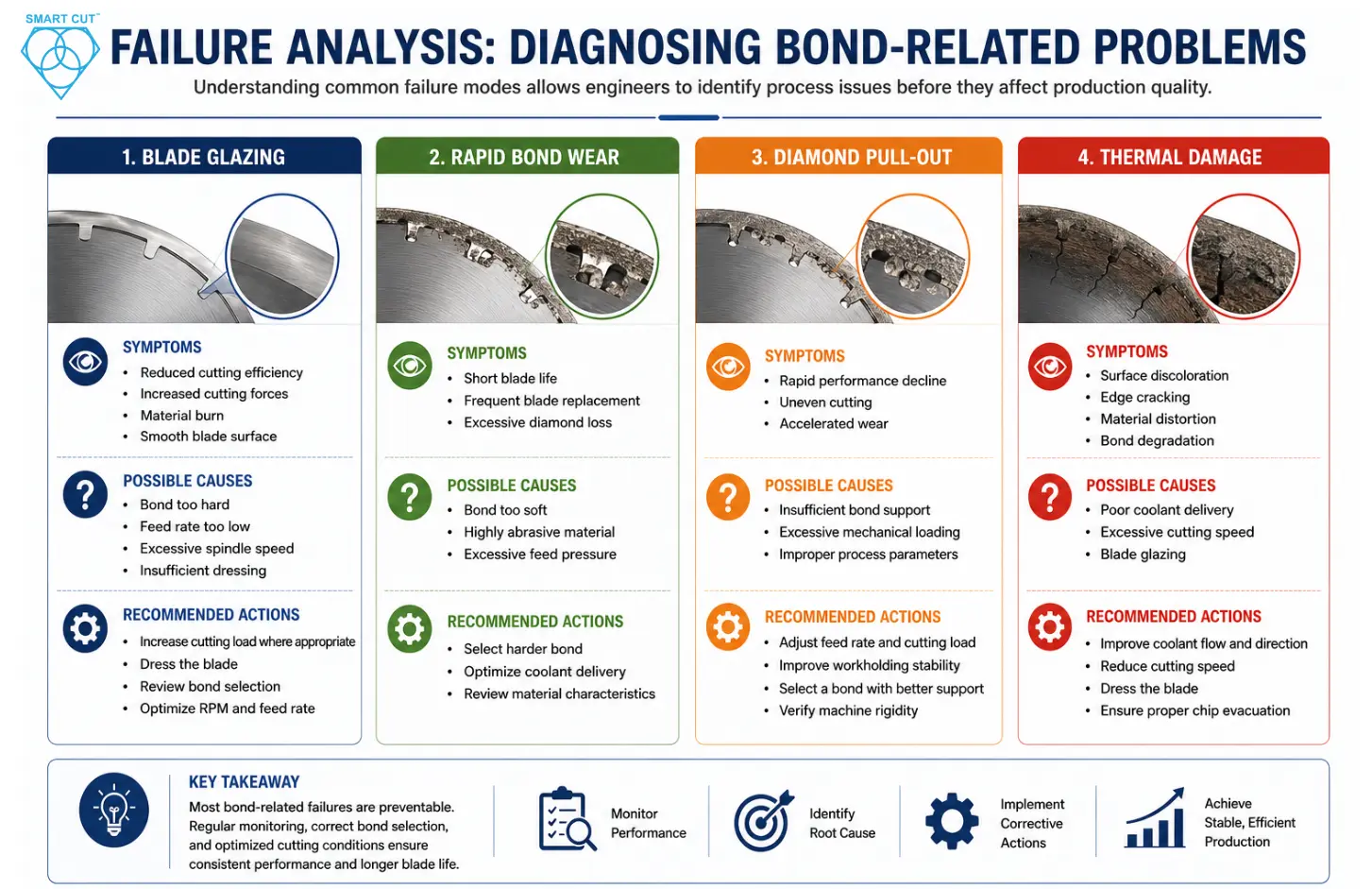
Understanding common failure modes allows engineers to identify process issues before they affect production quality.
Blade Glazing
Symptoms
- Reduced cutting efficiency
- Increased cutting forces
- Material burn
- Smooth blade surface
Possible Causes
- Bond too hard
- Feed rate too low
- Excessive spindle speed
- Insufficient dressing
Recommended Actions
- Increase cutting load where appropriate
- Dress the blade
- Review bond selection
- Optimize RPM and feed rate
Rapid Bond Wear
Symptoms
- Short blade life
- Frequent blade replacement
- Excessive diamond loss
Possible Causes
- Bond too soft
- Highly abrasive material
- Excessive feed pressure
Recommended Actions
- Select harder bond
- Optimize coolant delivery
- Review material characteristics
Diamond Pull-Out
Symptoms
- Rapid performance decline
- Uneven cutting
- Accelerated wear
Possible Causes
- Insufficient bond support
- Excessive mechanical loading
- Improper process parameters
Thermal Damage
Symptoms
- Surface discoloration
- Edge cracking
- Material distortion
- Bond degradation
Possible Causes
- Poor coolant delivery
- Excessive cutting speed
- Blade glazing
Engineering Case Study 1
Precision Sectioning of Monocrystalline Silicon Wafers
Representative Engineering Example
The following example represents a typical precision sectioning application used for semiconductor failure analysis. Actual blade specifications and operating parameters should always be optimized for the specific material, machine, and quality requirements.
| Parameter | Representative Value |
| Application | Failure Analysis / SEM Sample Preparation |
| Material | Monocrystalline Silicon |
| Material Thickness | 725 µm (0.029″) |
| Blade Type | Resin Bond Diamond Wafering Blade |
| Blade Diameter | 4″ (102 mm) |
| Arbor Size | 1/2″ (12.7 mm) |
| Blade Thickness (Kerf) | 0.015″ (0.38 mm) |
| Diamond Grit Size | 170/200 Mesh (75 to 90 µm) |
| Bond Type | Resin Bond |
| Bond Hardness | Medium |
| Diamond Concentration | Standard |
| Diamond Depth | Full Depth |
| Spindle Speed | 2,200 RPM |
| Feed Rate | 0.25 mm/sec |
| Coolant | Deionized (DI) Water |
Challenge
An electronics failure analysis laboratory experienced inconsistent edge quality while sectioning monocrystalline silicon wafers for SEM inspection. Although the blade continued removing material efficiently, microscopic examination revealed increasing edge chipping, greater subsurface damage, and inconsistent polishing times between samples.
Engineering Evaluation
Machine geometry, spindle runout, coolant delivery, blade alignment, spindle speed, and feed rate were verified and found to be within specification. Process evaluation determined that the resin bond retained worn diamond particles longer than optimal for this brittle material. As the diamonds developed wear flats, cutting forces gradually increased, causing greater friction, localized heat generation, and reduced cutting efficiency.
Process Optimization
The blade was replaced with an otherwise identical resin bond diamond blade using the same diameter, kerf, diamond grit size, concentration, spindle speed, feed rate, and coolant conditions. The only significant change was a softer bond formulation that promoted more controlled self-sharpening and continuous exposure of fresh diamond particles.
Results
Performance Characteristic | Original Bond | Optimized Bond |
Cutting Forces | Increased during extended cutting | Stable throughout production |
Edge Chipping | Moderate | Minimal |
Surface Integrity | Variable | Consistent |
Polishing Requirements | High | Reduced |
Blade Glazing | Occasional | Minimal |
Process Repeatability | Moderate | Excellent |
Engineering Lesson
This application demonstrates that bond hardness can significantly influence sectioning performance, even when blade geometry, diamond grit size, spindle speed, feed rate, and coolant conditions remain unchanged. Selecting a bond that releases worn diamond particles at the appropriate rate maintains a sharp cutting edge, reduces friction and heat generation, minimizes edge chipping, and improves process consistency.
Engineering Case Study 2
Precision Cutting of High-Purity Alumina Ceramic
Representative Engineering Example
The following example represents a typical production application. Actual blade specifications and operating parameters should always be optimized for the material, equipment, and quality requirements.
Parameter | Representative Value |
Application | Precision Cut-Off |
Material | 99.5% Alumina (Al₂O₃) |
Material Thickness | 8 mm (0.315″) |
Material Shape | Flat Plate |
Blade Type | Sintered (Metal Bond) Diamond Cut-Off Blade |
Blade Diameter | 8″ (203 mm) |
Arbor Size | 1-1/4″ (31.75 mm) |
Blade Thickness | 0.040″ (1.0 mm) |
Diamond Grit Size | 100/120 Mesh |
Bond Type | Metal Bond |
Bond Hardness | Medium |
Diamond Concentration | High |
Diamond Depth | Full Depth |
Spindle Speed | 3,200 RPM |
Feed Rate | 0.75 mm/sec |
Coolant | Water-Soluble Coolant |
Challenge
A manufacturer producing high-purity alumina components experienced shorter than expected blade life during production cutting. Although dimensional accuracy and edge quality remained acceptable, the blade required dressing and replacement more frequently than anticipated, increasing tooling costs and machine downtime.
Engineering Evaluation
Machine alignment, spindle runout, coolant delivery, and operating parameters were verified and found to be within specification. Examination of the blade showed accelerated bond wear while many diamond particles remained capable of cutting. The bond was wearing faster than necessary for the abrasiveness and cutting conditions of the application, resulting in premature loss of usable diamond abrasive.
Process Optimization
The blade was replaced with an otherwise identical specification using the same diameter, thickness, diamond grit size, concentration, spindle speed, feed rate, and coolant conditions. The only significant change was a more wear-resistant metal bond formulation designed to improve diamond retention while maintaining adequate self-sharpening.
Results
Performance Characteristic | Original Bond | Optimized Bond |
Bond Wear | Accelerated | Controlled |
Diamond Retention | Reduced | Improved |
Blade Life | Shorter than expected | Extended |
Edge Quality | Acceptable | Consistent |
Dressing Frequency | Frequent | Reduced |
Process Stability | Moderate | Improved |
Engineering Lesson
Selecting a harder bond does not simply increase blade life. The objective is to match the bond wear rate to the diamond wear rate so each diamond particle remains productive throughout its useful cutting life. When properly balanced, bond wear improves consumable utilization, reduces machine downtime, and maintains consistent cutting performance without sacrificing cut quality.
Engineering Case Study 3
Precision Cutting of Tungsten Carbide Components
Representative Engineering Example
The following example represents a typical precision cutting application. Actual blade specifications and operating parameters should always be optimized for the carbide grade, cobalt content, machine configuration, and production requirements.
Parameter | Representative Value |
Application | Precision Cut-Off |
Material | Tungsten Carbide (10% Cobalt Binder) |
Material Thickness | 12 mm (0.472″) |
Blade Type | Resin Bond Diamond Cut-Off Blade |
Blade Diameter | 8″ (203 mm) |
Arbor Size | 1-1/4″ (31.75 mm) |
Blade Thickness (Kerf) | 0.045″ (1.14 mm) |
Diamond Grit Size | 100 Mesh |
Bond Type | Resin Bond |
Diamond Concentration | 100 |
Coolant | Water-Soluble Synthetic Coolant |
Challenge
A manufacturer producing precision tungsten carbide components experienced inconsistent blade life during continuous production. While cut quality remained acceptable, blade performance gradually declined during extended cutting cycles, requiring more frequent blade changes than expected.
Engineering Evaluation
Inspection confirmed that spindle alignment, coolant delivery, machine rigidity, and operating parameters were within specification. Examination of the blade indicated that the bond formulation was wearing faster than required for the material and operating conditions. As a result, usable diamond particles were released before their full cutting life had been utilized, reducing overall blade life and increasing tooling costs.
Process Optimization
The blade was replaced with an otherwise identical specification using the same diameter, kerf, diamond grit size, diamond concentration, coolant, and operating parameters. The only significant change was a more wear-resistant resin bond formulation that improved diamond retention while maintaining efficient self-sharpening throughout the cutting cycle.
Results
Performance Characteristic | Original Bond | Optimized Bond |
Bond Wear | Accelerated | Controlled |
Diamond Utilization | Reduced | Improved |
Blade Life | Shorter than expected | Extended |
Cutting Performance | Declined during long production runs | Consistent throughout production |
Surface Finish | Consistent | Consistent |
Process Stability | Good | Improved |
Engineering Lesson
Maximum blade life is achieved by matching the bond wear rate to the diamond wear rate. In this application, selecting a more wear-resistant resin bond allowed each diamond particle to remain productive longer before being released, improving consumable utilization and extending blade life without sacrificing cutting performance or surface quality.
Recommended UKAM Solutions
Selecting the proper bond formulation requires balancing numerous process variables rather than relying on material hardness alone.
UKAM offers a broad range of diamond tooling engineered for specific applications, including:
- Resin Bond Diamond Blades for precision wafering and low-damage sectioning
- Metal Bond Diamond Blades for abrasive and high-wear materials
- Hybrid Bond Diamond Blades for balancing productivity with surface quality
- Precision Wafering Blades for semiconductor, ceramics, and advanced materials
- Precision Cutting Saws / Systems is designed to maximize blade performance through stable machine geometry
For complex applications involving multiple variables, UKAM’s applications engineering team can assist with:
- Bond selection
- Diamond concentration recommendations
- Grit size optimization
- Feed rate guidance
- RPM optimization
- Coolant strategy
- Process troubleshooting
Frequently Asked Questions
Diamond bond hardness describes the bond’s resistance to wear and its ability to retain diamond abrasive particles during cutting.
No. Material hardness is only one factor. Abrasiveness, fracture toughness, thermal behavior, and cutting objectives are equally important.
It influences blade life, cutting efficiency, surface finish, cutting forces, and diamond exposure.
The blade may glaze, generate excessive heat, and lose cutting efficiency because worn diamonds remain exposed too long.
Useful diamonds may be released prematurely, shortening blade life and increasing consumable costs.
Properly matched bond wear allows maximum utilization of each diamond particle, extending blade performance while maintaining cutting efficiency.
Yes. Coolant helps regulate temperature, reduce friction, and stabilize bond wear throughout the cutting process.
Yes. Larger diamond particles generally require different bond support characteristics than finer abrasives.
Yes. Unstable cutting forces associated with improper bond selection may contribute to edge damage in brittle materials.
Silicon, sapphire, glass, optical crystals, and many precision sectioning applications often benefit from bonds that promote continuous self-sharpening.
Highly abrasive materials such as silicon carbide, tungsten carbide, and boron carbide often require more wear-resistant bond formulations.
Absolutely. Spindle accuracy, machine rigidity, coolant delivery, and workholding all influence how the bond behaves during cutting.
No. Bond hardness should always be evaluated together with grit size, diamond concentration, feed rate, spindle speed, coolant, and machine capability.
UKAM’s applications engineers can recommend bond systems based on your material, equipment, production objectives, and quality requirements.
Conclusion
Diamond bond hardness is one of the most influential variables governing the performance of a precision cutting tool. While diamond abrasive performs the actual cutting, the bond determines how efficiently those abrasive particles are supported, renewed, and utilized throughout the cutting process.
Selecting the proper bond is not simply a question of choosing a soft or hard formulation. Successful bond engineering requires balancing material properties, diamond concentration, grit size, feed rate, spindle speed, coolant performance, machine rigidity, and production objectives into a stable and repeatable cutting process.
For applications ranging from semiconductor wafering and metallographic sectioning to technical ceramics, carbides, composites, and advanced engineering materials, optimizing bond hardness can improve surface integrity, reduce subsurface damage, extend blade life, and lower total operating costs.
Rather than treating bond hardness as an isolated specification, engineers should view it as a critical component of the entire precision cutting system.
When combined with appropriate machine settings and application-specific process optimization, the correct bond formulation helps maximize cutting efficiency while preserving the dimensional accuracy and surface quality demanded by today’s advanced manufacturing industries.
Trusted by Tens of Thousands of Manufacturers, Laboratories,
Research Institutions Worldwide Since 1990
American Based Manufacturer
Established in 1990
Custom manufacturing
RELATED ARTICLES

Brian is an experienced professional in the field of precision cutting tools, with over 27 years of experience in technical support. Over the years, he has helped engineers, manufacturers, researchers, and contractors find the right solutions for working with advanced and hard-to-cut materials. He’s passionate about bridging technical knowledge with real-world applications to improve efficiency and accuracy.
As an author, Brian Farberov writes extensively on diamond tool design, application engineering, return on investment strategies, and process optimization, combining technical depth with a strong understanding of customer needs and market dynamics.