







Skip to navigation Skip to main content
Home > Blog > Why Operator Skill Matters in Diamond Blade Cutting
Diamond Blade Articles, blog

Why Operator Skill Matters in Diamond Blade Cutting

Why Operator Skill Matters in Diamond Blade Cutting

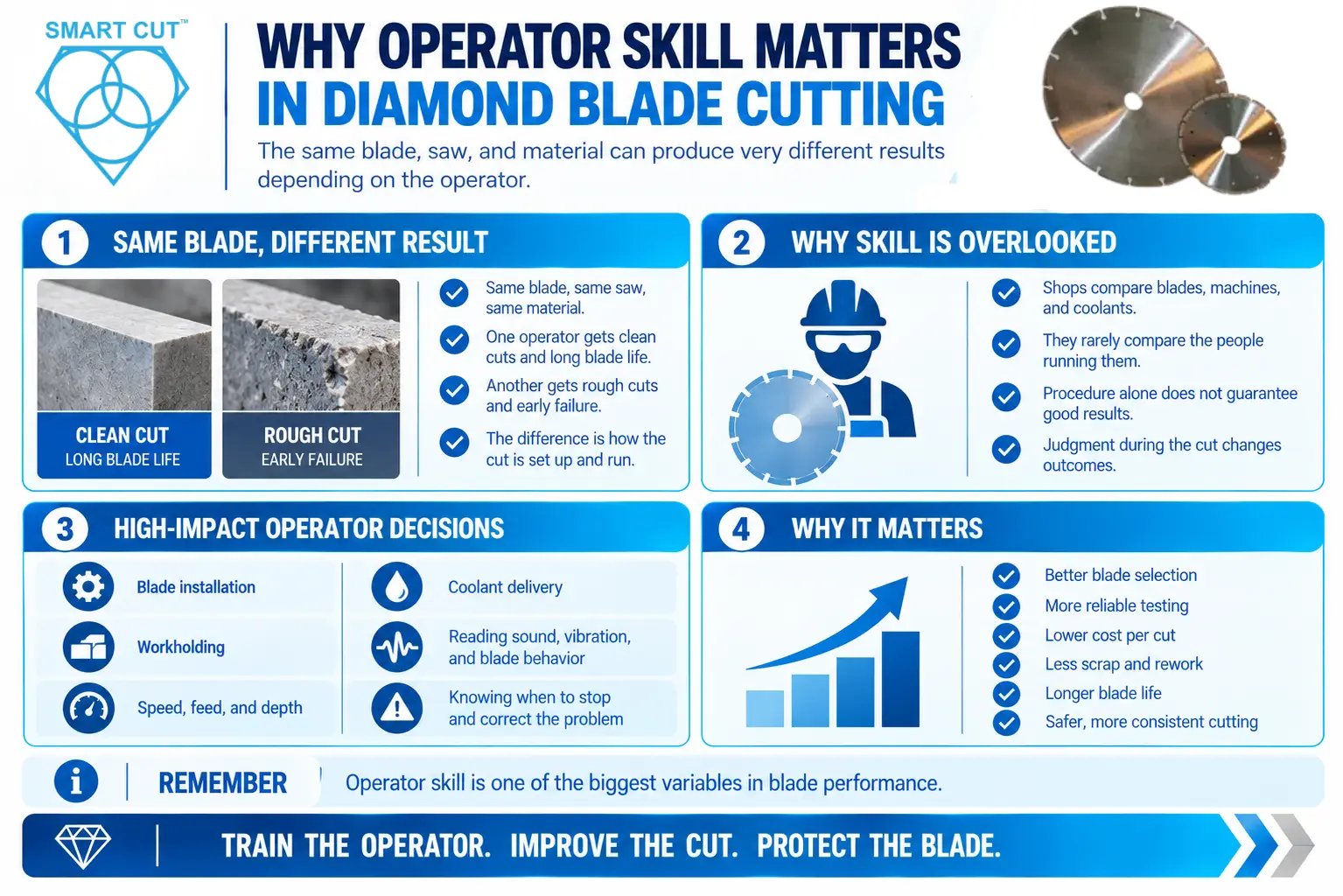
Two operators load the same blade on the same saw and cut the same material. One gets a clean cut and long blade life. The other gets a rough cut and a blade that dies early. Both followed “the procedure.” So what changed?

The operator changed. Operator skill is the most overlooked variable in diamond blade performance. Shops compare blades, compare machines, and compare coolants. They rarely compare the people running them.

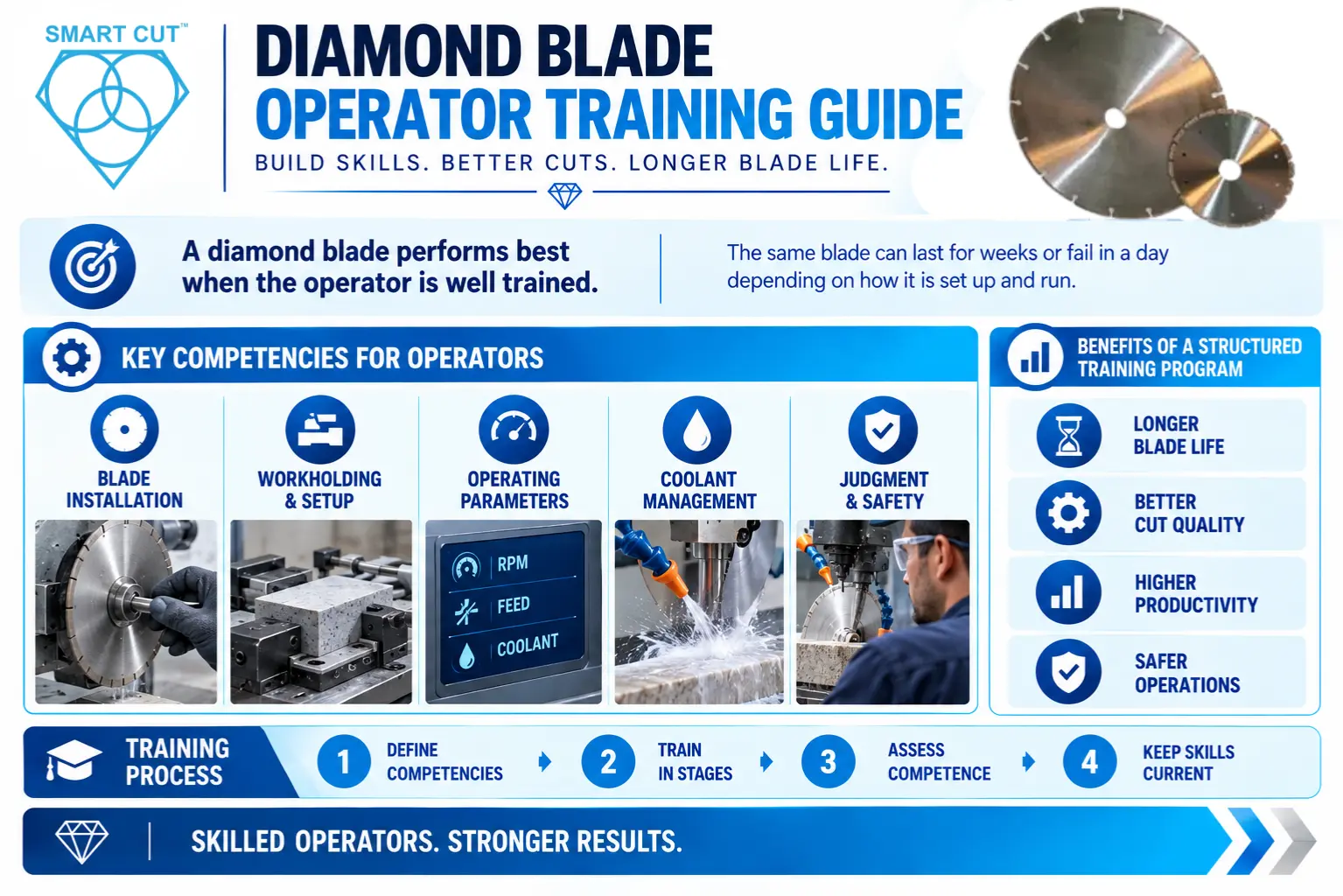
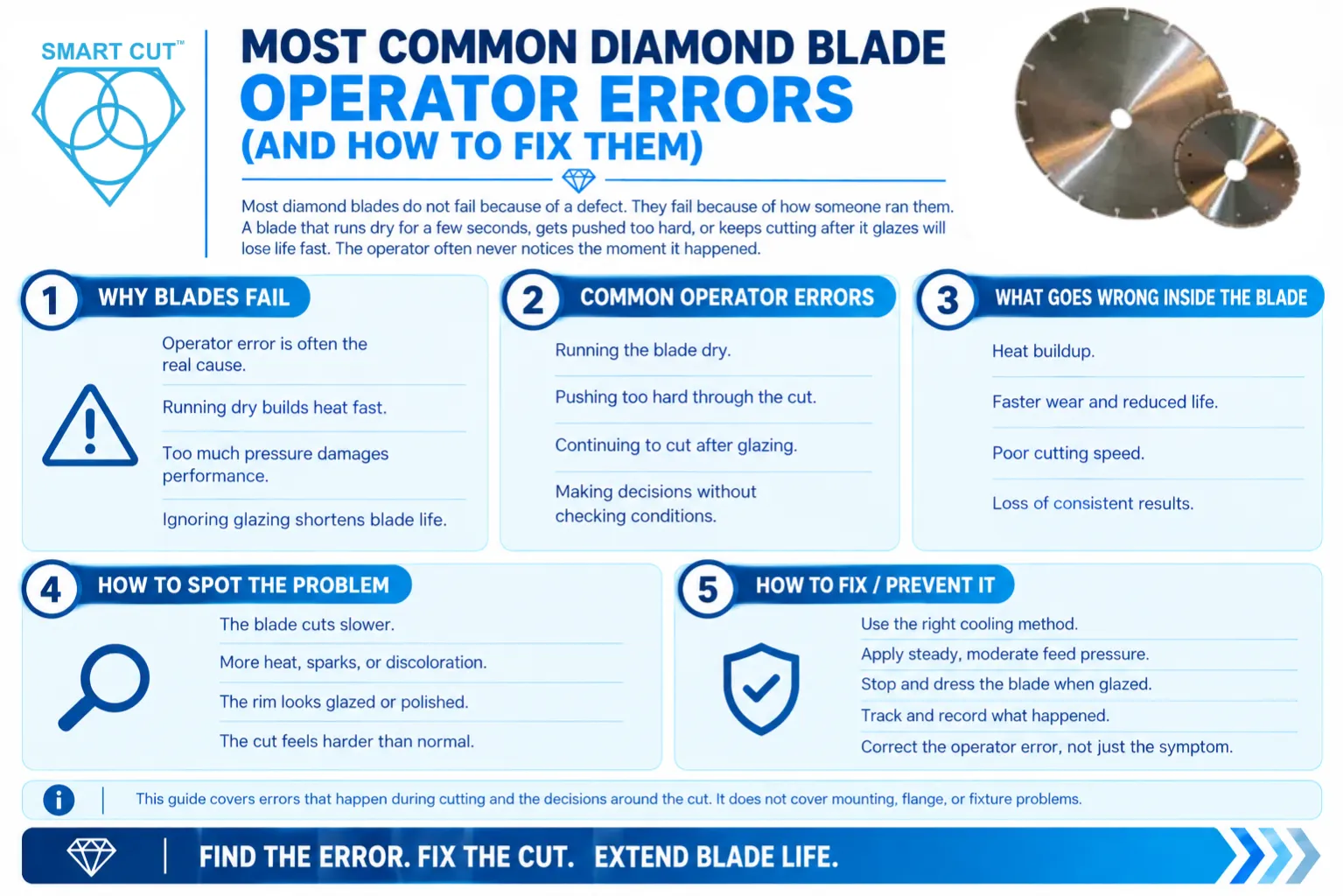
This article explains why operator skill matters, which decisions carry the most influence, and what that means for blade selection, testing, and cost. It focuses on the why. For the curriculum that builds skill, see our operator training guide. For a list of frequent mistakes, see our operator-errors article. For setup-specific damage, see our setup-mistakes article.

Trusted by Tens of Thousands of Manufacturers, Laboratories Research Institutions Worldwide Since 1990

American Based Manufacturer

Established in 1990

Custom manufacturing

The Problem: Same Blade, Different Results

The Problem: Same Blade, Different Results

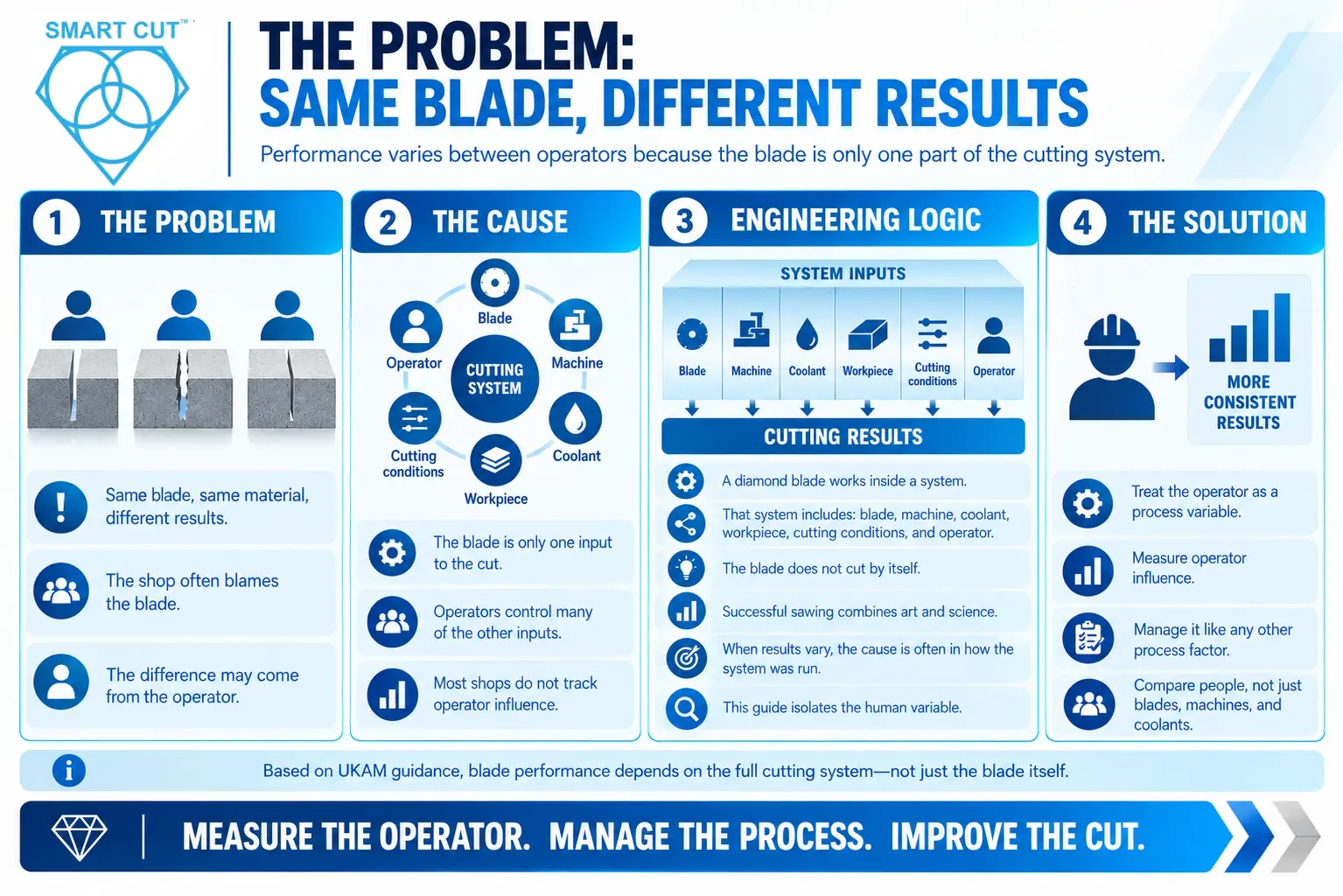
Problem: Blade performance varies between operators, and the shop blames the blade.

Cause: The blade is only one input to the cut. The operator controls many of the others, and nobody tracks that influence.

Engineering logic: A diamond blade does not cut by itself. It works inside a system made of the blade, the machine, the coolant, the workpiece, the cutting conditions, and the person who sets them. UKAM’s usage guidance makes this point clear: the blade is only one factor in the cutting operation, and successful sawing combines art and science. You can read the full guidance in our article on how to properly use precision diamond and CBN blades.

When results vary, the cause often sits in how the system was run. Our article on why the same diamond blade performs differently covers the wider set of causes. This article isolates the human one.

Solution: Treat the operator as a process variable, measure it, and manage it like any other.

Where the Operator Controls the Outcome

Where the Operator Controls the Outcome

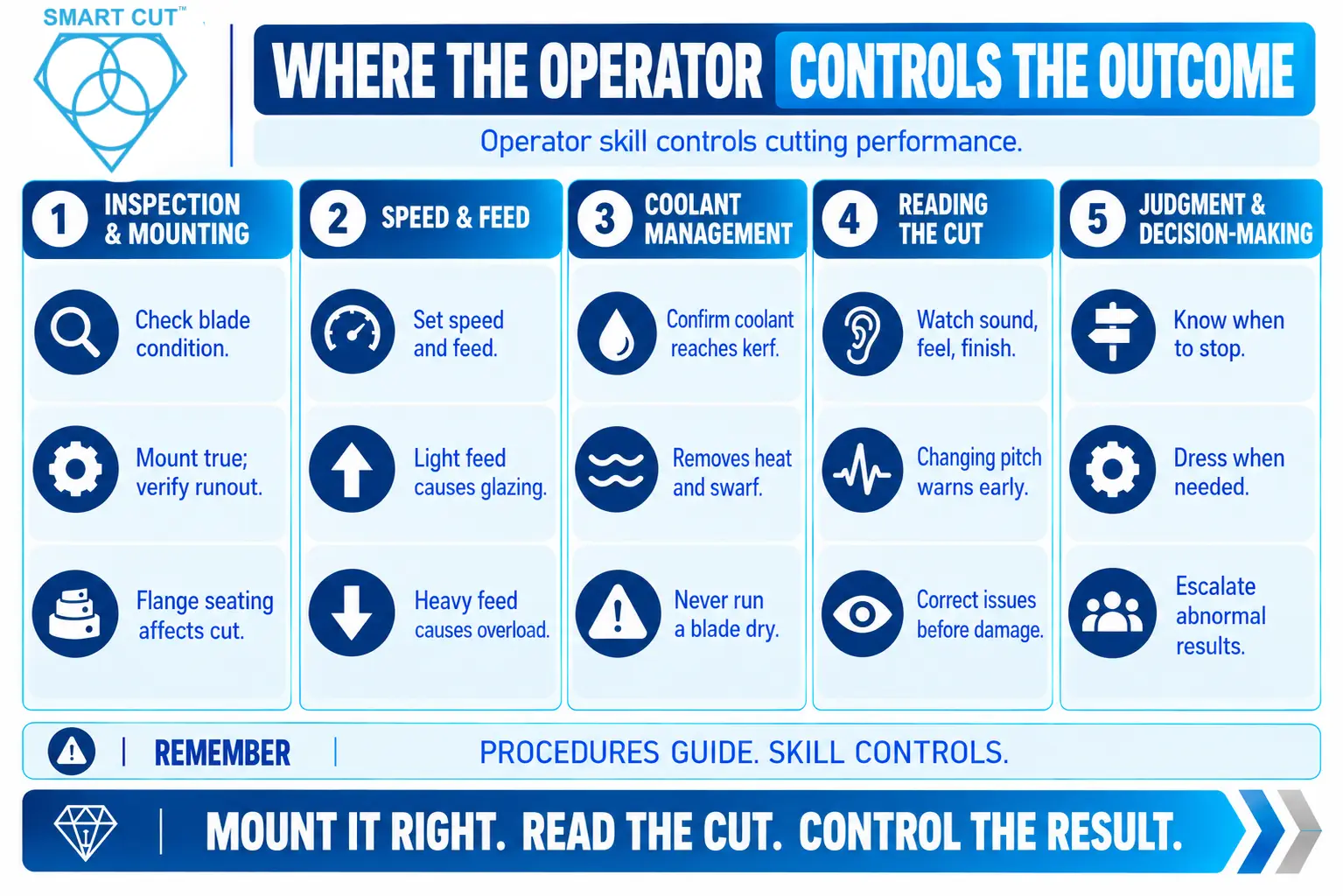
An operator influences the cut at every stage. Some decisions are obvious. Others happen so quickly that nobody notices them. The following sections walk through the main influence points.

Inspection and Mounting

The operator decides whether a blade is fit to run. They also decide how it sits on the machine.

A rotating blade must run true. Any runout makes the rim contact the material unevenly. Some sections then carry more load than others. Wear becomes uneven, the cut drifts, and the blade can chip or crack. The operator controls this through flange condition, seating, orientation, and the runout check after mounting.

A skilled operator treats mounting as part of the cut. An unskilled operator treats it as a chore before the cut.

Speed and Feed

The operator sets or adjusts the surface speed and the feed. These two settings determine how each diamond engages the material.

Feed that is too light can let the blade rub instead of cut. Rubbing polishes the diamonds and glazes the bond, so the blade stops cutting freely. Feed that is too heavy overloads the bond and can pull diamonds out early or cause the blade to deflect. Speed that is too high raises heat and can burn the material.

Surface speed also depends on blade diameter, not just RPM. An operator who understands this adjusts correctly when the blade size changes. An operator who only watches the RPM dial does not. Our RPM and feed rate guide explains the relationship in detail.

Coolant Management

The operator confirms that coolant reaches the cut and keeps it there.

Coolant removes heat and carries away swarf. Without enough of it, heat builds at the rim and damages the bond. UKAM guidance is direct on this: never run a diamond blade dry. Yet coolant discipline depends on the operator. Someone has to check the flow, notice when it weakens, and stop the cut when it fails.

Reading the Cut

This influence point separates experienced operators from beginners. A cut gives constant feedback through sound, feel, finish, and the look of the rim.

A healthy cut sounds steady. A changing pitch, a rougher finish, or dark marks at the rim all signal a developing problem. Burn marks, for example, point to excess speed or excess pressure. An operator who reads these signs can correct the cut early. An operator who misses them keeps cutting while the damage compounds.

Judgment and Decision-Making

Operators also make decisions that no procedure covers fully.

  • When to stop and inspect the blade.
  • When a blade needs dressing instead of replacement.
  • When a material change calls for new settings.
  • When a result looks abnormal enough to escalate.

These decisions rely on understanding, not just compliance. A procedure tells an operator what to do in normal conditions. Skill lets them respond when conditions change.

Why Small Differences Add Up

Why-Small-Differences-Add-Up

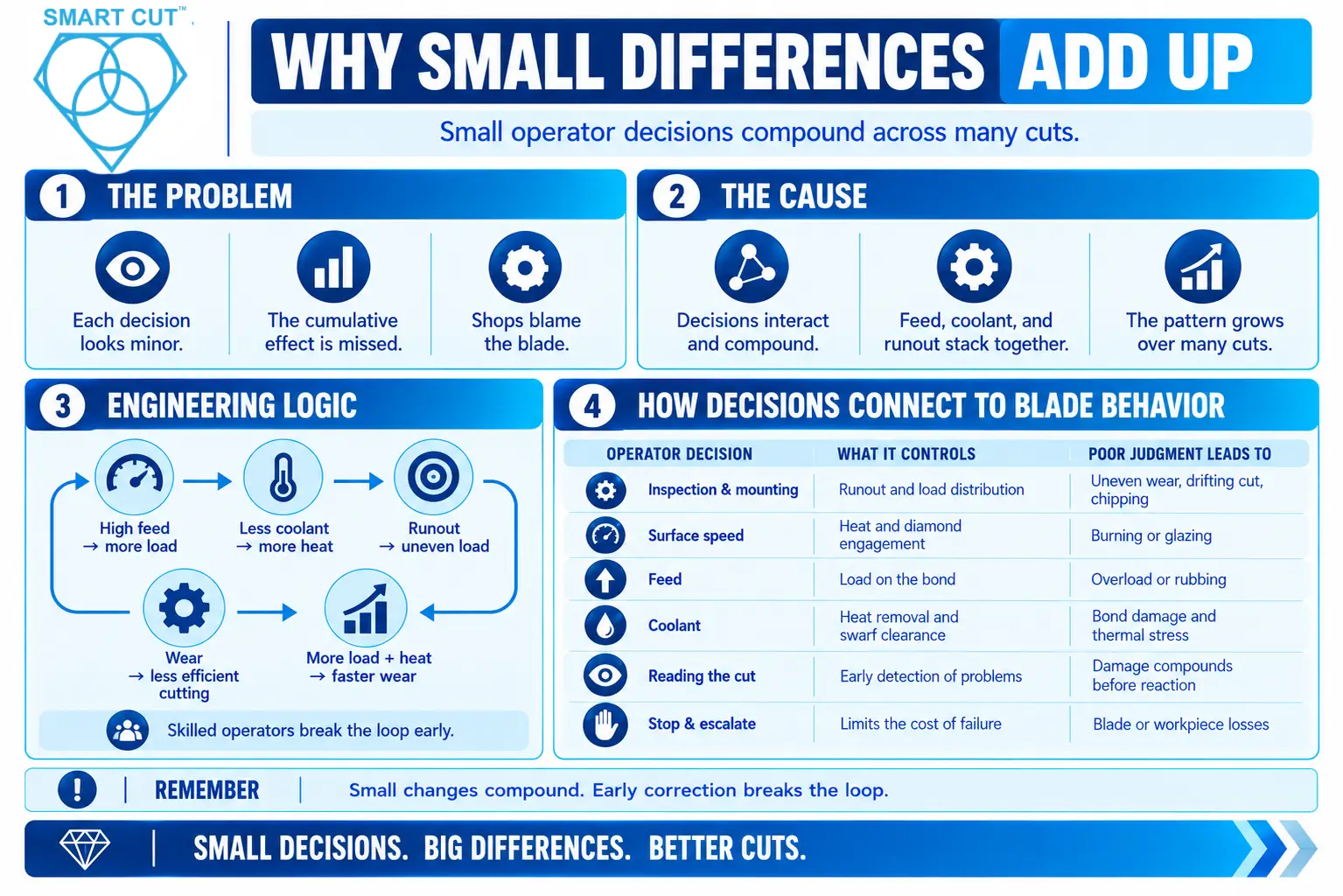
Problem: Each operator decision looks minor, so nobody sees the cumulative effect.

Cause: The decisions interact and compound over many cuts.

Engineering logic: Consider a single cut. A slightly high feed raises load on the bond. A little less coolant raises rim temperature. Slight runout concentrates load on part of the rim. Individually, each effect may seem small. Together, they accelerate wear, and a worn blade then cuts less efficiently, which raises load and heat further. The process feeds on itself.

Skilled operators break this loop early. They notice the first signs and correct them. Less skilled operators let the loop run. Over many cuts, the difference in blade life and cut quality becomes large, even though no single decision looked dramatic.

The table below summarizes how operator decisions connect to blade behavior. It contains no performance figures. It only shows the logic.

Operator decision What it controls What happens with poor judgment
Inspection and mounting Runout and load distribution Uneven wear, wandering cut, chipping
Surface speed Heat and diamond engagement Burning or glazing
Feed Load on the bond Overload or rubbing
Coolant Heat removal and swarf clearance Bond damage and thermal stress
Reading the cut Early detection of problems Damage compounds before anyone reacts
Stop and escalate decisions Limits the cost of a failure Small problems become blade or workpiece losses

How Operator Skill Shows Up in Your Data

Operator skill does more than affect individual cuts. It also affects how much you can trust your data.

Test results. If different operators run the tests, their variation enters the results. A blade comparison can then reflect operator differences instead of blade differences. A blade that looks better may simply have been run by a more careful operator. This is why test design must control for the operator. Our upcoming articles on test design and comparison cover that control in detail.

Blade evaluations. A customer who tries a blade once, with an inexperienced operator, may judge the blade harshly. The blade did not fail. The conditions did. This is a common source of unfair conclusions about blade quality.

Cost tracking. Cost per cut depends on blade life. If operator skill varies, cost per cut varies too. Without tracking, the shop cannot tell whether a cost problem comes from the blade, the material, or the process.

Process capability. A process that depends on one gifted operator is fragile. When that person leaves, performance drops. A process that teaches and verifies skill stays stable.

Skill Is Not Just Experience

Skill Is Not Just Experience

Many shops equate skill with years on the job. That assumption causes problems.

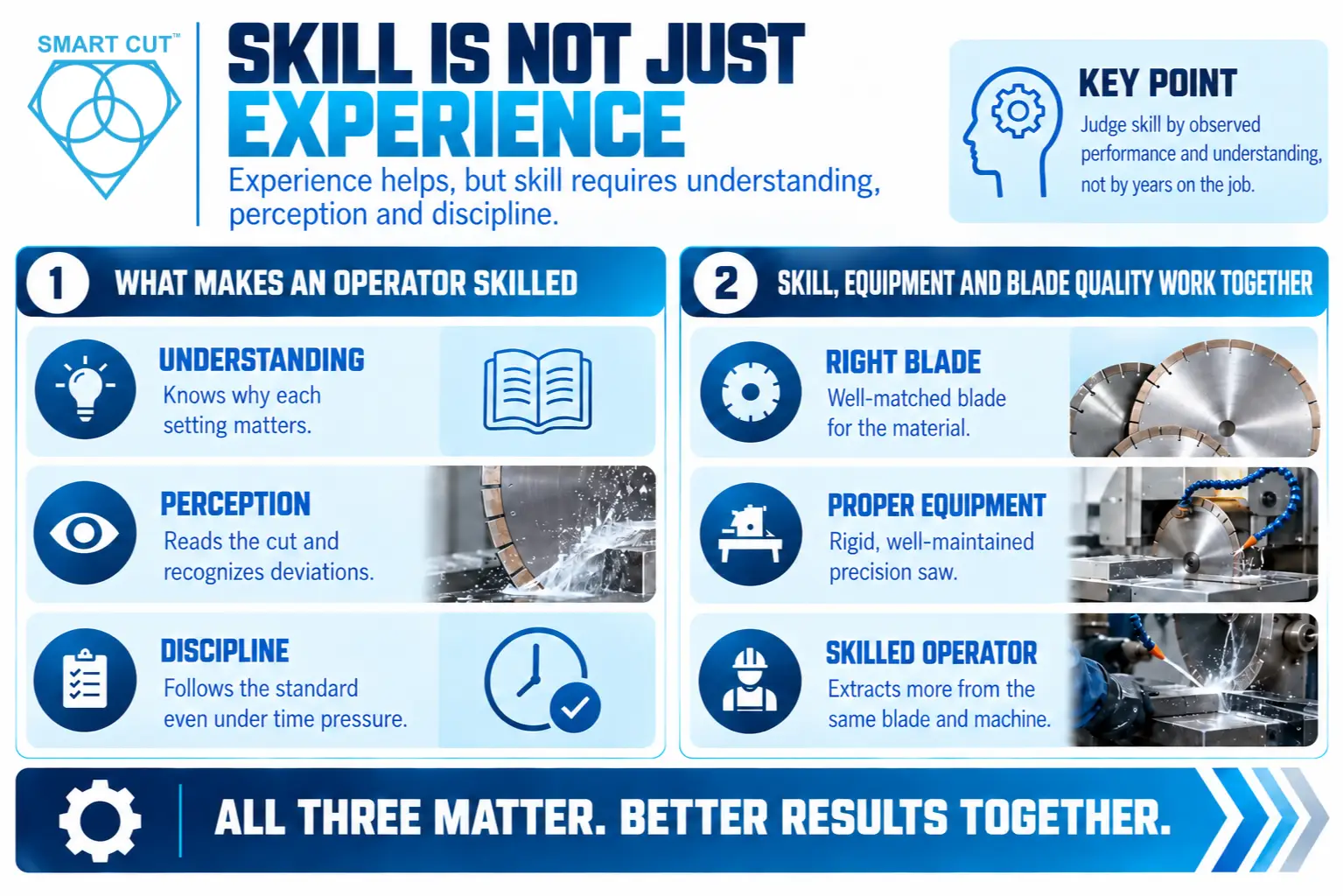
Experience helps, but it does not guarantee skill. An operator can repeat the same flawed practice for years. Long experience then locks in the flaw. Skill requires three things.

  1. Understanding. The operator knows why each setting matters.
  2. Perception. The operator reads the cut and recognizes deviations.
  3. Discipline. The operator follows the standard even when time pressure rises.

Therefore, judge skill by observed performance and understanding, not by tenure. Structured observation and sign-off do this far better than seniority.

Skill, Equipment, and Blade Quality Work Together

Operator skill does not replace good equipment or a well-matched blade. All three must work together.

A well-matched blade gives a skilled operator the best chance to succeed. A rigid, well-maintained precision saw removes sources of variation that skill cannot fully cancel. Equally, a skilled operator extracts more from the same blade and machine than an unskilled one.

Equipment can also reduce how much the operator influences the result. Controlled feed, consistent coolant delivery, and repeatable workholding all limit operator-driven variation. Even so, setup, inspection, and judgment stay with the operator. Automation narrows the gap but does not close it.

For the blade side, start with the material guide and the diamond and CBN blade range. A good match between blade and material means the operator works with the process instead of against it.

How to Make Operator Skill Visible

How to Make Operator Skill Visible

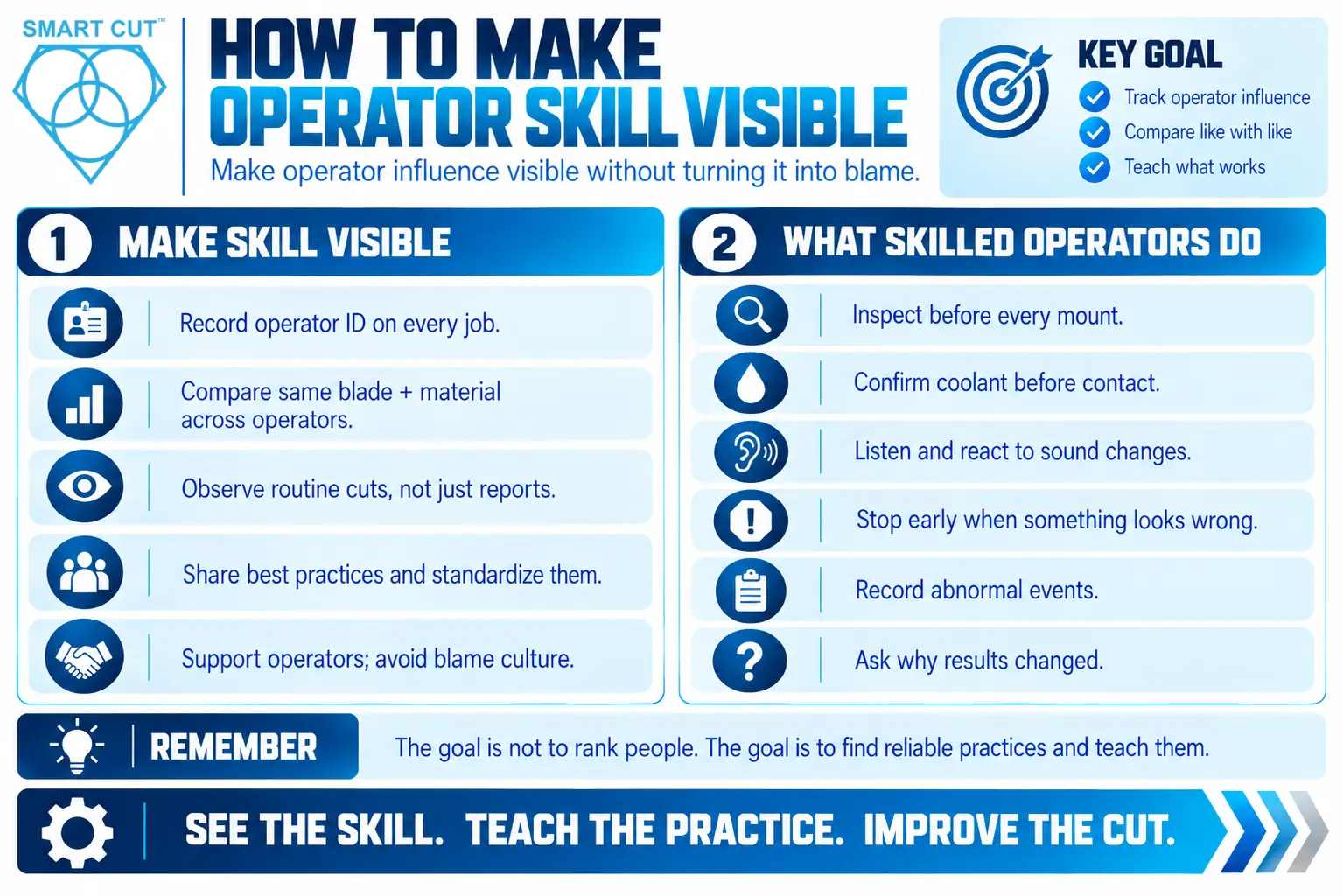
You cannot manage what you do not see. Use these approaches to make operator influence visible without turning it into blame.

Record the operator. Add the operator’s name or ID to each job log, next to the blade, material, and settings. Over time, patterns appear.

Compare like with like. Compare results for the same blade and material across operators. Large gaps point to a skill or practice difference, not a blade problem.

Observe routine work. A supervisor who watches normal cuts sees habits that logs never show.

Share what works. If one operator consistently gets better results, find out what they do differently. Then write it into the standard so everyone benefits.

Separate the person from the process. The goal is not to rank operators. The goal is to find practices that work and teach them. Operators who feel blamed hide problems. Operators who feel supported report them.

What Skilled Operators Do Differently

Skilled operators share several habits.

  • They inspect before every mount, even when they are in a hurry.
  • They confirm coolant flow before the blade touches the material.
  • They listen to the cut and react to changes in sound.
  • They stop early when something looks wrong.
  • They record what happened, including abnormal events.
  • They ask why a result changed instead of accepting it.

None of these habits needs special equipment. All of them need understanding and discipline, which is exactly why they can be taught.

Applying This in Your Shop

Applying-This-in-Your-Shop

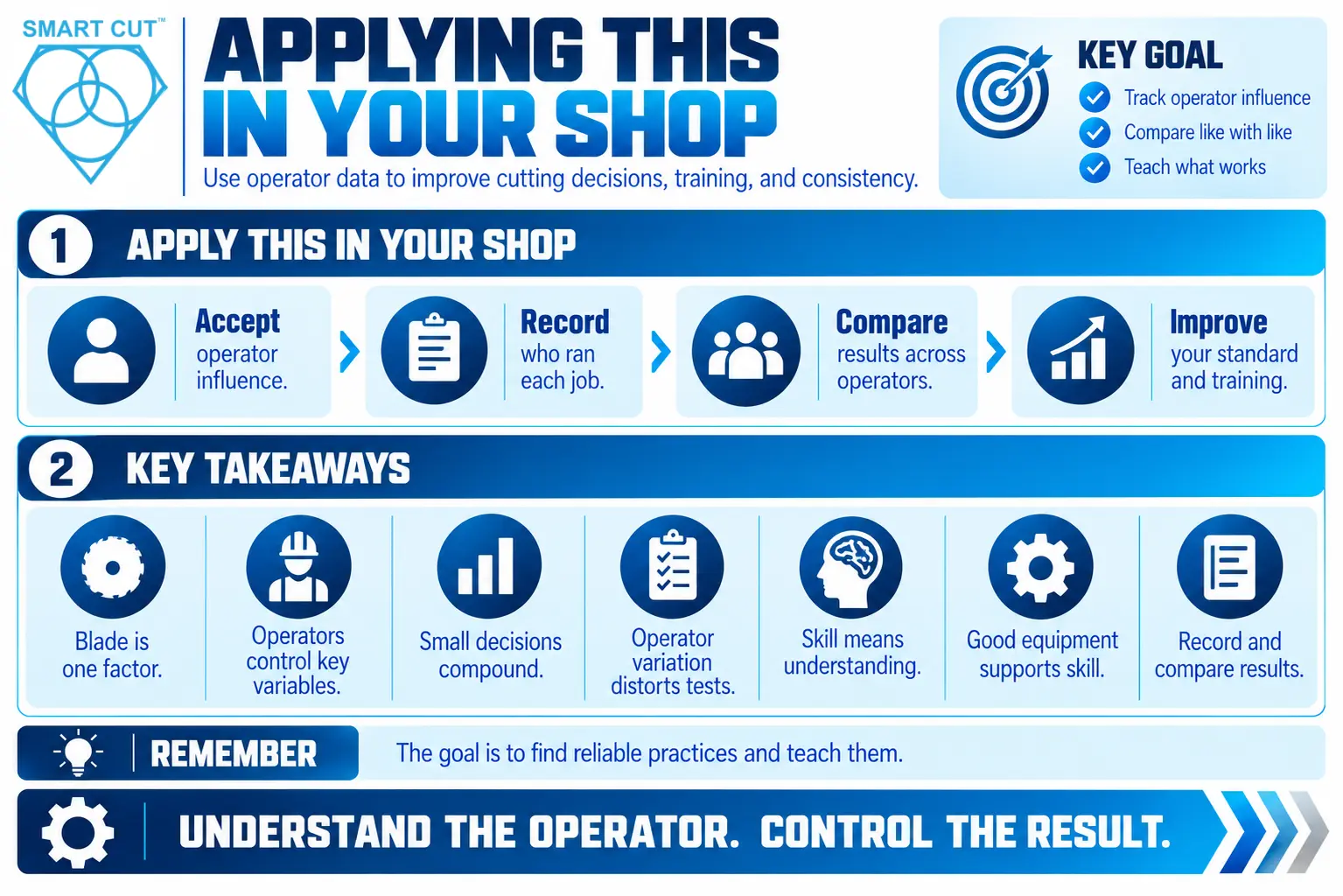
First, accept that the operator is part of the process. Second, start recording who ran each job. Third, compare results across operators for the same blade and material. Finally, use what you find to improve your standard and your training.

Keep your expectations realistic. Some variation between operators will always remain. The goal is to narrow it and to understand it. A shop that does this makes better blade decisions, runs fairer tests, and controls cost with more confidence.

Key Takeaways

  • The blade is only one factor in the cut. The operator influences many of the others.
  • Operators control mounting, speed, feed, coolant, cut reading, and judgment calls.
  • Small decisions compound over many cuts and change blade life and cut quality.
  • Operator variation can distort test results and blade evaluations.
  • Skill means understanding, perception, and discipline, not just years on the job.
  • Good equipment and a well-matched blade support skill but do not replace it.
  • Record the operator, compare like with like, and share the practices that work.

Frequently Asked Questions

The operator controls mounting, speed, feed, coolant, and judgment, all of which shape blade life and cut quality.

Yes, because operators set up and run the cut differently even with the same blade and machine.

Mounting quality, feed, surface speed, and coolant management carry the most influence.

No, because experience can repeat a flawed practice while skill requires understanding and discipline.

Better control of load, heat, and runout slows wear and reduces avoidable damage.

It reduces it but does not remove it, since setup, inspection, and judgment still depend on the person.

Operator differences enter the data and can make one blade look better or worse than it is.

Compare results for the same blade and material across several operators and look for gaps.

Yes, because the record reveals patterns that blade and material data alone cannot show.

A good match helps, but the operator still controls how the blade performs.

A change in cutting sound often signals load or heat changes before damage becomes visible.

Use a staged training program with competency checks and routine observation.

No, because inexperience can cause poor results that the blade did not create.

Record the operator on every job and compare results across people.

Conclusion

Diamond blade performance does not come from the blade alone. It comes from the whole system, and the operator sits at the center of it. Mounting, speed, feed, coolant, and judgment all pass through the operator’s hands.

Once you accept this, you can act on it. Record who runs each job, compare results fairly, and build skill through structured training instead of chance. Do that, and you get steadier blade life, cleaner cuts, and test data you can trust.

If you want help matching a blade to your material and process, request a consultation with the UKAM team, or explore the diamond and CBN wafering and cut-off blades.

Trusted by Tens of Thousands of Manufacturers, Laboratories,
Research Institutions Worldwide Since 1990

American Based Manufacturer

Established in 1990

Custom manufacturing

RELATED ARTICLES

Brian is an experienced professional in the field of precision cutting tools, with over 27 years of experience in technical support. Over the years, he has helped engineers, manufacturers, researchers, and contractors find the right solutions for working with advanced and hard-to-cut materials. He’s passionate about bridging technical knowledge with real-world applications to improve efficiency and accuracy.

As an author, Brian Farberov writes extensively on diamond tool design, application engineering, return on investment strategies, and process optimization, combining technical depth with a strong understanding of customer needs and market dynamics.

author-avatar

About Brian Farberov

Brian is an experienced professional in the field of precision cutting tools, with over 27 years of experience in technical support. Over the years, he has helped engineers, manufacturers, researchers, and contractors find the right solutions for working with advanced and hard-to-cut materials. He’s passionate about bridging technical knowledge with real-world applications to improve efficiency and accuracy. As an author, Brian Farberov writes extensively on diamond tool design, application engineering, return on investment strategies, and process optimization, combining technical depth with a strong understanding of customer needs and market dynamics.

Download Checklist

Please fill in your details to download the Precision Diamond Saw Pre-Operation Checklist.