








Skip to navigation Skip to main content
Home > Blog > Sectioning Zirconium Alloys and Other Ductile Reactive Metals: A Case Study
Metallography / Sample Preparation, blog

Sectioning Zirconium Alloys and Other Ductile Reactive Metals: A Case Study
Sectioning Zirconium Alloys and Other Ductile Reactive Metals

A cracked zirconia blank, a chipped ceramic edge, or a smeared polymer section can cost more than the blade, the saw, and the day’s work. Dental and medical device materials are expensive; they are held to strict quality limits, and a cutting defect can become a failure later.

Cutting dental ceramics with diamond blades works well when the blade, the process, and the machine match the material. It goes wrong when one blade is used for everything. A blade that suits fully sintered zirconia will smear a polymer. A blade that suits bone will not last on alumina.

This article explains how to approach cutting dental ceramics and medical device materials with diamond blades. It groups the materials, matches each group to a blade family using UKAM’s published guidance, and covers process control, cleanliness, troubleshooting, and qualification.

A scope note: this article covers industrial and laboratory cutting, such as manufacturing blanks, quality control sectioning, failure analysis, and research sample preparation. It is not clinical advice, and it does not address regulatory requirements for any specific device. Follow your own quality system and applicable regulations. UKAM also offers dental and laboratory diamond tools, including burs, discs, and foil for shaping dental restorative materials, which are separate from the sectioning blades discussed here.

Trusted by Tens of Thousands of Manufacturers, Laboratories Research Institutions Worldwide Since 1990

American Based Manufacturer

Established in 1990

Custom manufacturing

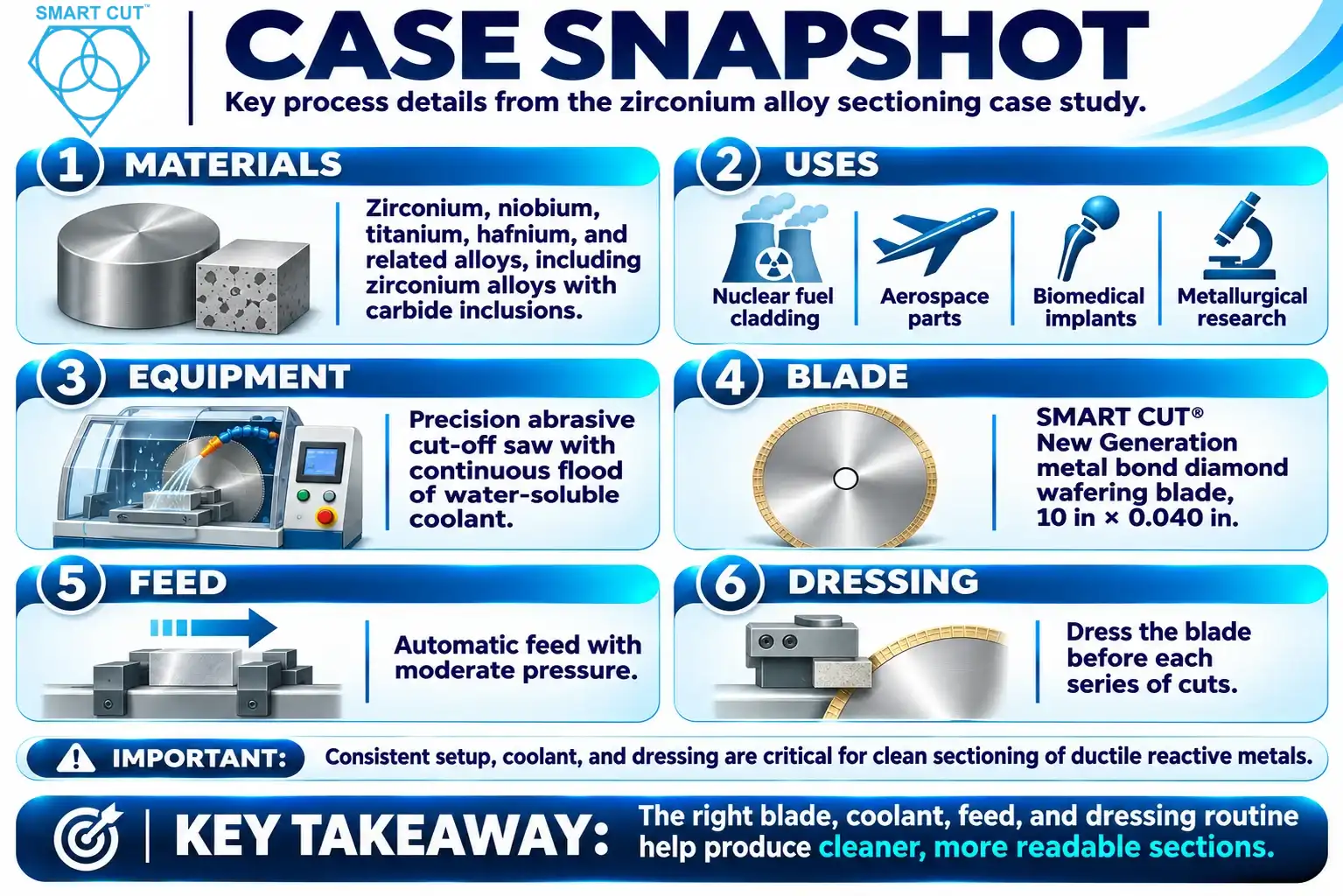
Case Snapshot

Case Snapshot
Item Detail
Materials Zirconium, niobium, titanium, hafnium, and related alloys, including zirconium alloys with carbide inclusions
Uses Nuclear fuel cladding, aerospace parts, biomedical implants, metallurgical research
Equipment Precision abrasive cut-off saw, continuous flood of water-soluble coolant
Blade SMART CUT® New Generation metal bond diamond wafering blade, 10 inch × 0.040 inch
Feed Automatic, moderate pressure
Dressing Before each series of cuts

The Problem: Sectioning Zirconium Alloys Without Smearing

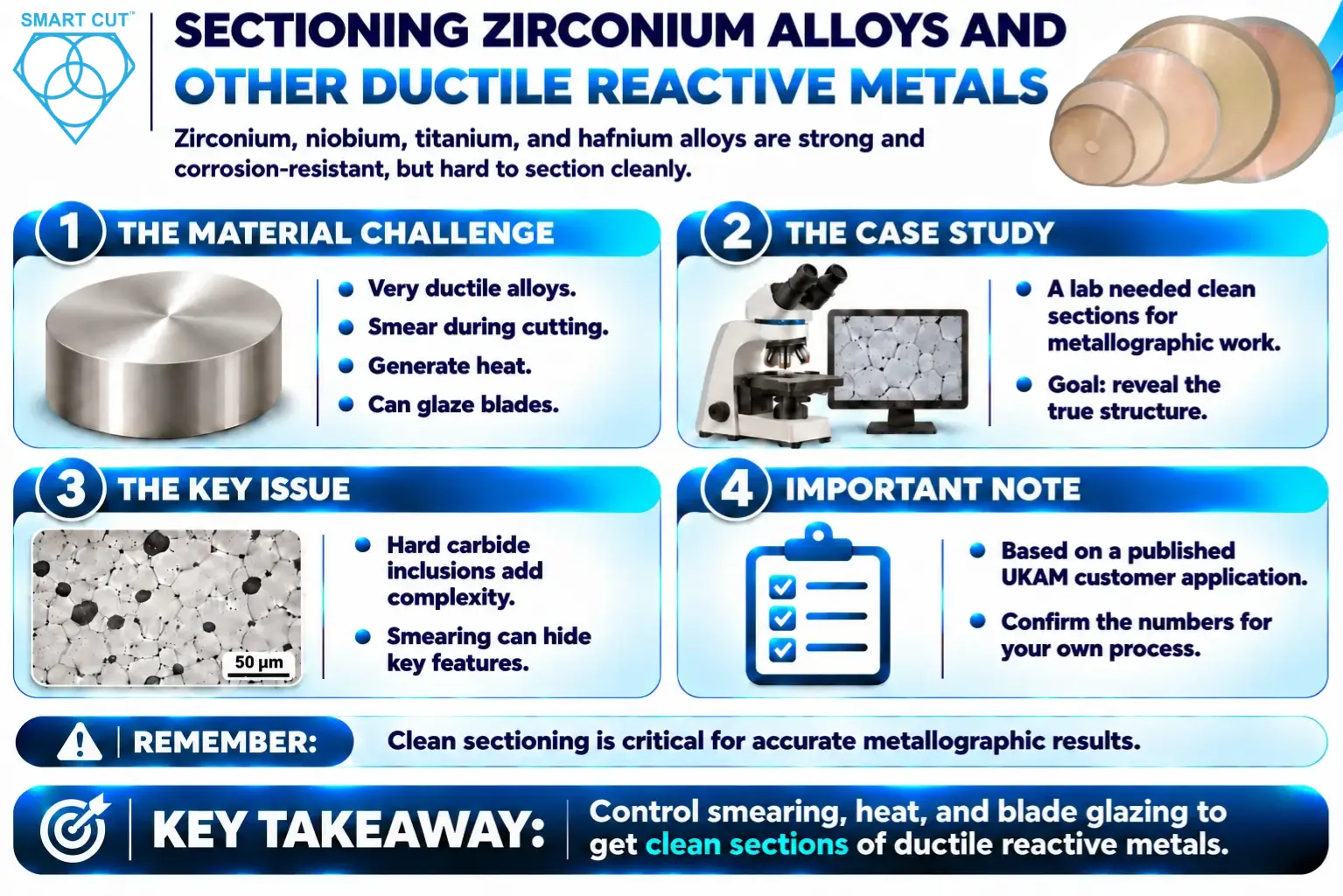
These alloys deform instead of shearing cleanly. UKAM’s description of the case lists the usual failures with conventional blades: heat build-up, rapid glazing, and smeared metal surfaces. Plastic deformation distorts the microstructure and can change what the metallographer sees.

Before the change, the laboratory had little success sectioning samples with carbide inclusions in zircaloy. A smeared or torn cut either hides the inclusions or damages them.

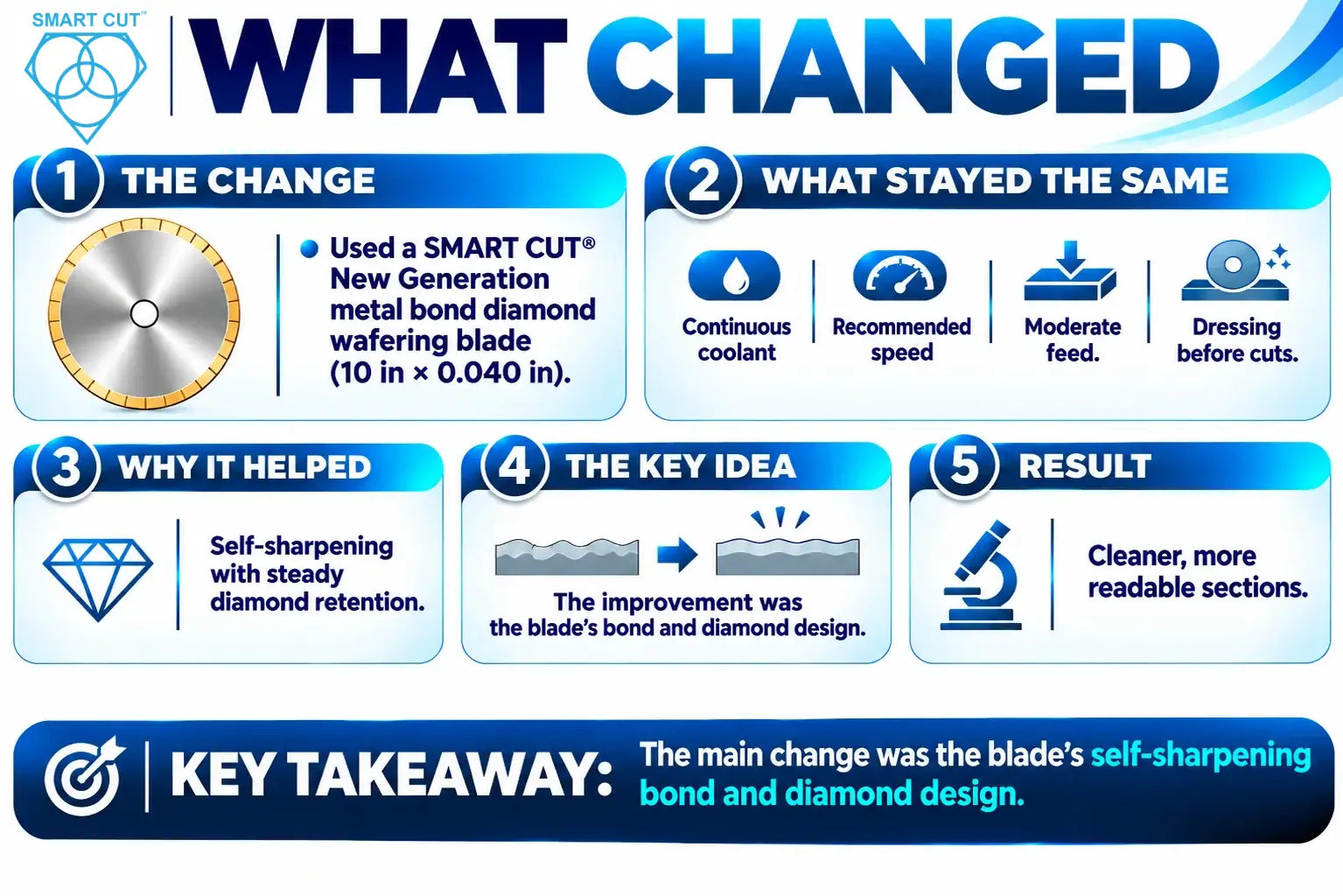
What Changed

What Changed

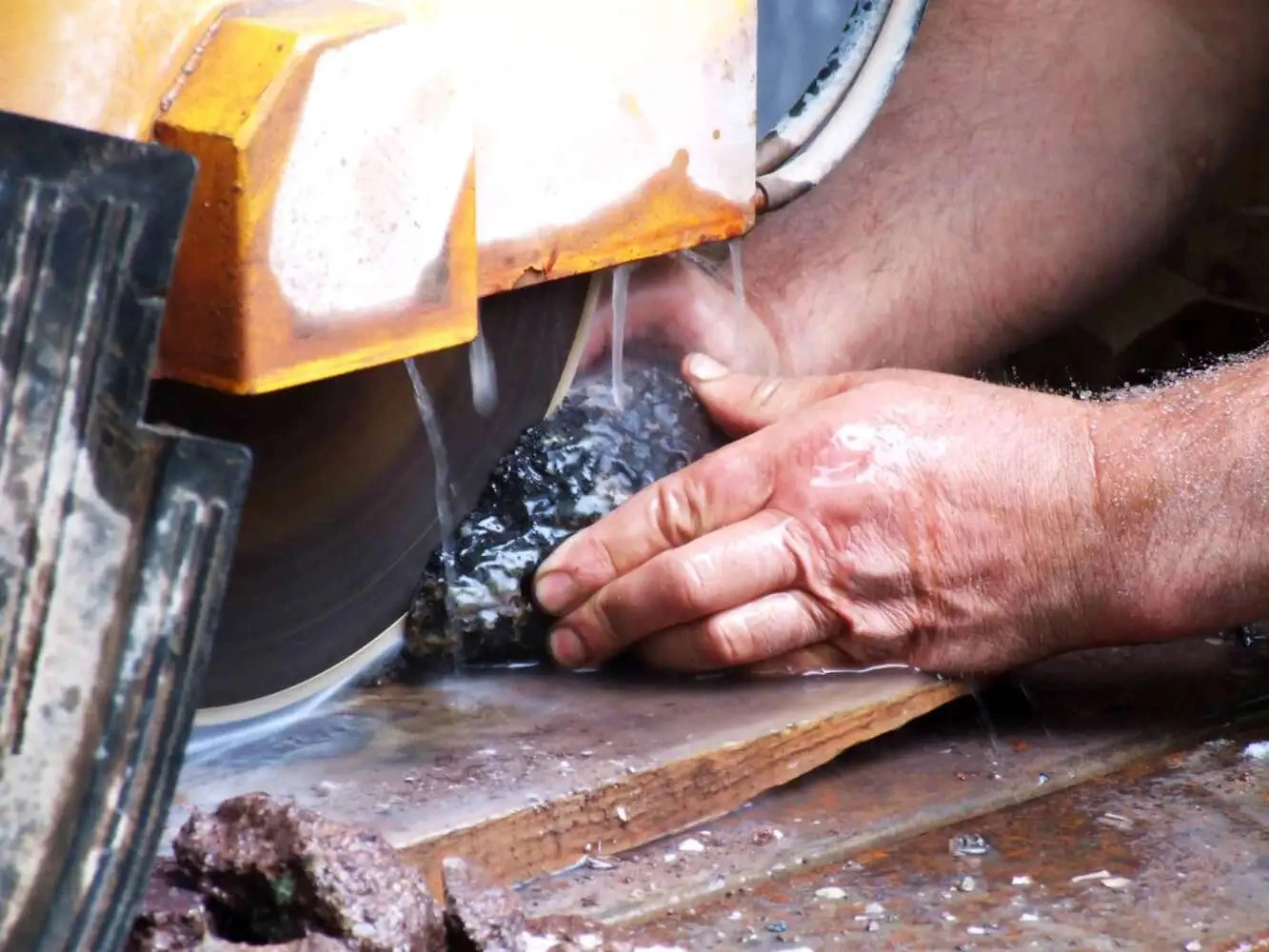
The laboratory moved to a SMART CUT® New Generation metal bond diamond wafering blade, 10 inches in diameter and 0.040 inch thick. The cutting conditions stayed conventional: continuous flood of water-soluble coolant, speed set to the saw manufacturer’s recommendation for metal sectioning, moderate automatic feed, and dressing before each series of cuts to keep the diamond exposed.

The point of the change was the blade’s bond and diamond design, which UKAM describes as self-sharpening with steady diamond retention.

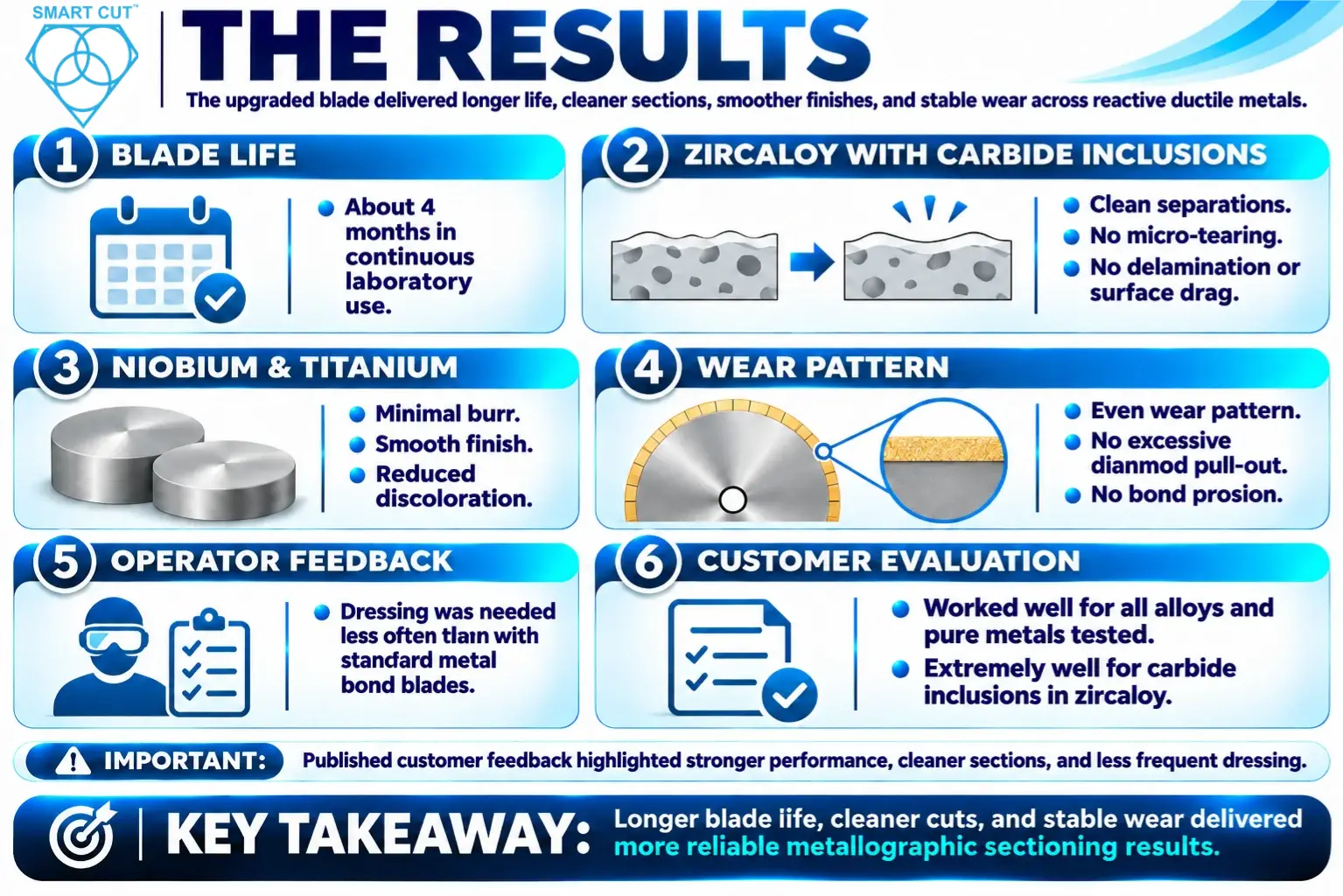
The Results

The Results
  • Blade life: about four months under continuous laboratory use.
  • Zirconium alloys with carbide inclusions: clean separations with no micro-tearing, delamination, or surface drag.
  • Niobium and titanium alloys: minimal burr, a smooth finish, and reduced discoloration.
  • Wear pattern: even wear, with no sign of excessive diamond pull-out or bond erosion.
  • Operator feedback: dressing could be done less often than with standard metal bond blades.

The customer’s evaluation, as published by UKAM, said the blade worked well for all the alloys and pure metals tested and extremely well for the carbide inclusions in zircaloy. The customer added that it had had little success with those samples before.

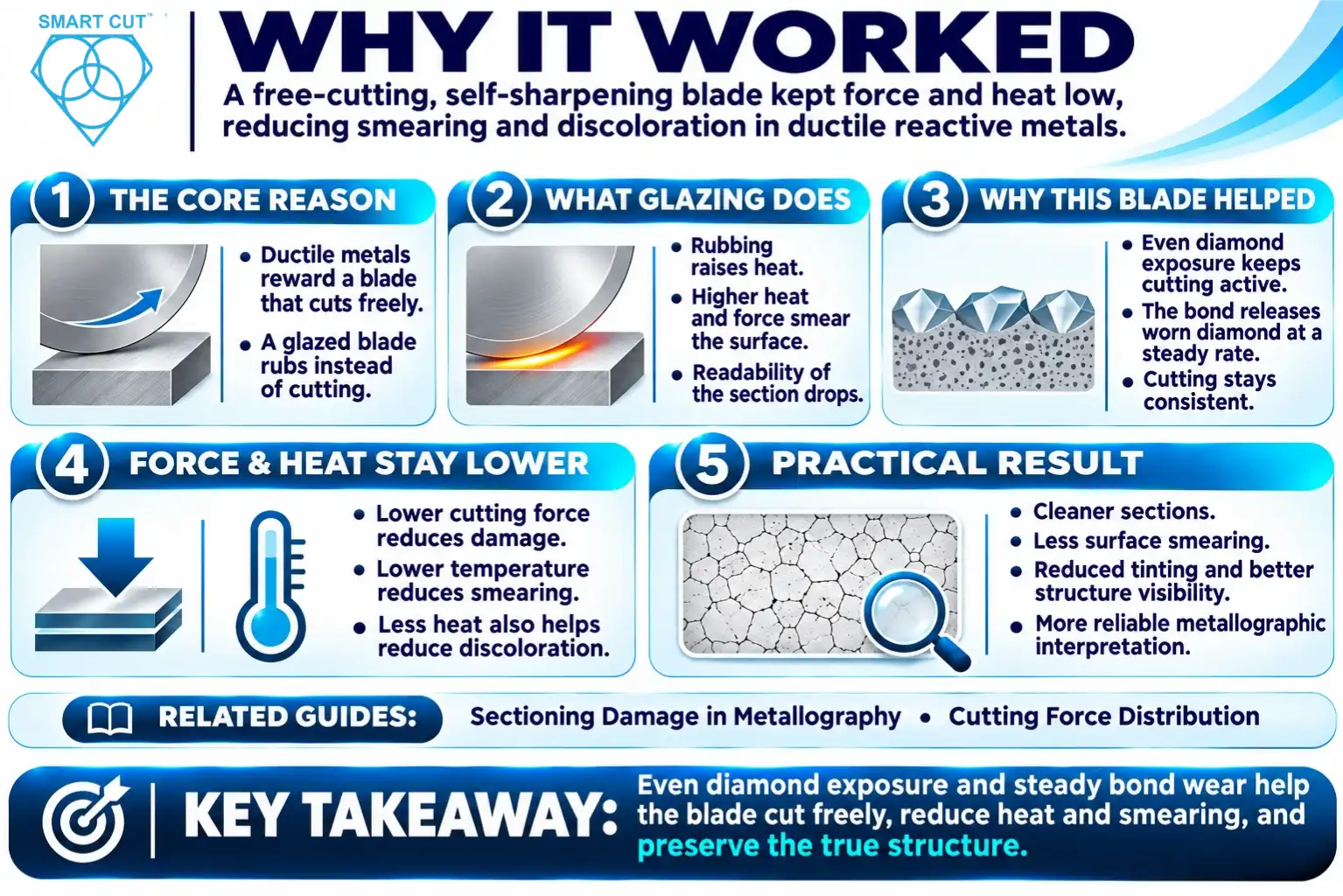
Why It Worked

Why It Worked

Ductile metals reward a blade that keeps cutting freely. A blade that glazes rubs the metal, raises heat, and smears the surface. UKAM links the result to even diamond exposure and a bond that releases worn diamond at a steady rate, which keeps cutting forces and temperature low. Less heat also explains the reduced discoloration, since heat can tint and alter the surface of reactive metals.

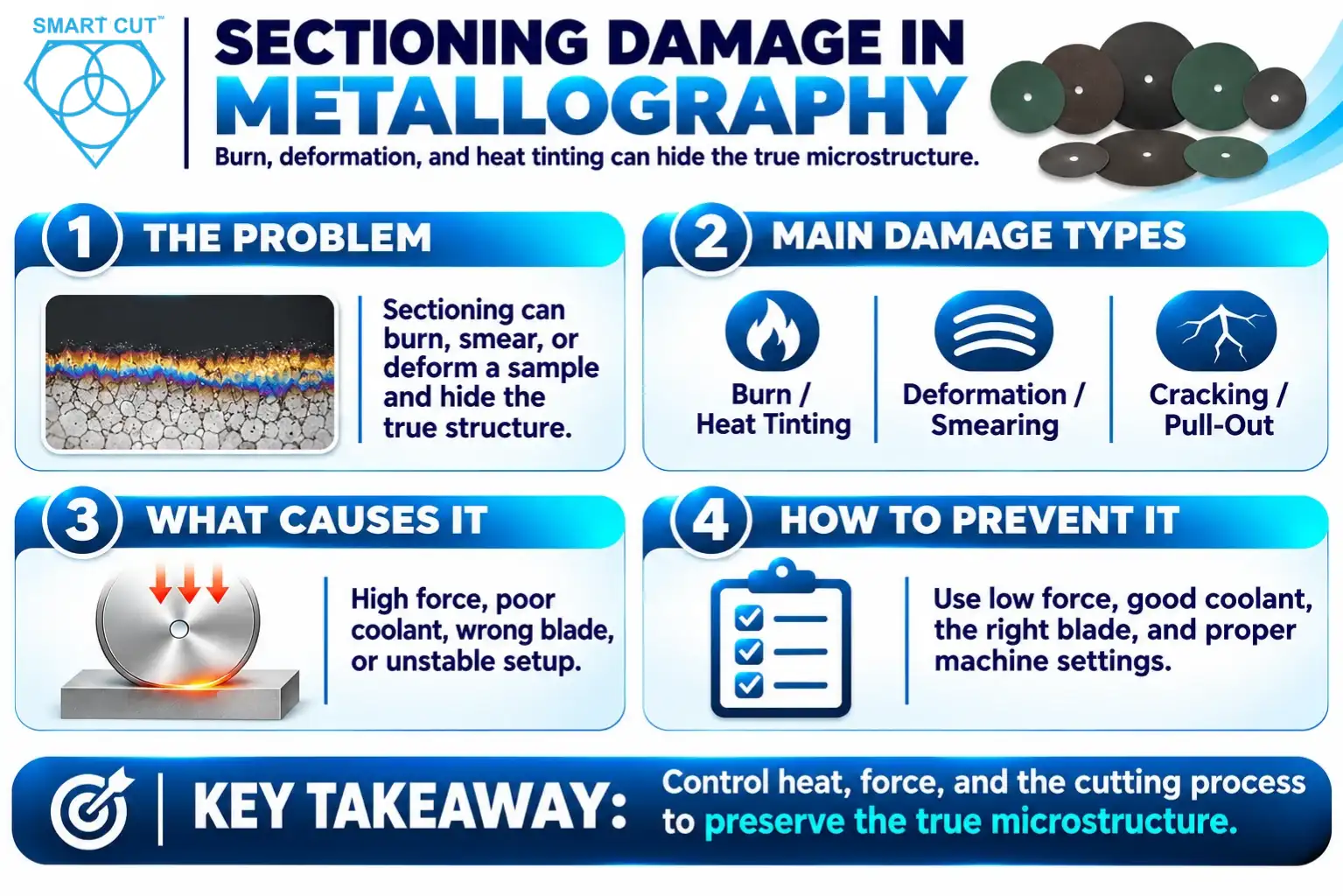
Our article on sectioning damage in metallography explains how burn and deformation form, and the cutting force distribution guide shows how force drives subsurface damage.

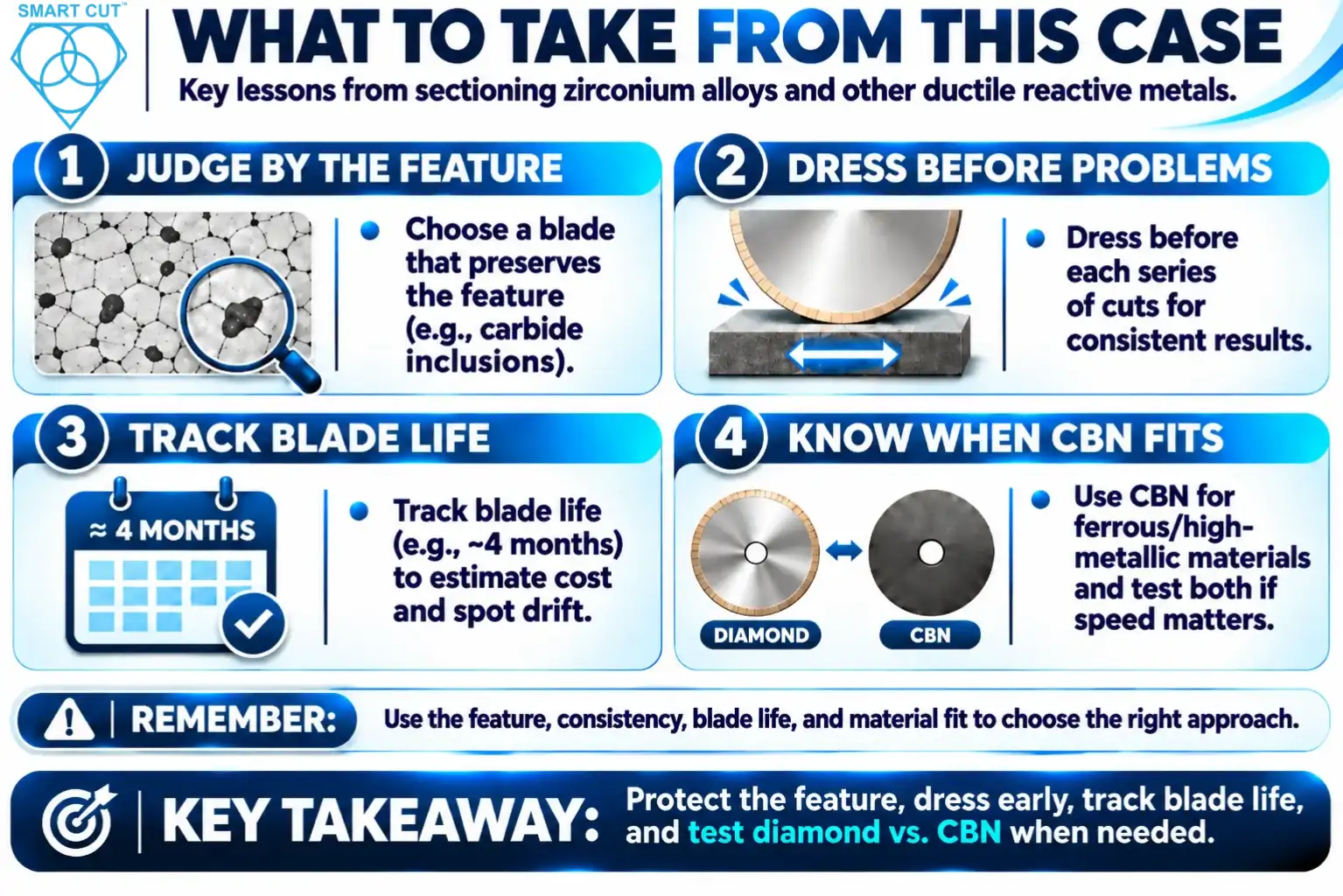
What to Take from This Case

Judge a blade by the feature you need to see. Here the test was whether the carbide inclusions survived the cut intact.

Dress before problems appear. Dressing before each series of cuts kept cutting consistent. See diamond and CBN blade dressing.

Track blade life. A figure such as four months of continuous use gives you a baseline for cost per cut and for spotting drift.

Know when CBN fits. UKAM recommends CBN for ferrous and high-metallic materials. For these alloys, test both diamond and CBN if cutting speed matters. See our guide to diamond vs. CBN.

Limits of This Case

This is a single laboratory’s experience on one saw. UKAM published the blade life and observations, not a controlled comparison with another blade. Alloy composition, sample size, and saw settings all affect results, so run your own trial.

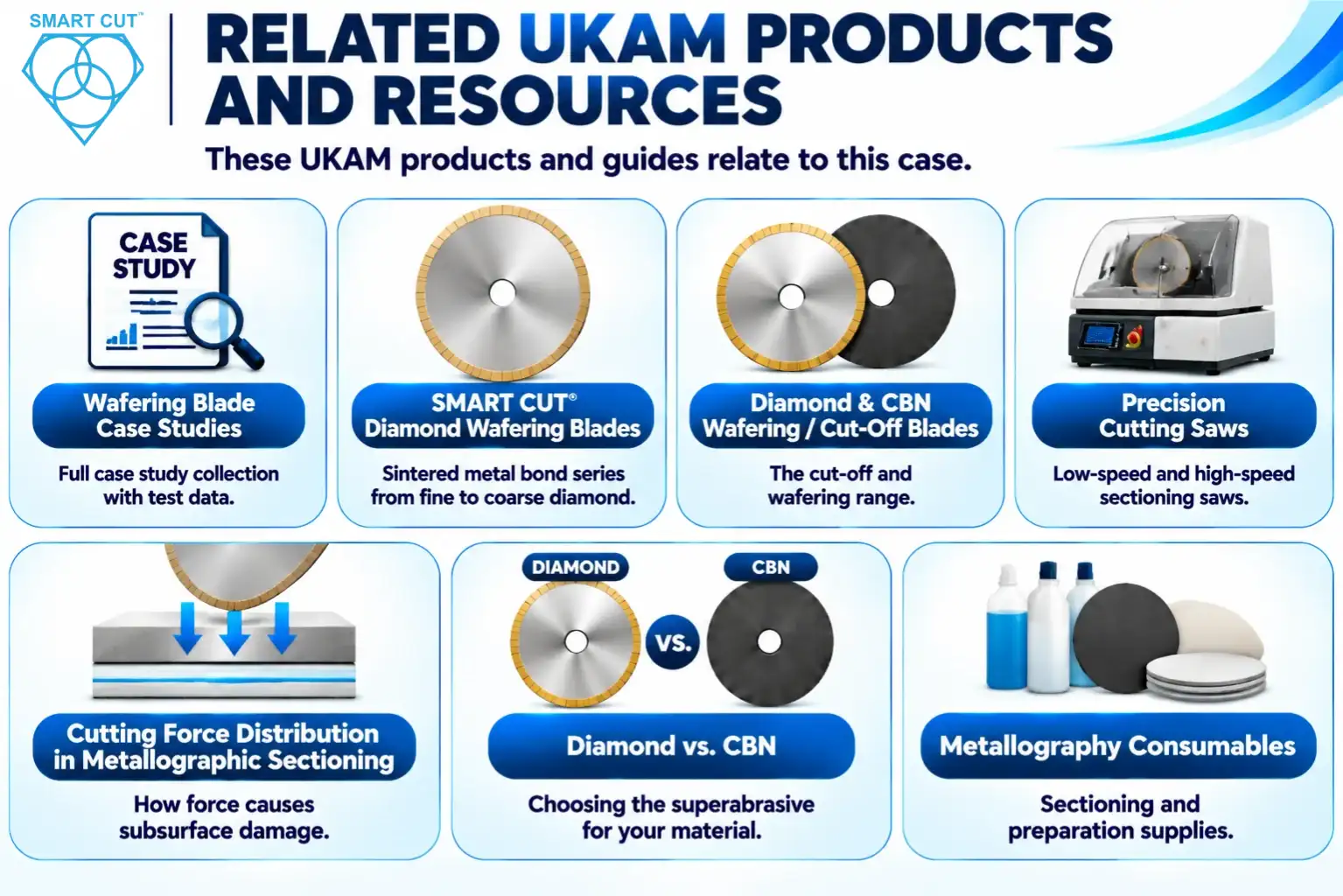
Related UKAM Products and Resources

These UKAM products and guides relate to this case.

Key Takeaways

  • Ductile reactive metals smear and glaze blades, which distorts the microstructure.
  • UKAM’s published case reports about four months of blade life under continuous laboratory use.
  • Zirconium alloys with carbide inclusions sectioned cleanly, with no micro-tearing or surface drag.
  • Niobium and titanium alloys showed minimal burr and reduced discoloration.
  • Dressing before each series of cuts kept cutting consistent.
  • This is one laboratory’s result, so confirm it in your own process.

Frequently Asked Questions

Zirconium, niobium, titanium, hafnium, and related alloys.

They are ductile, so they smear, heat up, and glaze the blades.

A SMART CUT® New Generation metal bond diamond wafering blade, 10 inch × 0.040 inch.

About four months under continuous laboratory use.

They sectioned cleanly, with no micro-tearing or surface drag.

Discoloration was reduced, especially on niobium and titanium.

Before each series of cuts.

Yes, a continuous flood of water-soluble coolant.

Test both, since UKAM recommends CBN for ferrous and high-metallic materials.

Not necessarily, because blade life depends on your samples and settings.

Conclusion

Sectioning zirconium alloys and related reactive metals is a test of how freely a blade cuts. In the case UKAM published, a metal bond diamond blade sectioned the alloys cleanly, handled carbide inclusions that had defeated the laboratory’s earlier attempts, and lasted about four months in continuous use.

The takeaway is practical. Match the blade to the metal, dress before problems appear, keep coolant on the cut, and judge success by whether the feature you need survives the cut.

If you want help matching a blade and process to your material, request a consultation with the UKAM team, or browse our diamond wafering blades and precision cutting saws.

Trusted by Tens of Thousands of Manufacturers, Laboratories,
Research Institutions Worldwide Since 1990

American Based Manufacturer

Established in 1990

Custom manufacturing

RELATED ARTICLES

Brian is an experienced professional in the field of precision cutting tools, with over 27 years of experience in technical support. Over the years, he has helped engineers, manufacturers, researchers, and contractors find the right solutions for working with advanced and hard-to-cut materials. He’s passionate about bridging technical knowledge with real-world applications to improve efficiency and accuracy.

As an author, Brian Farberov writes extensively on diamond tool design, application engineering, return on investment strategies, and process optimization, combining technical depth with a strong understanding of customer needs and market dynamics.

author-avatar

About Brian Farberov

Brian is an experienced professional in the field of precision cutting tools, with over 27 years of experience in technical support. Over the years, he has helped engineers, manufacturers, researchers, and contractors find the right solutions for working with advanced and hard-to-cut materials. He’s passionate about bridging technical knowledge with real-world applications to improve efficiency and accuracy. As an author, Brian Farberov writes extensively on diamond tool design, application engineering, return on investment strategies, and process optimization, combining technical depth with a strong understanding of customer needs and market dynamics.

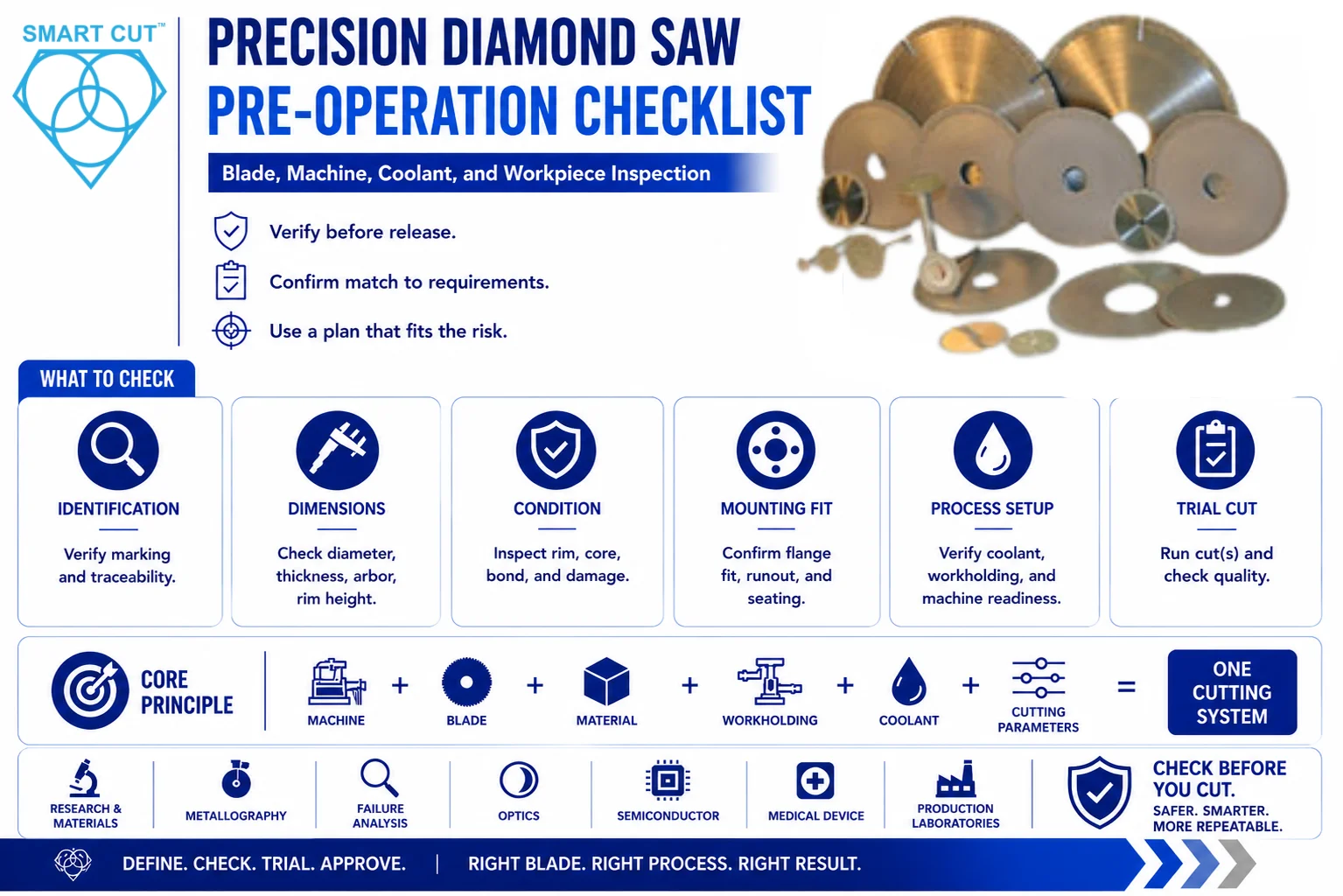
Download Checklist

Please fill in your details to download the Precision Diamond Saw Pre-Operation Checklist.