





















Diamond Wafering Blades: How Bond Type, Grit Size, and Blade Thickness Affect Cut Quality

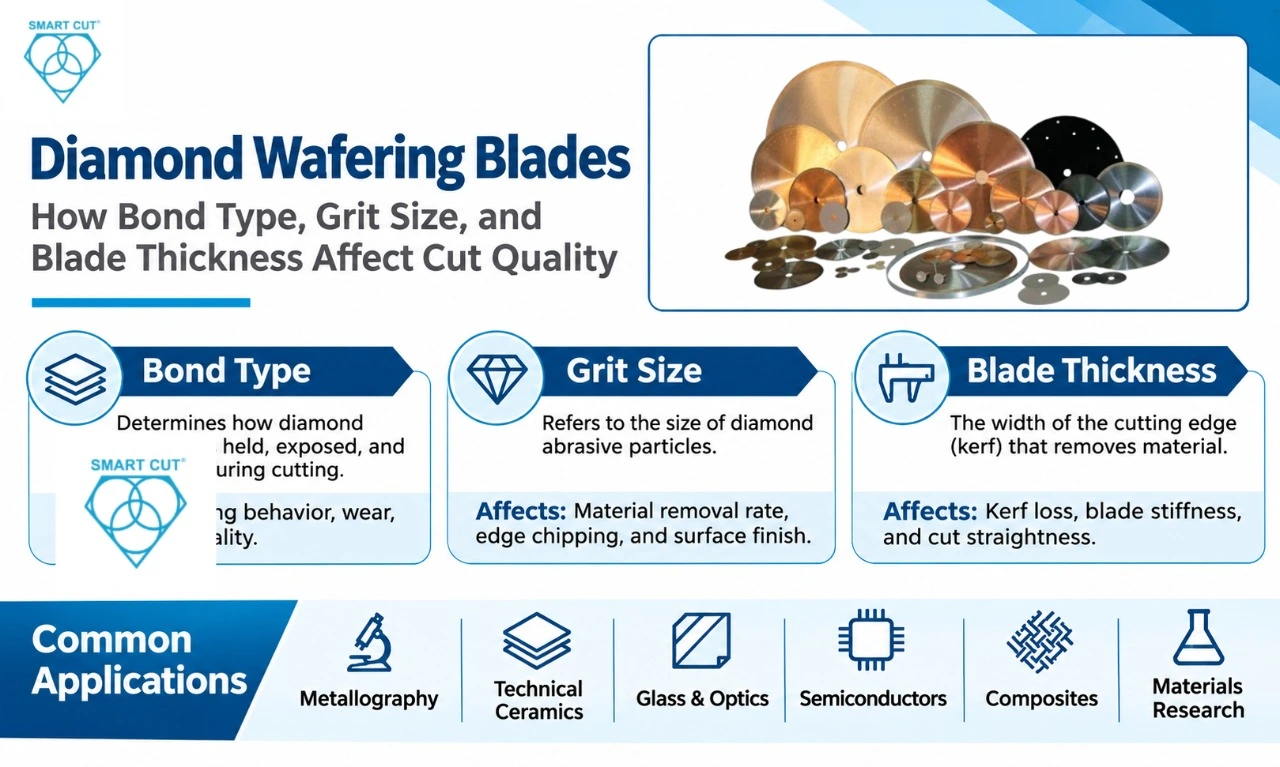
Table of Contents
Toggle
American Based Manufacturer

Established in 1990


Custom manufacturing


UKAM Industrial Superhard Tools | Engineering Selection Guide
A diamond wafering blade can fit a precision sectioning saw and still produce unacceptable results. Ceramic edge chipping, excessive blade wear, inaccurate section thickness, and unexpected kerf loss often indicate that the blade construction or cutting conditions do not match the application.
Selecting a blade based only on diameter or price can be expensive, particularly when preparing fragile, rare, or high-value specimens.
Three blade characteristics deserve particular attention:
- Bond type: Determines how diamond abrasive is held, exposed, and released during cutting.
- Diamond grit size: Influences abrasive engagement, material removal, and the condition of the cut surface.
- Blade thickness: Affects nominal kerf loss, cutting resistance, and susceptibility to deflection.
These characteristics must also be compatible with the saw’s operating speed, specimen geometry, cutting load, coolant, and workholding arrangement.
This guide explains how to evaluate diamond wafering blades for ceramics, glass, crystals, semiconductors, and composites. It also compares relevant UKAM SMART CUT® blade series, provides a practical selection process, and shows how to calculate cost per accepted section.
What Are Diamond Wafering Blades?
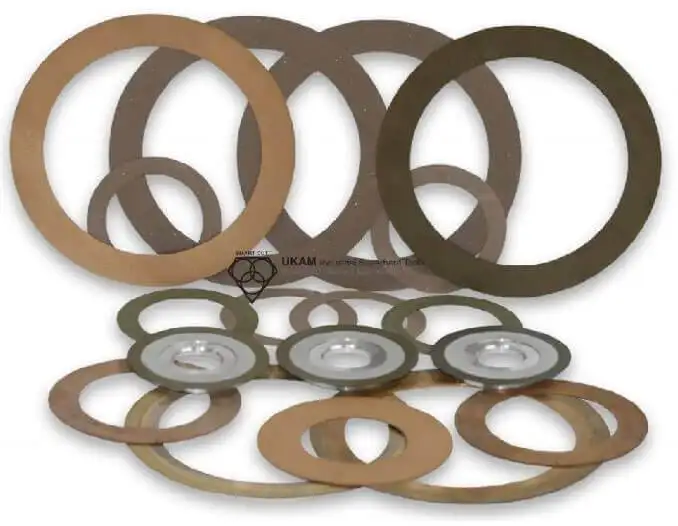
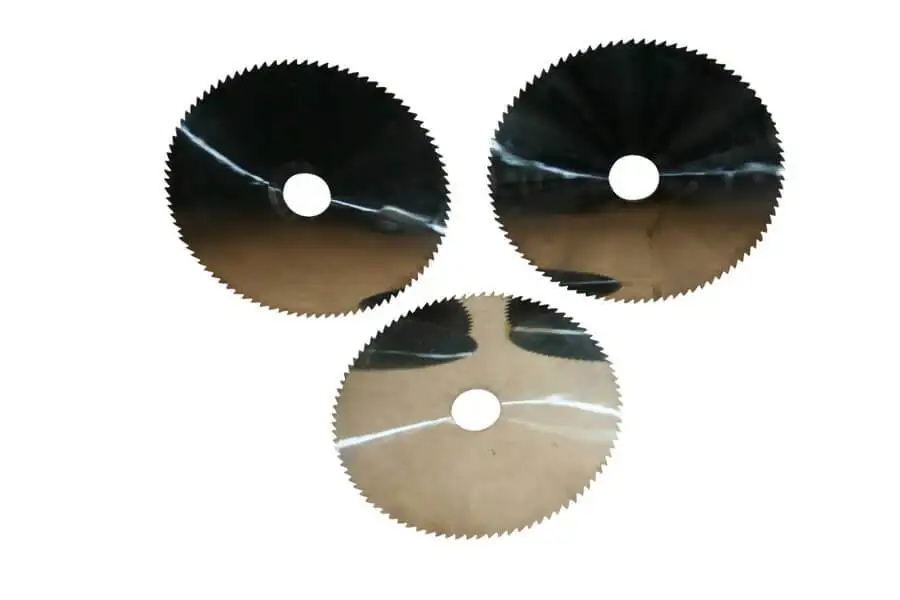
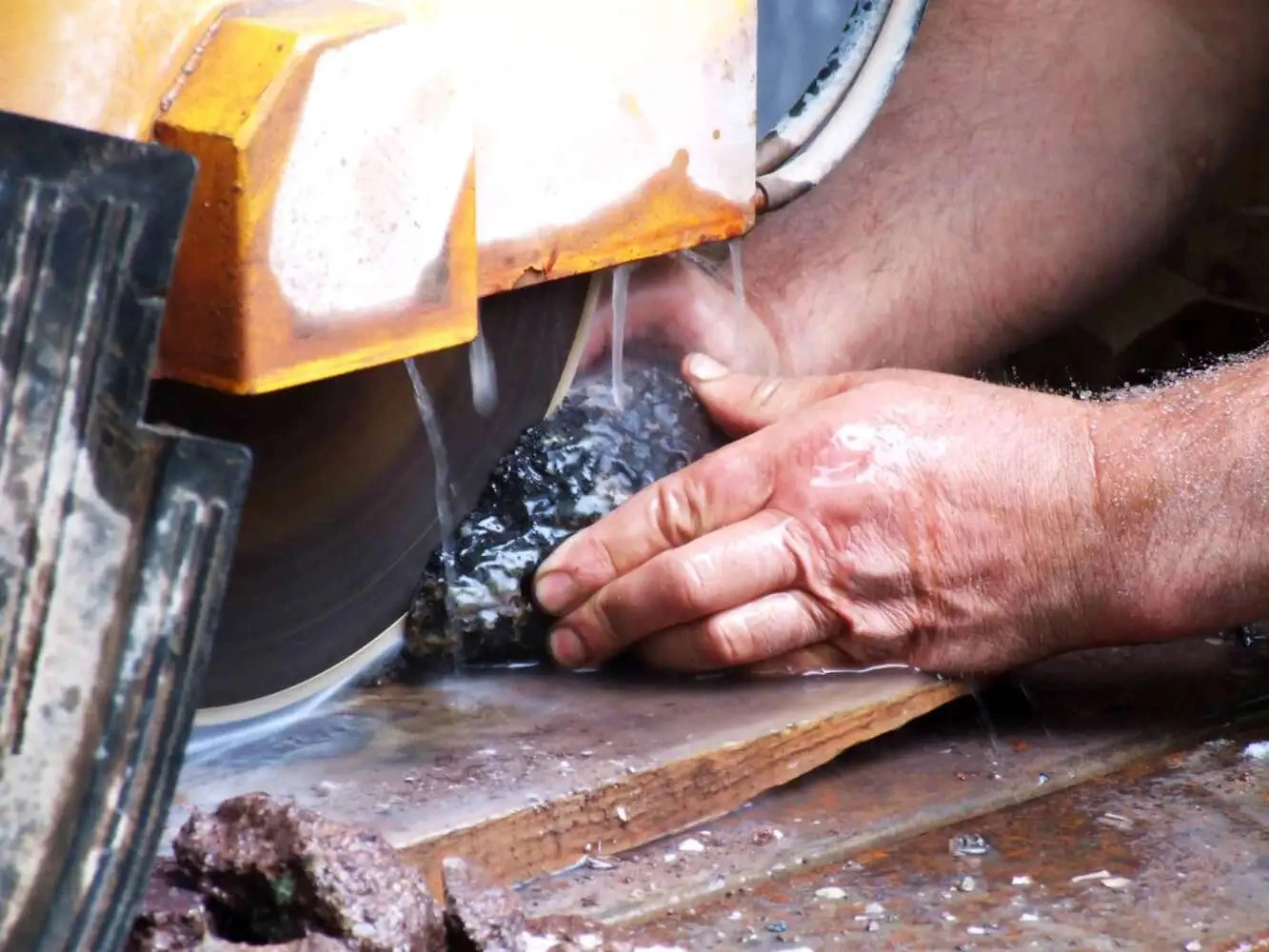
Diamond wafering blades are precision abrasive cutting tools used to section hard, brittle, abrasive, or otherwise difficult-to-machine materials.
Unlike toothed saw blades, diamond wafering blades remove material through abrasive particles held in or on the cutting edge.
They are commonly used for:
The objective is not always to produce the fastest cut.
In many laboratory applications, the more important requirement is obtaining a section that meets dimensional and surface-integrity criteria without excessive grinding, polishing, or specimen loss.
Five variables that determine cutting performance
|
Variable |
Primary influence |
What engineers should evaluate |
|---|---|---|
|
Bond type |
Abrasive retention and exposure |
Cutting behavior, wear, surface quality |
|
Diamond grit |
Abrasive particle size |
Chipping, removal rate, surface damage |
|
Blade thickness |
Nominal kerf and stiffness |
Material loss, deflection, cut straightness |
|
Diamond concentration |
Abrasive distribution |
Cutting resistance and wear |
|
Operating conditions |
Interaction with the workpiece |
Speed, load, coolant, fixture stability |
Engineering takeaway:
Blade performance is determined by the complete cutting system, not by a single specification.
How Diamond Blade Bond Type Affects Cut Quality
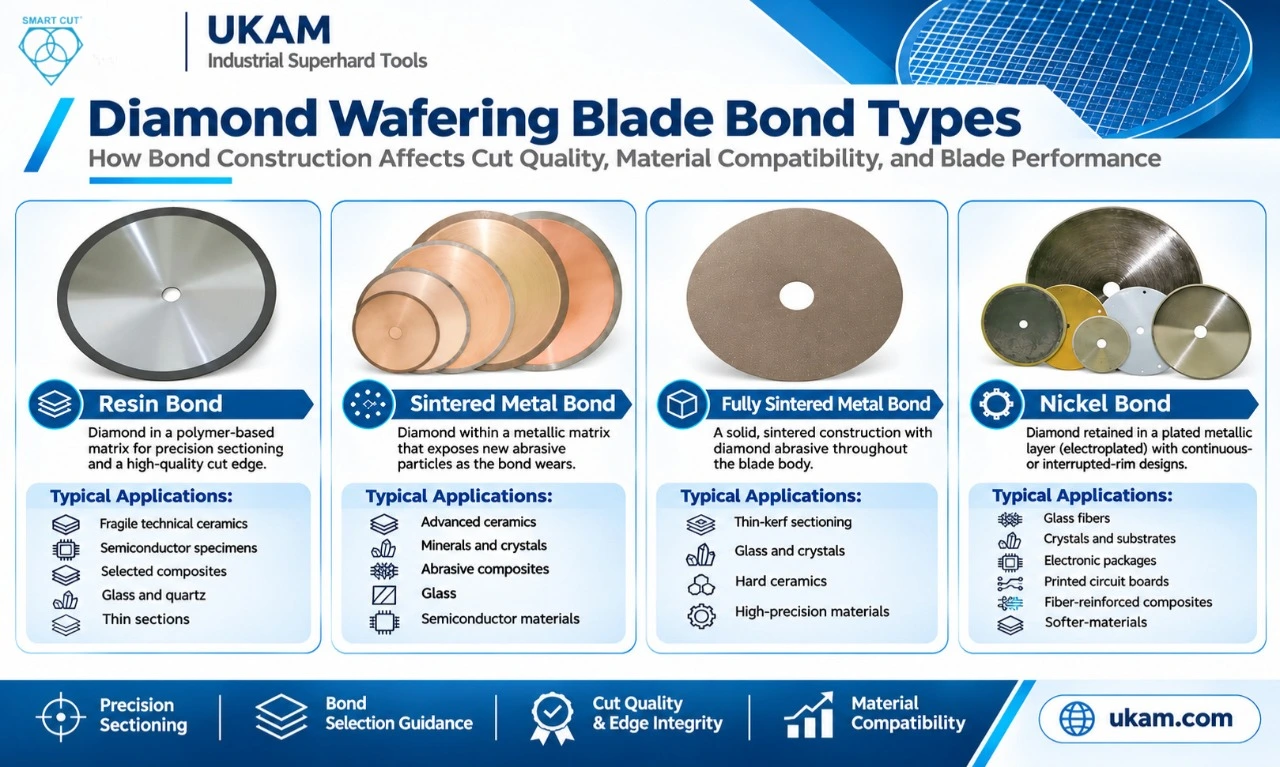
The bond holds diamond abrasive in the cutting edge.
As the blade operates, the interaction between abrasive particles, bond material, and specimen determines how effectively the blade removes material.
Different bond constructions behave differently as the abrasive wears.
Resin-bond diamond wafering blades
Resin-bond blades use a polymer-based matrix to retain diamond particles.
UKAM’s SMART CUT® Series 400 blades use a phenolic resin-based construction with diamond and additional fillers.
The Series 400 range is intended for precision laboratory sectioning applications where the quality of the cut edge is a major consideration.
Applications to evaluate:
- Fragile technical ceramics
- Glass and quartz
- Semiconductor specimens
- Thin sections
- Selected composites
Engineering considerations:
Resin-bond blades can provide a favorable cutting response on fragile specimens, but the blade must operate within its approved speed range.
UKAM’s Series 400 guidance specifies a minimum operating speed of 1,000 RPM for the relevant configurations.
These blades should not be selected for a lower-speed saw simply because the diameter and arbor fit.
Sintered metal-bond diamond wafering blades
Sintered metal-bond blades contain diamond abrasive within a metallic matrix.
As the bond wears, additional abrasive particles can become exposed.
UKAM offers conventional sintered wafering blades with a steel core and abrasive rim, as well as fully sintered constructions.
Applications to evaluate:
- Advanced ceramics
- Glass
- Minerals and crystals
- Selected semiconductor materials
- Abrasive composite specimens
Engineering considerations:
Metal-bond selection involves balancing abrasive retention with the ability to maintain effective cutting action.
A blade with inadequate abrasive exposure may cut slowly or require dressing.
A blade with unsuitable bond wear characteristics may lose cutting efficiency or dimensional consistency.
Nickel-bond diamond wafering blades
Nickel-bond blades typically retain a layer of diamond abrasive using an electroplated metallic bond.
The abrasive exposure and rim configuration influence the cutting action.
UKAM offers both continuous-rim and interrupted-rim nickel-bond wafering blade configurations.
Applications to evaluate:
- Glass fibers
- Selected crystals and substrates
- Electronic packages
- Printed circuit boards
- Fiber-reinforced composites
- Selected softer materials
The appropriate nickel-bond configuration depends on the material and the required edge condition.
Bond-type comparison
|
Bond type |
Construction |
Primary consideration |
|---|---|---|
|
Resin bond |
Diamond in polymer-based matrix |
Fragile-specimen cutting and surface quality |
|
Sintered metal bond |
Diamond within metallic matrix |
Abrasive retention, wear, and cutting stability |
|
Fully sintered metal bond |
Abrasive throughout the blade body |
Thin-kerf sectioning and usable abrasive depth |
|
Nickel bond |
Diamond retained in plated metallic layer |
Exposed abrasive action and rim configuration |
No bond construction guarantees the best result for every material.
Comparing UKAM SMART CUT® Diamond Wafering Blade Series
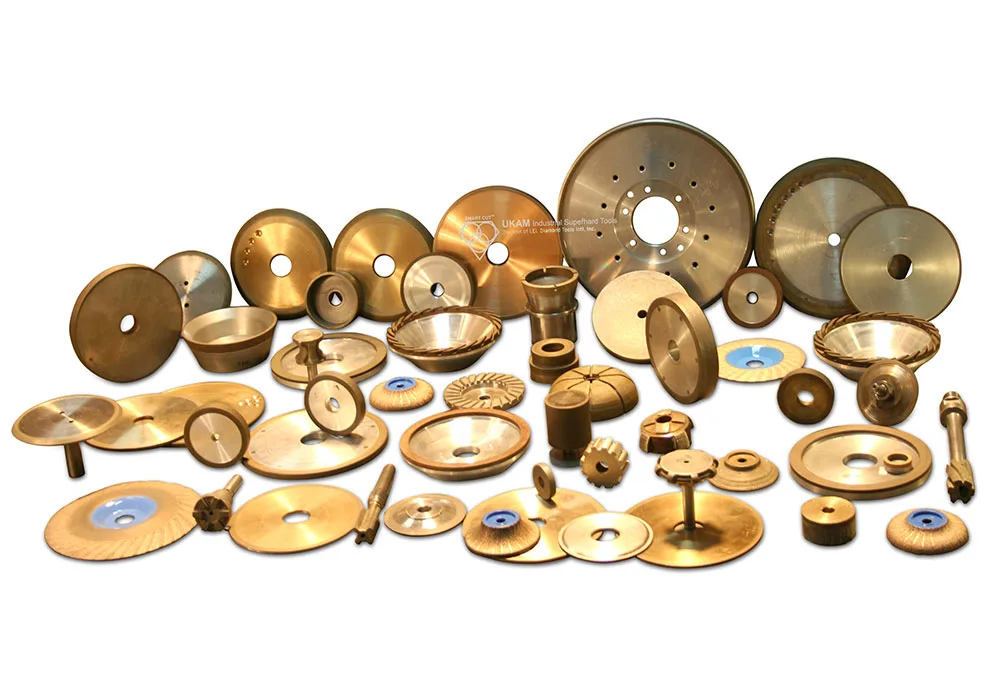
UKAM offers several blade constructions designed for different specimen materials and cutting requirements.
The following comparison helps engineers identify candidate blades for further evaluation.
|
UKAM blade series |
Construction |
Documented characteristics |
Initial application considerations |
|---|---|---|---|
|
SMART CUT® sintered diamond series, including 15HCU and related grades |
Metal-bond diamond rim |
Different abrasive concentrations, grit sizes, and bond options |
Ceramics, glass, minerals, composites |
|
SMART CUT® fully sintered |
Metal bond, abrasive from outside diameter toward arbor |
No separate steel core; thin-kerf configurations |
Small, valuable, or fragile specimens |
|
SMART CUT® Series 400 |
Resin-bond diamond |
Medium diamond, medium concentration; minimum 1,000 RPM for documented configurations |
Fragile ceramics, glass, quartz, semiconductors |
|
SMART CUT® Series 100N |
Continuous-rim nickel-bond diamond |
Continuous cutting edge |
Selected fragile crystals, substrates, glass fibers |
|
SMART CUT® Series 105N |
Interrupted-rim nickel-bond diamond |
Interrupted cutting edge |
Selected composites, electronic packages, PCBs, plastics |
These are product-family characteristics, not a guarantee that every diameter, thickness, or configuration is available for every saw.
SMART CUT® sintered diamond blades
UKAM’s sintered metal-bond wafering blade range includes series such as 15HCU, 20HCU, and other concentration and bond variants.
The correct series should be selected using the specimen material, cutting requirements, and approved operating conditions.
A product-series code alone should not replace application qualification.
SMART CUT® fully sintered blades
Fully sintered blades differ from conventional steel-core blades because the abrasive-containing structure extends through the blade body rather than being limited to a separate cutting rim.
UKAM’s SMART CUT® 4002 XP brochure documents fully sintered diamond options including:
|
Blade item |
Diameter |
Nominal kerf |
Diamond specification |
|---|---|---|---|
|
3030405 |
4 in |
0.006 in (0.15 mm) |
Medium |
|
3030406 |
4 in |
0.008 in (0.20 mm) |
Medium |
|
3030407 |
4 in |
0.010 in (0.25 mm) |
Medium |
|
3030404 |
4 in |
0.013 in (0.33 mm) |
Fine |
These are documented examples for the relevant machine configuration.
The 4002 XP brochure also advises using gravity feed with light cutting weight for the particularly thin 0.006-inch and 0.008-inch options rather than relying on hand feed.
SMART CUT® Series 400 resin-bond blades
The same brochure lists the Series 400 blade item 4041502 with:
- Diameter: 4 inches (101.6 mm)
- Thickness: 0.015 inches (0.381 mm)
- Arbor: 1/2 inch
- Diamond specification: Medium grit and concentration
- Minimum operating speed: 1,000 RPM
The Series 400 option may be evaluated when fragile-specimen edge quality is a priority and the saw supports the blade’s operating requirements.
SMART CUT® nickel-bond blades
UKAM identifies two distinct nickel-bond constructions:
- Series 100N: Continuous-rim blades for applications where a more continuous cutting edge is appropriate.
- Series 105N: Interrupted-rim blades for applications where the more open cutting action may be useful.
Engineers should evaluate both against actual edge damage, cutting resistance, and blade wear rather than assuming one is always superior.
Which UKAM blade should you evaluate first?
|
Cutting requirement |
Candidate blade family |
Qualification priority |
|---|---|---|
|
General precision ceramic sectioning |
Sintered diamond |
Grit, bond, wear, chipping |
|
Very thin sections with minimal nominal kerf |
Fully sintered diamond |
Deflection, feed, actual kerf |
|
Fragile glass or semiconductor sections |
Series 400 resin bond, where speed-compatible |
Edge damage, speed, stability |
|
Selected fragile substrates and glass fibers |
Series 100N nickel bond |
Surface quality and abrasive wear |
|
Selected composite and electronic packages |
Series 105N nickel bond |
Delamination, loading, edge condition |
|
Hardened ferrous metals |
Abrasive compatibility, heat, wear |
Important: The table is a shortlist for technical evaluation. Final blade selection requires the exact material grade, specimen dimensions, machine configuration, and section-quality requirements.
How Diamond Grit Size Influences Cutting Performance
Diamond grit size describes the approximate dimensions of the abrasive particles.
UKAM offers different grit specifications across its wafering blade families.
The selected grit can affect both cutting efficiency and specimen damage.
Coarser diamond grit
Larger abrasive particles may remove more material per active particle under suitable conditions.
Potential benefits include more aggressive cutting action.
Potential concerns include:
- Larger surface scratches
- Edge chipping
- Greater local fracture damage
- Additional downstream preparation
Finer diamond grit
Smaller abrasive particles may provide a finer cutting action for some materials.
However, finer grit can also change cutting resistance, loading behavior, and cutting time.
Grit selection matrix
|
Cutting objective |
Initial approach |
Measurement required |
|---|---|---|
|
Increase removal rate |
Evaluate a coarser compatible grit |
Cutting time and accepted yield |
|
Reduce ceramic edge chipping |
Evaluate finer grit and controlled feed |
Maximum chip size |
|
Prepare fragile crystals |
Evaluate fine-grit options |
Edge and subsurface damage |
|
Improve abrasive cutting efficiency |
Review grit and bond together |
Cutting time and blade wear |
|
Reduce composite damage |
Evaluate grit with fixture support |
Delamination and fiber pullout |
Engineering takeaway:
The finest available grit is not automatically the most economical or technically appropriate.
Blade Thickness and Kerf: How Much Material Is Really Lost?
Blade thickness is particularly important when cutting expensive, scarce, or small specimens.
A thinner blade generally has a smaller nominal kerf, but actual material loss can be greater than blade thickness because of abrasive protrusion, runout, and blade deflection.
Illustrative kerf comparison
Assume a rectangular cut has:
- Cutting length: 20 mm
- Cutting depth: 10 mm
- Nominal kerf equal to blade thickness
|
Parameter |
Blade A |
Blade B |
|---|---|---|
|
Nominal blade thickness |
0.15 mm |
0.38 mm |
|
Cut area |
200 mm² |
200 mm² |
|
Calculated nominal material removed |
30 mm³ |
76 mm³ |
Formula:
Nominal material removed = Cut area × Nominal kerf
In this simplified example, the thinner blade removes less material.
These figures are geometric illustrations, not measured performance results.
Why the thinnest blade may not be the best choice
A thin blade may be more susceptible to lateral movement if the specimen is poorly clamped or the cutting load is excessive.
This can cause:
- Blade wander
- Uneven section thickness
- Increased actual kerf
- Blade damage
- Rejected specimens
The objective should be to select a blade that minimizes total material loss while maintaining adequate cutting stability.
Matching Blade Diameter and Operating Speed
Spindle RPM and blade diameter determine the speed of the cutting edge.
Peripheral speed formula
Peripheral speed (m/s) = π × Blade diameter (m) × RPM ÷ 60
|
Blade diameter |
RPM |
Calculated peripheral speed |
|---|---|---|
|
100 mm |
600 |
3.14 m/s |
|
100 mm |
1,200 |
6.28 m/s |
|
150 mm |
1,200 |
9.42 m/s |
These are mathematical examples, not recommended cutting settings.
Blade compatibility checks
Before selecting a blade, confirm:
- Outside diameter
- Arbor diameter
- Blade thickness
- Flange and guard clearance
- Approved blade operating-speed range
- Machine spindle-speed capability
- Material compatibility
- Coolant and feed requirements
Critical SMART CUT® Series 400 compatibility warning
UKAM’s relevant Series 400 resin-bond blade documentation specifies a minimum operating speed of 1,000 RPM.
The SMART CUT® 4005 has a published maximum spindle speed of 600 RPM.
Therefore, the documented Series 400 configuration requiring at least 1,000 RPM should not be paired with the 4005.
Physical fit does not establish operating compatibility.
Choosing Diamond Wafering Blades for Ceramics
Technical ceramics can exhibit edge chipping, cracking, and abrasive wear during sectioning.
Material grade and microstructure matter as much as hardness.
Alumina
For alumina, investigate:
- Diamond grit
- Cutting load
- Specimen support
- Blade condition
- Coolant delivery
If chipping occurs mainly at the exit edge, inspect the fixture before changing the blade.
Silicon carbide
Silicon carbide is highly abrasive.
Evaluate the blade’s bond wear, abrasive exposure, and cutting time over repeated sections.
Zirconia
Zirconia grades can vary in mechanical behavior.
Monitor cutting load, edge quality, and downstream preparation requirements.
Ceramic selection matrix
|
Material |
Main risk |
Candidate blade approach |
|---|---|---|
|
Alumina |
Edge chipping |
Compatible sintered or resin-bond diamond |
|
Silicon carbide |
Abrasive wear |
Sintered diamond with qualified bond |
|
Zirconia |
Load and edge damage |
Compatible diamond blade with controlled feed |
|
Fragile ceramic substrates |
Breakage and kerf loss |
Thin fully sintered or compatible resin-bond option |
These recommendations are starting points, not validated cutting recipes.
Choosing Blades for Glass, Crystals, and Semiconductors
These materials often require close attention to edge quality and material loss.
Glass and quartz
Potential problems include edge breakout, scratches, and microcracks.
Evaluate grit, blade construction, and support at the cutting exit.
Sapphire and crystals
Crystal orientation may influence fracture behavior.
Record the cutting direction and inspect the resulting section for damage.
Semiconductor specimens
Semiconductor preparation may require tight control of:
- Kerf loss
- Edge chipping
- Subsurface damage
- Contamination
- Dimensional consistency
For valuable specimens, the cost of a rejected section may exceed the cost of the blade.
Engineering takeaway:
Choose the blade according to the inspection or preparation operation that follows sectioning.
Choosing Blades for Composites
Composite materials contain reinforcement and matrix phases that can respond differently during abrasive cutting.
Common problems include:
- Delamination
- Fiber pullout
- Matrix smearing
- Edge fraying
- Localized heating
UKAM’s nickel-bond blade families may be worth evaluating for selected composite and electronic-package applications.
However, blade selection should also consider fiber orientation, laminate thickness, and specimen support.
|
Defect |
Possible cause |
First investigation |
|---|---|---|
|
Delamination |
Unsupported laminate, excessive load |
Fixture and feed |
|
Fiber pullout |
Abrasive interaction |
Grit and blade condition |
|
Matrix smearing |
Heat or loading |
Coolant and cutting conditions |
|
Edge fraying |
Inadequate exit support |
Workholding and cut direction |
A change in blade bond may help, but it should not be the first response to every composite cutting problem.
Matching SMART CUT® Blades to Sectioning Saws
The following machine specifications help narrow the blade selection.
|
Machine |
Published RPM |
Blade diameter |
Main selection consideration |
|---|---|---|---|
|
SMART CUT® 4005 |
0–600 |
3–4 in |
|
|
50–1,500 |
3–7 in |
Wider blade and speed options |
|
|
SMART CUT® 4002 XP |
400–3,400 |
4 in |
Compact higher-speed sectioning |
|
400–3,000 |
4–7 in |
Open-table cutting and blade-size flexibility |
The machine’s RPM range does not mean every blade is approved throughout that range.
Need Help Matching a Blade to Your SMART CUT® Saw?
Selecting a compatible wafering blade requires more than matching diameter and arbor.
UKAM can review your material, specimen dimensions, machine model, blade construction, and required section quality to help identify suitable configurations for evaluation.
Common Diamond Wafering Blade Selection Mistakes
Mistake 1: Selecting by price alone
Blade purchase price does not account for rejected sections, blade changes, or additional polishing.
Mistake 2: Assuming finer grit always produces better results
Fine grit may improve some surface-quality characteristics but can also affect cutting efficiency.
Mistake 3: Selecting the thinnest blade without considering feed
Thin blades can be sensitive to lateral loading and poor workholding.
Mistake 4: Ignoring the blade’s minimum operating speed
Some resin-bond blade configurations require operating speeds that low-speed saws cannot achieve.
Mistake 5: Using diamond for every hard material
For many hardened ferrous materials, CBN or a suitable conventional abrasive may be preferable.
Mistake 6: Changing several cutting variables at once
Changing blade, RPM, feed, and coolant simultaneously makes troubleshooting difficult.
Troubleshooting Diamond Wafering Blade Problems
|
Problem |
Possible causes |
Recommended checks |
|---|---|---|
|
Excessive load, unsuitable grit, poor support |
Feed, fixture, blade condition |
|
|
Slow cutting |
Loading, wear, unsuitable bond |
Abrasive edge and dressing requirements |
|
Blade deflection |
Excessive load, insufficient support |
Blade thickness, flanges, fixture |
|
Premature blade wear |
Abrasive incompatibility |
Material grade, bond, operating conditions |
|
Excessive kerf |
Runout, lateral movement |
Blade mounting and actual kerf |
|
Surface damage |
Abrasive and process mismatch |
Grit, feed, coolant |
|
Composite delamination |
Poor support or cutting load |
Fixture, laminate orientation |
|
Variable section thickness |
Positioning or blade instability |
Alignment, workholding, measurement |
Recommended troubleshooting sequence
- Record the observed defect.
- Check the fixture and specimen support.
- Inspect blade condition and mounting.
- Verify the approved speed range.
- Review feed and coolant.
- Change one primary variable.
- Measure the result using defined acceptance criteria.
How to Qualify a Diamond Wafering Blade
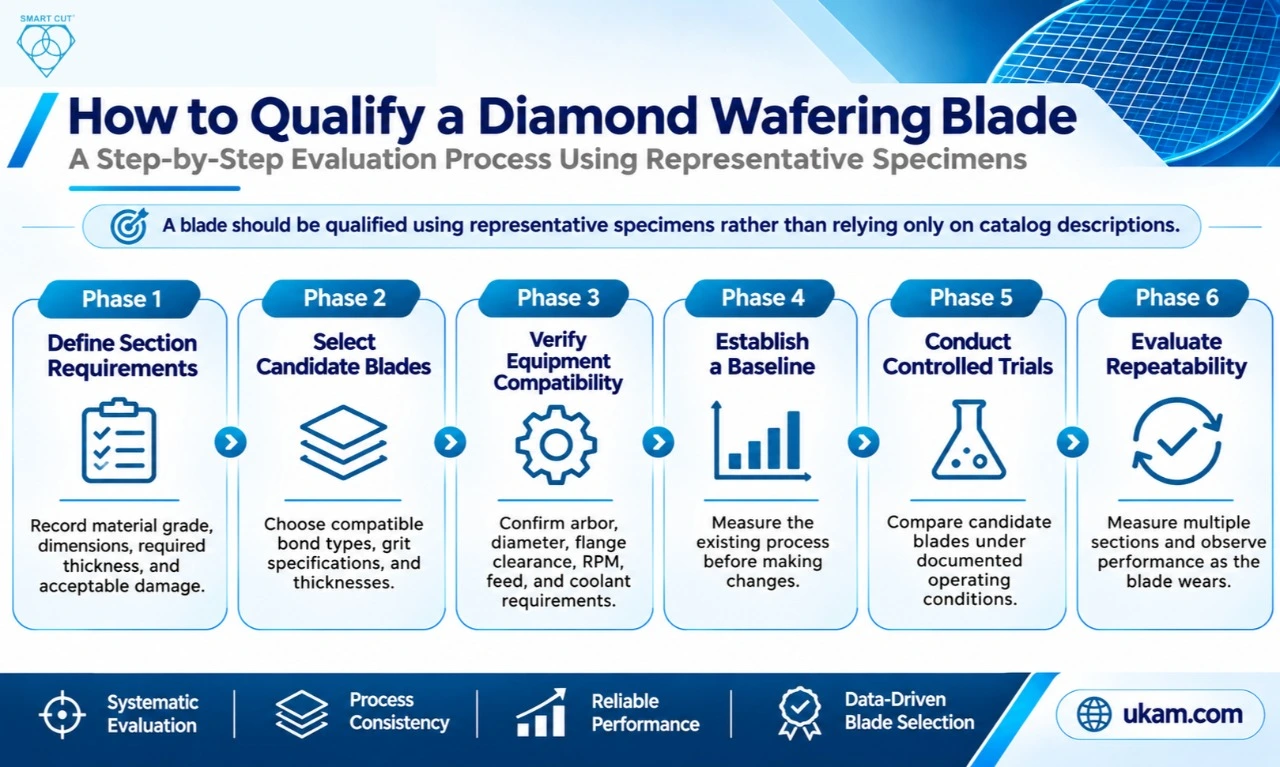
A blade should be qualified using representative specimens rather than relying only on catalog descriptions.
Phase 1: Define section requirements
Record material grade, dimensions, required thickness, and acceptable damage.
Phase 2: Select candidate blades
Choose compatible bond types, grit specifications, and thicknesses.
Phase 3: Verify equipment compatibility
Confirm arbor, diameter, flange clearance, RPM, feed, and coolant requirements.
Phase 4: Establish a baseline
Measure the existing process before making changes.
Phase 5: Conduct controlled trials
Compare candidate blades under documented operating conditions.
Phase 6: Evaluate repeatability
Measure multiple sections and observe performance as the blade wears.
Blade qualification worksheet
|
Measurement |
Existing blade |
Candidate A |
Candidate B |
|---|---|---|---|
|
Blade series |
Record |
Record |
Record |
|
Bond type |
Record |
Record |
Record |
|
Grit specification |
Record |
Record |
Record |
|
Thickness |
Record |
Record |
Record |
|
RPM |
Record |
Record |
Record |
|
Cutting load |
Record |
Record |
Record |
|
Coolant |
Record |
Record |
Record |
|
Average cutting time |
Measure |
Measure |
Measure |
|
Actual kerf |
Measure |
Measure |
Measure |
|
Edge damage |
Measure |
Measure |
Measure |
|
Accepted sections |
Count |
Count |
Count |
|
Blade wear |
Measure |
Measure |
Measure |
|
Preparation time |
Measure |
Measure |
Measure |
Do not assume one blade is superior until the acceptance criteria and actual results support that conclusion.
Experiencing Chipping, Excessive Kerf, or Premature Blade Wear?
A cutting problem may involve blade construction, feed, coolant, or specimen support.
Share your material grade, saw model, blade specification, operating conditions, and observed defect with UKAM.
These details can support a more focused application review.
Request a Diamond Blade Application Review
Calculating Cost per Accepted Section
Blade price alone is not enough to compare cutting economics.
A blade that costs more initially may be economical if it consistently produces acceptable sections with less rework. The reverse may also be true.
Cost calculation
Cost per accepted section = Total applicable cutting cost ÷ Accepted sections
Total cutting cost may include:
- Blade consumption
- Machine operating time
- Operator attendance
- Blade changes and conditioning
- Coolant and other consumables
- Rejected specimens
- Additional preparation attributable to cutting
Blade cost comparison framework
|
Cost factor |
Blade A |
Blade B |
|---|---|---|
|
Blade purchase price |
Actual |
Actual |
|
Blade life |
Measured |
Measured |
|
Average cutting time |
Measured |
Measured |
|
Accepted-section yield |
Measured |
Measured |
|
Additional preparation |
Measured |
Measured |
|
Cost per accepted section |
Calculated |
Calculated |
This is an illustrative calculation framework. It does not claim any specific cost reduction or blade-life improvement.
Supplier Evaluation: Questions to Ask Before Ordering
A technical blade supplier should be able to help clarify the following:
|
Evaluation question |
Why it matters |
|---|---|
|
Is the blade suitable for the exact material grade? |
Similar material names can conceal different cutting behavior |
|
What are the approved operating conditions? |
Prevents unsuitable speed or feed selection |
|
Which bond and grit options are available? |
Allows application-specific qualification |
|
What blade thicknesses are offered? |
Supports kerf and stability requirements |
|
Establishes physical compatibility |
|
|
What dressing and coolant guidance applies? |
Supports repeatable cutting |
|
Are alternative constructions available? |
Provides options when the baseline process fails |
|
What information is needed for technical review? |
Reduces unnecessary trial-and-error |
Final Blade Selection Checklist
Material and quality
- Exact material grade identified
- Specimen dimensions recorded
- Required thickness documented
- Edge-damage limits established
Blade specification
- Bond type selected
- Grit specification confirmed
- Thickness evaluated
- Abrasive concentration considered
- Blade series documented
Machine compatibility
- Blade diameter verified
- Arbor and flanges checked
- Approved operating-speed range confirmed
- Feed arrangement reviewed
- Coolant requirements checked
Qualification
- Representative specimens tested
- Actual kerf measured
- Edge condition inspected
- Blade wear monitored
- Accepted-section yield calculated
- Total cutting cost evaluated
Frequently Asked Questions
Resin-bond blades hold diamond in a polymer-based matrix, while metal-bond blades retain diamond in a metallic matrix. Their abrasive exposure and wear characteristics differ, so the correct choice depends on the specimen and cutting conditions.
SMART CUT® Series 400 resin-bond and selected fully sintered diamond blades are candidates worth evaluating. The final selection depends on material grade, specimen geometry, edge-quality requirements, and machine compatibility.
No. UKAM’s fully sintered construction contains abrasive through the blade body, whereas conventional steel-core constructions have an abrasive cutting rim attached to a separate core.
No. Grit size interacts with bond, feed, blade condition, and specimen support. Controlled trials are needed to determine the best result.
A thinner blade generally reduces nominal kerf, but actual kerf can increase because of runout or deflection.
Not the documented Series 400 configurations requiring at least 1,000 RPM. The 4005’s published maximum is 600 RPM.
Series 100N uses a continuous-rim nickel-bond configuration, while Series 105N uses an interrupted-rim configuration. They are intended for different cutting responses and application requirements.
For many hardened ferrous materials, CBN or another suitable abrasive is preferable. Verify the material and cutting requirements before selecting the blade.
Possible causes include abrasive loading, wear, unsuitable bond behavior, or operating conditions outside the blade’s effective range.
Provide material grade, specimen dimensions, saw model, blade diameter, arbor, existing blade specification, cutting conditions, and required section quality. UKAM technical support can review these details.
Final Engineering Recommendations
Selecting a diamond wafering blade requires a balance between abrasive construction, cutting stability, section quality, and total operating cost.
For reliable results:
- Match the abrasive and bond to the actual specimen material.
- Evaluate grit size using measured cutting time and section damage.
- Balance blade thickness against stiffness and actual kerf.
- Confirm the blade’s approved operating conditions.
- Control feed, coolant, and workholding.
- Qualify candidate blades with representative specimens.
- Compare cost per accepted section rather than purchase price alone.
The best diamond wafering blade is the one that repeatedly produces acceptable sections under verified operating conditions at a practical total processing cost.
Request a Diamond Wafering Blade Engineering Review
UKAM Industrial Superhard Tools supplies SMART CUT® precision wafering blades and sectioning equipment for laboratory and industrial applications.
Whether you are selecting a new blade, comparing resin-bond and sintered constructions, or troubleshooting recurring cutting defects, UKAM can review your application requirements and discuss suitable options for qualification.
To begin, provide:
- Material type and grade
- Specimen dimensions
- Required section thickness and tolerance
- Saw make and model
- Current blade diameter, thickness, bond, and grit
- RPM, feed, and coolant conditions
- Current cutting problem
- Expected cutting volume
UKAM Industrial Superhard Tools
Valencia, California
Phone: (661) 257-2288
Email: lel@ukam.com
Trusted by Tens of Thousands of Manufacturers, Laboratories,
Research Institutions Worldwide Since 1990

Established in 1990
