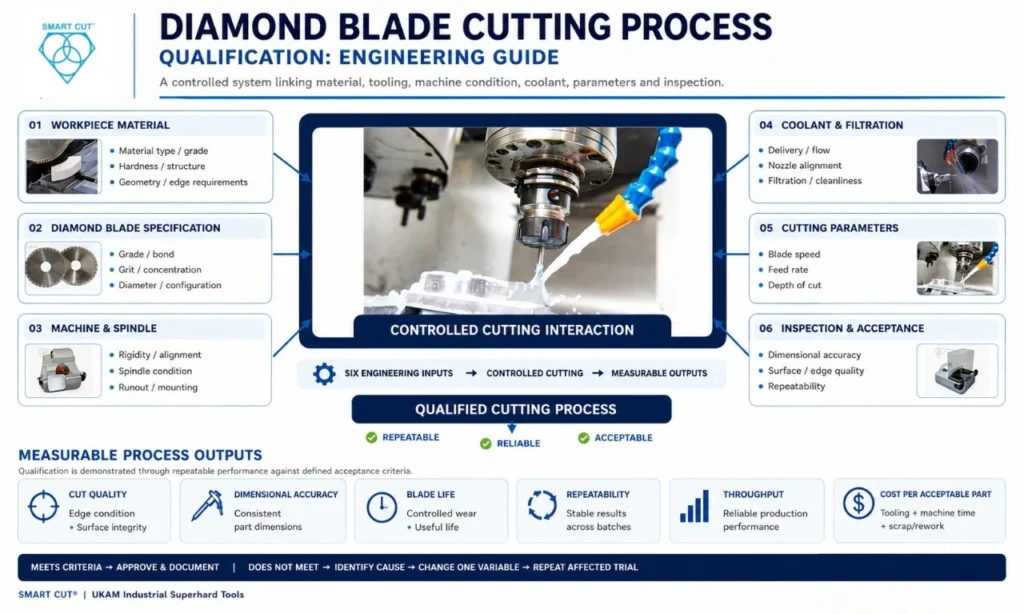









Diamond Blade Cutting Process Qualification: Engineering Guide

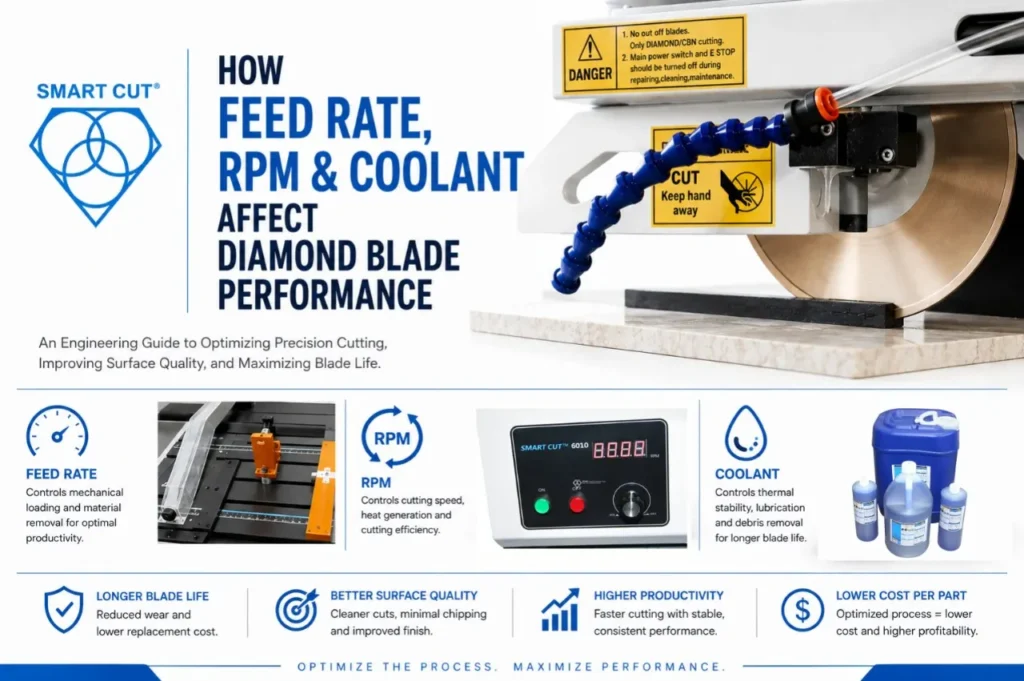
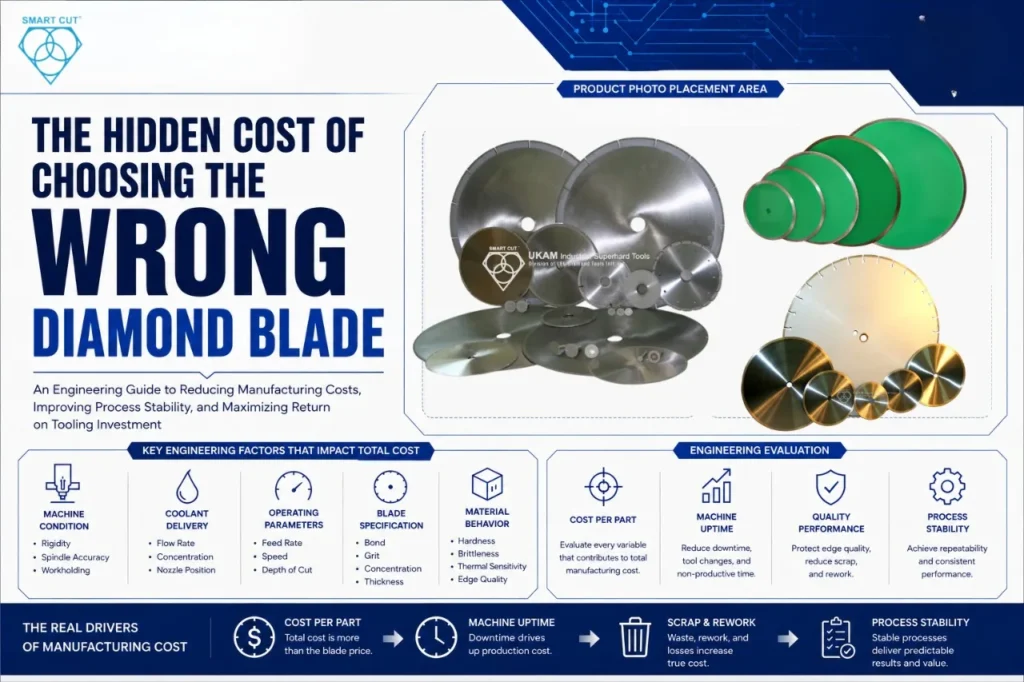
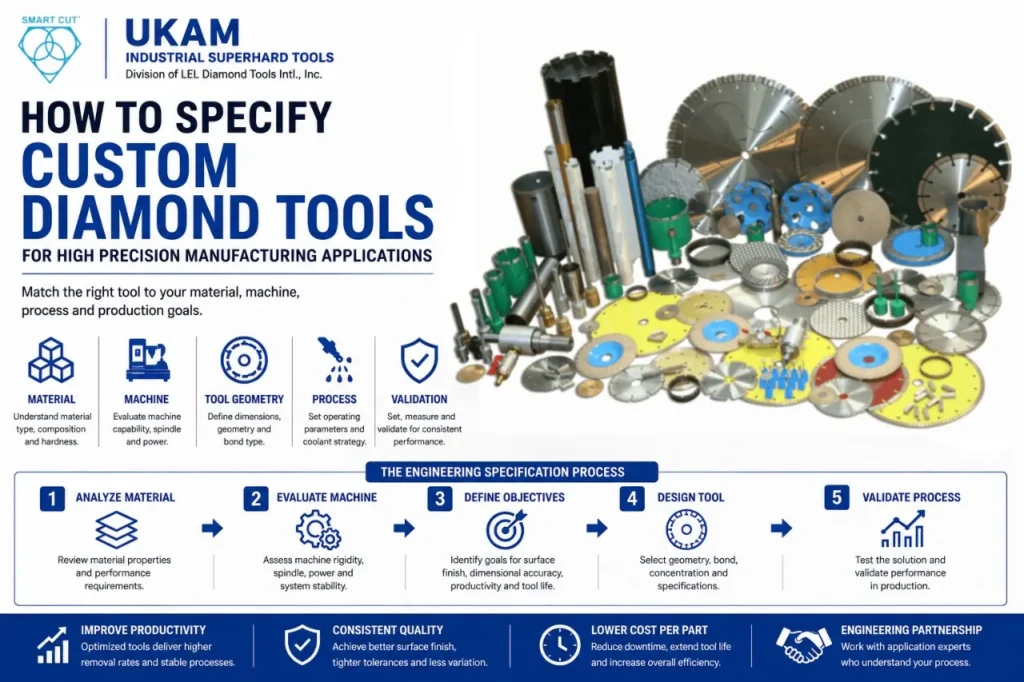
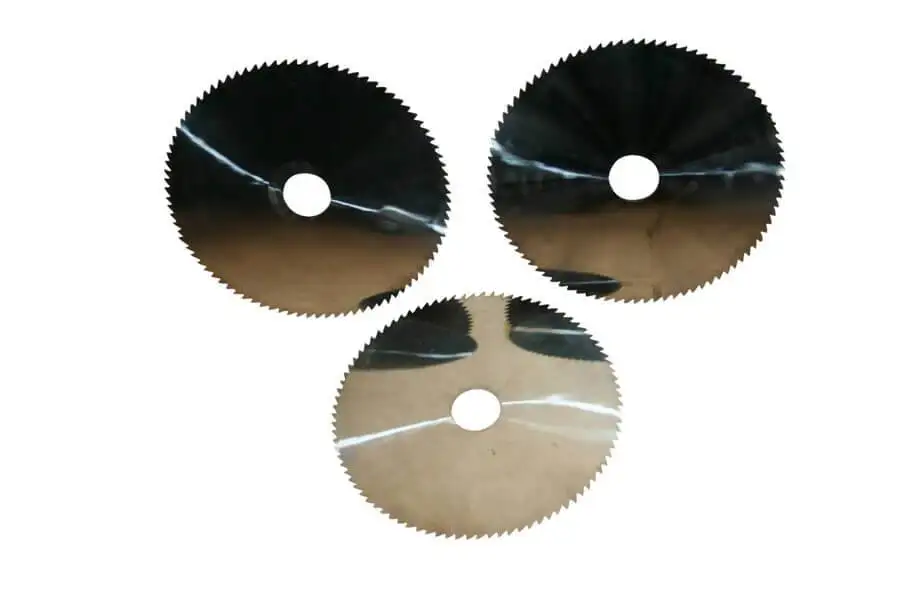
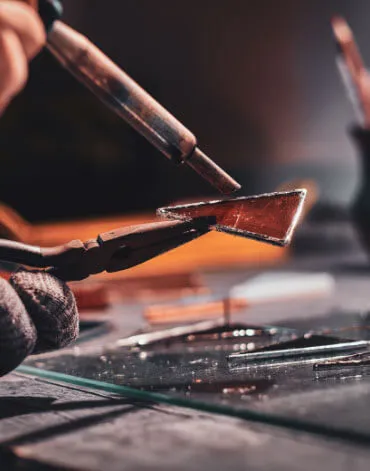
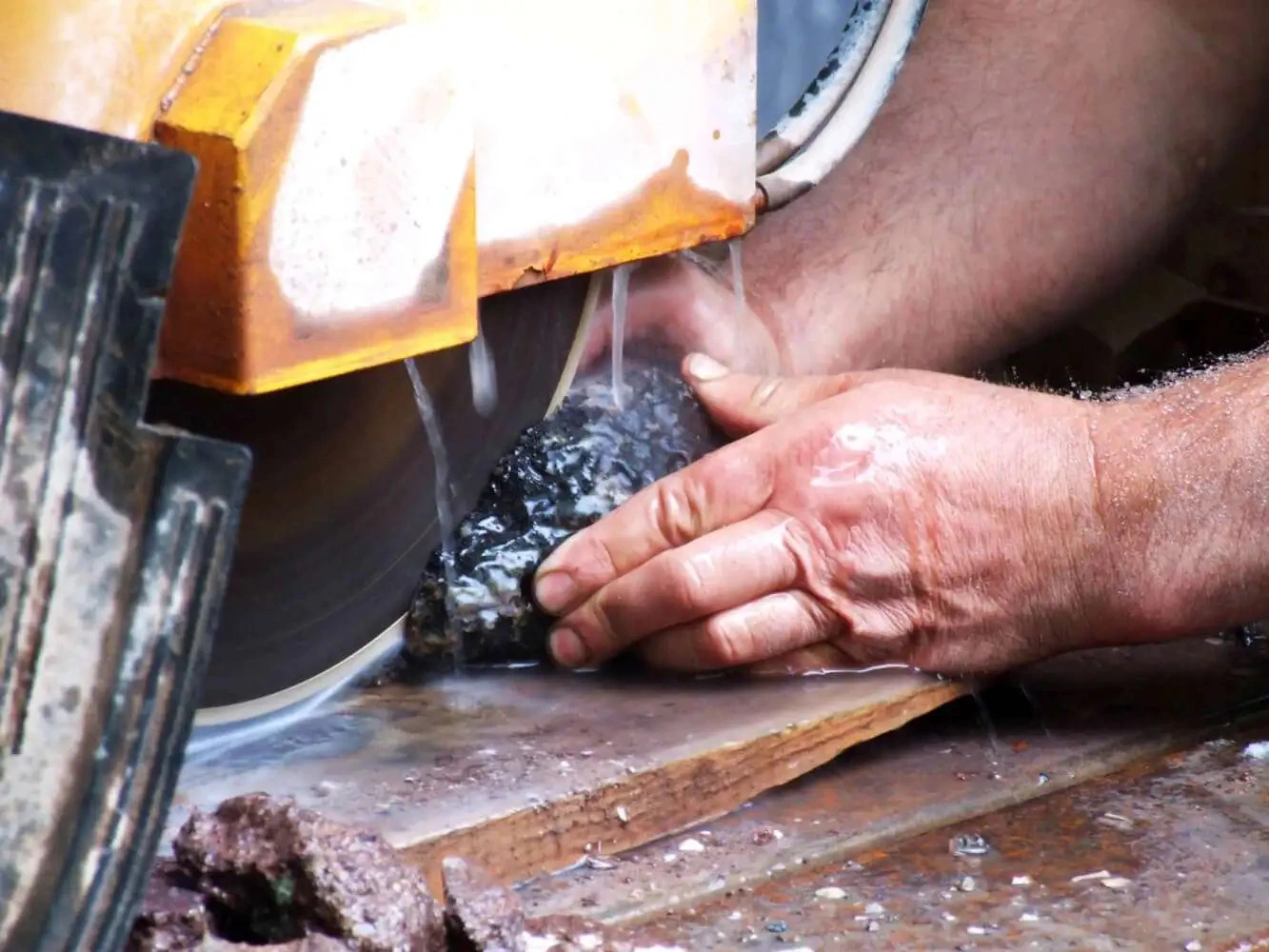
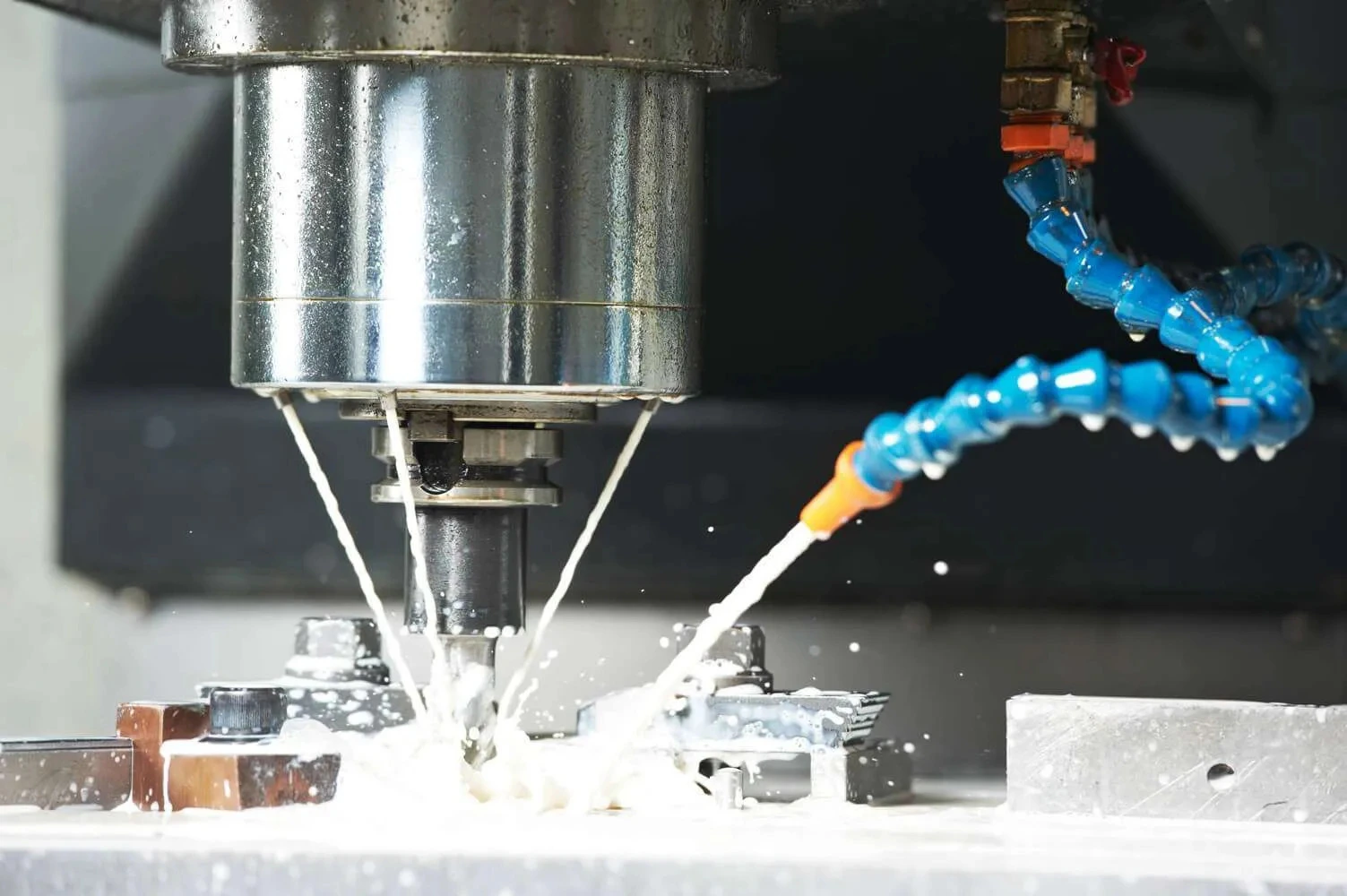
Successful diamond blade cutting depends on more than selecting the correct blade. Material properties, blade specification, machine condition, coolant delivery, cutting parameters, and operator practices all influence cutting quality. Without a structured qualification process, manufacturers often experience inconsistent edge quality, excessive blade wear, dimensional variation, thermal damage, and higher production costs.
Continue reading

How Diamond Mesh Size Affects Grinding Performance and Surface Finish

Diamond mesh size is one of the most misunderstood yet influential variables in diamond grinding wheel design. Engineers often focus on bond type, spindle speed, coolant delivery, or wheel concentration when troubleshooting grinding problems, while the abrasive particle size receives far less attention than it deserves. In reality, diamond mesh size directly influences chip formation, grinding forces, stock removal rate, surface finish, wheel wear, dressing frequency, heat generation, dimensional accuracy, and overall process stability.
Continue reading
diamond bond types

How to Select the Correct Diamond Bond Type for Precision Grinding Applications

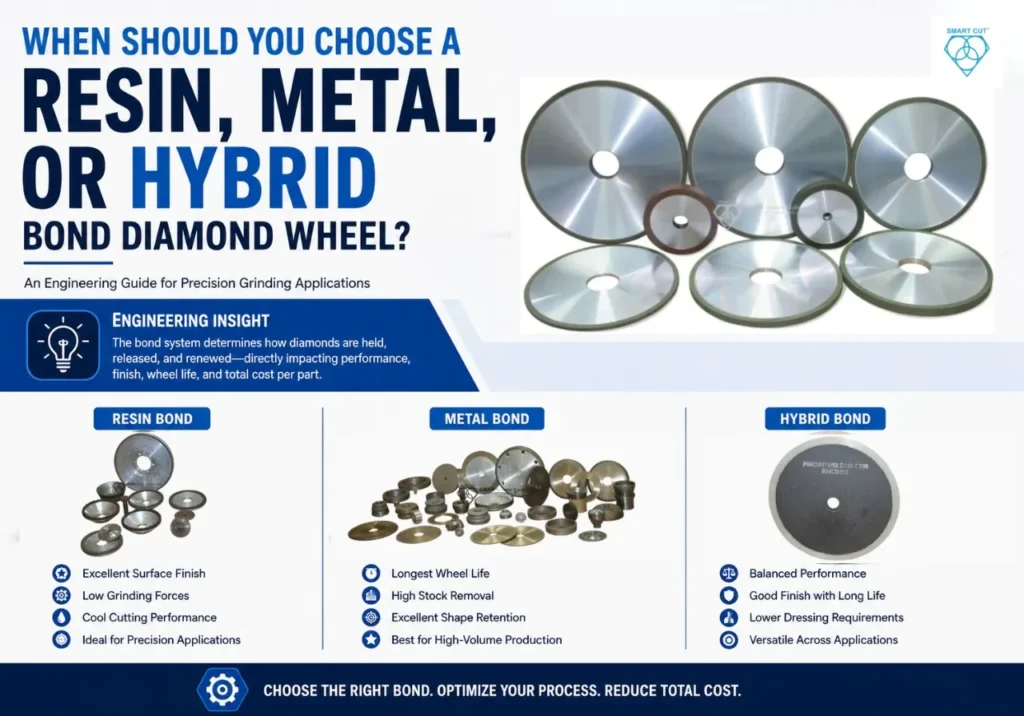
Selecting the correct diamond bond type is one of the most important engineering decisions in any precision grinding operation. Bond selection influences grinding forces, wheel wear, abrasive exposure, chip evacuation, surface finish, dimensional accuracy, dressing frequency, and overall process stability. An incorrect bond may cause wheel loading, glazing, excessive heat generation, premature wheel wear, or poor workpiece quality even when the diamond grit size and concentration have been selected correctly.
Continue reading

Resin Bond vs. Metal Bond Diamond Wheels: Engineering Comparison for Precision Grinding Applications

Selecting between a resin bond and a metal bond diamond wheel directly influences grinding efficiency, wheel wear, surface finish, dimensional accuracy, dressing requirements, and overall process stability. Engineers frequently focus on diamond grit size or diamond concentration when troubleshooting grinding problems, yet bond selection often determines how consistently the abrasive particles perform throughout the grinding process.
Continue reading

Why Diamond Tools Load During Grinding and How to Prevent It

Diamond tool loading is one of the most common causes of reduced grinding efficiency, inconsistent surface finish, excessive heat generation, and premature tool replacement. In many precision grinding operations, engineers initially assume the grinding wheel has reached the end of its service life. In reality, the abrasive particles often remain usable, but the spaces between the exposed diamonds become filled with workpiece material, grinding debris, and swarf. This condition prevents the wheel from cutting efficiently and causes it to rub instead of grind.
Continue reading

Common Grinding Mistakes That Reduce Diamond Tool Performance

Diamond tool performance depends on the complete grinding process rather than the grinding wheel alone. Production problems such as wheel loading, glazing, poor surface finish, excessive dressing, thermal damage, inconsistent dimensional accuracy, and premature wheel replacement often develop because several process variables are working against each other. Replacing the grinding wheel without evaluating the entire grinding system rarely produces a lasting improvement — a full breakdown of these failure patterns is covered in our diamond & CBN wheel troubleshooting guide.
Continue reading

Semiconductor Wafer Grinding: Reduction in Edge Chipping Using Resin Bond Diamond Wheels

Edge chipping during semiconductor wafer grinding was generating unacceptable scrap rates on GaAs, sapphire, and silicon carbide substrates used in RF devices, power electronics, and optoelectronic manufacturing. During qualification trials a metal bond diamond wheel optimized primarily for wheel life and dimensional retention. Production data showed progressive edge fracture, thermal haze, and subsurface cracking during finish grinding passes.
Continue reading

Common Causes of Thermal Damage During PCD Grinding Operations

A manufacturer producing PCD cutting tools for aerospace aluminum machining and composite machining applications experienced recurring thermal damage during finish grinding operations. Operators reported edge discoloration, unstable wheel wear, inconsistent edge radius formation, surface haze, and premature insert failure during production validation.
Continue reading
Vitrified Bond Diamond Grinding Wheels for PDC Cutter Grinding

Vitrified Bond Diamond Grinding Wheels for PDC Cutter Grinding

PDC cutter grinding fails in three specific ways: thermal damage to the diamond layer, chipping at the diamond-carbide interface, and wheel glazing that stops material removal entirely. Each failure mode has a distinct cause and a distinct fix. Most process problems trace back to one of three decisions: the wrong bond system, inadequate coolant delivery, or unchanged parameters across the diamond-carbide transition zone. This guide addresses all three. It covers the material science behind PDC grinding difficulty, why vitrified bond outperforms alternative systems, how to set starting parameters, how to manage the transition zone, and what wheel specification variables actually control surface finish and tool life.
Continue reading