





















Table of Contents
ToggleGlass is one of the hardest materials to cut. It is a tough, brittle material that is extremely heat and vibration resistant. Kegs: Small cutting errors can result in chipping, cracking or catastrophic failure of the work piece. Therefore, professionals in various fields of applications demand diamond blades for glass when it comes to clean, glass cutting in the future.
This guide will address what a diamond blade for glass is, how it works, how to choose the right type of diamond blade for cutting glass, and some techniques that can help you cut different types of glass. With that said, the purpose of this article is to be an educational resource to lend a better understanding about glass cutting, a way of explaining the technology, techniques and considerations involved.
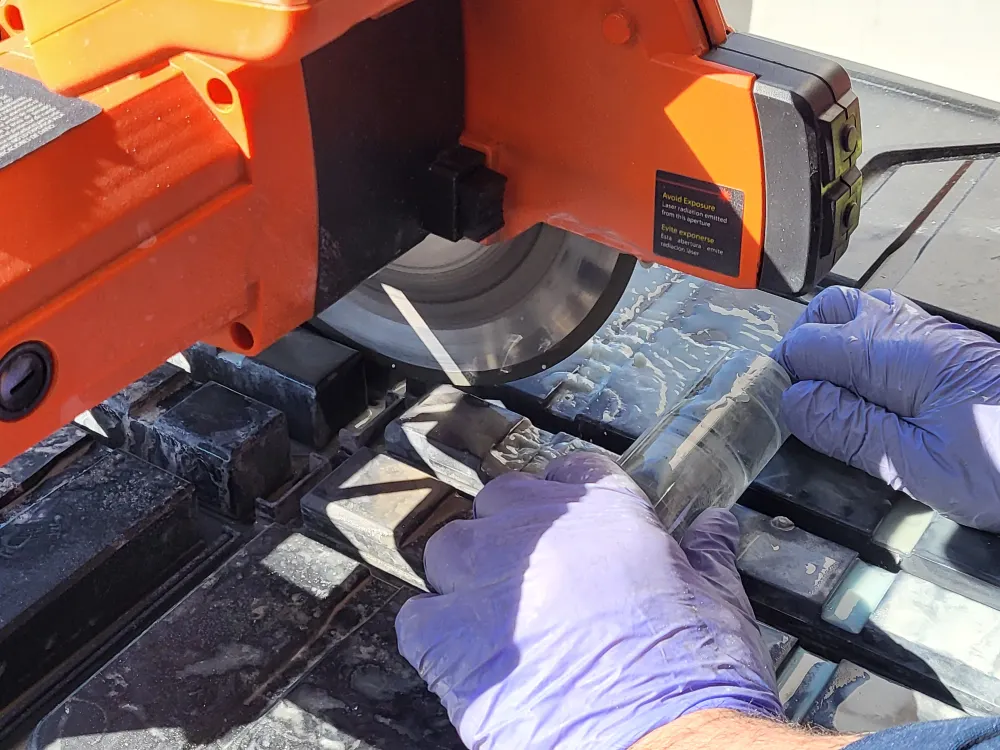
Why Cutting Glass Is Difficult
Glass behaves very differently from materials like metal or wood. It does not bend or deform under stress. Instead, it fractures suddenly when its internal structure is disturbed.
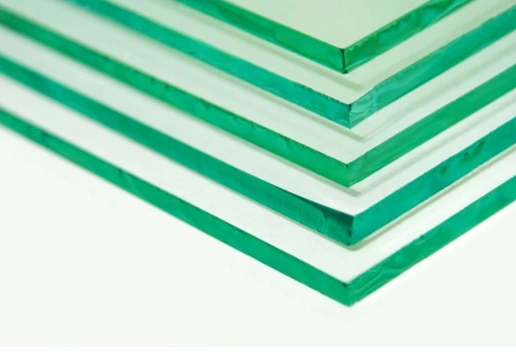
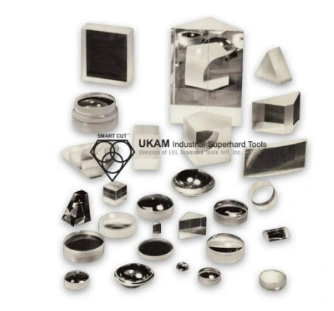
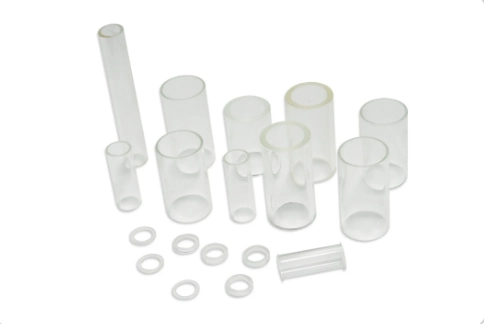
Key challenges when cutting glass:
- Brittleness: Glass cracks instead of flexing
- Micro-fractures: Small internal cracks can spread quickly
- Heat sensitivity: Localised heat causes stress fractures
- Edge chipping: Poor tools or techniques damage cut edges
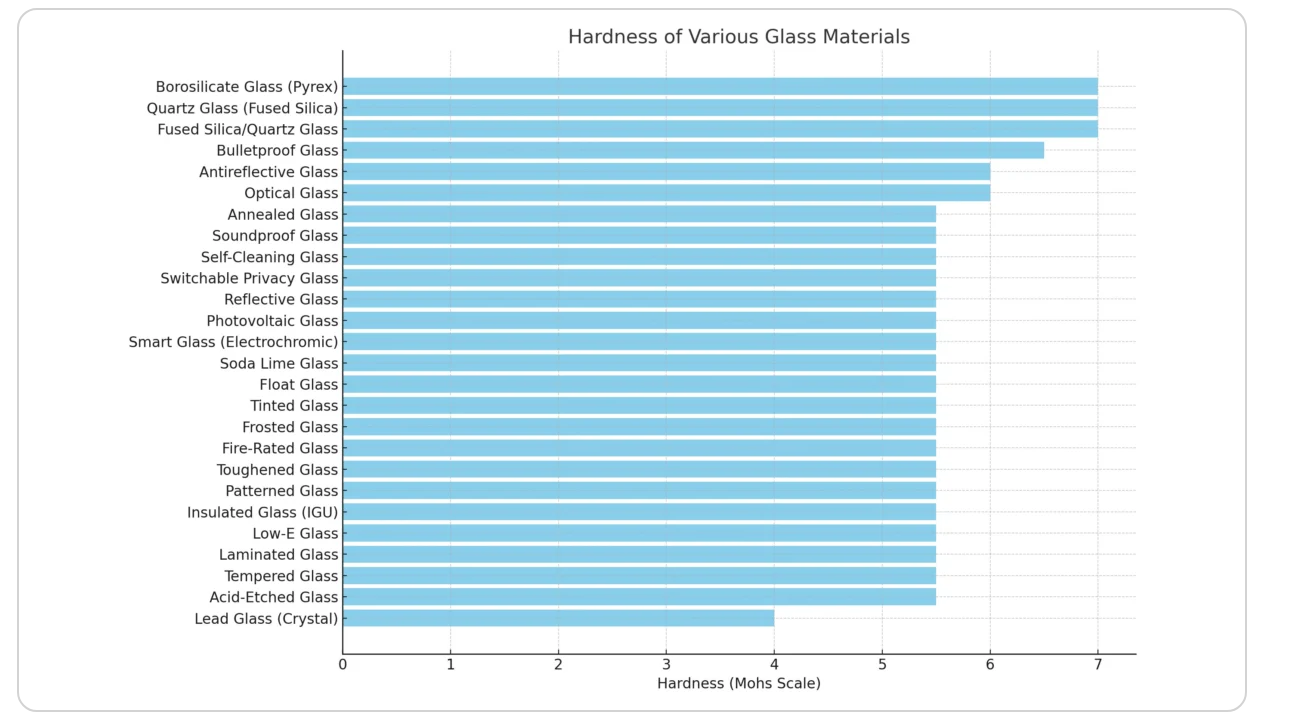
Because of these characteristics, standard cutting blades are not suitable. Glass requires precision tools designed to control heat, vibration, and cutting pressure.
What Are Diamond Blades for Glass?
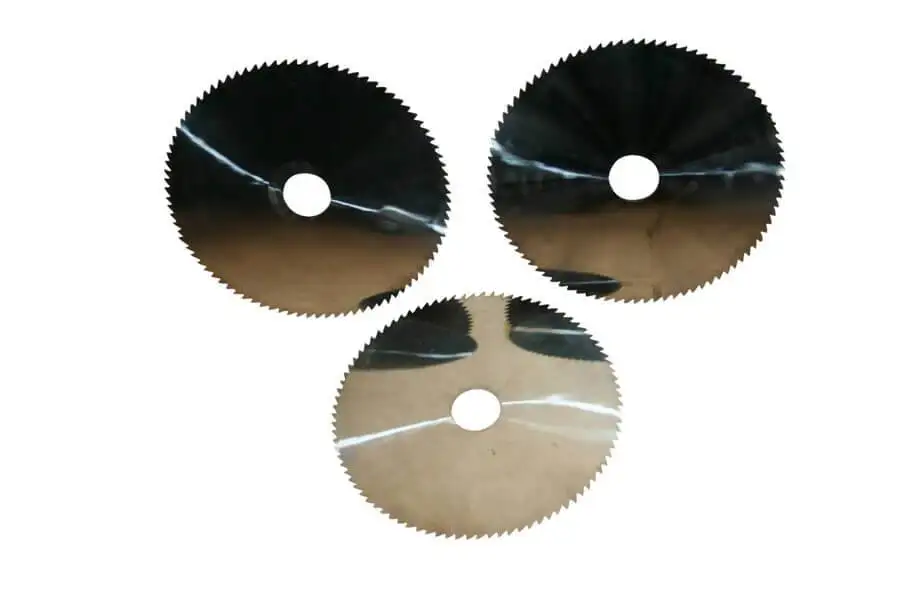
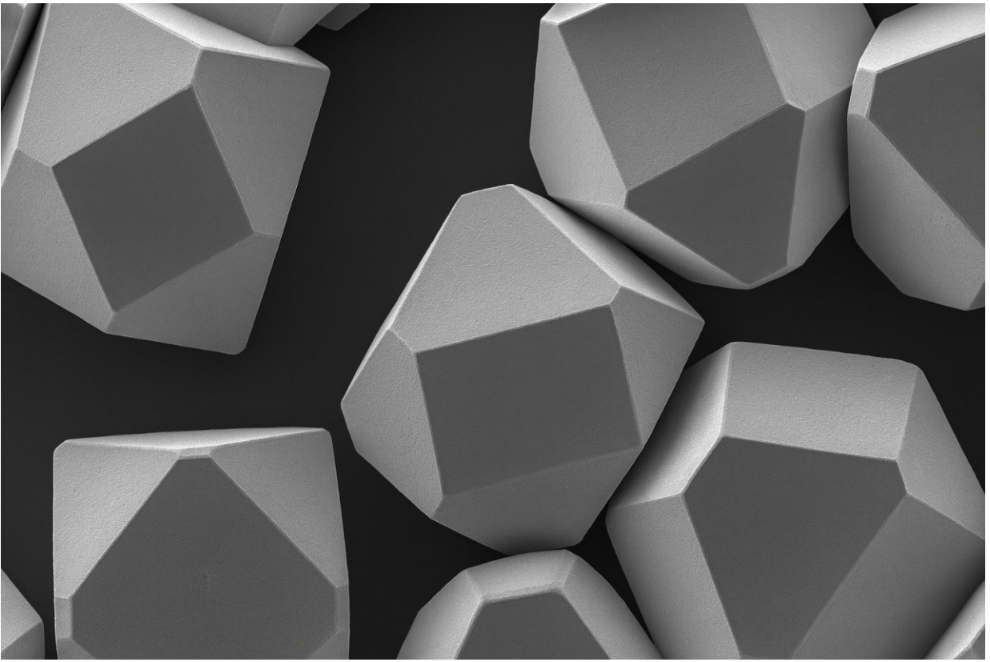
Diamond blades for glass are cutting tools that use industrial-grade diamond particles embedded along the cutting edge. Diamonds are used because they are the hardest known material and can grind glass effectively without excessive force.
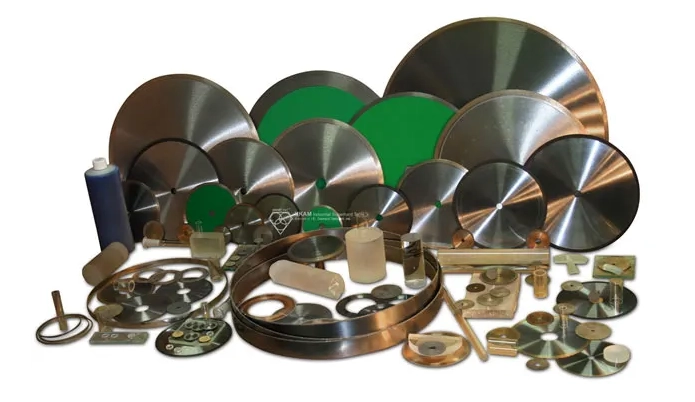
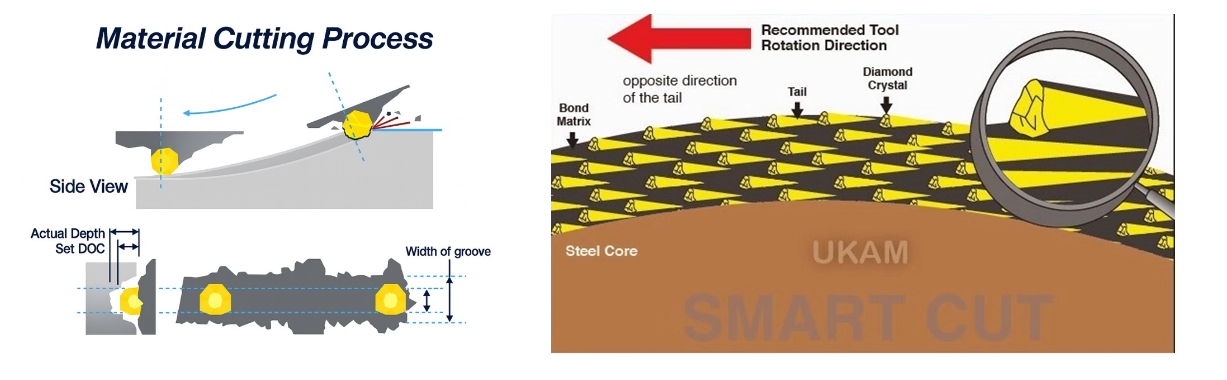
Unlike traditional saw blades that slice material, diamond blades grind through glass gradually, removing material in a controlled manner. This grinding action is what allows clean cuts with minimal damage.
Key characteristics of glass-cutting diamond blades:
- Fine or very fine diamond grit
- Softer bond systems to reduce chipping
- Thin blade profiles for precision
- Designed for low vibration and smooth cutting
How Diamond Blades Cut Glass (Simple Explanation)
Diamond blades do not cut glass by tearing or slicing. Instead, they work through a controlled grinding process.
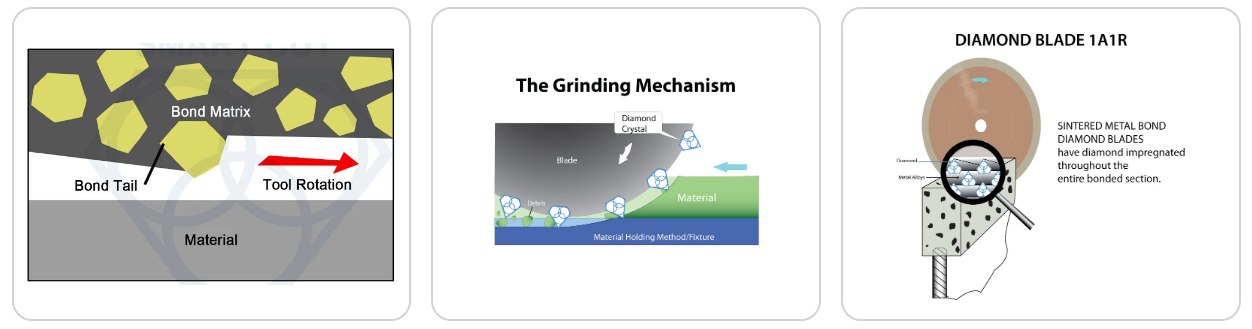
- Diamond particles contact the glass surface
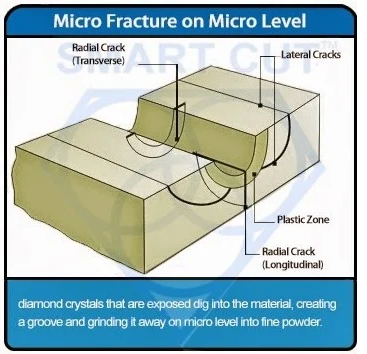
- Micro-fractures form at a controlled rate
- Material is removed gradually
- Heat is dissipated using a coolant or proper speed
This controlled process prevents sudden cracks and preserves edge quality.
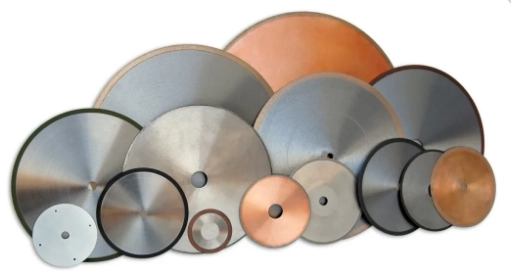
Types of Diamond Blades Used for Glass Cutting
Not all diamond blades are suitable for glass. The blade design must match the application.
1. Continuous Rim Diamond Blades
These blades have a smooth, uninterrupted cutting edge.
Best for:
- Thin glass
- Decorative and architectural glass
- Optical and display glass
Advantages:
- Smoothest cuts
- Minimal edge chipping
- High surface quality
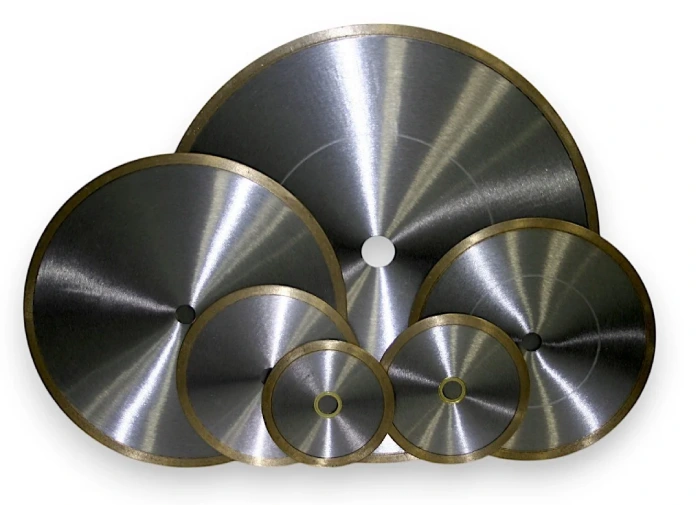
2. Fine-Grit Diamond Blades
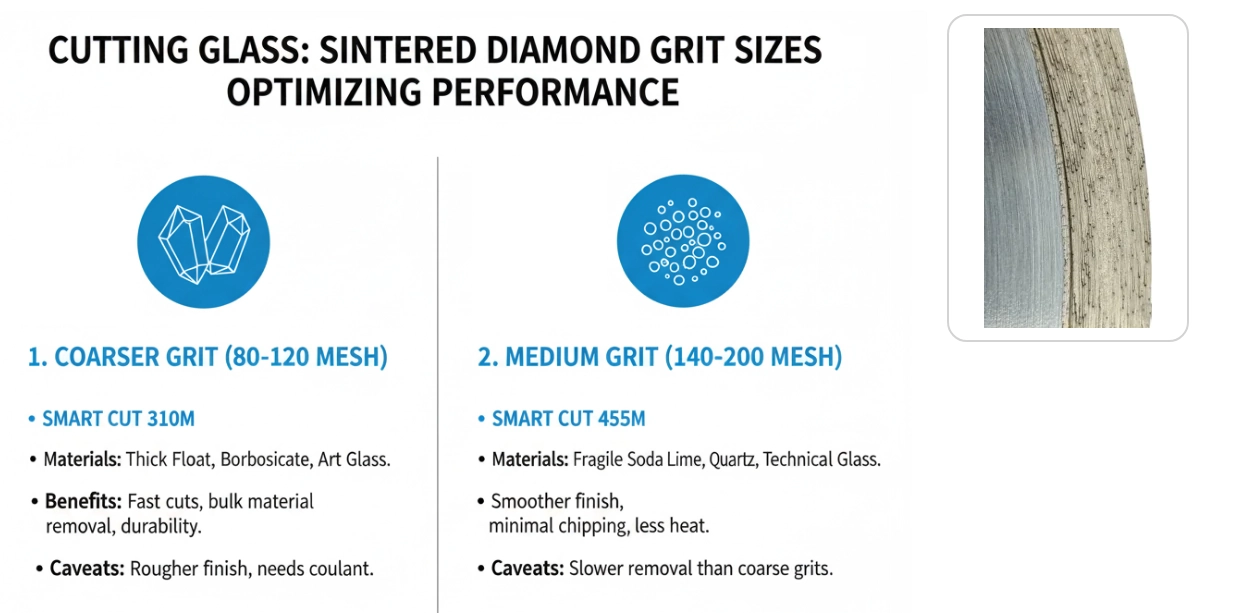
Fine Diamond Grit Size Diamond Blades use smaller diamond particles. SMART CUT® 455M, a cutting-edge blade engineered specifically for precision glass cutting where minimizing chipping and excellent surface finish is important.
Best for:
- Precision applications
- Fragile or thin glass
- High-quality edge requirements
Trade-off:
- Slower cutting speed, but superior finish
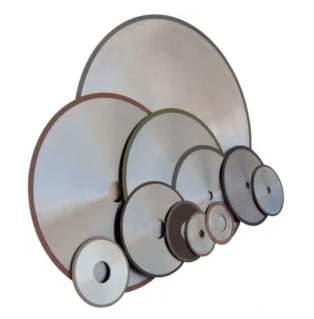
3. Resin Bond Diamond Blades
In resin bond diamond blades, diamonds are held in a resin-based matrix.
Best for:
- Heat-sensitive glass
- Applications requiring smooth finishes
Reduced subsurface damage
Advantages
- Unmatched Cut Quality (eliminates secondary finishing operations)
- Faster & Freer Speed
- Less Heat Generation than other bond types
- Less Stress to material than other bond types
- Will work the hardest material (even natural diamond)
- Can be used dry (without coolant) when needed
- Can withstand Higher Temperature than sintered (metal bond) tools
- Perfect for fragile and delicate materials
- Minimize Chipping
- Minimize Material Deformation
- Improve Surface Finish
- maximum cutting performance
- no glazing
- faster cutting action
- improved surface finish quality
- better coolant retention
- No Contamination
- Longer Life than any other Resin Bond Blade in Industry
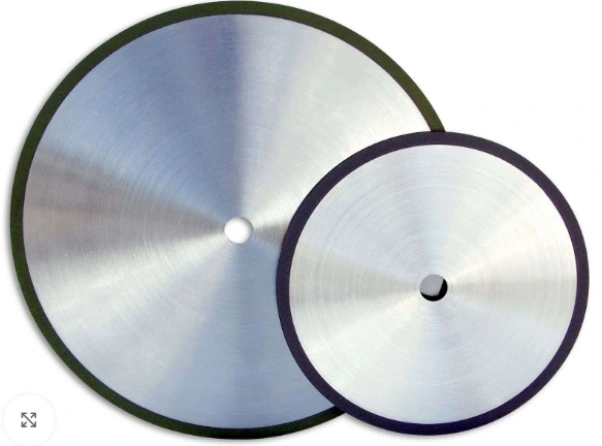
SMART CUT® Series 2000
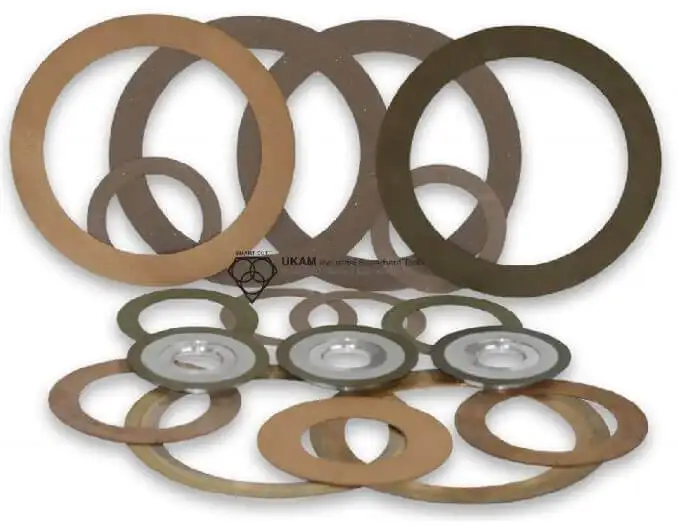
SMART CUT® Series 2000 are the highest quality & most commonly used Resin Bond Diamond Cut off Blades / Cut Off Wheels available today. Designed specifically for cutting a wide array of materials such as soda lime and borosilicate glass tubing, along with ultra hard and brittle materials such as ceramic tubing materials like Al203, silicon carbide, sapphire, and tungsten carbide, & exotic metals. These blades also handle metals and alloys with ease. While they can be used dry, employing coolant is advised to achieve the best results.
SMART CUT® Series 3000R
SMART CUT® Series 3000R are the highest quality & most commonly used Resin Bond Diamond Cut off Blades / Cut Off Wheels available today. Finer Diamond Grit Size, and Slightly Higher Diamond Content then the SMART CUT Series 2000R blades.
They are used for cutting very thin wall tubing, more fragile material, that need best surface finish possible to achieve. Cutting speed would be slower then the 2000R series. These blades cut more slowly due to their finer grit size, which provides less aggressive material removal.
They are better suited for precision tasks where cut quality is prioritized over speed. The finer grit results in a much smoother surface finish with minimal chipping, making them ideal when a high-quality, clean cut is needed, especially for delicate materials
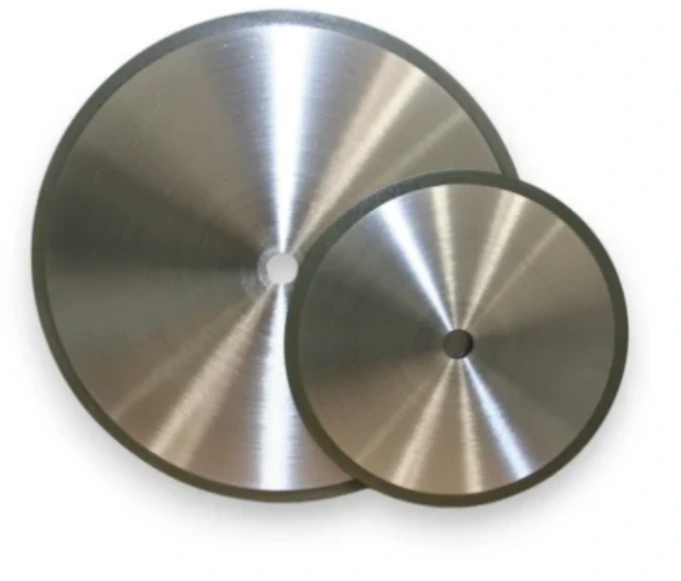
4. Electroplated Diamond Blades
Electroplated Diamond Blades have diamonds bonded to the surface using a nickel plating process.
Best for:
- Thin glass sheets
- Dry Cutting
- Short production runs
Advantages:
- Sharp cutting action
- Excellent control
Understanding Diamond Grit Size for Glass
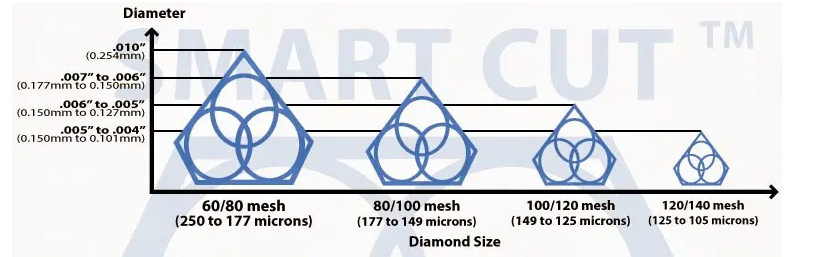
Diamond grit size is one of the most important factors affecting cut quality.
| Grit Size | Cutting Result |
|---|---|
| Coarse grit | Faster cutting, more chipping |
| Medium grit | Balanced performance |
| Fine grit | Smooth edges, minimal damage |
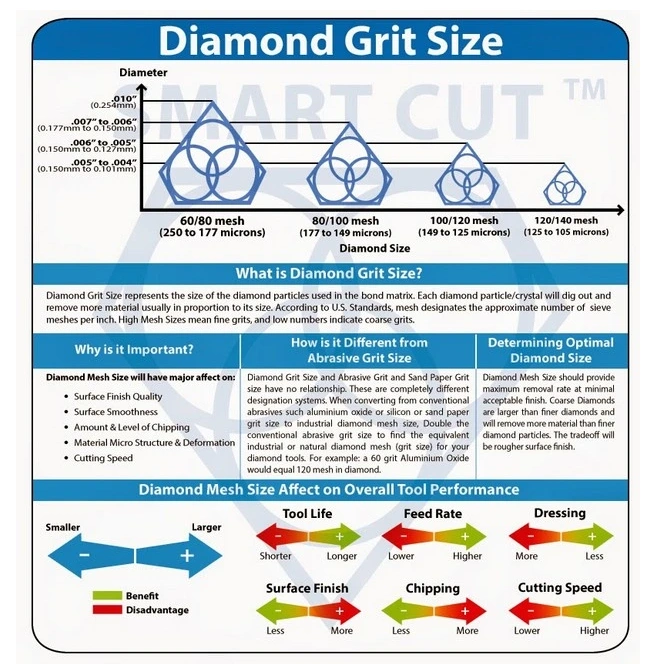
For glass, fine to very fine grit sizes are typically preferred, especially when edge quality is critical. Typical diamond Grit Sizes used for cutting glass is usually 80 to 320 mesh. With 80/100 mesh for general purpose glass cutting and 320 mesh for very fine cutting of thin wall tubing or crystals for sintered (metal bond). For resin bond diamond cutting blades typically diamond grit size range used is 100 to 320 mesh. With 100/120 for general purpose cutting and soda lime/borosilicate glass tubing and 220 mesh for quartz tubing and similar delicate applications.
Types of Glass and Their Cutting Requirements
Different types of glass require different cutting approaches.
Common glass types:
- Float glass
- Laminated glass
- Borosilicate glass
- Quartz glass
- Optical and technical glass
Harder glasses like borosilicate and quartz require:
- High-quality diamonds
- Controlled cutting speeds
- Efficient cooling
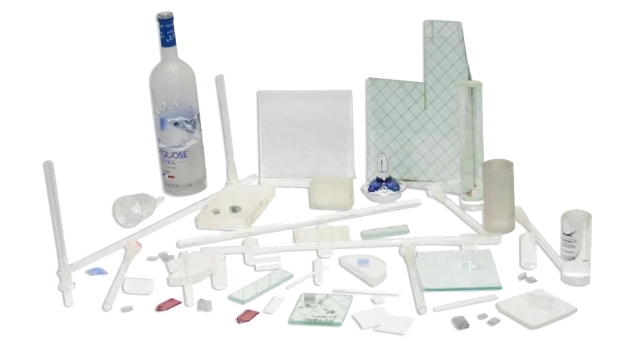
Wet Cutting vs Dry Cutting Glass
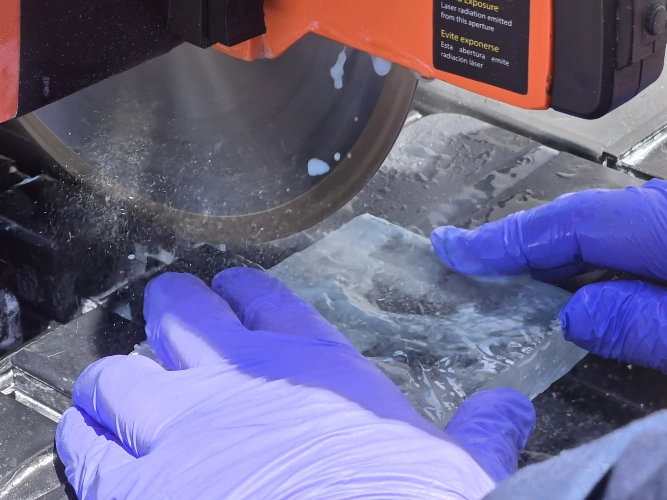
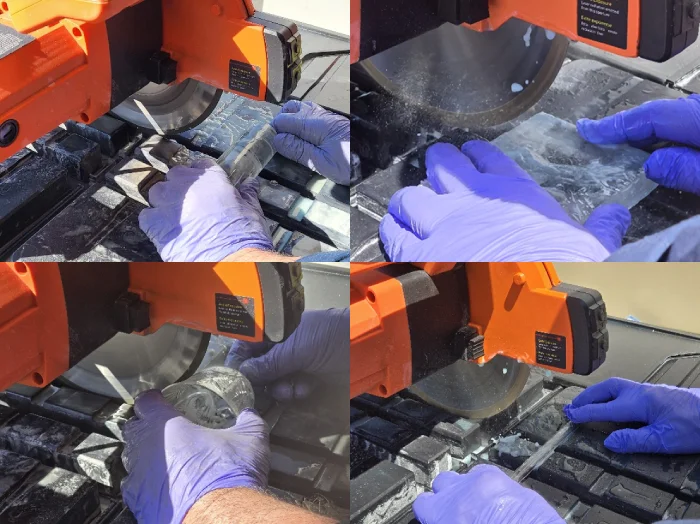
Wet Cutting (Recommended)
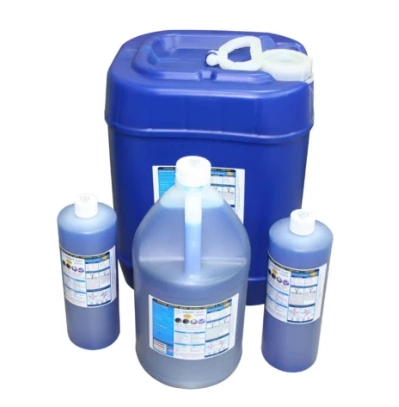
Wet cutting uses water or coolant during the cutting process. Water soluble coolant such as our SMART CUT® Water Soluble Coolant is highly recommended and much better solution then just using plain water
Benefits:
- Reduces heat buildup
- Minimises micro-cracking
- Improves surface finish
- Extends blade life

Dry Cutting
Dry cutting is possible, but not recommended for glass. For dry cutting electroplated (nickel bond) bond blades are best
Limitations:
- Higher chance of cracking
- Faster blade wear
- Limited to controlled or low-depth cuts
For most glass applications, wet cutting is strongly recommended.
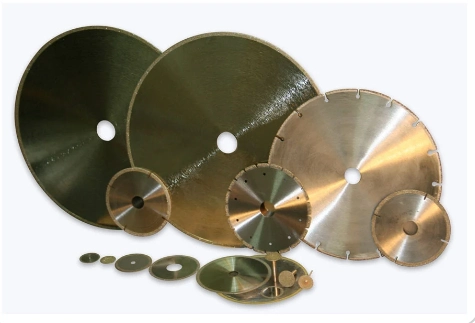
How to Choose the Right Diamond Blade for Glass
Selecting the correct blade depends on several factors.
1. Glass Thickness
- Thin glass → fine grit, thin blade
- Thick glass → stable blade, controlled feed
2. Glass Type
- Quartz and borosilicate glass tubing need specialized blades
- Standard float glass is easier to cut
3. Cut Quality Requirements
- Optical or decorative glass → fine grit, continuous rim
- Structural glass → balance speed and finish
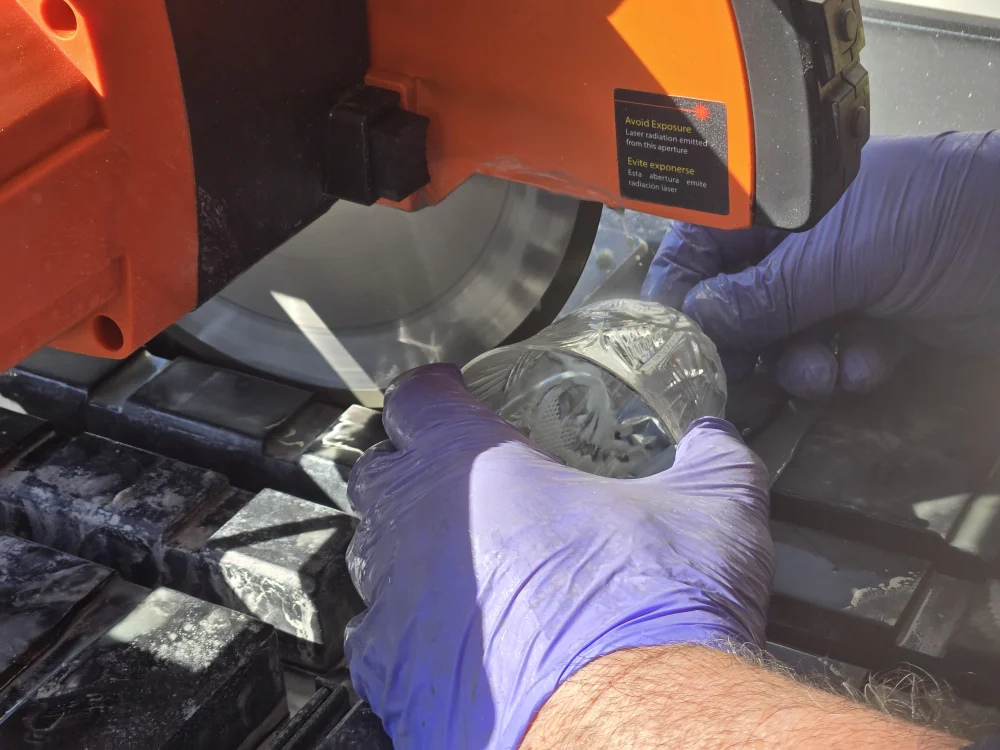
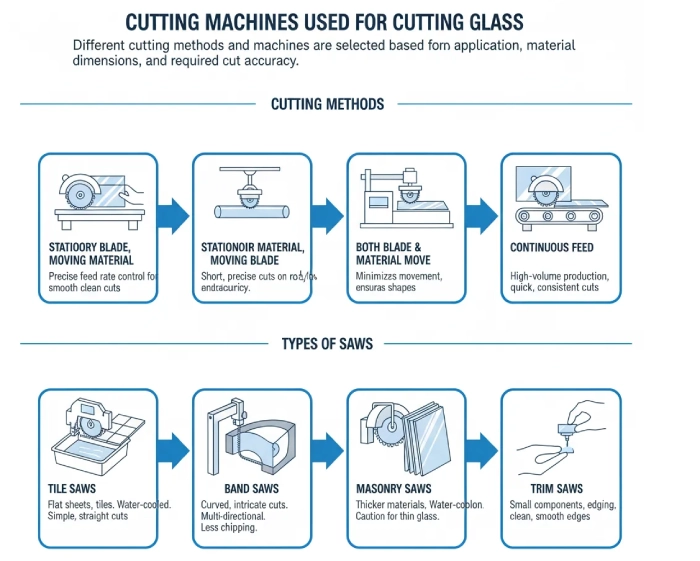
4. Machine Compatibility
Blade selection must match:
- RPM
- Power
- Stability of the cutting machine
Best Practices for Cutting Glass with Diamond Blades
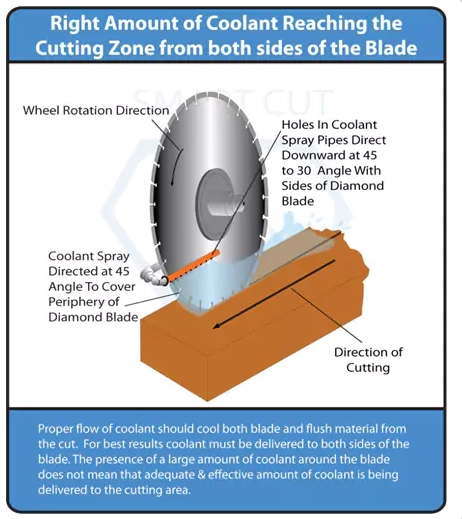
1. Use Proper Cooling
Always use sufficient water or coolant to control heat. Makes sure the coolant is able to reach the cutting zone with sufficient pressure and tempreature.
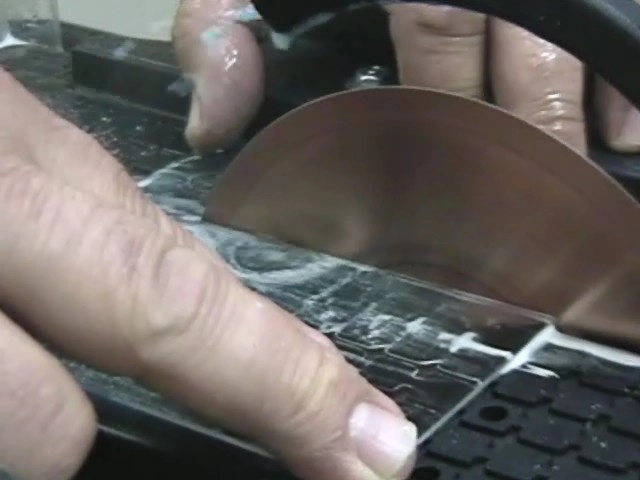
2. Apply Light, Consistent Pressure
Forcing the blade increases the risk of cracks.
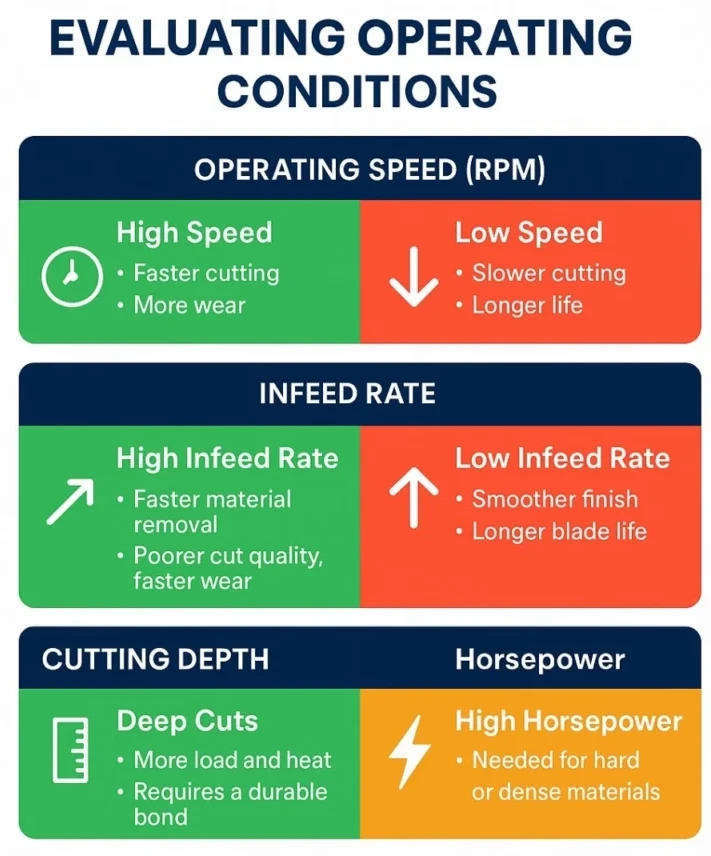
3. Maintain Correct Speed
- Too fast → overheating
- Too slow → uneven grinding
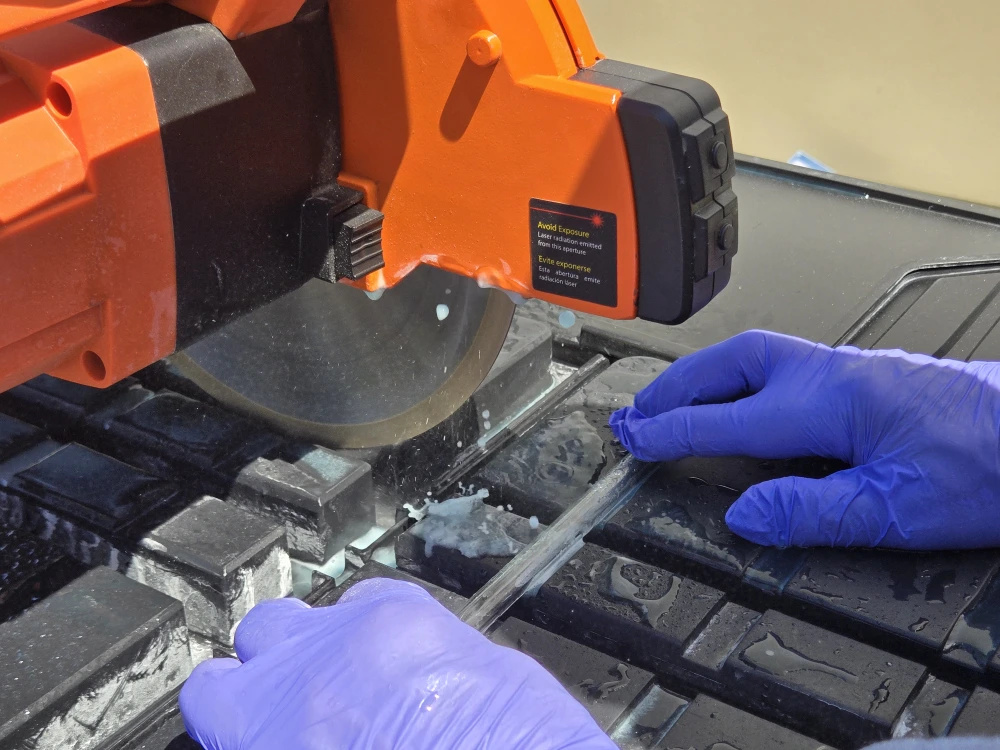
4. Secure the Glass
Proper fixturing / material holding reduces vibration and improves accuracy.
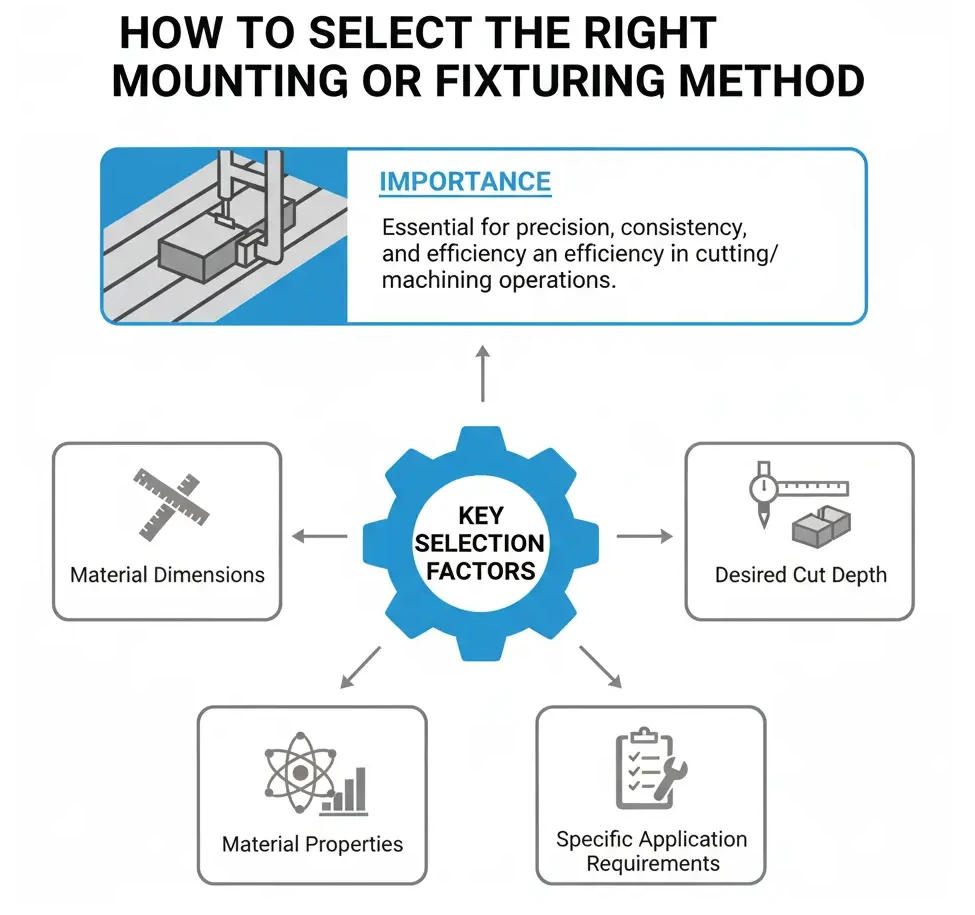
5. Dress the Blade When Needed
Blade dressing exposes fresh diamonds and restores cutting performance.
Common Problems When Cutting Glass (and How to Fix Them)
Chipping at the Edges
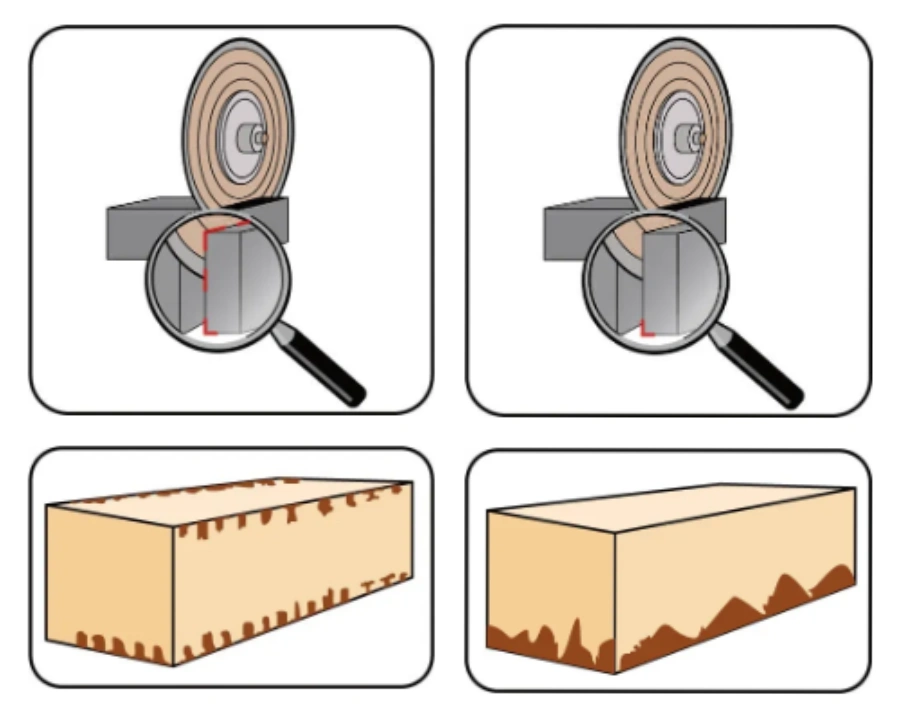
Causes:
- Coarse grit blade
- Excessive pressure
- Insufficient cooling
Cracking During Cutting
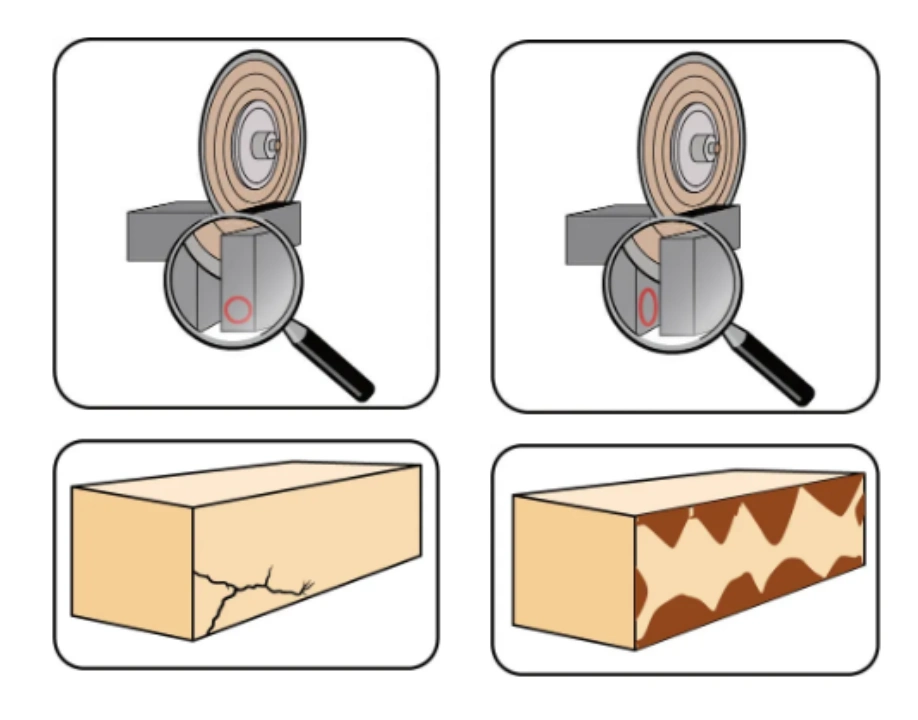
Causes:
- Heat buildup
- Cutting tempered glass
- High vibration
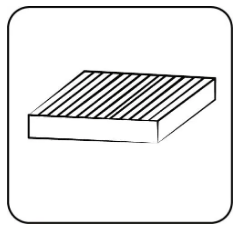
Poor Surface Finish
Causes:
- Wrong grit size
- Worn blade
- Incorrect speed
Diamond Blades vs Diamond Core Drills for Glass
Diamond blades and diamond core drills serve different purposes. In many glass fabrication processes, both tools are used together.
Tool | Primary Use |
|---|---|
Diamond blade | Straight or curved cuts |
Diamond core drill | Drilling holes and openings |
Safety Guidelines for Cutting Glass
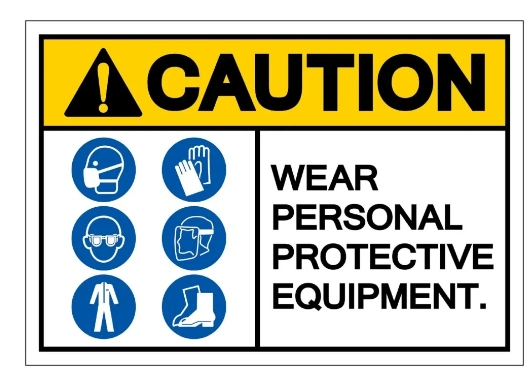
- Wear eye and face protection
- Use gloves designed for glass handling
- Ensure proper ventilation
- Keep your hands clear of the cutting area
- Never rush the cutting process
Glass cutting requires patience and precision.
Conclusion
Diamond blades provide the precision, control, and reliability required for cutting glass and other brittle materials. By selecting the appropriate blade type, diamond grit size, bond, and cutting parameters, operators can achieve cleaner edges, reduce chipping, and extend blade life. Proper blade selection combined with correct cutting practices ensures safer operation, higher efficiency, and consistently high-quality results in glass fabrication and processing.
Frequently Asked Questions (FAQs)
No. Once glass is tempered, it cannot be cut and will shatter.
A fine-grit, continuous rim diamond blade is generally best for smooth, chip-free cuts.
Common reasons include excessive heat, too much pressure, incorrect blade choice, or vibration.
Wet cutting is highly recommended in most glass applications to enhance cut quality and reduce breakage.
Blade life is determined by the glass type blade, grit size blade, cutting speed and cooling capability.
Final Thoughts
A smoother diamond blade is a precision instrument and should be used in the same way. Good glass cutting is the result of a proper blade, to be sure, but also of correct technique, cooling, machine settings and knowing your material.
When the right blade is used correctly:
- Edge quality improves
- Waste is reduced
- Tool life increases
- Overall process reliability improves
Whether working with architectural glass, quartz, or technical glass, knowledge and preparation are essential for consistent results.
Trusted by Tens of Thousands of Manufacturers, Laboratories,
Research Institutions Worldwide Since 1990

American Based Manufacturer

Established in 1990


Custom manufacturing



Brian is an experienced professional in the field of precision cutting tools, with over 27 years of experience in technical support. Over the years, he has helped engineers, manufacturers, researchers, and contractors find the right solutions for working with advanced and hard-to-cut materials. He’s passionate about bridging technical knowledge with real-world applications to improve efficiency and accuracy.
As an author, Brian Farberov writes extensively on diamond tool design, application engineering, return on investment strategies, and process optimization, combining technical depth with a strong understanding of customer needs and market dynamics.