











Understanding Cutting Force Distribution During Metallographic Sectioning Using Diamond & CBN Wafering Blades and Cut-Off Wheels
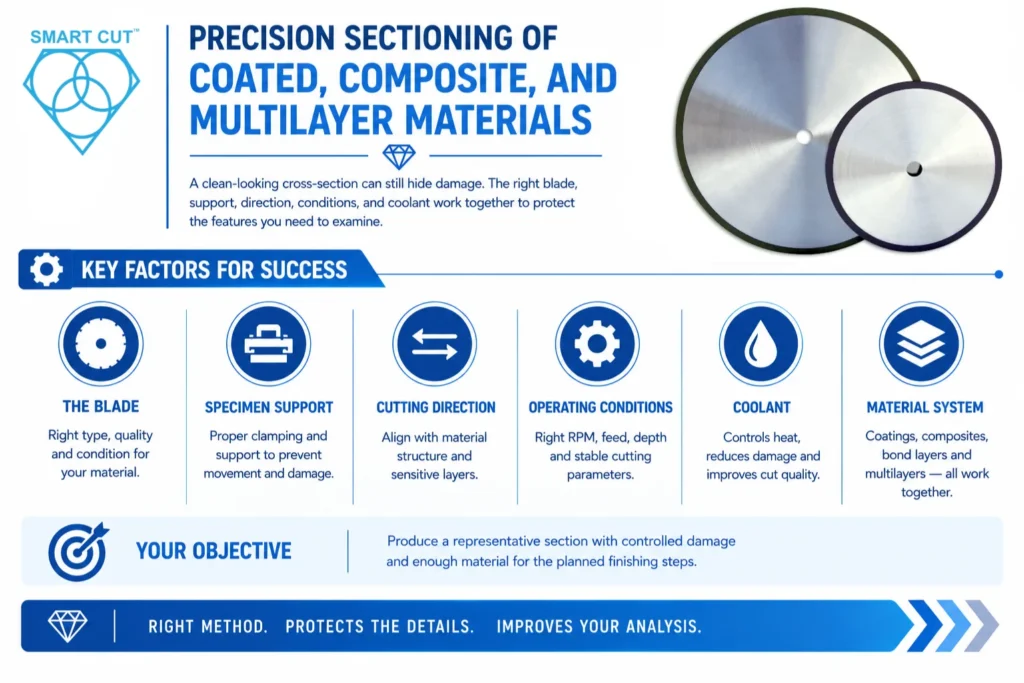
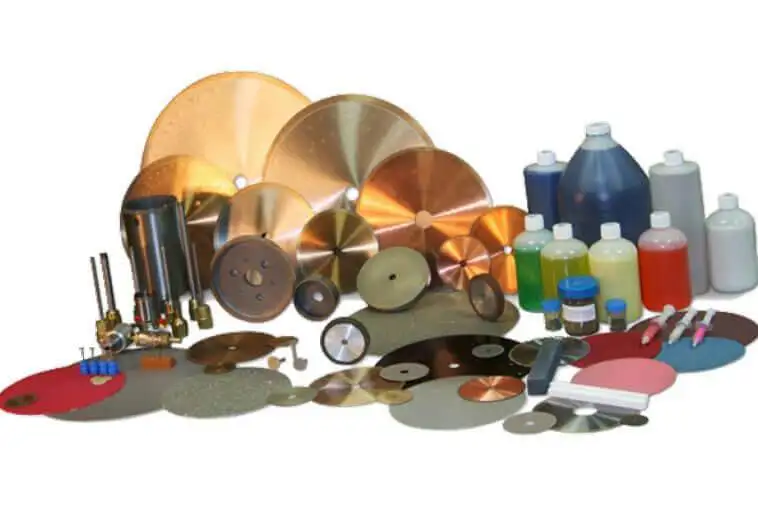
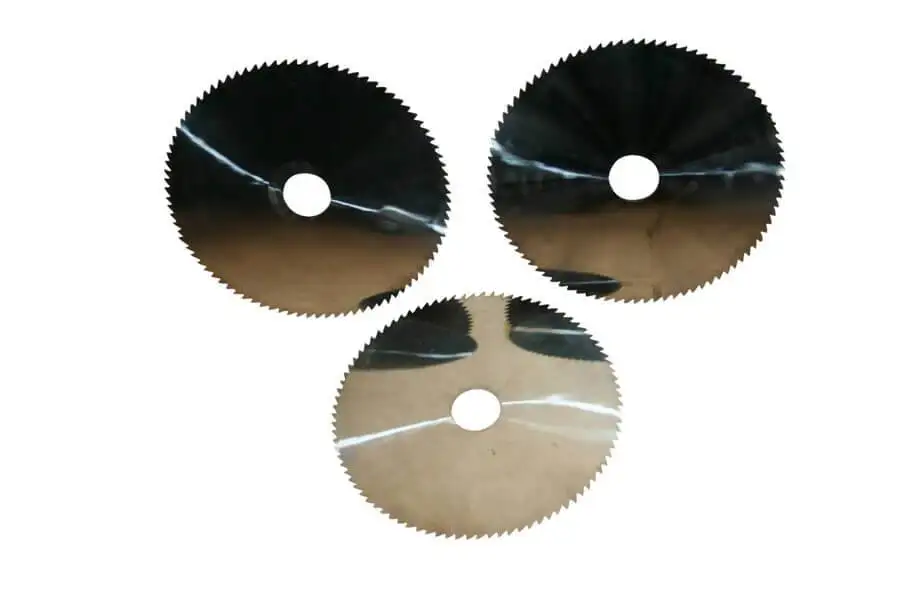
Precision sectioning is far more than simply separating material into smaller pieces. In metallography, semiconductor manufacturing, failure analysis, materials research, and quality control laboratories, the objective is to produce a specimen that accurately represents the original material without introducing damage that could compromise subsequent inspection or analysis.
How Material Fracture Toughness Influences Diamond & CBN Blade Selection
Selecting the correct diamond or CBN blade involves far more than matching the blade to a material’s hardness. While hardness is often the first property engineers consider, it is rarely sufficient for determining how a material will behave during precision cutting.
Two materials may exhibit similar hardness values yet respond very differently under identical cutting conditions. One may produce clean, repeatable cuts with minimal edge damage, while the other may experience extensive edge chipping, subsurface cracking, rapid blade wear, or complete specimen failure.
Understanding Diamond Crystal Concentration: Balancing Cutting Speed, Tool Life & Cost
Diamond crystal concentration is one of the most important and one of the most misunderstood specifications in diamond blade selection.
Many users assume that a blade with a higher diamond concentration will always cut faster, last longer, and produce superior results. In reality, concentration is only one component of an engineered cutting system, and increasing it without considering bond hardness, grit size, material properties, spindle speed, feed rate, coolant performance, and machine rigidity can reduce cutting efficiency rather than improve it.
Bond Hardness in Diamond & CBN Blades: How It Affects Cutting Performance, Wear, Blade Life & Surface Quality
In precision cutting applications, engineers often focus on selecting the correct diamond grit size, blade thickness, spindle speed, or feed rate to achieve optimal cutting performance. While each of these variables plays an important role, the characteristics of the diamond bond system frequently have an even greater influence on cutting efficiency, blade wear, surface integrity, and overall process stability.
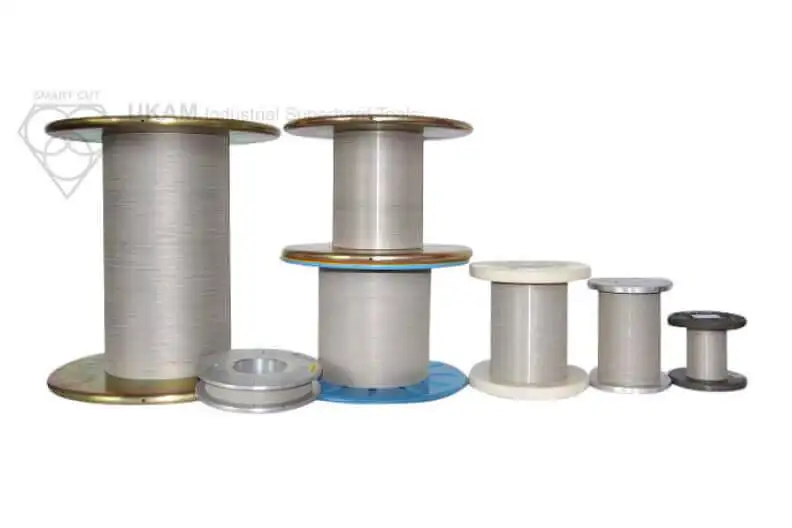
Diamond Blade vs. Diamond Wire Saw: Selecting the Best Cutting Method for Advanced Materials
Selecting the appropriate cutting technology is one of the most important decisions in precision material processing. While diamond blades and diamond wire saws both use industrial diamond abrasives to machine difficult materials, they are designed for fundamentally different applications and process requirements.
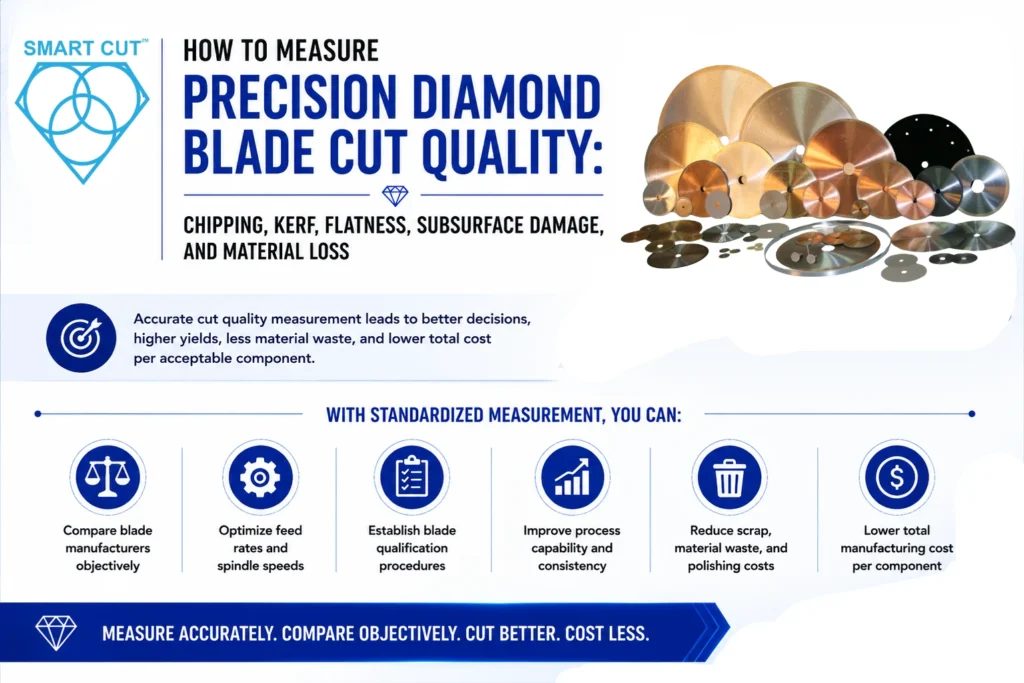
Choosing the wrong cutting method can lead to excessive kerf loss, edge chipping, subsurface damage, poor surface finish, higher consumable costs, and unnecessary production delays. Conversely, selecting the right cutting technology can significantly improve material yield, extend tool life, reduce polishing requirements, and increase overall process stability.
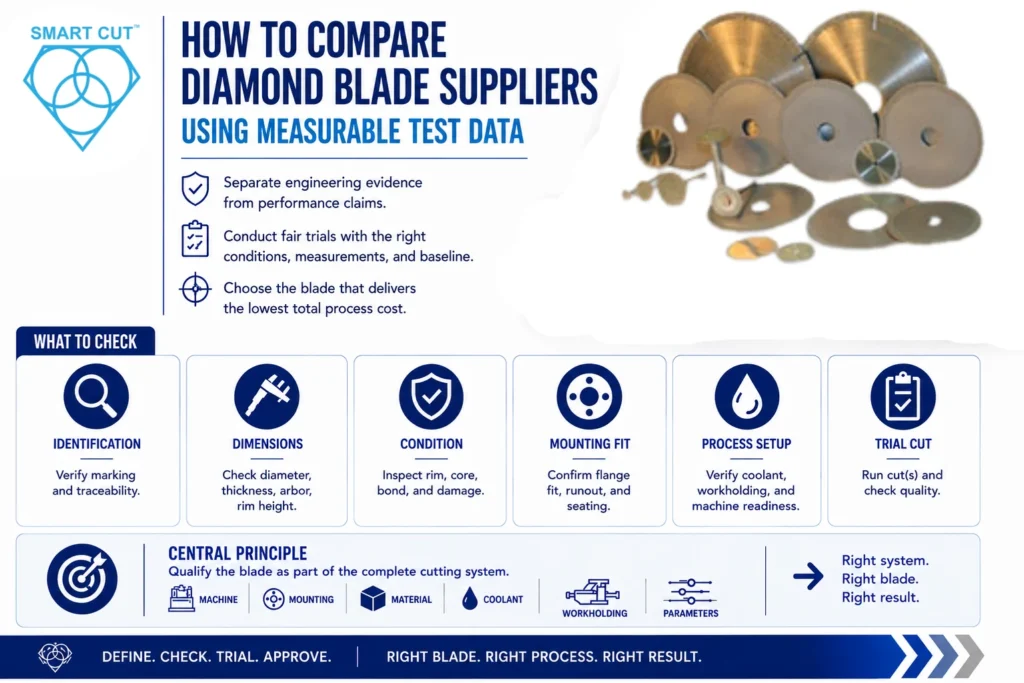
Select right Diamond Blade for your application
Selecting the right parameters for your Precision & Ultra Thin Diamond Blade can be a very time consuming, trial & error frustrating process. The guide below has been designed to help you better understand the most...
Everything You Wanted to Know About Cutting Glass with Diamond Blades
Cutting glass is a delicate process that requires the right set up, technique and process to avoid cracks, chips, or fractures. The inherent brittleness and hardness of glass make it challenging to work with, requiring...
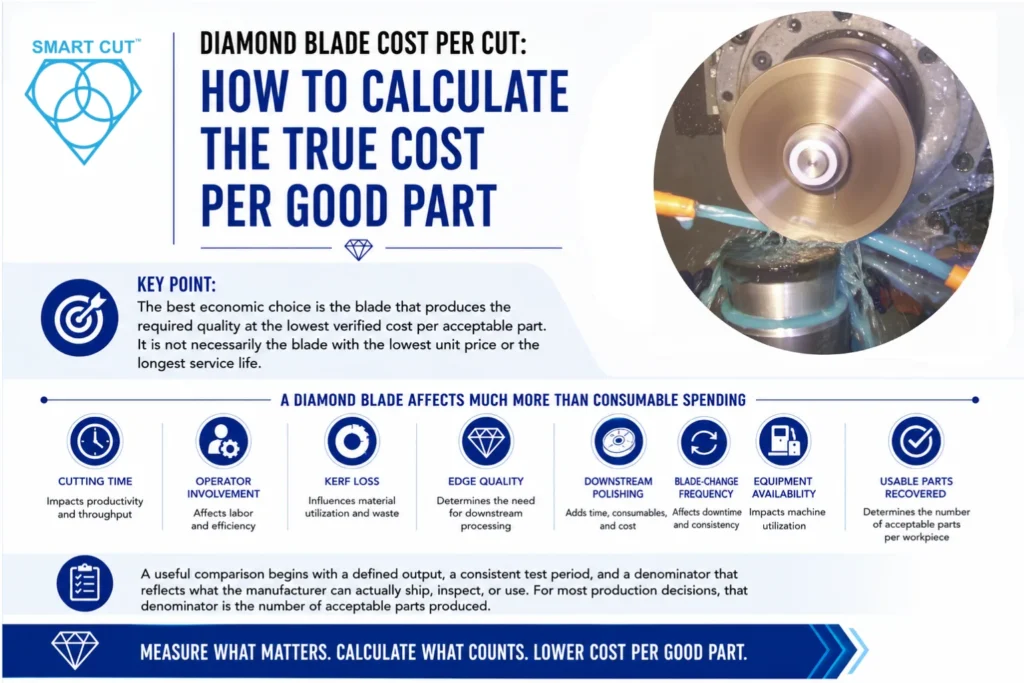
Understanding & Calculating Return on Investment for Diamond & CBN Blades
The term "ROI" (Return On Investment) is frequently mentioned across various industries, often with different interpretations depending on the context. However, few take the time to thoroughly understand what ROI truly represents and its specific...
Understanding Tradeoffs- Searching for Perfect Diamond & CBN Blade
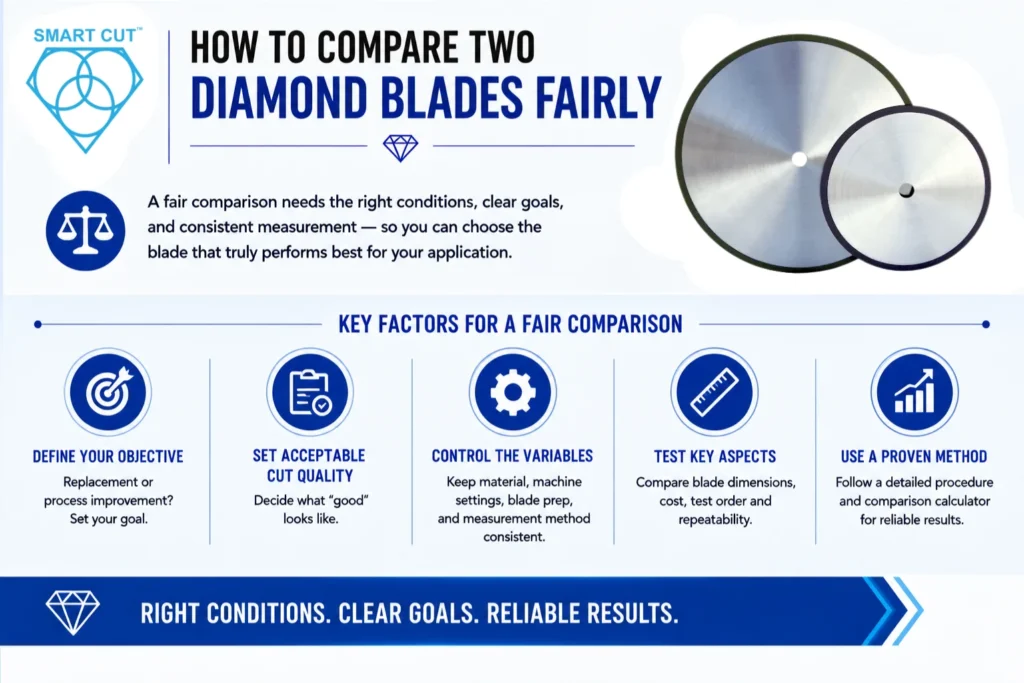
Choosing the right blade diamond or cbn blade can significantly impact efficiency, cost, and quality. However, this is not simple and clear cut process. Selecting the optimal blade involves navigating a complex landscape of trade-offs, where factors such as cutting speed, surface finish, blade longevity, and cost must be carefully balanced. This article explores the critical performance trade-offs associated with diamond and CBN blades, providing insights to help you make informed decisions that align with your specific cutting requirements and operational goals. Understanding these trade-offs is essential for optimizing your processes, enhancing productivity, and achieving superior results in your cutting applications.