







Home > Blog > Why Water Swivels Are Critical in Diamond Core Drilling Applications
Diamond Drill Articles, blog, Drilling

Why Water Swivels Are Critical in Diamond Core Drilling Applications
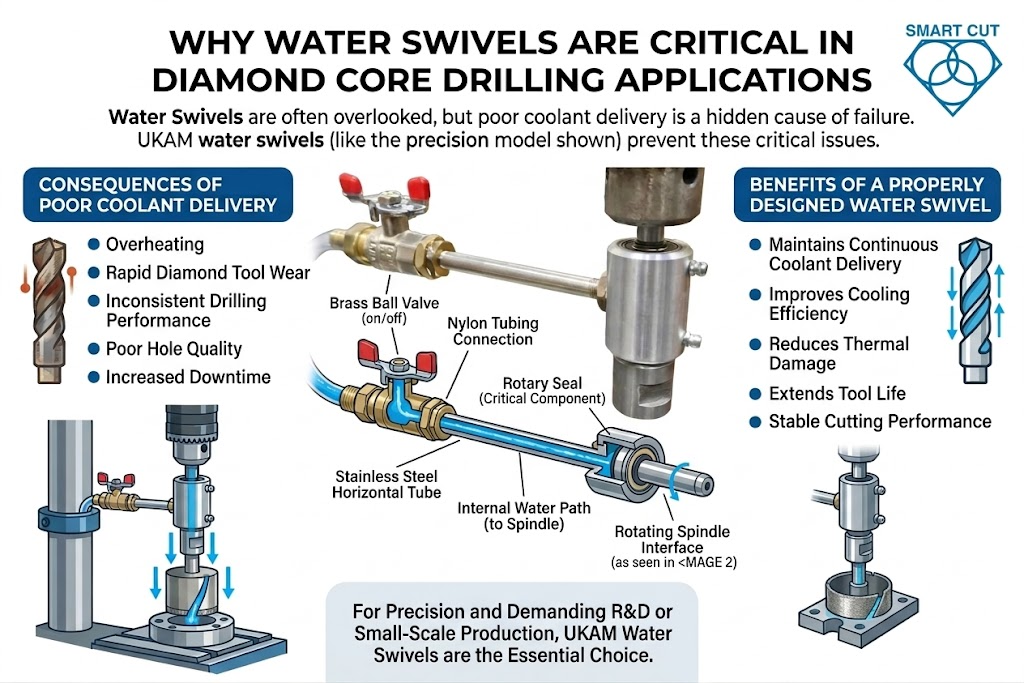
In diamond core drilling operations, most attention is usually placed on drill bit selection, spindle speed, feed rates, and machine power. However, one critical component that directly affects drilling efficiency and tool life is often overlooked — the water swivel.

In many drilling applications, poor coolant delivery becomes the hidden cause behind:

● overheating
● rapid diamond tool wear
● inconsistent drilling performance
● poor hole quality
● increased downtime

Even high-quality diamond core bits can underperform when coolant flow is unstable or insufficient.

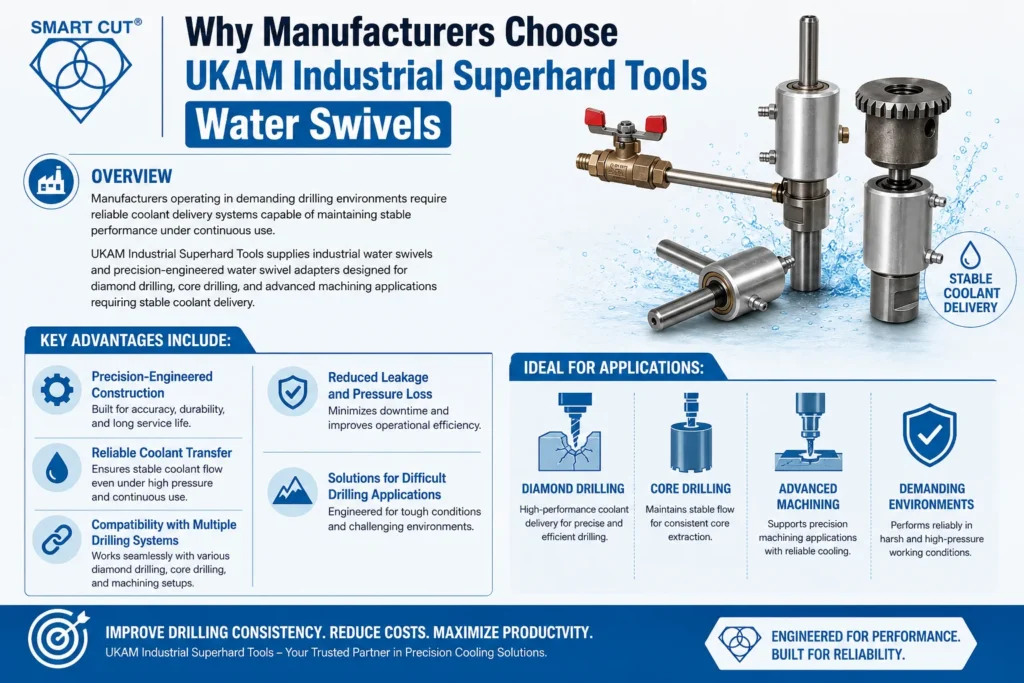
A properly designed water swivel helps maintain continuous coolant delivery directly to the cutting zone during drilling operations. This improves cooling efficiency, reduces thermal damage, extends tool life, and helps maintain stable cutting performance.

In industries where precision drilling is critical, water swivels have become an essential part of modern drilling systems.

Manufacturers such as UKAM Industrial Superhard Tools provide industrial-grade water swivels and coolant delivery solutions designed for demanding diamond drilling and precision machining applications.

Trusted by Tens of Thousands of Manufacturers, Laboratories Research Institutions Worldwide Since 1990

American Based Manufacturer

Established in 1990

Custom manufacturing

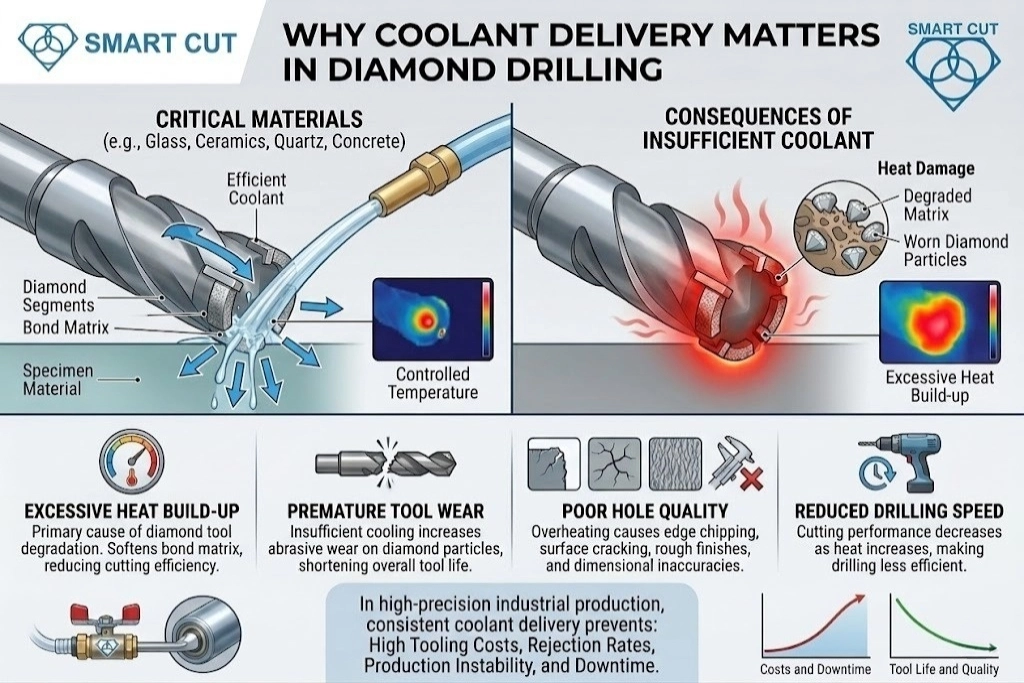
Why Coolant Delivery Matters in Diamond Drilling

Diamond drilling generates significant friction and heat, especially when machining hard or brittle materials such as:

● glass
● ceramics
● quartz
● silicon
● concrete
● stone
● advanced composites

Without sufficient coolant reaching the cutting interface, temperatures rise rapidly.
This can lead to several performance problems.

Excessive Heat Build-Up

Heat is one of the primary causes of diamond tool degradation. High temperatures can soften the bond matrix and reduce cutting efficiency.

Premature Tool Wear

Insufficient cooling increases abrasive wear on diamond particles, shortening overall tool life.

Poor Hole Quality

Overheating often causes:
● edge chipping
● surface cracking
● rough finishes
● dimensional inaccuracies

Reduced Drilling Speed

As heat increases, cutting performance decreases, and drilling becomes less efficient.
In industrial production environments, these problems increase:
● tooling costs
● downtime
● rejection rates
● production instability
This is why consistent coolant delivery is critical in precision drilling operations.

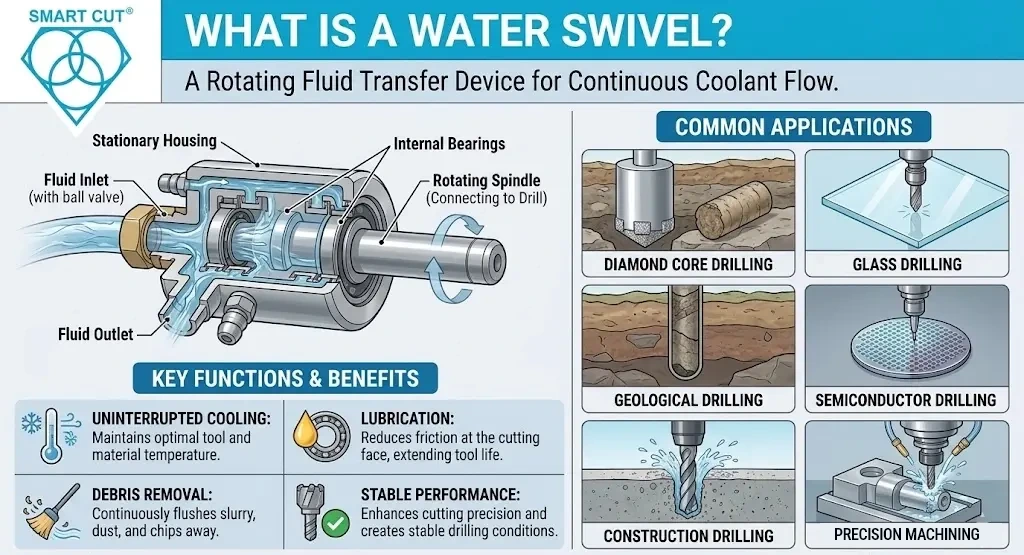
What Is a Water Swivel?

A water swivel is a rotating fluid transfer device that allows coolant or water to pass through rotating drilling equipment during operation.

The system transfers coolant from a stationary supply line into a rotating spindle or drill assembly while maintaining continuous flow.

This enables:
● uninterrupted cooling
● lubrication
● debris removal
● stable drilling performance

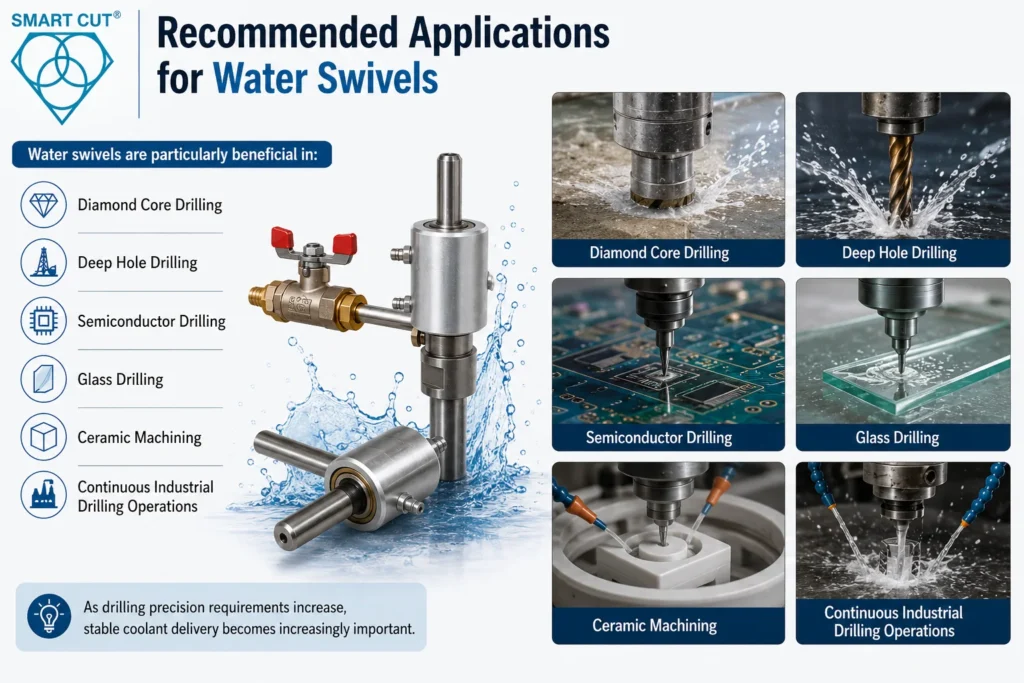
Water swivels are commonly used in:
● diamond core drilling
● glass drilling
● geological drilling
● semiconductor drilling
● construction drilling
● precision machining

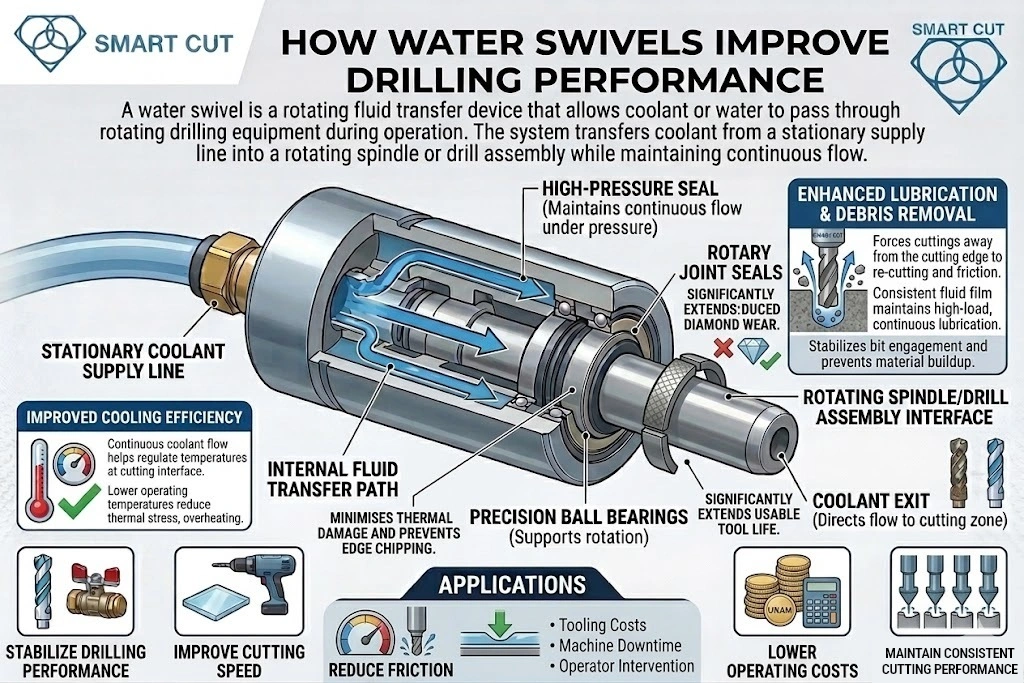
How Water Swivels Improve Drilling Performance

Many drilling performance issues are directly related to inadequate coolant flow.

A properly engineered water swivel helps maintain stable coolant delivery throughout the drilling process.

Improved Cooling Efficiency

Continuous coolant flow helps regulate temperatures at the cutting interface.

Lower operating temperatures reduce:
● thermal stress
● overheating
● bond degradation

This helps maintain consistent cutting performance.

Better Debris Removal

Coolant flow also helps flush drilling debris away from the cutting zone.

This prevents material buildup that can interfere with cutting efficiency.

Improved debris evacuation helps:
● stabilize drilling
● improve cutting speed
● reduce friction

Longer Tool Life

One of the biggest advantages of proper coolant delivery is increased tool longevity.

In many applications, improving coolant flow significantly reduces diamond wear and extends usable tool life.

This lowers:
● tooling costs
● machine downtime
● operator intervention

Improved Hole Quality

Water cooling minimises thermal damage and helps maintain cleaner cutting conditions.
This is particularly important when drilling brittle materials, where edge chipping and cracking must be minimised.

Applications involving:
● glass
● ceramics
● semiconductors
● quartz

often require highly stable coolant delivery to maintain part integrity.

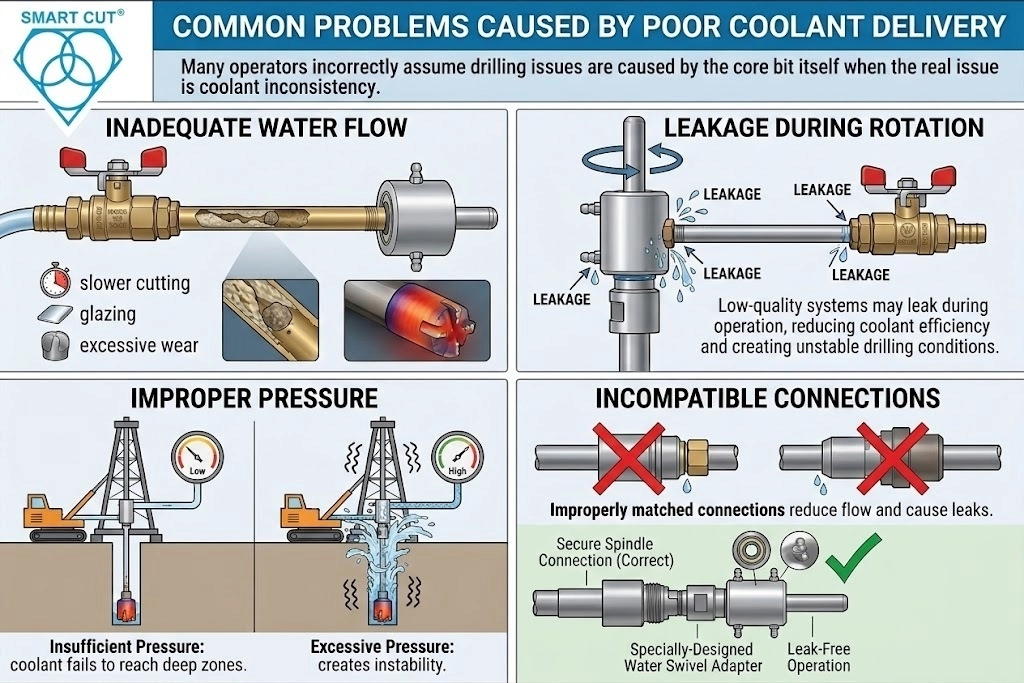
Common Problems Caused by Poor Coolant Delivery

Many operators incorrectly assume drilling issues are caused by the core bit itself when the real issue is coolant inconsistency.

Inadequate Water Flow

Restricted coolant delivery can cause localised overheating.

This frequently leads to:
● slower cutting
● glazing
● excessive wear

Leakage During Rotation

Low-quality systems may leak during operation, reducing coolant efficiency and creating unstable drilling conditions.

Improper Pressure

Insufficient water pressure may prevent coolant from reaching deep drilling zones effectively.
Excessive pressure can also create instability.

Incompatible Connections

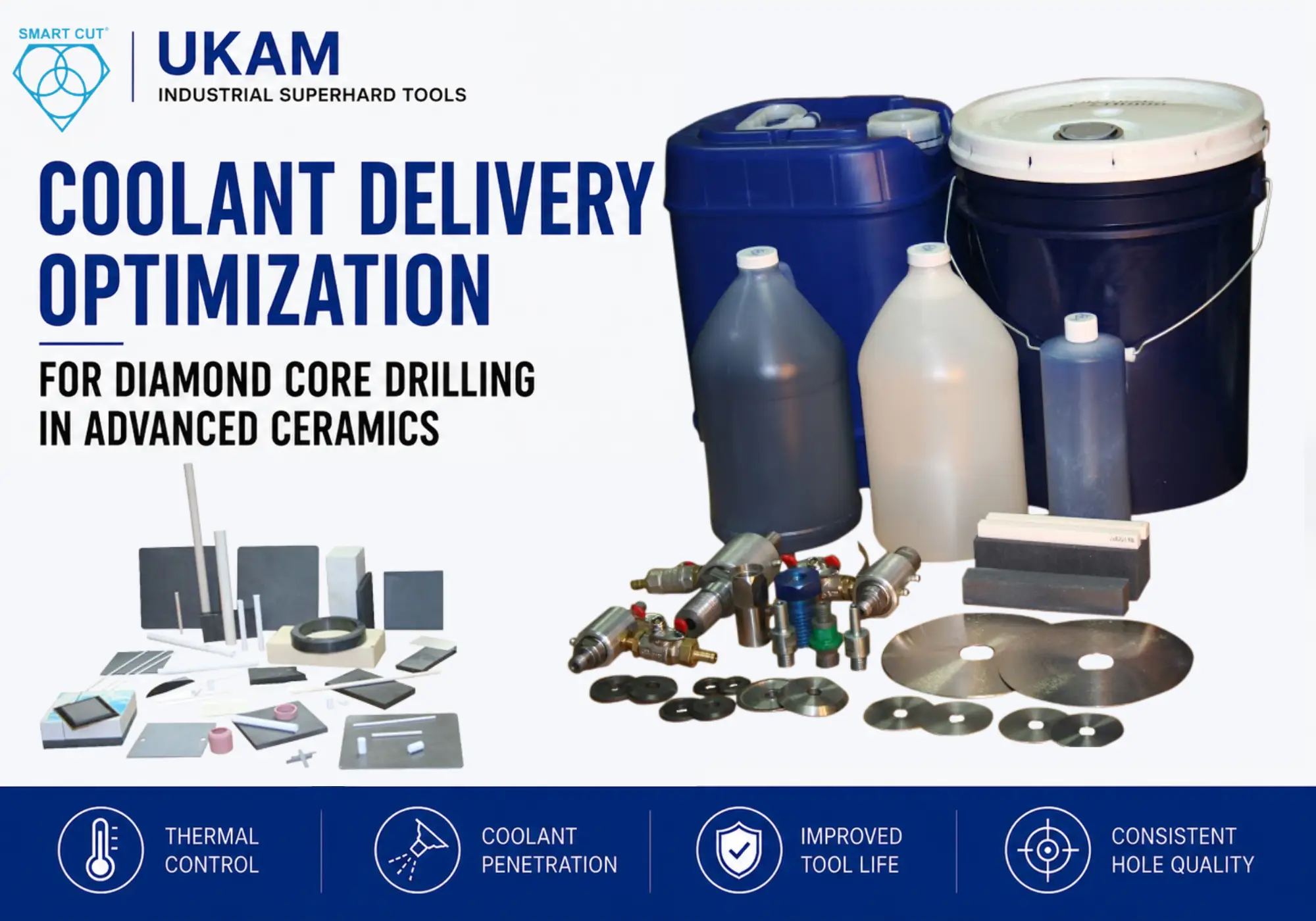
Different drilling systems often require specialised water swivel adapters to ensure proper coolant transfer, secure spindle connections, and leak-free operation during continuous drilling applications.
Improperly matched connections may reduce flow consistency or create leakage problems.

Water Swivels vs Improvised Cooling Systems

Some operators attempt to use external coolant delivery methods instead of dedicated rotary coolant systems.

While these setups may work temporarily, they often create inconsistent cooling conditions.

Feature Water Swivel System

External Coolant Setup

Coolant Stability

High

Variable

Leak Prevention

Better

Limited

Cooling Efficiency

Optimized

Inconsistent

Tool life

Longer

Reduced

Drilling Precision

Higher

Less Stable

In professional drilling environments, dedicated water swivels provide far more reliable performance.

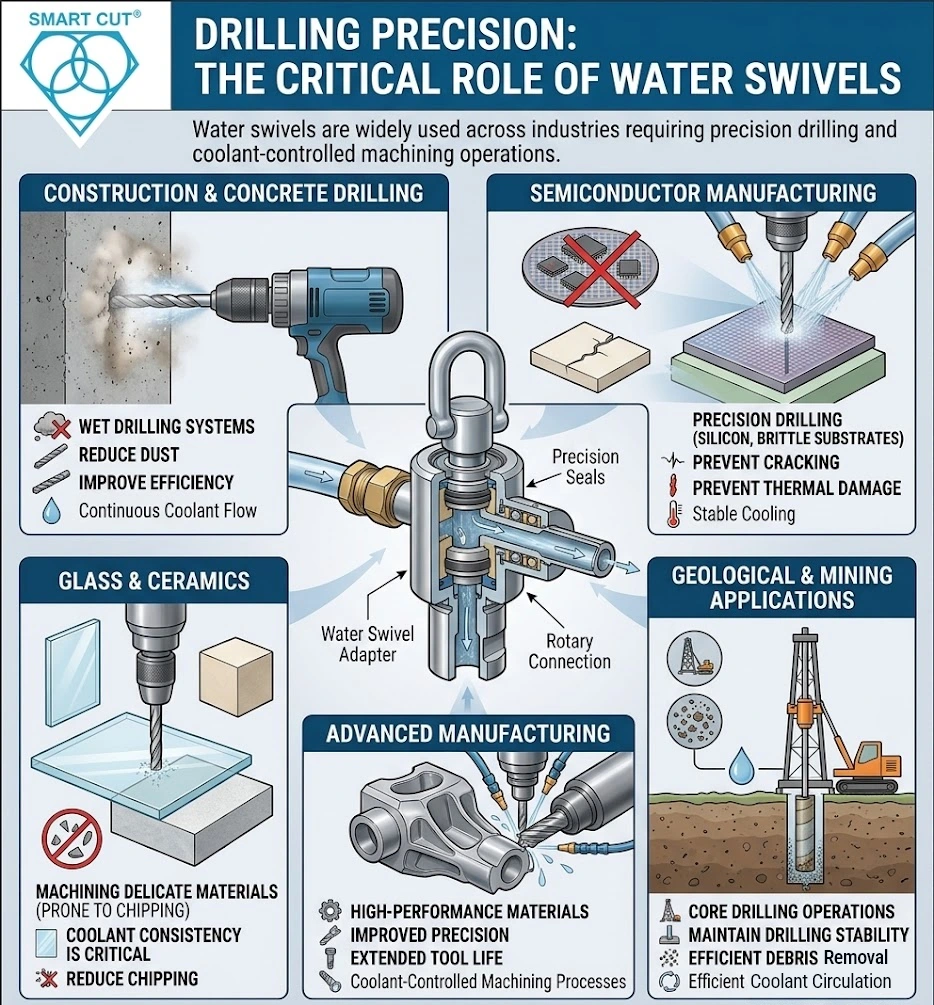
Drilling Precision

Water swivels are widely used across industries requiring precision drilling and coolant-controlled machining operations.

Construction & Concrete Drilling

Wet drilling systems rely on continuous coolant flow to reduce dust and improve drilling efficiency.

Semiconductor Manufacturing

Precision drilling of silicon and brittle substrates requires stable cooling to prevent cracking and thermal damage.

Glass & Ceramics

Coolant consistency is critical when machining delicate materials that are prone to chipping.

Geological & Mining Applications

Core drilling operations depend on efficient coolant circulation to maintain drilling stability and remove debris.

Advanced Manufacturing

High-performance materials increasingly require coolant-controlled machining processes for improved precision and tool life.

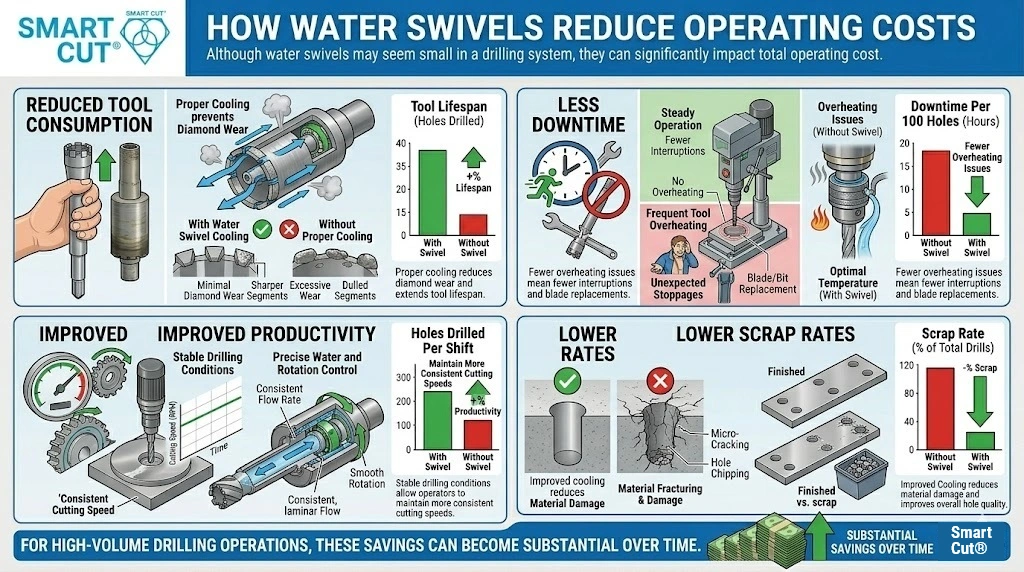
How Water Swivels Reduce Operating Costs

Although water swivels may seem small in a drilling system, they can significantly impact total operating cost.

Reduced Tool Consumption

Proper cooling reduces diamond wear and extends tool lifespan.

Less Downtime

Fewer overheating issues mean fewer interruptions and blade replacements.

Improved Productivity

Stable drilling conditions allow operators to maintain more consistent cutting speeds.

Lower Scrap Rates

Improved cooling reduces material damage and improves overall hole quality.

For high-volume drilling

perations, these savings can become substantial over time.

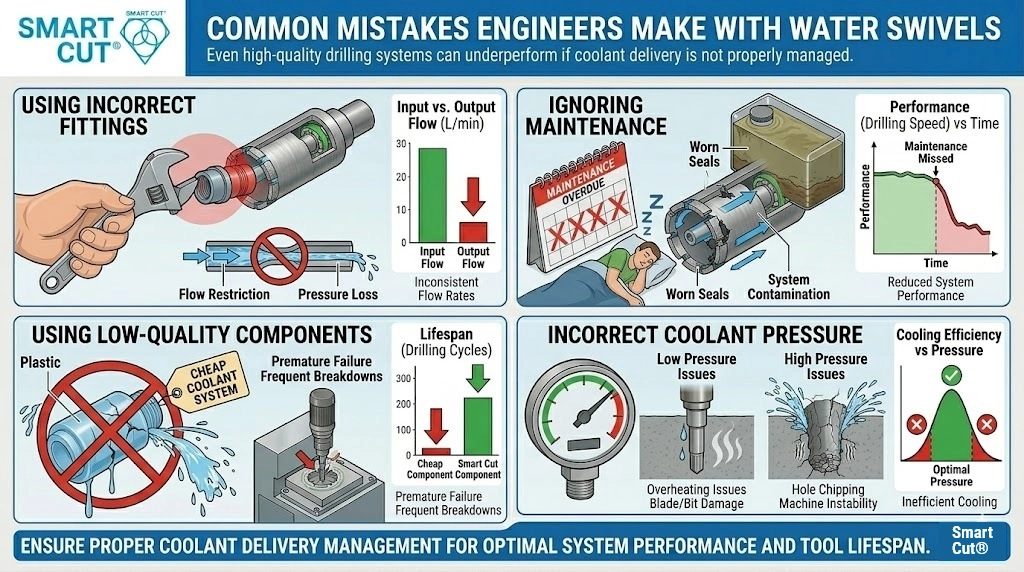
Common Mistakes Engineers Make with Water Swivels

Even high-quality drilling systems can underperform if coolant delivery is not properly managed.

Using Incorrect Fittings

Improper connections may restrict coolant flow or create pressure loss.

Ignoring Maintenance

Worn seals or contaminated coolant systems can reduce performance significantly.

Using Low-Quality Components

Cheap coolant systems often fail under continuous industrial use.

Incorrect Coolant Pressure

Improper pressure settings can negatively affect drilling stability and cooling efficiency.

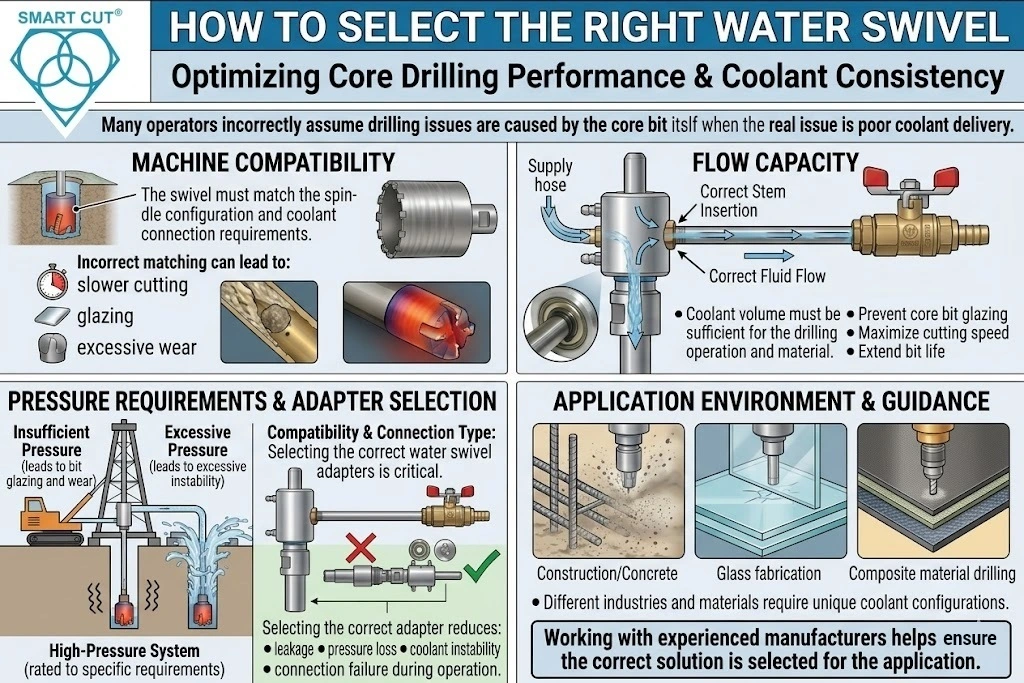
How to Select the Right Water Swivel

Selecting the correct water swivel depends on the drilling application and operating conditions.

Machine Compatibility

The swivel must match the spindle configuration and coolant connection requirements.

Pressure Requirements

High-pressure drilling applications require properly rated systems.

Flow Capacity

Coolant volume must be sufficient for the drilling operation and material type.

Compatibility & Connection Type

Selecting the correct water swivel adapters is important for maintaining proper coolant flow between drilling systems, hoses, and rotating spindle assemblies.
Proper adapter selection helps reduce:

● leakage
● pressure loss
● coolant instability
● connection failure during operation

Application Environment

Different industries and materials require different coolant delivery configurations.

Working with experienced manufacturers helps ensure the correct solution is selected for the application.

How to Select the Right CBN Cut-Off Blade

For over decades, UKAM has specialized in high-performance superhard tools.

Key Advantages

● Advanced CBN and diamond tooling technology
● Custom manufacturing capabilities
● Consistent product quality
● Expertise in difficult materials

What This Means for Buyers

● Longer tool life
● Better cutting precision
● Lower cost per part
● Reliable production performance

Why Manufacturers Choose UKAM Industrial Superhard Tools

For over decades, UKAM has specialized in high-performance superhard tools.

Key Advantages

● Advanced CBN and diamond tooling technology
● Custom manufacturing capabilities
● Consistent product quality
● Expertise in difficult materials

What This Means for Buyers

● Longer tool life
● Better cutting precision
● Lower cost per part
● Reliable production performance

Recommended Solutions for Your Application

For cutting hardened steels and alloys, manufacturers typically benefit from:

● CBN resin bond cut-off blades for precision cutting
● Optimized cutting parameters for maximum tool life
● Custom tooling solutions for specific applications

For best results, working directly with tooling experts ensures optimal performance.

Frequently Asked Questions

CBN is used for cutting hardened ferrous materials.

Diamond reacts with iron at high temperatures

They typically last 5–15× longer than abrasive wheels.

Higher upfront cost but lower per-cut cost.

Yes, they increase speed and reduce downtime.

Conclusion

CBN resin bond cut-off blades provide a superior solution for cutting hardened steels and high-performance alloys. Compared to conventional abrasive wheels, they offer significantly longer tool life, improved cutting precision, and lower cost per cut. These advantages make them an essential tool for manufacturers seeking to improve productivity and reduce machining costs. By selecting the correct blade specifications and working with experienced suppliers such as UKAM Industrial Superhard Tools, manufacturers can achieve consistent, high-quality results while optimizing overall production efficiency.

Trusted by Tens of Thousands of Manufacturers, Laboratories,
Research Institutions Worldwide Since 1990

American Based Manufacturer

Established in 1990

Custom manufacturing

RELATED ARTICLES

Brian is an experienced professional in the field of precision cutting tools, with over 27 years of experience in technical support. Over the years, he has helped engineers, manufacturers, researchers, and contractors find the right solutions for working with advanced and hard-to-cut materials. He’s passionate about bridging technical knowledge with real-world applications to improve efficiency and accuracy.

As an author, Brian Farberov writes extensively on diamond tool design, application engineering, return on investment strategies, and process optimization, combining technical depth with a strong understanding of customer needs and market dynamics.

author-avatar

About Brian Farberov

Brian is an experienced professional in the field of precision cutting tools, with over 27 years of experience in technical support. Over the years, he has helped engineers, manufacturers, researchers, and contractors find the right solutions for working with advanced and hard-to-cut materials. He’s passionate about bridging technical knowledge with real-world applications to improve efficiency and accuracy. As an author, Brian Farberov writes extensively on diamond tool design, application engineering, return on investment strategies, and process optimization, combining technical depth with a strong understanding of customer needs and market dynamics.