













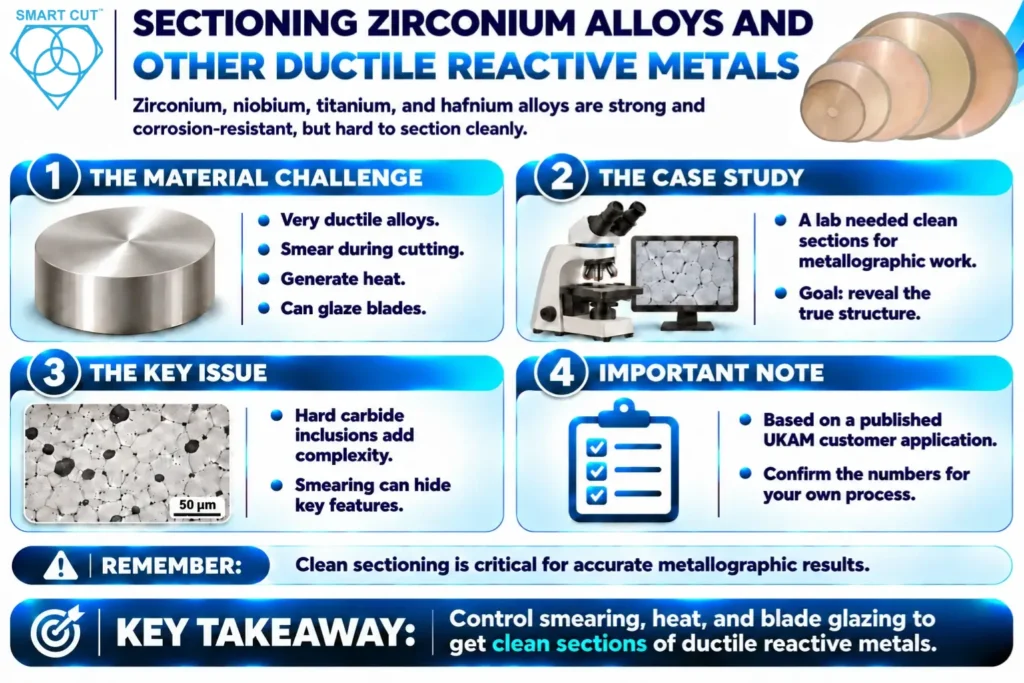
Sectioning Zirconium Alloys and Other Ductile Reactive Metals
Metallography / Sample Preparation, blog

Sectioning Zirconium Alloys and Other Ductile Reactive Metals: A Case Study

A cracked zirconia blank, a chipped ceramic edge, or a smeared polymer section can cost more than the blade, the saw, and the day’s work. Dental and medical device materials are expensive; they are held to strict quality limits, and a cutting defect can become a failure later. Cutting dental ceramics with diamond blades works well when the blade, the process, and the machine match the material. It goes wrong when one blade is used for everything. A blade that suits fully sintered zirconia will smear a polymer. A blade that suits bone will not last on alumina.
Continue reading
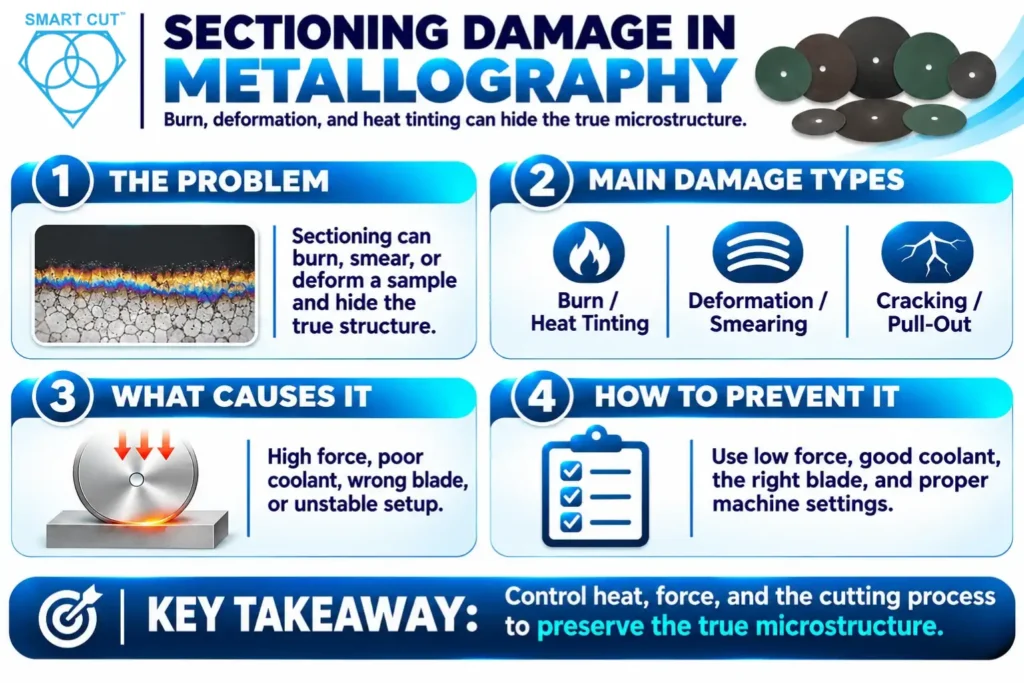
Sectioning Damage in Metallography: Burn, Deformation, and Heat Tinting
Metallography / Sample Preparation, blog

Sectioning Damage in Metallography: Burn, Deformation, and Heat Tinting

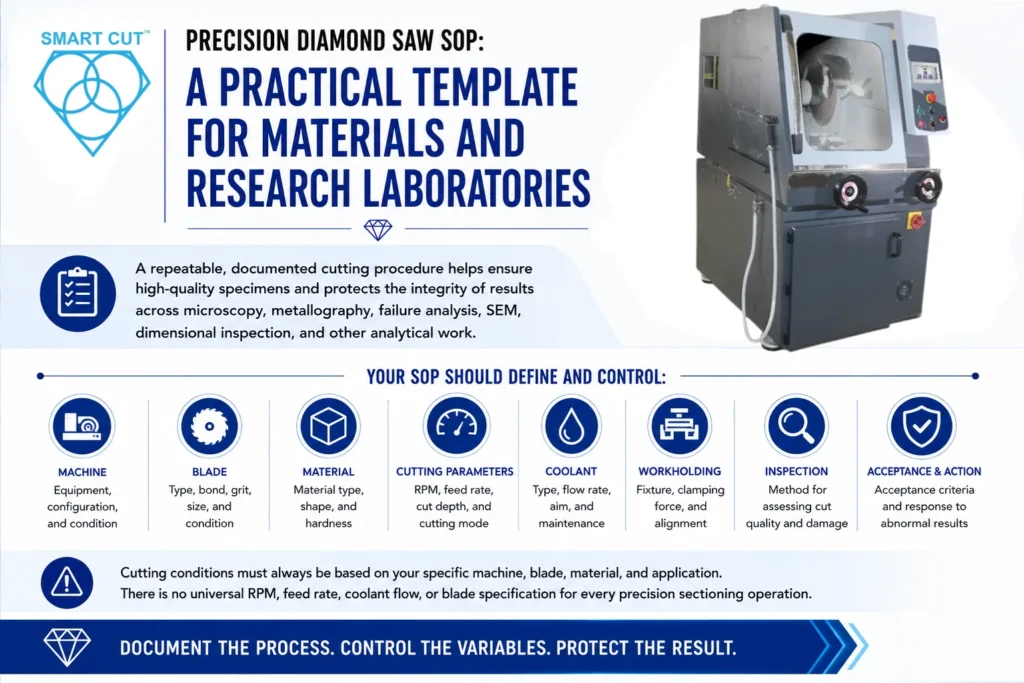
There is no single number of diamond blade tests that guarantees a reliable decision. The number depends on what you measure, how much performance varies, how small a difference matters, and how much uncertainty your decision can tolerate. A practical approach is to define the decision, collect representative preliminary data, and use the observed variation to plan the number of independent blades. Then evaluate the completed test against criteria chosen in advance. A running average that barely changes is useful to observe, but it does not establish that you have enough evidence.
Continue reading
incoming diamond blade inspection & trial cut checklist
Metallography / Sample Preparation, blog

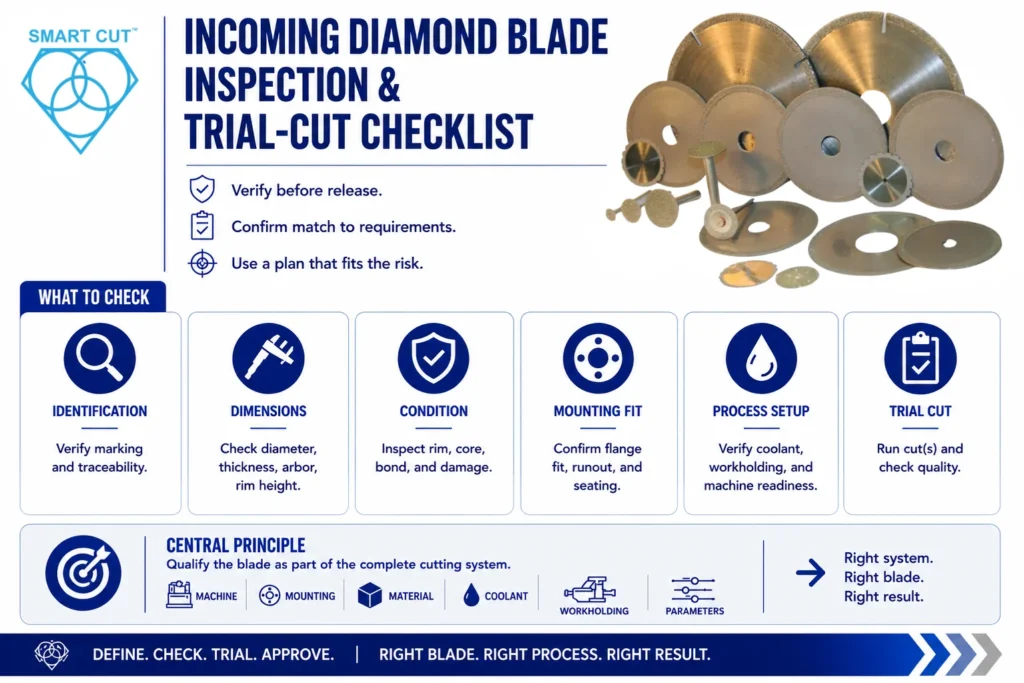
Incoming Diamond Blade Inspection and Trial-Cut Checklist

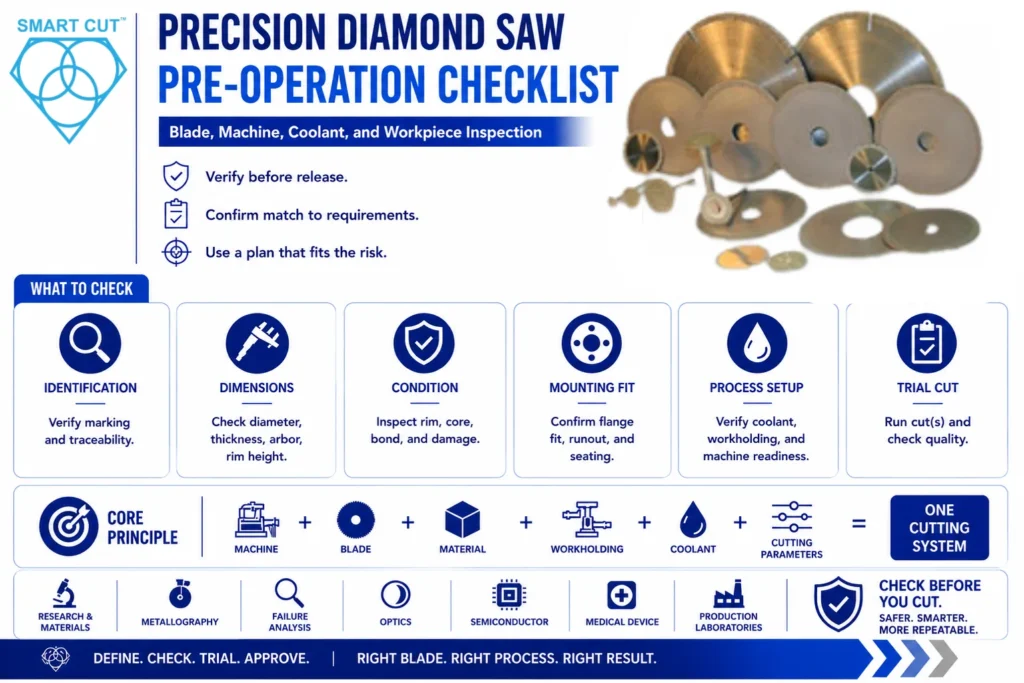
For new, changed, high-value, or process-critical applications, incoming verification and a controlled trial cut can reduce risk before a diamond blade is released for regular production. The goal is not to impose one universal test on every blade. The goal is to confirm that the received blade matches the approved requirements and that the complete cutting process can produce the required result under defined conditions. A useful acceptance plan is proportional to risk. It may be limited to identification and dimensional checks for a stable, previously qualified process, or it may include a documented series of trial cuts for a new or demanding application. In either case, the plan should state what will be checked, how it will be measured, and who can approve the result.
Continue reading
Metal Bond Diamond Discs
Metallography / Sample Preparation, blog

Metal Bond Diamond Discs for Metallographic Sample Preparation: Performance, Benefits & Applications

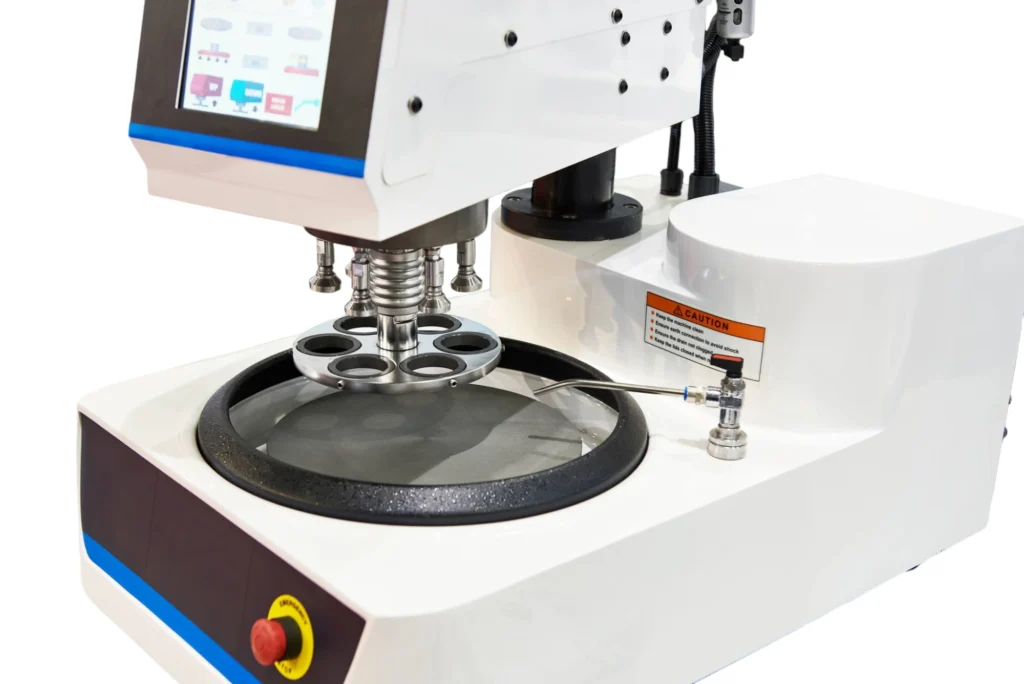
Proper sample preparation is a key contributor to accurate metallographic analysis. Research on the microstructure of materials, the appearance of material defects, or their formation, and which heat treatment processes can lead to certain influences on the structure requires at least some stage of preparation, for which reliability is important. Usually, the first step of this procedure is grinding, and the grinding tools have a significant effect on the quality of the resulting specimen.
Continue reading
sample preparation consumables for metallography
Measuring Tools, Metallography / Sample Preparation, blog, Grinding, Polishing

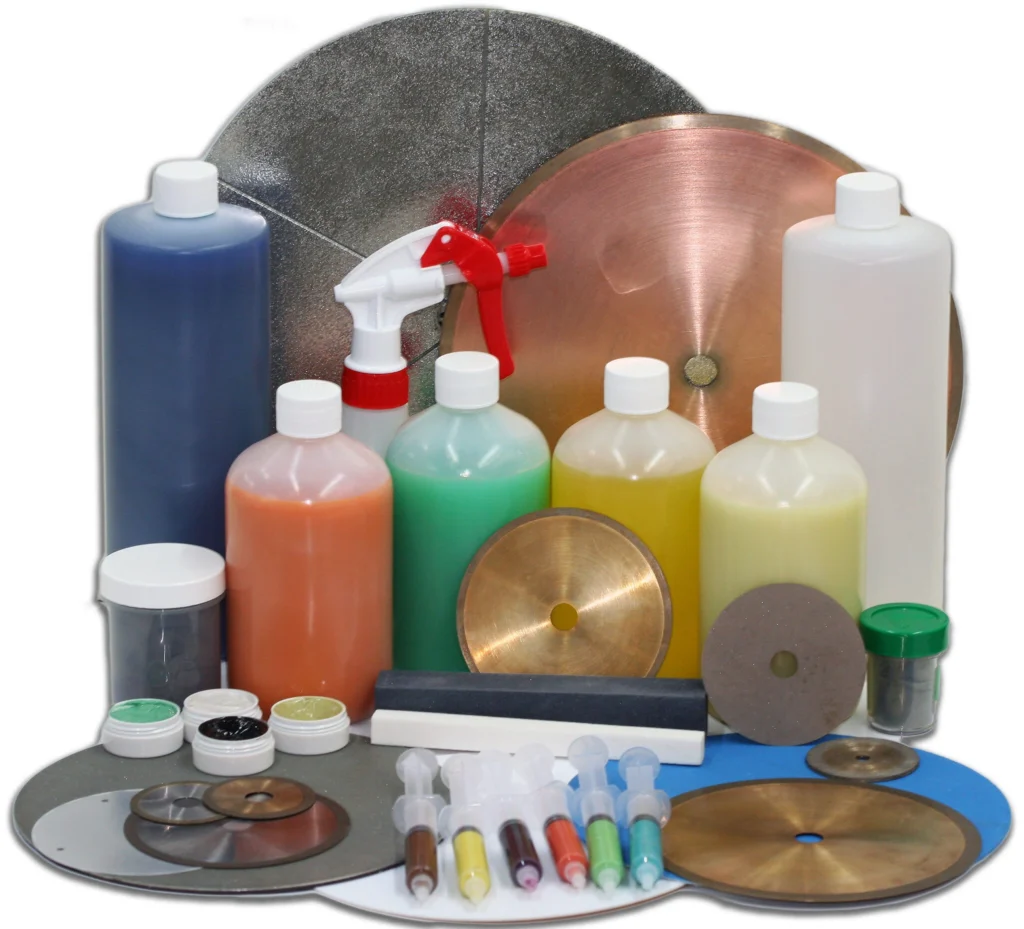
Sample Preparation Consumables for Metallography: Selection, Function, and Best Practices

Careful sample preparation is the key to good metallographic analysis. Although equipment features and process conditions are significant factors, the impact of sample preparation consumables is equally crucial for surface quality, reproducibility, and trustworthiness in microstructural assessment. Consumables...
Continue reading