









blog, Cutting

Engineered Diamond Pellet Systems for Controlled Surface Preparation
Trusted by Tens of Thousands of Manufacturers, Laboratories Research Institutions Worldwide Since 1990

American Based Manufacturer

Established in 1990

Custom manufacturing

In metallography, advanced ceramics processing, semiconductor substrate preparation, and materials research, polishing is not a cosmetic operation – it is a controlled material removal step that directly influences surface integrity, dimensional accuracy, and downstream reliability.

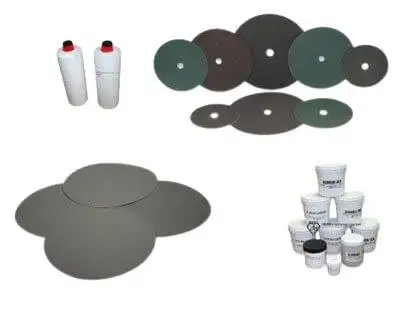
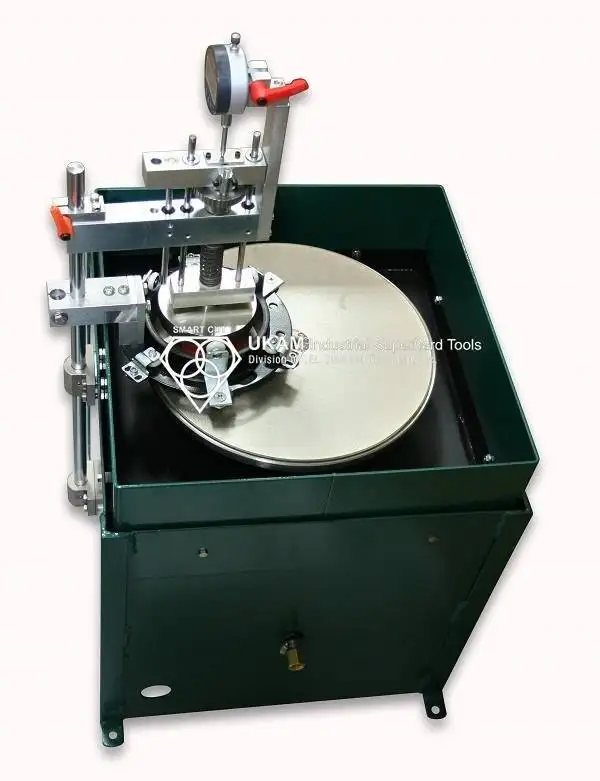
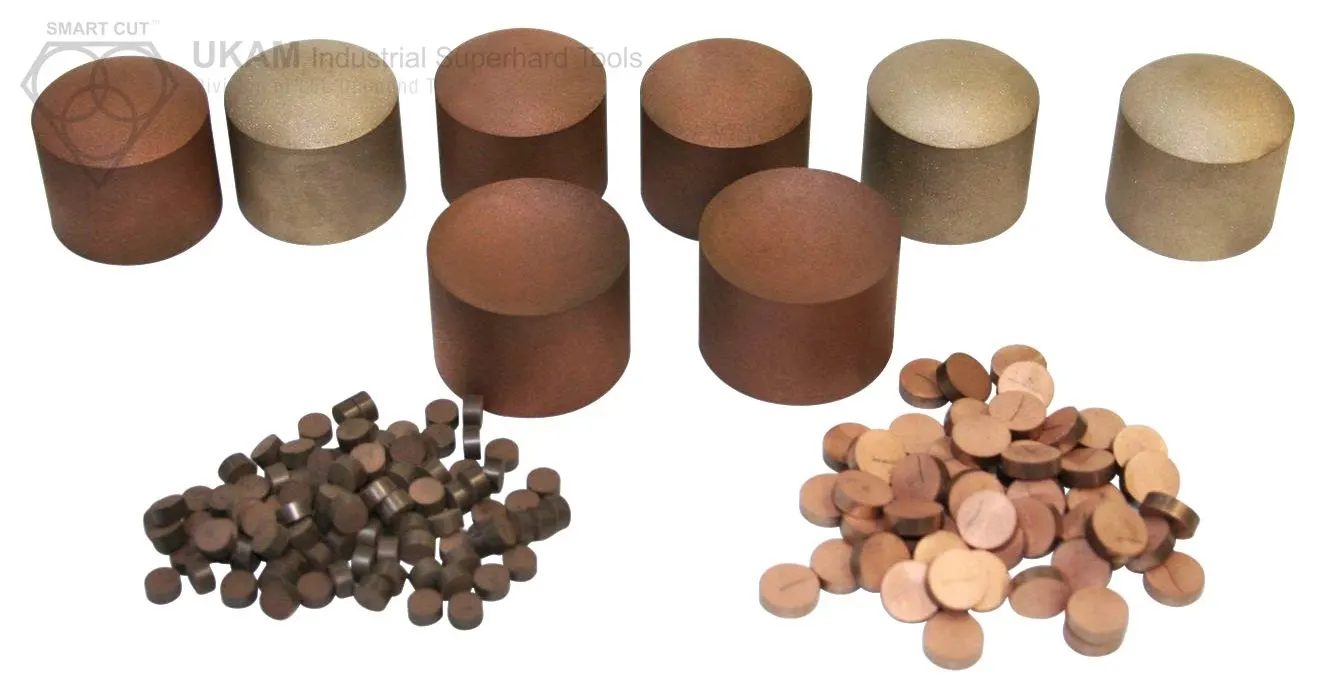
When flatness control, repeatability, and predictable abrasive behavior are required, fixed abrasive pellet systems provide an alternative to loose diamond slurries and conventional polishing pads. These engineered structures allow consistent material removal while maintaining control over surface condition.

This article expands on how diamond pellet systems function within precision workflows, how they differ from other polishing consumables, and where they fit within modern surface preparation strategies.

Why Fixed Abrasive Pellet Systems Are Used in Precision Applications

In many sample preparation environments, variability is the biggest enemy. Inconsistent removal rates, uneven wear, or operator-dependent slurry distribution can introduce surface defects that are not immediately visible but become critical during analysis, coating, or bonding.

Engineered pellet systems address this by offering:

● Controlled abrasive exposure
● Stable removal characteristics
● Repeatable wear behavior
● Reduced process variability between runs

Unlike loose abrasives, these systems function as structured micro-cutting tools. The abrasive particles are fixed within a designed bond matrix, allowing gradual and predictable exposure during use.

For full technical specifications and available configurations, refer to UKAM’s Diamond pellets

How Pellet-Based Polishing Differs from Slurry or Pad-Based Methods

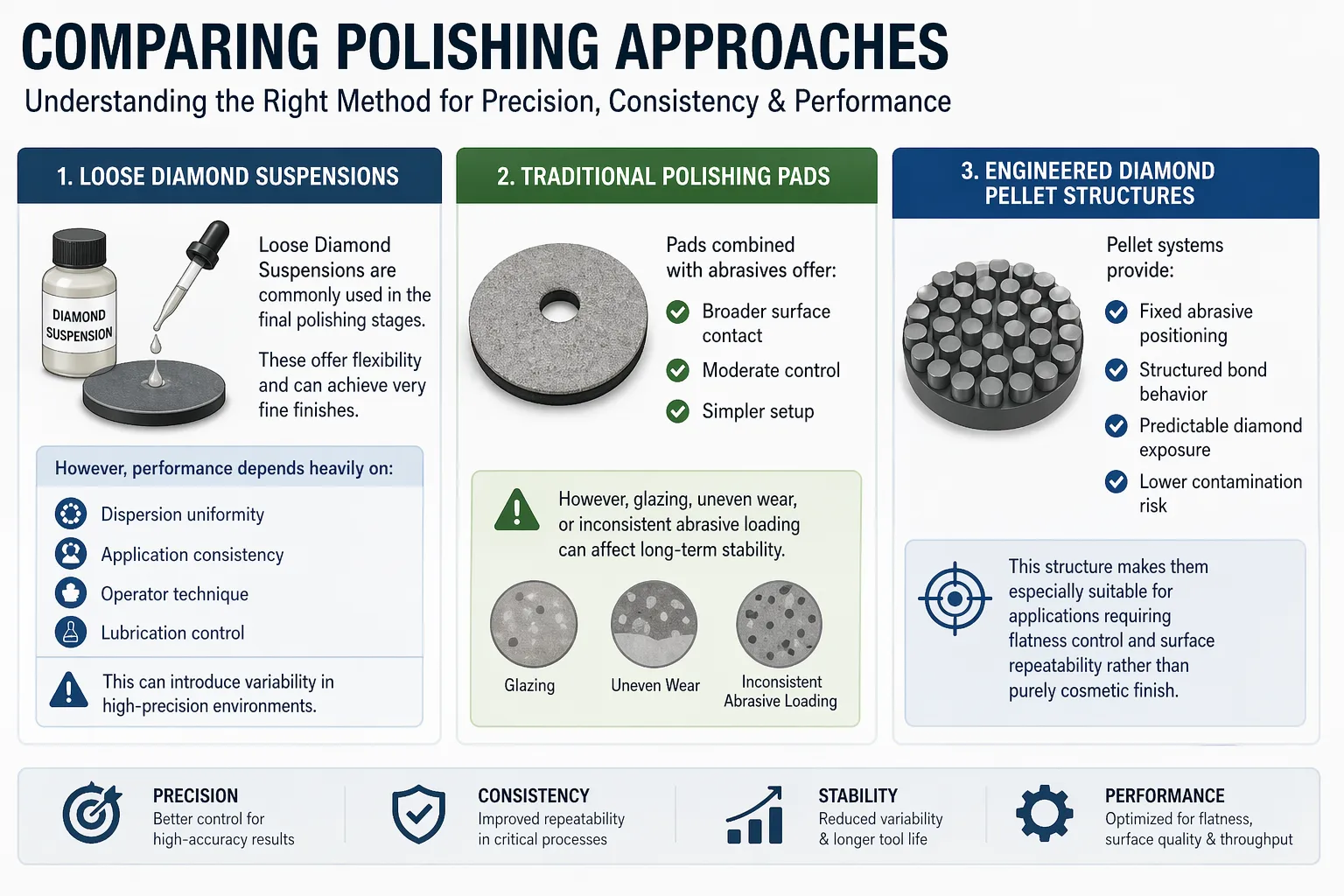
Polishing approaches generally fall into three categories:

1. Loose Diamond Suspensions

Loose Diamond Suspensions are commonly used in the final polishing stages.
These offer flexibility and can achieve very fine finishes. However, performance depends heavily on:

● Dispersion uniformity
● Application consistency
● Operator technique
● Lubrication control

This can introduce variability in high-precision environments.

2. Traditional Polishing Pads

Pads combined with abrasives offer:

● Broader surface contact
● Moderate control
● Simpler setup

However, glazing, uneven wear, or inconsistent abrasive loading can affect long-term stability.

3. Engineered Diamond Pellet Structures

Pellet systems provide:

● Fixed abrasive positioning
● Structured bond behavior
● Predictable diamond exposure
● Lower contamination risk

This structure makes them especially suitable for applications requiring flatness control and surface repeatability rather than purely cosmetic finish.

Where Pellet Systems Fit in the Sample Preparation Workflow

In metallographic and materials analysis workflows, polishing is rarely a single-step operation.
A typical sequence may include:

● Coarse grinding
● Intermediate planar correction
● Controlled polishing
● Final surface refinement

Early grinding stages may use silicon carbide papers.
These establish initial flatness and remove bulk material.

Pellet-based polishing systems typically follow grinding stages, where:

● Dimensional control becomes critical
● Surface deformation must be minimized
● Subsurface damage must be controlled

For a broader understanding of how grinding and polishing interact in metallography, see:

Improve Sample Quality & Optimize your Polishing Operating for Metallography & Sample Preparation

This workflow-based integration reduces cumulative stress and improves the reliability of the final surface.

Technical Factors That Influence Performance

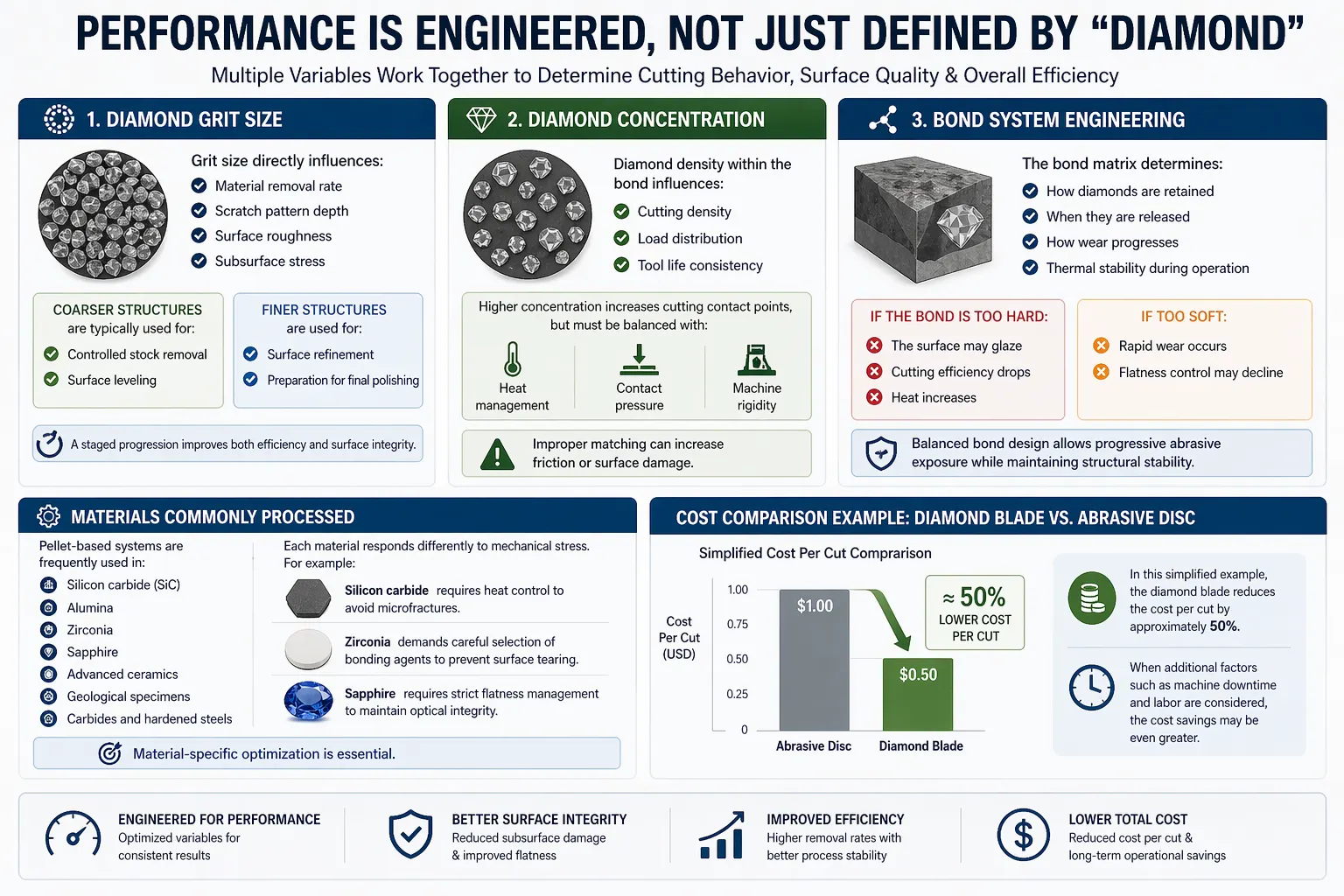
Performance is not defined by “diamond” alone. Several engineered variables determine behavior.

1. Diamond Grit Size

Grit size directly influences:

● Material removal rate
● Scratch pattern depth
● Surface roughness
● Subsurface stress

Coarser structures are typically used for:

● Controlled stock removal
● Surface leveling

Finer structures are used for:

● Surface refinement
● Preparation for final polishing

A staged progression improves both efficiency and surface integrity.

2. Diamond Concentration

Diamond density within the bond influences:

● Cutting density
● Load distribution
● Tool life consistency

Higher concentration increases cutting contact points, but must be balanced with:

● Heat management
● Contact pressure
● Machine rigidity

Improper matching can increase friction or surface damage.

3. Bond System Engineering

The bond matrix determines:

● How diamonds are retained
● When they are released
● How wear progresses
● Thermal stability during operation

If the bond is too hard:

● The surface may glaze
● Cutting efficiency drops
● Heat increases

If too soft:
● Rapid wear occurs
● Flatness control may decline

Balanced bond design allows progressive abrasive exposure while maintaining structural stability.

Materials Commonly Processed

Pellet-based systems are frequently used in:

● Silicon carbide (SiC)
● Alumina
● Zirconia
● Sapphire
● Advanced ceramics
● Geological specimens
● Carbides and hardened steels

Each material responds differently to mechanical stress.

For example:

Silicon carbide requires heat control to avoid microfractures.
Zirconia demands careful selection of bonding agents to prevent surface tearing.

Sapphire requires strict flatness management to maintain optical integrity.
Material-specific optimization is essential.

In this simplified example, the diamond blade reduces the cost per cut by approximately 50%.

When additional factors such as machine downtime and labor are considered, the cost savings may be even greater.

Surface Integrity: Beyond Roughness Values

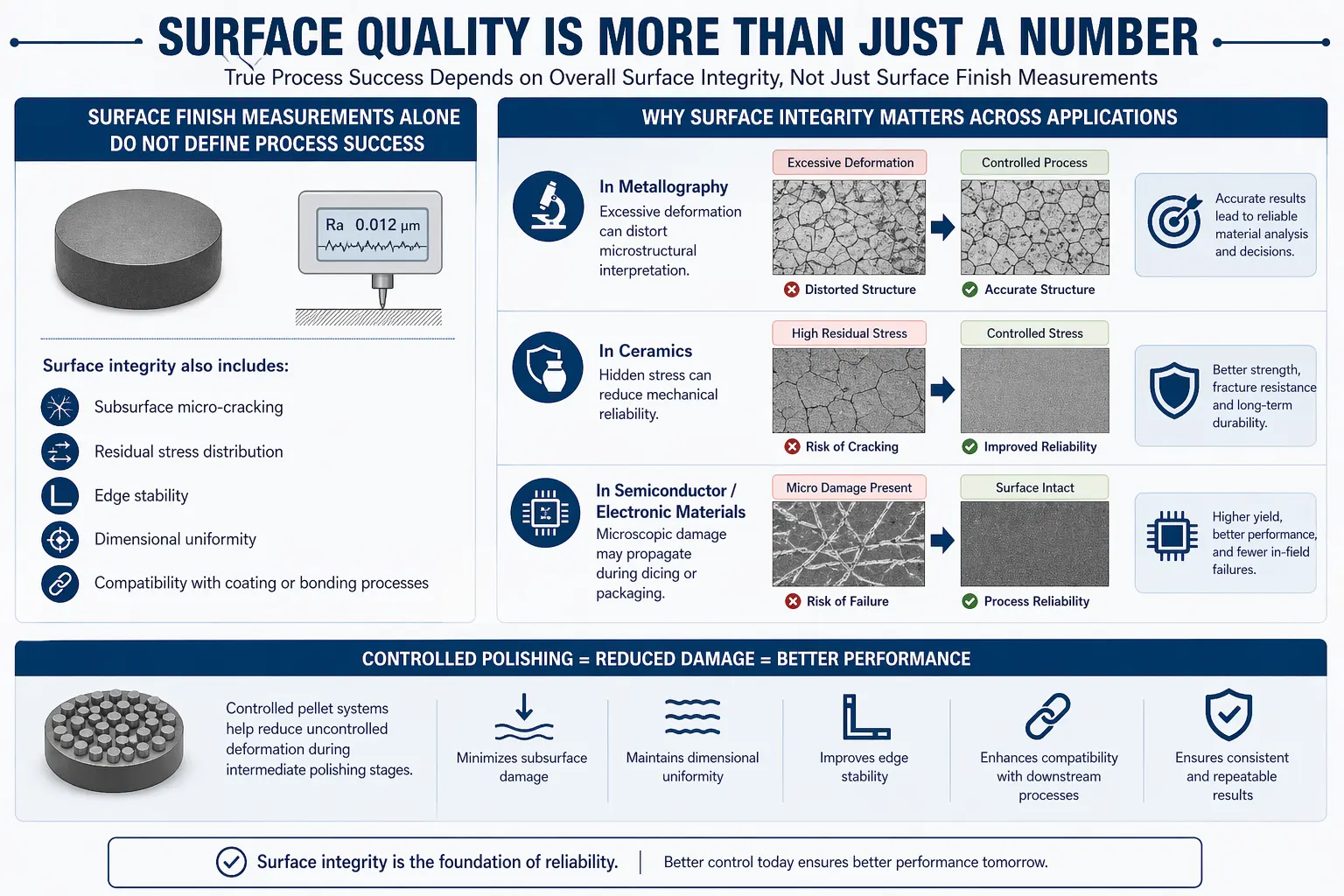
Surface finish measurements alone do not define process success.
Surface integrity also includes:

● Subsurface micro-cracking
● Residual stress distribution
● Edge stability
● Dimensional uniformity
● Compatibility with coating or bonding processes

In metallography, excessive deformation can distort microstructural interpretation.
In ceramics processing, hidden stress can reduce mechanical reliability.

In semiconductor or electronic materials, microscopic damage may propagate during dicing or packaging.

Controlled pellet systems help reduce uncontrolled deformation during intermediate polishing stages.

Process Stability in Production Environments

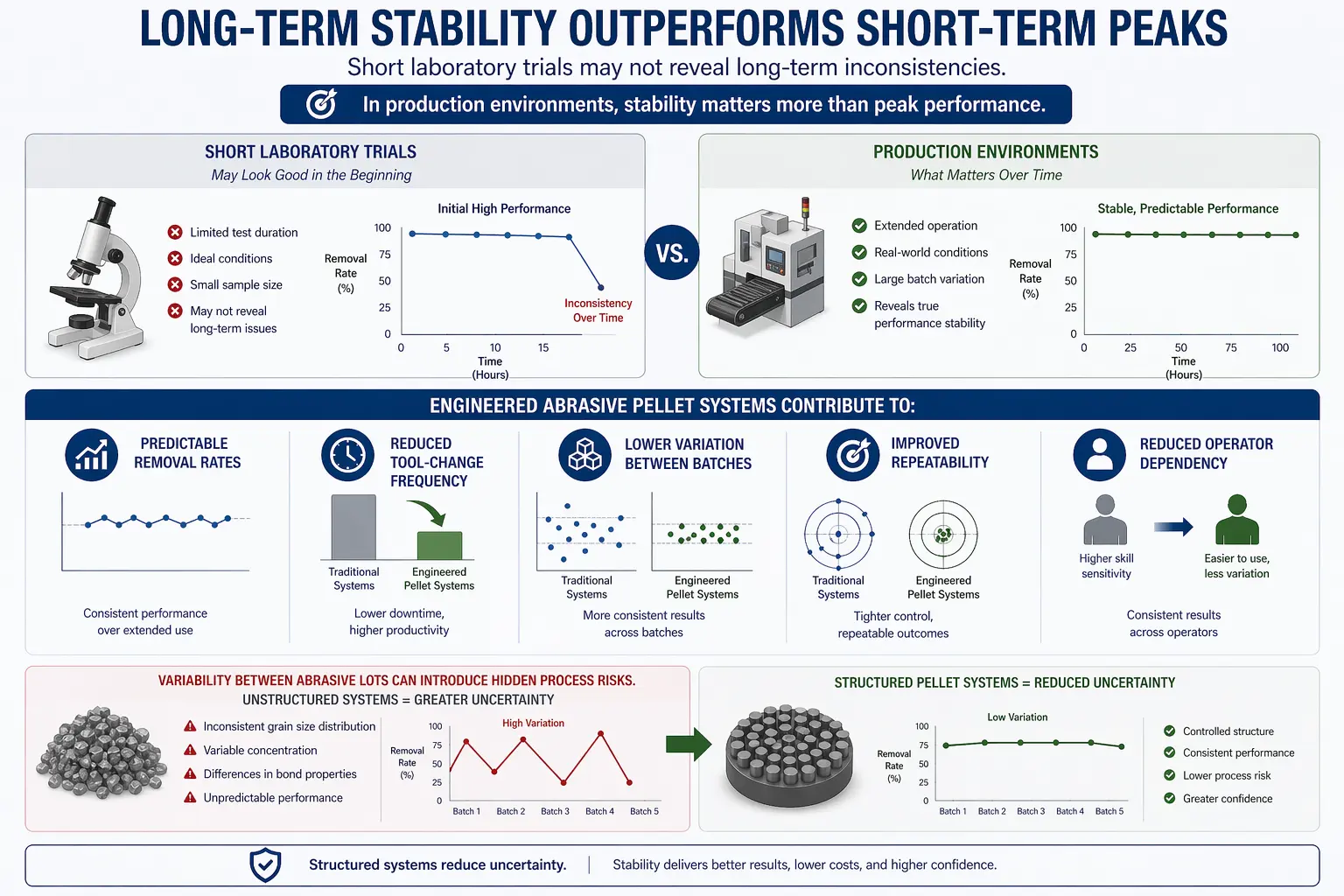
Short laboratory trials may not reveal long-term inconsistencies.
In production environments, stability matters more than peak performance.

Engineered abrasive pellet systems contribute to:

● Predictable removal rates
● Reduced tool-change frequency
● Lower variation between batches
● Improved repeatability
● Reduced operator dependency

Variability between abrasive lots can introduce hidden process risks. Structured systems reduce that uncertainty.

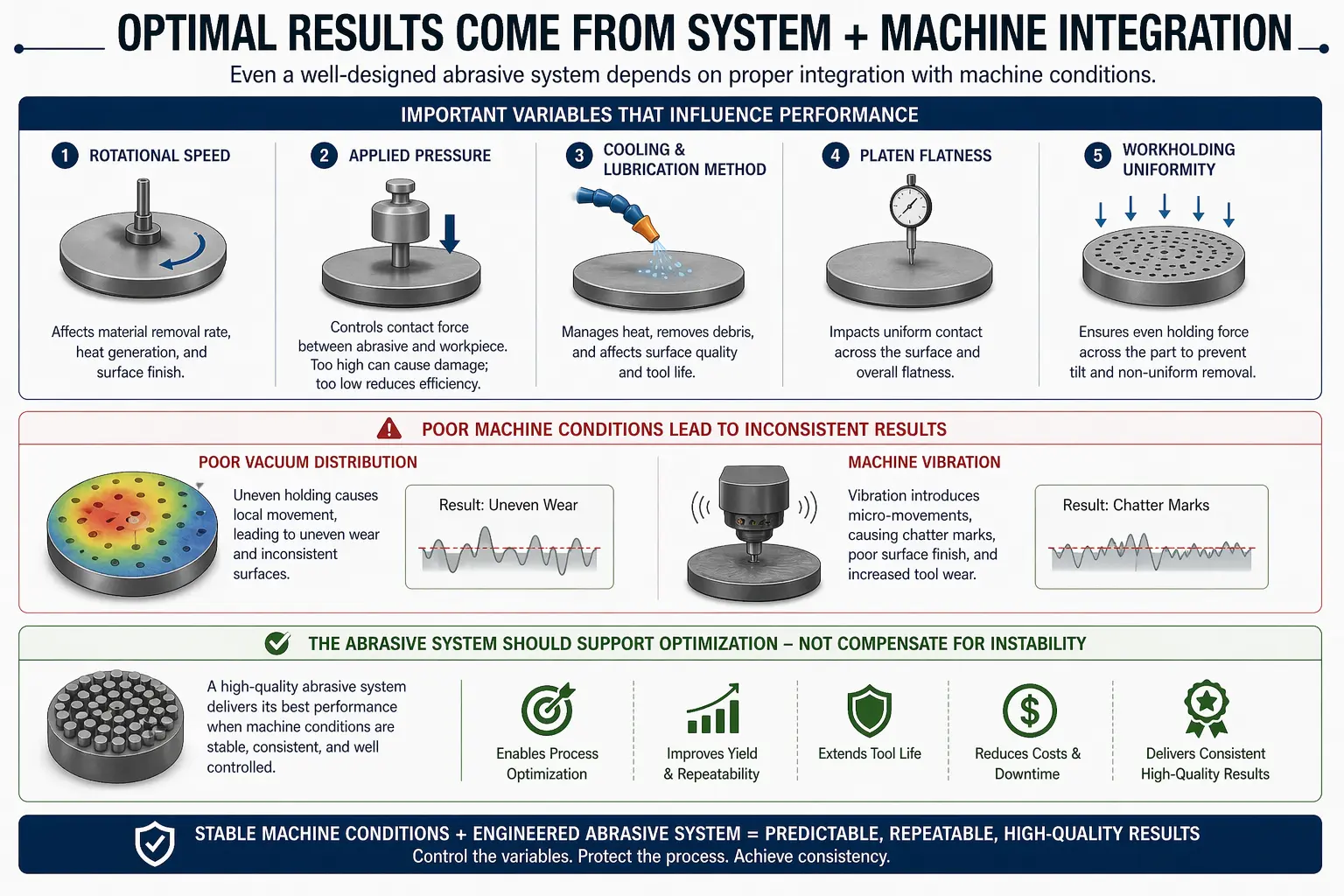
Machine & Process Variables That Influence Results

Even a well-designed abrasive system depends on proper integration with machine conditions.

Important variables include:

● Rotational speed
● Applied pressure
● Cooling and lubrication method
● Platen flatness
● Workholding uniformity

Poor vacuum distribution or machine vibration can lead to uneven wear and inconsistent surfaces.

The abrasive system should support optimization – not compensate for unstable machine conditions.

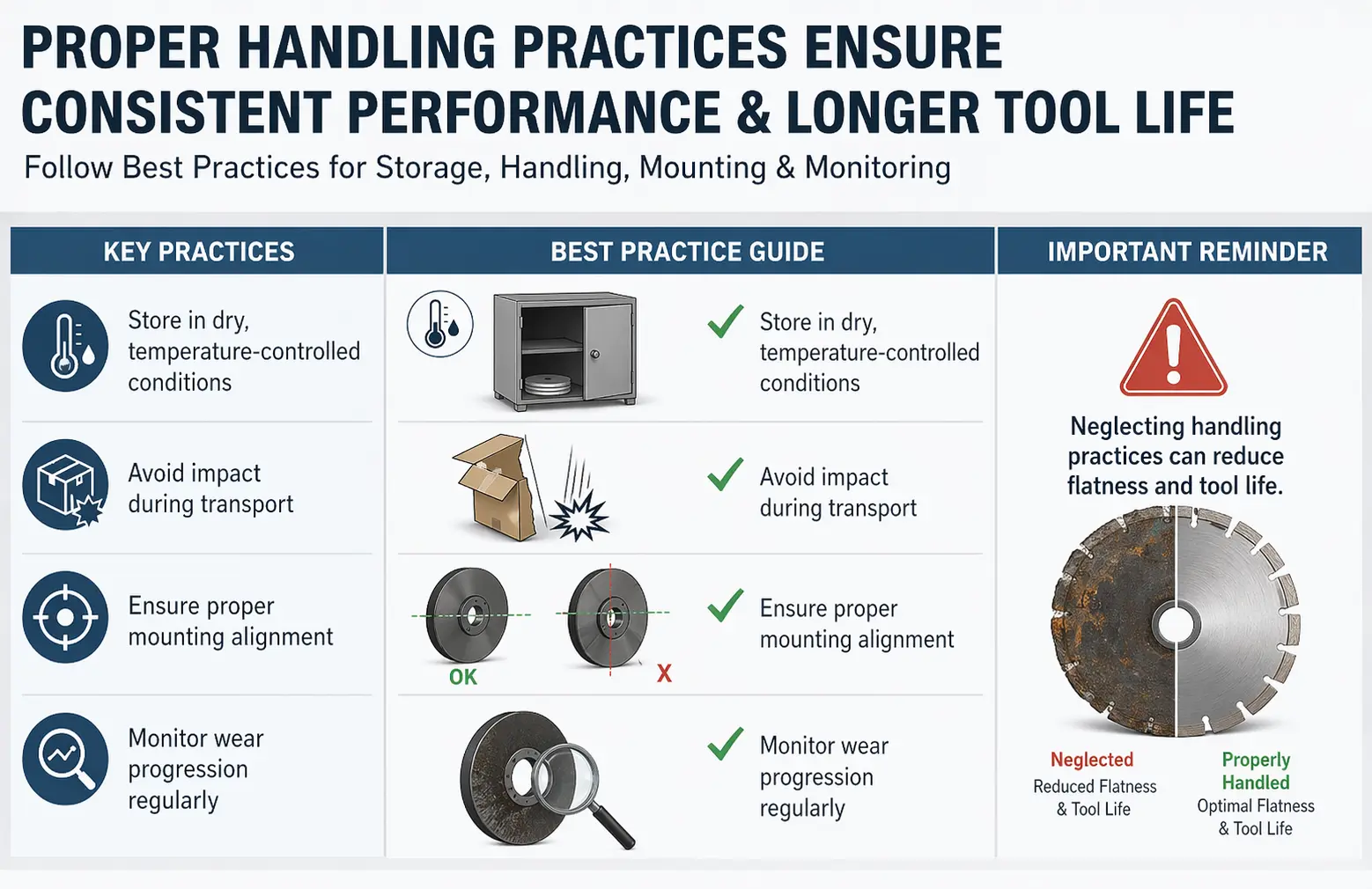
Handling and Maintenance Considerations

To maintain consistent performance:

● Store in dry, temperature-controlled conditions
● Avoid impact during transport
● Ensure proper mounting alignment
● Monitor wear progression regularly

Neglecting handling practices can reduce flatness and tool life.

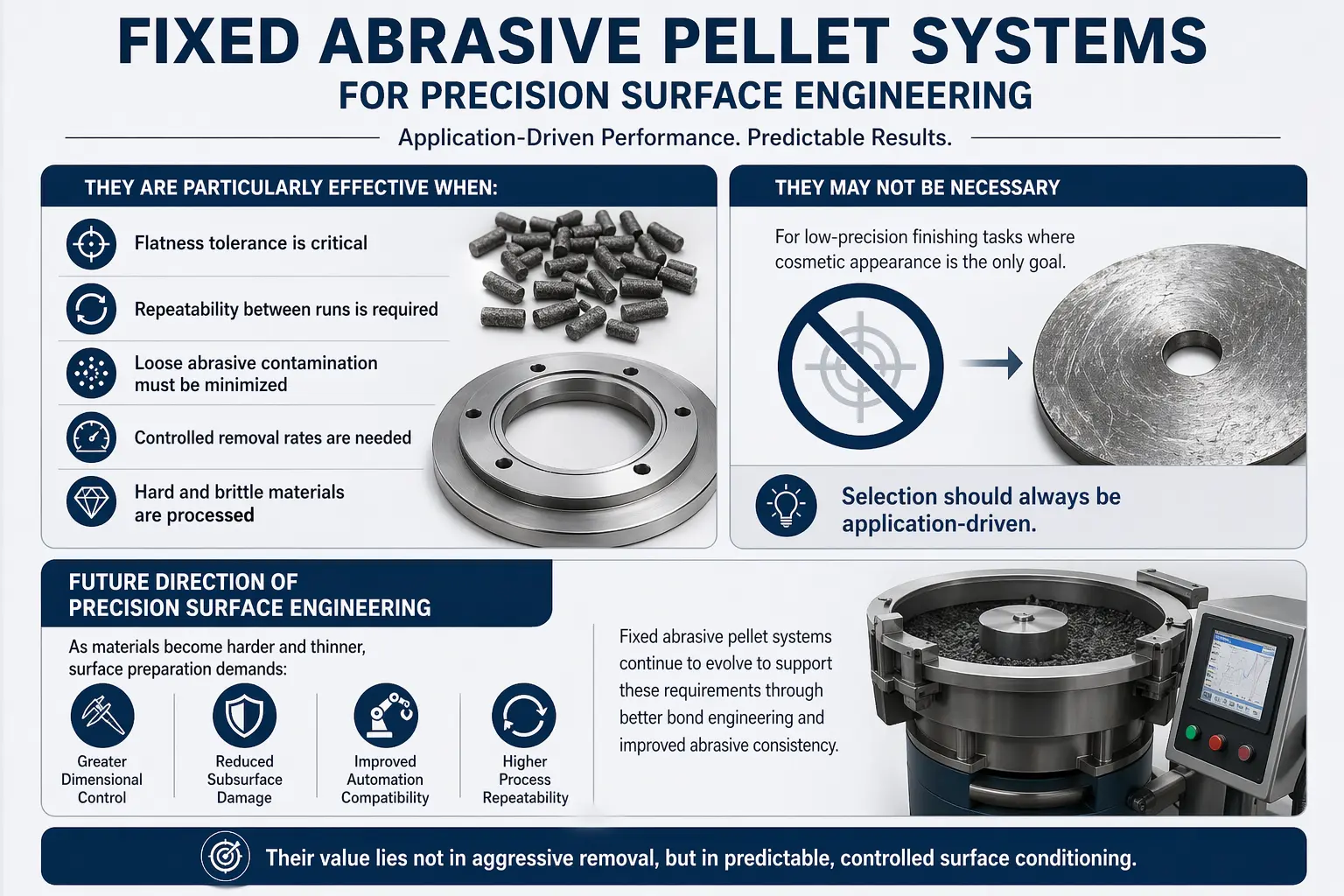
When Pellet Systems Are the Right Choice

They are particularly effective when:

● Flatness tolerance is critical
● Repeatability between runs is required
● Loose abrasive contamination must be minimized
● Controlled removal rates are needed
● Hard and brittle materials are processed

They may not be necessary for low-precision finishing tasks where cosmetic appearance is the only goal.

Selection should always be application-driven.

Future Direction of Precision Surface Engineering

As materials become harder and thinner, surface preparation demands:

● Greater dimensional control
● Reduced subsurface damage
● Improved automation compatibility
● Higher process repeatability

Fixed abrasive pellet systems continue to evolve to support these requirements through better bond engineering and improved abrasive consistency.

Their value lies not in aggressive removal, but in predictable, controlled surface conditioning.

Short FAQs

They are used for controlled polishing and intermediate material removal in hard and brittle materials where flatness and surface integrity are critical.

They provide greater structural stability and repeatability, while slurry systems may be preferred in ultra-fine final finishing stages.

Yes. They are commonly integrated after coarse grinding and before final polishing to improve dimensional stability.

When properly specified and operated, they help minimize uncontrolled microfractures compared to aggressive grinding.

Yes. They are widely used in alumina, zirconia, silicon carbide, sapphire, and other advanced ceramic materials.

Trusted by Tens of Thousands of Manufacturers, Laboratories,
Research Institutions Worldwide Since 1990

American Based Manufacturer

Established in 1990

Custom manufacturing

Brian is an experienced professional in the field of precision cutting tools, with over 27 years of experience in technical support. Over the years, he has helped engineers, manufacturers, researchers, and contractors find the right solutions for working with advanced and hard-to-cut materials. He’s passionate about bridging technical knowledge with real-world applications to improve efficiency and accuracy.

As an author, Brian Farberov writes extensively on diamond tool design, application engineering, return on investment strategies, and process optimization, combining technical depth with a strong understanding of customer needs and market dynamics.

author-avatar

About Brian Farberov

Brian is an experienced professional in the field of precision cutting tools, with over 27 years of experience in technical support. Over the years, he has helped engineers, manufacturers, researchers, and contractors find the right solutions for working with advanced and hard-to-cut materials. He’s passionate about bridging technical knowledge with real-world applications to improve efficiency and accuracy. As an author, Brian Farberov writes extensively on diamond tool design, application engineering, return on investment strategies, and process optimization, combining technical depth with a strong understanding of customer needs and market dynamics.