









blog, Cutting

Cutting Carbon Fiber Tubes: Best Blades, Tool Life Comparison, and Cost-Per-Cut Analysis
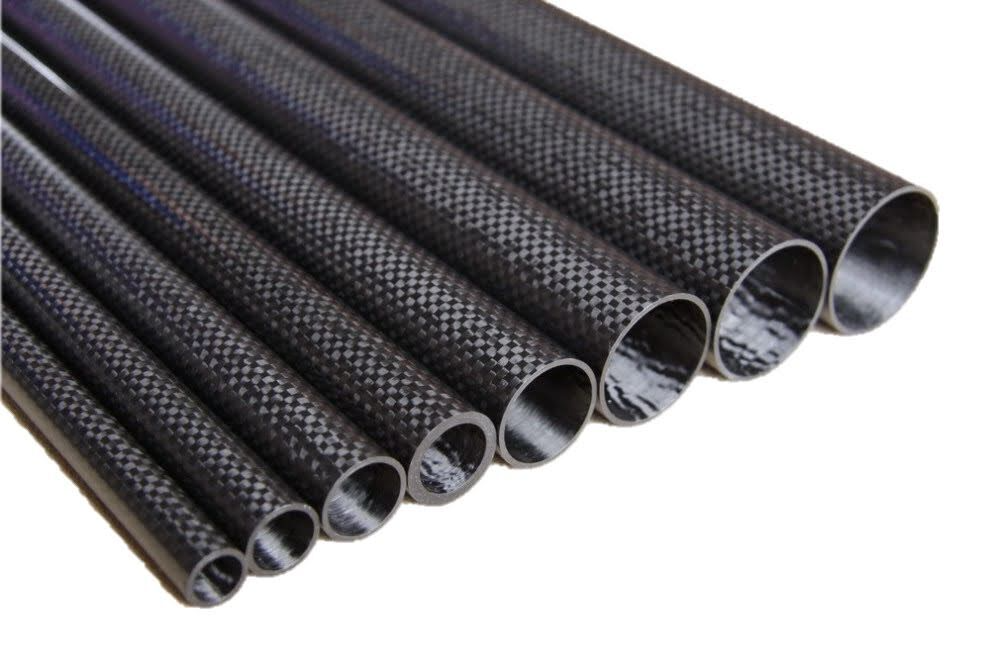
Table of Contents

Trusted by Tens of Thousands of Manufacturers, Laboratories Research Institutions Worldwide Since 1990

American Based Manufacturer

Established in 1990

Custom manufacturing

Carbon fiber reinforced composites have become essential materials in industries such as aerospace, automotive, sporting goods, and advanced manufacturing. Carbon fiber tubes, in particular, are widely used because they offer an excellent combination of high strength, low weight, and dimensional stability.
However, machining or cutting carbon fiber tubes presents several challenges. The material is highly abrasive and can cause rapid tool wear. It also tends to produce delamination, frayed edges, and excessive dust when cut using conventional abrasive tools.
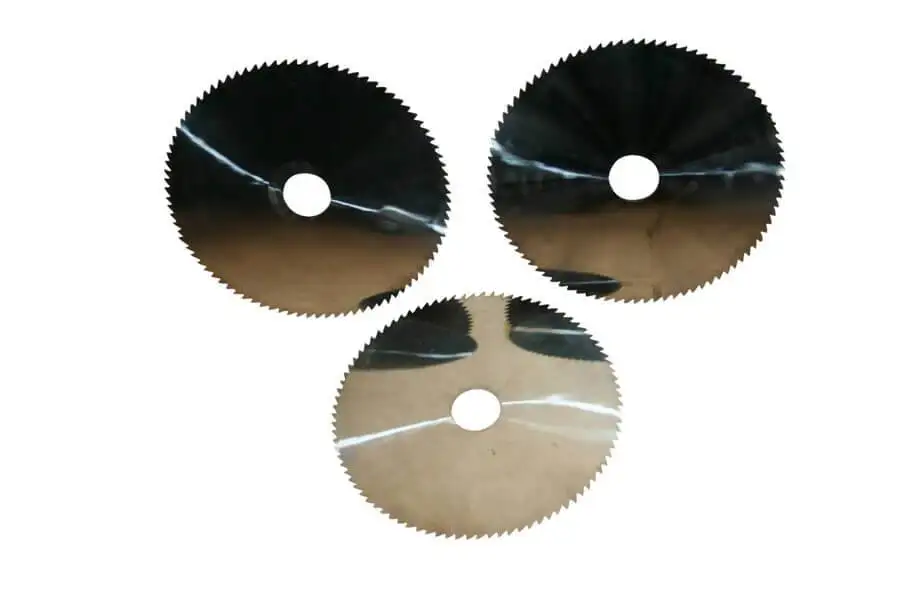
For manufacturers seeking consistent results and lower production costs, selecting the right cutting tool is critical. In many applications, diamond cutting blades and precision composite cutting tools provide the most effective solution.
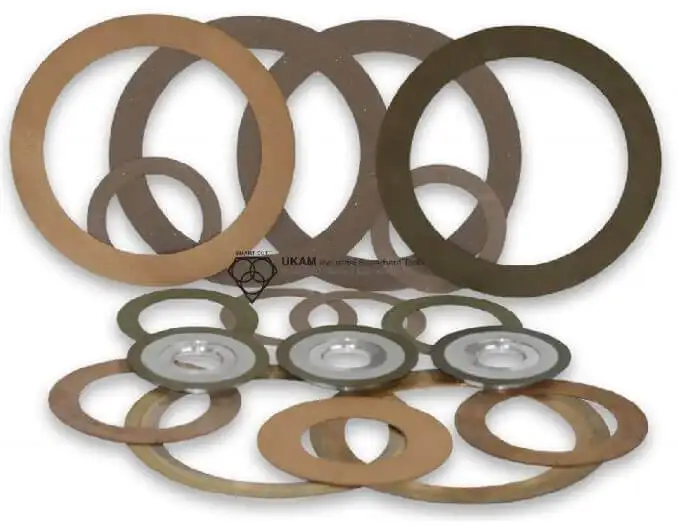
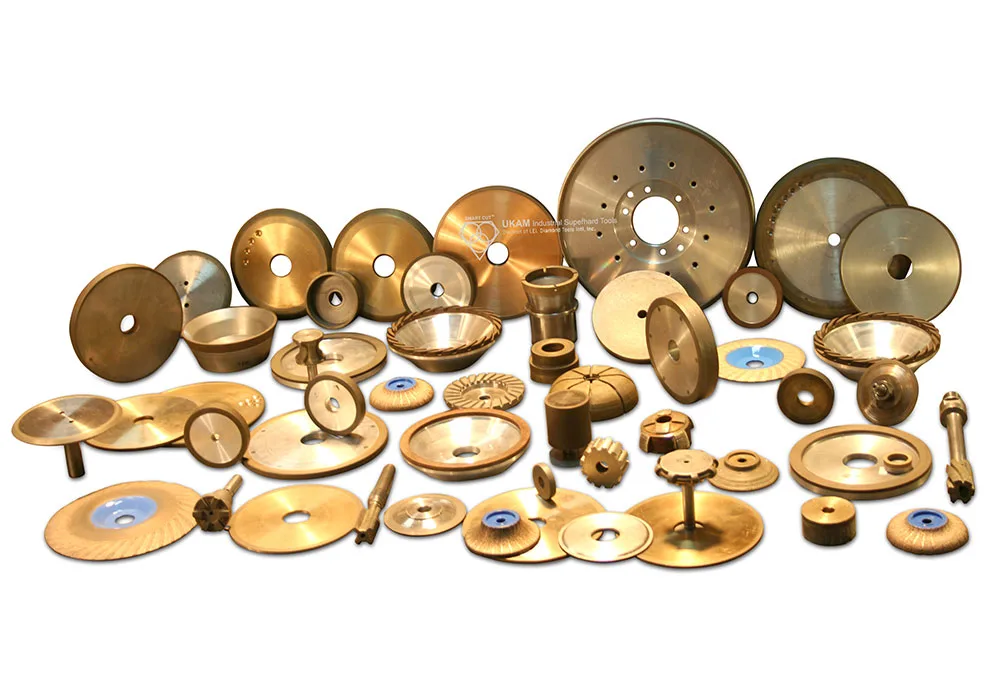
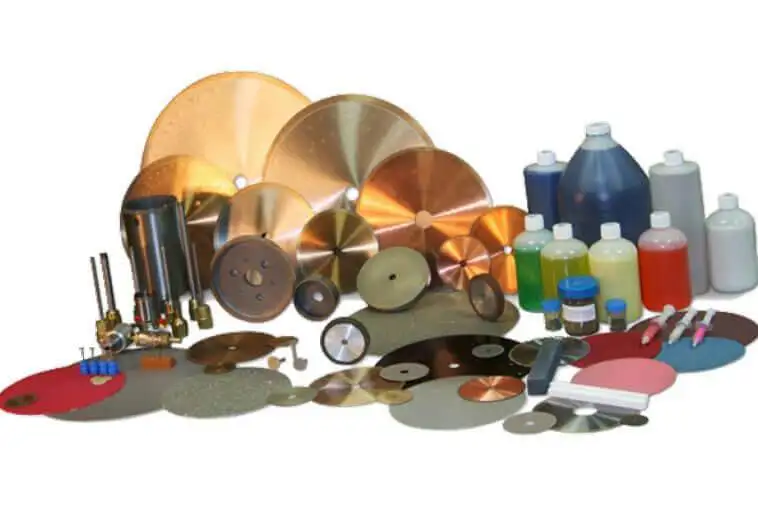
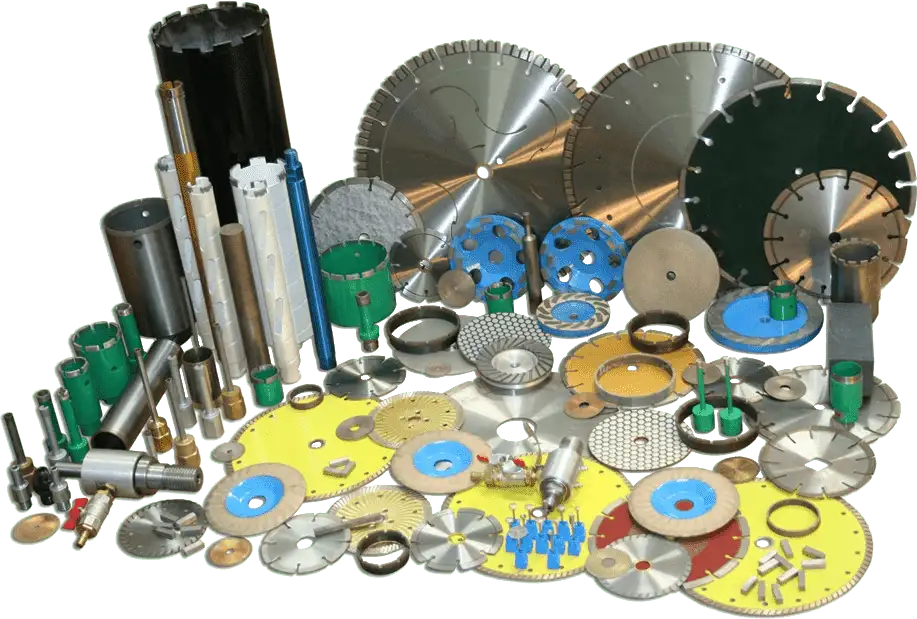
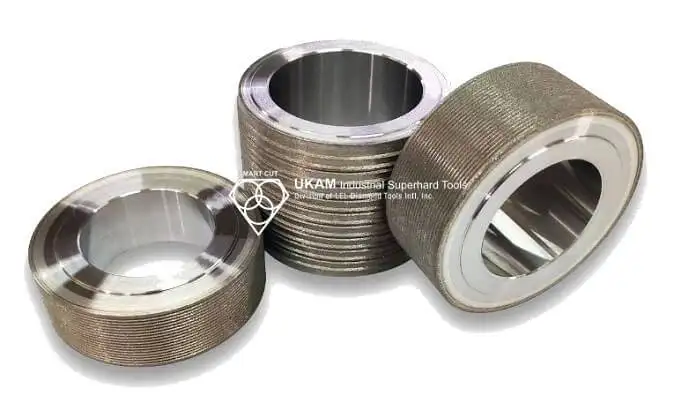
Manufacturers such as UKAM Industrial Superhard Tools specialize in producing high-performance diamond blades engineered specifically for cutting advanced composite materials, including carbon fiber tubes.
Understanding the differences between cutting tools—and how they affect tool life, productivity, and cost per cut—can help engineers and production managers make better tooling decisions.

Challenges When Cutting Carbon Fiber Tubes

Although carbon fiber composites are extremely strong and lightweight, they can be difficult to machine. Cutting operations must be carefully controlled to prevent damage to the material.

Common issues include:

1. Delamination

Carbon fiber consists of a layered composite material. Improper cutting tools can cause these layers to separate, leading to weakened structural integrity.

2. Frayed Edges

Traditional abrasive discs often tear fibers rather than cleanly cutting them, resulting in rough edges that require secondary finishing.

3. Rapid Tool Wear

Carbon fiber is highly abrasive and can quickly wear down conventional cutting tools.

4. Excessive Dust

Improper cutting tools can generate large amounts of airborne carbon fiber dust, which can create safety and cleanliness challenges in production environments.
Because of these challenges, manufacturers increasingly rely on diamond cutting tools designed specifically for composite materials.

Diamond Blades vs Abrasive Discs: Performance Comparison

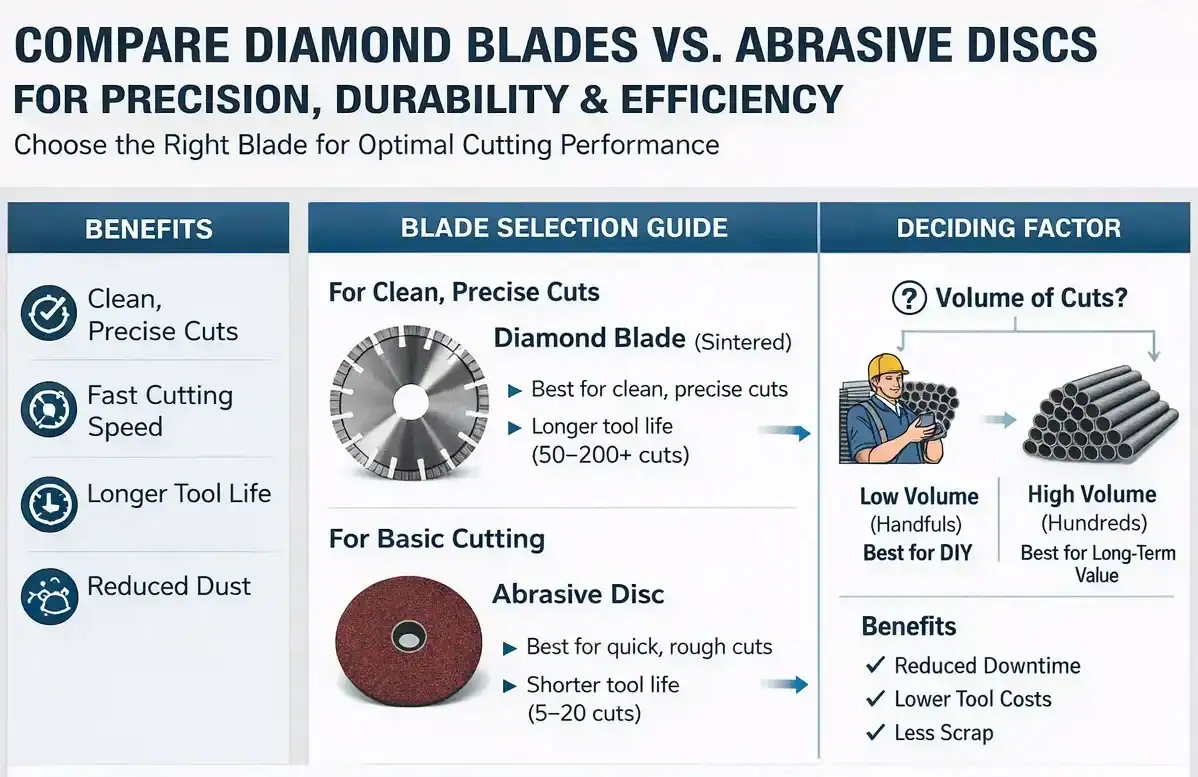
One of the most important decisions when cutting carbon fiber tubes is selecting the right blade type. While abrasive discs may be less expensive initially, diamond blades often deliver significantly better long-term performance.

Typical Performance Comparison

Diamond blades provide cleaner cuts, longer life, and more consistent performance, making them a preferred choice for many composite cutting applications.

Feature

Diamond Blade

Abrasive Disc

Cut Quality

Clean, precise edges

Fraying and tearing

Tool Life

50–200+ cuts

5–20 cuts

Cutting Speed

Faster

Slower

Heat Generation

Lower

Higher

Dust Production

Reduced

Higher

Tool Life Comparison: Why It Matters

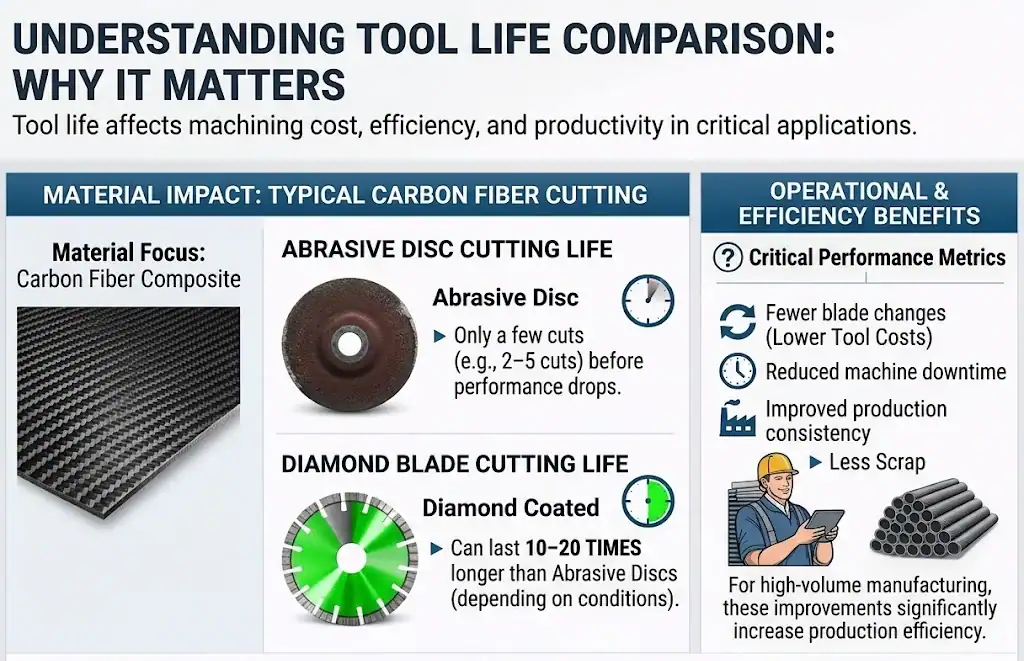
Tool life is one of the most important factors affecting machining cost and productivity.
In typical carbon fiber cutting applications:

  • Abrasive discs may last only a few cuts before performance drops
  • Diamond blades can last 10–20 times longer, depending on operating conditions

Diamond blades can last

  • fewer blade changes
  • reduced machine downtime
  • improved production consistency

For high-volume manufacturing operations, these improvements can significantly increase production efficiency.

Cost-Per-Cut Analysis

Although diamond blades generally cost more upfront than abrasive discs, their longer lifespan and higher cutting efficiency often reduce the total cost per cut.
Example Cost Comparison

Tool Type

Estimated Tool Life

Cost Per Blade

Cost Per Cut

Abrasive Disc

10 cuts

$20 $2.00

Diamond Blade

150 cuts $150

$1.00

Although diamond blades generally cost more upfront than abrasive discs, their longer lifespan and higher cutting efficiency often reduce the total cost per cut. Example Cost Comparison

Production Efficiency Gains

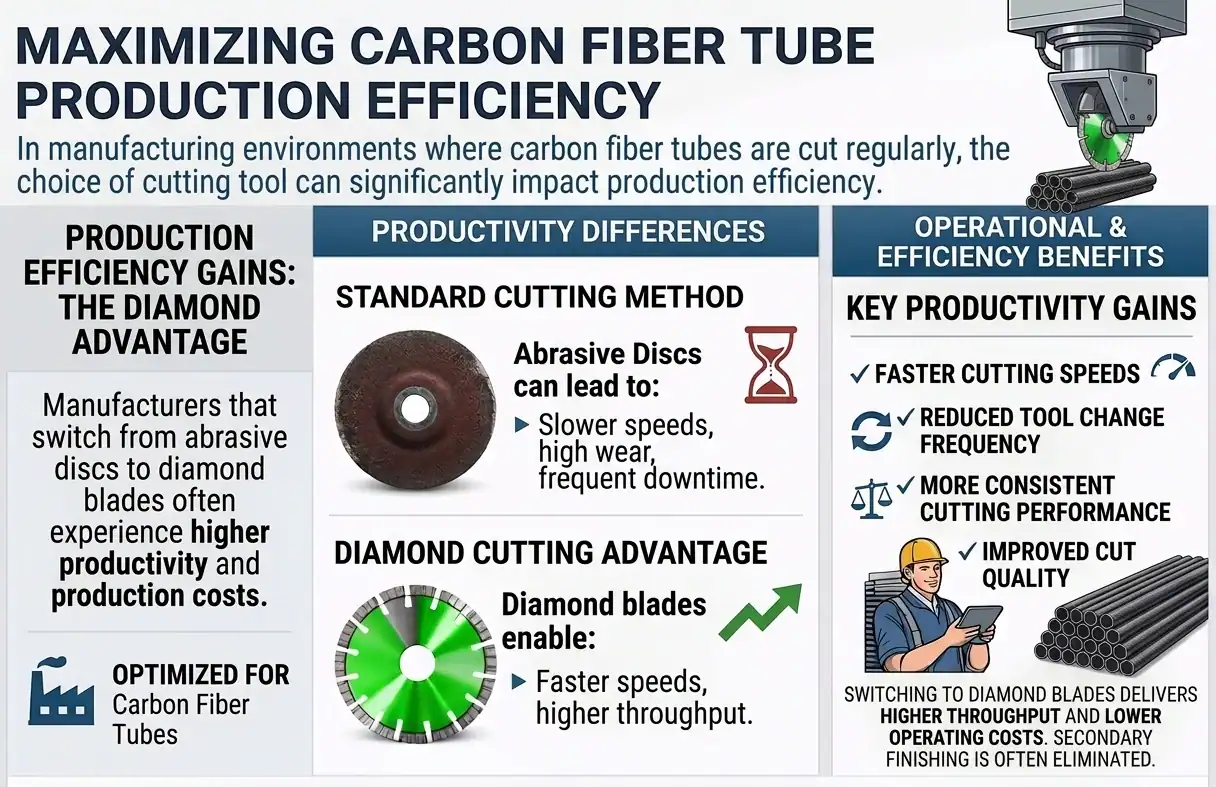
In manufacturing environments where carbon fiber tubes are cut regularly, the choice of cutting tool can significantly impact production efficiency.
Diamond cutting blades offer several productivity advantages:

  • Faster cutting speeds
  • Reduced tool change frequency
  • More consistent cutting performance
  • Improved cut quality

These factors can increase production throughput while reducing the need for secondary finishing operations.
Manufacturers that switch from abrasive discs to diamond blades often experience higher productivity and lower overall production costs.

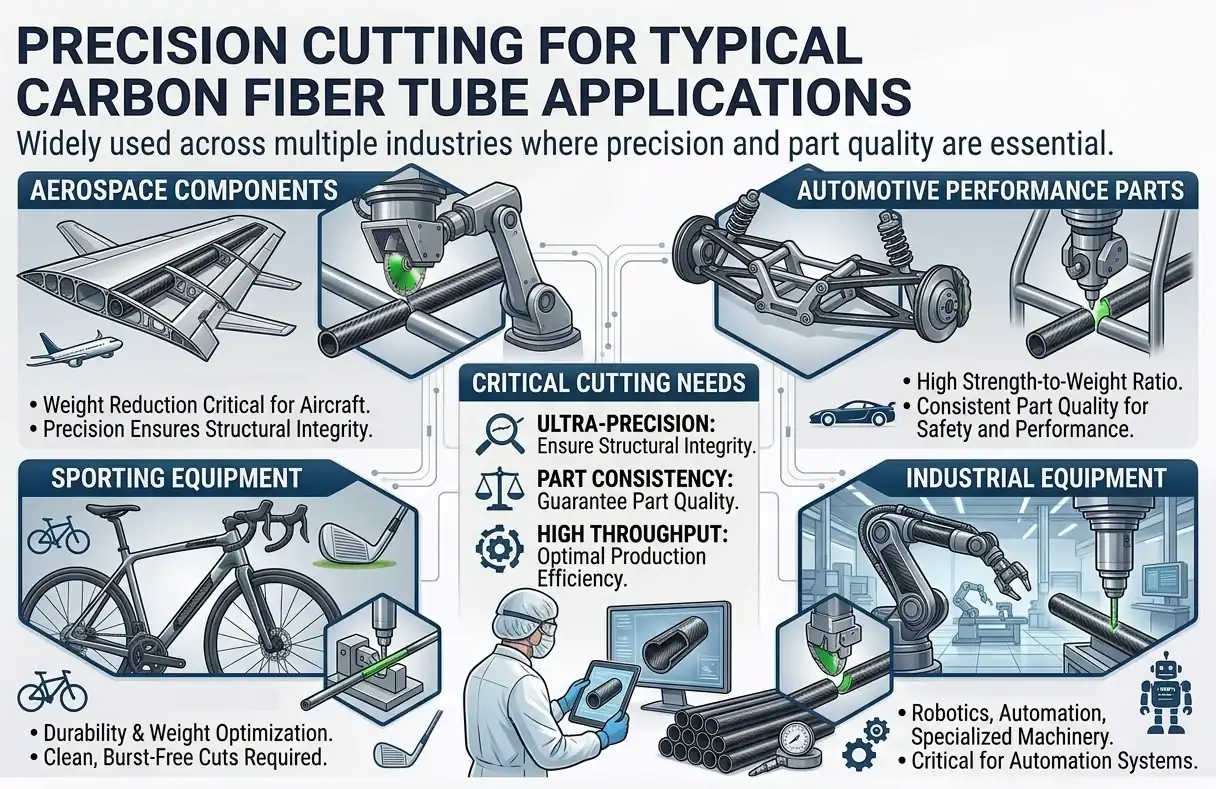
Typical Applications for Carbon Fiber Tube Cutting

Carbon fiber tubes are widely used in many industries due to their strength and lightweight properties.

In these industries, precision cutting is essential to ensure structural integrity and consistent part quality.

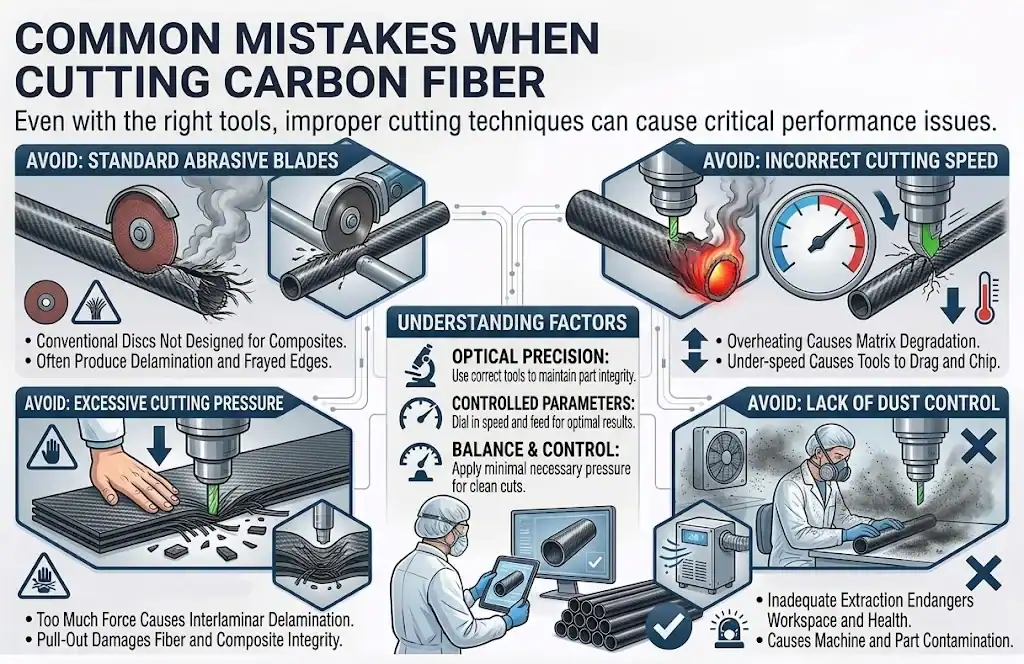
Common Mistakes When Cutting Carbon Fiber

Even with the right tools, improper cutting techniques can cause performance issues.

Understanding these factors helps ensure better cutting results and longer tool life.

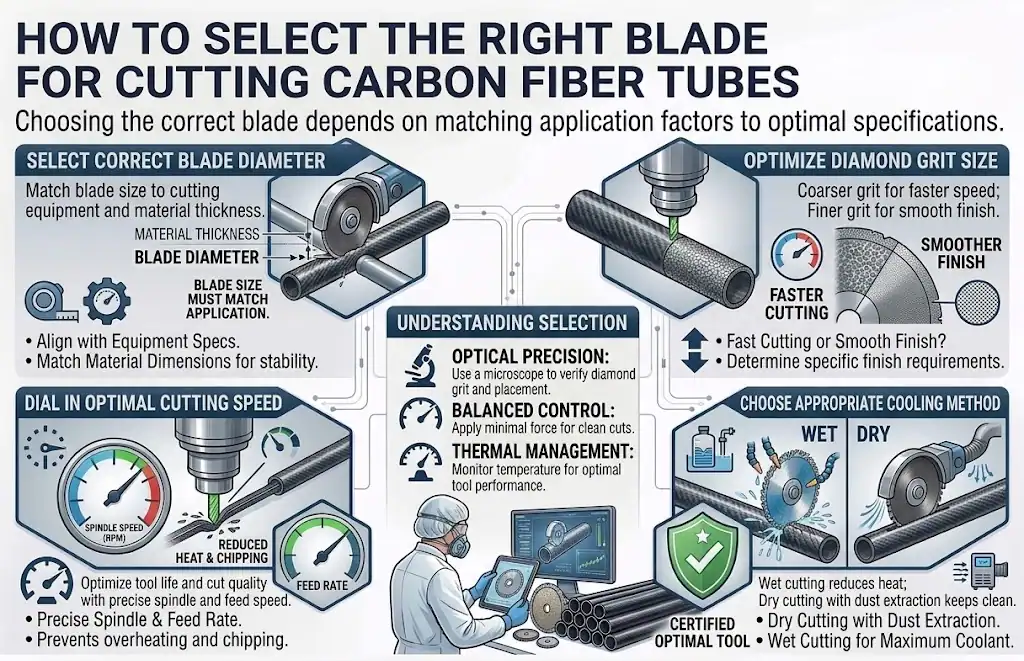
How to Select the Right Blade for Cutting Carbon Fiber Tubes

Choosing the correct blade depends on several factors related to the cutting application.

Blade Diameter- The blade size must match the cutting equipment and material thickness.

Diamond Grit Size-Coarser grit may be used for faster cutting, while finer grit provides smoother finishes.

Cutting Speed- Proper spindle speed and feed rate help optimize tool life and cut quality.

Cooling Method- Some applications use coolant to reduce heat, while others rely on dry cutting with dust extraction.

Working with experienced diamond tool manufacturers can help ensure the correct blade specifications are selected.
Companies such as UKAM Industrial Superhard Tools provide specialized tooling solutions for cutting advanced materials, including custom diamond blades designed specifically for composite machining.

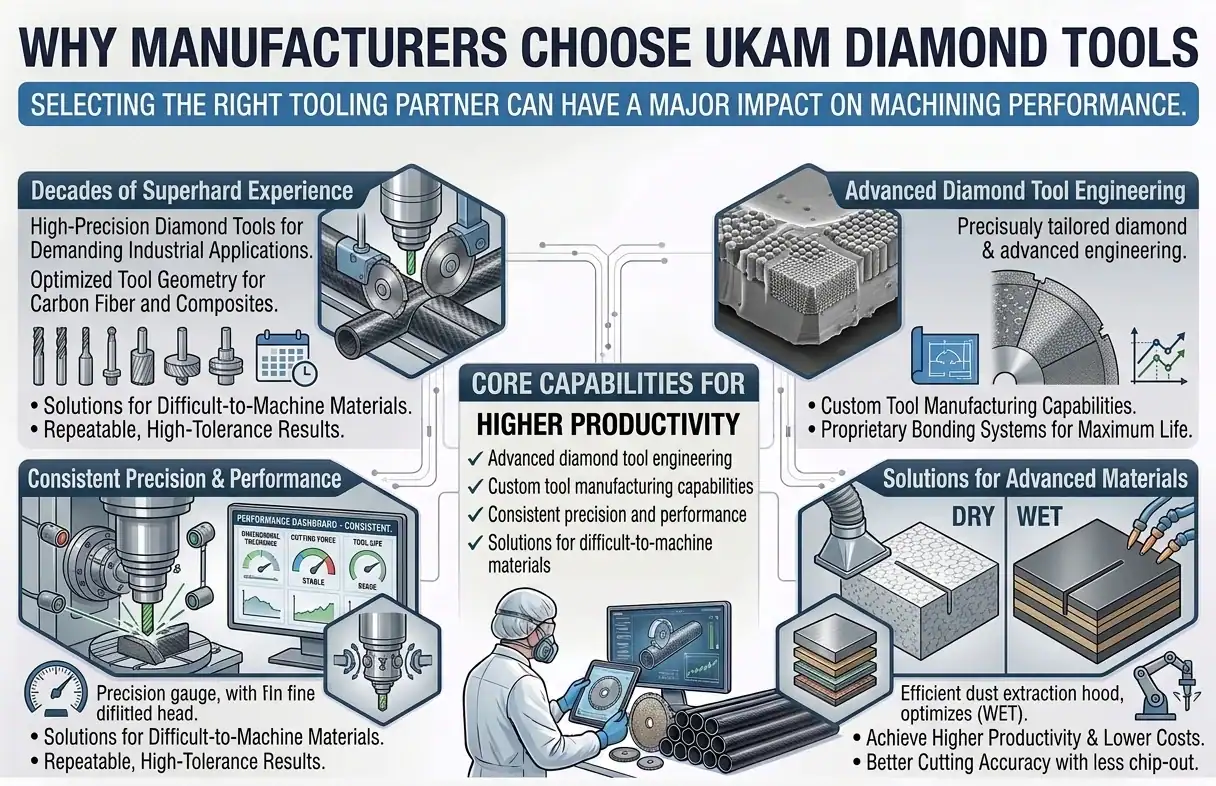
Why Manufacturers Choose UKAM Diamond Tools

Selecting the right tooling partner can have a major impact on machining performance.
With decades of experience in superhard tooling technology, UKAM Industrial Superhard Tools provides high-precision diamond tools designed for demanding industrial applications.

Manufacturers often choose UKAM tools because they offer:

  • advanced diamond tool engineering
  • custom tool manufacturing capabilities
  • consistent precision and performance
  • solutions for difficult-to-machine materials

These capabilities allow manufacturers to achieve higher productivity, better cutting accuracy, and lower machining costs.

Frequently Asked Questions:

Diamond cutting blades are typically the most effective for clean, precise composite cutting.

They wear quickly and tend to tear fibers instead of cutting them cleanly.

Depending on conditions, they can last 10–20 times longer than abrasive discs.

Yes, they generally produce less dust and cleaner cuts.

Aerospace, automotive, sporting goods, and advanced manufacturing industries.

Yes, specialized manufacturers can design blades optimized for specific materials and cutting conditions.

Conclusion

Cutting carbon fiber tubes requires tools capable of handling abrasive composite materials while maintaining clean edges and consistent performance. Diamond cutting blades provide significant advantages compared with conventional abrasive discs, including longer tool life, improved cut quality, and lower cost per cut. These benefits make diamond tools an effective solution for manufacturers seeking to improve productivity and reduce machining costs. By selecting the correct blade specifications and working with experienced tooling providers such as UKAM Industrial Superhard Tools, manufacturers can achieve reliable performance and more efficient carbon fiber machining operations.

Trusted by Tens of Thousands of Manufacturers, Laboratories,
Research Institutions Worldwide Since 1990

American Based Manufacturer

Established in 1990

Custom manufacturing

RELATED ARTICLES