










blog, Cutting

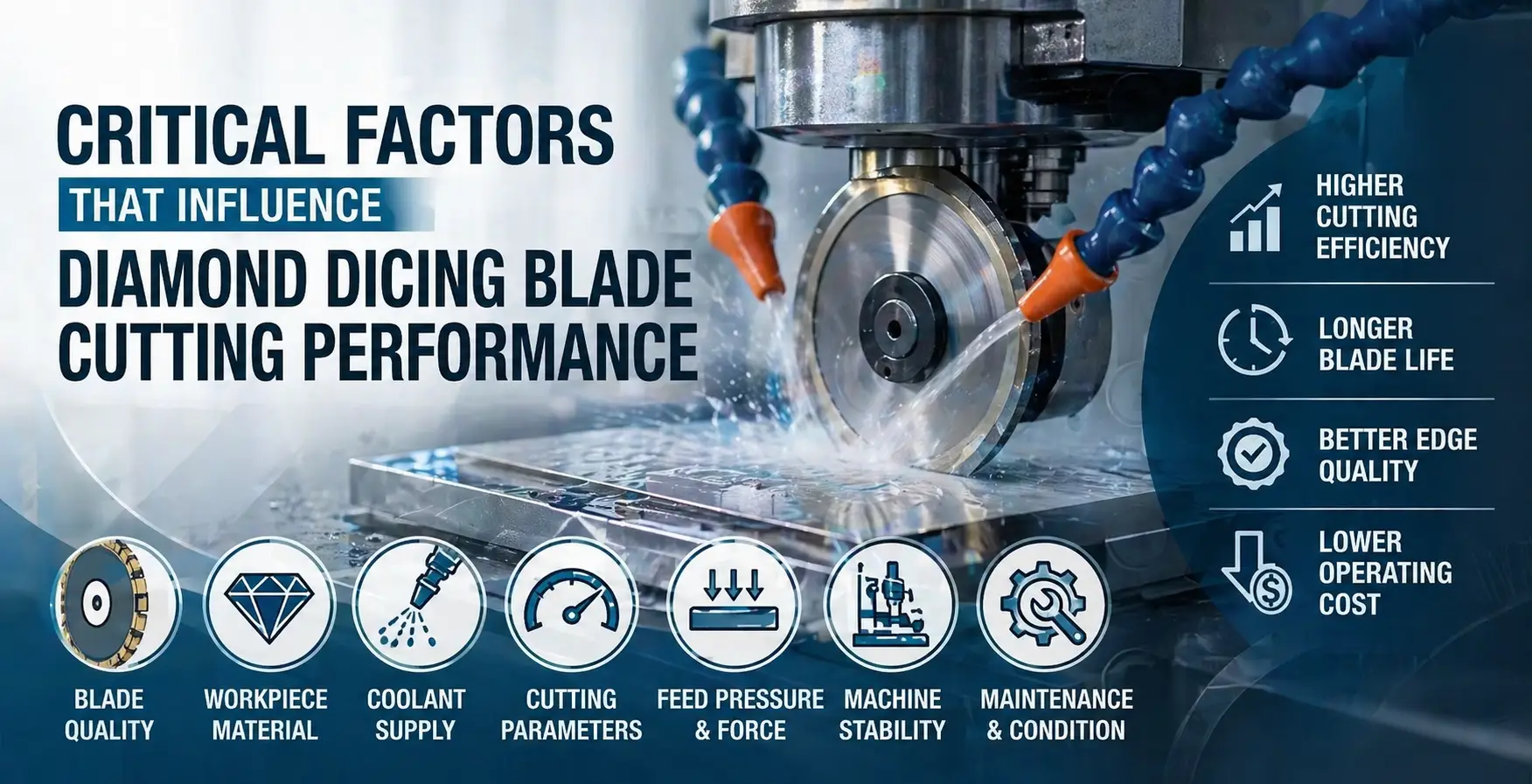
Critical Factors That Influence Diamond Dicing Blade Cutting Performance
Trusted by Tens of Thousands of Manufacturers, Laboratories Research Institutions Worldwide Since 1990

American Based Manufacturer

Established in 1990

Custom manufacturing

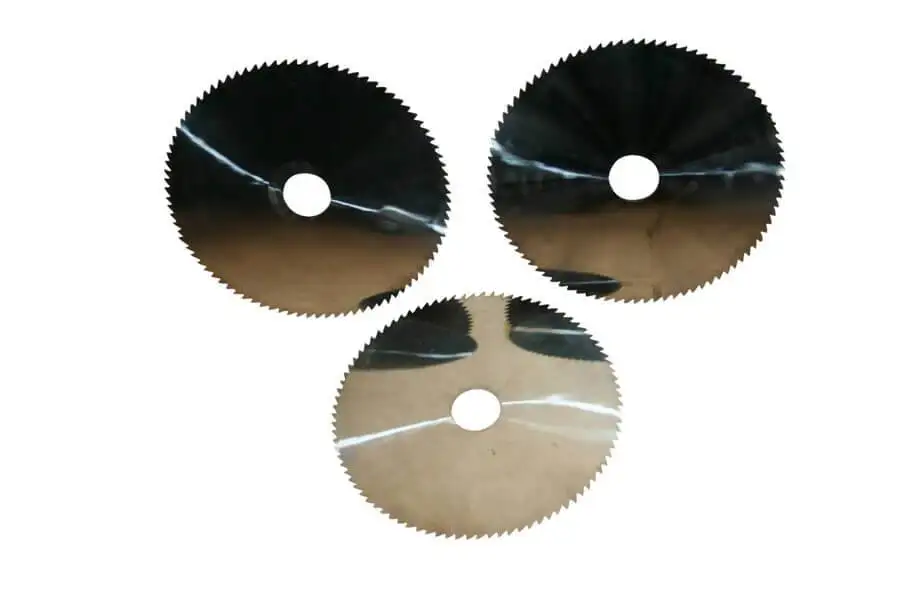
Diamond dicing blades are essential tools for high-precision cutting in semiconductor manufacturing, electronics packaging, advanced ceramics, and optical materials. These blades enable manufacturers to separate delicate substrates with extremely tight tolerances while minimizing material damage.

But getting consistent, reliable results in your dicing process means more than just choosing a quality blade. The performance of a diamond dicing blade is influenced by several factors, including machine parameters, blade condition, coolant flow and material characteristics.

The way these variables interact with each other is key to the optimisation of cutting performance, yields in wafers, and extended blade life. In this article, we will take a look at some of the most essential aspects impacting diamond dicing blade performance and discuss several actionable steps that can be taken to optimize cutting stability and efficiency.

Understanding the Diamond Dicing Process

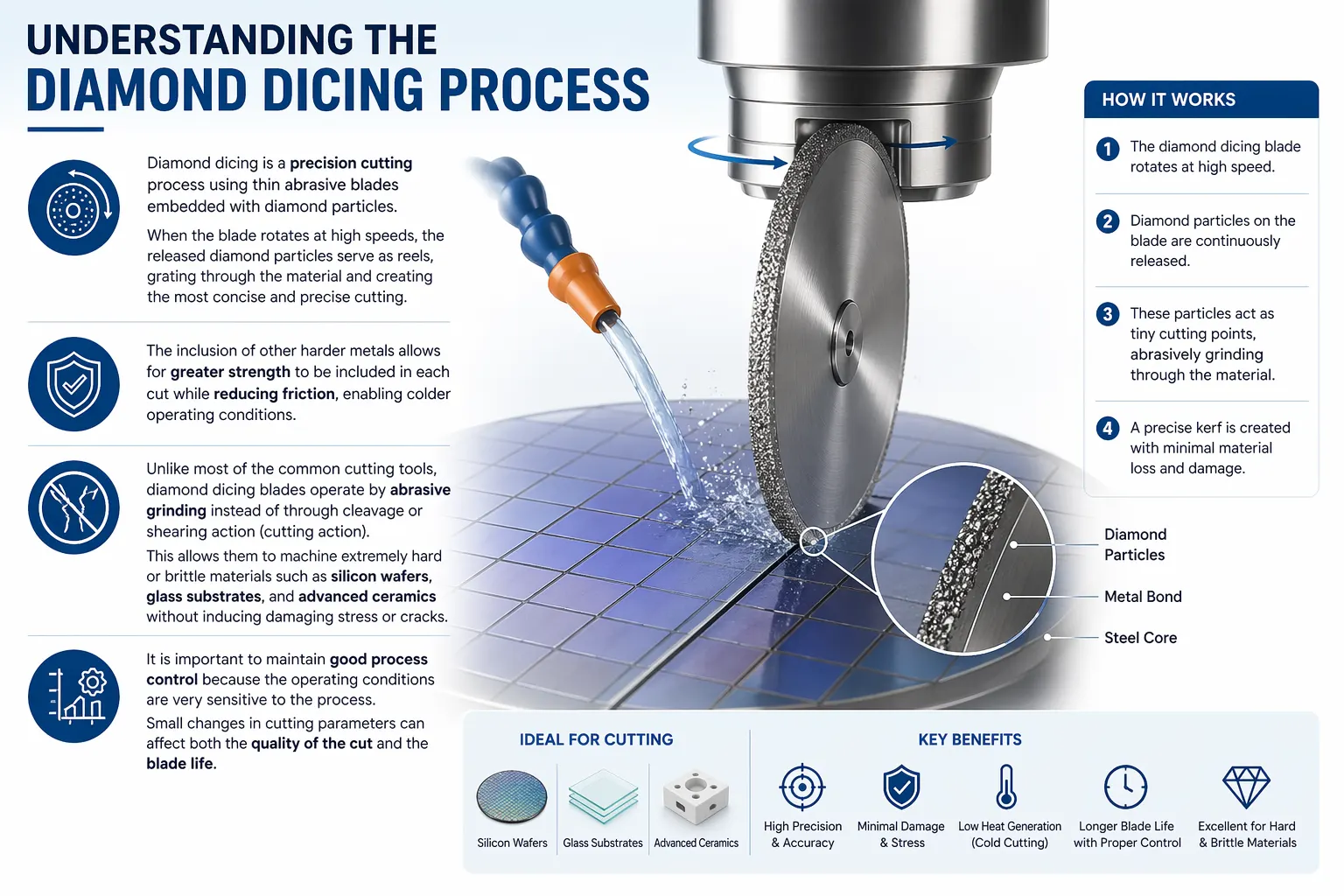
Diamond dicing is a precision cutting process using thin abrasive blades embedded with diamond particles. When the blade rotates at high speeds, the released diamond particles serve as reels, grating through the material and creating the most concise and precise cutting. The inclusion of other harder metals allows for greater strength to be included in each cut while reducing friction, enabling colder operating conditions.

Unlike most of the common cutting tools, diamond dicing blades operate by abrasive grinding instead of through cleavage or shearing action (cutting action). This allows them to machine extremely hard or brittle materials such as silicon wafers, glass substrates, and advanced ceramics without inducing damaging stress or cracks.

It is important to maintain good process control because the operating conditions are very sensitive to the process. Small changes in cutting parameters can affect both the quality of the cut and the blade life.

Machine Parameters That Affect Blade Performance

Machine settings play a critical role in determining the effectiveness of the dicing process. Proper adjustment of these parameters ensures the blade interacts with the material in a stable, controlled manner.

Spindle Speed

Spindle speed directly affects how diamond particles engage the workpiece material. Higher spindle speeds generally allow smoother cutting action and improved cutting efficiency. However, excessive speed may increase heat generation and accelerate blade wear.

Spindle speed and feed rate help to counterbalance cutting, supporting stable netting performance.

Feed Rate

The rate of feed is the speed at which material advances into the blade. High feed rates lead to excessively high blade cutting forces. This can chip, damage your blade, or miscut.

In general, cuts are smoother with lower feed rates, which is an important consideration when working with fragile or brittle materials.

Blade Exposure

Blade exposure is the portion of the blade that extends beyond the mounting flange. This also ensures that you have appropriate blade exposure to maintain cutting efficiency and stability. Not enough exposure might reduce the cut level, and too much can make it shake.

The blade setup is a key aspect in ensuring the blade does what it’s intended to do when cutting.

Importance of Coolant in Diamond Dicing

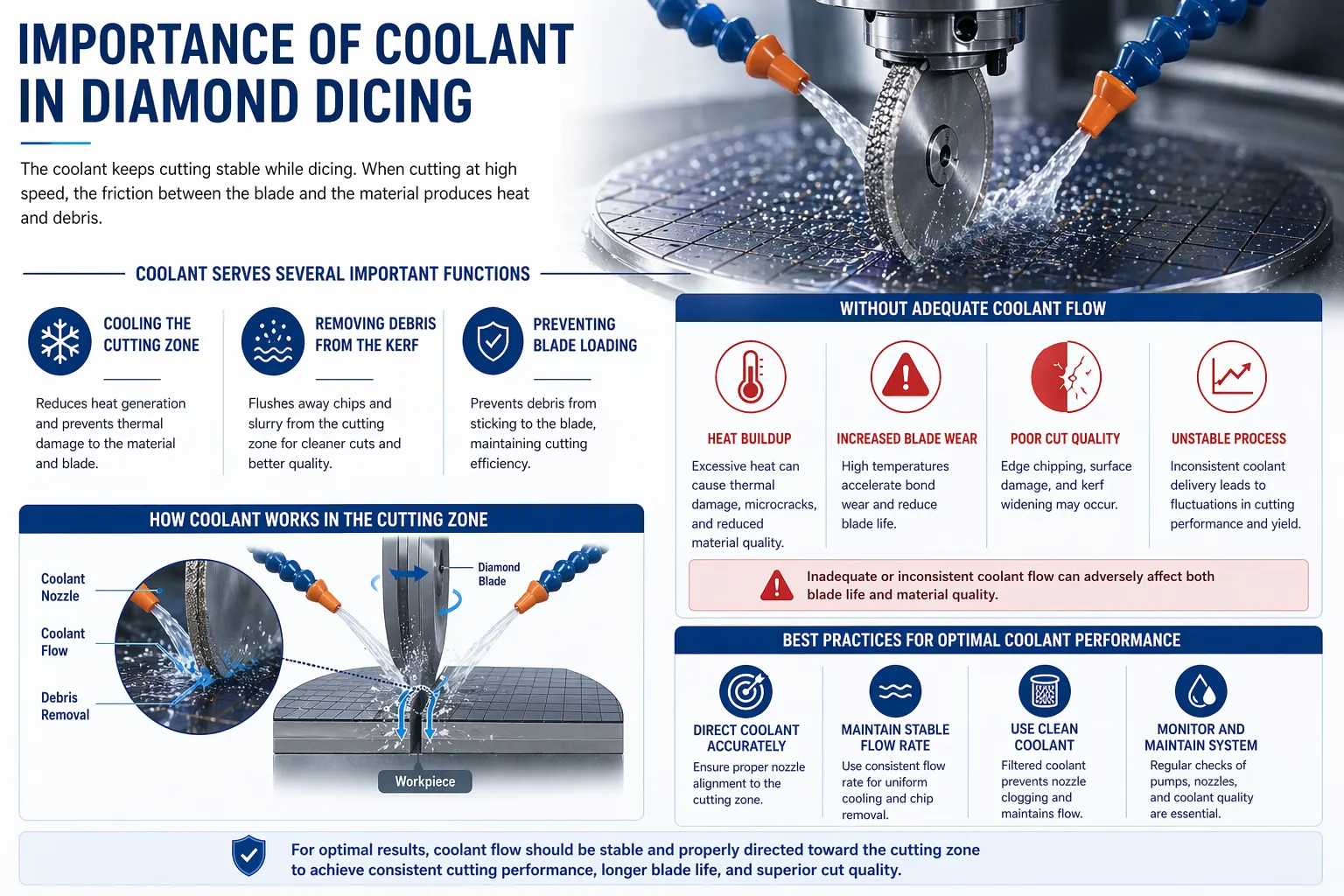
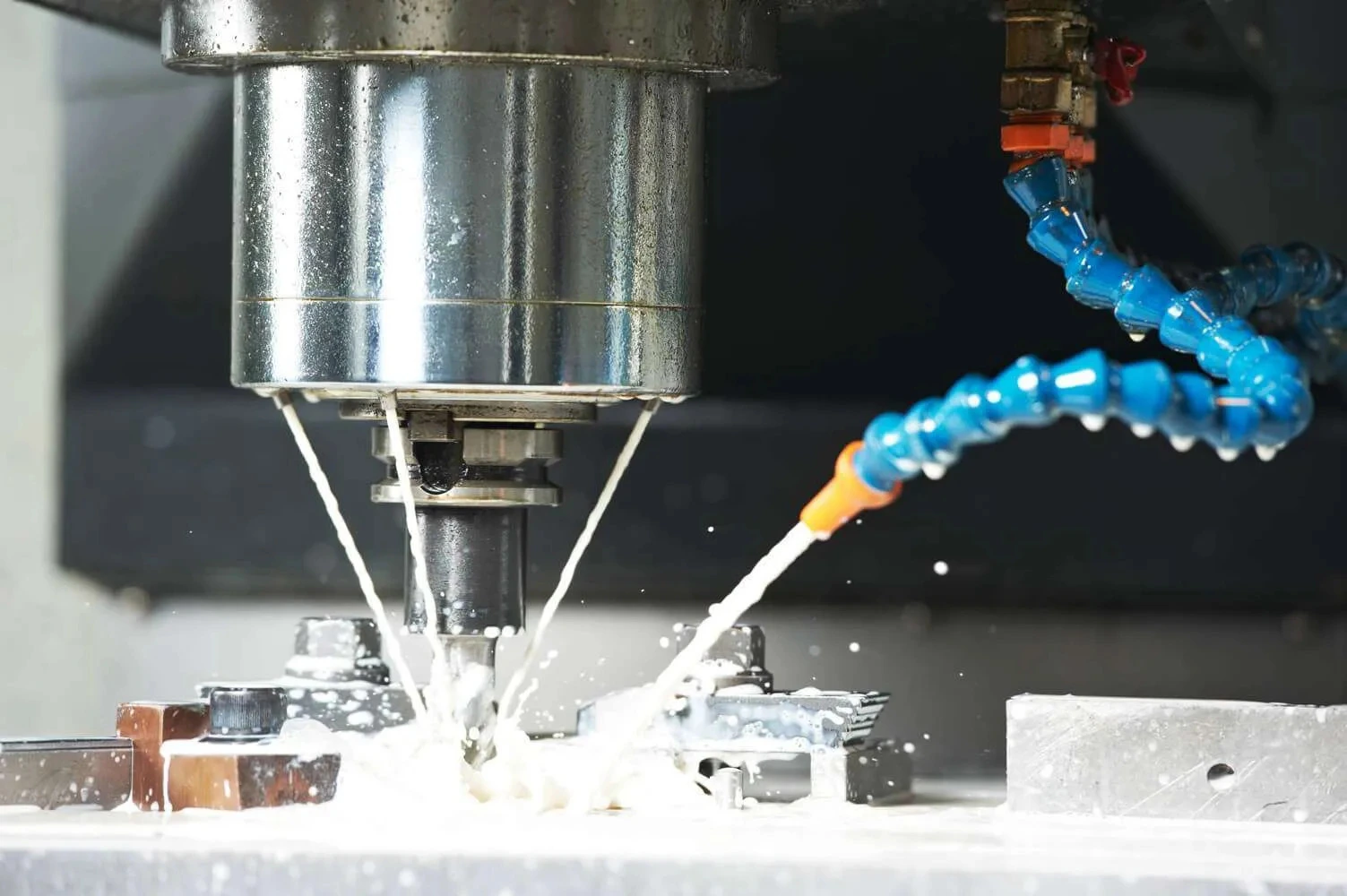
The coolant keeps cutting stable while dicing. When cutting at high speed, the friction between the blade and the material produces heat and debris.

Coolant serves several important functions:

  • Cooling the cutting zone
  • Removing debris from the kerf
  • Preventing blade loading
  • Reducing friction between the blade and material

Without adequate coolant flow, heat buildup can occur, adversely affecting both blade life and material quality. Inconsistent coolant delivery may also cause fluctuations in cutting performance.

For optimal results, coolant flow should be stable and properly directed toward the cutting zone. 

Material Properties and Their Influence on Cutting

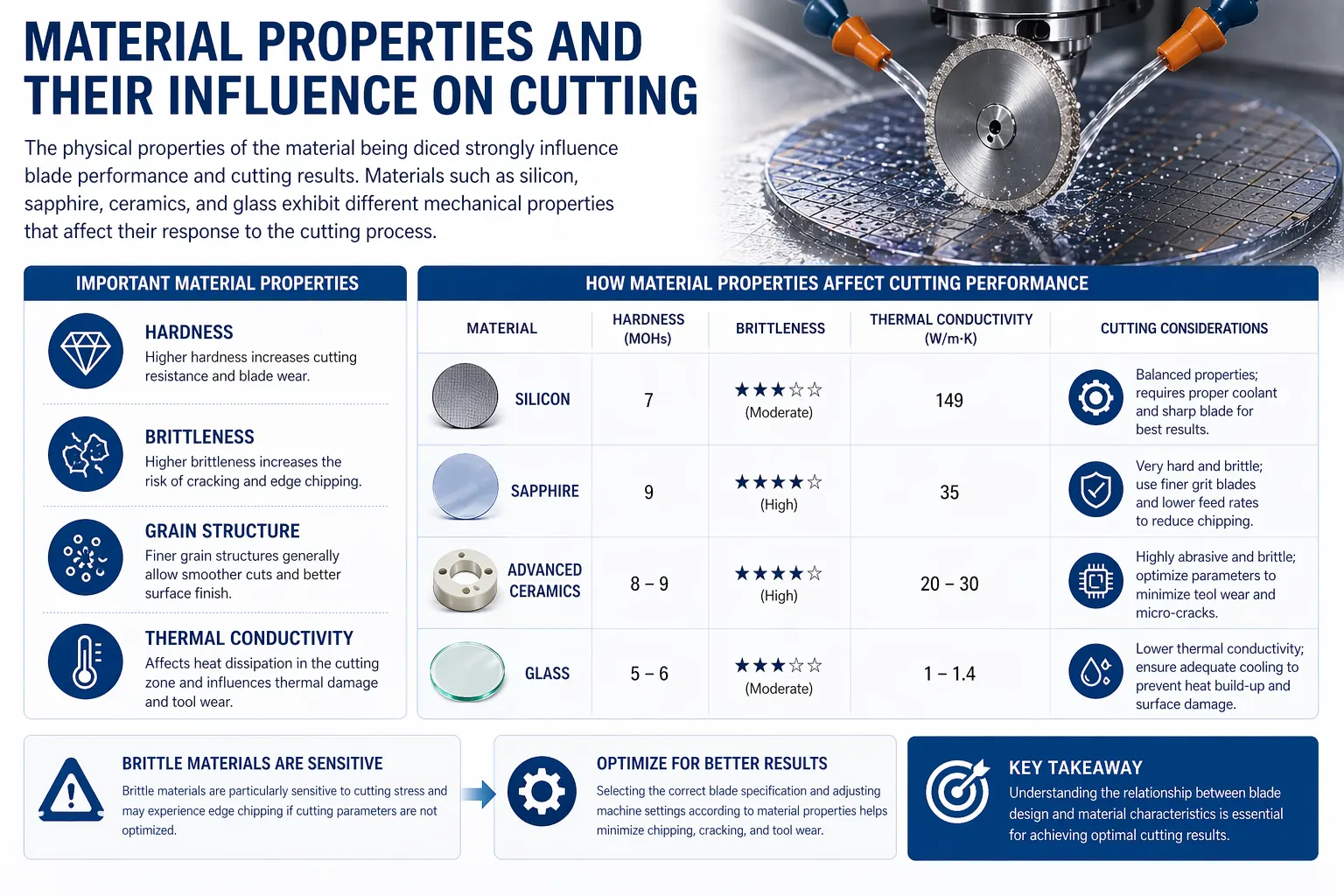
The physical properties of the material being diced strongly influence blade performance and cutting results. Materials such as silicon, sapphire, ceramics, and glass exhibit different mechanical properties that affect their response to the cutting process.

Important material properties include:

  • Hardness
  • Brittleness
  • Grain structure
  • Thermal conductivity

Brittle materials are particularly sensitive to cutting stress and may experience edge chipping if cutting parameters are not optimized. Selecting the correct blade specification and adjusting machine settings according to material properties helps minimize these issues.

Understanding the relationship between blade design and material characteristics is essential for achieving optimal cutting results.

Monitoring Blade Condition

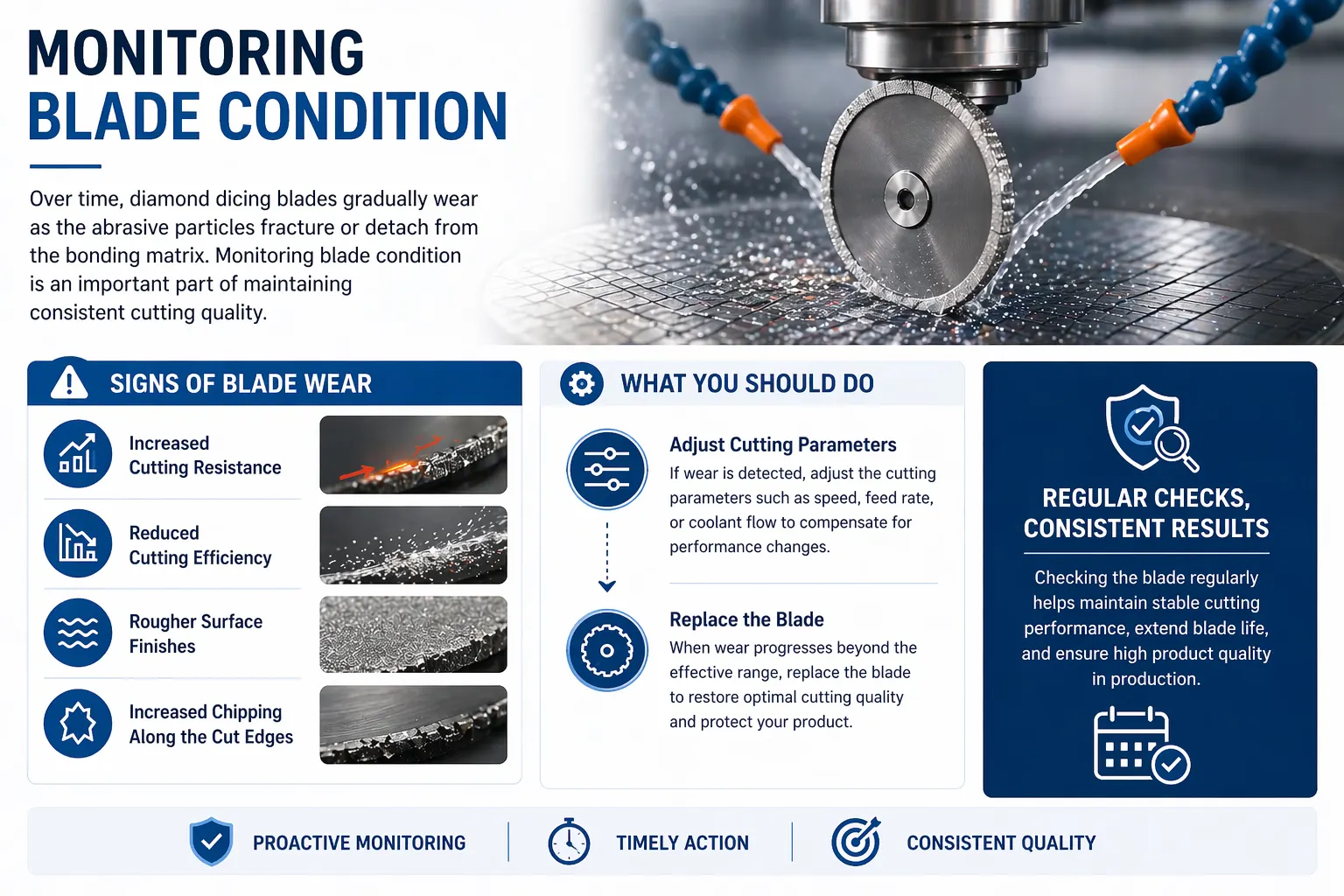
Over time, diamond dicing blades gradually wear as the abrasive particles fracture or detach from the bonding matrix. Monitoring blade condition is an important part of maintaining consistent cutting quality.

Signs of blade wear may include:

  • Increased cutting resistance
  • Reduced cutting efficiency
  • Rougher surface finishes
  • Increased chipping along the cut edges

At this point, operators may need to change cutting parameters or replace the blade. Checking the blade regularly to maintain stable cutting performance in production.

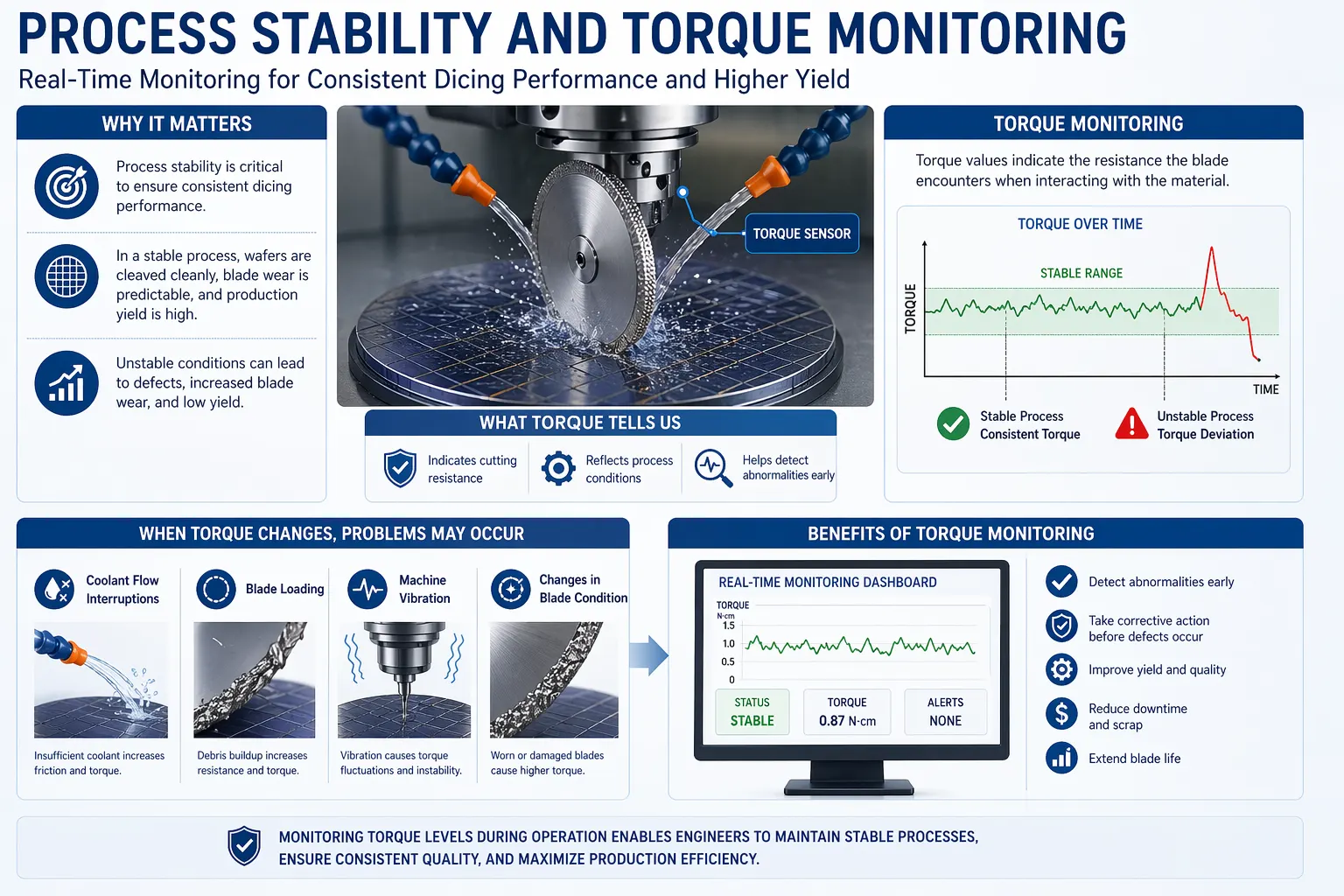
Process Stability and Torque Monitoring

One of the most critical aspects to ensure consistent dicing performance is process stability. In a stable process, wafers are cleaved cleanly, blade wear is predictable, and production yield is high.

One effective method for monitoring process stability is torque measurement. During cutting operations, torque values indicate the resistance the blade encounters when interacting with the material.

When cutting conditions remain stable, torque values typically remain consistent. However, sudden changes in torque may indicate potential issues such as:

  • Coolant flow interruptions
  • Blade loading
  • Machine vibration
  • Changes in blade condition

By monitoring torque levels during operation, engineers can quickly detect abnormalities and take corrective action before defects occur.

Strategies for Improving Dicing Blade Performance

Optimizing diamond dicing blade performance often involves adjusting several factors simultaneously. The goal is to create a stable cutting environment that allows the blade to operate efficiently while minimizing stress on both the tool and the material.

Several strategies can help improve cutting performance:

  • Selecting the appropriate blade specification for the material
  • Optimizing spindle speed and feed rate
  • Maintaining consistent coolant flow
  • Ensuring proper blade installation and alignment
  • Monitoring blade wear during production

When these variables are carefully controlled, manufacturers can significantly improve cutting efficiency and extend blade service life.

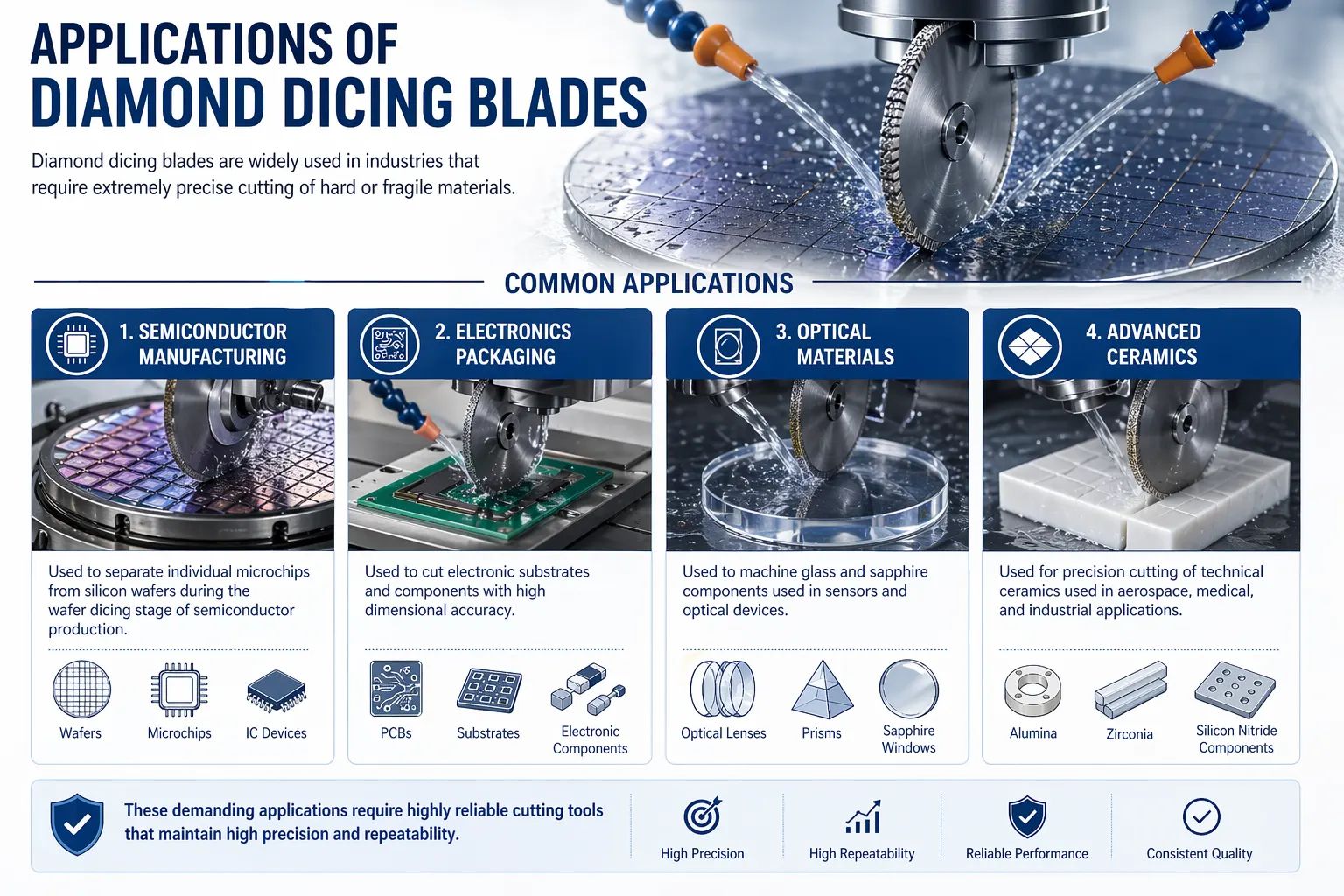
Applications of Diamond Dicing Blades

Diamond dicing blades are widely used in industries that require extremely precise cutting of hard or fragile materials.

Some common applications include:

Semiconductor Manufacturing

Used to separate individual microchips from silicon wafers during the wafer dicing stage of semiconductor production.

Electronics Packaging

Used to cut electronic substrates and components with high dimensional accuracy.

Optical Materials

Used to machine glass and sapphire components used in sensors and optical devices.

Advanced Ceramics

Used for precision cutting of technical ceramics used in aerospace, medical, and industrial applications.

These demanding applications require highly reliable cutting tools that maintain high precision and repeatability.

Frequently Asked Questions:

A diamond dicing blade is used for precision cutting of hard or brittle materials, such as semiconductor wafers, ceramics, glass, and composites.
Coolant helps control temperature, flush debris from the cutting zone, and reduce friction, thereby extending blade life and maintaining stable cutting conditions.
Chipping can occur when cutting forces are too high, feed rates are excessive, or the blade specification is not optimized for the material being cut.
Blade life can be improved by optimizing cutting parameters, ensuring proper coolant flow, and selecting the appropriate blade specification for the application.
Torque monitoring helps detect changes in cutting resistance, which may indicate process instability, blade wear, or coolant problems.

Conclusion

Diamond dicing blades are critical tools for precision cutting in industries such as semiconductor manufacturing, electronics packaging, and advanced materials processing. Achieving optimal performance requires careful control of machine parameters, blade condition, coolant flow, and material properties.

By maintaining stable cutting conditions and continuously monitoring the dicing process, manufacturers can improve cutting accuracy, extend blade life, and reduce defects during production.

A well-optimized dicing process not only improves operational efficiency but also helps ensure the consistent quality required for modern high-precision manufacturing.

Trusted by Tens of Thousands of Manufacturers, Laboratories,
Research Institutions Worldwide Since 1990

American Based Manufacturer

Established in 1990

Custom manufacturing

Brian is an experienced professional in the field of precision cutting tools, with over 27 years of experience in technical support. Over the years, he has helped engineers, manufacturers, researchers, and contractors find the right solutions for working with advanced and hard-to-cut materials. He’s passionate about bridging technical knowledge with real-world applications to improve efficiency and accuracy.

As an author, Brian Farberov writes extensively on diamond tool design, application engineering, return on investment strategies, and process optimization, combining technical depth with a strong understanding of customer needs and market dynamics.

author-avatar

About Brian Farberov

Brian is an experienced professional in the field of precision cutting tools, with over 27 years of experience in technical support. Over the years, he has helped engineers, manufacturers, researchers, and contractors find the right solutions for working with advanced and hard-to-cut materials. He’s passionate about bridging technical knowledge with real-world applications to improve efficiency and accuracy. As an author, Brian Farberov writes extensively on diamond tool design, application engineering, return on investment strategies, and process optimization, combining technical depth with a strong understanding of customer needs and market dynamics.