





















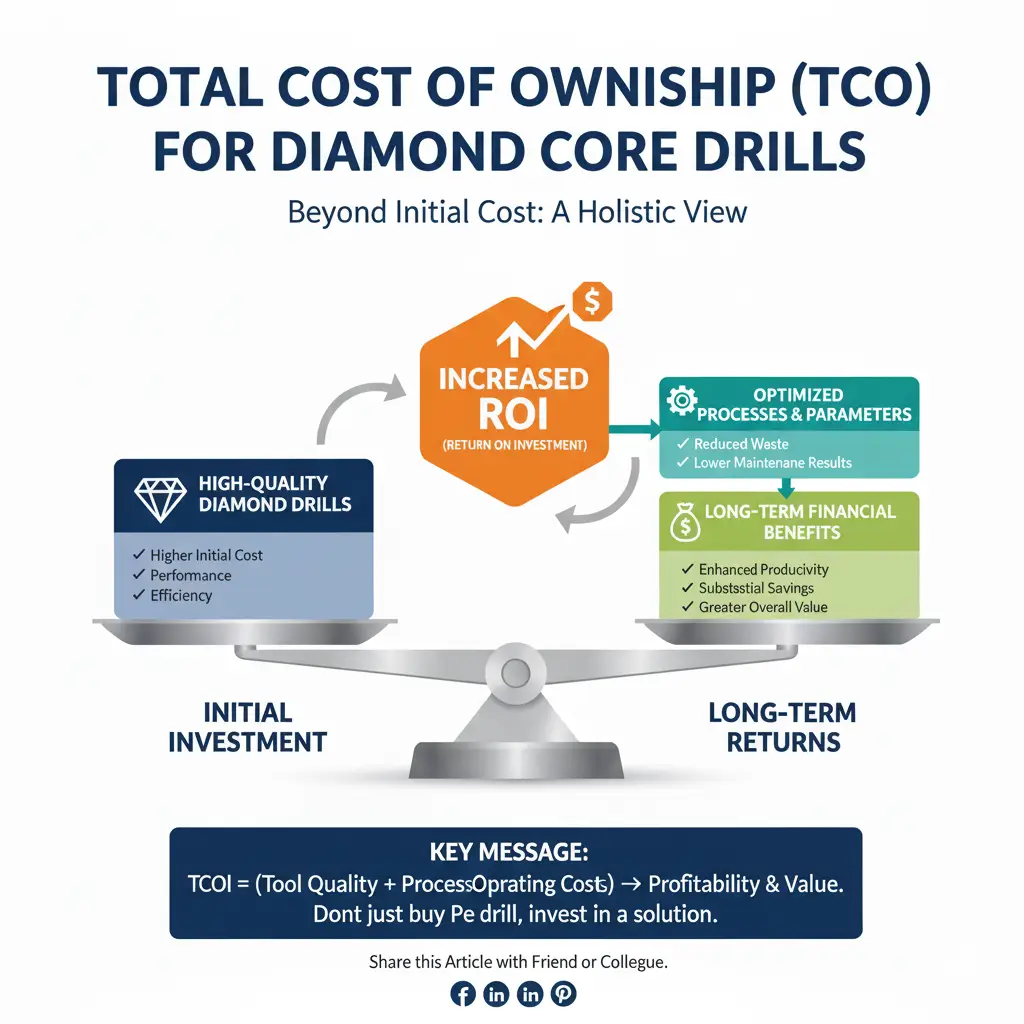
Total Cost of Ownership (TCO) for Diamond Drills







-
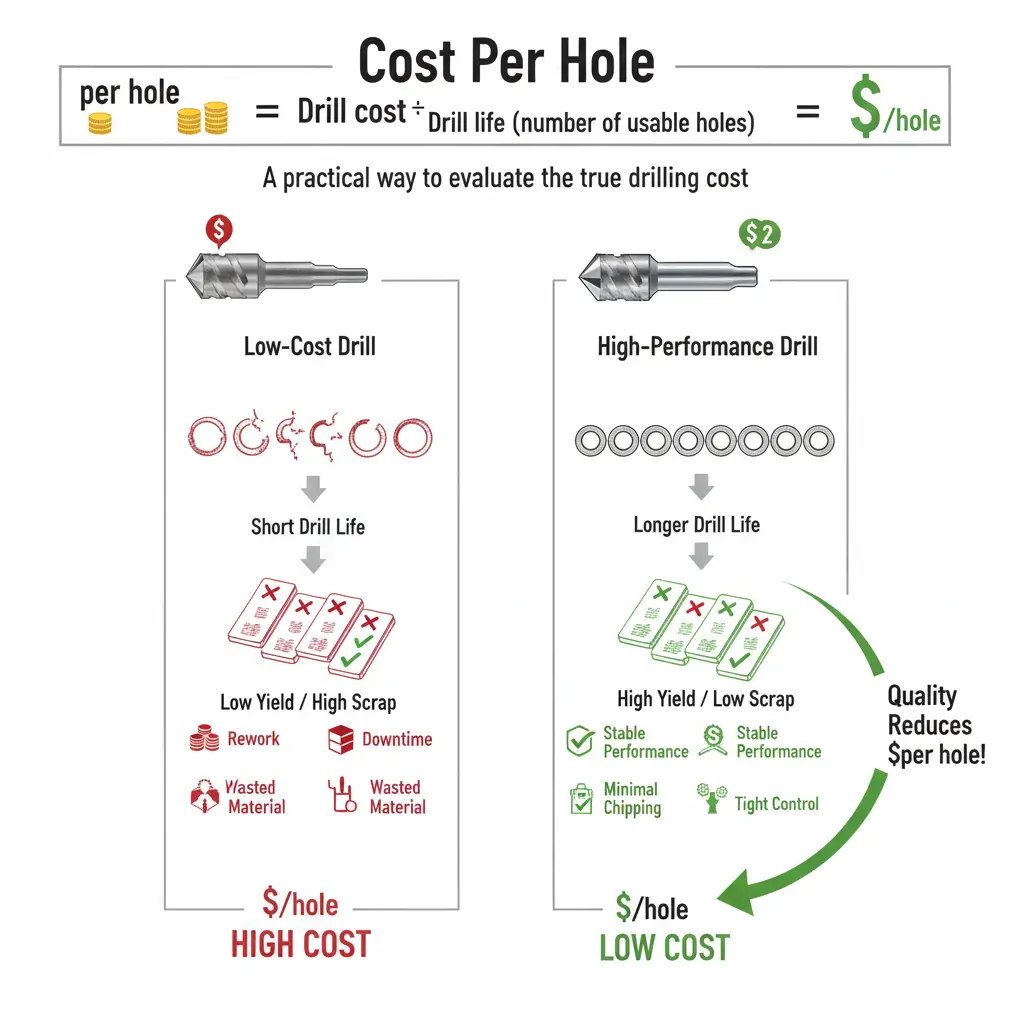
 $ per hole – for applications requiring high precision and repeatability.
-
$ per millimeter (or inch) drilled – for deep drilling or continuous production.
-
Drill life – number of holes or total depth before replacement.
-
Hole quality – edge finish, chipping, taper, and dimensional accuracy.
-
Yield– percentage of usable parts after drilling.
-
Throughput– drilling speed at acceptable quality.
-
Downtime – drill changeovers, dressing, and setup.
-
$ per hole drilled – for applications where consistent precision in every hole is critical.
-
$ per millimeter (or inch) drilled – practical for deep drilling applications or when tracking cost by total depth.
-
Material: Borosilicate glass, 1/4" (6 mm) thick
-
Drill Price: $75
-
Drill Life: ~8,000 holes
-
Price: $60
-
Drill Life: ~3,000 holes
-
$60 ÷ 3,000 holes = $0.020 per hole/stromg>

-
Material: 96% alumina ceramic, 1.0 mm thickness
-
Drill Type: Sintered metal bond core drill
-
Drill Dimensions: 3.0 mm OD × 2.0 mm ID × 0.50 mm wall, 7 mm exposure
-
Spindle Speed: 18,000 RPM
-
Feed Rate: 2.5 mm/min, peck drilling in 0.20 mm steps
-
Coolant: Water-soluble dicing fluid (1:40 ratio, flood delivery)
-
Quality Target: 40 µm exit chipping, no breakout, cylindricity<25 µm
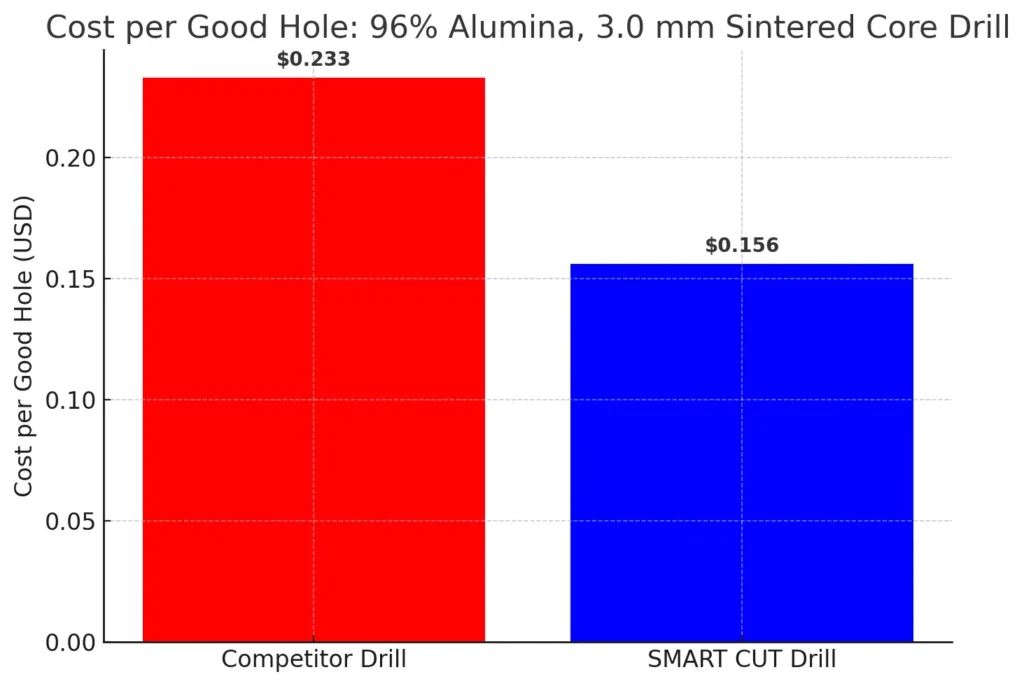
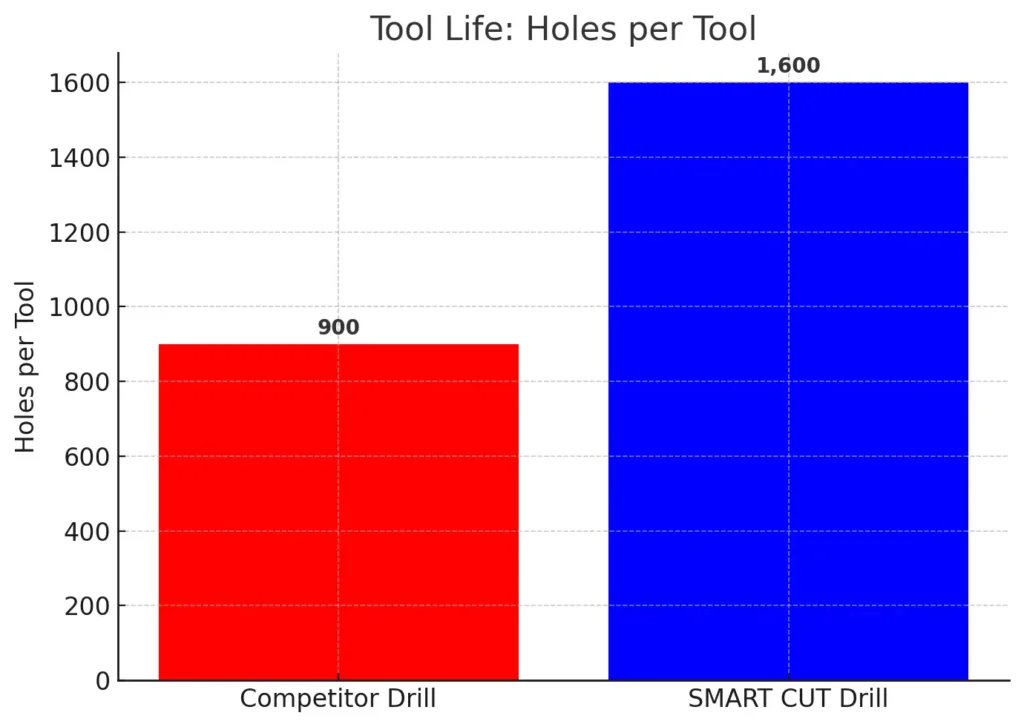
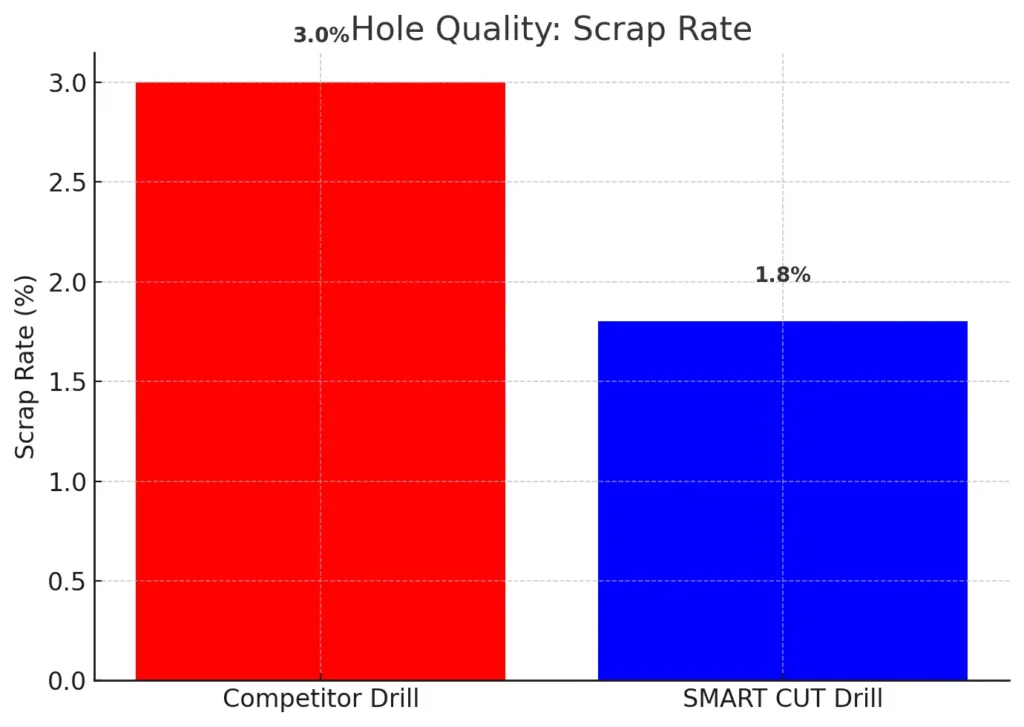
-
Longer Tool Life: SMART CUT® drills last nearly twice as long, reducing changeovers and downtime.
-
Lower Scrap: Cleaner holes reduce waste, protecting expensive ceramic substrates.
-
True Cost Advantage: Over 10,000 holes, SMART CUT® drills save ≈ $769, even with a slightly higher purchase price.
-
Process Stability: Consistent sharpness and geometry improve scheduling and throughput.
-
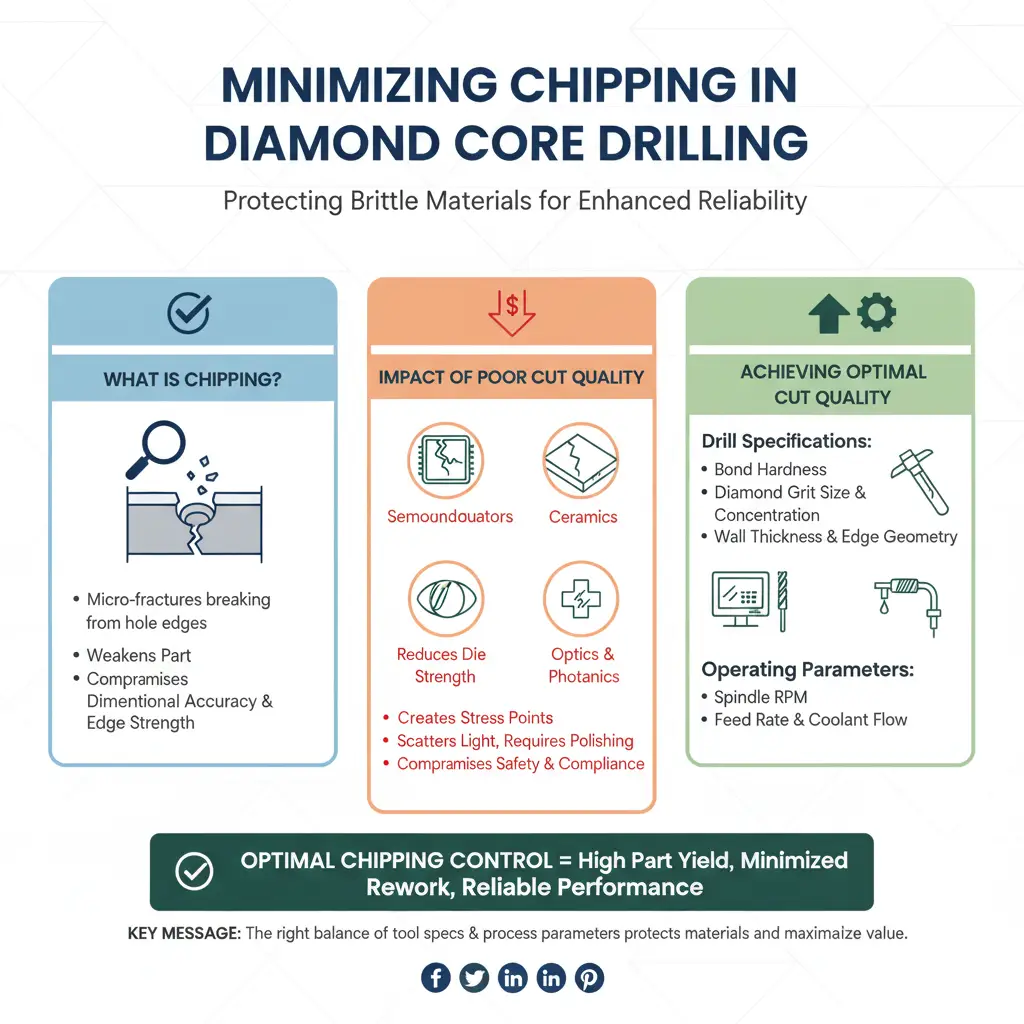
In semiconductors, edge chipping weakens wafers and reduces die strength, lowering yield.
-
In ceramics, chips create stress points that limit part performance under high loads or temperatures.
-
In optics and photonics, chips scatter light, degrade clarity, and require additional polishing or repolishing, driving up costs.
-
In medical devices, poor edge integrity can compromise both safety and compliance with strict dimensional tolerances.
-
Drill design – Bond hardness, diamond grit size, concentration, wall thickness, and edge geometry all influence hole stability and kerf precision.
-
Machine setup – Spindle accuracy, run-out tolerance, and proper alignment of collets or chucks are critical to achieving consistent hole sizes.
-
Operating conditions – Feed rate, spindle RPM, and coolant flow determine whether the drill cuts smoothly or deflects, which can widen or distort the hole. Improper coolant delivery, for example, can cause localized heating and increase breakout.
-
In medical devices, poor edge integrity can compromise both safety and compliance with strict dimensional tolerances.
-
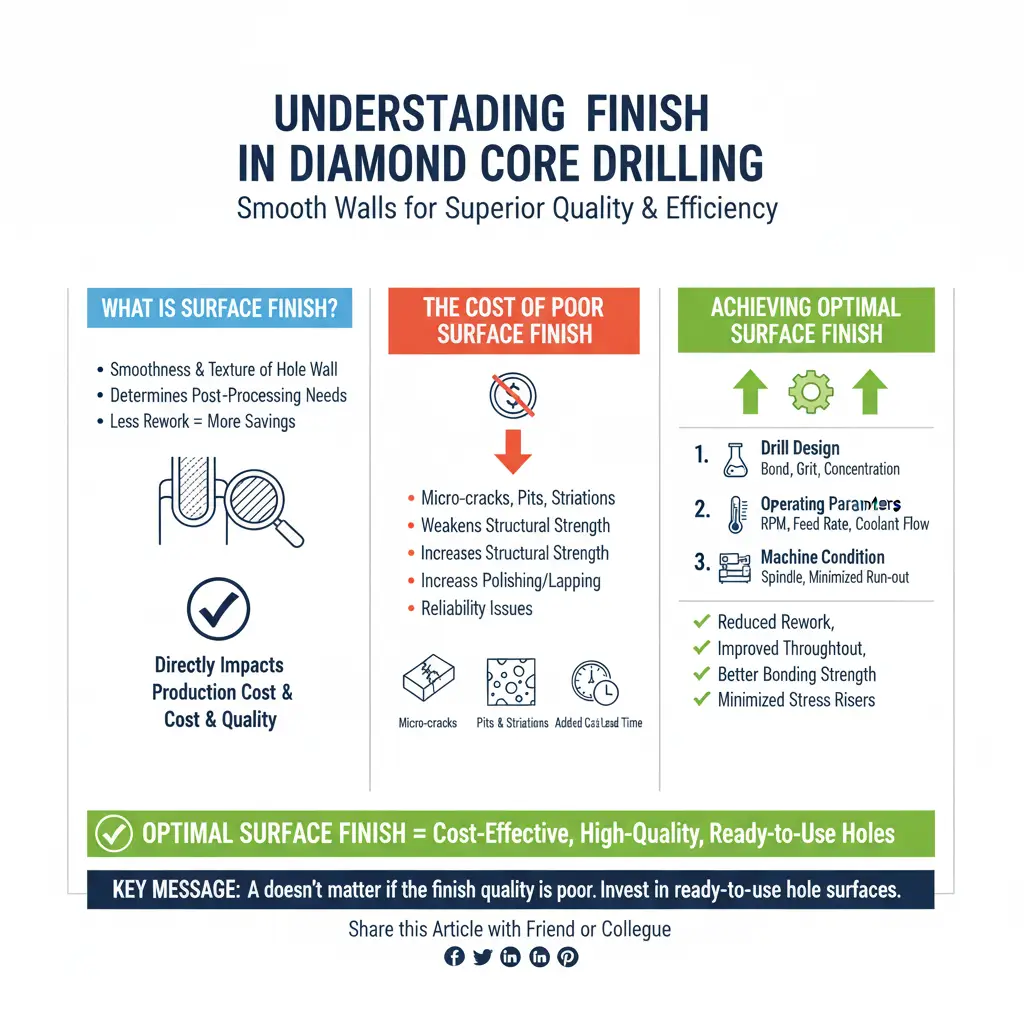
Weaken structural strength, since micro-cracks may propagate during later thermal, mechanical, or bonding steps.
-
Increase polishing or lapping requirements, adding cost and lead time.
-
Create reliability issues in high-value components like optics, photonics, or semiconductor substrates.
-
Improve bonding strength when coatings or adhesives are applied inside the hole.
-
Reduce scattering and optical distortion in glass or photonics components.
-
Minimize stress risers in ceramics and other brittle materials.
-
Drill design: A properly selected bond type, grit size, and concentration ensures steady cutting action with controlled material removal.
-
Operating parameters: Correct spindle RPM, feed rate, and coolant delivery minimize vibration, debris packing, and heat—common causes of rough walls.
-
Machine condition: A rigid spindle and minimal run-out prevent chatter and striations inside the hole.
-
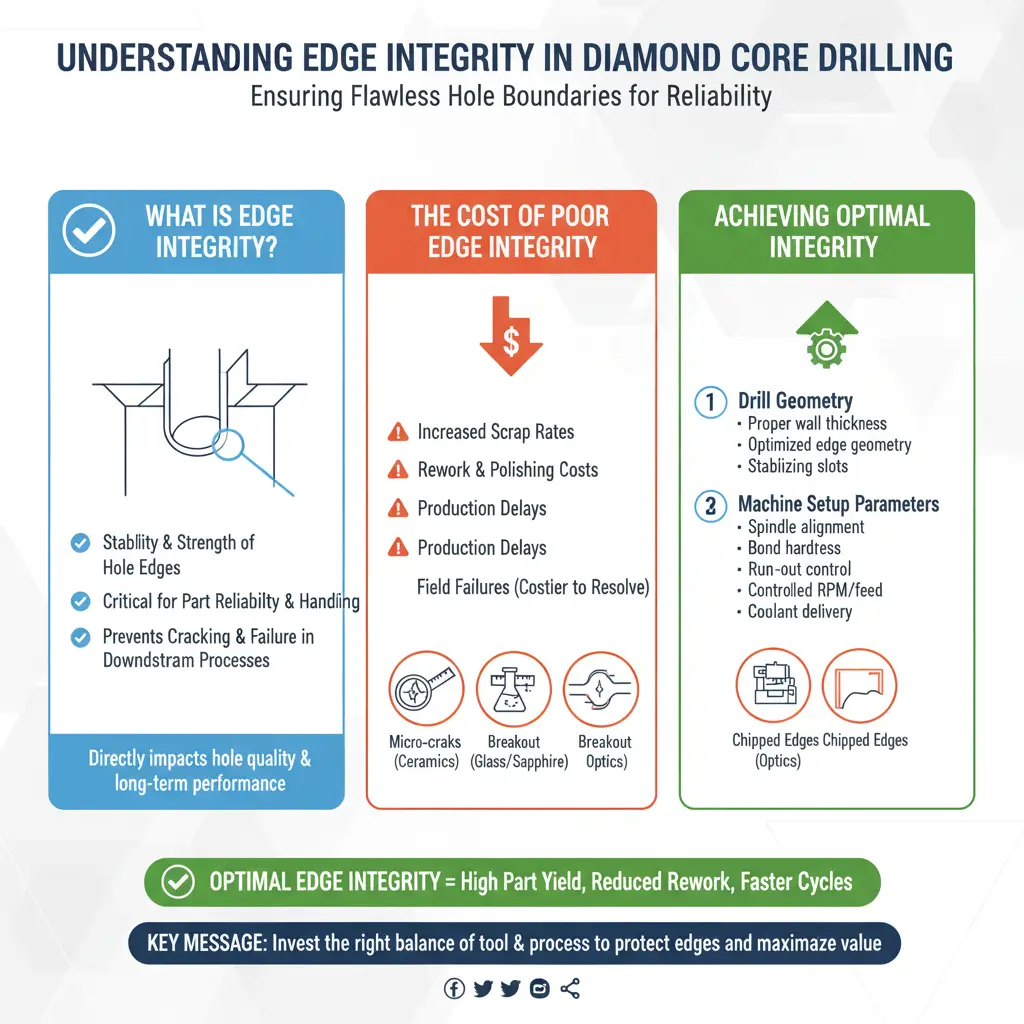
Glass and sapphire:Breakout at the hole exit caused by insufficient support or improper feed rate.
-
Ceramics: Micro-cracks around edges that later propagate under load, reducing strength.
-
Optical parts: Chipped edges that scatter light or prevent proper bonding.
-
Drill geometry – Proper wall thickness prevents edge breakout, while optimized edge geometry reduces cutting stress. Length-to-diameter ratio and slotting or side ports help stabilize the drill and improve debris removal.
-
Bond and grit selection – The right bond hardness, grit size, and concentration balance sharpness and durability to minimize micro-cracking at edges.
-
Machine setup – Precise spindle alignment, run-out control, and rigid fixturing keep holes consistent and prevent chatter at the edges.
-
Operating parameters – Controlled RPM, feed rate, and coolant delivery reduce thermal shock and mechanical stress that damage edges.
-
Drill specifications– Bond hardness, grit size, concentration, and wall thickness determine how aggressively a drill can cut without losing stability.
-
Machine capability – Spindle power, rigidity, and run-out tolerance limit the maximum practical feed rate.
-
Operating parameters – Feed pressure, RPM, and coolant flow directly control cutting speed and heat generation.
-
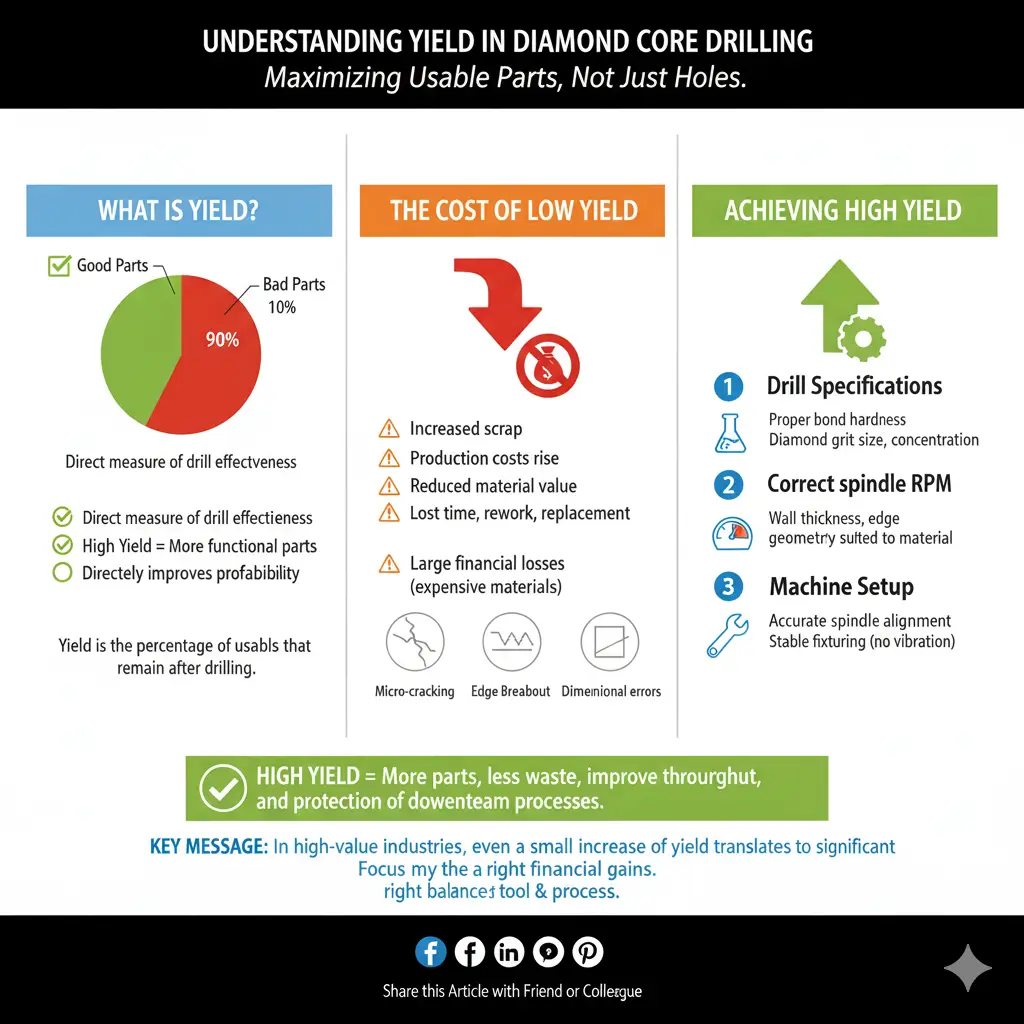
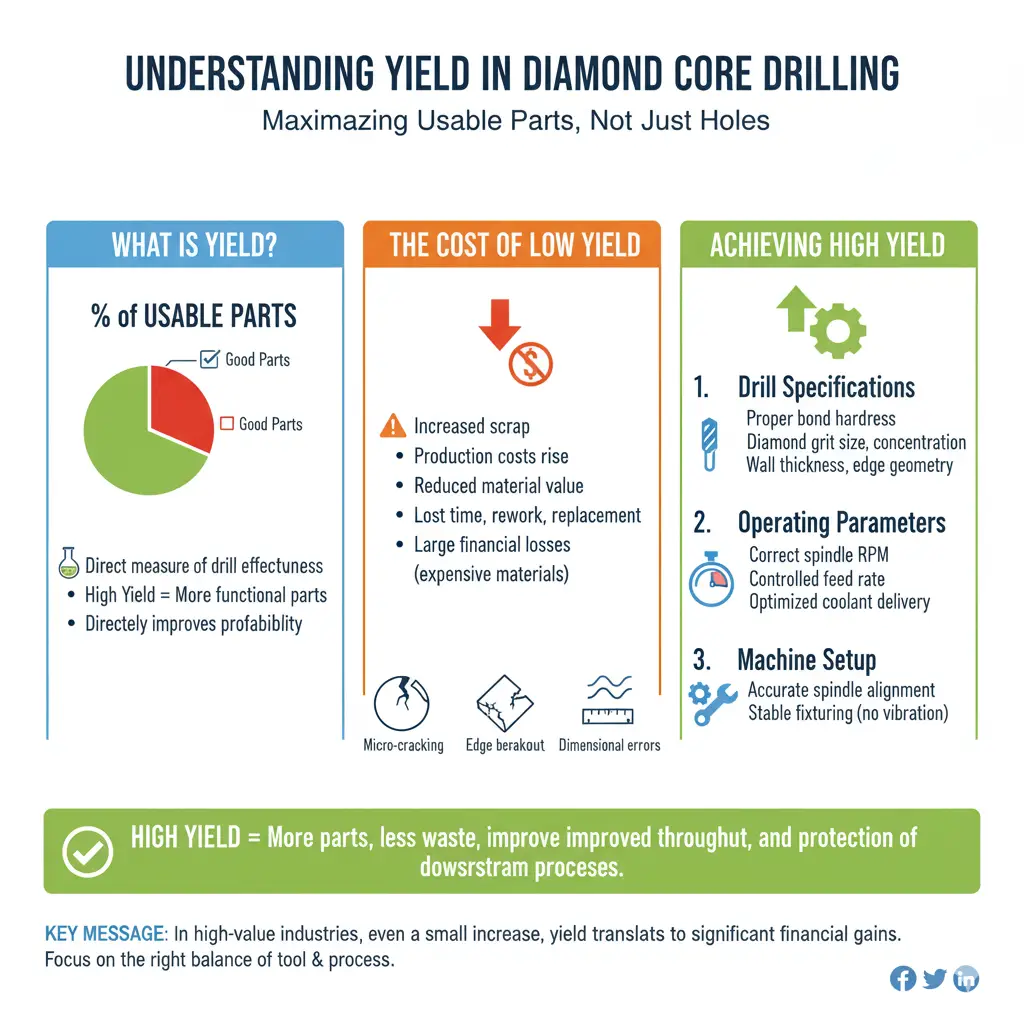
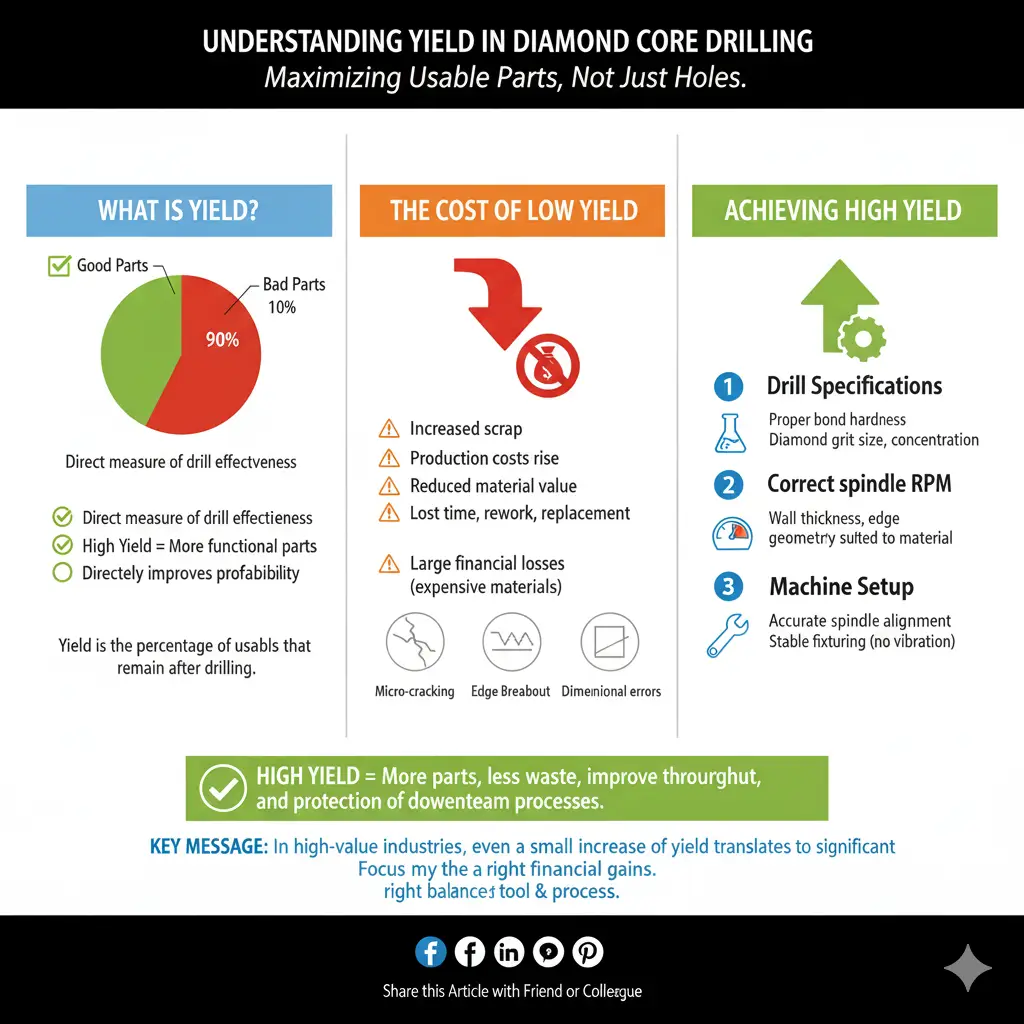
Drill specifications – Proper bond hardness, diamond grit size, concentration, wall thickness, and edge geometry suited to the material.
-
Operating parameters – Correct spindle RPM, feed rate, and coolant delivery to minimize stress and heat buildup.
-
Machine setup– Accurate spindle alignment and stable fixturing to prevent run-out or vibration that would reduce hole quality.


How to Selecting Right Diamond Tools for your application
Selecting the appropriate Diamond & CBN Tool specification is a crucial aspect of achieving your objectives. Opting for the ideal specification not only yields optimal results but also ensures the best return on investment. Conversely,...

How to properly use Diamond Tools
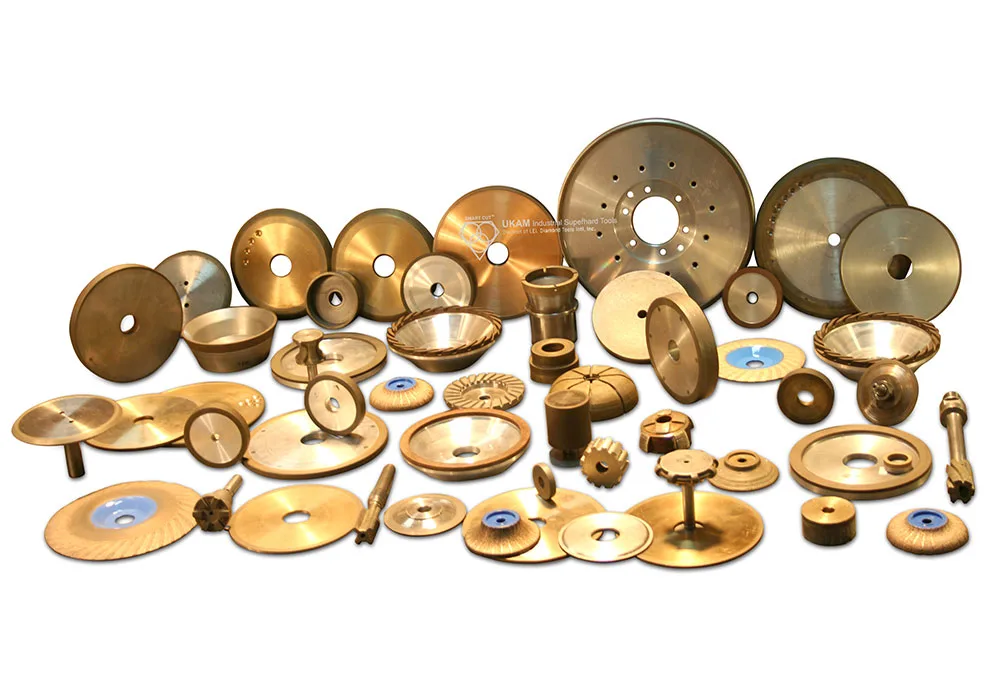
UKAM Industrial Superhard Tools manufactures precision diamond tools for a large variety of applications, materials, and industries.
Trusted by Tens of Thousands of Manufacturers, Laboratories,
Research Institutions Worldwide
Since 1990
American Based Manufacturer
Established in 1990
Expert technical support
Custom manufacturing
Thousands...

Why use diamond
Diamond is the hardest material known to man kind. When used on diamond/tools, diamond grinds away material on micro (nano) level. Due to its hardness Diamond will work all types of materials from hardness of 40 on Rockwell scale and up. Diamond will machine hardest material, including those materials that other conventional types of abrasives, carbide and high speed steel will not.

Diamond vs CBN (cubic boron nitride) Tools
Cubic Boron Nitride (CBN) is a synthetic material that is renowned for its exceptional hardness and high thermal stability. It is composed of boron and nitrogen atoms arranged in a crystal lattice structure, similar to...
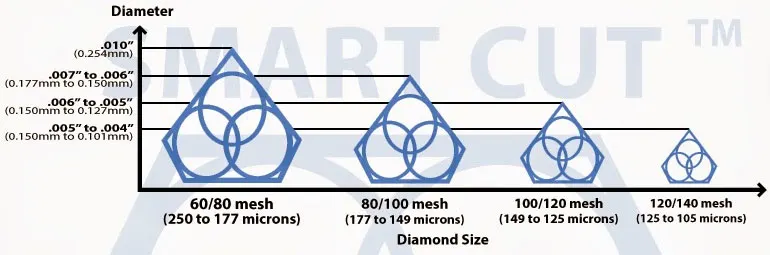
What is Diamond Mesh Size and how to select best one for your application
Diamond grit size can be defined as the size of the diamond particles used in the bond matrix. The larger the diamond particles (grit size) the faster the tool will cut.
Trusted by Tens of Thousands of...

What is Diamond Concentration and which to use for your application
Diamond concentration is measured based on the volume of diamond within a section of the tool. It is typically defined as Concentration 100, which equates to 4.4 carats per cubic centimeter of the diamond layer...

Choosing The Correct Diamond Bond Type
Selecting the appropriate diamond bond type for specific applications is crucial for several reasons. Diamond bond type directly affects the tool's performance, efficiency, and longevity. Different bond types determine how well a tool can withstand...
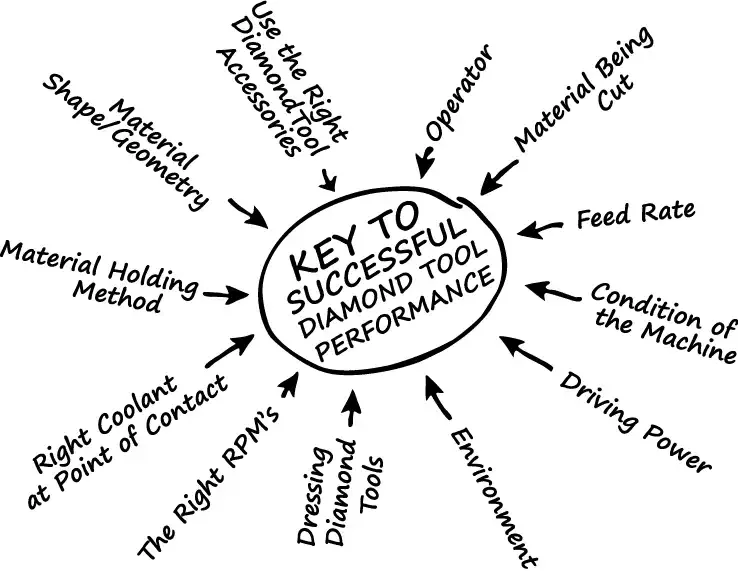
How to Properly Use Diamond Tools: A Complete Guide to Performance, Safety, and Tool Life
The use of diamond tools in the manufacturing and precision machining industries, as well as in construction, research, etc., is essential. They are used for a wide range of materials, including sharpening, cutting, grinding, and polishing...
