




















Table of Contents
ToggleTrusted by Tens of Thousands of Manufacturers, Laboratories Research Institutions Worldwide Since 1990
American Based Manufacturer

Established in 1990


Custom manufacturing


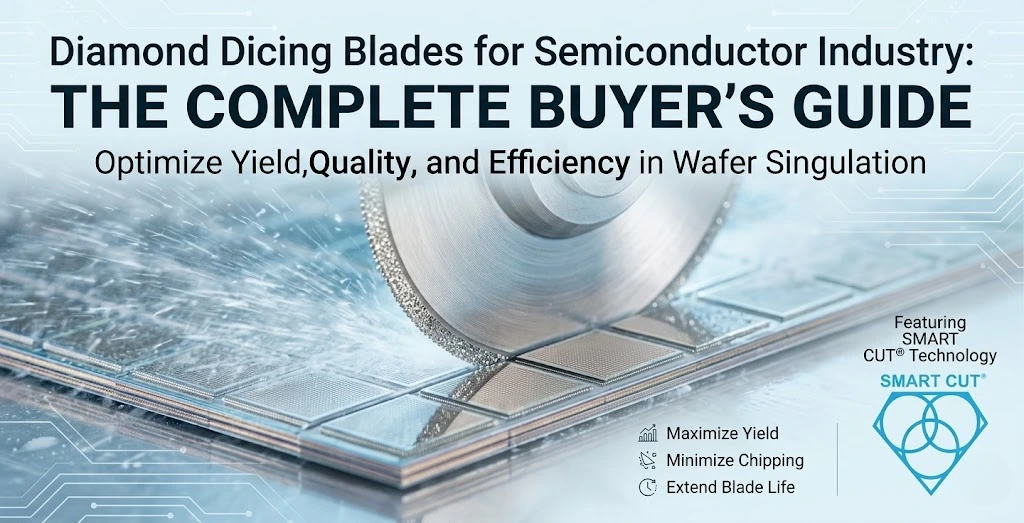
Diamond Dicing Blades for Semiconductor Industry: The Complete Buyer's Guide
If you are sourcing diamond dicing blades for microelectronics and semiconductor industry, you already know that the wrong blade choice does not just cost you money — it costs you yield. Chipping, cracking, inconsistent kerf width, and premature blade wear are not just quality problems. They are production problems that shut down lines and delay shipments.
This guide is written for process engineers, procurement managers, and production leads who need to select the right dicing blades for their application — and get it right the first time.
At UKAM Industrial Superhard Tools, we have been manufacturing precision diamond dicing blades for semiconductor and microelectronics applications since 1990. As the first company to develop SMART CUT® technology, we have helped thousands of manufacturers, research institutions, and fab operators worldwide optimize their dicing operations.
What Are Diamond Dicing Blades and Why Do They Matter in Semiconductor Manufacturing?
Diamond dicing blades are ultra-precision cutting tools used to slice — or singulate — semiconductor wafers into individual dies or chips. This process, known as wafer dicing or wafer singulation, is one of the most critical steps in semiconductor packaging. Any defect introduced at this stage — chipping, microcracking, or delamination — directly impacts die strength, device reliability, and final yield.
The semiconductor industry demands blades that can hold extremely tight tolerances across thousands of cuts, maintain consistent kerf width, minimize frontside and backside chipping, and remain dimensionally stable under high spindle speeds and coolant flow.
As chip designs continue to shrink and wafer materials become more complex — from traditional silicon to silicon carbide (SiC), gallium nitride (GaN), gallium arsenide (GaAs), and compound semiconductors — the performance demands placed on dicing blades have never been higher.
Types of Diamond Dicing Blades for Semiconductor Applications
Selecting the right blade type for your application starts with understanding the three primary bond systems available:
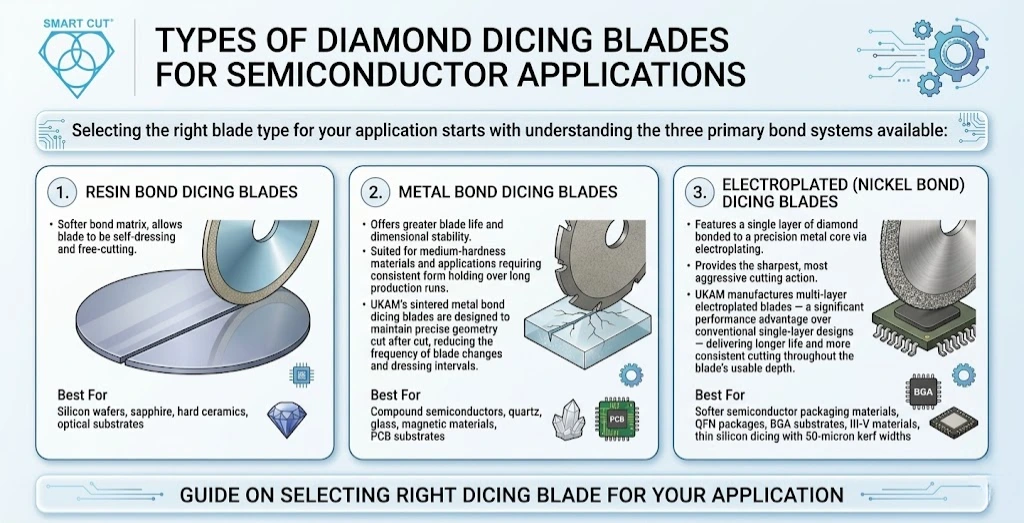
1. Resin Bond Dicing Blades
Resin bond diamond dicing blades use a softer bond matrix that allows the blade to be self-dressing and free-cutting. This makes them the preferred choice for hard and brittle semiconductor materials such as silicon, sapphire, and ceramics. They deliver excellent surface finish and low chipping rates, making them ideal for applications where cut quality and die integrity are the top priorities.
Best for: Silicon wafers, sapphire, hard ceramics, optical substrates
2. Metal Bond Dicing Blades
Metal bond (sintered) dicing blades offer greater blade life and dimensional stability. They are suited for medium-hardness materials and applications that require consistent form holding over long production runs. UKAM’s sintered metal bond dicing blades are designed to maintain precise geometry cut after cut, reducing the frequency of blade changes and dressing intervals.
Best for: Compound semiconductors, quartz, glass, magnetic materials, PCB substrates
3. Electroplated (Nickel Bond) Dicing Blades
Electroplated diamond dicing blades feature a single layer of diamond bonded to a precision metal core via electroplating. They provide the sharpest, most aggressive cutting action and are typically used for softer substrate materials. UKAM manufactures multi-layer electroplated blades — a significant performance advantage over conventional single-layer designs — delivering longer life and more consistent cutting throughout the blade’s usable depth.
Best for: Softer semiconductor packaging materials, QFN packages, BGA substrates, III-V materials, thin silicon dicing with 50-micron kerf widths
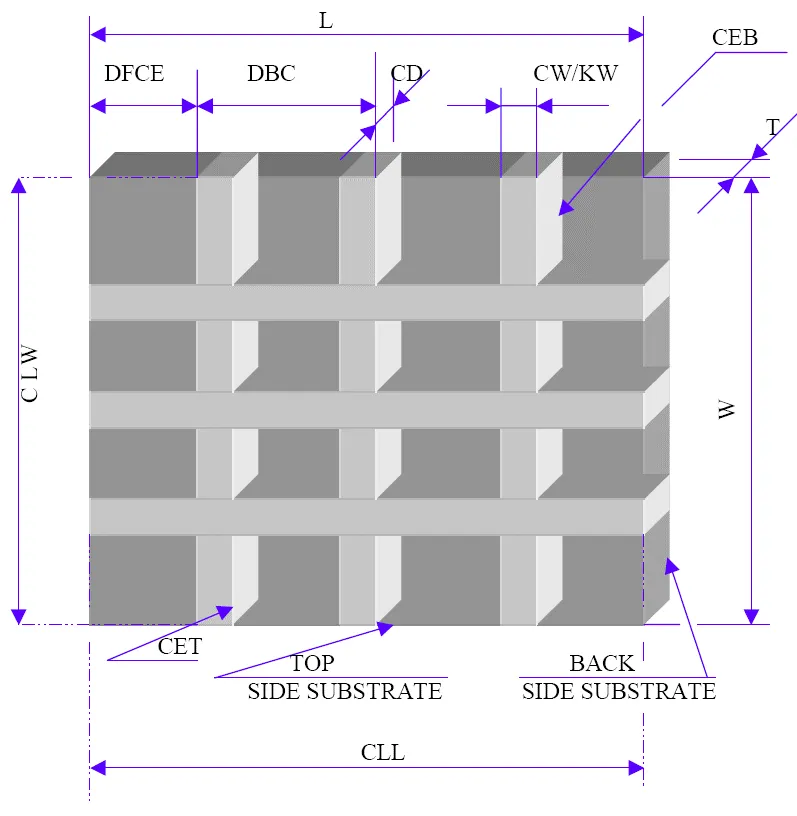
Guide on selecting right dicing blade for your application
Hub vs. Hubless Dicing Blades: Which Do You Need?
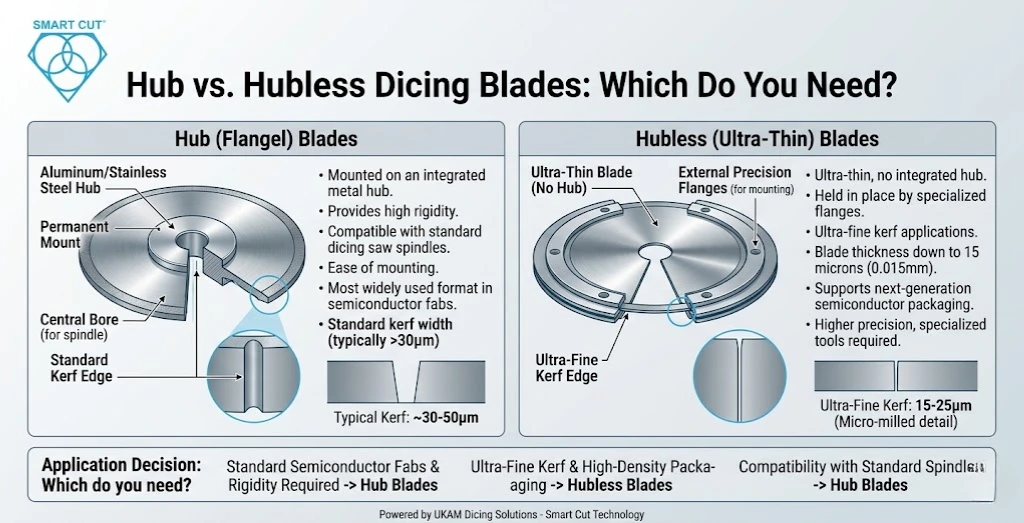
Another critical specification decision when sourcing diamond dicing blades for semiconductor applications is whether to use hub (flanged) or hubless blades.
Hub dicing blades are mounted on an aluminum or stainless steel hub that provides rigidity and ease of mounting. They are the most widely used format in semiconductor fabs and are compatible with most standard dicing saw spindles.
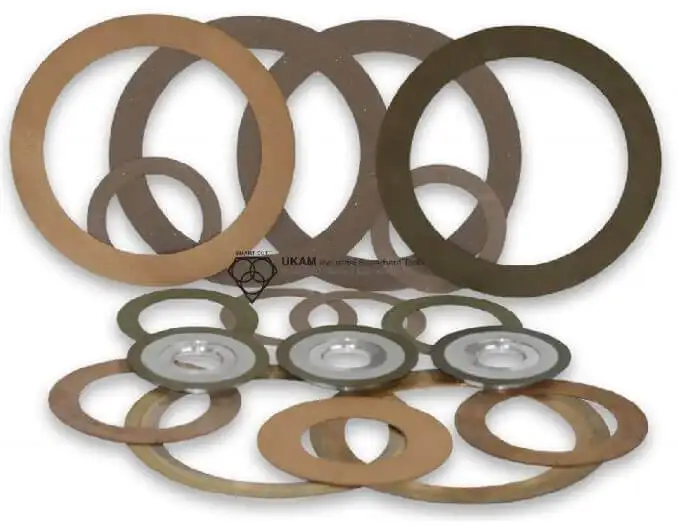
Hubless dicing blades are ultra-thin blades without a hub, held in place by flanges during operation. They are preferred for ultra-fine kerf applications where blade thickness starts as low as 0.015mm (15 microns). UKAM manufactures hubless dicing blades down to these extreme tolerances, supporting next-generation semiconductor packaging requirements.
Key Specifications to Evaluate When Buying Dicing Blades
When requesting a quote or evaluating dicing blade suppliers, these are the specifications that will define your process performance:
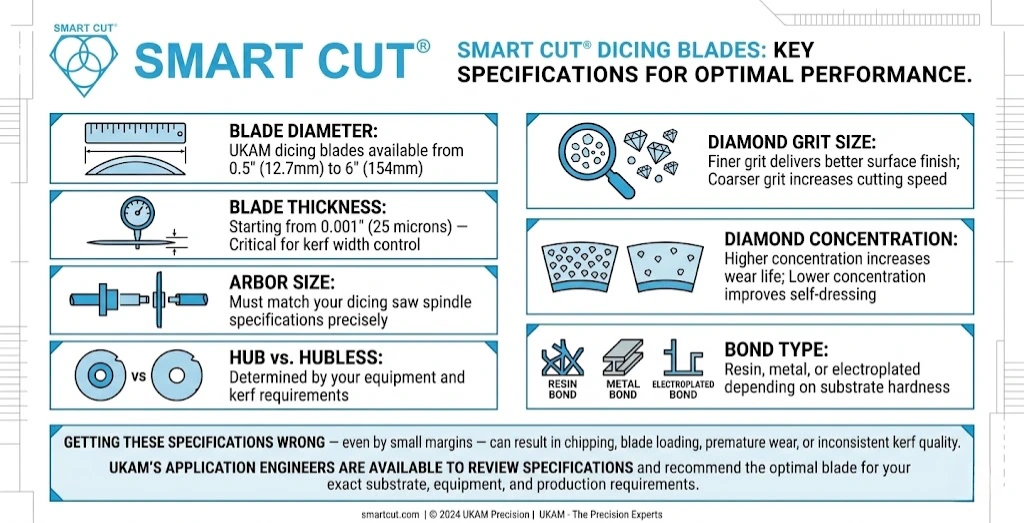
- Blade Diameter: UKAM dicing blades are available from 0.5" (12.7mm) to 6" (154mm) in diameter
- Blade Thickness: Starting from 0.001" (25 microns) — critical for kerf width control
- Diamond Grit Size: Finer grit delivers better surface finish; coarser grit increases cutting speed
- Diamond Concentration: Higher concentration increases wear life; lower concentration improves self-dressing
- Bond Type: Resin, metal, or electroplated depending on substrate hardness
- Arbor Size: Must match your dicing saw spindle specifications precisely
- Hub vs. Hubless: Determined by your equipment and kerf requirements
Getting these specifications wrong — even by small margins — can result in chipping, blade loading, premature wear, or inconsistent kerf quality. UKAM’s application engineers are available to review your specifications and recommend the optimal blade for your exact substrate, equipment, and production requirements.
Materials Commonly Diced in Semiconductor & Microelectronics Applications
UKAM’s diamond dicing blades are used across a wide range of semiconductor and microelectronics substrates, including:
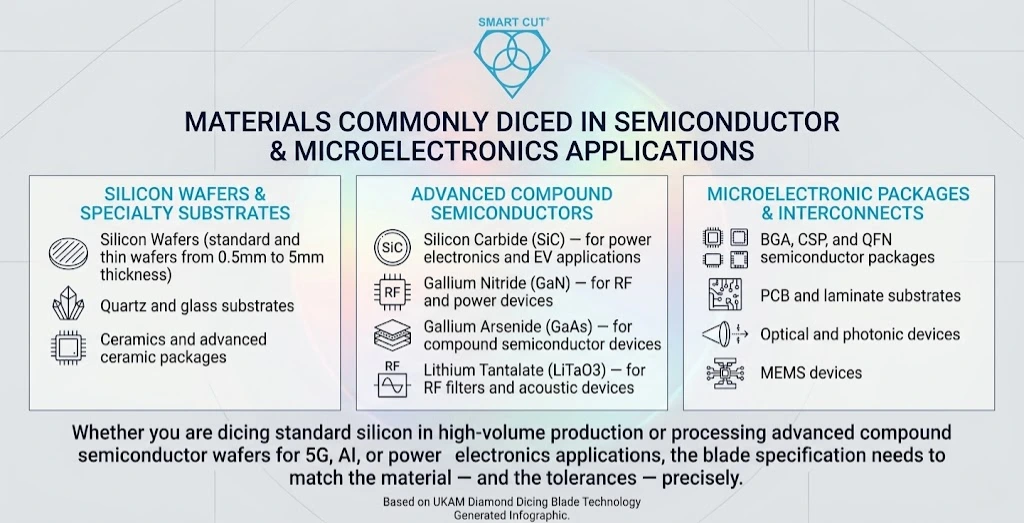
- Silicon wafers (standard and thin wafers from 0.5mm to 5mm thickness)
- Silicon Carbide (SiC) — for power electronics and EV applications
- Gallium Nitride (GaN) — for RF and power devices
- Gallium Arsenide (GaAs) — for compound semiconductor devices
- Lithium Tantalate (LiTaO3) — for RF filters and acoustic devices
- Quartz and glass substrates
- Ceramics and advanced ceramic packages
- BGA, CSP, and QFN semiconductor packages
- PCB and laminate substrates
- Optical and photonic devices
- MEMS devices
Whether you are dicing standard silicon in high-volume production or processing advanced compound semiconductor wafers for 5G, AI, or power electronics applications, the blade specification needs to match the material — and the tolerances — precisely.
Why Semiconductor Manufacturers Choose UKAM Industrial Superhard Tools
UKAM Industrial Superhard Tools is a U.S.-based manufacturer with over 35 years of specialization in precision diamond tooling for semiconductor and microelectronics applications. Here is why procurement teams and process engineers continue to choose UKAM:
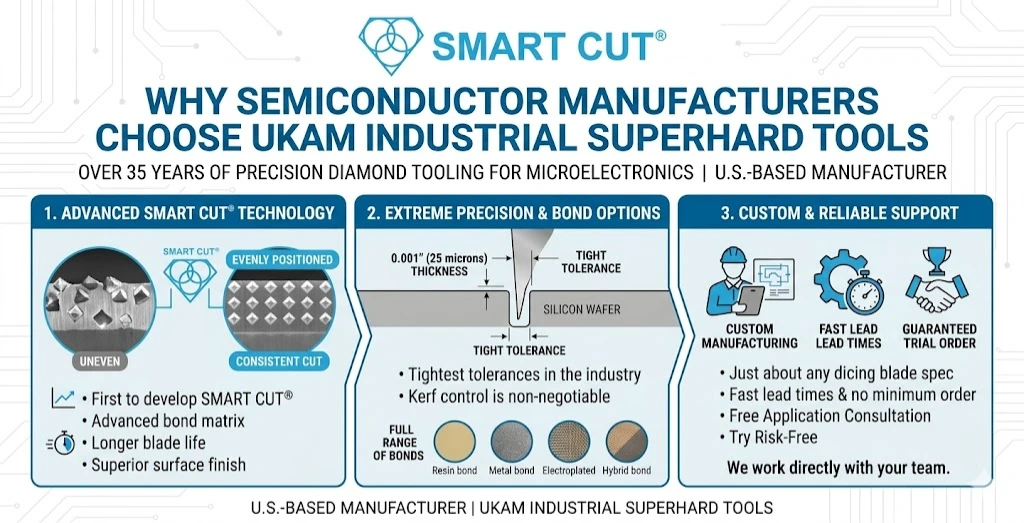
- SMART CUT® Technology: UKAM was the first company to develop SMART CUT® technology — an advanced bond matrix design where every diamond crystal is evenly positioned and oriented, delivering consistent cutting performance, longer blade life, and superior surface finish compared to conventional dicing blades.
- Extreme Precision: Our dicing blades are manufactured to the tightest dimensional tolerances in the industry, starting at 0.001" (25 microns) thickness — essential for advanced semiconductor packaging where kerf control is non-negotiable.
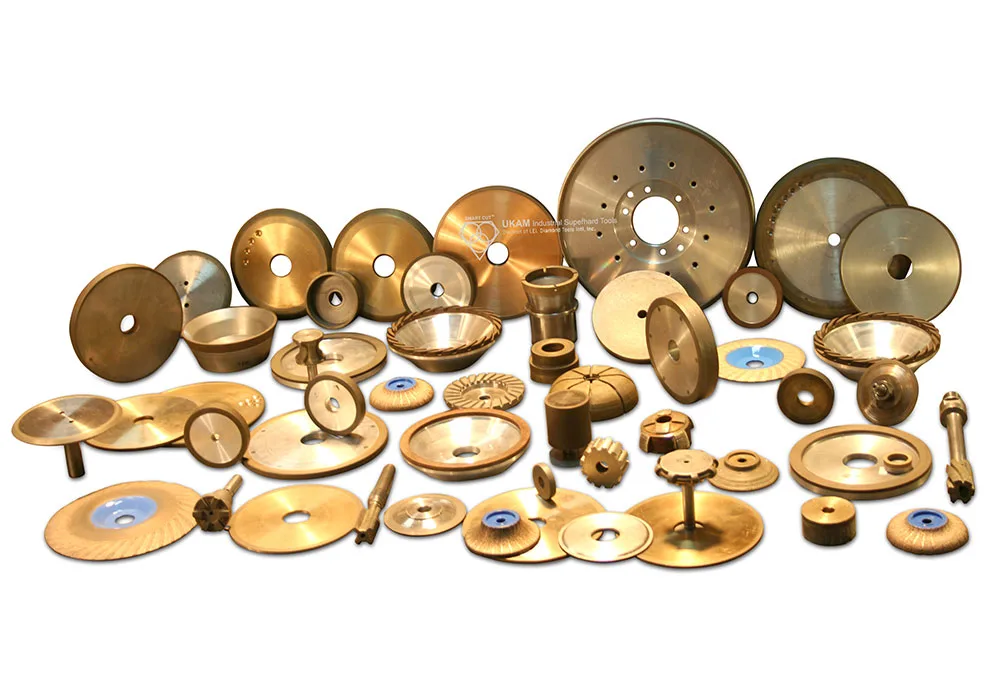
- Full Range of Bond Types: Resin bond, metal bond, electroplated, and hybrid bond options available from stock and custom manufactured to your specifications.
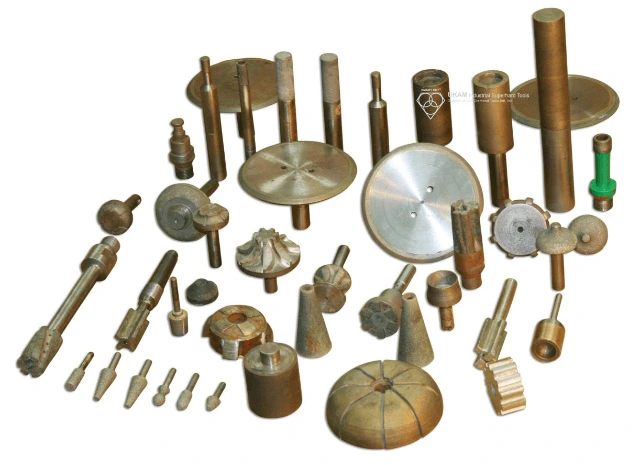
- Custom Manufacturing: Just about any dicing blade specification can be designed and manufactured to your requirements, with fast lead times and no minimum order quantity.
- Free Application Consultation: UKAM's engineers work directly with your team to select the optimal blade specification for your material, equipment, and production goals — at no charge.
- Guaranteed Trial Order: We stand behind every blade we manufacture. Try UKAM dicing blades risk-free.
Frequently Asked Questions: Diamond Dicing Blades for Semiconductor
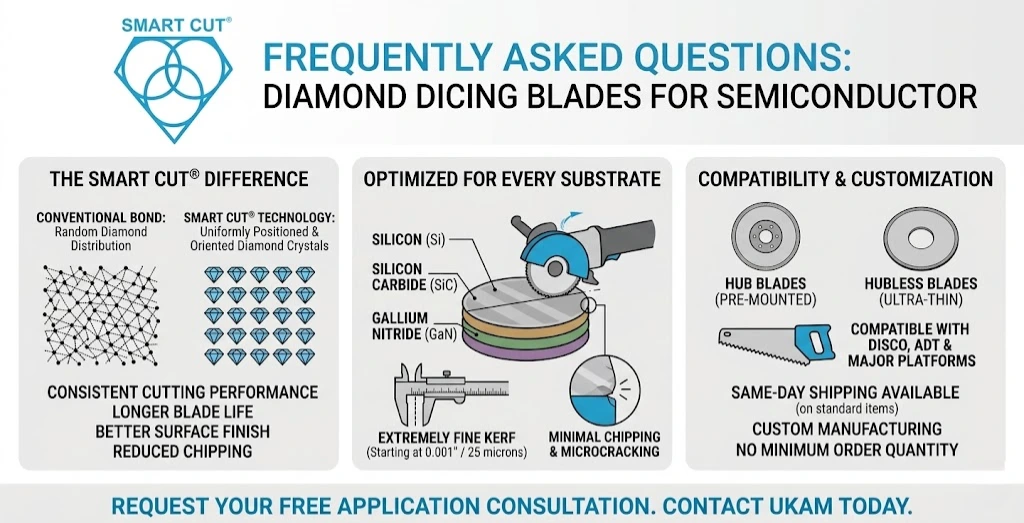
Hub dicing blades come pre-mounted on a rigid metal hub for easy installation on dicing saw spindles. Hubless blades are ultra-thin, flangeless blades used for extremely fine kerf applications, typically in advanced semiconductor packaging. The choice depends on your equipment compatibility and required kerf width.
Resin bond dicing blades are generally the preferred choice for standard silicon wafer dicing. They are self-dressing, free-cutting, and deliver excellent surface finish with minimal chipping. For tougher or abrasive substrates, metal bond or electroplated blades may be more appropriate.
Yes. UKAM Industrial Superhard Tools manufactures fully custom CBN wheels with no minimum order quantity. This is particularly valuable for R&D labs, prototype work, and specialized machining applications where standard catalog wheels do not meet the required specifications.
UKAM dicing blades start at 0.001″ (25 microns) in thickness, enabling extremely fine kerf widths required by modern semiconductor packaging. Exact achievable kerf width depends on blade thickness, bond type, substrate material, and dicing parameters — our engineers can help you optimize this for your application.
The key variables are your substrate material and hardness, required kerf width, acceptable chipping level, blade life expectations, and dicing saw equipment. UKAM offers a free application consultation where our engineers review these parameters and recommend the exact blade specification for your process. Contact us to request yours.
UKAM offers same-day shipping on thousands of standard dicing blade specifications stocked in our U.S. facility. Custom specifications are manufactured with fast lead times. Contact us for current availability on your specific requirements.
Yes. UKAM specializes in custom diamond dicing blade manufacturing with no minimum order quantity. Blades can be manufactured to any diameter, thickness, arbor size, bond type, diamond grit, and concentration to match your exact application requirements.
SMART CUT® is UKAM’s proprietary bond matrix technology where every diamond crystal is uniformly positioned and oriented within the bond. This results in more consistent cutting performance, longer blade life, better surface finish, and reduced chipping compared to conventional randomly-distributed diamond bond systems.
Yes. UKAM dicing blades are manufactured to be compatible with DISCO, ADT, and other major dicing saw platforms. Arbor sizes and hub dimensions are available to match your specific equipment configuration.
Chipping is primarily caused by blade loading, incorrect bond hardness for the substrate, excessive blade wear, improper dressing intervals, or incorrect dicing parameters such as feed rate and spindle speed. Selecting the correct bond type, diamond grit size, and concentration for your material — along with proper dressing protocols — significantly reduces both frontside and backside chipping. UKAM engineers can diagnose your chipping issues and recommend corrective blade specifications.
Ready to Optimize Your Semiconductor Dicing Operation?
Whether you are running high-volume silicon wafer production, developing a process for SiC power devices, or sourcing precision dicing blades for compound semiconductor packaging, UKAM Industrial Superhard Tools has the blade, the technology, and the expertise to support your operation.
Request a free consultation and quote today. Our application engineers will review your specifications, recommend the right diamond dicing blade, and help you achieve better yield, longer blade life, and lower cost per cut.
📞 Call us: (661) 257-2288
🌐 Visit: ukam.com/
✉️ Email: lel@ukam.com
UKAM Industrial Superhard Tools — American Manufacturer of Diamond & CBN Cutting Tools Since 1990
Trusted by Tens of Thousands of Manufacturers, Laboratories,
Research Institutions Worldwide Since 1990
American Based Manufacturer
Established in 1990
Custom manufacturing
RELATED ARTICLES
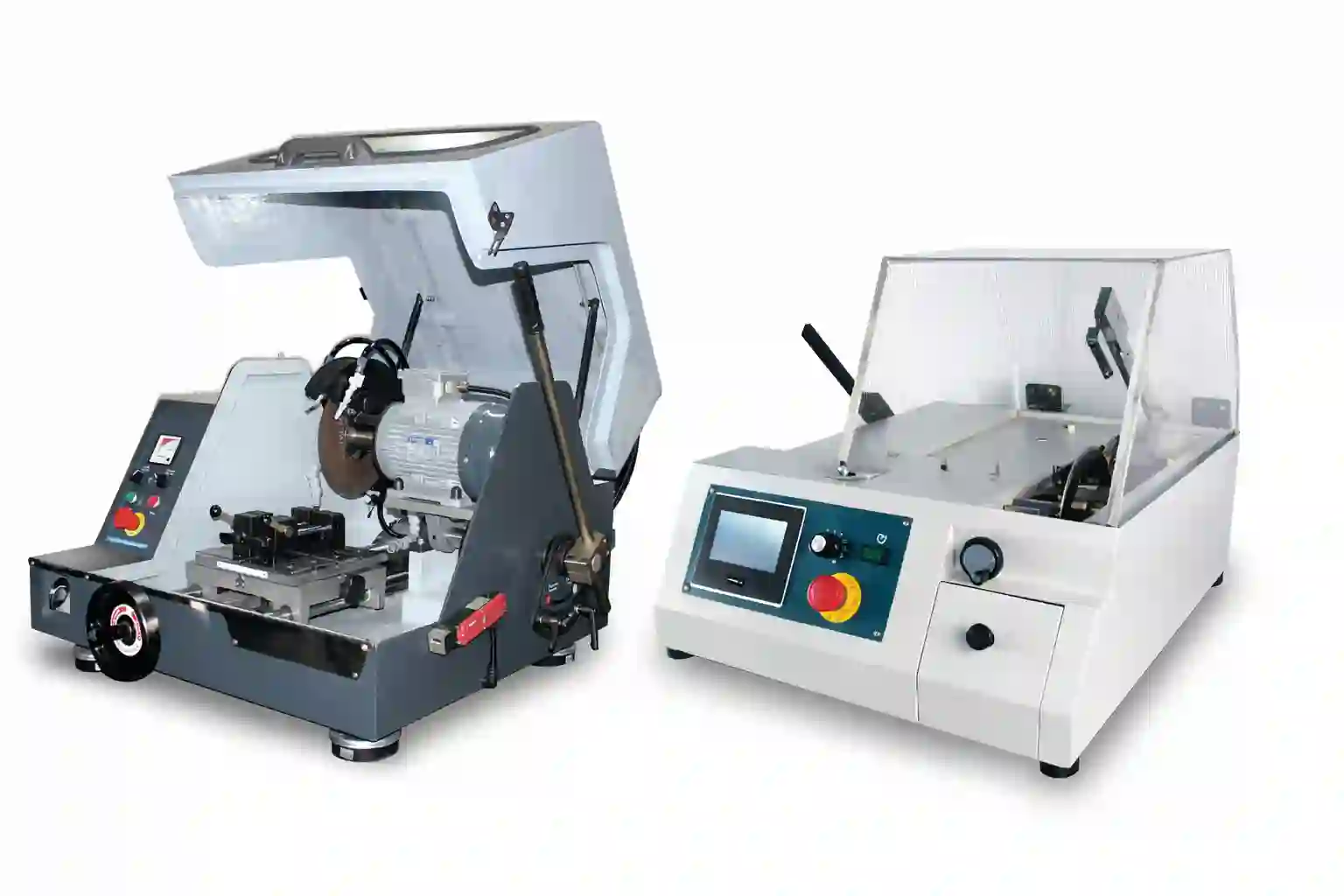
Whether in a factory for industrial production or in the research lab, testing lab, and inspection area of a university
Whether in a factory for industrial production or in the research lab, testing lab, and inspection area of a university
Whether in a factory for industrial production or in the research lab, testing lab, and inspection area of a university
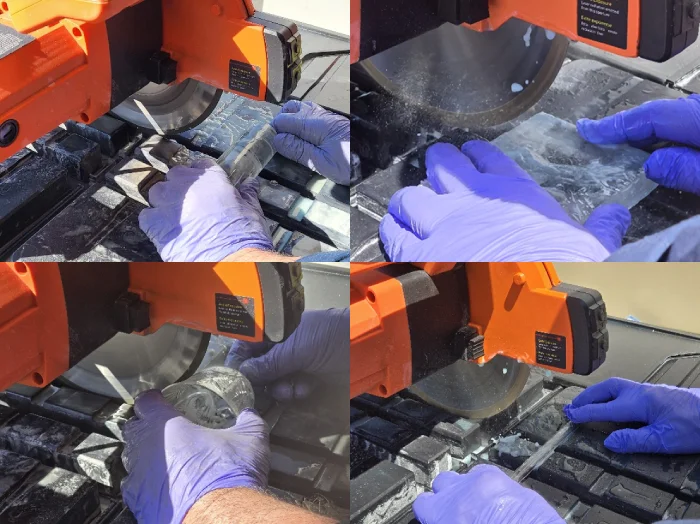
Glass is one of the hardest materials to cut. It is a tough, brittle material that is extremely heat and vibration resistant.
Glass is one of the hardest materials to cut. It is a tough, brittle material that is extremely heat and vibration resistant.
Glass is one of the hardest materials to cut. It is a tough, brittle material that is extremely heat and vibration resistant.
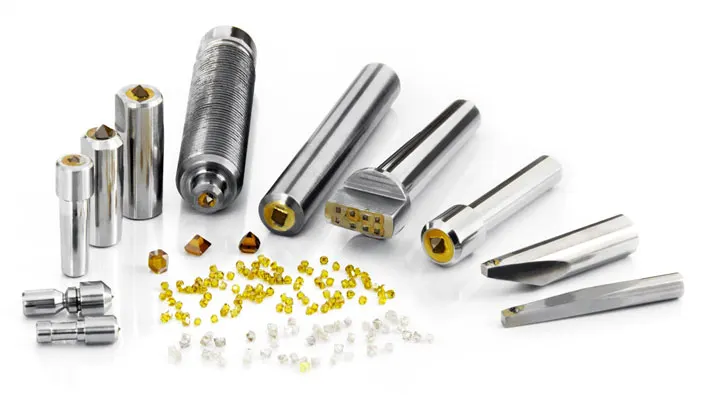
Grinding is an important finishing and material-removal stage on components in manufacturing processes, which are secondary to precision, surface finish, and
Grinding is an important finishing and material-removal stage on components in manufacturing processes, which are secondary to precision, surface finish, and
Grinding is an important finishing and material-removal stage on components in manufacturing processes, which are secondary to precision, surface finish, and
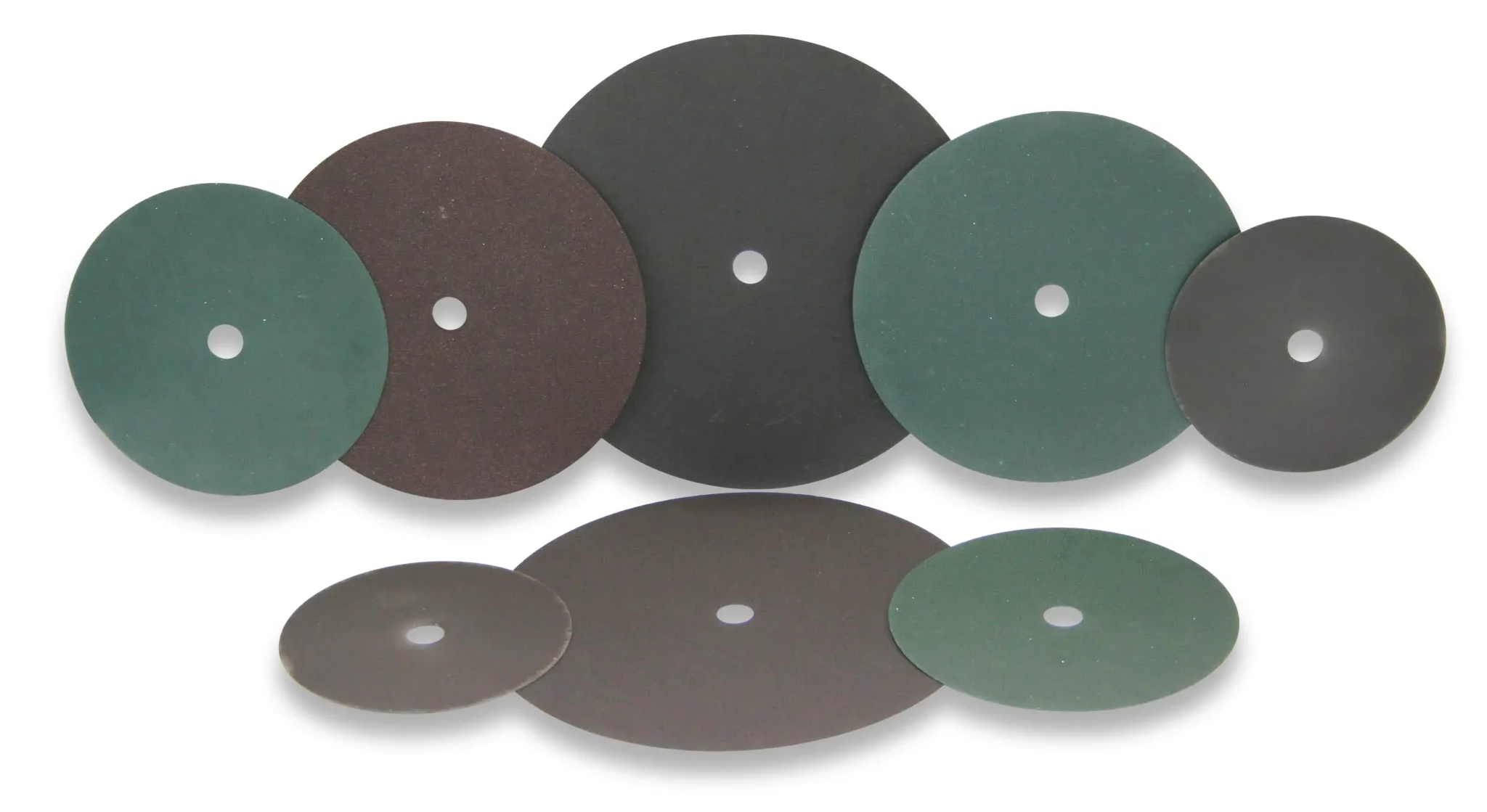
Thin abrasive cut off blades are widely used in precision tube cutting, needle manufacturing, metallography, and high accuracy production cutting.
Thin abrasive cut off blades are widely used in precision tube cutting, needle manufacturing, metallography, and high accuracy production cutting.
Thin abrasive cut off blades are widely used in precision tube cutting, needle manufacturing, metallography, and high accuracy production cutting.
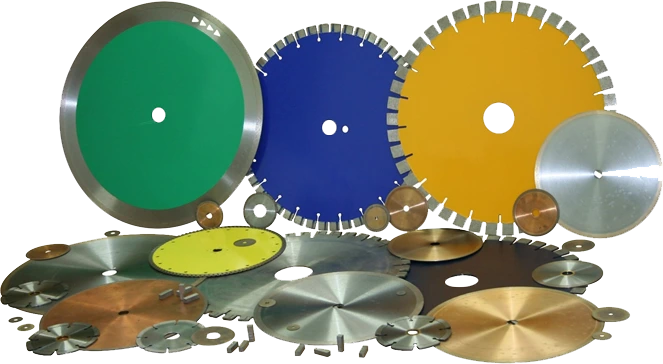
Cutting hard materials like concrete, tile, asphalt, or natural stone requires tools engineered for precision, durability, and efficiency. Among the
Cutting hard materials like concrete, tile, asphalt, or natural stone requires tools engineered for precision, durability, and efficiency. Among the
Cutting hard materials like concrete, tile, asphalt, or natural stone requires tools engineered for precision, durability, and efficiency. Among the
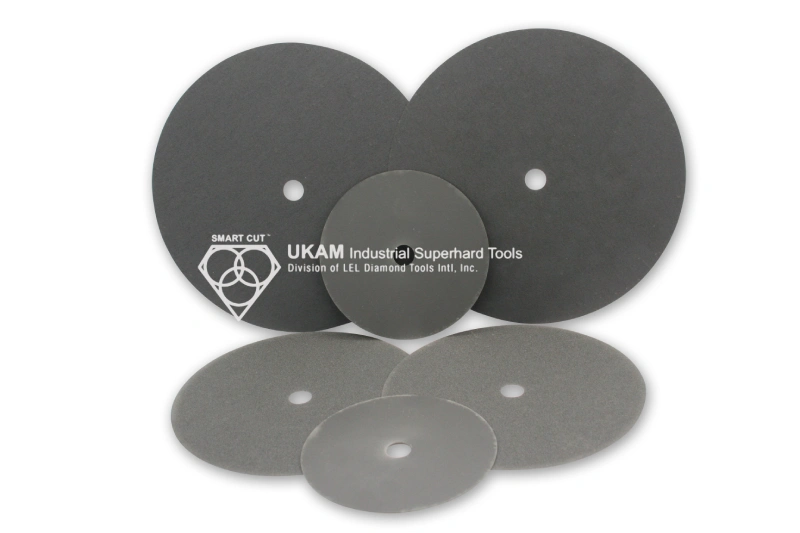
Abrasive cut‑off wheels are a necessary tool within industrial manufacturing and metal fabrication operations. Critical is the accuracy, performance, and safety
Abrasive cut‑off wheels are a necessary tool within industrial manufacturing and metal fabrication operations. Critical is the accuracy, performance, and safety
Abrasive cut‑off wheels are a necessary tool within industrial manufacturing and metal fabrication operations. Critical is the accuracy, performance, and safety
