









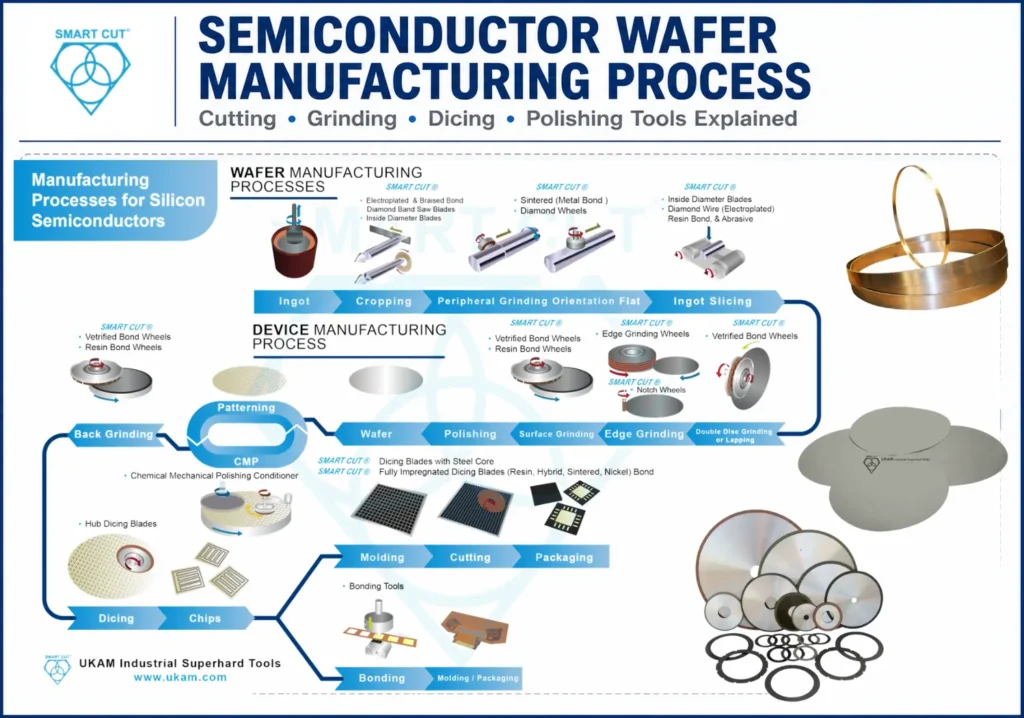
Semiconductor Wafer Manufacturing Process: Cutting, Grinding, Dicing & Polishing Tools Explained
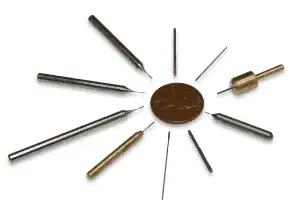
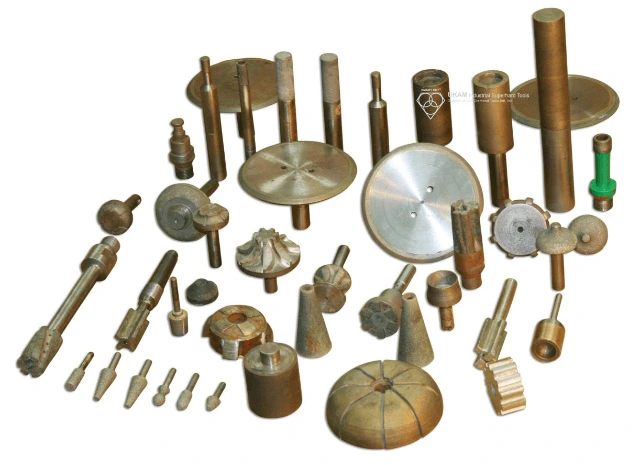
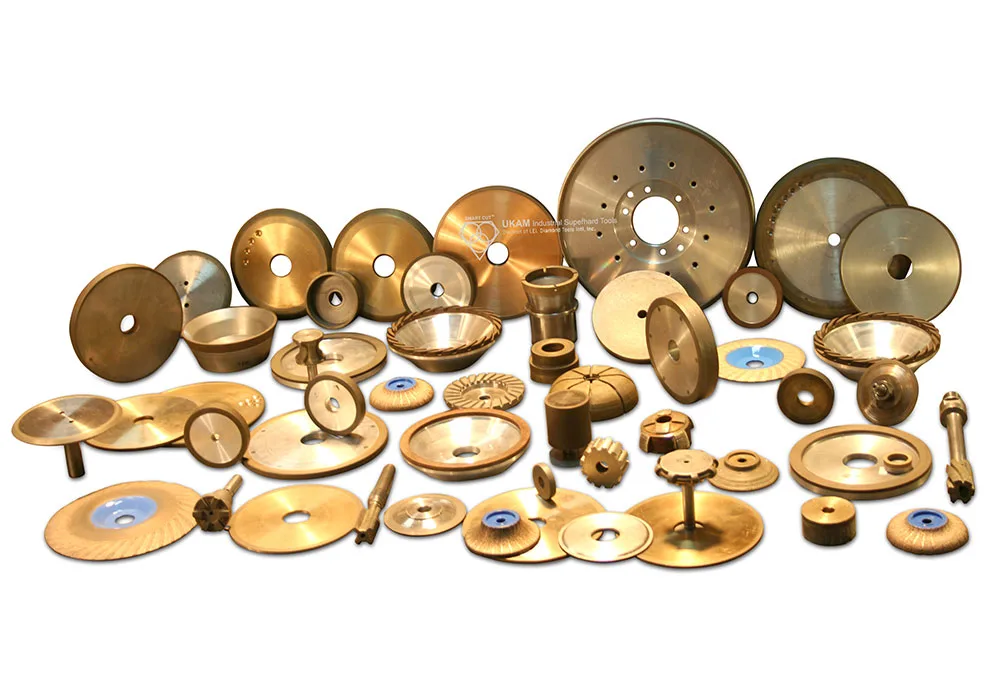
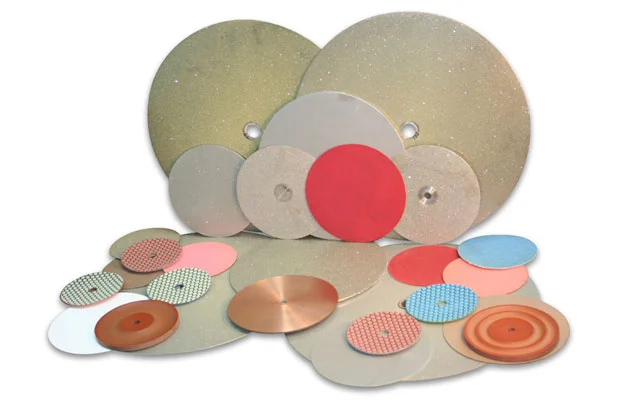
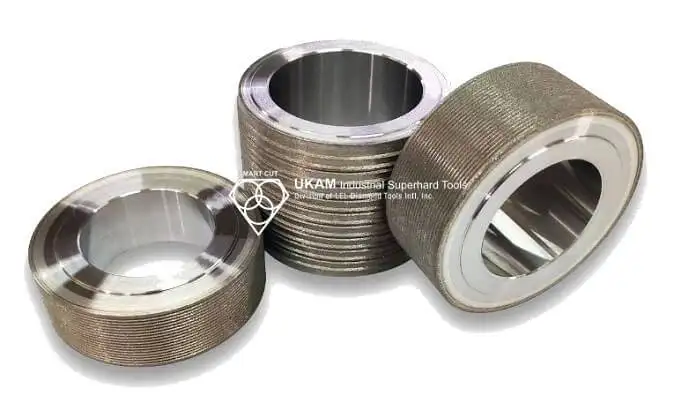
When your production line depends on precision grinding of carbide, ceramics, glass, or semiconductor materials, the condition of your diamond grinding wheel is not a maintenance afterthought — it is a core process variable. A wheel that has degraded in performance does not announce itself with a warning light. It shows up as dimensional drift, rising scrap rates, inconsistent surface finish, and rework cycles that consume time and margin. At UKAM Industrial Superhard Tools, we manufacture precision diamond and CBN grinding wheels for engineers, labs, and production environments where tolerances are tight and process consistency is non-negotiable. This guide is written for that audience — production managers, process engineers, and tooling buyers who need to understand not just what to do, but why it matters at the engineering level.
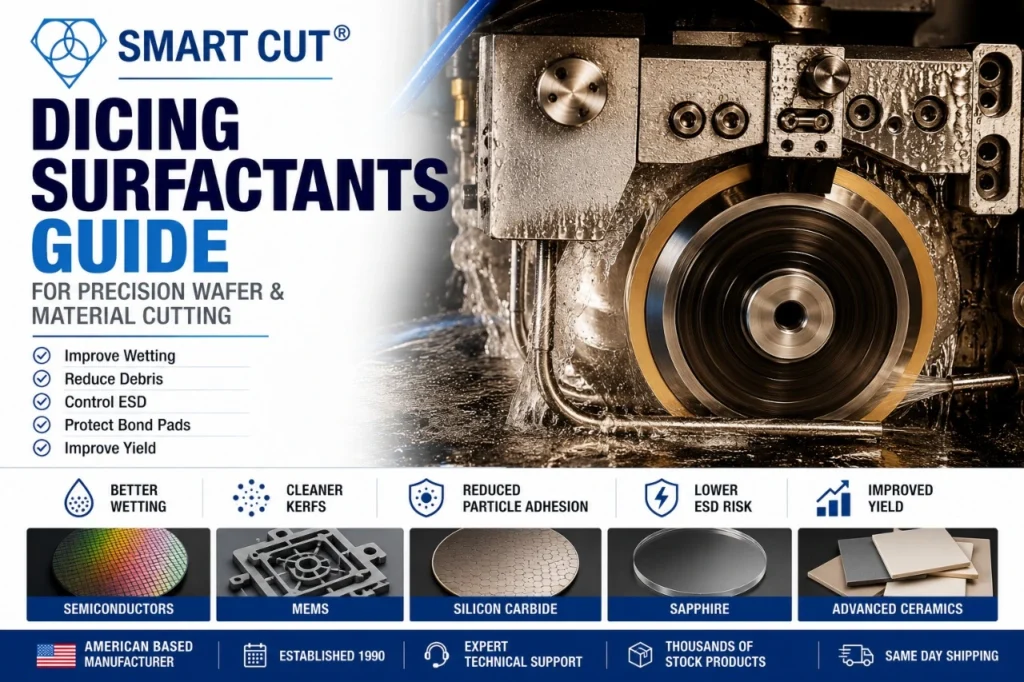
Dicing Surfactants Guide
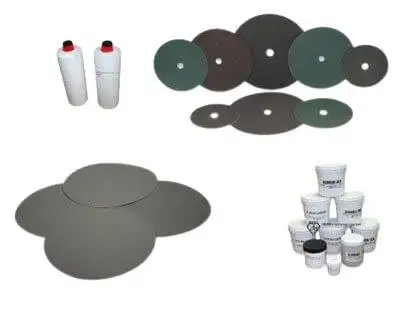
Dicing surfactants support stable and consistent wafer dicing. You use them as part of a complete dicing fluid designed to cool the blade, flush debris, and protect exposed device surfaces. Modern semiconductor wafers contain smaller...
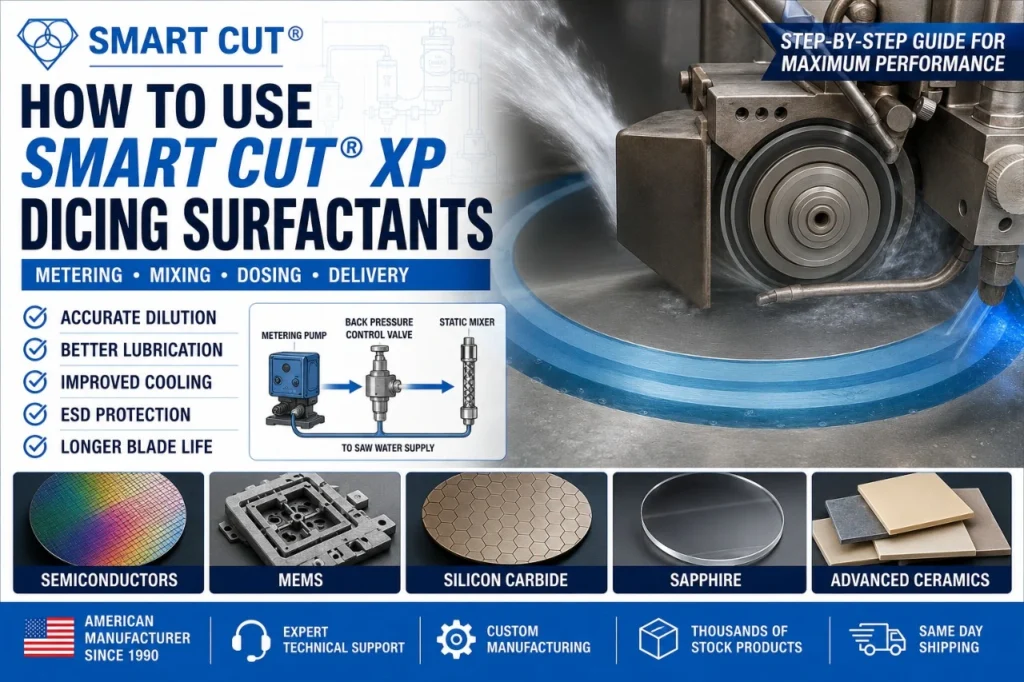
How to Use SMART CUT XP Dicing Surfactants
SMART CUT® XP dicing surfactants should be introduced into the saw water supply in a controlled and consistent manner to ensure proper dilution, stable chemical performance, and uniform delivery to the cutting zone. Correct dosing equipment and proper setup help achieve full...
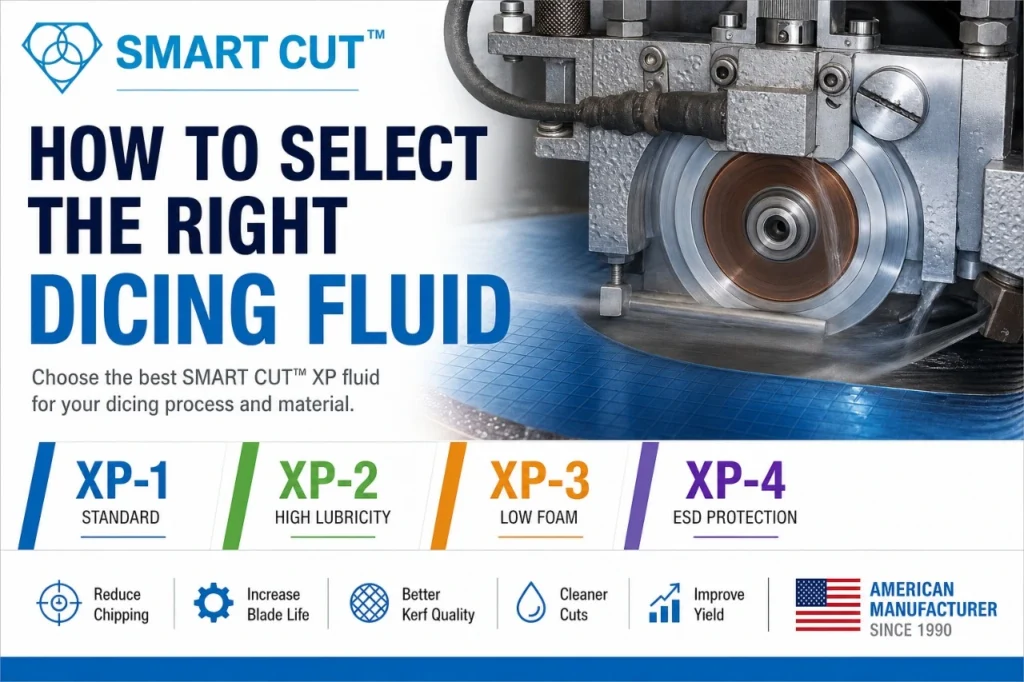
Selecting the Right Dicing Surfactant / Fluid for Your Application
Selecting the correct dicing surfactant / fluid is essential for stable cutting, consistent kerf quality, and long blade life. Each operation places specific demands on lubrication, cooling, foaming control, and electrostatic behavior. You must choose...
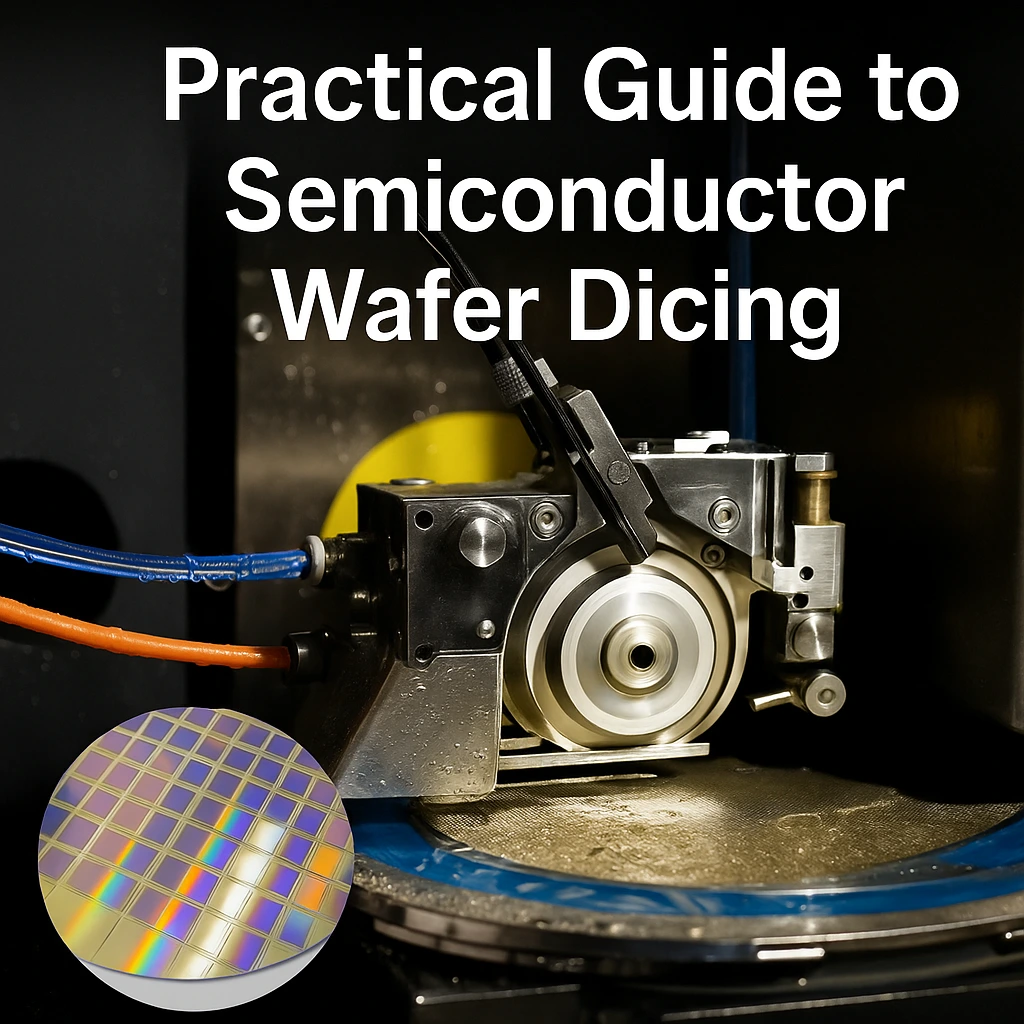
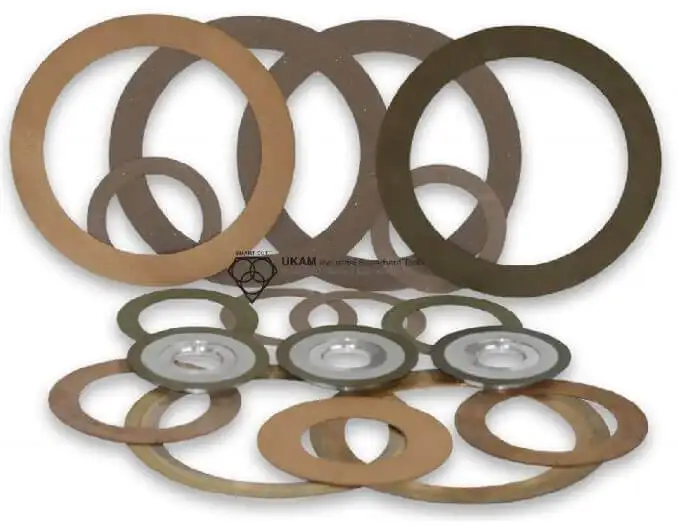
Practical Guide to Semiconductor Wafer Dicing: Materials, Blades, and Process Optimization
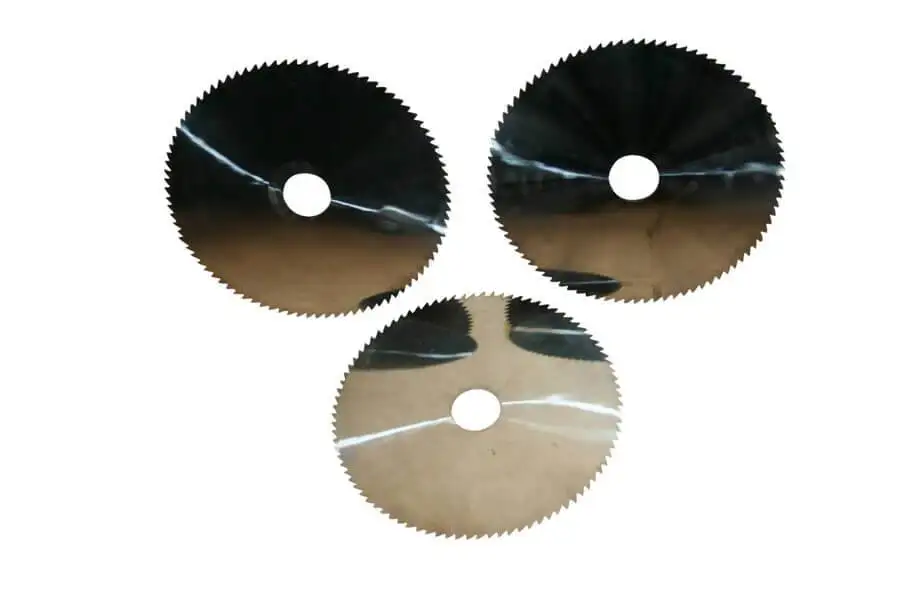
Semiconductor wafers are the foundation of nearly all modern electronics, from integrated circuits and photonic devices to advanced power components. As device geometries shrink and packaging density increases, the requirements placed on wafer dicing processes...
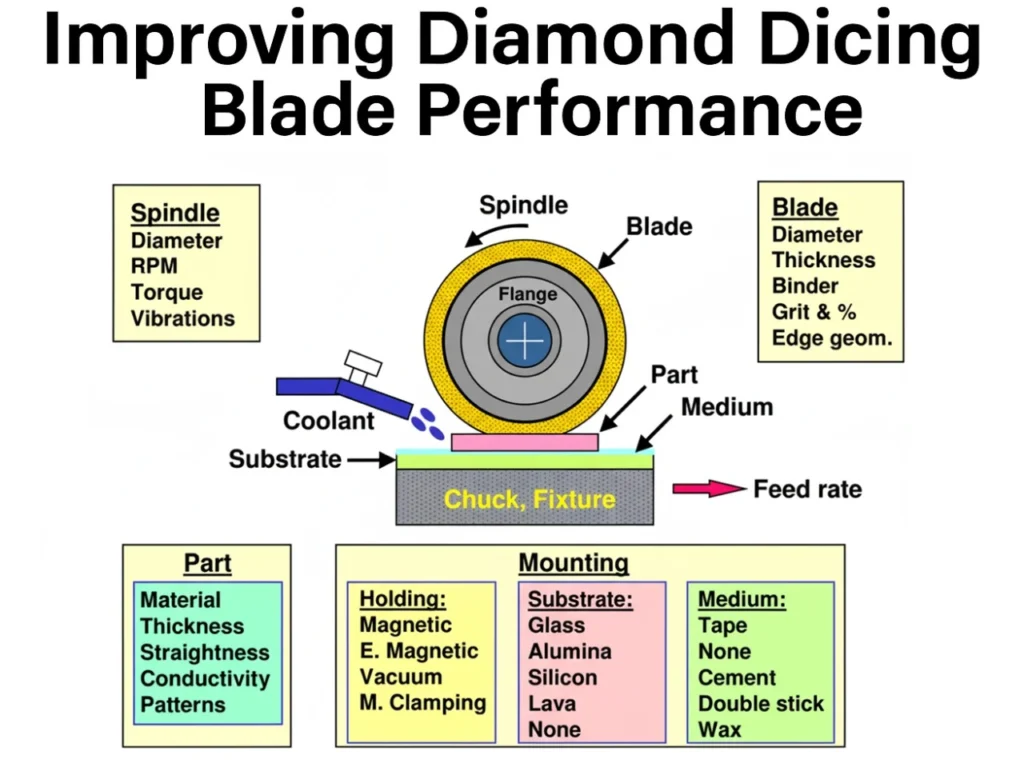
Improving Diamond Dicing Blade Performance: Key Factors and Strategies
Diamond dicing is one of the most important step in semiconductor & microelectronics manufacturing package. Although the process itself does not add direct value to the finished device, it has a decisive impact on yield,...
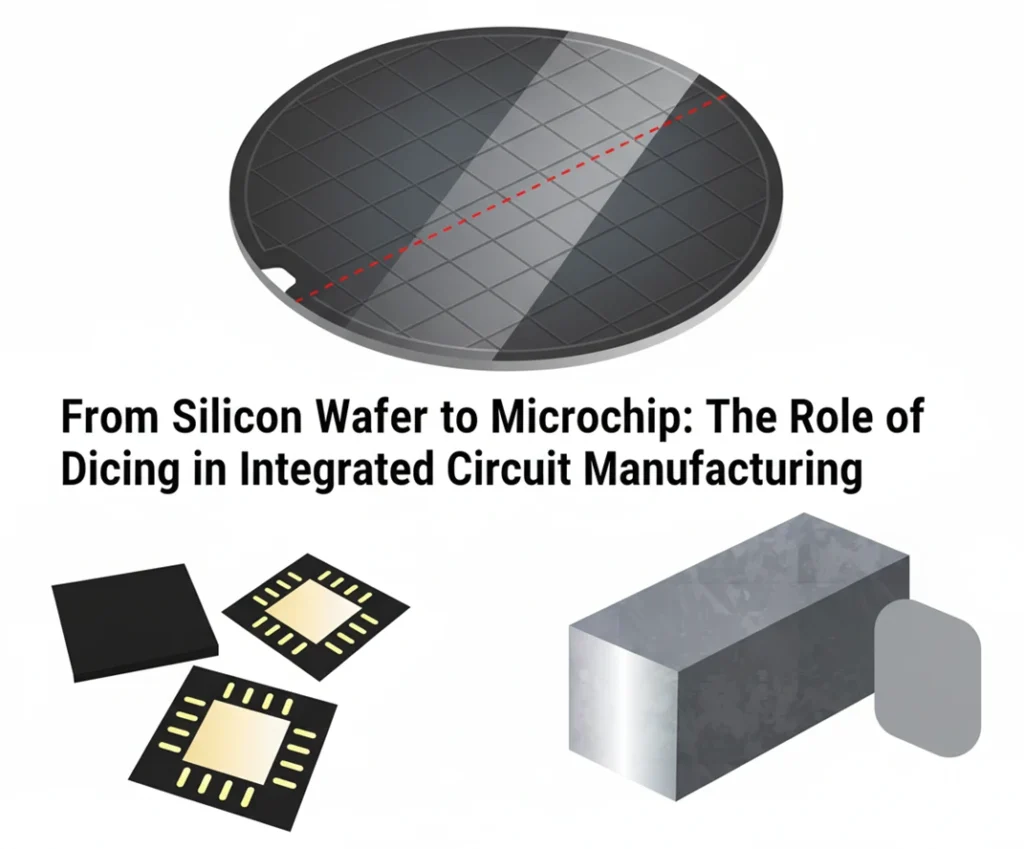
From Silicon Wafer to Microchip: The Role of Dicing in Integrated Circuit Manufacturing
The making of the integrated circuit is a long and complex process that involves many critical steps. In most cases, the wafer travels to multiple facilities before it is completed and turned into the final...
Total Cost of Ownership – Measuring the Real Economics of Diamond Dicing
Many companies still judge diamond dicing blades by purchase price alone. At first, the cheapest blade may appear to be the best choice. However, price does not equal cost. The real economics of diamond dicing...
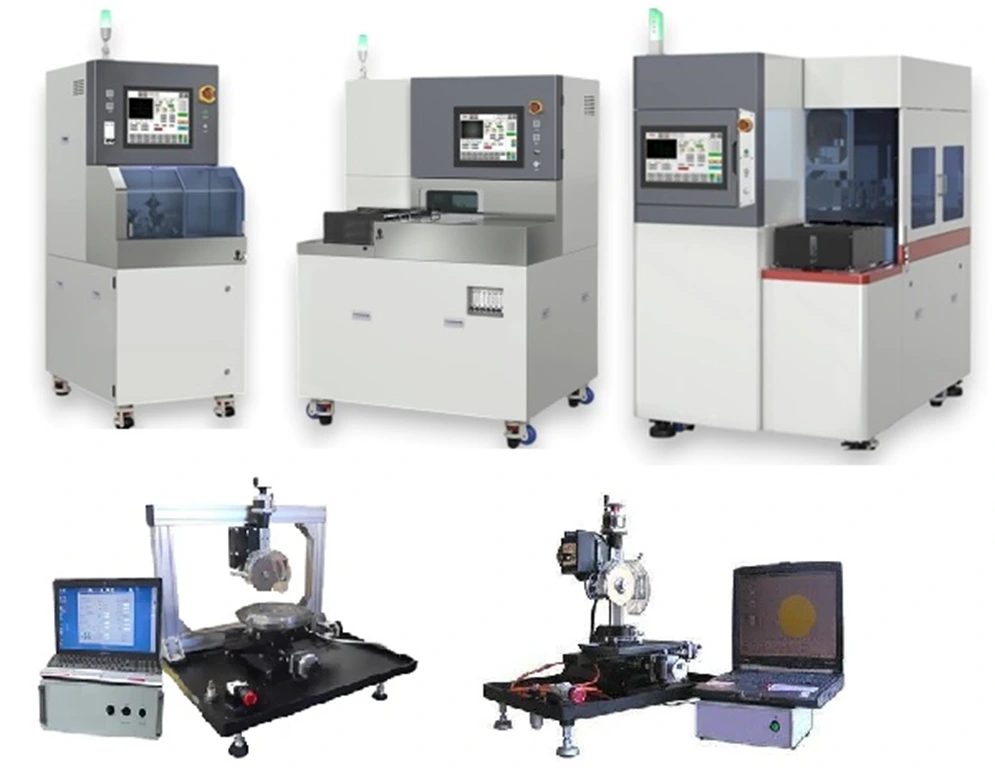
Selecting the Right Wafer Dicing Saw Practical Guide
Selecting the proper wafer dicing saw is a important decision for manufacturers, researchers, and engineers working with large variety of materials. Whether processing silicon wafers in microelectronics, ceramics in materials science, or glass substrates in...